 Nguyen Manh Thang
Chief Executive Officer, AgileTech Vietnam
Nguyen Manh Thang
Chief Executive Officer, AgileTech Vietnam
- Published
- Last updated
- Read time
- 11 min
- Views
- 284
Read the AI overview
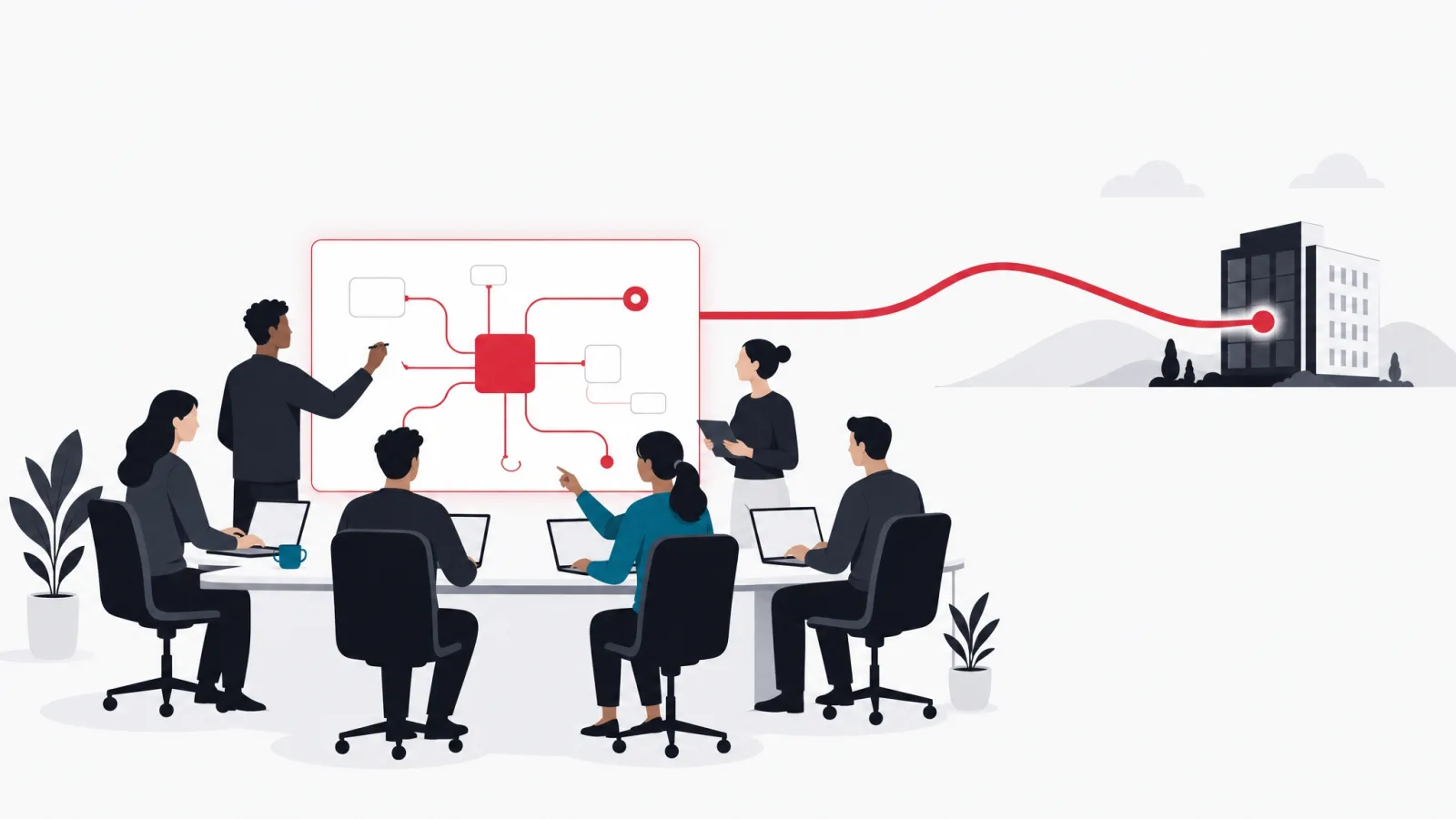
An offshore development center (ODC) is a permanent engineering team in another country that works only for you, under your backlog and your standards, employed by a local partner who handles hiring, payroll, office and compliance. It differs from project outsourcing in that you direct the work rather than buy a deliverable, and from staff augmentation in that the team is a standing unit with its own lead, not individuals slotted into your org chart.
Most guides to offshore development centers are written to sell one. This one is written to help you decide whether you need one at all, because the model has a real failure mode and it is worth knowing before you commit a year of budget to it.
AgileTech runs offshore development centers from Hanoi for clients in the United States, the United Kingdom, Australia and Singapore, with 200+ developers and delivery certified to ISO 9001:2015 and ISO 27001:2013. That is the experience this page is written from, including the parts that go wrong.
Key takeaways
- An ODC is a team you direct, not a project you buy. If you want to hand over a fixed scope and receive a result, you want project outsourcing instead.
- Onshore, nearshore and offshore are a trade between hourly cost and overlap hours. Offshore buys the largest cost gap and the smallest overlap, so it rewards teams that can work asynchronously.
- The model breaks on communication, not on engineering skill. Budget for a written decision trail, a named lead on each side, and a fixed overlap window.
- Ask who employs the engineers, who owns the code, and who holds the security certification. If those three answers point at different companies, you are carrying the risk.
- A realistic ramp is weeks, not days: role definition, then hiring, then a pilot scope before the team takes production work.
What an offshore development center actually is

An offshore development center is a dedicated team, in a country with a lower cost of engineering labor, that works exclusively on your product. The partner company employs the engineers, provides the office, the equipment, the payroll and the local legal compliance. You provide the backlog, the technical standards and the product direction.
The distinction that matters is control. In project outsourcing you buy a defined deliverable and the vendor decides how to build it. In an ODC you decide how it is built, in the same way you would with employees, and the partner makes that possible without you registering a company abroad.
- Exclusive. The engineers work on your product only. They are not shared across the partner other clients between sprints.
- Persistent. The team stays together across releases, so domain knowledge accumulates instead of leaving with each project.
- Directed by you. Your backlog, your definition of done, your architecture decisions, your code review standards.
- Employed by the partner. Hiring, contracts, payroll, tax, office, hardware and local labor law are the partner problem, not yours.
ODC vs outsourcing vs staff augmentation

These three are routinely used as synonyms in vendor marketing, and they carry genuinely different risk. Choosing the wrong one is the most common and most expensive mistake in this category.
Project outsourcing suits a bounded piece of work with a specification you can write down and accept against. Staff augmentation suits a team that is one or two skills short and has the management capacity to absorb individuals. An ODC suits a product with a long roadmap that you want built by a team who will still be there in two years. If you are still writing the specification, do not sign a fixed-price project; if you have no engineering manager, do not take on individuals.
A vocabulary note, because the search results blur it: staff augmentation is also sold as resource augmentation, and hiring remote developers through an agency is the same arrangement under a third name. All three mean adding named individuals to a team you already manage. The label does not change the test: if you do not have a manager with capacity to direct those individuals, none of the three names will make the model work, and the standing-team shape on this page is the one to compare against instead.
- Project outsourcing. You buy an outcome. Lowest management load, least flexibility, and every change is a change request. See custom software development.
- Staff augmentation. You add named individuals to your existing team and manage them yourself. See IT staff augmentation.
- Offshore development center. You direct a standing team with its own technical lead. Highest flexibility, and it requires you to actually lead it. See offshore development.
The three models, side by side
| Question | Project outsourcing | Staff augmentation | Development center |
|---|---|---|---|
| Who directs the daily work? | The vendor | Your manager | You, through the team lead |
| What are you buying? | A defined deliverable | Named individuals | A standing team |
| What does a scope change cost? | A change request | Nothing extra | A re-prioritized backlog |
| What management must you supply? | Acceptance and review | Full daily direction | Backlog and standards |
| Where does knowledge accumulate? | With the vendor | In individuals who leave | In a team that stays |
| What does a wrong fit look like? | Change-request fights | Unmanaged contractors | A team waiting for direction |
Read the rows as questions to ask yourself before talking to any vendor. The model where your honest answers line up is the one to buy.
Onshore, nearshore and offshore: what you are really trading
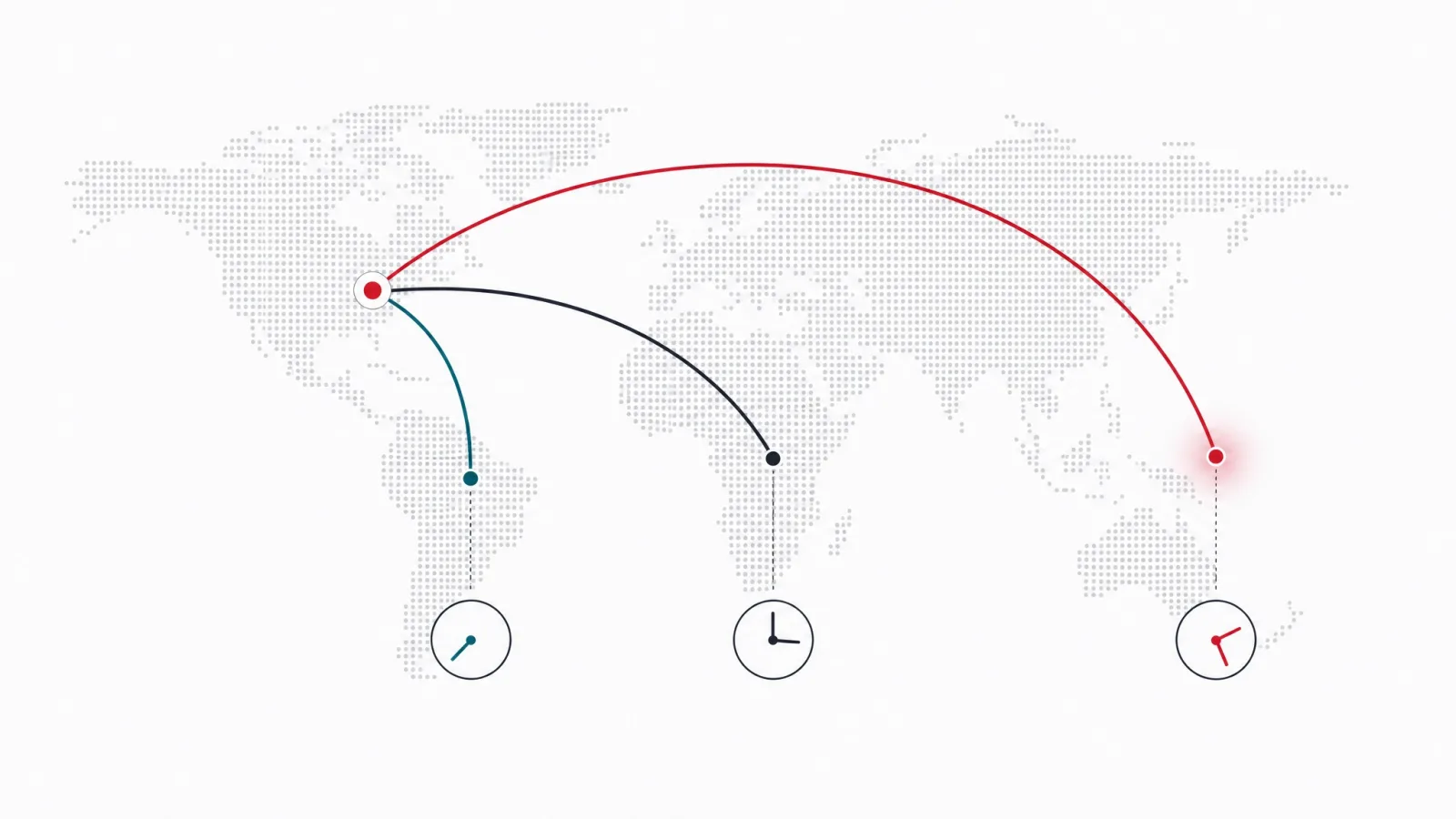
The three location models are usually presented as a cost ladder. That is the least useful way to read them, because the cost difference is the easy part to measure and the coordination difference is the part that decides whether the arrangement survives.
Onshore means the same country: full overlap, highest rate, no cultural or legal translation. Nearshore means a nearby country a few hours away: most of the working day overlaps, moderate saving. Offshore means a distant time zone: the largest saving, and only a few hours of overlap unless someone shifts their day.
Hanoi is UTC+7 and Vietnam observes no daylight saving, so the gap to London is seven hours in winter and six in summer, narrowing when London springs forward rather than when it falls back. A 09:00 to 18:00 Hanoi day therefore ends at 11:00 London time in winter and noon in summer, which gives two or three shared hours, and they fall in the UK morning against the close of the Hanoi day. Plan for the morning, not the afternoon.
Against United States Pacific time the offset is fifteen hours in winter, and two ordinary working days do not intersect at all. Overlap there is not small, it is zero, and it exists only if one side deliberately moves. AgileTech teams working with United States clients hold a fixed early-morning window in Hanoi against the previous afternoon in California. That works, and it works because it is scheduled rather than hoped for.
The choice between them, and the separate question of who manages the team, is the whole subject of onshore, nearshore and offshore compared, which works through the two decisions in order and shows why taking them in the wrong order is what produces most of the regret.
What you pay for, and what is not on the invoice

The commercial shape of a center is a monthly fee per engineer, and the fee is doing more work than a salary comparison suggests. It covers compensation, the office and equipment, the employer obligations that come with Vietnamese employment law, and the partner margin that pays for recruiting, retention and the management layer that keeps the team staffed. Comparing the fee against a raw local salary understates what you would actually spend building the same capability yourself.
The costs that never appear on an invoice are the ones that decide whether the arrangement pays off. Your own management attention is the largest: someone on your side has to own the backlog, answer questions inside the overlap window, and review what comes back. Ramp time is the second: a new team ships less in its first months while it absorbs your domain, and pretending otherwise just moves the cost into rework. The cost guide works through how these hidden lines compare across engagement models.
Where the costs of a center actually sit
Inside the monthly fee
- Compensation
- Salary, benefits and the retention measures that keep attrition low enough for knowledge to accumulate.
- Workplace
- Office space, equipment, licenses and the IT baseline the team works on.
- Compliance
- Employment contracts, social insurance and the employer obligations under Vietnamese law.
- Partner operations
- Recruiting, HR, and the delivery management that keeps seats filled and escalations answered.
Outside the fee, on your side
- Product direction
- A named owner who sets the backlog and answers questions. Without one, the team stalls politely.
- Ramp time
- Months of reduced output while the team absorbs your domain. Budget it; it happens either way.
- Overlap discipline
- A scheduled shared window your side actually attends, every working day.
- Knowledge transfer
- Documentation and context-sharing that someone on your side has to produce.
The left group is what the monthly fee buys. The right group is what you spend that no invoice will ever show, and skipping it is how centers fail.
When the model fails
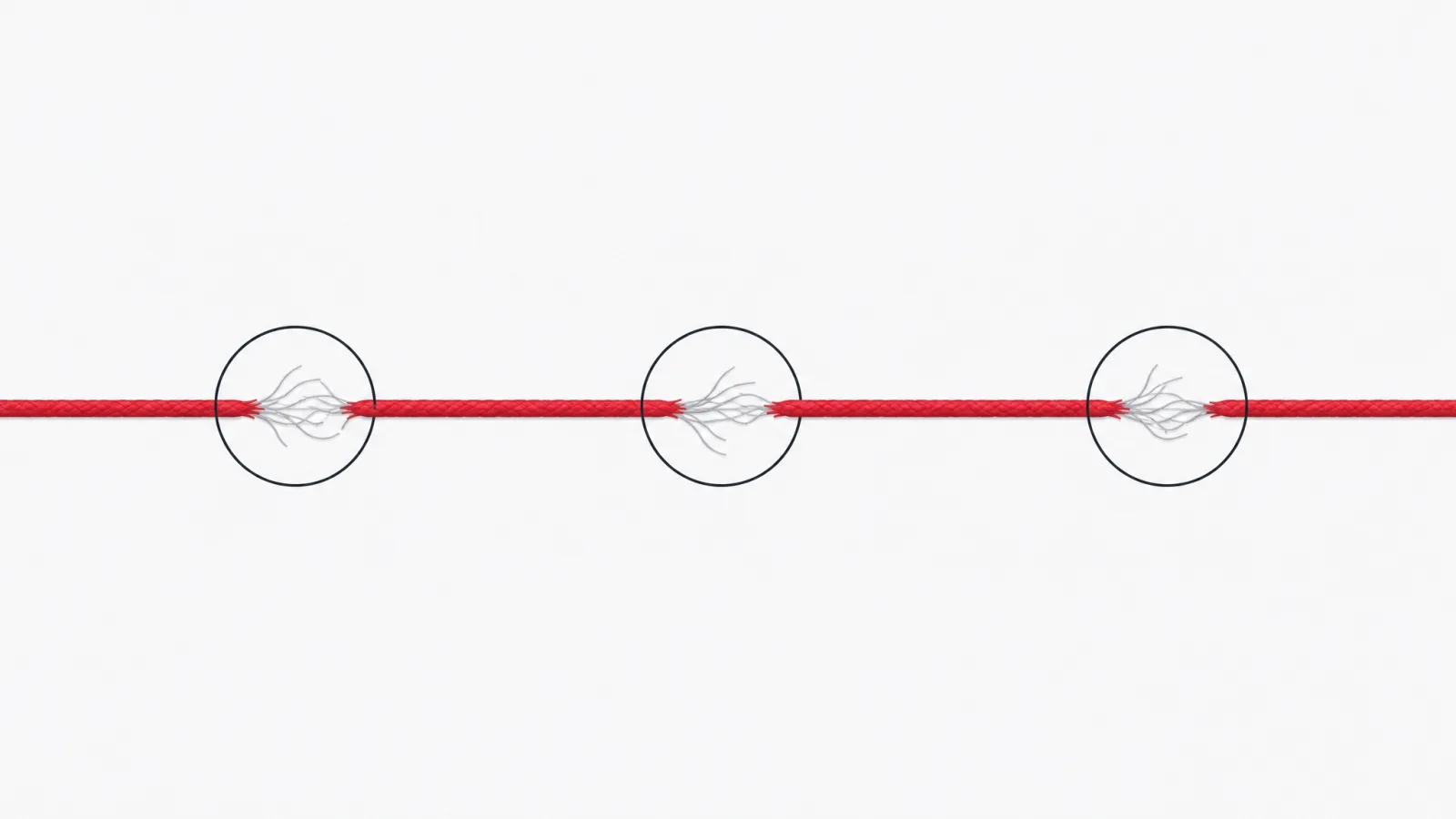
Offshore engineering capability is not the constraint. Vietnam produces strong engineers and the market is competitive enough that a serious partner can hire well. What fails is the communication system around the team.
The specific failure is a decision made in a room the offshore team was not in, and never written down. The team builds against a stale understanding, the work is rejected at review, and the conclusion drawn is that the offshore team cannot be trusted with anything important. That conclusion is wrong and it is self-reinforcing, because the response is to give them less context, which makes the next failure worse.
- Write decisions down. If a decision only exists in a meeting, it does not exist for a team eight time zones away.
- Name a lead on each side. Two named people who talk daily beats six people who talk when there is a problem.
- Fix the overlap window. A scheduled two hour overlap is worth more than a nominal five hours nobody plans around.
- Send the why, not just the ticket. A team that understands the business reason catches the requirement you forgot to write.
Governance: the operating system of a working center

Governance sounds like paperwork and is actually the difference between the failure pattern above and a team that compounds. The working version is a small set of habits held consistently: decisions written where the team reads them, one named owner for every open question, and a cadence that surfaces problems while they are still cheap. None of it is sophisticated. All of it is easy to skip under deadline pressure, which is exactly when skipping it costs the most.
The cadence that works in practice is a daily written standup that survives the time difference, sprint planning where the team hears the why behind the priorities, a demo of working software every sprint so progress is observed rather than reported, and a monthly partnership review where both sides say what is not working while it is still small. The demo matters most: percent-complete status is a genre of fiction, and running software is not.
Governance habits that predict the outcome
Do this
- Decisions written where the team reads themA decision log the team checks daily makes every meeting survivable by people who were asleep during it.
- One named owner per open questionQuestions with an owner get answered. Questions addressed to a company do not.
- Demo working software every sprintA demo cannot be inflated. It shows exactly what exists and what does not.
- A monthly partnership reviewA standing slot for saying what is not working, held while the problem is still cheap to fix.
Not this
- Context that lives only in callsWhatever was said evaporates for everyone in the other time zone, then gets rebuilt wrong from memory.
- All communication through one relayA single human router becomes a bottleneck, then a single point of failure when they leave.
- Status as percent completeNinety percent done is a feeling, not a measurement, and it stays ninety percent for months.
- Escalation invented during the incidentIf the path is designed while the fire burns, the fire wins. Agree the path before you need it.
These pairs are drawn from the failure pattern in the previous section. Each right-column habit is the specific way its left-column twin decays.
Security, IP and offboarding in practice

The contract assigns intellectual property to you; practice is what protects it. The single most useful arrangement is structural: the repositories, the cloud accounts and the CI pipelines live in accounts you own, and the team receives access rather than custody. Under that shape, offboarding an engineer or ending the whole engagement is a permissions change in systems you control, not a negotiation over handing assets back.
The same shape answers the security question. Access is granted per system on a least-privilege default, production data stays out of development environments, and every departure triggers the same routine revocation whether it is one engineer rotating off or a contract ending. A partner who resists working inside your accounts is telling you something about how offboarding will go.
- Your accounts, their access. Code, cloud and CI live in accounts you own. The partner works inside them, never the reverse.
- Least privilege by default. Engineers get the access their work needs, per system, and production data does not travel to development machines.
- Certified, with scope. AgileTech holds ISO 27001:2013 for information security. Ask any partner for the certificate and check the legal entity named on it matches the one on your contract.
- Offboarding as routine. Departure triggers the same revocation checklist every time, for one engineer or for the whole engagement.
How an ODC is set up in practice

Setting up a center is mostly hiring, and hiring takes the time it takes. Any partner who promises a full senior team next week is describing people who are currently on someone else project.
The sequence below is how AgileTech sets one up. The pilot scope matters more than it looks: it is a real piece of production work, small enough that being wrong is cheap, chosen so that both sides learn how the other actually operates before the commitment gets large.
The first ninety days, as a checklist
- Roles and standards in writingTeam shape, seniority mix, coding standards and the definition of done, agreed before any hiring starts.
- Access and environments before day oneAccounts, repositories and a working development environment ready when the first engineer starts, not requested that morning.
- Context transfer scheduledSessions on the domain, the architecture and the users, treated as real work with real calendar time.
- A pilot scoped for information valueReal production work, small enough to be safely wrong, chosen to exercise the full path from ticket to deploy.
- The overlap window fixedA scheduled shared window both sides attend daily, on the calendar before the team writes its first line.
- Exit criteria stated up frontWhat both sides must see by day ninety to continue, written down while everyone is still calm.
Each item is a gate, not a suggestion. A center that skips one of these carries the gap forward into production, where it costs more.
What to ask a partner before signing
These are the questions that separate a partner from a broker. A broker will be vague about the first and the third.
- Who employs the engineers? Direct employees, or subcontractors placed for the duration? Subcontracted teams dissolve when a better placement appears.
- Who owns the code and the IP? It should be assigned to you in the contract, unambiguously, including work by any subcontractor.
- What is certified, and by whom? AgileTech holds ISO 9001:2015 for quality management and ISO 27001:2013 for information security. Ask to see the certificates, not a logo on a website.
- What is the attrition rate on this team? A team that turns over every nine months never accumulates the domain knowledge you are paying for.
- Who do I call when it is broken? A named person in a known time zone, not a support queue.
Frequently asked questions
What is the difference between an offshore development center and outsourcing?
In outsourcing you buy a defined deliverable and the vendor decides how to build it. In an offshore development center you direct a permanent team that works only for you, setting the backlog, the architecture and the standards yourself, while the partner handles employment, office and local compliance.
Is offshore development cheaper than nearshore?
Offshore usually carries the lower hourly cost and the smaller overlap with your working day. Whether it is cheaper in total depends on how much coordination your product needs. Work that can be handed over asynchronously benefits most; work that requires constant real-time discussion often does not.
How long does it take to set up an offshore development center?
Expect a few months from agreeing roles to steady production delivery, most of which is hiring. A partner promising a full senior team within days is describing engineers currently committed elsewhere.
Who owns the intellectual property in an offshore development center?
You should, assigned explicitly in the contract and covering any subcontractor. Confirm this in writing before work starts, and confirm which company actually employs the engineers.
What is resource augmentation, and how is it different from an offshore development center?
Resource augmentation is another name for staff augmentation: adding named individual engineers to a team you already manage, with your own manager directing their daily work. An offshore development center is a standing team with its own technical lead that you direct at the backlog level. The practical test is management capacity: augmentation needs a manager of yours with room to absorb individuals, a center needs you to lead a team.
How big should an offshore development center be at the start?
Start with one pod: a technical lead, a few engineers, QA, and shared slices of DevOps and delivery management. A single pod is small enough to ramp quickly and large enough to own real production work end to end. Grow by adding pods once the first one is delivering steadily, not by adding individuals to a team that has not settled.
What does an offshore development center cost?
The commercial shape is a monthly fee per engineer that covers compensation, workplace, employer compliance and the partner operations behind the team. AgileTech does not publish a generic rate card because the honest number depends on the seniority mix and the team shape; describe the roadmap and the roles you need and you get a quote against that. Budget separately for your own management attention and for ramp time, because neither appears on any invoice.
Does AgileTech run offshore development centers?
Yes, from Hanoi, with 200+ developers and delivery certified to ISO 9001:2015 and ISO 27001:2013, for clients in the United States, the United Kingdom, Australia and Singapore.
Source: https://agiletech.vn/blog/offshore-development-center/ · (c) AgileTech Vietnam. Printed from agiletech.vn.