
12 Best Corporate LMS for Effective Employee Training and Development
In today’s rapidly evolving business environment, organizations need efficient ways to train and develop their workforce. Corporate learning management systems (LMS) have emerged as essential tools for delivering, tracking, and managing employee training initiatives. This comprehensive guide explores the best corporate LMS solutions, their key features, benefits, and how to select the right platform for your organization’s unique training requirements.

1. What is Corporate LMS
A corporate learning management system (LMS) is a software application designed specifically for businesses to administer, document, track, report, and deliver educational courses, training programs, and development initiatives. Unlike academic LMS platforms focused on student learning, corporate LMS solutions are tailored to meet the specific training needs of organizations, including employee onboarding, compliance training, skill development, and professional growth.
Corporate LMS platforms serve as centralized hubs where learning content is stored, organized, and accessed by employees across the organization. These systems enable companies to standardize training processes, ensure consistent knowledge dissemination, and track employee progress and performance. Modern corporate learning management systems incorporate various learning methodologies, including self-paced learning, instructor-led training, microlearning, social learning, and mobile learning to accommodate different learning preferences and organizational requirements.
How Does a LMS for Corporate Training Work?
A corporate LMS operates through several interconnected functions:
- Content Management: Administrators can create, upload, organize, and store various training materials, including videos, interactive modules, assessments, and documents.
- Course Delivery: Training content is delivered through intuitive interfaces in various formats such as self-paced modules, virtual classrooms, or blended learning approaches.
- Progress Tracking: The system automatically tracks learner activities, including course completions, assessment scores, and time spent on modules.
- Reporting and Analytics: Comprehensive reporting features generate detailed insights on training activities, learner progress, and other key performance indicators.
Why Do You Need LMS Systems for Business
Implementing LMS systems for business offers numerous advantages:
- Streamlined Training Operations: A corporate LMS centralizes training administration, reducing the administrative burden on HR and L&D teams.
- Consistent Knowledge Distribution: Organizations can ensure standardized training content across the enterprise regardless of location.
- Reduced Training Costs: Online training reduces expenses associated with traditional methods, including venue rentals, printed materials, and travel costs.
- Improved Employee Retention: Organizations investing in employee development often experience higher retention rates.
- Accelerated Onboarding: New hires can be onboarded more efficiently, reducing time-to-productivity.
2. Types of Corporate Learning Management Systems
Corporate LMS systems can be categorized into various types based on deployment, functionality, and use cases:
- Cloud-based LMS: Hosted on the provider’s servers and accessed via the internet, offering quick deployment, automatic updates, and scalability with subscription-based pricing.
- Self-Hosted LMS: Installed and maintained on the organization’s own servers, providing greater control over data but requiring dedicated IT resources.
- Open-source LMS: Freely available source code that organizations can modify to their specific requirements, offering flexibility but requiring technical expertise.
- Integrated Talent Management Systems: Comprehensive platforms combining LMS functionalities with other HR processes for a holistic approach to talent management.
- Industry-specific LMS: Platforms designed for specific industries with features and compliance tools relevant to particular regulatory environments.
- Mobile-First LMS: Platforms optimizing the learning experience for smartphones and tablets, catering to distributed workforces.
3. 12 Best LMS for Corporate Training
| LMS platform | G2 Rating | Key Strengths | Best For |
|---|---|---|---|
| TalentLMS | 4.6 /5 | User-friendly interface, customizable portals, gamification | SMEs seeking an affordable yet powerful LMS |
| Absorb LMS | 4.6 /5 | Elegant UI/UX, white-labeling, automation engine | Companies prioritizing user engagement and modern design |
| Trainual | 4.7 /5 | Easy content creation, role-based training, progress tracking | SMBs focusing on onboarding and standard operating procedures documentation |
| iSpring Suite | 4.6 /5 | Easy course authoring, mobile compatibility, detailed analytics | Businesses looking for a simple yet effective LMS |
| 360Learning | 4.6 /5 | Expert-led content creation, discussion forums, collaboration | Organizations democratizing knowledge sharing |
| Tovuti LMS | 4.6 /5 | Built-in content creation, virtual classrooms, gamification | All-in-one solution without additional tools |
| LearnUpon LMS | 4.6 /5 | Multi-portal architecture, batch management, webinar integration | Organizations with complex training needs |
| Canvas LMS | 4.4 /5 | Intuitive interface, mobile app, third-party integrations, advanced analytics | Educational institutions and corporations seeking a flexible LMS |
| D2L Brightspace | 4.4 /5 | AI-driven insights, mobile-friendly design, third-party integrations, analytics | Organizations seeking a scalable and feature-rich LMS |
| Docebo | 4.3 /5 | AI-driven recommendations, social learning, advanced analytics | Medium to large enterprises needing scalability |
| Litmos | 4.3 /5 | Pre-built course libraries, mobile learning, robust reporting | Businesses needing a quick-to-implement, scalable LMS |
| Cornerstone Learning | 4.1 /5 | Performance management, succession planning, compliance tracking | Organizations looking for an all-in-one talent management solution |
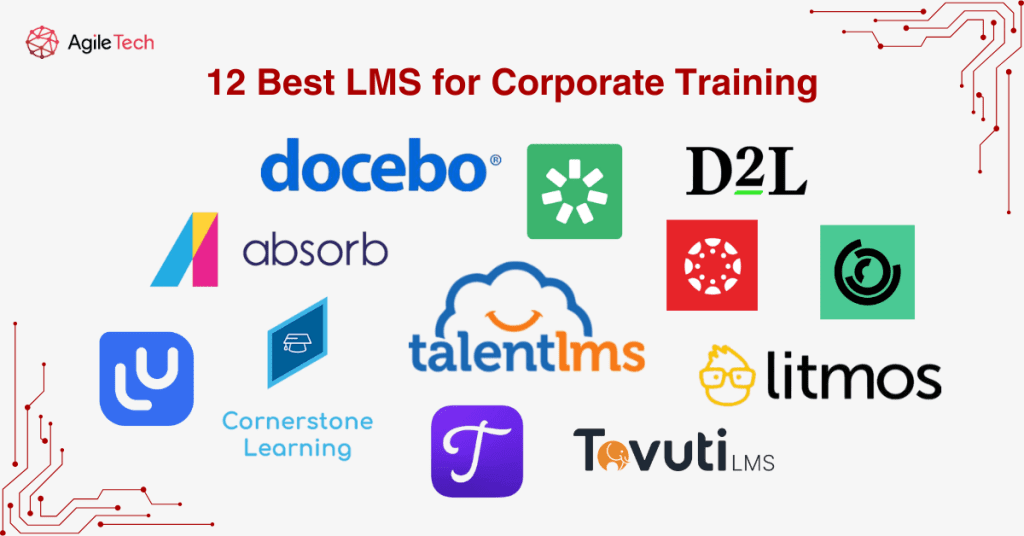
1. TalentLMS
Overview: TalentLMS offers an intuitive, cloud-based solution that balances simplicity with powerful functionality. Its straightforward interface makes it accessible for organizations without dedicated L&D teams.
G2 Rating: 4.6 /5 (700+ reviews)
Key Features:
- User-friendly course builder with drag-and-drop functionality
- Customizable branded portals for different departments or clients
- Gamification elements including points, badges, and leaderboards
- Extensive integration capabilities with HR and productivity tools
- Flexible pricing with a free tier for small teams
Best For: Small to medium-sized businesses looking for an easy-to-implement solution with minimal technical overhead.
2. Absorb LMS
Overview: Absorb LMS provides an elegant, highly customizable platform that delivers exceptional user experiences while maintaining powerful administrative capabilities.
G2 Rating: 4.6 /5 (600+ reviews)
Key Features:
- User-friendly course builder with drag-and-drop functionality
- Customizable branded portals for different departments or clients
- Gamification elements including points, badges, and leaderboards
- Extensive integration capabilities with HR and productivity tools
- Flexible pricing with a free tier for small teams
Best For: Small to medium-sized businesses looking for an easy-to-implement solution with minimal technical overhead.
3. Trainual
Overview: Trainual is a user-friendly LMS designed to streamline onboarding and training processes. It focuses on simplifying the creation and management of Standard Operating Procedures (SOPs).
G2 Rating: 4.6 /5 (600+ reviews)
Key Features:
- Easy content creation with templates and multimedia support.
- Role-based training to ensure employees receive relevant information.
- Progress tracking to monitor employee completion and understanding.
- Centralized knowledge base for storing and organizing SOPs.
Best For: Small to medium-sized businesses (SMBs) focusing on onboarding, SOP documentation, and role-based training.
4. iSpring Learn
Overview: iSpring Learn specializes in rapid deployment and ease of use, with particular strengths in converting existing training materials into e-learning content through its bundled authoring tool.
G2 Rating: 4.6 /5 (600+ reviews)
Key Features:
- Bundled with iSpring Suite, a PowerPoint-based authoring tool
- Automated assignment rules for streamlined administration
- Detailed tracking of online and offline learning activities
- Mobile app with offline learning capabilities
- Transparent, user-based pricing model
Best For: Organizations new to e-learning looking to quickly convert existing materials and launch their online training program.
5. 360Learning
Overview: 360Learning pioneers the concept of collaborative learning, enabling subject matter experts to create and share knowledge efficiently without requiring instructional design expertise.
G2 Rating: 4.6 /5 (400+ reviews)
Key Features:
- Collaborative Learning Platform for expert-led content creation
- Reaction systems and discussion forums in each course
- Integrated authoring tools with templates and collaborative editing
- Automated content refreshment reminders
- Activity-focused learning analytics
Best For: Organizations looking to democratize content creation and leverage internal expertise for peer-to-peer learning.
6. Tovuti LMS
Overview: Tovuti stands out with its comprehensive suite of built-in content creation tools, eliminating the need for additional authoring software and providing an all-in-one solution.
G2 Rating: 4.6 /5 (200+ reviews)
Key Features:
- Integrated course authoring with 40+ interactive activity types
- Virtual classroom environment with breakout rooms
- Interactive content libraries with customization options
- Advanced gamification including badges, points, and rewards
- Comprehensive reporting with scheduled distribution
Best For: Organizations wanting to create interactive, engaging content without additional authoring tools.
7. Canvas LMS
Overview: Canvas LMS is a cloud-based learning management system designed for educational institutions and corporate training. It is known for its flexibility and ease of use.
G2 Rating: 4.4 /5 (1400+ reviews)
Key Features:
- Intuitive interface with drag-and-drop functionality.
- Mobile app for learning on the go.
- Integration with third-party tools like Google Workspace and Microsoft Teams.
- Advanced analytics for tracking learner progress and engagement.
Best For: Educational institutions and corporations looking for a flexible and user-friendly LMS.
8. D2L Brightspace
Overview: D2L Brightspace is a modern LMS designed to deliver personalized learning experiences. It is known for its robust features and scalability.
G2 Rating: 4.4 /5 (600+ reviews)
Key Features:
- AI-driven insights for personalized learning paths.
- Mobile-friendly design for on-the-go learning.
- Integration with third-party tools like Zoom and Microsoft Teams.
- Advanced analytics for tracking learner performance and engagement.
Best For: Organizations seeking a scalable and feature-rich LMS for personalized learning experiences.
9. LearnUpon
Overview: LearnUpon focuses on delivering exceptional training experiences across multiple audiences through its multi-portal architecture, making it ideal for companies that train employees, partners, and customers.
G2 Rating: 4.6 /5 (100+ reviews)
Key Features:
- Multi-portal architecture for different audience segments
- Powerful batch user management and automation
- Robust exam engine with various question types
- Webinar integration with major providers
- Exceptional customer support with dedicated success managers
Best For: Organizations that need to manage training for multiple distinct audiences with different requirements.
10. Docebo
Overview: Docebo delivers an AI-powered learning suite that seamlessly integrates formal, social, and experiential learning approaches. The platform stands out for its sophisticated content delivery mechanisms and ability to scale with organizational growth.
G2 Rating: 4.3 /5 (600+ reviews)
Key Features:
- AI-powered learning paths that adapt to individual progress
- Deep learning analytics with customizable dashboards
- Social learning tools including Coach & Share for peer knowledge exchange
- Extensive integration ecosystem with 400+ pre-built connectors
- Multi-format content support including interactive video assessments
Best For: Medium to large enterprises seeking an AI-enhanced learning platform with robust analytics and scalability.
11. Litmos
Overview: Litmos is a cloud-based LMS known for its simplicity and scalability. It is designed to meet the needs of businesses of all sizes, from small startups to large enterprises.
G2 Rating: 4.3 /5 (600+ reviews)
Key Features:
- Pre-built course libraries for quick implementation.
- Mobile learning for training on the go.
- Robust reporting and analytics to track learner progress.
- Integration with CRM and ERP systems for seamless data flow.
Best For: Businesses needing a quick-to-implement, scalable LMS with strong integration capabilities.
12. Cornerstone Learning
Overview: As part of Cornerstone’s comprehensive talent management suite, Cornerstone Learning connects training activities to broader talent processes including performance management and succession planning.
G2 Rating: 4.1 /5 (500+ reviews)
Key Features:
- AI-driven content recommendations based on skills and roles
- Comprehensive skills gap analysis and competency mapping
- Integration with performance reviews and career development
- Extensive content marketplace with partnered providers
- Configurable workflows for learning approval processes
Best For: Organizations seeking an integrated approach to employee development within a broader talent management framework.
Related Post: 10 Best LMS for Small Businesses to Simplify Training & Development
4. Benefits of LMS Systems for Business
Implementing a corporate learning management system delivers multifaceted benefits that impact various aspects of organizational performance:
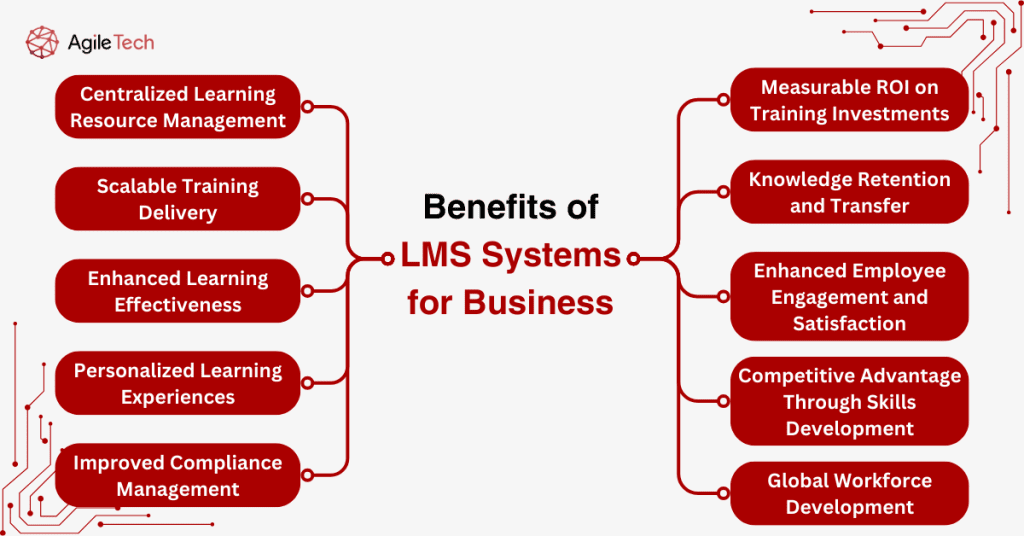
Centralized Learning Resource Management
A corporate LMS creates a unified repository for all training materials, eliminating knowledge silos and ensuring consistent access to up-to-date information. This centralization prevents the fragmentation of learning resources across departments and locations, reducing duplication efforts and ensuring version control of training content.
Scalable Training Delivery
As organizations grow, their training needs expand correspondingly. Corporate LMS systems enable seamless scaling of training initiatives to accommodate increasing numbers of employees, new departments, or geographic expansion. The same training program can be efficiently delivered to ten employees or ten thousand without proportional increases in resources or administrative burden.
Enhanced Learning Effectiveness
Modern corporate learning management systems incorporate proven pedagogical principles and diverse learning methodologies that enhance knowledge retention and skill application. Features such as microlearning, spaced repetition, interactive assessments, and multimedia content cater to different learning styles and maximize training impact.
Personalized Learning Experiences
Advanced corporate LMS platforms leverage AI and machine learning to create personalized learning paths based on individual roles, skills gaps, performance data, and career aspirations. This personalization increases engagement by delivering relevant content that addresses specific development needs rather than one-size-fits-all training programs.
Improved Compliance Management
For organizations in regulated industries, corporate LMS systems streamline compliance training by automatically assigning required courses, tracking completion status, sending certification reminders, and generating audit-ready reports. This systematic approach reduces compliance risks and demonstrates due diligence to regulatory authorities.
Measurable ROI on Training Investments
The comprehensive analytics capabilities of corporate LMS platforms enable organizations to quantify training effectiveness and its impact on business outcomes. By tracking metrics such as completion rates, assessment scores, time-to-competency, and correlating them with performance indicators, companies can demonstrate tangible returns on their learning investments.
Knowledge Retention and Transfer
Corporate learning management systems facilitate knowledge preservation and transfer within organizations, addressing challenges posed by employee turnover and retirement of experienced staff. By capturing and structuring institutional knowledge in reusable learning objects, organizations maintain their intellectual capital despite workforce changes.
Enhanced Employee Engagement and Satisfaction
Well-implemented corporate LMS solutions demonstrate organizational commitment to employee development, which correlates strongly with engagement and job satisfaction. The autonomy, mastery, and purpose that effective learning programs provide are powerful intrinsic motivators that boost morale and productivity.
Competitive Advantage Through Skills Development
In rapidly evolving industries, the ability to quickly upskill and reskill employees becomes a strategic differentiator. Corporate LMS systems enable organizations to rapidly deploy training in response to market changes, technology advancements, or emerging opportunities, maintaining competitive advantage through workforce agility.
Global Workforce Development
For multinational organizations, corporate LMS platforms enable consistent training delivery across geographic boundaries while accommodating regional variations such as language, cultural contexts, and local regulations. This balance of global standardization and local relevance ensures coherent skill development across the entire enterprise.
Read more: How to Build an LMS? LMS Development Full Guide 2025
5. Core Features of a Corporate LMS
When evaluating corporate LMS systems, organizations should consider these essential features:
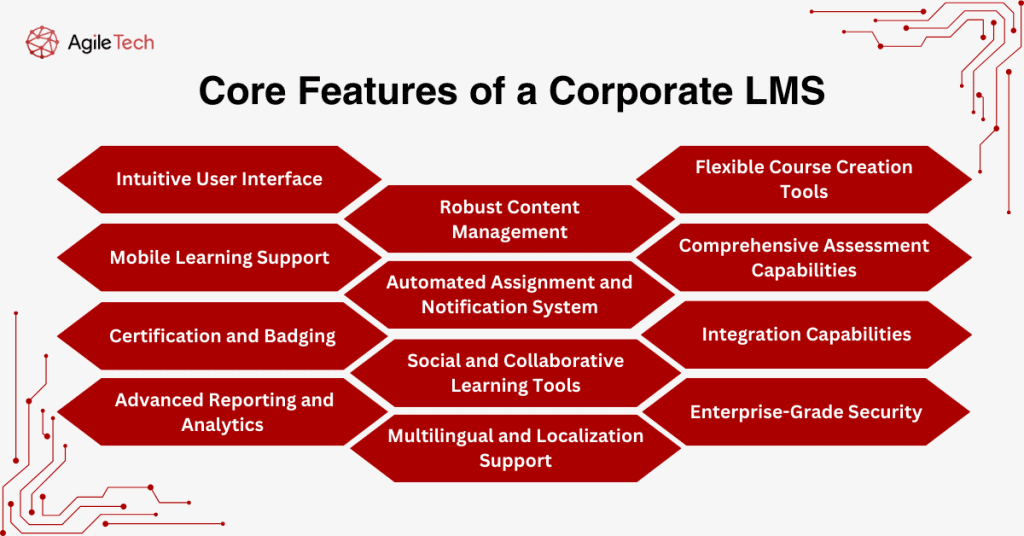
- Intuitive User Interface: User-friendly design that minimizes friction and cognitive load, increasing adoption and effectiveness.
- Robust Content Management: Efficient organization, storage, and delivery of diverse learning materials, with support for industry standards like SCORM and xAPI.
- Flexible Course Creation Tools: Built-in authoring capabilities for developing custom training content without external tools.
- Mobile Learning Support: Responsive design or dedicated mobile apps providing optimized learning experiences on smartphones and tablets.
- Automated Assignment and Notification System: Reduces administrative overhead through rule-based course assignments and intelligent notifications.
- Comprehensive Assessment Capabilities: Various question types, randomized question banks, and detailed feedback mechanisms to evaluate knowledge acquisition.
- Certification and Badging: Automatic issuance of certificates upon course completion and support for digital badges.
- Social and Collaborative Learning Tools: Features that facilitate knowledge sharing and peer learning, enhancing engagement.
- Integration Capabilities: Seamless connections with other business systems including HRIS, talent management platforms, and authentication systems.
- Advanced Reporting and Analytics: Customizable dashboards, drill-down reports, and data visualization tools that transform learning metrics into business intelligence.
- Multilingual and Localization Support: Multiple language options and regional adaptations for global organizations.
- Enterprise-Grade Security: Role-based access control, data encryption, and compliance with regulations such as GDPR to protect proprietary knowledge.
6. A Step-by-step Guide to Choose The Best Corporate LMS Software
Step 1: Assess Your Needs – Identify your organization’s specific training requirements and goals.
Step 2: Set a Budget – Determine how much you are willing to invest in an LMS.
Step 3: Research Options – Explore various corporate LMS platforms and compare their features.
Step 4: Request Demos – Test the platforms to evaluate their usability and functionality.
Step 5: Check Reviews – Read user reviews and case studies to gauge the platform’s effectiveness.
Step 6: Evaluate Support – Ensure the vendor offers reliable customer support and training resources.
Step 7: Make a Decision – Choose the LMS that best aligns with your business needs and budget.
7. Develop Your Own Corporate LMS with AgileTech
While many corporate LMS systems cater to general business needs, some organizations require customized solutions tailored to their specific workflows. AgileTech specializes in developing bespoke corporate LMS systems that align with your business goals.
Why Choose AgileTech?
- Custom LMS Development: Built specifically for your business requirements.
- Scalable Solutions: Designed to grow with your organization.
- Advanced Features: AI-driven insights, seamless integrations, and high security.
AgileTech leverages cutting-edge technologies including modern frontend frameworks, robust backend solutions, cloud infrastructure, and AI capabilities to develop high-performance corporate learning management systems. A recent case study showed that a custom LMS developed by AgileTech for a multinational provider resulted in 60% improved training completion rates, a 28% reduction in compliance incidents, and significant cost savings compared to their previous approach.