 Nguyen Manh Thang
Chief Executive Officer, AgileTech Vietnam
Nguyen Manh Thang
Chief Executive Officer, AgileTech Vietnam
- Published
- Read time
- 15 min
- Views
- 54

Read the AI overview
IT outsourcing in 2026 is being reshaped by three forces at once, and most trend lists miss how they interact. The first is AI in the delivery team itself: vendors using coding assistants, generative test tooling, and agentic workflows are producing more per engineer, which is pushing pricing away from hours and toward outcomes and forcing buyers to renegotiate rate cards that assumed a 2022 level of productivity. The second is geography: the traditional destinations are saturating on cost and attrition, Vietnam and a handful of secondary hubs are absorbing demand for engineering-heavy work, and nearshore markets are consolidating around a few larger providers for time zone sensitive work. The third is risk: security certification, data residency, and AI governance have moved from a checkbox at the end of procurement to a gating criterion at the start, which is squeezing out small vendors that cannot certify and favoring mid-size specialists that can. For buyers the practical response is the same across all ten trends covered here: contract for outcomes rather than seats where the work allows it, insist that AI productivity shows up in your price or your scope, choose locations by the mix of cost, skills, and overlap the work needs rather than by habit, and treat vendor security posture as a requirement rather than a preference.
Every year produces a list of outsourcing trends, and most of them are the same list with the year changed. This one tries to be different in two ways. It is written for the buyer, the CTO or engineering leader or procurement head who has to decide in the next budget cycle how much engineering to source externally, from where, on what commercial terms, and with which risks accepted. And it treats the trends as forces that interact rather than as ten independent bullets, because the interesting decisions in 2026 sit at the intersections: AI productivity and pricing, geography and risk, specialization and contract shape.
The context is a market that has grown steadily through a decade of disruptions and is now being reshaped from the inside. Demand for external engineering capacity remains strong, driven by AI and data programs that companies cannot staff internally, by cloud and platform work that never ends, and by the ordinary need to build and run software with fewer permanent hires. Supply is changing faster than demand: the delivery teams themselves are using AI, the destinations are shifting, and the compliance bar is rising. Buyers who negotiate in 2026 on 2022 assumptions will overpay, under-scope, and accept risk they did not intend to.
The ten trends below are grouped into what is changing in delivery, in commercial models, in geography, and in risk, followed by a section on how to turn them into a sourcing strategy. Buyers new to the model should read the software outsourcing in Vietnam pillar first for the fundamentals; this article assumes them and focuses on what is different this year.
Key takeaways
- AI native delivery is the trend that changes the economics. A team using assistants well ships materially more per engineer, and buyers should expect that in scope, price, or both, and should ask how the vendor governs AI use on client code.
- Pricing is moving from hours to outcomes: fixed scope, managed capacity with output commitments, and value shares. Pure hourly staff augmentation is shrinking to the cases where it genuinely fits.
- Geography is diversifying. Vietnam, the Philippines, and parts of Eastern Europe and Latin America are absorbing work as India's mid-tier saturates, and buyers are running two-location strategies for resilience.
- Security, data residency, and AI governance are now gating criteria in procurement. Vendors that cannot show certifications and controls are excluded before price is discussed.
- Smaller, specialized vendors are winning engineering-heavy work from the large generalists, especially in AI, data, and product engineering, because depth beats scale when the work is not commodity.
- Talent scarcity has moved to AI and data roles. Rate inflation there is real and buyers should budget for it while general web and mobile rates stay flat.
Trend 1: AI native delivery teams change the unit of work

The single largest change in outsourced engineering since the cloud is happening inside the delivery team. Coding assistants that complete functions and draft modules, generative tools that write tests and documentation, agents that triage bugs and open pull requests, and review tools that catch defects before a human looks: these are now standard in well run vendor teams. The productivity effect is real but uneven. On routine implementation, integration glue, test coverage, and documentation, a team using these tools well ships noticeably more per engineer per week. On novel architecture, ambiguous requirements, and hard debugging, the effect is smaller and sometimes negative when the tools are trusted too far.
For buyers this creates two obligations. The first is commercial: if the vendor's engineers are more productive, that productivity should appear somewhere in the buyer's favor, as more scope for the same price, a lower price for the same scope, or a shorter timeline. Rate cards negotiated before the tools were standard embed a productivity assumption that is now wrong, and renegotiating them is legitimate. The second is governance: the buyer needs to know which tools touch its code, where the prompts and completions go, whether the vendor's AI usage complies with the buyer's own policies and its customers' contracts, and who is accountable for AI-generated code that ships with a defect or a license problem.
The vendors that will matter in 2026 are the ones that treat AI as part of their engineering method rather than as a marketing line: they have a written policy on tool use, they can show the effect on their own metrics, they train engineers to review AI output rather than accept it, and they price in a way that shares the gain. A vendor that says its rates are unchanged because AI does not affect its work is either not using the tools or not sharing the benefit, and both are reasons to look elsewhere.
Questions to ask any vendor about AI in delivery
- Which AI tools does your team use on client code, and under what policy?Expect a named list, a written policy, and an answer about where code and prompts are sent and retained.
- How has your throughput per engineer changed, and how does that reach my price?A credible vendor has measured it and has a commercial answer: more scope, lower rate, or outcome pricing.
- Who reviews AI-generated code, and how is it marked?Review standards should be explicit, and the vendor should be able to show review coverage rather than assert it.
- How do you handle license and provenance risk in generated code?Tooling that checks for verbatim reproduction of licensed code, and a contractual indemnity, are the two answers to look for.
- Can you comply with my AI use restrictions if my customers impose them?Regulated buyers increasingly must pass restrictions down the chain; the vendor should be able to switch tools off per project.
Trend 2: from hours and seats to outcomes

Hourly staff augmentation, the model where a buyer rents engineers by the month and directs them, has been the default for a decade because it is simple to buy and easy to scale. It is shrinking as a share of new contracts, for two reasons that reinforce each other. AI productivity makes hourly billing a worse deal for the buyer every quarter, because the buyer pays the same for more output that the vendor could have delivered in fewer hours. And buyers who have run augmented teams for years have learned that renting hands without accountability for results produces exactly that: hands, and no accountability.
The models replacing it are outcome shaped. Fixed scope and fixed price for well defined work, with change control. Managed capacity, where the buyer pays for a team but the vendor commits to output measures such as story throughput, defect escape rate, or release cadence, with credits when they are missed. Product engagements where the vendor owns a product area end to end, with a roadmap and metrics. And a small but growing set of value share arrangements, where part of the vendor's fee is tied to a business result. Each requires more work up front, in scoping, in measurement, and in trust, than a rate card, and each shifts risk that hourly billing left entirely with the buyer.
Hourly still fits some cases: genuinely undefined exploratory work, very small engagements, and buyers with strong engineering management who want capacity rather than a partner. The in-house against outsourcing analysis and the dedicated team model article cover when a rented team is the right shape. The trend is not that hours disappear; it is that they become the exception a buyer chooses deliberately rather than the default nobody questioned.
Commercial models and where each fits in 2026
| Model | Buyer pays for | Vendor accountable for | Fits when |
|---|---|---|---|
| Hourly augmentation | Engineer months | Attendance and skills | Undefined work; strong in-house management; small scale |
| Managed capacity | A team with output commitments | Throughput, quality, cadence measures | Ongoing product work with measurable flow |
| Fixed scope and price | A defined deliverable | Delivery to specification | Well specified projects; migrations; integrations |
| Product ownership | A product area with a roadmap | Product metrics and delivery | Non-core products; long horizon; trusted vendor |
| Value share | Base fee plus a share of results | Business outcome | Revenue-linked products; mature partnerships |
The shift is toward the lower rows. Each moves risk toward the vendor and requires more definition from the buyer.
Trends 3 and 4: destinations diversify, and Vietnam moves up the stack
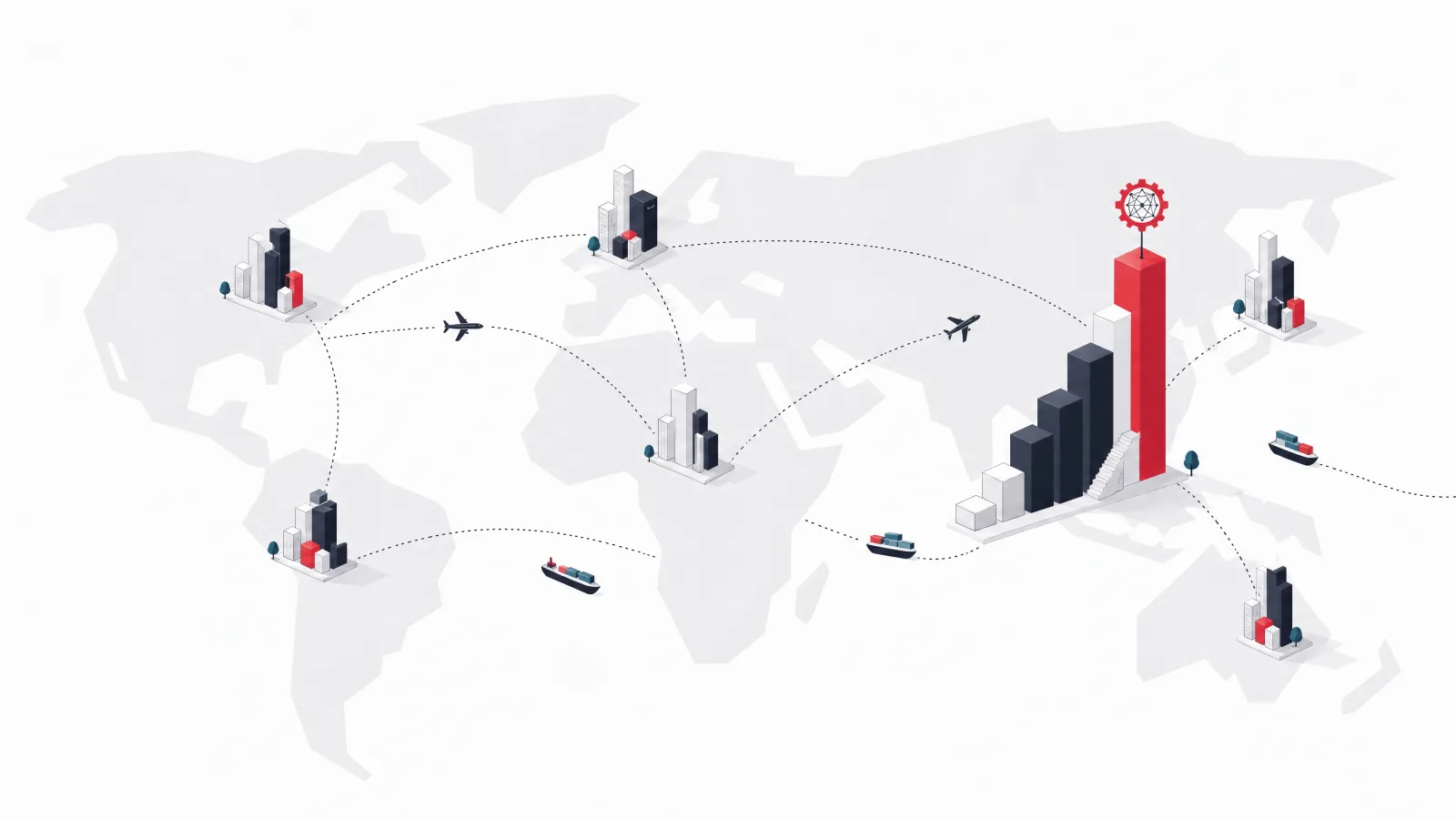
For twenty years outsourcing geography meant India first, then Eastern Europe for higher-end work and Latin America for United States time zones. Those destinations still carry the most volume, and India in particular remains the largest supplier by far. What is changing is at the margins, which is where buyer decisions live. India's mid-tier rates have risen with demand and attrition in the major cities remains high, pushing buyers to look at secondary Indian cities and at other countries. Eastern Europe absorbed a shock from the war in Ukraine that permanently redistributed some capacity to Poland, Romania, and beyond, at higher rates. Latin America grew fast on nearshore demand and is now consolidating around a few larger providers.
Vietnam is the clearest beneficiary. It has moved in a decade from a cost destination for outsourced testing and maintenance to a serious supplier of product engineering, mobile, cloud, data, and increasingly AI implementation, with a large annual output of engineering graduates, government support for the sector, and rates that remain well below Eastern Europe and below much of India for comparable seniority. The offshore development in Vietnam guide covers the market in depth; the trend to note here is that Vietnam is now on shortlists for work that would have gone only to India or Poland five years ago, and that the leading Vietnamese providers have built the certifications and English-language delivery management that enterprise buyers require.
The buyer response is a portfolio rather than a single destination. Companies with mature sourcing are running two or three locations deliberately: a nearshore team for work that needs live overlap with the product organization, an offshore engineering center in Vietnam or India for the bulk of build and run, and sometimes a specialist vendor in a third market for AI or data. The onshore, nearshore, and offshore comparison works through the tradeoffs; the 2026 addition is that resilience against country-level shocks is now an explicit criterion, not an afterthought.
Trend 5: security, residency, and AI governance become gating criteria

Vendor security used to be a questionnaire near the end of procurement, completed after the price was agreed and rarely decisive. In 2026 it sits at the front. Buyers in finance, health, and government have always required certifications; what changed is that mid-market buyers in ordinary industries now require them too, because their own customers demand them, because cyber insurance requires them, and because a breach through a vendor is the most common breach pattern they are warned about. ISO 27001 and SOC 2 Type II are baseline for enterprise work; data residency commitments are required wherever European or regulated data is involved; and AI governance, which tools may process which data, is a new line on every questionnaire.
The effect on the supply side is a squeeze. Certification costs money and management time that a fifteen person vendor cannot easily carry, and the result is that small vendors are being excluded from enterprise work before price is discussed, while mid-size specialists that invested in certification are winning it. For buyers this is mostly good, since it filters out vendors with weak controls, but it has a cost: some of the most technically excellent small teams cannot pass procurement, and buyers who want them have to work through an accredited intermediary or accept a compliance exception.
The practical advice is to run security as the first gate, not the last. Publish the requirements in the request for proposal, ask for evidence rather than assertions (certificates, recent audit reports, penetration test summaries, the AI tool policy), and score them before commercial evaluation. A vendor that clears the gate and costs ten percent more is a better deal than one that fails it and costs less, because the cost of a vendor breach is not on the rate card. The offshore development center pillar covers the controls a dedicated center should have in place; for project vendors the same list applies, scaled to the engagement.
Trends 6 and 7: specialists win engineering-heavy work, and platform engineering becomes a service
The large generalist outsourcers built their businesses on scale: thousands of engineers, every technology, every industry, one contract. That model still wins the largest programs and the commodity work, application maintenance, service desks, infrastructure operations, where scale and process are the product. It is losing the engineering-heavy work: new product builds, AI and data platforms, modernization of core systems, mobile and web product engineering. Buyers have learned that a generalist's AI practice is often a slide deck with a few hundred people behind it, while a two hundred person vendor that does only data and AI has depth the generalist cannot match at any price.
The result is a bifurcating market. At one end, a few very large providers consolidating the commodity and mega-deal segments. At the other, a growing population of mid-size specialists, typically fifty to a thousand engineers, focused on a domain (fintech, health, logistics), a discipline (AI and data, mobile, cloud native), or a region and a discipline together, winning the work that requires judgment. Buyers with engineering-heavy needs should shortlist specialists first and use the generalists for what they are good at. A vendor that offers AI software development as one of forty services and a vendor that has shipped twenty AI implementations in the buyer's industry are not the same option, whatever the rate.
One specialization is worth naming because it is new as a purchasable service: platform engineering. Companies have learned that their internal developer platform, the pipelines, environments, observability, security scanning, and infrastructure abstractions that every product team depends on, is a product in its own right and needs a team. Many cannot staff it. Vendors now offer platform engineering as a managed service or a dedicated team, and buyers should evaluate it the way they evaluate any product engagement: on the developer experience metrics it commits to, not on the tooling list.
Which vendor type fits which work in 2026
| Large generalist | Mid-size specialist | Boutique under 50 | |
|---|---|---|---|
| Application maintenance at scale | Yes | Partial | No |
| New product engineering | Partial | Yes | Yes |
| AI and data platform build | Partial | Yes | Partial |
| Core system modernization | Yes | Yes | No |
| Platform engineering as a service | Partial | Yes | No |
| Enterprise compliance requirements | Yes | Yes | No |
| Deep niche expertise, small scope | No | Partial | Yes |
Yes means the strongest fit, partial means workable with care, no means a mismatch that usually costs more than it saves.
Trends 8 and 9: talent scarcity moves to AI and data, and rate inflation splits

The talent market has split. General software engineering, web, mobile, backend, QA, is well supplied in every major destination, and rates there have been broadly flat in real terms since 2023, with AI productivity adding downward pressure. AI and data engineering are scarce everywhere: machine learning engineers who can take a model to production, data engineers who can build governed pipelines, and the newer roles around retrieval systems, evaluation, and agent orchestration. Rates for these roles have risen sharply in every destination and the gap between a senior data engineer and a senior backend engineer in the same city is wider than it has ever been.
For buyers this means budgeting differently by workstream. A web product team sourced from Vietnam in 2026 costs roughly what it did in 2024, and should deliver more. A data and AI team from the same vendor costs materially more per head than it did, and the scarce roles are where vendors are most likely to substitute a less experienced engineer. The offshore development rates for 2026 guide gives ranges by role and region; the point here is that a single blended rate across a mixed team hides the inflation where it is happening and should be resisted in negotiation.
The second effect is on vendor selection for AI work. Because the talent is scarce, the vendors that have it are the ones that built the practice early and retain the people, which in practice means specialists again. A buyer evaluating an AI implementation partner should interview the specific engineers who will do the work, check how long they have been with the vendor, and write key personnel clauses into the contract. Rotating a scarce senior engineer off the account after the sale is the most common way an AI engagement quietly degrades.
Trend 10: buyers get better, and vendors that depended on buyers being bad lose
The last trend is about the buyer side, and it is the one that makes the others bite. A generation of engineering leaders has now managed outsourced teams for their whole careers, and they buy differently from their predecessors. They write outcome-based contracts because they have been burned by hourly ones. They audit security because they have been through a vendor incident. They run two locations because a single one failed them. They ask about AI tooling because they use it themselves and know what it does to throughput. And they measure vendors on delivery metrics rather than on relationship warmth, because they have the data.
The vendors that lose in this environment are the ones whose model depended on buyer inexperience: rate cards nobody benchmarked, scope creep nobody controlled, senior people sold and junior people delivered, security asserted and never checked. The vendors that win are transparent about productivity, comfortable with outcome measures, honest about who is on the team, and able to show controls. This is good news for buyers and for the better vendors, and it is the reason the other nine trends are moving as fast as they are.
A buyer who wants to be on the right side of this trend does not need a sophisticated procurement function. The contract mistakes that cost buyers the most and the clauses that fix them are a short list; the software development process that a vendor should be able to describe is well understood; and the metrics that matter, throughput, quality, cadence, and cost per outcome, are the same ones the buyer's own engineering teams should be tracking. What is needed is the discipline to apply them before signing rather than after the first missed milestone.
Buying habits for 2026, and the ones to retire
Do this
- Benchmark the rate card against current ranges before negotiatingRates from a 2022 contract embed productivity and market assumptions that are now wrong in the buyer's favor.
- Interview the engineers who will actually do the workEspecially for AI and data roles, where substitution after the sale is the most common failure.
- Write output measures into managed capacity contractsThroughput, defect escape, and release cadence, with credits when missed, turn a rented team into an accountable one.
Not this
- Accept a single blended rate across a mixed teamIt hides inflation in scarce roles and lets the vendor shift the mix toward cheaper people without a visible price change.
- Treat security as the final questionnaireRunning it last means discovering a disqualifying gap after the commercial negotiation has built momentum.
- Choose a destination by habitThe location that fit in 2018 may no longer have the cost, skills, or resilience profile the current work needs.
Turning the trends into a sourcing strategy for the next budget cycle
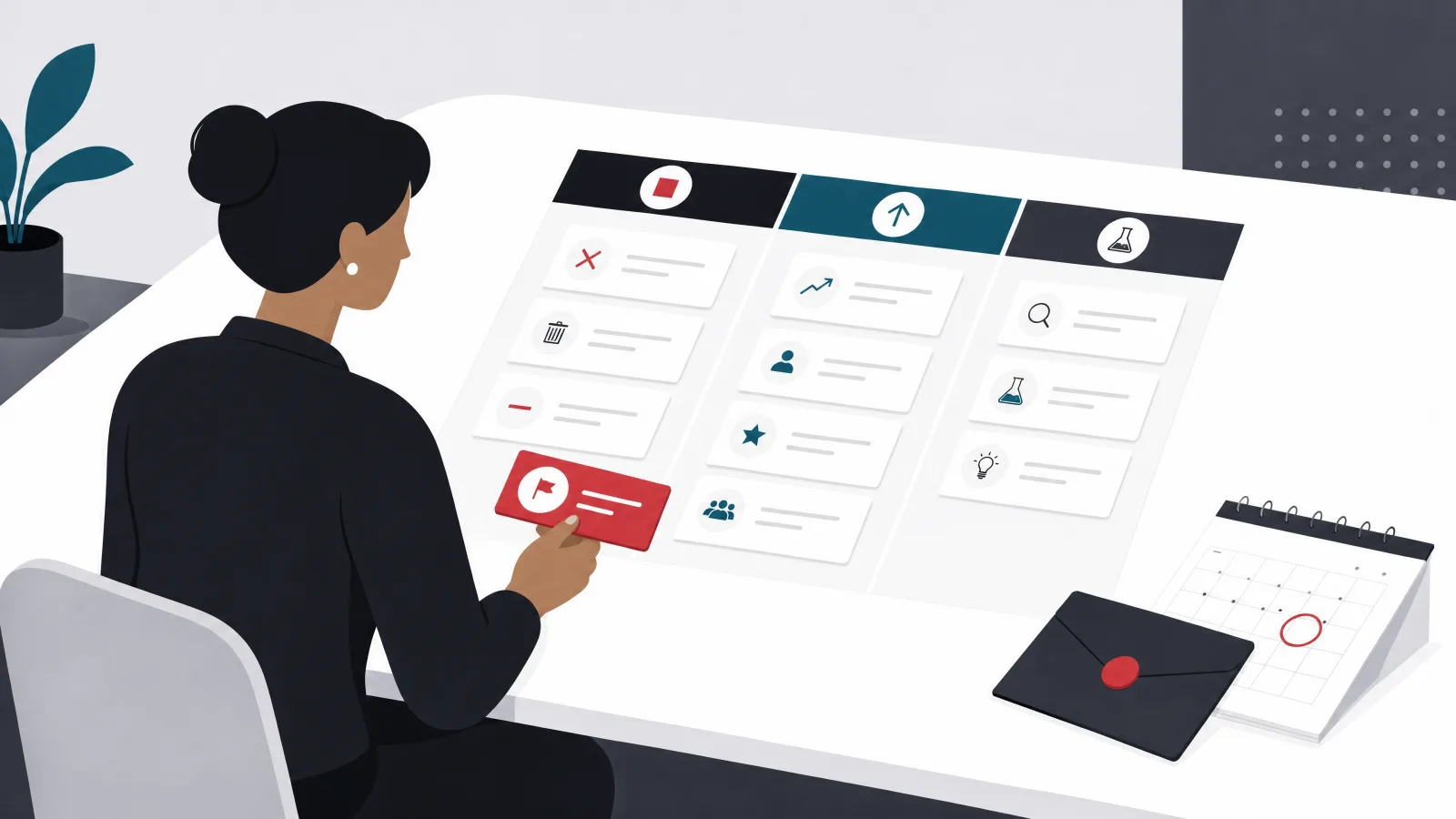
The trends are only useful if they change a decision, so this section works through the decisions a buyer faces and how each trend bears on them. The first decision is what to source externally at all. The answer in 2026 leans toward sourcing more of the build and run work and less of the product judgment: external teams are more productive and more accountable than they were, but the roles that define what to build, product management, architecture ownership, and the data and AI strategy, remain hard to outsource well and are where in-house investment pays.
The second decision is commercial shape, and the guidance is to default to outcomes and choose hours deliberately. For ongoing product work, managed capacity with output measures; for defined projects, fixed scope with change control; for exploratory work, a short hourly engagement with an explicit conversion point. In every case, negotiate the AI productivity dividend explicitly, in scope or in price. The third decision is geography, and the guidance is a portfolio: an offshore center for scale, in Vietnam or a comparable market, plus nearshore capacity where the work needs live overlap, chosen on the actual overlap the work requires rather than on a general preference.
The fourth decision is vendor type, and it follows from the work: generalists for commodity scale, specialists for engineering-heavy and AI work, boutiques for narrow deep problems where compliance allows. The fifth is risk, and the guidance is to gate on security, residency, and AI governance before price, and to hold two vendors or two locations for anything critical. A buyer who makes these five decisions deliberately, with the trends in view, will spend less, get more, and sleep better than one who renews last year's contracts with a cost of living adjustment. A partner that offers offshore development as a dedicated center should be able to speak to every one of these decisions in the first meeting.
A sourcing review in five steps
-
Inventory current contracts and their assumptionsWeek 1
List every external engineering engagement with its model, rate, location, term, and the productivity and market assumptions it was priced on.
-
Benchmark rates and models against 2026 rangesWeeks 2 to 3
Compare each contract to current rate ranges by role and region, and note where hourly billing could move to outcomes.
-
Run the security and AI governance gate on incumbentsWeeks 2 to 4
Apply the same three questions you would ask a new vendor. Incumbents that fail need a remediation plan or an exit.
-
Design the target portfolioWeeks 4 to 6
Decide the mix of locations, vendor types, and commercial models the next two years of work needs, and where the gaps against incumbents are.
-
Renegotiate, re-source, and set the metricsWeeks 6 to 12
Renegotiate contracts that can be fixed, run selections for the gaps, and put throughput, quality, and cost per outcome measures on every engagement.
Conclusion: the market is moving toward the buyer, if the buyer moves
IT outsourcing in 2026 is a better market for buyers than it has been in a decade, and a harder one for vendors that relied on inertia. AI has made delivery teams more productive and pricing more negotiable; geography has diversified and Vietnam has moved up the stack; security has become a filter that removes weak vendors early; specialists are winning the work that needs judgment; and buyers know more than they did. None of it helps a buyer who renews on autopilot.
The response is not complicated. Contract for outcomes where the work allows. Insist that AI productivity reaches your price or your scope. Choose locations for the cost, skills, and overlap the work needs and hold more than one. Gate on security before price. Shortlist specialists for engineering-heavy work. Interview the people who will do the work and keep them. Measure delivery, not relationships. Buyers who do these things will find that the trends of 2026 are working for them; buyers who do not will read about the same trends next year with the year changed.
Frequently asked questions
Is IT outsourcing growing or shrinking in 2026?
Growing in value, changing in shape. Demand for external engineering remains strong, driven by AI and data programs, cloud and platform work, and the general preference for variable over fixed engineering cost. What is shrinking is the share of that demand bought as hourly staff augmentation from large generalists; what is growing is outcome-based work from mid-size specialists in a wider set of destinations.
Will AI replace outsourced developers?
It is changing what they do and how many are needed per unit of output, not removing the need for them. Routine implementation and testing take fewer engineer hours; architecture, ambiguous requirements, integration with messy real systems, and accountability for results still need experienced people. The practical effect for buyers is that the same team delivers more, or a smaller team delivers the same, and pricing should reflect that.
Why is Vietnam growing as an outsourcing destination?
A large and growing engineering graduate output, rates below Eastern Europe and much of India for comparable seniority, government support for the sector, improving English-language delivery management, and a decade of vendors moving from testing and maintenance into product, cloud, data, and AI engineering. Enterprise buyers also value it as a second location alongside India for resilience.
What certifications should I require from an outsourcing vendor?
ISO 27001 and SOC 2 Type II are the baseline for enterprise work. Industry-specific requirements add HIPAA controls for health data, PCI DSS for payments, and increasingly a written AI tool policy covering which tools touch client code and data. Ask for the certificates and recent audit reports under NDA rather than accepting a logo on a website.
Should I move from hourly billing to fixed price?
For well defined projects, usually yes, with change control written in. For ongoing product work, the better move is managed capacity with output commitments rather than fixed price, because product work is not fixed. Hourly still fits exploratory work and buyers with strong in-house engineering management who want capacity rather than a partner. The point is to choose the model deliberately for each engagement.
How do I get the AI productivity gain into my contract?
Ask the vendor how its throughput per engineer has changed and how that reaches your price, then choose one of three mechanisms: more scope for the same price, a lower rate for the same scope, or an outcome-based model where the gain shows up as faster delivery. Add a clause for a periodic rate and productivity review, since the tools will keep improving through the contract term.
When the sourcing strategy calls for an offshore engineering center run on outcome terms, AgileTech is an AI native software development company in Vietnam that runs dedicated teams in Hanoi with AI native delivery and enterprise certifications.
Source: https://agiletech.vn/blog/it-outsourcing-trends-2026/ · (c) AgileTech Vietnam. Printed from agiletech.vn.