 Nguyen Manh Thang
Chief Executive Officer, AgileTech Vietnam
Nguyen Manh Thang
Chief Executive Officer, AgileTech Vietnam
- Published
- Last updated
- Read time
- 15 min
- Views
- 66
Read the AI overview
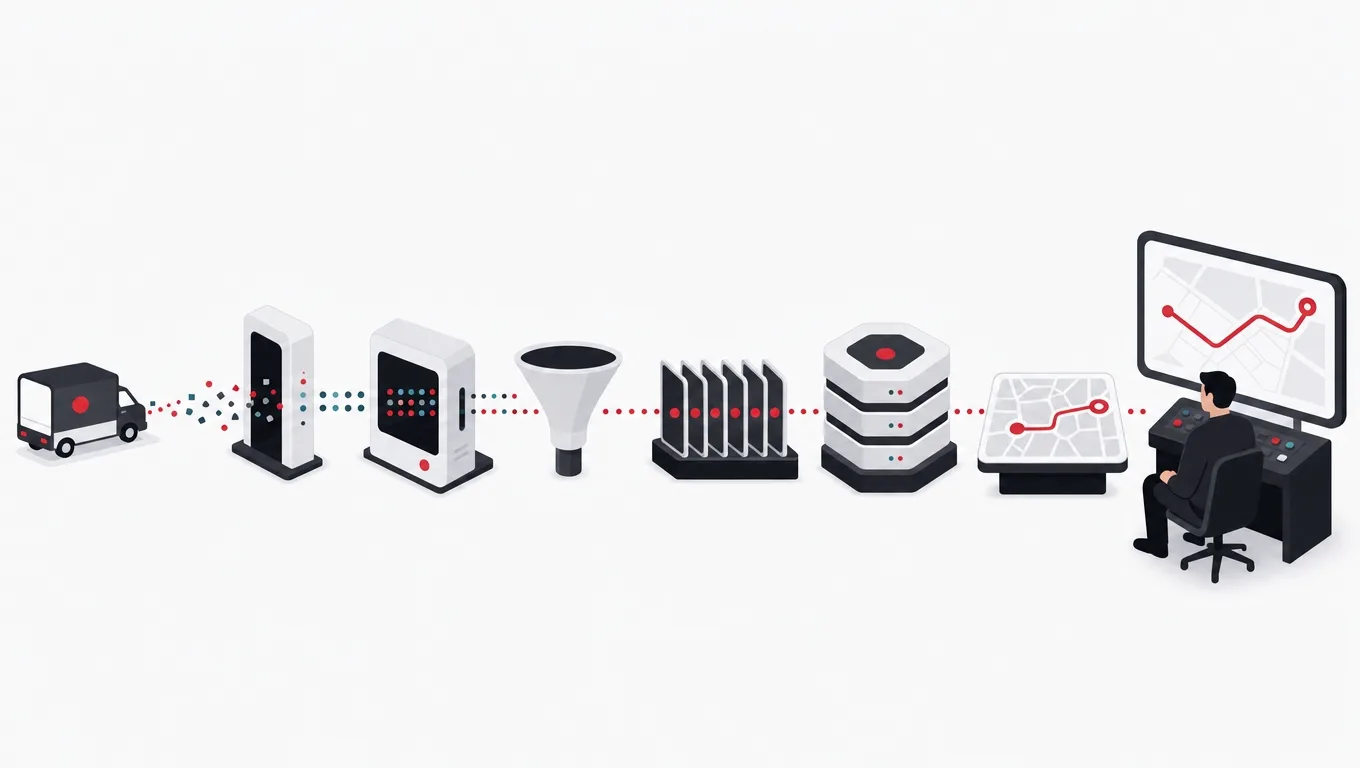
A vehicle tracking platform is a data pipeline wearing a map as its face. Devices emit positions over dozens of mostly undocumented vendor protocols. Adapters normalize them into one internal message and reject the garbage at the edge. A queue absorbs the burst when a thousand trackers reconnect after a network event. Consumers maintain a live position store, a tiered history store and a rules engine. Only then does anything become a map, a report or an alert. Two numbers decide whether the project is viable: how many positions per day you are storing, which is arithmetic anyone can do in a minute and almost nobody does, and how many alerts a dispatcher receives, because a platform that interrupts people needlessly gets muted within a month and then it does not matter how good the pipeline is.
Every vehicle tracking product looks the same from the outside: a map with moving icons. That similarity is misleading, because the map is the last stage of a pipeline and contributes almost nothing to whether the product works. What decides that is five verbs happening upstream. Positions have to be ingested reliably, cleaned, stored economically, evaluated against rules in real time, and only then presented as something a dispatcher can act on.
Each of those verbs hides real engineering, and the two that decide project viability are the least discussed. Storage volume is pure arithmetic that anyone can do in a minute, and it routinely comes out one or two orders of magnitude above what the original design assumed. Alert volume is a product decision that determines whether humans keep reading what the system sends them, and a platform whose notifications get muted has stopped delivering value while continuing to cost money.
This guide covers the device layer and its protocol reality, the ingestion pipeline, the processing that turns coordinates into business objects, the alerting design that survives contact with a dispatcher, and a phased build plan. It is based on the tracking systems we deliver inside our logistics engineering practice.
Key takeaways
- Isolate protocol parsing behind a normalization layer. One internal position message, many adapters, so onboarding a new device model never touches the rest of the system.
- Validate and deduplicate at the ingestion edge. Trackers send duplicates, out-of-order batches after coverage gaps, clock skew and coordinates that are simply wrong.
- The queue is the load-bearing architectural choice. It decouples reconnect bursts from processing and gives you replay when a consumer turns out to have a bug.
- Do the storage arithmetic in the first week. A thousand vehicles reporting every ten seconds is roughly 8.6 million positions a day, and a naive schema drowns.
- Map matching and trip segmentation create most of the perceived quality, and both are invisible in a demonstration.
- Design against alert fatigue from the start: hysteresis, severity tiers, digests and per-recipient routing. A muted platform delivers nothing regardless of its data quality.
- In business-to-business tracking the outbound API is frequently the actual product, because the customer wants the data inside their own systems.
The device layer, where the protocol reality lives
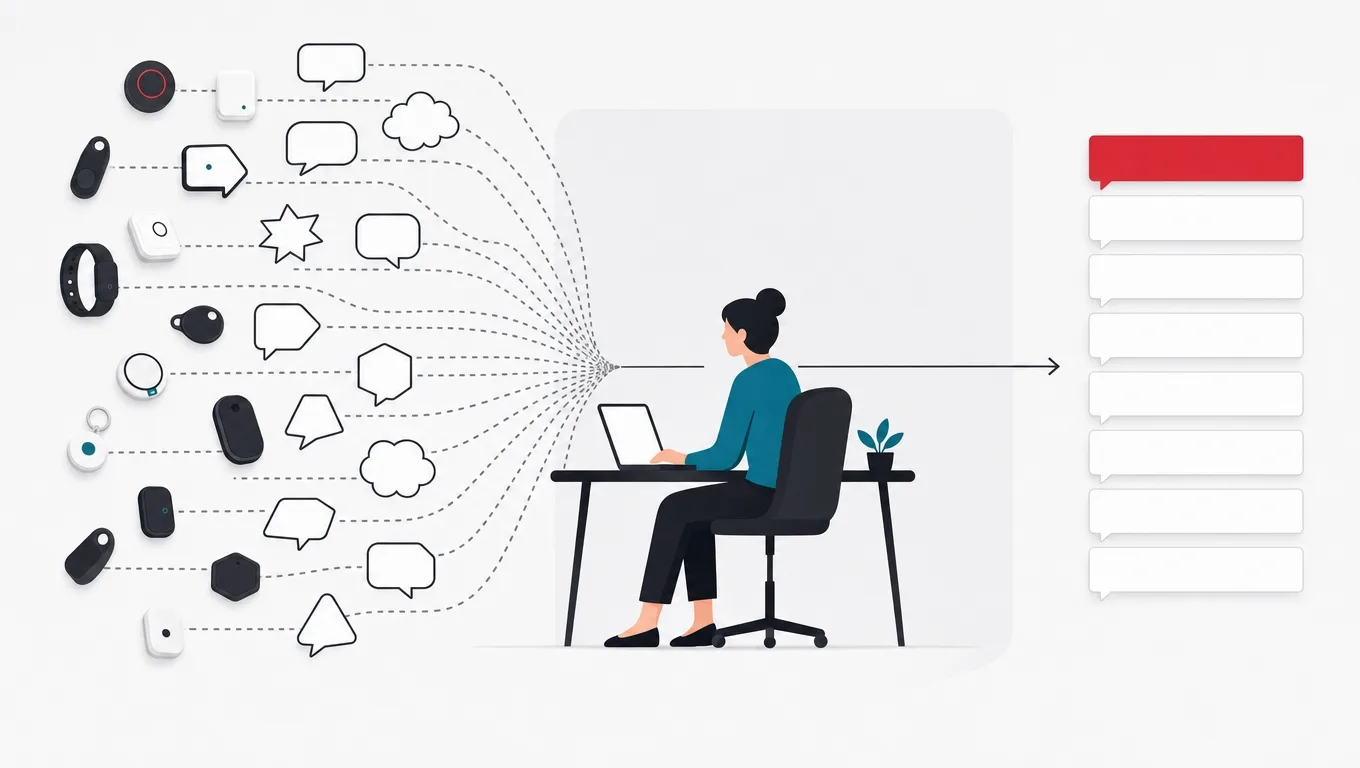
Position data arrives from three classes of device, and the choice among them is commercial as much as technical. Dedicated hardware trackers, either wired into a vehicle or battery-powered on an asset, are the fleet standard: they report over cellular, carry ignition and sensor inputs, and buffer positions through coverage gaps so a tunnel does not become a hole in the record. Driver smartphones are the cheap alternative with genuine trade-offs, since the operating system restricts background work, the battery is the driver's concern rather than yours, and the driver can simply turn the app off. Diagnostic port devices sit between the two, adding vehicle data at commodity prices.
The engineering reality of hardware trackers is protocol babel. There are hundreds of models on the market speaking dozens of protocols, most of them binary, many of them documented only partially and some of them documented incorrectly. Fields are reused between firmware versions. Undocumented message types appear in production. This is not a solvable problem, it is a permanent condition of the category, and the correct response is architectural rather than heroic.
That response is a normalization boundary. Every protocol gets an adapter whose only job is to turn that vendor's messages into one internal position message, and nothing downstream ever sees a vendor format. Whether you write adapters for the handful of devices your market actually uses or integrate an existing protocol server component, the boundary itself is the decision that matters, because it is what stops the onboarding of a new device model from becoming a change to the rules engine.
Design for garbage arriving, because it will. Duplicate packets are normal. Batches arriving out of order after a coverage gap are normal. Clock skew between the device and your server is normal. Coordinates in the wrong hemisphere, at the origin, or in the middle of an ocean all occur in production. Validation and deduplication belong at the ingestion edge, before anything downstream is permitted to trust a position.
Device strategies, and what each one makes your problem
| Device class | Reliability | Unit cost | What becomes your problem |
|---|---|---|---|
| Wired hardware tracker | Highest | Highest | Installation appointments, warranties, SIM management, firmware variation across a fleet |
| Battery asset tracker | High while charged | Moderate | Battery replacement logistics and reporting cadence traded against battery life |
| Diagnostic port device | Good | Low | Vehicle compatibility variation, and devices that a driver can unplug in seconds |
| Driver smartphone | Lowest | None | Background execution limits, battery complaints, and a tracked party who can disable tracking |
| Customer-owned mixed devices | Varies | None to you | An open-ended protocol matrix that grows with every new customer you sign |
The last column is the one that decides this. A device strategy is a set of ongoing operational obligations, and those obligations outlive the build by years.
The ingestion pipeline, and why the queue is load bearing
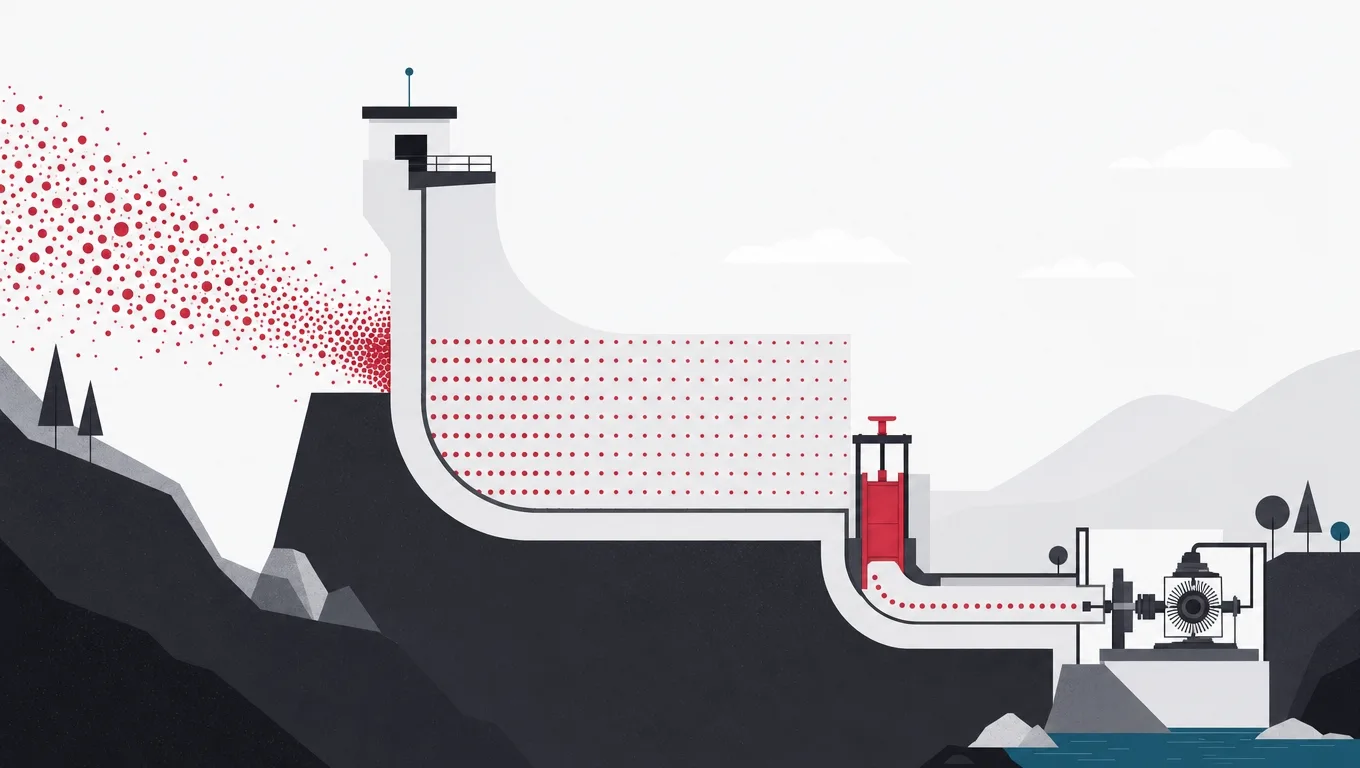
The shape that works is consistent across implementations. A set of protocol listeners terminates device connections and emits normalized position messages onto a queue. Separate consumers read from that queue: one updates a live position store keyed by device, one appends to history in batches, one feeds the rules engine. Nothing reads the device connection directly except the listener, and nothing writes to more than one store.
The queue is the single most consequential choice in this architecture, and its value is not throughput. It is decoupling and replay. When a mobile network event causes several thousand trackers to reconnect within a few seconds, each replaying its buffered positions, the ingestion edge sees a burst that may be two orders of magnitude above the steady state. With a queue, the burst is absorbed and processed at whatever rate the consumers manage. Without one, the burst reaches your database directly, and the outage that caused it becomes an outage of yours as well.
Replay is the second benefit and the one that pays for itself during incidents. When a consumer turns out to have had a bug for six hours, a queue with retained messages lets you fix the consumer and reprocess. Without retention, that data is gone, and in a system whose entire purpose is producing a defensible record of where vehicles were, losing six hours is a customer-facing problem rather than an engineering inconvenience.
One further separation is worth making explicit. The live store and the history store have opposite characteristics: the live store is small, written constantly in place, and read constantly, while history is enormous, written sequentially in batches, and read rarely. Putting both in one table serves neither well, and it is the arrangement almost every first implementation begins with.
The ingestion edge, specified
Connection handling
- Concurrent connections
- How many devices hold a connection simultaneously, and what happens at the limit. This sizes the listener tier and is frequently underestimated by an order of magnitude.
- Reconnect burst capacity
- The peak arrival rate the edge accepts without dropping, stated as a multiple of steady state rather than as a hope.
- Authentication
- How a device proves which device it is. Tracker protocols vary from strong identity to a plain serial number, and the weak ones need compensating controls.
Validation
- Plausibility rules
- Rejection of coordinates outside the operating region, implied speeds beyond physical possibility, and timestamps far from server time.
- Deduplication
- A stable identity per position so a replayed buffer does not double the mileage on a trip, which is the most common data quality complaint in this category.
- Ordering
- A defined policy for positions arriving out of sequence, since a buffered batch after a coverage gap arrives after newer live positions.
Storage tiers
- Live positions
- Keyed by device, overwritten in place, sized by concurrently active devices rather than total devices ever registered.
- Full resolution history
- Every accepted position, retained for a bounded operational window measured in weeks, partitioned by time so expiry drops whole partitions.
- Downsampled history
- Route shape preserved at far fewer points, retained for the analysis horizon measured in months.
- Trip aggregates
- Distance, duration, stops, idling and events per journey, retained indefinitely, because this is what reporting actually queries.
This is what a serious proposal for a tracking platform contains. Each row is a decision that will otherwise be made implicitly by whoever writes the listener, at three in the morning, during the first network event.
The storage arithmetic that surprises every buyer

This section exists because the calculation takes sixty seconds, changes the architecture, and is almost never performed before a design is committed. It is the cheapest risk reduction available in the entire project.
Take a modest fleet of a thousand vehicles. Report every ten seconds while moving, which is a common requirement when customers ask for a live map that feels live. That is six positions per minute, 360 per hour, and across a ten hour operating day about 3,600 positions per vehicle. Multiply by a thousand vehicles and the fleet produces roughly 3.6 million positions per day. Run the same fleet with tracking continuously rather than only during operating hours and it approaches 8.6 million per day. Over a year, at the lower figure, that is above a billion rows.
None of those numbers are large for purpose-built storage. All of them are fatal to a naive relational schema with several indexes, kept in one table, queried directly for reports. And the number people forget is the read cost: a report over three months of full resolution positions for a whole fleet is scanning hundreds of millions of rows to produce a figure that could have been maintained incrementally as an aggregate.
The standard answer is tiered retention, and it works because the questions people ask have different resolutions. Nobody asks for second-by-second detail from eight months ago. They ask for the total mileage of a vehicle last quarter, which is an aggregate, or for the exact route of one journey during a dispute, which is one trip at full resolution within a recent window. Design the tiers around those two real questions rather than around keeping everything in case somebody asks.
Report cadence deserves the same scrutiny as retention, because it multiplies everything. Adaptive reporting, meaning frequent updates while moving and sparse ones while stationary, typically cuts volume substantially with no loss the dispatcher can perceive, since a parked vehicle reporting every ten seconds is generating thousands of identical positions per day. That single change is often the difference between a viable storage budget and an uncomfortable one.
Position volume, worked through
| Scenario | Positions per day | Per year | Comment |
|---|---|---|---|
| 100 vehicles, 30s, 10h day | About 120,000 | About 44 million | Comfortable for a conventional database with sensible partitioning |
| 1,000 vehicles, 30s, 10h day | About 1.2 million | About 438 million | Needs partitioning and a retention policy from the start |
| 1,000 vehicles, 10s, 10h day | About 3.6 million | About 1.3 billion | Purpose-built time series storage or aggressive tiering required |
| 1,000 vehicles, 10s, continuous | About 8.6 million | About 3.1 billion | The figure a naive design accidentally chooses by tracking around the clock |
| Same fleet, adaptive cadence | About 2.1 million | About 767 million | Sparse reporting while stationary, with no perceptible loss to a dispatcher |
| Trip aggregates only | About 4,000 | About 1.5 million | What reports should actually query, maintained incrementally as trips close |
The arithmetic, not a benchmark. Substitute your own fleet size and cadence. The bottom two rows show why adaptive reporting is usually the first change worth making, and why per-trip aggregates are what reporting should read.
Map matching and trip segmentation, where perceived quality comes from
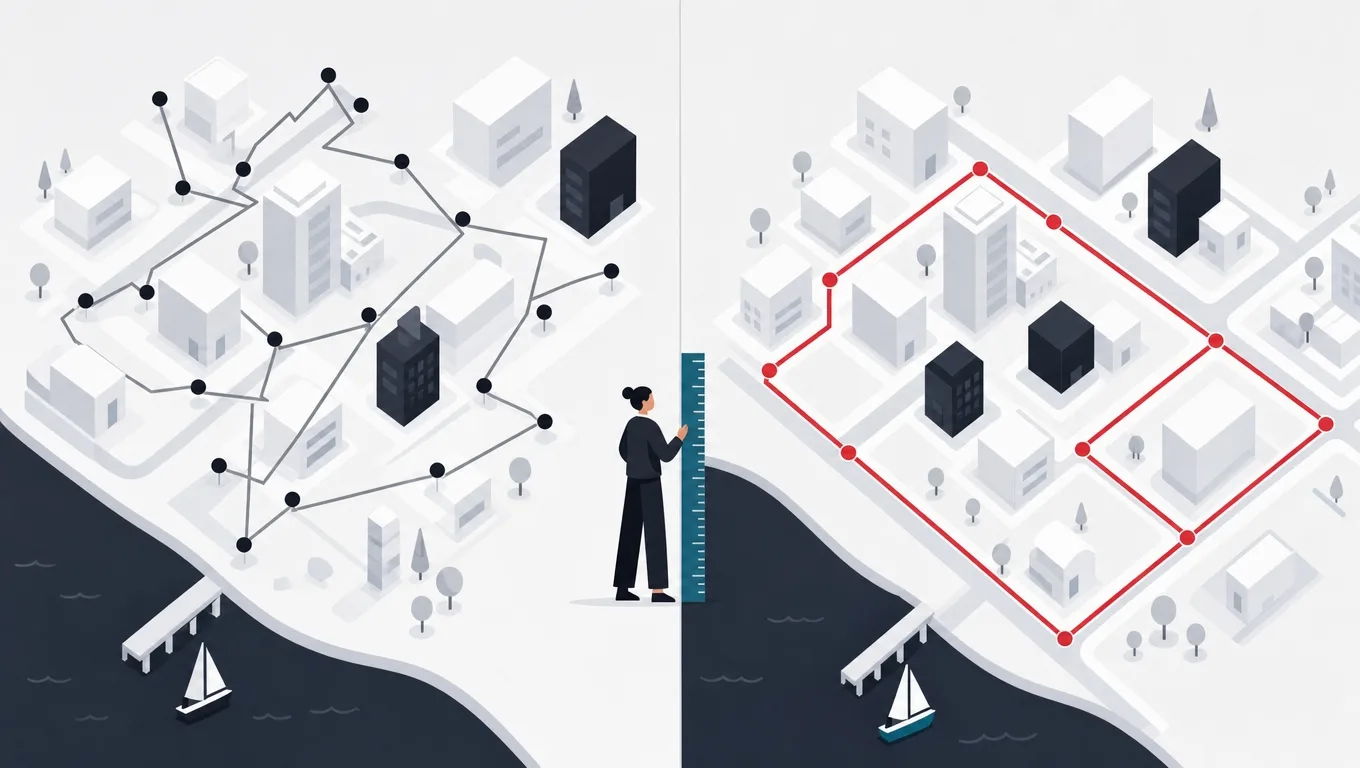
Two processing steps account for most of the difference between a tracking product that feels professional and one that feels like a prototype, and neither is visible in a demonstration because both operate on messy real data rather than on a clean test route.
The first is map matching, which snaps noisy positions onto the road network. Without it, a rendered track is recognizably spaghetti: it cuts corners, wanders off the carriageway, and occasionally crosses buildings. With it, the same data draws a route that looks like the journey the driver actually made. The commercial consequence is larger than the aesthetic one, because distance computed from a matched route is defensible while distance computed from raw fixes is systematically inflated by jitter, and mileage is what customers bill and audit against.
The second is trip segmentation, which converts a continuous position stream into the objects humans reason about: journeys, stops, and idling periods. This uses ignition state where the device provides it and dwell logic where it does not. It sounds mechanical and it is where a surprising amount of product judgment lives, because the definition of a stop is a business decision. Is thirty seconds at a traffic light a stop? Is four minutes outside a customer's premises a delivery? The thresholds have to be configurable per customer, because a courier fleet and a long-haul operator do not agree on any of them.
Both steps deserve the same fixture-based testing discipline as any other quality-critical processing. Recorded real journeys, replayed through the pipeline with expected distances and expected stop counts asserted, turn segmentation quality into a test suite instead of an opinion. This is the recurring theme our backend engineering team plans around: the invisible processing is where the product quality is, so it needs the strongest tests.
Processing decisions that decide whether the data is defensible
Do this
- Distance from the matched routeMileage derived after snapping to the road network, which is defensible when a customer audits it against their own records.
- Configurable stop thresholdsDwell time and ignition rules set per customer, because a courier fleet and a long-haul operator disagree about what a stop is and both are right.
- Segmentation tested on real journeysRecorded traces replayed with expected trip counts and distances asserted, so a threshold change cannot silently alter every historical report.
- Aggregates maintained as trips closePer-trip totals computed once when the journey ends, so reporting reads thousands of rows rather than hundreds of millions.
Not this
- Distance summed between raw fixesSystematically inflated by jitter, including for parked vehicles, which is the single most common source of a customer disputing your numbers.
- One hard-coded stop definitionA fixed threshold that suits the first customer and misrepresents every subsequent one, with no way to correct it per account.
- Segmentation verified by looking at a mapQuality assessed by eye on a few journeys, which cannot detect a regression and cannot be run in a build pipeline.
- Reports querying full resolution historyA monthly utilization report scanning a quarter of raw positions, which is slow at launch and impossible at scale.
Each right-hand item produces a system that works on a clean test route and generates support tickets on real journeys. The mileage row is the one that becomes a billing dispute.
Alert design, or how a working platform gets muted
Tracking data becomes operational value through rules: a vehicle entered or left an area, exceeded a speed threshold, idled beyond a limit, deviated from a route, moved outside working hours, or moved when it should not have moved at all. The rules engine evaluates incoming positions against the active rules for each device, which at fleet scale means spatially indexing the fence set rather than looping over every polygon for every position.
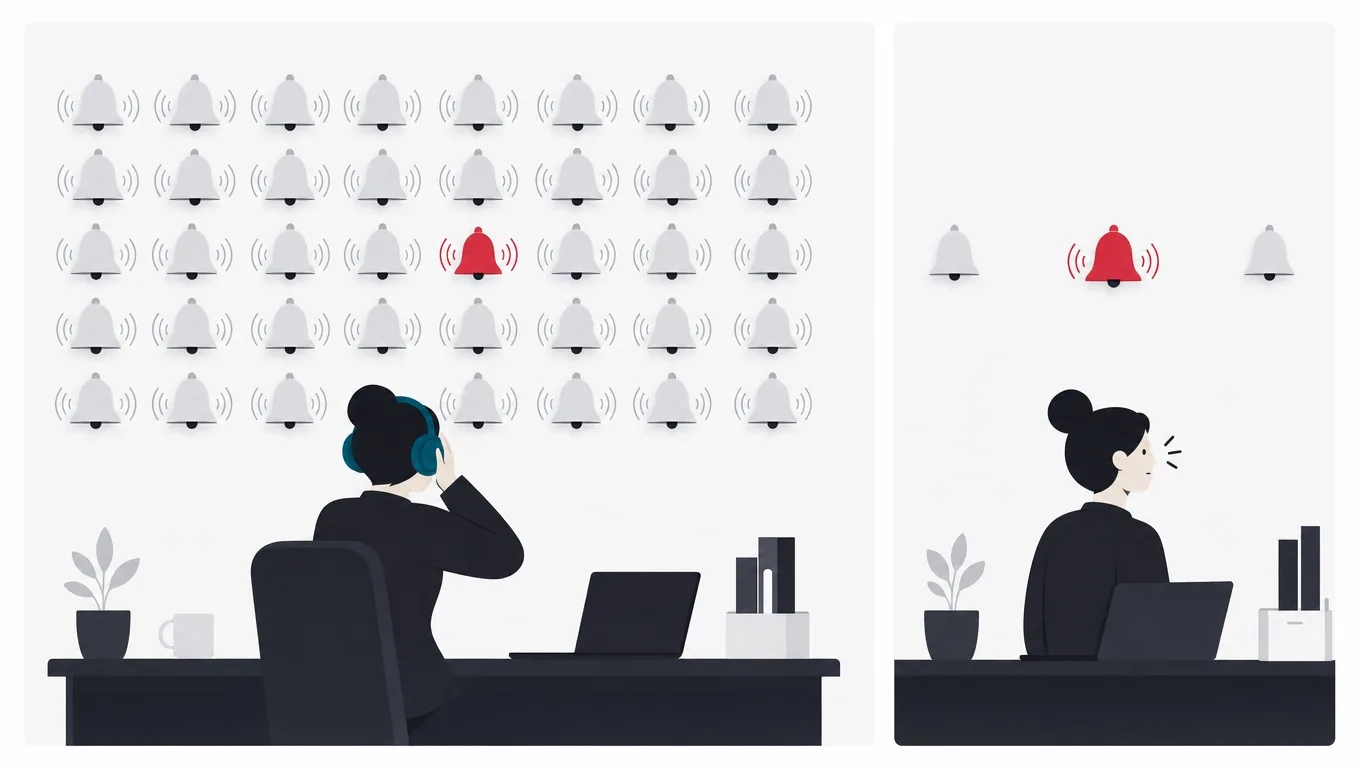
The engineering there is tractable. The product risk is not, and it is the most common way these platforms fail in daily use. A system that emails a dispatcher on every geofence event trains that dispatcher to ignore its email within about a month. After that, the platform is still ingesting perfectly, still evaluating rules correctly, still costing money, and delivering nothing, because the human at the end of the chain has stopped reading. Nobody files a defect for this, and it does not appear in any monitoring.
The mitigations are all design decisions rather than technology. Hysteresis and dwell confirmation on every fence, exactly as in any geofencing system, so a vehicle parked on a boundary cannot generate a stream of arrivals and departures. Severity tiers with genuinely different delivery channels, so that something requiring immediate action interrupts a person while something merely informational accumulates. Digest summaries for the informational tier. And per-recipient routing, so the alert about a night movement reaches whoever is actually on shift rather than the fleet manager's inbox at four in the morning.
The alerting configuration interface deserves to be treated as a first-class part of the product rather than an administrative screen, because it is where fleet managers spend their time once the novelty of the live map has worn off. A manager who can tune their own notification thresholds keeps using the system. A manager who has to raise a support request to change a speed threshold mutes the notifications instead.
Driver behavior scoring, covering harsh braking, acceleration, cornering and speeding, is a frequent requirement with a fairness obligation attached. Sensor-derived events need calibration per vehicle class, since a loaded truck and a small van do not produce comparable readings for the same driving, and drivers will challenge scores that affect their pay or standing. Keep the underlying evidence, meaning the track segment and the sensor trace, attached to every scored event, so a challenge can be answered with data rather than with an assertion.
The ladder that keeps alerts worth reading
-
Confirm before firingKills boundary flapping
Hysteresis with a larger exit radius than entry, plus dwell time before an entry counts. A vehicle parked on a fence edge is the single largest source of pointless alerts in these systems.
-
Assign a severity honestlyThree tiers, not ten
Something requiring action now, something worth knowing today, and something worth having in a report. If everything is urgent, the tiering has failed and the user will re-tier it themselves by ignoring you.
-
Route to the person on shiftPer-recipient rules
A night movement alert reaches whoever is working, not the manager who is asleep. Alerts sent to people who cannot act on them are the fastest route to a muted channel.
-
Digest the informational tierOne message, many events
A daily summary of idling, minor speed events and routine arrivals, which is read because it is one message rather than forty.
-
Let the manager tune it themselvesConfiguration is product
Thresholds, recipients and channels editable without a support request, because a manager who cannot adjust the noise will remove it entirely instead.
-
Attach the evidenceEspecially for scoring
Every alert and every behavior score links to the track segment and sensor data behind it, so a challenge is settled with data rather than with an argument about whether the system is trustworthy.
Each rung removes noise before a human is interrupted. Skipping any of them tends to produce the same outcome, which is a platform whose notifications are filtered into a folder nobody opens.
A build plan sequenced along the data flow
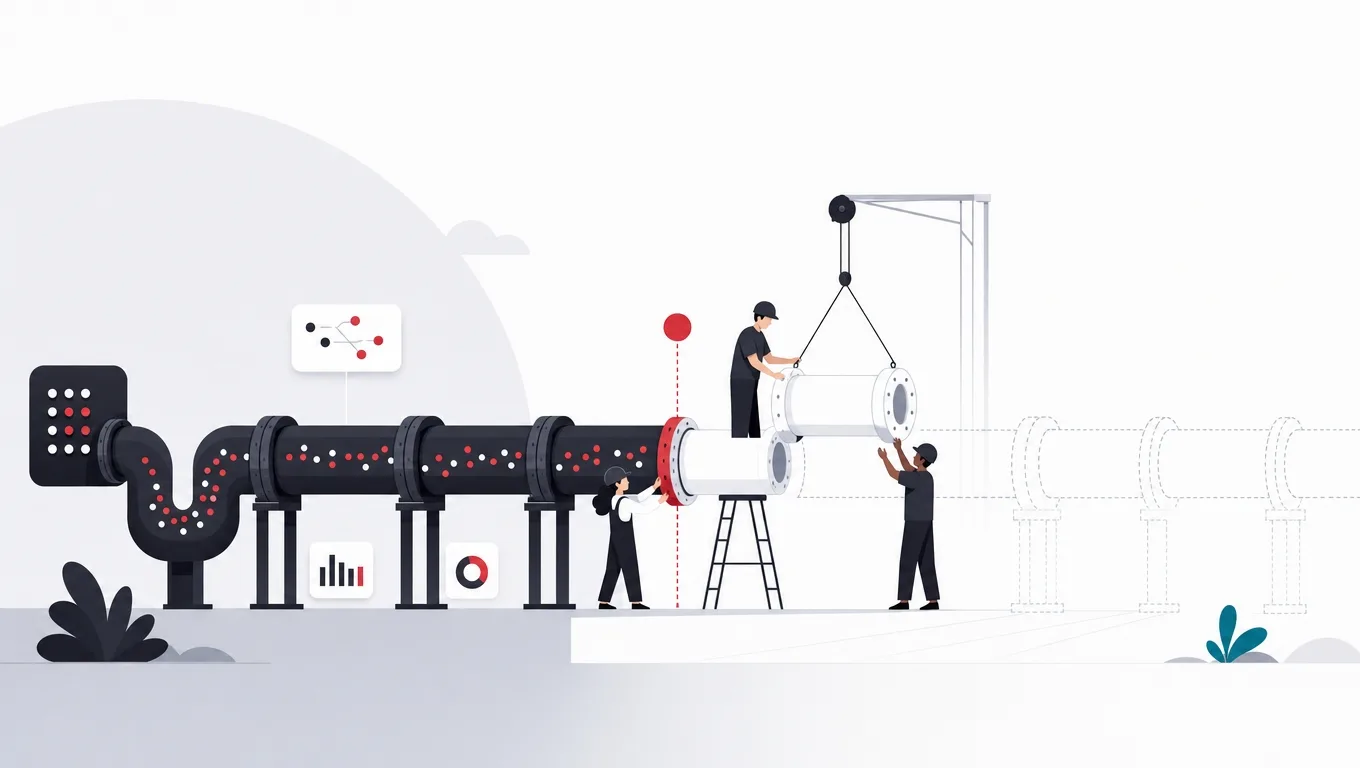
Sequence the work in the direction the data travels, because each stage can be verified with real devices before the next depends on it. The first phase supports one or two device models end to end: listener, normalization, live store, history, and a live map, running with a genuine pilot fleet rather than a simulator. That is a shippable product for a small operator and it produces the feedback that keeps everything after it honest.
The second phase adds the rules engine, alerts, and the specific reports the pilot users asked for, which will differ from the reports you expected. The third adds more protocols, driver behavior scoring, maintenance triggers and the outbound API. Keeping these as separate phases matters because each one is independently valuable, and because the pilot fleet between phases is the only reliable source of information about which features are actually used.
Two commercial decisions belong at the start rather than in the middle. The device strategy: bundling hardware makes installation, warranties and connectivity management your business, while supporting customer-owned devices makes the protocol matrix your business, and both are ongoing costs rather than project costs. And mapping economics: commercial map, matching and geocoding services price per request, and a tracking platform makes a great many requests, so the choice between commercial services and self-hosted open data is a meaningful operating budget line that deserves modeling at design time rather than after the first invoice.
A final note on the reporting surface. Feature lists in this market are long, and daily usage concentrates into a short list: the live map with fleet status, trip history with playback for disputes, usable geofence management, scheduled reports, maintenance triggers, and an API. Maintenance triggers driven by odometer and engine hours are frequently the cheapest return in the whole product, because a missed service is expensive and the reminder is trivial to compute. And in business-to-business tracking the API often is the product, since the customer wants positions and events inside their own transport or resource planning systems rather than in another portal. If the tracked entities are phones rather than vehicles, the client-side engineering in our guide to building a geolocation app is the complementary read.
A phased build with a pilot fleet between each stage
-
Device selection and arithmeticWeeks 1 to 2
Choose one or two device models, obtain them, read the traffic they actually emit, and complete the storage and cadence arithmetic for the target fleet size.
Done when Real packets captured from real hardware, and a written volume model with a retention tier plan.
-
Pipeline and live mapWeeks 3 to 9
Listener, normalization, validation, queue, live position store, tiered history, and a live map with fleet status.
Done when A pilot fleet visible and correct for a full week, including through at least one network disruption, with mileage matching the vehicles' own odometers.
-
Processing and reportsWeeks 8 to 13
Map matching, trip segmentation with configurable thresholds, per-trip aggregates, and the reports the pilot users requested rather than the ones you planned.
Done when Trip counts and distances asserted against recorded journeys in automated tests, and a report a manager reads without asking for an explanation.
-
Rules and alertsWeeks 12 to 17
Geofence management, rule evaluation at fleet scale, severity tiers, digests, per-recipient routing, and self-service configuration.
Done when Pilot users still reading the alerts after a month, which is the only test of this phase that means anything.
-
Scale outWeeks 16 to 22
Additional protocols, driver behavior scoring with attached evidence, maintenance triggers, and the outbound API.
Done when A second device model onboarded without changes outside its adapter, which proves the normalization boundary actually holds.
Indicative spans for a small dedicated team, not a quotation. The pilot fleet in phase one is what makes the rest of the plan trustworthy, because real devices behave differently from the documentation in ways nobody can predict.
Tracking people, not just vehicles, and the line that has to be drawn explicitly
A telematics platform records where a vehicle went, and a vehicle is almost always driven by an identifiable person. That makes the dataset a record of an employee's movements over time, which is among the more sensitive categories of workplace data and is treated as such in most jurisdictions. Fleet platforms are routinely designed as if the subject were the vehicle, and the gap between that assumption and the legal reality is where these projects encounter their most expensive surprises.
The practical questions are not difficult, but they must be answered before the schema is written rather than after the first complaint. Is location recorded outside working hours, and if the vehicle is taken home, what happens between the end of one shift and the start of the next? Who inside the organization can view an individual driver's history as opposed to aggregate fleet performance, and is that access recorded? How long is the full resolution trace retained, given that operational need is measured in days while accumulated data represents indefinite risk? Can a driver see the data held about them, which several regimes require, and is there a route to challenge a behavior score that affects their pay?
The engineering that follows from these answers is mostly straightforward and needs to exist from the first release. A shift boundary in the data model so that off duty periods are either not recorded or clearly separated. Role separation between operational dispatch, which needs live positions, and management reporting, which needs aggregates and rarely needs an individual trace. An access log on individual driver history views, because unlogged access is indistinguishable from surveillance to the person being tracked. And a retention schedule implemented as a scheduled job rather than an intention, with full resolution traces expiring in days, downsampled traces in months and aggregates retained indefinitely.
There is a delivery argument for this that is separate from the legal one and often more persuasive internally. Driver acceptance determines whether a telematics deployment works, because drivers who experience the system as surveillance will find ways to defeat it, and a tracker that is unplugged or shielded produces exactly the gaps that make the whole dataset untrustworthy. Deployments that explain what is recorded, restrict it to working hours, show drivers their own data and use scoring for coaching rather than punishment measurably survive. Deployments that arrive unannounced generate resistance, and the resistance shows up as data quality problems that look like device faults.
Three datasets that get commingled, and why they should not be
| Dataset | Operational need | Retention | Who should see it |
|---|---|---|---|
| Live position | Dispatch and customer arrival estimates, needed for seconds to minutes | Not durable, held in memory or a short lived cache | Dispatch, and the customer for their own delivery only |
| Full resolution trace | Dispute resolution, incident reconstruction and debugging | Days, expired by a scheduled job rather than by intention | Operations on demand, with the access logged |
| Downsampled trace | Route analysis and historical comparison | Months, at reduced precision and frequency | Operations and analysis, individual identity often unnecessary |
| Trip and event records | Utilization, billing, maintenance triggers and reporting | Years, as a small structured artifact rather than raw fixes | Management reporting, mostly in aggregate |
| Behavior scores | Coaching, and safety programs | Months, with the underlying evidence attached while it exists | The driver themselves, their direct manager, and nobody else by default |
The single most consequential design decision in a telematics data model. Operational need, retention pressure and sensitivity all differ across these three, and one table holding all of them satisfies none of the requirements properly.
Decisions to make before the schema is written
- Define the shift boundary in the data modelRecording location outside working hours is the most common single complaint and in some jurisdictions the most straightforward violation. Either do not record it, or store it separately with distinct access rules and a shorter retention.
- Separate dispatch access from management reportingDispatch needs live positions and no history. Management needs aggregates and rarely needs an individual trace. Collapsing these into one permission is what turns a fleet tool into a surveillance tool by accident.
- Log every view of an individual driver historyWho looked, at whom, when and for what stated reason. Unlogged access is indistinguishable from surveillance from the driver's perspective, and the log is what makes the policy credible.
- Implement retention as a scheduled job on day oneA retention policy that exists only as a document is not a retention policy. Write the expiry job in the same sprint as the ingestion path, because it is trivial then and touches years of accumulated data later.
- Build the driver facing viewLet drivers see their own trips and scores. Several regimes require it, it removes most of the objection to the system, and it surfaces data quality problems from the people best placed to notice them.
- Attach evidence to every behavior scoreA score without the underlying event is unchallengeable, which makes it unusable in any process affecting pay or employment, and correctly so.
- Write the resolution for the retention conflictWhere an authority requires multi year trip records and privacy law requires location minimization, keep the small structured trip record long and expire the raw trace early. Decide this explicitly and write it down, because it will be asked about.
Each of these is cheap to implement at the start and expensive to retrofit, because retrofitting means separating records that have already been written to one table for months.
Frequently asked questions
Can we just use driver smartphones instead of hardware trackers?
For some use cases yes, and for fleet compliance work usually not. Phones cost nothing to deploy and are excellent for pilots, courier work and any case where the tracked party is cooperative. They are weak where reliability is the requirement: background execution is restricted by the operating system, the battery is the driver's concern, coverage gaps are not buffered as well as a dedicated device buffers them, and the driver can switch the app off. If the tracking exists partly to verify behavior, a device the tracked person can disable undermines the purpose.
How many device protocols should we support?
Start with one or two and expand deliberately. Each protocol is an adapter to write plus a permanent stream of quirks, firmware variants and regressions, so breadth is an ongoing cost rather than a one-time feature. The important architectural point is the normalization boundary: with one internal position message and per-vendor adapters, adding a protocol touches nothing else, and you can then decide how many to support as a commercial question rather than a technical one.
What reporting cadence should we ask for?
Less frequent than instinct suggests, and adaptive rather than fixed. Frequent reporting while moving and sparse reporting while stationary preserves everything a dispatcher can perceive while cutting volume substantially, since a parked vehicle reporting every ten seconds generates thousands of identical positions per day. Do the volume arithmetic for your fleet before committing to a number, because cadence multiplies storage, processing and cost simultaneously.
Why does our reported mileage differ from the vehicle odometer?
Almost always because distance is being summed between raw positions rather than computed from a route matched to the road network. Position jitter adds distance in every direction, including for stationary vehicles, so raw summation is systematically higher than reality. Map matching corrects this and makes the figure defensible when a customer audits it. If mileage is used for billing or reimbursement, this is not a quality nicety, it is the difference between an invoice that survives scrutiny and one that does not.
How long should we keep position history?
In tiers, because the questions have different resolutions. Full resolution for a bounded operational window of weeks, which covers dispute resolution and debugging. Downsampled routes for the months where somebody might genuinely need a path. Per-trip aggregates indefinitely, because that is what reporting actually queries. Keeping everything at full resolution forever is expensive, slows every report, and answers a question nobody asks.
Our fleet managers ignore the alerts. What went wrong?
This is the most common failure in the category and it is a design problem rather than a defect. It happens when every rule event becomes a notification, so the volume passes the point at which a human can triage it and they filter the whole channel. The fixes are hysteresis and dwell confirmation to stop boundary flapping, severity tiers with different channels, digests for informational events, routing to whoever is actually on shift, and letting managers tune thresholds themselves rather than through a support request.
Should we build this or buy an existing platform?
Buy if you are a fleet operator wanting visibility, because mature products exist and the requirements are largely settled. Build if tracking is your product rather than your tool, if you need the data inside your own systems in a way that the available APIs do not support, or if your operating context has requirements that the available platforms handle poorly. A frequent middle path is buying the tracking layer and building the operational software above it, which is a reasonable answer as long as you verify that the platform's API genuinely exposes what you need before committing.
If you are commissioning a tracking platform for a fleet, a rental business or a logistics product and want the pipeline priced honestly, talk to AgileTech, a top AI software development company in Vietnam that builds it from the protocol adapter to the dispatcher screen.
Source: https://agiletech.vn/blog/fleet-telematics-pipeline/ · (c) AgileTech Vietnam. Printed from agiletech.vn.