 Nguyen Manh Thang
Chief Executive Officer, AgileTech Vietnam
Nguyen Manh Thang
Chief Executive Officer, AgileTech Vietnam
- Published
- Last updated
- Read time
- 16 min
- Views
- 62
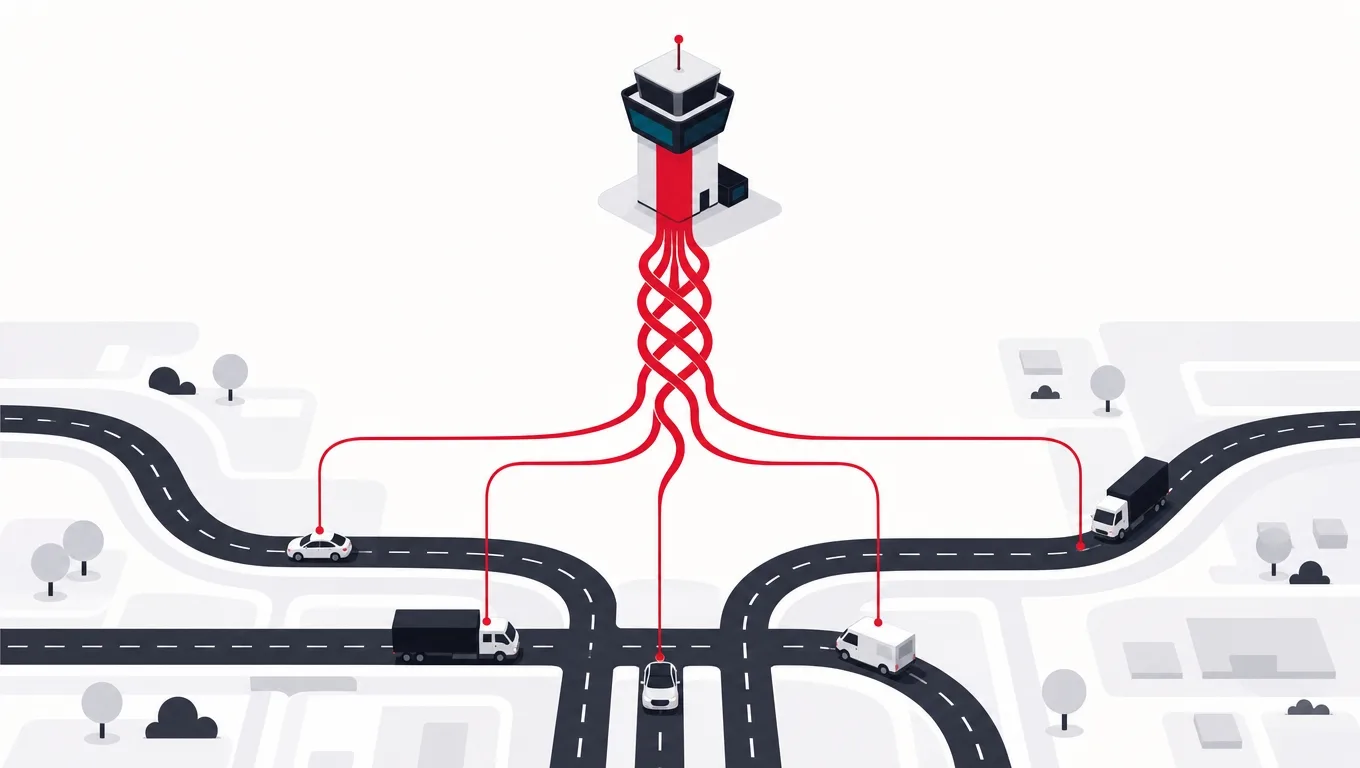
Read the AI overview
Fleet management software is the system of record for vehicles, drivers and the money both consume. At minimum it shows where every vehicle is; a serious product also reconciles fuel purchases against tank readings, schedules maintenance from engine data rather than the calendar, records driver hours automatically, and proves deliveries happened. Choosing one is not a features contest. It starts with naming the line item that hurts your operation most, because a cost-driven fleet, a compliance-driven fleet and a service-driven fleet are best served by three differently shaped products, and the ranking lists that dominate search results cannot know which one you are.
Search for this category and the results are ranking lists: the top ten platforms, the best software of the year, five tools every fleet needs. Those lists share a defect that has nothing to do with their honesty. They rank products without knowing your operation, and in this category the right choice depends almost entirely on which line item is bleeding: a fleet losing money to fuel needs a different product than a fleet losing sleep over audits, and both need a different product than a fleet losing customers over missed delivery windows.
This guide takes the other route. It explains what the category actually does beneath the map, which modules separate deep products from shallow ones, where fuel money leaks and how the software catches each leak, what the hardware layer commits you to, and what the full cost looks like once the subscription line is joined by the two costs vendors quote less eagerly. It ends with a shortlisting method you can run in a month with five vehicles.
One boundary, so you know what you are reading. This is the buyer’s side of the subject. If your question is how these systems are engineered, the protocol adapters, the queue, the storage arithmetic, that is covered in the fleet telematics pipeline guide, written for the team commissioning a build rather than the operator choosing a product. The two articles deliberately do not overlap.
Key takeaways
- The category spans everything from a map with icons to a full operations suite. The map is table stakes; the money is in the modules behind it.
- Judge module depth, not module presence. Every vendor checklist shows the same ten boxes, and the difference between a real fuel module and a checkbox is the difference between recovered money and a report nobody opens.
- Fuel is usually the largest controllable line, and it leaks four distinct ways: idling and routing, theft and leakage, vehicle condition, and driving style. Each leak needs a different sensor and a different report.
- The IoT layer is a procurement decision disguised as a technical one. Who owns the hardware, who replaces a dead sensor, and what happens to your data if you leave are contract questions to settle before the pilot.
- Ignore top-ten lists. Shortlist by naming your dominant cost, writing your own ten-line requirements note, and piloting two candidates on five vehicles for one month with exit criteria written in advance.
- Total cost has three layers: the visible subscription, the deployment cost of hardware and integration, and the exit cost of getting your history out. Vendors quote the first and buyers discover the other two.
- Video telematics, behavior-priced insurance and electrification planning are the three trends concrete enough to act on now; everything else in the trend articles can wait a cycle.
What fleet management software actually does
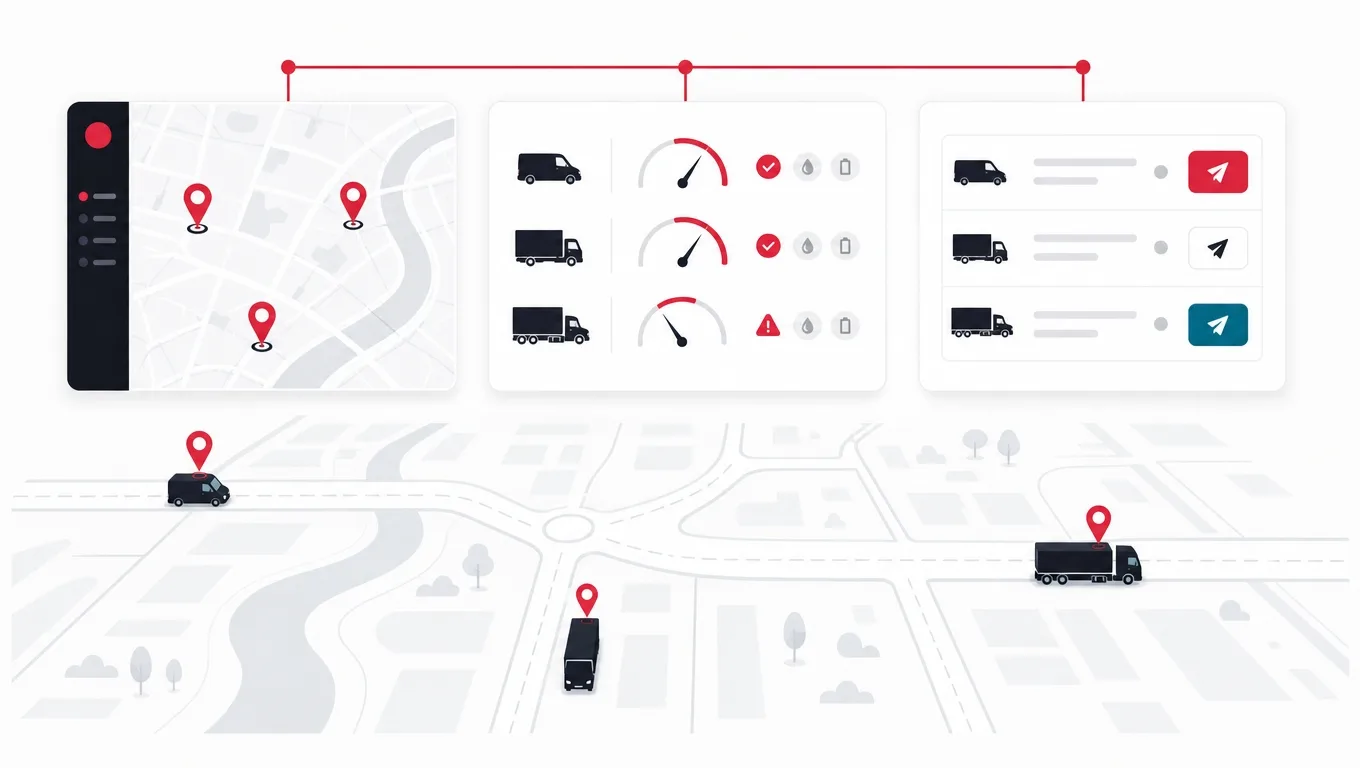
Strip the marketing and the category is a system of record for three things: vehicles, the people driving them, and the money both consume. Everything a vendor demonstrates is a view onto one of those three. The live map is a view onto vehicles. The driver scorecard is a view onto people. The fuel report is a view onto money. A product is serious to the degree that the records behind those views are complete, automatic and trustworthy enough to settle an argument, because that is what a system of record is for: the moment a customer disputes a delivery or an auditor questions a logbook, the record either ends the conversation or it does not.
The floor of the category is vehicle tracking, a map showing where everything is right now and where it has been. Ten years ago that was the product; today it is the login screen. The operational value has moved into what the position stream is joined against: fuel card transactions matched to tank levels, engine hours matched to service schedules, driving hours matched to the rules that govern them, arrival times matched to promised windows. Each join turns raw location into a business fact, and the joins, not the map, are what you are actually buying.
It helps to name the roles the system serves, because they want different things and a demo aimed at one can hide weakness toward another. The dispatcher wants the live picture and the exceptions that need action in the next hour. The maintenance planner wants engine data and a schedule that reflects how vehicles are actually used. The accountant wants fuel and payroll records clean enough to close the month without phone calls. The compliance officer wants an audit trail that assembles itself. A general manager wants one number per week that says whether the fleet is getting cheaper or more expensive to run.
The honest test of the whole category is what changes on a Tuesday. Before: a dispatcher spends the morning calling drivers to learn what a map would have shown, fuel receipts live in envelopes, maintenance follows the calendar whether the vehicle worked hard or sat idle, and proof of delivery is a signature that may or may not be findable in a month. After: the same questions are answered by records that created themselves. The comparison below is the shortest version of the pitch, and it is worth keeping in mind through every demo, because a module that does not move one of these rows is decoration.
Six terms the demos assume you know
- Telematics
- The combined stream of position, engine and sensor data coming off a vehicle. The raw material every module refines.
- Geofence
- A drawn boundary on the map that fires events on entry or exit. The building block behind arrival alerts, unauthorized-use flags and site time reports.
- Diagnostic port
- The standard connector on most vehicles through which plug-in devices read engine data. Cheap to deploy, and a driver can unplug one in seconds.
- Hours of service
- The regulated limits on driving and rest time. In many markets these must be recorded by device rather than on paper, which makes the module a legal matter rather than a feature.
- Proof of delivery
- The record that a consignment arrived: photo, signature, timestamp and position, bound together so a dispute ends with a lookup instead of an investigation.
- Total cost of ownership
- Subscription plus hardware, installation, integration, training and the cost of leaving. The number this article prices in its own section, because vendors reliably quote only the first term.
The modules that matter, and how to tell deep from shallow
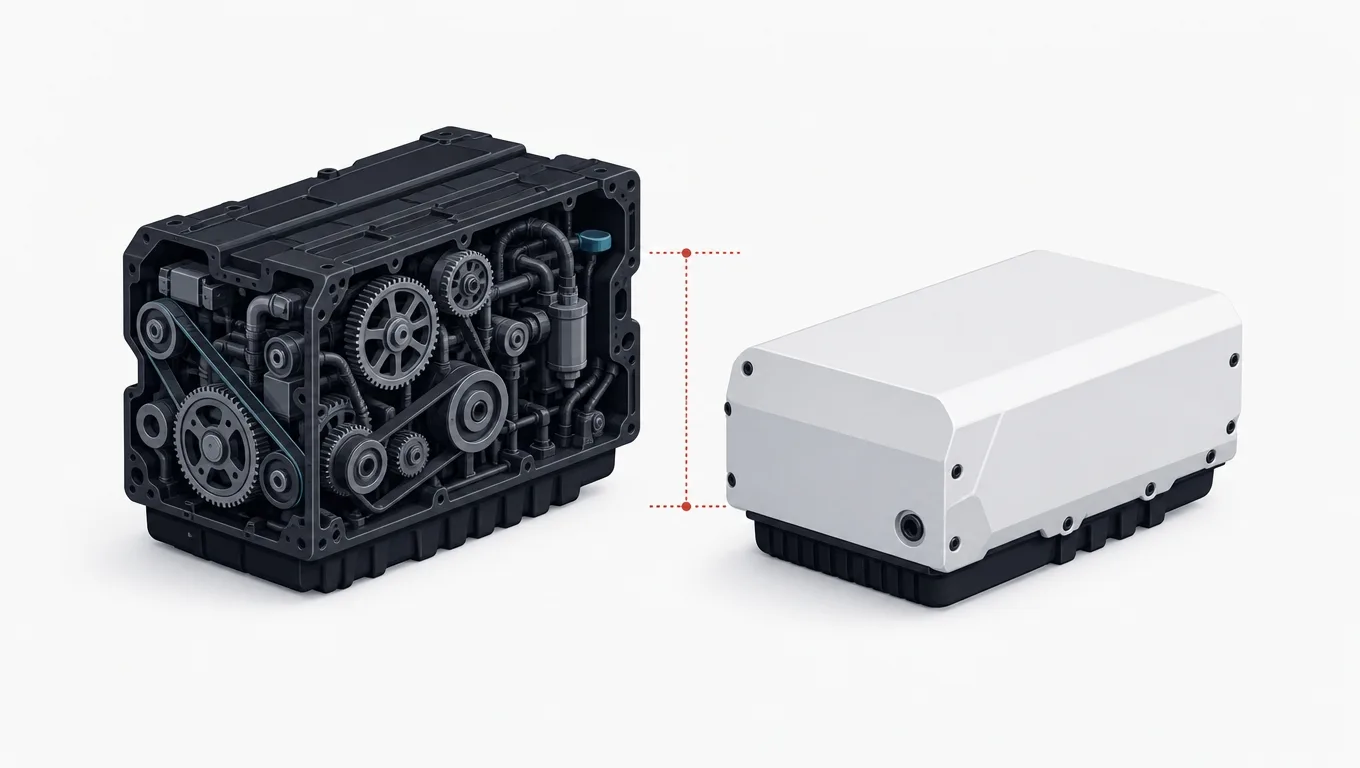
Every vendor in the category publishes roughly the same feature checklist, which makes the checklist useless as a comparison tool. The real variation is depth: two products can both tick the maintenance box while one merely stores service dates you type in and the other schedules work from engine hours, fault codes and usage patterns, orders the parts window, and shows the cost per vehicle trend that tells you when to sell the truck. Presence is what the sales deck shows. Depth is what changes your numbers.
Depth has a reliable smell test: a deep module consumes data that collects itself and produces decisions, while a shallow module consumes data someone must type and produces documents. Ask, for any module in a demo, where its input comes from and what its output changes. If the input is manual entry, the module will decay the first busy week, because manual entry is the first thing an overloaded team drops. If the output is a report nobody is named as acting on, the module is a brochure page rendered in software.
Routing and dispatch deserve a specific caution, because it is the module where demo conditions flatter hardest. Planning ten stops on a clean map is a solved problem; planning three hundred stops across a real city with time windows, vehicle capacities, driver hours and a customer who calls at nine to move their slot is a different product entirely. If daily route planning is your pain, test the module on your actual stop list during the pilot, not on the vendor’s sample data, and watch what happens when you change one stop after the plan is published. Fleets that live inside a larger freight operation should also check how the module hands off to the transportation management layer above it, because a routing module that cannot exchange orders and statuses with the planning system becomes a silo with a nice map.
The last habit worth building before a shortlist exists: for each module, name the person in your operation whose week it changes and the number on a report it should move. A maintenance module answers to the planner and moves cost per vehicle. A fuel module answers to the accountant and moves the fuel line. A compliance module answers to whoever signs the audit response. A module you cannot attach to a person and a number is one you are being sold rather than one you are buying, and striking it from the requirements note keeps the pilot honest.
The core modules: what shallow looks like, what deep looks like
| Module | Shallow version | Deep version |
|---|---|---|
| Tracking and dispatch | A live map with vehicle icons and history playback | Exceptions surfaced to the dispatcher: late against window, off route, unauthorized use, with the map as context rather than the product |
| Fuel | A list of fuel card transactions | Card transactions reconciled against tank sensor readings and distance, so a purchase that never reached the tank is flagged the same day |
| Maintenance | A calendar of service dates you enter | Schedules driven by engine hours and fault codes, parts and downtime planned together, cost per vehicle trending toward a replacement decision |
| Driver hours and behavior | A manual timesheet screen | Hours recorded from the vehicle automatically, scored driving events with video context, coaching queues instead of blame spreadsheets |
| Compliance and audit | A folder of uploaded documents | Inspection records, hours logs and incident files assembled continuously, so an audit is an export rather than a project |
| Proof of delivery | A signature capture screen | Photo, position, timestamp and exceptions bound to the order, pushed to the customer before they think to call |
Every product ticks all six boxes on a checklist. This table is the checklist replaced by the question that actually separates products: what does the deep version do that the shallow one cannot.
Evaluating modules in a demo
Do this
- Ask where the data comes fromA module fed by sensors and card feeds survives a busy month. A module fed by typing does not.
- Bring your ugliest real weekAsk the vendor to walk your worst recent day through their screens: the breakdown, the disputed delivery, the driver over hours.
- Name the owner of every reportFor each report in the demo, ask which of your people reads it and what they do next. No owner, no module.
Not this
- Score the checklistCounting ticked boxes rewards breadth, and breadth is the cheapest thing for a vendor to manufacture.
- Judge routing on sample dataTen clean stops on a demo map prove nothing about three hundred real ones with time windows.
- Let the map carry the decisionEvery product in the category has a good map now. It is the login screen, not the differentiator.
Following the fuel money

Fuel is usually the largest controllable line in a fleet budget, and it is worth a whole section because it is where the software either pays for itself or does not. The word controllable is doing work in that sentence: the price per liter is set by the market, but how many liters the operation consumes, and how many of the purchased liters actually move freight, are operational facts the right instrumentation can change. A fleet that has never measured this is almost always losing more to fuel than the software costs.
The money leaks four distinct ways, and the reason to name them separately is that each needs a different sensor and a different report. Idling and routing waste is fuel burned while parked with the engine running or driven along a worse route than necessary; it is caught by position and engine data alone, which makes it the leak every product can see. Theft and leakage is fuel purchased but never reaching the tank, or leaving the tank without the vehicle moving; catching it requires reconciling card transactions against tank level sensors, a join shallow fuel modules do not perform. Vehicle condition waste is the extra consumption of an engine overdue for service or tires underinflated; it surfaces as a consumption trend against the vehicle’s own baseline. Driving style waste is aggressive acceleration and braking, visible in accelerometer and engine data and changeable by coaching rather than by any purchase.
The reconciliation flow for theft deserves spelling out, because it is the sharpest demo request you can make. The fuel card says two hundred liters were bought at 14:02. The tank sensor should show the level rising by roughly that amount at roughly that time, at a station whose position matches the card record. When the numbers disagree beyond tolerance, someone bought fuel that did not enter the tank, or the tank lost fuel the engine never burned. We have built fuel management into fleet systems where exactly this join, card against tank against position, was the module the operator cared about most, and the pattern generalizes: ask any vendor to walk this flow with a deliberately mismatched transaction and watch whether the system catches it or you would have to.
Two honesty notes before the chart. First, tank sensors are the fussiest hardware in the stack: readings slosh with the vehicle, calibration drifts, and a fuel report is only as good as the sensor maintenance behind it, which is a standing cost to budget rather than a one-off. Second, the split between the four leaks varies enormously by fleet, geography and cargo; the donut below is an illustrative decomposition to make the structural point that the leaks are distinct, not a benchmark to hold your operation against.
The questions a real fuel module can answer
The IoT layer: what the hardware commits you to
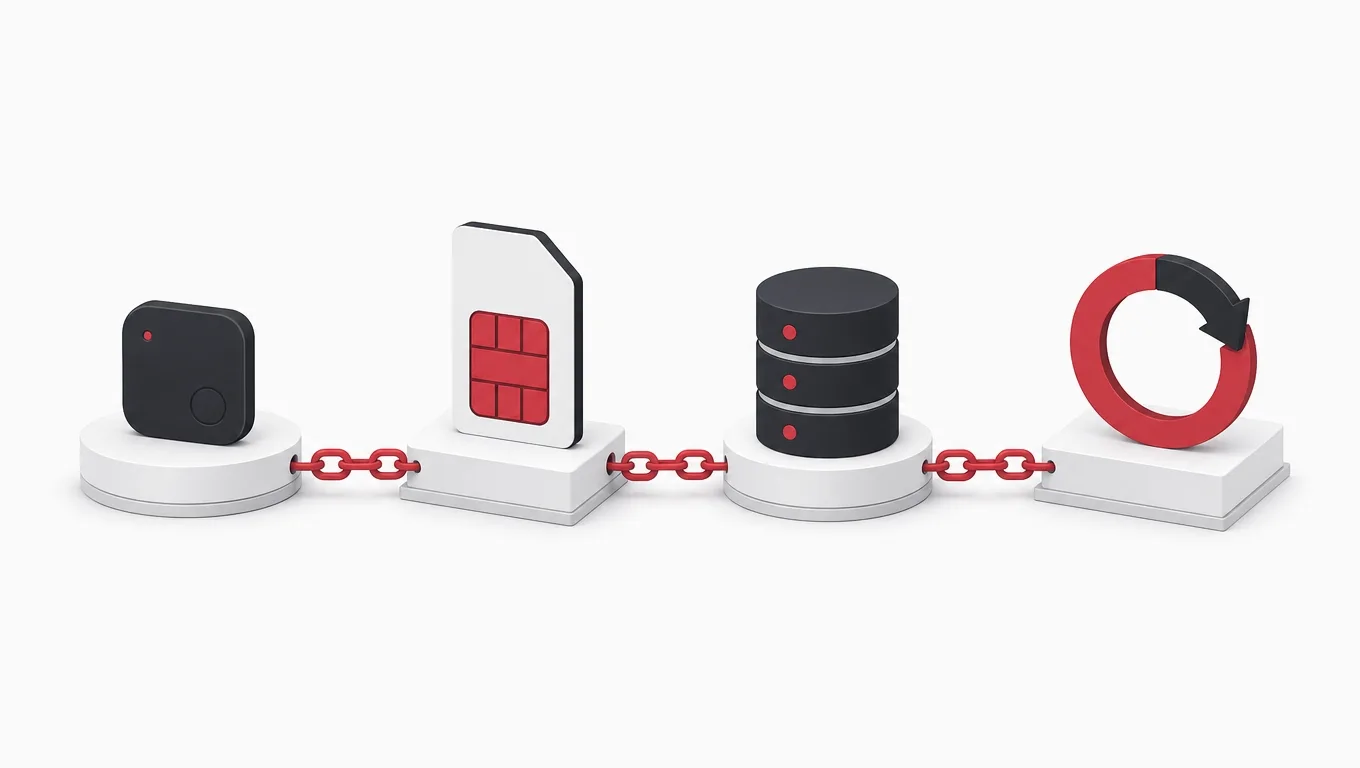
Everything the software reports rests on a layer of hardware bolted to vehicles: trackers wired to the battery or plugged into the diagnostic port, fuel level sensors in tanks, temperature probes in cold boxes, cameras facing the road and the driver. Buyers evaluate this layer last, as an installation detail, and that ordering is backwards. The hardware decides what the software can ever know, and the contract around the hardware decides what leaving the vendor will cost. Both are set before the pilot, when your negotiating position is strongest.
The technical shape is worth one paragraph, because it explains several contract questions. Devices report over cellular networks on a cadence somebody chose, and that cadence is a cost dial: frequent reporting while moving gives dispatch a live picture, sparse reporting while parked avoids paying to learn a vehicle is still parked. Data lands in the vendor’s pipeline, is cleaned and stored, and becomes the vehicle history every module reads. The engineering inside that pipeline, the protocol adapters, the queue that absorbs reconnect bursts, the storage tiers, is the subject of the fleet telematics pipeline guide; what a buyer needs from it is a diagram-level understanding of where their data lives and one number, the reporting cadence, priced explicitly.
The ownership question matters more than the model number. Vendor-owned hardware on a bundled subscription is simpler to buy and pleasant to run, right up until you want to change vendors and discover the trackers in your vehicles belong to the incumbent and the replacement wants an installation appointment with every vehicle in the fleet. Buyer-owned hardware costs more up front and demands a compatibility check against any future platform, but it converts a rip-and-replace exit into a reconfiguration. Neither answer is wrong; the mistake is not knowing which one you signed.
Installation and maintenance are the quiet line items. Wired trackers need an installer and a vehicle out of service for an hour; across a fleet that is a scheduling project with a real cost. Sensors drift and fail: the fuel section already flagged tank calibration as a standing cost, and the same applies to temperature probes, whose readings may carry regulatory weight for food and pharmaceutical cargo. The checklist below is the set of questions worth settling in writing before any pilot begins, because every one of them is cheap to ask now and expensive to discover later.
Hardware questions to settle in writing before the pilot
- Who owns the devices in our vehicles?Vendor-owned bundles simplify buying and complicate leaving. Buyer-owned reverses the trade. Know which one the contract says.
- What exactly does a dead sensor cost us?Replacement part, callout fee, vehicle downtime, and who schedules it. Sensor maintenance is a standing cost, not an incident.
- What is the reporting cadence, and its price?Cadence drives both data cost and dispatch usefulness. Ask for the moving and parked cadences separately, and what changing them costs.
- Can a driver disable the device, and would we know?Diagnostic port devices unplug in seconds. Ask what the system does when a device goes silent in the middle of a shift.
- What happens to our history if we leave?Export format, export cost, and how many years of history come with us. The exit section below prices this; the hardware contract is where it is decided.
- Whose networks do the devices roam on?Fleets crossing borders need coverage and roaming cost answered per country, not in aggregate.
Building a shortlist without a top-ten list
The search results this article competes with are ranking lists, so it should say plainly why it refuses to be one. A ranking encodes someone else’s weights: a list built for large regulated carriers quietly scores compliance depth, one built for trade fleets scores simplicity and price. Neither set of weights is yours, and the products that win generic lists are optimized for winning generic lists, which is a marketing capability rather than an operational one. The method below takes about a month and produces a decision you can defend to whoever signs the purchase order.
The method stands on one prior insight: fleets are dominated by one of three pressures, and the pressure picks the product shape. A cost-driven fleet, where fuel and maintenance dominate the pain, should weight telematics depth, sensor fit and the fuel reconciliation flow from the fuel section. A compliance-driven fleet, living under hours rules and audits, should weight the audit trail, driver hour handling and inspection records, and treat everything else as secondary. A service-driven fleet, judged on delivery windows and customer communication, should weight routing under real constraints, customer-facing ETAs and proof of delivery. Most operations feel all three pressures; the point of the exercise is naming the one that dominates, because a product that is excellent at your dominant pressure and adequate at the rest beats one that is good at everything and excellent at nothing.
With the pressure named, write a requirements note of about ten lines: the dominant pressure, the fleet size and vehicle mix, the three reports that must exist with a named reader for each, the systems the product must exchange data with, and the hardware constraints from the previous section. This note replaces the feature checklist as your comparison instrument, and it has a second use: sent to vendors before the demo, it forces the demo onto your agenda. A vendor who ignores the note and delivers the standard tour has told you something useful about the support relationship to come.
Then pilot two candidates, not one, on five vehicles for one month, with exit criteria written before it starts. One pilot is a rehearsal for a decision already made; two keeps both vendors honest and gives every number a comparator. Choose the five vehicles to include your hardest cases, the oldest vehicle, the busiest route, the driver most hostile to being measured, because the pilot exists to surface failure, not to succeed. Exit criteria should be checks against the requirements note plus the operational ones no demo can fake: did the hardware install on schedule, did drivers actually use the app by week four, did the three named reports get read by their named readers, and did the fuel reconciliation catch the test mismatch you deliberately fed it.
The shortlisting method, end to end
-
Name the dominant pressureWeek 1
Cost, compliance or service. Pull last quarter’s numbers and let the largest painful line item decide, not the loudest voice in the room.
-
Write the ten-line requirements noteWeek 1
Pressure, fleet size and mix, three must-exist reports with named readers, integration targets, hardware constraints. One page, no adjectives.
-
Cut the market to three or fourWeek 2
Eliminate on hard facts only: vehicle types supported, your country’s compliance rules handled, integration with your systems, hardware model compatibility.
-
Demo against the noteWeeks 2 and 3
Send the note ahead. Bring your ugliest real week. Ask the fuel mismatch question and the who-reads-this-report question in every demo.
-
Pilot two on five vehiclesWeeks 4 to 8
One month, hardest vehicles and routes included, exit criteria written in advance. Feed each pilot one deliberate fuel mismatch and one disputed delivery.
-
Decide on the criteria, then negotiate exit termsWeek 9
Score both pilots against the written criteria. Before signing, fix the data export format and price in the contract, while you still have two willing vendors.
Pricing, and the two costs the quote leaves out

Pricing in this category looks simple and is not. The visible shape is a subscription per vehicle per month, tiered by module bundle, and that number is what every comparison spreadsheet captures. The full cost has three layers, and the two the quote leaves out are routinely larger than the one it shows. This article does not print currency figures, because they vary by market, fleet size and year and any number written here would be stale by your budget cycle; the structure below is stable, and it is the structure that decides whether the purchase pays.
The visible layer is the subscription itself, plus the per-module uplifts, plus data. Read the data line carefully: some vendors bundle cellular data into the subscription, others meter it, and for a fleet that crosses borders the roaming treatment can move the real per-vehicle number substantially. Video modules deserve their own look, because continuous camera footage is orders of magnitude more data than position reports, and vendors price that reality in ways the headline tier hides.
The deployment layer is everything between signing and the system being true: hardware purchase or rental, installation labor and the vehicle downtime it causes, integration work to connect fuel cards, payroll and whatever logistics software systems already run in your operation, data migration from the previous system or the spreadsheets, and training time for dispatchers and drivers. On small fleets the deployment layer commonly rivals the first year of subscription; on any fleet it is the layer where timelines slip, because it is the layer involving physical vehicles and human schedules.
The exit layer is the one nobody prices until they need it, which is why the shortlist section said to negotiate it while two vendors still want your signature. It contains the cost of getting your history out in a usable format, the cost of hardware that turns out to be vendor-owned or vendor-locked, the overlap period when the old and new systems both run, and the contractual notice terms. A product that is cheap to run and expensive to leave is not cheap; it is a loan against your future flexibility, and the exit terms in the contract are the interest rate.
The three layers of total cost
Visible: the quote itself
- Subscription
- Per vehicle per month, by module tier. The only number every spreadsheet captures.
- Module uplifts
- Video, advanced routing, cold chain and compliance packs are usually priced separately from the base tier.
- Data and roaming
- Bundled or metered, and treated per country for fleets that cross borders. Video multiplies this line.
Deployment: signing to system-being-true
- Hardware
- Trackers, tank sensors, cameras and probes, bought or rented, plus spares.
- Installation
- Installer labor plus vehicle downtime, scheduled across the whole fleet.
- Integration and migration
- Fuel card feeds, payroll, existing operational systems, and history from whatever came before.
- Training
- Dispatcher and driver time, and the productivity dip of the first weeks.
Exit: the cost of leaving
- Data export
- Format, completeness and price of taking your vehicle history with you. Negotiate before signing.
- Hardware lock
- Vendor-owned devices mean a fleet-wide reinstallation project for the successor.
- Overlap and notice
- The months both systems run, and the contractual notice period before they can.
A structure to price, not a set of figures. Fill each row with your own quotes and estimates; the discipline is refusing to compare vendors until all three groups have numbers.
Trends worth acting on, and trends worth watching
Trend articles in this category recycle the same list every year, so it is worth separating the trends concrete enough to change a purchase decision this budget cycle from the ones that remain conference material. The test applied here is narrow: does the trend change which product you should shortlist, or what you should negotiate in the contract, within the next year? Three pass that test.
Video telematics passes first. Road-facing and driver-facing cameras have moved from premium option to mainstream module, and the operational case is specific: when an incident happens, footage settles in minutes what claims processes argue about for months. The purchasing consequences are equally specific: video multiplies data volume and therefore the data line of the visible cost layer, it raises driver privacy questions that need a written policy and honest consultation before installation, and driver-facing cameras in particular deserve care, because a workforce that feels surveilled rather than protected will fight the whole system, not just the camera.
Behavior-priced insurance passes second. Insurers increasingly offer fleet terms informed by telematics data, priced on how the fleet actually drives rather than only on its claims history. For a fleet with good driving data that is leverage in the renewal conversation; for one with poor scores it is a coaching program with a payback date. The purchasing consequence is a question for the shortlist: can the product export the driving record in a form an insurer will accept, and who controls whether it is shared. That is your data creating your leverage, and the contract should say so.
Electrification planning passes third, even for fleets years away from their first electric vehicle. The near-term value is analytical rather than operational: a system holding your real routes, loads and energy consumption can answer which routes an electric vehicle could serve today, what the charging window looks like against your schedule, and which vehicles to convert first when the economics or the regulations arrive. Buying a platform that cannot model this is buying a second analysis project later. The watching list, by contrast: autonomous driving remains outside a purchasing horizon, and predictive everything is a marketing prefix until a vendor shows the prediction beating the maintenance planner’s calendar on your vehicle class, which is a demo you can ask for.
Frequently asked questions
What does fleet management software actually do?
It is the system of record for vehicles, drivers and the money both consume. The visible layer is a live map, but the operational value is in the joins behind it: fuel card transactions reconciled against tank readings, maintenance scheduled from engine data rather than the calendar, driver hours recorded from the vehicle, arrival times matched to promised windows, and proof of delivery bound to the order. A product is worth what those records can settle: a month-end close, an audit question, a customer dispute.
Which features matter most when comparing products?
Depth matters more than the feature list, because every vendor publishes the same checklist. For each module, ask where its data comes from and what its output changes: a module fed by sensors that produces decisions is deep, a module fed by typing that produces documents is shallow and will decay the first busy week. Then weight modules by your dominant pressure. A cost-driven fleet should weight fuel and maintenance depth, a compliance-driven fleet the audit trail and hours handling, a service-driven fleet routing under real constraints and proof of delivery.
How does fuel monitoring actually catch fuel loss?
By reconciling three records that should agree: the fuel card transaction, the tank sensor reading, and the vehicle position. If the card says two hundred liters were bought and the tank level did not rise by roughly that amount at roughly that time and place, fuel was purchased that never reached the tank, or left the tank without the engine burning it. Products without tank sensors cannot perform this join; their fuel module reports what was bought and estimates what was burned, which catches idling waste honestly but is blind to theft and leakage.
What is the IoT layer, and why does it matter in the contract?
It is the hardware on the vehicles, trackers, tank sensors, temperature probes, cameras, and the cellular reporting that feeds the software. It matters contractually because it decides what the system can ever know and what leaving costs. Settle in writing before the pilot: who owns the devices, who pays when a sensor dies, what the reporting cadence is and what changing it costs, and what happens to your data history if you switch vendors. Vendor-owned hardware makes buying simple and leaving a fleet-wide reinstallation project.
Which fleet management software is the best?
The honest answer is that the question is malformed, which is why this guide replaces the ranking with a method. The best product for a regulated carrier is a poor fit for a ten-van trade fleet, and generic top-ten lists cannot know which you are. Name the line item that hurts most, write a ten-line requirements note, cut the market on hard facts, demo against your note rather than the vendor tour, then pilot two candidates on five vehicles for a month with exit criteria written in advance. The product that wins that process is your best one.
What does fleet management software cost in total?
Three layers, of which the quote shows one. The visible layer is the subscription per vehicle per month plus module uplifts and data charges. The deployment layer is hardware, installation labor and vehicle downtime, integration with fuel cards and payroll, data migration and training, and on small fleets it commonly rivals the first year of subscription. The exit layer is the cost of leaving: data export, vendor-owned hardware replacement, and the overlap period. Refuse to compare vendors until all three layers have numbers, and negotiate the exit terms before signing.
Should we buy a product or build our own system?
Buy, in most cases. Packaged products amortize years of hardware integration and edge cases across thousands of fleets, and a build has to justify itself against that head start. The build case appears when the fleet is the business rather than a cost center: an operation whose workflow is a competitive advantage no vendor models, a logistics product being sold to others, or a scale where per-vehicle subscription economics break. If that is your situation, the engineering side of the decision is covered in our fleet telematics pipeline guide, which is written for exactly that reader.
And if your evaluation ends where some do, with the realization that no packaged product models the way your operation actually runs, talk to AgileTech, a software development company in Vietnam whose logistics teams build fleet platforms from the sensor on the vehicle to the report that closes the month.
Source: https://agiletech.vn/blog/fleet-management-software/ · (c) AgileTech Vietnam. Printed from agiletech.vn.