 Nguyen Manh Thang
Chief Executive Officer, AgileTech Vietnam
Nguyen Manh Thang
Chief Executive Officer, AgileTech Vietnam
- Published
- Read time
- 10 min
Read the AI overview
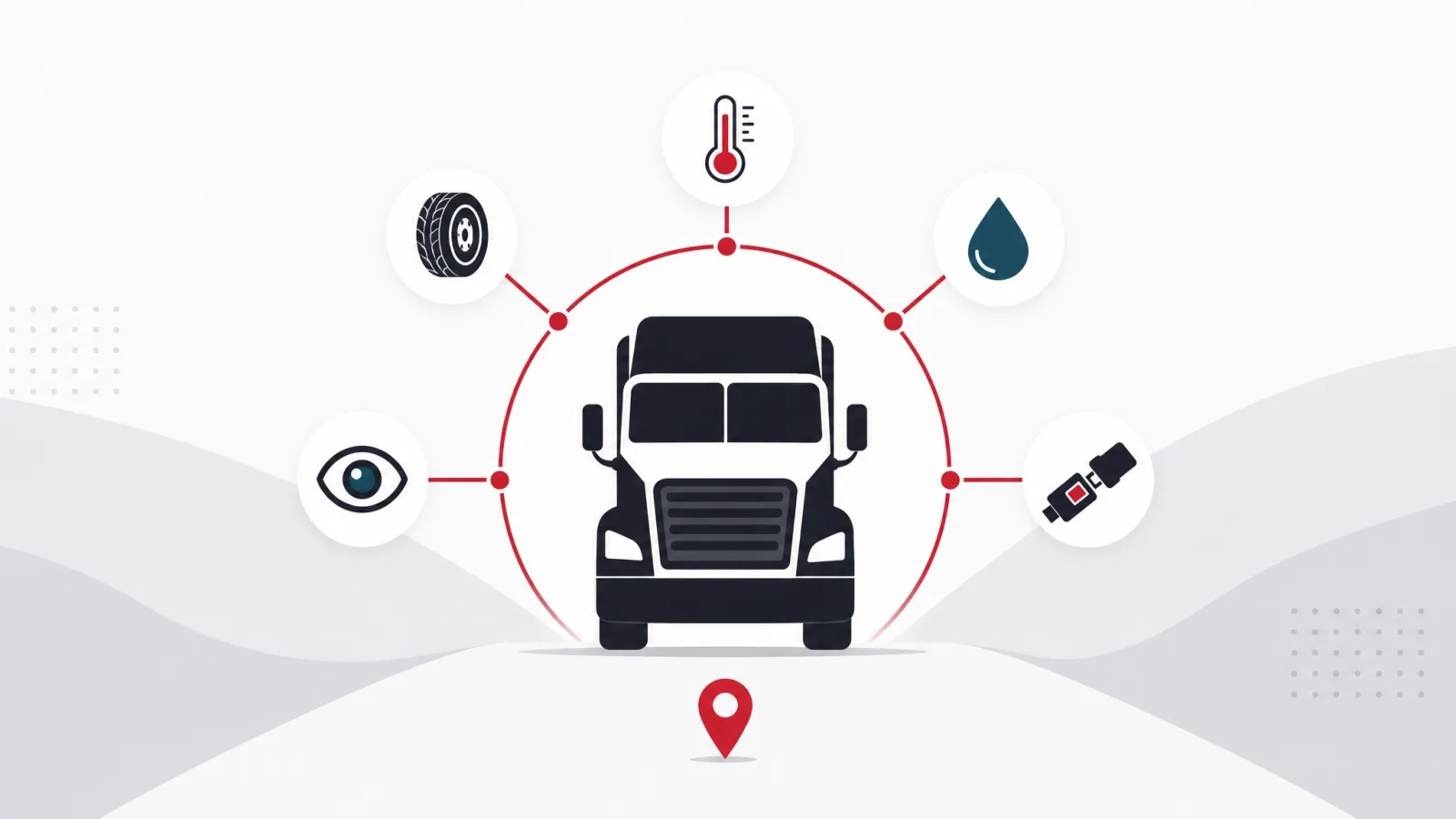
IoT in fleet management is the sensor layer beyond location: engine bus data for fuel and fault codes, temperature and humidity probes for cold chain, door and cargo sensors, tire pressure monitoring, driver-facing and road-facing cameras, and weight and fuel-tank sensors, all reporting through the vehicle's telematics gateway or their own cellular links into the fleet platform's event stream. The architecture questions that decide success are connectivity (cellular, with satellite fallback for remote routes), edge processing (cameras and high-frequency sensors must filter locally, because raw upload is unaffordable), and data integration (sensor events must join positions and trips in one stream, not live in a vendor silo). The ROI concentrates in four cases: fuel monitoring, cold chain compliance, predictive maintenance and camera-based insurance economics, each of which can individually pay for the hardware when the fleet's profile matches.
Most fleets already run the first IoT device without calling it that: the GPS tracker. The interesting question is what happens after location is solved, because the same vehicle can carry sensors that watch the engine, the cargo, the tires, the fuel tank, the doors and the driver, and each of those streams answers a business question the position dot cannot. The fleets that extract real money from IoT are not the ones with the most sensors; they are the ones that wired specific sensors to specific decisions.
This guide covers the sensor layer properly: the catalog of what can be measured on a vehicle and what each measurement is worth, the connectivity and edge computing architecture that keeps a sensored fleet affordable, the integration discipline that keeps sensor data useful rather than siloed, and the four ROI cases, fuel, cold chain, maintenance and cameras, where the hardware reliably pays for itself. Throughout, the frame is the operator's: which business problem does this sensor retire, and what does the answer cost.
It completes a cluster: the buyer's guide covers choosing the platform these sensors report into, the telematics pipeline guide covers the data engineering from device to dashboard, and the build guide covers constructing the platform itself. This article owns the hardware edge of that map.
Key takeaways
- The GPS dot is the least interesting sensor on a modern fleet: engine bus, temperature, doors, tires, cameras and fuel tanks are where operational money hides.
- Edge processing is not optional for cameras and high-frequency sensors: raw upload across a fleet is unaffordable, so events are detected on the vehicle and clips or summaries uploaded on trigger.
- Sensor data must join the same event stream as positions and trips: a cold chain probe in a vendor silo answers no dispatcher's question and defends no insurance claim.
- ROI concentrates in four cases: fuel theft and waste, cold chain compliance, failure prediction on high-cost components, and camera-driven insurance and liability economics.
- Buy the sensor hardware, build the integration: sensor manufacturing is a commodity market, while the platform that turns readings into decisions is where differentiation lives.
- Start with the one sensor family whose business case the fleet's own numbers already prove, not with a sensor catalog: instrumentation without a consumer decays into ignored dashboards.
What IoT actually adds beyond the GPS dot
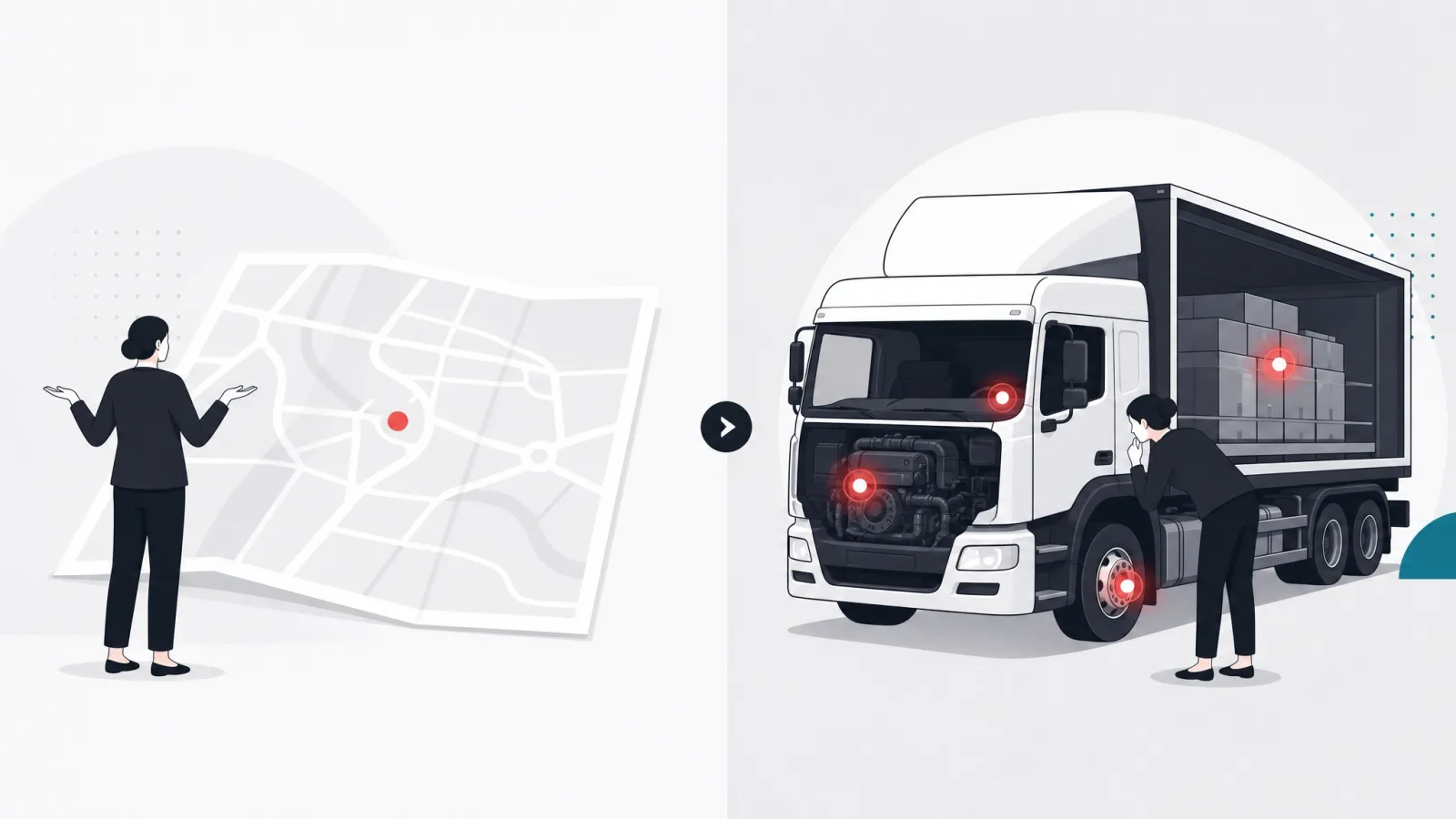
Location answers where; the sensor layer answers everything else an operator asks. Is the reefer holding two degrees, or did it drift during the highway stretch and the load is now a claim? Is unit 41's fuel burn this month explained by routes, or is fuel leaving the tank in a parking lot at night? Is the vibration signature on that compressor the early sound of a four-thousand-dollar failure next month? Did the cargo door open between the depot and the delivery? Was the harsh braking event the driver's fault, and is there footage that proves it was not? Every one of those questions has a sensor, and none of them is answered by a dot on a map.
The economic structure of the answer matters more than the technology. A position stream mostly produces visibility, which is worth something but hard to invoice; sensor streams produce avoided costs with names and amounts: the rejected load that was not rejected, the engine that was serviced before it failed on the interstate, the insurance premium that dropped because the camera program cut claims, the fuel line item that fell eight percent when theft got hard. IoT programs succeed when they are run as a portfolio of these avoided-cost cases and fail when they are run as an instrumentation project with a dashboard as the deliverable.
It is also worth being precise about what changed to make this practical, because fleet sensors are not new. Three curves crossed: cellular modules and data plans became cheap enough to put a SIM in anything, sensor hardware commoditized (a calibrated temperature probe that cost hundreds now costs tens), and edge compute became powerful enough to run detection on the vehicle, which turned cameras from storage problems into event sources. The consequence is that the constraint moved from hardware cost to organizational appetite: the limiting factor in most fleets is no longer what can be measured but who will act on the measurements.
That constraint sets this guide's method. For each sensor family below, the question is not what it measures but what decision it feeds and who makes that decision. A temperature probe feeding a compliance report nobody reads is a cost; the same probe feeding an alert that reroutes a failing reefer to the nearest depot is a claim avoided. The difference is never in the sensor. It is in the wiring between the reading and the person with authority to act, which is software and process work, and it is where most of the program's real budget belongs.
The question each sensor family answers
| Sensor family | The question it answers | The avoided cost |
|---|---|---|
| Engine bus (OBD/CAN) | What is the vehicle's health and burn? | Roadside failures, warranty leakage |
| Temperature and humidity | Is the cold chain intact right now? | Rejected loads, compliance findings |
| Fuel tank level | Where did the fuel actually go? | Theft, card fraud, idle waste |
| Tire pressure (TPMS) | Which tire fails next week? | Blowouts, fuel penalty of underinflation |
| Door and cargo | Was the load accessed in transit? | Shrinkage, disputed deliveries |
| Cameras (driver and road) | What actually happened out there? | Claims, premiums, litigation exposure |
Sensors as answers to operator questions. A sensor without a question is a dashboard without a reader.
The sensor catalog, family by family
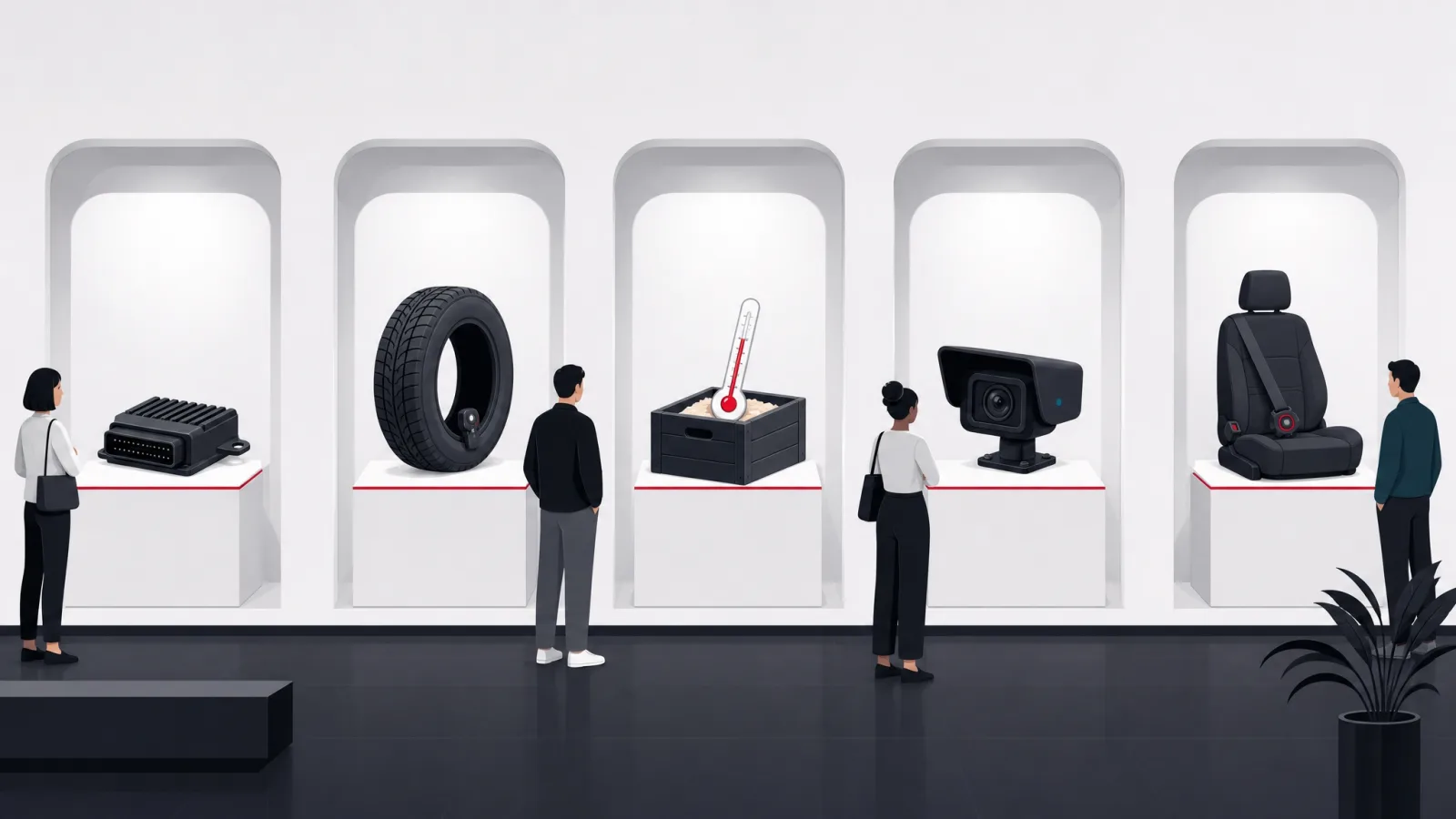
The engine bus is the highest-value sensor most fleets already have and underuse. A tracker or dongle wired to the OBD-II or CAN bus reads what the vehicle already knows about itself: odometer, fuel rate, coolant temperature, battery voltage, fault codes, seat belt and door signals on many models. This is the family that feeds maintenance scheduling and fuel analytics without any additional hardware, and the first move of most IoT programs should be exhausting it before buying anything new: a fleet that is not yet acting on fault codes and fuel-rate data has no business installing vibration sensors.
The cargo families come next in adoption order. Cold chain sensors, temperature and humidity probes placed in the cargo space, not inferred from the reefer unit's own display, report the condition of the load itself, with multi-zone probes for compartmentalized trailers; regulation and retailer contracts increasingly require the recorded trace, which makes this family mandatory rather than optional for food and pharma. Door sensors timestamp every opening against location, which turns shrinkage from a mystery into a query. Cargo weight sensors on axles catch both overloading fines and the quiet revenue loss of underutilized trucks. Each of these is cheap hardware wired to an expensive business problem.
Tire pressure monitoring deserves its own paragraph because its economics are underrated. Underinflation is invisible, universal, and expensive twice: a few percent of fuel burn across the fleet, and the blowout that strands a load and buys a tow. TPMS retrofits report per-tire pressure and temperature into the same stream as everything else, and the alerting is gloriously simple, thresholds and trends, no machine learning required. For fleets running significant highway miles, TPMS is frequently the fastest payback in the entire catalog after the engine bus.
Cameras are the most consequential family and the most operationally demanding. Road-facing cameras produce the evidence that wins not-at-fault claims; driver-facing cameras enable coaching programs and distracted-driving detection; both together change a fleet's insurance conversation. The demands are equally real: video is the one stream that cannot be shipped raw (a fleet of dashcams uploading continuously would cost more in data than in fuel), so the cameras must detect events on the device, harsh maneuvers, following distance, phone use, and upload clips on trigger. And driver-facing cameras are a labor relations project as much as a technology one: fleets that deploy them without a coaching framework and clear policies get grievances and sabotage; fleets that deploy them with driver-protective policies (footage exonerates more often than it convicts) report drivers requesting them.
Adoption order that respects payback
- Exhaust the engine bus firstFault codes, fuel rate, odometer: the vehicle already reports it. Act on this before buying hardware.
- Add the contract-driven sensorsCold chain probes where retailers and regulators require the trace. This family is mandatory, not elective.
- TPMS for highway fleetsPer-tire pressure and trend alerts. Often the fastest pure payback after the bus.
- Fuel tank sensors where theft is suspectedTank level plus location plus time turns a suspicion into a pattern.
- Cameras with a coaching programThe insurance economics are real, but only inside a driver-protective policy framework.
- Exotic sensors last, against a named failureVibration and acoustic monitoring earn their place on specific high-cost components, not fleetwide.
Connectivity and the edge: the architecture that keeps it affordable
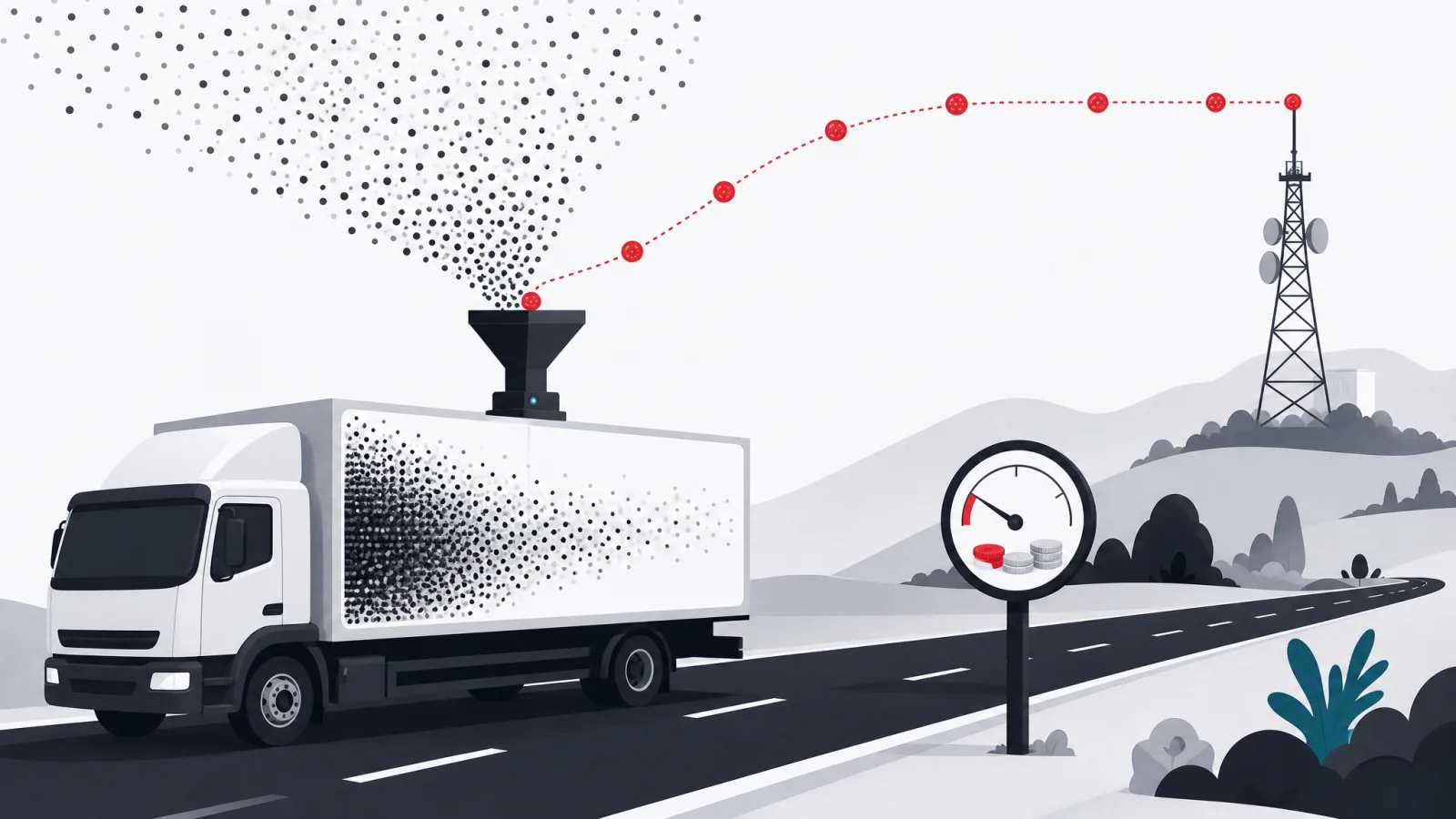
Every sensor needs a path to the platform, and the path decision shapes cost and reliability. The default pattern routes sensors through the vehicle's telematics gateway, the same spine every fleet tracking platform is built on: probes and TPMS talk to the tracker over short-range links (Bluetooth Low Energy dominates retrofits, wired connections dominate factory installs), and the tracker's single cellular connection carries everything. This concentrates the data plan, simplifies device management and gives sensors the gateway's buffering when coverage drops. The alternative, sensors with their own SIMs, fits assets that detach from vehicles, trailers, containers, dumpsters, generators, where the sensor must report regardless of which tractor is attached.
Coverage strategy is a route-profile question. Urban and regional fleets live comfortably on LTE with store-and-forward buffering through dead zones. Long-haul and remote operations, mining, forestry, cross-border routes through sparse coverage, need a satellite fallback for at least the safety-relevant signals, and modern dual-mode trackers make that a configuration rather than a second device. The design rule that matters everywhere: every device buffers locally and reconciles on reconnection, and the platform treats late-arriving data as normal, because a cold chain trace with a two-hour coverage hole is exactly the trace the claim dispute will ask about.
The edge computing decision is forced by arithmetic. A camera recording continuously produces gigabytes per vehicle per day; an accelerometer sampled at high frequency produces millions of readings; uploading either raw across a fleet costs more than the program saves. The pattern that works pushes detection to the vehicle: the camera's onboard processor watches for events and uploads twenty-second clips plus thumbnails; the accelerometer's firmware reduces raw motion to classified events, harsh braking, cornering, impact, with severity scores; the platform receives judgments and evidence, not firehoses. The trade is real and worth stating: edge logic is harder to update than server logic, and event definitions baked into firmware evolve at firmware-update speed, so the classification thresholds should be remotely configurable even when the detection is local.
Device management is the unglamorous half of the architecture and the half that determines whether year two is calm or chaotic. A sensored fleet is a population of hundreds or thousands of devices with batteries, firmware versions and failure modes, and it needs what any device population needs: provisioning workflows that pair sensors to vehicles without a technician's guesswork, health monitoring that notices a silent probe before the missing data becomes a rejected claim, firmware update campaigns that do not brick a fleet mid-route, and an RMA loop with spares. Programs that budget hardware but not device operations discover the difference between installing sensors and running a sensor fleet, usually in month three.
One stream, not five silos
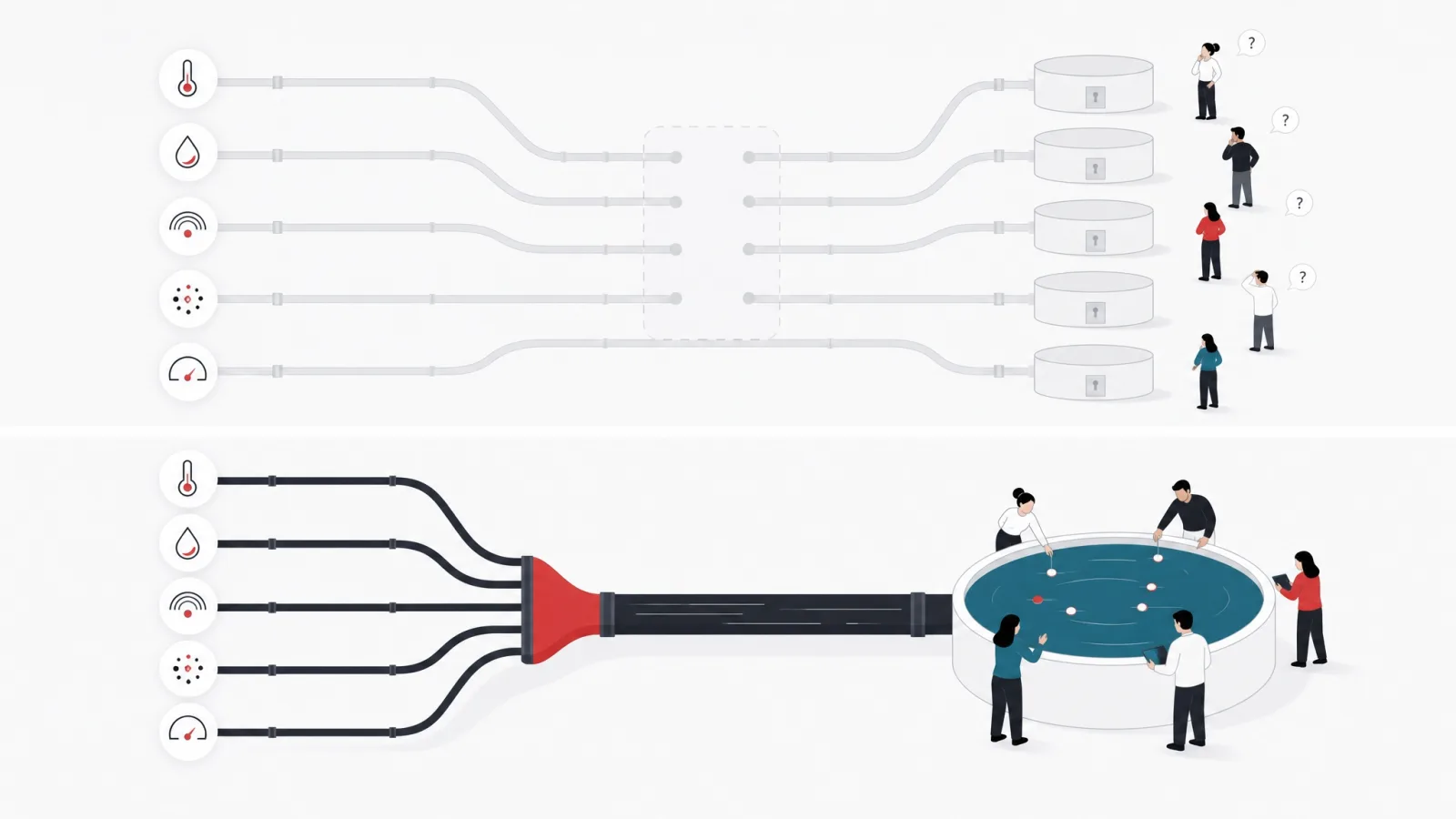
The most common failure in fleet IoT is not technical but organizational: each sensor family arrives with its own vendor portal, and the fleet ends up with five dashboards that cannot answer one joined question. The temperature portal knows the reefer drifted; the tracking portal knows the truck sat in traffic for two hours; only a human with two browser tabs can connect them, and humans with two browser tabs do not scale. The integration principle is absolute: every sensor stream lands in the same event backbone as positions and trips, keyed to the same vehicle, driver and trip identities, or its value collapses to whatever one silo can say alone.
Practically, that means the platform's ingestion layer, the gateway architecture the build guide describes, treats sensor events as first-class citizens of the same canonical stream: a temperature reading carries the vehicle, the trip and the position context; a door event joins the geofence model so opening at a customer site and opening at an unplanned roadside are different events; a camera clip attaches to the harsh-braking event that triggered it, which attaches to the trip, the driver and the road segment. This joining is where sensor data becomes answers, and it is precisely what vendor silos cannot do because each vendor sees only its own devices.
The joined stream then feeds three consumers with different tempos. Real-time operations gets the alerts: temperature breach, door-open-off-site, tire trend crossing threshold, each routed to the person who can act within minutes, the dispatcher, not a weekly report. Compliance gets the traces: the cold chain record per delivery, the inspection evidence, exportable in the formats auditors and claim adjusters demand. And analytics gets the history: fuel burn versus route profile, failure patterns by component and vehicle age, driver events over time, the layer where the fleet's own data starts pricing its next decisions, from vehicle purchasing to route design to insurance negotiation.
A buying implication follows and deserves emphasis: prefer sensors and cameras with open APIs and documented event schemas over closed ecosystems, even at a hardware premium, because the integration is the product. A slightly cheaper camera whose footage lives only in the manufacturer's cloud, retrievable only through their portal, has quietly captured your evidence workflow; a probe whose readings export nightly as CSV has turned your real-time cold chain into a batch report. The market has largely learned this, and every serious hardware vendor now sells API access; the trap remaining is tiered pricing where the API costs extra, which should be read as the true hardware price rather than as an optional add-on.
The integration discipline
Do this
- One event backbone for everythingSensor events join positions and trips on shared vehicle, driver and trip identities.
- Context at ingestionA door event knows its geofence; a clip knows its triggering event and trip.
- Route alerts to actors, traces to auditorsReal-time to dispatch, compliance exports to the claims desk, history to analytics.
- Buy hardware with open APIsThe API tier is the real price. Closed ecosystems capture your workflow.
Not this
- One portal per sensor vendorFive dashboards cannot answer one joined question, and humans with browser tabs do not scale.
- Batch exports as integrationA nightly CSV turns real-time cold chain into a report about yesterday's spoilage.
- Alerts to a weekly reportA temperature breach routed to Friday's PDF is a claim, not an alert.
- Footage only in the vendor cloudYour legal evidence workflow now has a landlord.
The four ROI cases that actually close
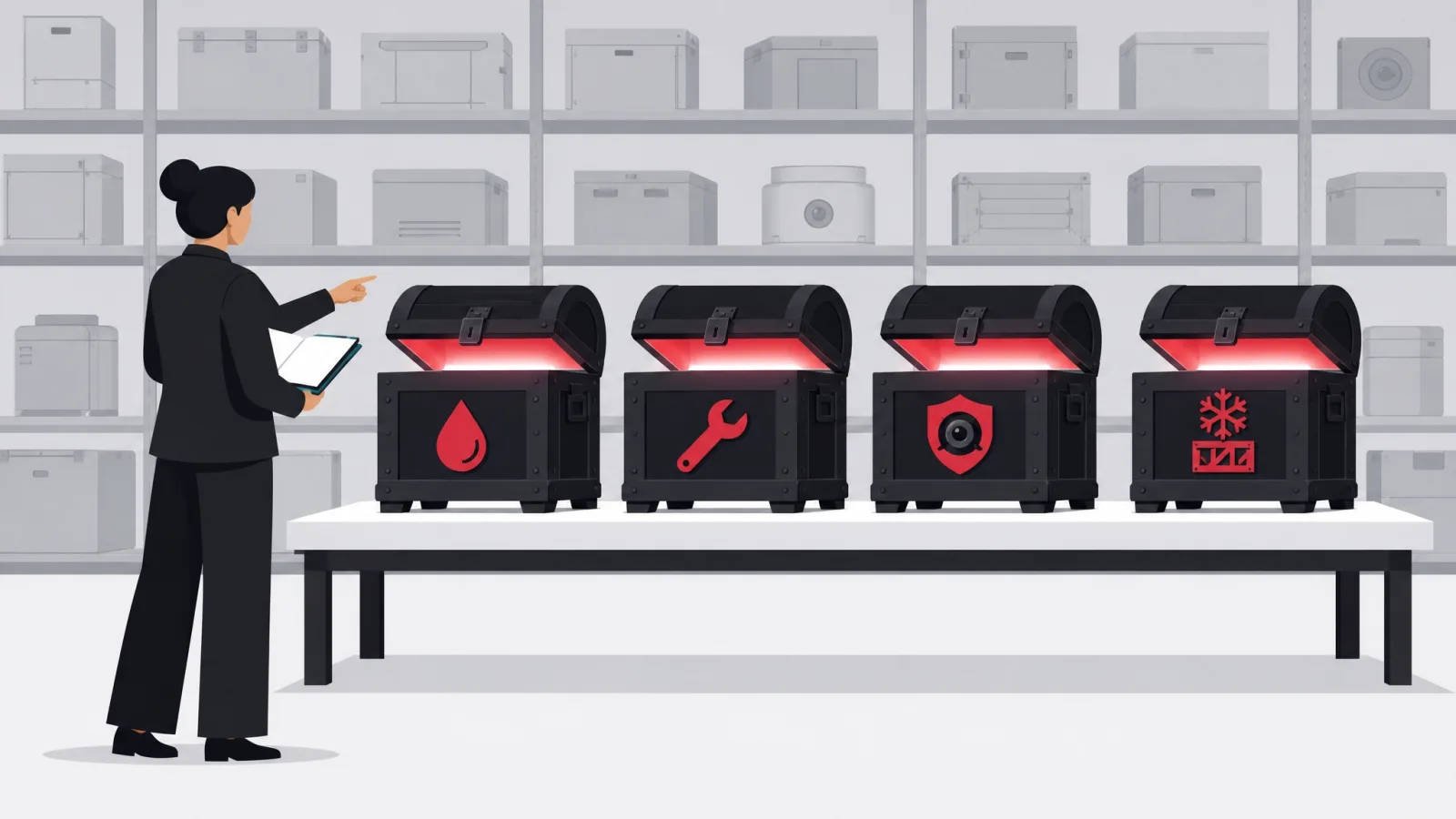
Fuel is the first case because the line item is huge and the leakage is real. The instrumentation is engine fuel-rate data plus tank level sensors plus fuel card reconciliation in the platform; the detections are unglamorous and effective: fills that exceed tank capacity (card fraud), tank drops without engine burn (siphoning), idle hours priced in dollars per vehicle, and burn-versus-route-profile outliers that surface both mechanical problems and driving habits. Fleets running this case seriously report low-to-mid single-digit percentage reductions in total fuel spend, which against fuel's share of operating cost is frequently the program's entire budget back in year one.
Cold chain is the second case, and for food and pharma fleets it is less an ROI than a license to operate. The instrumentation is in-cargo probes with multi-zone coverage; the payoffs stack: rejected-load claims defended with second-by-second traces, real-time breach alerts that convert spoilage events into rerouted saves, compliance reporting that turns audit weeks into exports, and, at contract renewal, the documented performance record that wins the shipper accounts demanding proof. A single defended claim on a high-value pharmaceutical load can exceed the annual hardware cost of the entire probe fleet.
Predictive maintenance is the third case, and honesty about its shape matters because vendors oversell it. The dependable layer is not exotic machine learning but disciplined condition monitoring: acting on fault codes the day they appear, trending battery voltage and coolant temperature, TPMS trend alerts, and scheduling by engine hours and fuel burn rather than calendar guesswork. That layer alone converts a meaningful share of roadside failures, each carrying tow, delay and cascade costs, into scheduled bay visits. True failure-prediction models earn their complexity only on high-cost repeated components across large fleets, refrigeration units and transmissions being the classic examples, where enough failure history exists to train against. Start with the discipline; graduate to the models where the fleet's own data justifies them.
Cameras are the fourth case and increasingly the largest. The mechanism is threefold: exoneration footage that converts at-fault claims into not-at-fault (the industry's open secret is how often fleet drivers are wrongly blamed and how decisively footage settles it), coaching programs built on detected events that measurably reduce incident rates over months, and the insurance conversation, where documented camera-plus-coaching programs command premium reductions that on large fleets reach hundreds of dollars per vehicle per year. The case requires its operational costs stated honestly: event review takes human time (or a review service), coaching takes management commitment, and the driver-relations work described earlier is real. Fleets that fund all three get the returns; fleets that install cameras and skip the program get footage of incidents they did not prevent.
The four cases, sized
What to buy, what to build, what to ignore
The hardware layer is a buy, without interesting exceptions. Trackers, probes, TPMS kits, cameras and tank sensors are commodity markets with mature vendors, certification regimes and economies of scale no fleet or software company should compete with. The selection criteria that matter are the unglamorous ones: certified accuracy for compliance-relevant sensors, battery life honesty, ingress protection ratings matched to the mounting environment, the open-API condition from the integration section, and the vendor's RMA behavior at volume, which references reveal and datasheets do not.
The integration and decision layer is the build, or at least the differentiated configuration. Wiring sensor streams into one backbone, joining them to trips and identities, encoding the alert rules that match this fleet's operating reality, and building the review and coaching workflows: this is where programs differ and where the money from the four cases is actually extracted. Fleets running commercial platforms do this work inside the platform's configuration and API surface; companies building platforms, per the build guide, carry it as the product itself. In both cases the budget weighting surprises newcomers: a mature program spends more on the software and process side than on the sensors.
The ignore list saves more money than the buy list. Sensor programs attract catalog thinking, instrument everything, and catalog thinking produces the fleet with humidity sensors in dry-goods trailers and dashboards nobody opens. The filter is the one this guide has applied throughout: no sensor without a named decision, a named decision-maker and a modeled payback. Similarly ignorable for most fleets: blockchain provenance layers where a signed database row does the same work, as the supply chain assessment argues in detail; fleetwide vibration sensing without a specific component failure history to justify it; and any analytics module sold on insights rather than on a decision it feeds.
Sequence the program as a portfolio of the four cases against this fleet's own numbers. Pull twelve months of fuel spend, claims history, maintenance records and insurance terms; size each case against the actual data; run the best case as a pilot on a defined vehicle cohort with success metrics agreed before installation; and let each proven case fund the next. This is slower than an instrumentation blitz and dramatically more durable, because each expansion arrives with an internal champion holding a spreadsheet that shows the last one paid. IoT programs die of dashboard fatigue and live on documented savings; the sequencing is what decides which.
The program filter, applied per sensor
Should this sensor family join the fleet?
-
A named decision, decision-maker and modeled payback exist
Pilot it on a cohort
Success metrics agreed before installation; the pilot's spreadsheet funds the expansion.
-
A contract or regulation requires the trace
Deploy it as compliance
Cold chain probes for food and pharma are a license to operate, not an ROI debate.
-
It measures something with no consumer
Ignore it
Instrumentation without a decision decays into dashboard fatigue and quiet cancellation.
A 90-day starting plan for a real fleet
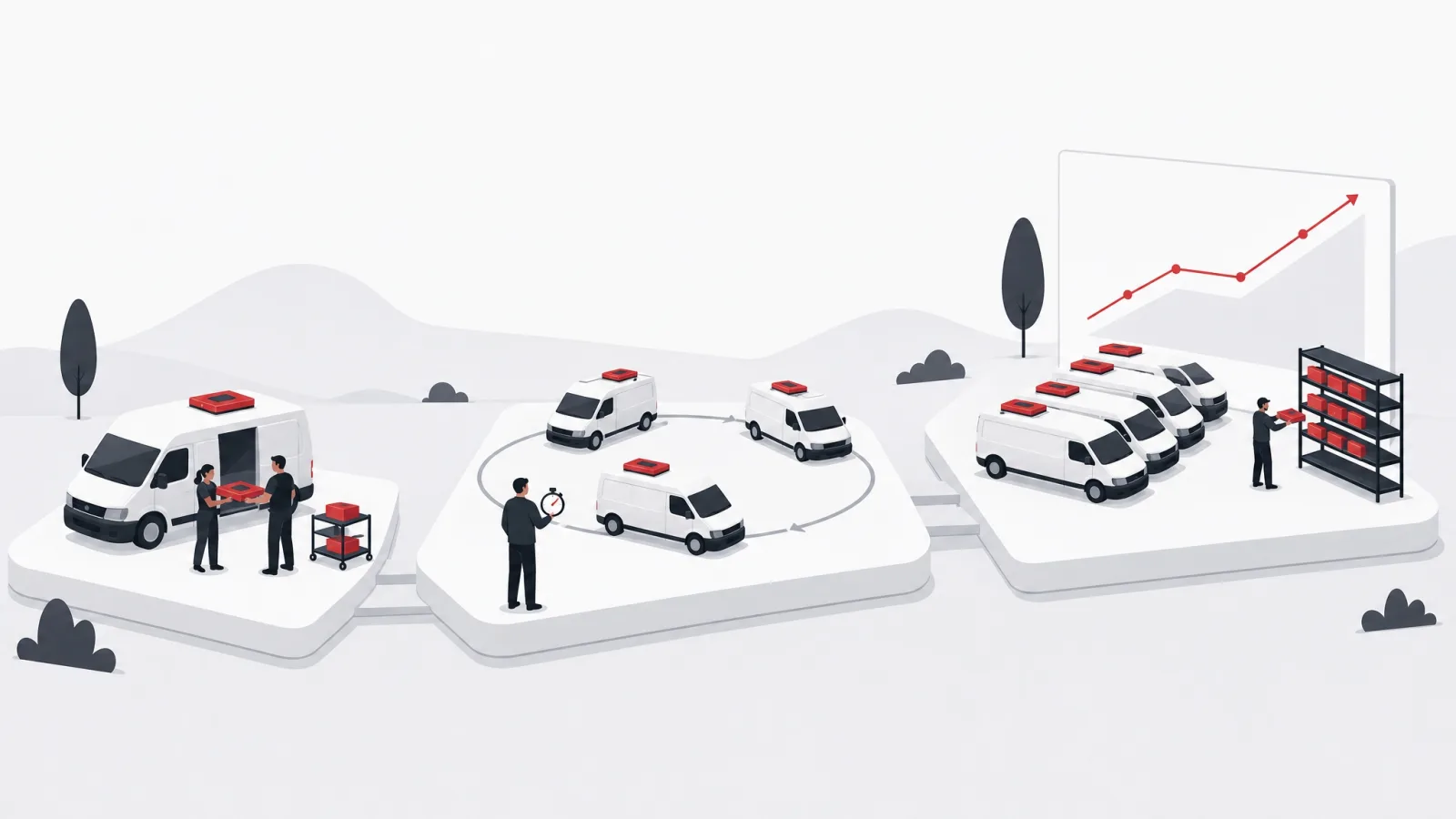
The first month is arithmetic, not hardware. Pull the fleet's own numbers: fuel spend by vehicle and month, the claims file, the maintenance log with roadside-versus-scheduled split, insurance terms and the renewal date, and any contract or regulatory trace requirements arriving from shippers. Size the four cases against those numbers and rank them. Most fleets discover one case that is obviously first, either the compliance-mandated one or the one whose leakage is embarrassingly visible once stated in dollars per vehicle per month. Choose the pilot cohort, ten to thirty vehicles that represent the fleet's dominant duty cycle, and agree the success metrics with the people who own the affected budget line.
The second month is the pilot installation and the integration work, in parallel. Hardware goes onto the cohort with the provisioning discipline from the device management section, every sensor paired, tested and reporting before the installer leaves. The platform work wires the new stream into the event backbone, configures the alert rules against the operating reality (thresholds that match this cargo, these routes, this tolerance), and routes each alert to its named actor. The second month's exit test is operational, not technical: the dispatcher has received real alerts and acted on them, and the actions were the intended ones.
The third month is measurement against the agreed metrics, run honestly. Fuel cases compare cohort burn against both its own history and a control group, because seasons and routes confound naive before-after reads. Cold chain cases count breach alerts, response times and any claims events. Maintenance cases track fault-code response latency and any converted failures. Camera cases count reviewed events, coaching sessions and driver feedback alongside incident data, which in ninety days will be directional rather than statistical. The month ends with a written result against the pre-agreed metrics and a decision: expand the case, adjust it, or kill it and promote the next one.
What the plan deliberately avoids: fleetwide rollout before a cohort has proven the case, sensor families added because the installer was already on site, dashboards as deliverables, and any success theater that reports installations rather than outcomes. Ninety days is enough to prove one case on one cohort and to build the organizational muscle, the alert-to-action wiring, the device operations habits, the measurement honesty, that every subsequent case reuses. The fleets that run IoT well all started this way: one case, one cohort, one spreadsheet that ended the argument.
The 90 days, step by step
-
Size the four cases on your own numbersWeeks one to two
Fuel, claims, maintenance and insurance data, twelve months back. Rank by modeled payback.
-
Pick the cohort and agree metricsWeeks three to four
Ten to thirty representative vehicles; success defined with the budget owner before any install.
-
Install with provisioning disciplineWeeks five to six
Every sensor paired, tested and reporting before the installer leaves the yard.
-
Wire alerts to named actorsWeeks six to eight
Streams join the event backbone; each alert routes to a person who can act in minutes.
-
Measure against controlsWeeks nine to twelve
Cohort versus history and control group. Confounders named, arithmetic shown.
-
Decide: expand, adjust or killWeek thirteen
A written result against pre-agreed metrics. The proven case funds the next.
Frequently asked questions
What is IoT in fleet management?
The sensor layer beyond GPS location: engine bus data (fuel rate, fault codes, odometer), cargo sensors (temperature, humidity, doors, weight), tire pressure monitoring, fuel tank level sensors, and driver- and road-facing cameras, all reporting into the fleet platform's event stream, mostly through the vehicle's telematics gateway. Its value is answering the operational questions a position dot cannot: is the cold chain intact, where did the fuel go, which component fails next, and what actually happened in that incident.
Which fleet IoT sensors have the best ROI?
In typical order: the engine bus (usually already installed and underused; feeds fuel analytics and fault-code maintenance for free), fuel tank sensors where theft is suspected, TPMS for highway fleets (fuel penalty plus blowout avoidance), cold chain probes where contracts require traces (one defended claim can pay for the probe fleet), and cameras, whose insurance and claims economics reach 200 to 600 dollars per vehicle per year on documented programs but require a real coaching operation.
Why do fleet cameras and sensors need edge computing?
Arithmetic. Continuous video from one camera is roughly 5 gigabytes per vehicle per day, and a raw accelerometer stream is hundreds of megabytes; uploading either across a fleet costs more than the program saves. So detection runs on the device: cameras watch for harsh maneuvers and distraction and upload twenty-second clips on trigger; accelerometer firmware reduces motion to classified events with severity scores. The platform receives judgments and evidence rather than firehoses, with detection thresholds kept remotely configurable.
How should sensor data integrate with fleet management software?
Into one event backbone, never vendor silos. Every sensor reading should land in the same stream as positions and trips, keyed to the same vehicle, driver and trip identities, so a temperature breach knows its location, a door event knows its geofence, and a camera clip attaches to its triggering event. Route alerts to people who can act in minutes, traces to compliance, history to analytics. Buy hardware with open APIs even at a premium, because the integration is where the money is extracted.
What does a fleet IoT program cost?
Hardware is the smaller half: trackers run 50 to 150 dollars, probes and TPMS kits tens of dollars per unit, camera systems 300 to 800 dollars per vehicle, plus cellular data at 1 to 4 dollars per vehicle per month. The larger half is the software and process side: integration into the platform, alert wiring, review and coaching workflows, and device operations. A disciplined program pilots one case on ten to thirty vehicles first, letting each proven case's documented savings fund the next expansion.
Do driver-facing cameras cause driver backlash?
Deployed carelessly, yes; deployed inside a driver-protective policy framework, the experience across large fleets is the opposite, because footage exonerates drivers more often than it convicts them. The programs that work state clear policies (event-triggered review rather than continuous surveillance, footage access rules, coaching rather than discipline as the default response), involve drivers early, and publicize the first exoneration. The camera case fails when it is bought as surveillance and succeeds when it is run as protection.
When the sensor program needs a platform built around it, AgileTech is a leading software house in Hanoi with fleet and IoT integration work in production.
Source: https://agiletech.vn/blog/iot-in-fleet-management/ · (c) AgileTech Vietnam. Printed from agiletech.vn.