 Nguyen Manh Thang
Chief Executive Officer, AgileTech Vietnam
Nguyen Manh Thang
Chief Executive Officer, AgileTech Vietnam
- Published
- Last updated
- Read time
- 15 min
- Views
- 50

Read the AI overview
Ride-hailing is not one global market. It is a collection of city-level two-sided marketplaces, and the network effect is local: a million drivers in another country do nothing for a rider standing on your street at midnight. That single property explains almost everything about the industry, including why regional operators keep outlasting global entrants, why incumbency is weaker than it looks in any individual city, and why every viable entry strategy is a plan for reaching local liquidity without an unwinnable subsidy war. The economics rest on three levers, which are take rate, driver utilization and incentive spend, and the two costs new operators consistently underestimate are the driver-side product and the operations tooling their city team lives in.
Ride-hailing looks like a finished market. A handful of enormous companies, years of consolidation, and a general sense that the question was settled some time ago. Yet new operators keep launching, and a meaningful number of them keep succeeding, in specific cities, specific service models and specific niches the large platforms serve badly.
Understanding why requires looking underneath the app at the marketplace it coordinates. Once you see that the liquidity a rider experiences is a purely local property, and that neither side of the market has any real switching cost, the apparent contradiction dissolves. A global platform has global scale and local vulnerability at the same time, in every city simultaneously.
This article covers the economics with the arithmetic shown rather than asserted, why the market regionalized instead of globalizing, what multi-service platforms changed, the entry strategies that still work, and what a launch platform actually consists of. We write it from the builder's seat: our teams deliver the dispatch and tracking machinery this market runs on through our transportation and logistics practice.
Key takeaways
- The network effect is local, so the moat has to be rebuilt city by city. That is expensive for incumbents and it is the opening for focused entrants.
- Switching costs on both sides are one app install. In a single city, better pickup times or better driver economics can flip the market faster than intuition suggests.
- Utilization, meaning the paid share of a driver hour, is the lever that decides driver earnings and therefore supply. Most strategic moves in this industry are utilization moves.
- The super-app pattern is utilization arithmetic, not ambition: each additional demand stream fills a gap between peaks on a driver network you are already paying to maintain.
- Build dispatch, tracking, wallet and identity as shared platform services from the start. Operators who welded them into a rides app paid for the rewrite when delivery arrived.
- Focused entries still win: secondary cities, service niches with requirements the mass market handles badly, fleet partnerships that convert incumbency into liquidity, and adjacent verticals on the same engine.
- The driver app and the operations dashboard are core product, not internal tools. Supply retention and the ability to respond at three in the morning are decided there.
A two-sided marketplace whose network effect stops at the city limit
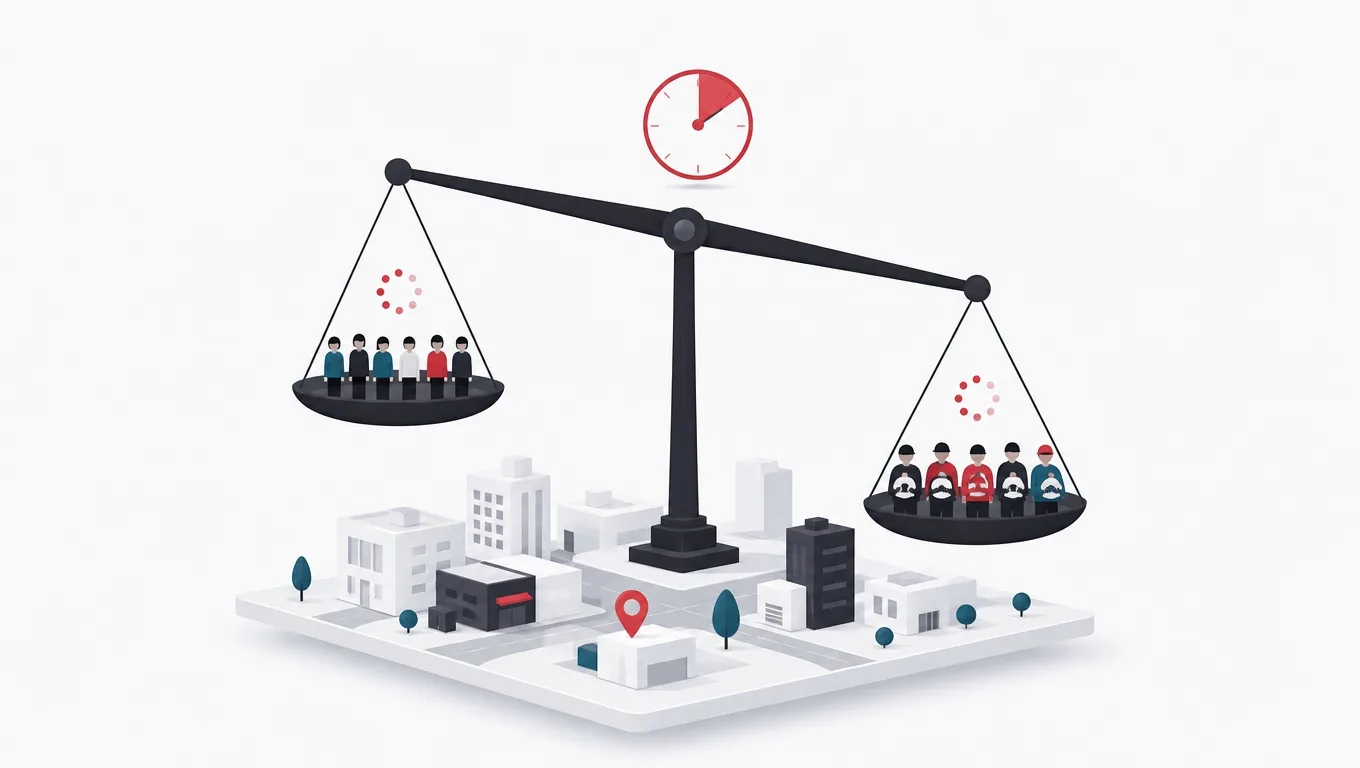
A ride-hailing platform does not sell rides. It sells liquidity, which is the credible promise that a rider will get a car within a few minutes and that a driver will get a fare without long idle stretches. Each side joins because the other side is present, which is the classic two-sided network effect, and it is genuinely powerful.
The twist that shaped the entire industry is that this particular network effect is local. Scale in one city does almost nothing for liquidity in another. A rider does not care how many drivers a platform has nationally, only how many are within a few minutes of them right now. That means the moat is not one moat, it is hundreds of separate small moats, each of which had to be dug at full cost and each of which can be attacked independently.
The second uncomfortable property, for incumbents, is that switching costs are close to zero on both sides. A rider installs another app. A driver runs two apps simultaneously and takes whichever fare appears first, which is normal behavior rather than disloyalty. There is no data lock-in, no contract, and no meaningful habit that survives a better pickup time. In any single city, a focused operator with better economics can move the market surprisingly quickly.
The economics themselves rest on three levers. Take rate is the platform's share of each fare. Utilization is the share of a driver's working hour that is actually paid, which determines their effective hourly earnings and therefore whether they keep showing up. Incentive spend is what you pay to hold either side in place while the other side develops. Most of the historic losses in this industry were incentive wars, and most of the subsequent profitability came from ending them.
The unit economics of one driver hour, with the arithmetic shown
| Line | Low utilization | High utilization | Why it moves |
|---|---|---|---|
| Paid minutes in the hour | 24 | 42 | The core lever, driven by demand density and matching quality |
| Gross fare collected | 20 units | 35 units | Directly proportional to paid minutes at a fixed fare rate |
| Platform take at 20% | 4 units | 7 units | The platform earns per fare, so revenue tracks utilization exactly |
| Driver gross earnings | 16 units | 28 units | What actually determines whether the driver returns tomorrow |
| Incentive needed to retain | 6 units | 0 units | Subsidy exists to close the gap between actual and acceptable earnings |
| Net platform contribution | Negative 2 units | 7 units | The same take rate is loss-making or profitable depending on one variable |
An illustrative model with round numbers, not a benchmark from any operator. The point is the mechanism rather than the values: substitute your own market's fare levels and watch which lever moves the outcome most. Utilization does, by a wide margin.
Why regional operators kept outlasting global entrants

The pattern of the past decade is consistent enough to be instructive. In market after market, regional operators either outlasted global entrants or absorbed their local operations, with the global player retreating to an equity stake. This happened often enough, and across enough different regulatory and cultural contexts, that it is worth treating as structural rather than as a series of individual outcomes.
The mechanics matter to anyone planning an entry, because they are all operational rather than promotional. Payments came first: in markets where card penetration was low, handling cash properly and integrating the locally dominant wallet was decisive, and it is the kind of requirement that is easy to describe and expensive to retrofit. Regulation came second: licensing regimes are municipal and relationship-heavy, which systematically favors operators who treat regulators as stakeholders with legitimate concerns rather than as obstacles to be routed around.
Vehicle mix came third and was underrated for years. Two-wheelers dominate ride-hailing across much of Asia, and a car-first product built elsewhere does not merely need a new vehicle category, it needs different pricing, different safety features, different pickup behavior and a different driver economics model. And fourth, service culture: driver onboarding, support in the right languages, dispute handling that feels fair locally, and trust features tuned to local expectations. Each is small, and together they compound into retention differences that marketing spend does not offset.
The lesson is not that local operators always win. It is that ride-hailing is operationally local, and the winner in any given market is whichever operator absorbs that locality fastest. For anyone building the software, that argues strongly for a platform designed to be configured per city, covering pricing rules, vehicle classes, payment methods, compliance documents and driver requirements as data rather than as code.
What "configurable per city" has to mean concretely
Pricing and fares
- Fare structure
- Base, per distance, per time, minimum fare and waiting charges, each configurable per city and per vehicle class rather than shared.
- Surge policy
- Whether dynamic pricing is permitted at all, its cap, and how it must be disclosed. All three are regulated differently between neighboring jurisdictions.
- Rounding and currency
- Local currency handling including the smallest practical unit, which matters more than it sounds when drivers handle cash.
Supply rules
- Vehicle classes
- Two-wheeler, three-wheeler, car categories and accessible vehicles, each with its own pricing, capacity and eligibility rules.
- Driver documents
- The set of licenses, permits, insurance and background checks required, with expiry tracking, differing by jurisdiction.
- Working time rules
- Any mandated rest periods or maximum driving hours, enforced by the platform because the platform is what regulators can inspect.
Money movement
- Payment methods
- Cash, card, local wallets and account billing, with cash handling as a first-class case rather than a legacy exception.
- Payout cadence
- How often drivers are paid and by what mechanism, which is a supply retention feature in markets where daily earnings matter.
- Tax and invoicing
- Local receipt requirements for riders and reporting obligations for driver earnings, both of which are legal rather than optional.
This is the difference between launching a second city in weeks and launching it in quarters. Every row is something that will differ between two cities in the same country, let alone two countries, and every row hard-coded is a code change per launch.
Multi-service platforms are utilization arithmetic, not ambition
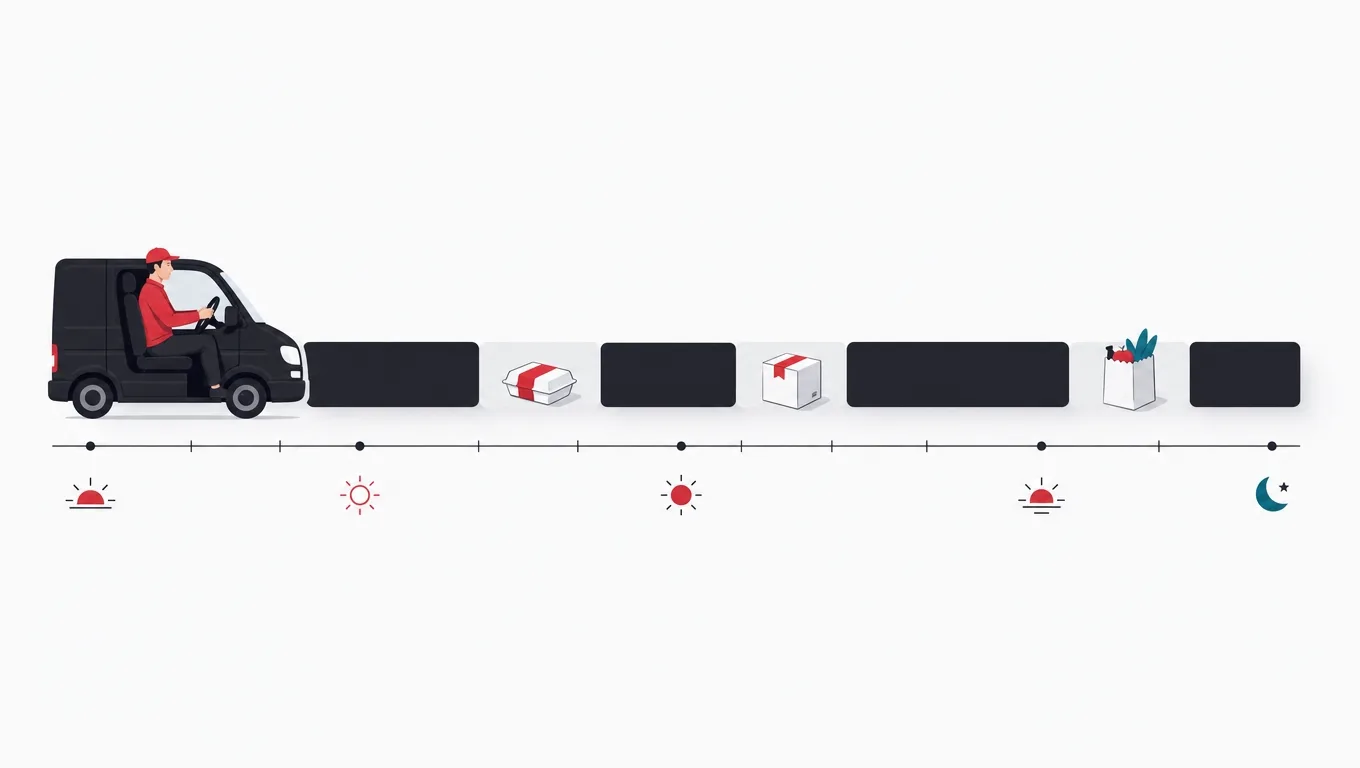
The most successful regional operators did not remain ride-hailing companies. They became multi-service platforms carrying rides, food delivery, parcel delivery and payments inside one application on one driver network. This is often described as a strategic vision, and it is more usefully understood as arithmetic.
A driver network is close to a fixed asset. You spend to recruit it, to verify it, to support it and to retain it, and that spend does not decrease when demand is slack. Ride demand, meanwhile, has severe peaks around commuting hours and troughs in between. Every additional demand stream that fills a trough raises utilization, which raises driver earnings without raising fares, which improves supply retention, which improves pickup times, which grows demand. A lunchtime food order is not a new business line so much as a use for an hour you were already paying for.
For anyone building the platform, this has one very concrete architectural consequence. Dispatch and matching, the tracking layer, the wallet and payouts, and identity and safety should all be platform services shared across verticals, not features living inside a rides application. Operators who built rides-only architectures paid for a rewrite when delivery arrived, and the rewrite happened at exactly the moment they were trying to move fast. Operators who built a platform added verticals comparatively cheaply. This is the same modular reasoning behind our super-app engineering work.
The payments layer deserves specific respect. In several markets the wallet ultimately became more valuable than the mobility business that seeded it, because it accumulated a payment relationship with users who had no other convenient digital option. If payments are anywhere on your roadmap, understand that the licensing and compliance path is measured in years rather than months, and that it therefore has to start earlier than feels natural, well before the product needs it.
Architectural decisions that determine whether a second vertical is cheap
Do this
- Dispatch as a service with a generic jobThe engine matches a unit of work to a nearby worker. A ride, a food order and a parcel are all jobs with different attributes, so a new vertical is configuration rather than a new engine.
- One wallet, many earning sourcesDriver earnings, adjustments and payouts flow through a single ledger regardless of which vertical generated them, so payout correctness is solved once.
- One identity and verification layerA driver is verified once and gains eligibility for the verticals their documents permit, rather than being onboarded separately per service.
- Tracking as shared infrastructureThe live position pipeline does not know what is being tracked, so adding a vertical does not add a second tracking implementation to operate.
Not this
- Trip as the core domain objectEverything is modeled around a passenger journey with a pickup and a destination. A parcel with three drops does not fit, and forcing it produces a parallel system.
- Earnings computed inside the rides servicePayout logic embedded in one vertical means the second vertical either duplicates it or reaches into it, and both options break reconciliation.
- Per-vertical driver onboardingSeparate verification per service, which multiplies operational cost per driver and produces contradictory eligibility records.
- Tracking inside the driver app for rides onlyPosition reporting tied to an active ride, so any non-ride work needs its own reporting path and its own bugs.
Everything in the right column is a decision that looks sensible while you have one vertical and becomes a rewrite when you have two. These are choices made in the first month that are paid for in the second year.
The third side of the market, and what it actually pays for
Everything above treats the marketplace as two-sided, which is correct for passenger transport and incomplete for delivery. A food or grocery order has three participants, because the merchant is not a passenger who happens to be a shop. The merchant supplies the inventory, absorbs a commission, and carries the reputational consequence of a late delivery it did not perform. Understanding that third position is necessary whether you are building a delivery platform or building software for the merchants who sell through one.
The commission is the part everyone argues about and the part least often understood. A merchant on a delivery marketplace is not buying courier capacity. It is buying demand, courier capacity, payment handling and customer support in one bundled rate, and the rate is high because the demand component is the expensive one. This is why platforms offer tiered pricing where a lower commission comes with less promotional placement: the tiers are unbundling demand from logistics, and the merchant is being asked which one it is actually short of.
That framing produces the decision a merchant should be making. A restaurant with strong local recognition and thin margins is short of courier capacity, not demand, and belongs on its own ordering channel with delivery bought separately. A new location in an unfamiliar neighborhood is short of demand, and the marketplace commission is a customer acquisition cost that happens to include a courier. Most merchants we build for end up running both, deliberately, with the marketplace treated as paid discovery and the direct channel treated as the place repeat customers are supposed to land.
The operational consequences reach into software, which is where this stops being a business essay. Menu and price parity across channels, stock synchronization so a sold-out item disappears everywhere at once, order injection into the kitchen system rather than a tablet per platform, and reconciliation of platform payouts against orders actually fulfilled. Each of those is a real integration, and the last one is where merchants discover money is missing. The same discipline applies here as in any retail software development model: exactly one system owns the truth about what is available, and the others read it.
- The tablet farm is the tell. A counter with one tablet per delivery platform means orders are being retyped into the kitchen system by hand at the busiest moment of the day. It is the single most common source of wrong orders in a multi-channel merchant, and it is an integration problem with a known shape.
- Stock has to be one number. If availability lives separately in each channel, the merchant will sell an item that ran out twenty minutes ago and pay the refund. One owning system, read by every channel, is the only version of this that holds during a rush.
- Reconcile payouts against fulfilled orders, not against the statement. Platform statements net commissions, promotions, adjustments and refunds together. A merchant that checks only the total will not notice a missing order, and missing orders are common enough to be worth a report.
- Decide what the direct channel is for. If it exists only to be cheaper it will lose to convenience. If it exists to hold the repeat customer, with loyalty, saved orders and an honest delivery estimate, it changes the channel mix over a year.
What the merchant is buying under each fulfillment model
| Model | Who brings the customer | Who moves the order | What it is really buying |
|---|---|---|---|
| Marketplace, platform courier | The platform | The platform | Demand, bundled with logistics and support. Priced for the demand. |
| Own channel, platform courier | The merchant | The platform | Courier capacity only, at a much lower rate, with the customer relationship retained. |
| Own channel, own courier | The merchant | The merchant | Full margin and full operational burden, including the driver on a rainy Friday. |
| Marketplace, merchant delivery | The platform | The merchant | Discovery, with the delivery promise and its failures owned by the merchant. |
The comparison a merchant should be making before negotiating a rate. The column that decides the answer is the last one: what the merchant is actually short of. Rates and splits vary by market and by category, so the shape is the transferable part, not the numbers.
The four entry strategies that still work

A new generalist entry into a contested major metro, competing on price against a well-capitalized incumbent, fails with impressive reliability. That is the strategy the industry's history warns against, and the warning is well earned. What the market keeps rewarding is focus, and the successful patterns recur often enough to enumerate.
- Underserved geographies. Secondary cities and towns that large platforms deprioritize because the absolute revenue is small. Liquidity is achievable with a modest driver base, municipal relationships are winnable by a local operator, and the incumbent's service quality is often genuinely poor rather than merely less good.
- Service niches with real requirements. Corporate transport needing consolidated billing, cost center allocation and duty-of-care reporting. Medical and school transport needing vetting, scheduling and guardian notification. Women-focused services. Accessibility-first fleets. Each has requirements a mass-market app handles badly, and each supports a higher take rate because the buyer is purchasing compliance rather than the cheapest ride.
- Fleet and franchise partnerships. Platforms operated with or by existing taxi fleets, which converts regulatory incumbency and an existing verified driver base into launch liquidity instead of fighting both. The commercial negotiation is harder than the software, and the software is what makes the negotiation possible.
- Adjacent verticals on the same engine. Starting with parcel or food delivery, where the liquidity threshold is lower because customers tolerate longer waits, and adding passenger transport once the driver network exists. This inverts the usual sequence deliberately, and it works because the hard asset is the network rather than the app.
What each entry strategy actually demands of you
| Low capital | Regulatory skill | Enterprise sales | Dense city needed | |
|---|---|---|---|---|
| Secondary citiesliquidity at small scale | Yes | Yes | No | No |
| Corporate transporthigher take rate | Yes | Partial | Yes | No |
| Medical and school transportvetting heavy | Partial | Yes | Yes | No |
| Fleet partnershipborrowed liquidity | Yes | Yes | Yes | Partial |
| Delivery first, rides laterlower threshold | Partial | Partial | No | Yes |
| Generalist metro entrythe one that fails | No | Yes | No | Yes |
Read down the columns rather than across the rows. The strategy that suits you is the one whose demanded strengths you already have, and the most common failure is choosing a strategy that requires the capability you are weakest in.
The driver app is the product that decides whether you have a business
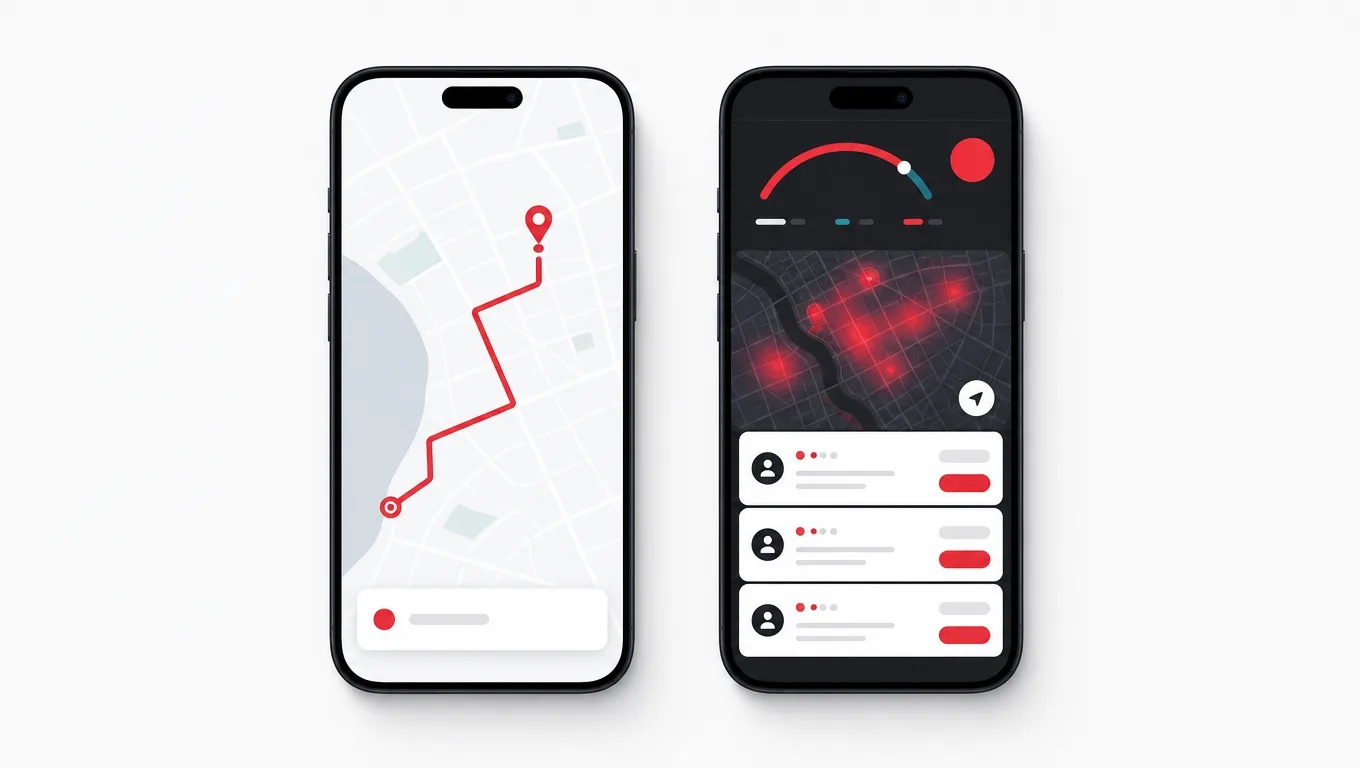
This is the section most consistently missing from ride-hailing plans, and the omission is predictable: pitch decks show the rider experience because that is what the audience recognizes. But riders are comparatively easy to acquire and easy to re-acquire, whereas a driver who leaves takes a verified, trained, equipped unit of supply with them, and replacing that costs real money every time.
What retains drivers is not interface polish, it is trust in the numbers. Earnings must be transparent and reconcilable: a driver should be able to see exactly how a fare became their payment, including every deduction, without contacting support. Payouts must arrive when promised, and in markets where daily earnings matter, promptness is a competitive feature rather than a finance preference. Disputes must be handled by a process that feels fair, with a human reachable when it matters, because the perception that the platform sides with riders by default is corrosive and spreads quickly through driver communities.
There are also mundane engineering requirements that decide whether the app is usable at all. It runs all day on a mid-tier phone, frequently an older one, often mounted in direct sunlight, on mobile data that is intermittent. Battery discipline is a retention feature. Working through a tunnel without losing a job is a retention feature. So is not consuming an unreasonable amount of the driver's data allowance, which they pay for.
The honest way to specify this is to allocate driver-side product work as a proportion of total engineering effort at the outset and defend it, rather than letting it be the thing that absorbs delay when the rider app slips. Operators who treat the driver app as an internal tool discover the consequence in their supply numbers a quarter later, by which point the cause is no longer obvious.
Driver-side requirements that are not optional
- Fare to payment is fully traceableA driver can see every component and deduction that turned a fare into their earnings, itemized, without asking anyone.
- Payouts are predictable and on timeA stated schedule that is met reliably. In many markets faster payout is worth more to a driver than a higher take.
- Disputes have a fair, visible processA defined path with a stated timeline and a reachable human for significant cases, because a driver who believes the process is arbitrary tells other drivers.
- The app survives a working dayBattery behavior tested over an eight hour shift on a mid-tier device, because the driver cannot charge as freely as an office worker.
- Connectivity loss does not lose a jobAccepted work, navigation and completion all survive a tunnel or a dead zone, with reconciliation afterwards.
- Data usage is modest and statedThe driver pays for the connection, and an app that consumes an unreasonable share of their allowance is a cost they will notice.
- Support is reachable during a shiftA driver stuck with a passenger and a problem needs an answer in minutes, not a ticket queue measured in days.
Every item here has cost an operator supply when it was absent. The first three are about trust in the numbers, and trust in the numbers is what a driver actually buys from you.
What a launch platform consists of, including the part nobody budgets for
The product is three applications and an engine. The rider app, the driver app and the operations console are the visible surfaces. The engine underneath handles matching and dispatch, pricing, live tracking, payments and payouts, and fraud control. The engine is where the difficulty lives, because matching under real-time constraints, fare integrity derived from noisy position data, and payout correctness are all distributed systems problems with money attached to being wrong.
A credible launch platform does not require reproducing an incumbent's decade of accumulated systems. It requires honest scoping of one launch market's actual needs, meaning one city, a defined set of vehicle classes and the locally dominant payment methods, built on an architecture that can add cities and verticals without a rewrite. The tracking and dispatch machinery overlaps heavily with what we build for last-mile delivery and fleet tracking, and the positioning fundamentals are covered in our guide to building a geolocation app.
The line that gets cut from every plan is the operations console, because it never appears in a demonstration and no investor asks about it. It is nonetheless core product. When a driver and rider dispute a fare, when a payment fails midway, when a vehicle stops moving in an unexpected place, when a city regulator asks a specific question about a specific trip, the answer comes from a tool somebody built. If that tool does not exist, the answer comes from an engineer querying a database at three in the morning, and that arrangement fails at exactly the scale where it starts to matter.
Scope it deliberately. The console needs trip inspection with a full timeline, driver and rider account management, manual fare adjustment with an audit trail, live supply visibility by area, and the ability to answer a regulatory question without engineering involvement. That is a substantial application, and pretending otherwise means building it anyway, later, under pressure, badly.
A launch sequence for one city
-
Market and regulatory groundworkWeeks 1 to 4
Licensing path, driver document requirements, permitted pricing model, payment methods, and the vehicle classes that actually operate locally.
Done when A written compliance model for the launch city, and the licensing application submitted rather than planned.
-
Engine and driver appWeeks 3 to 12
Dispatch, tracking, fare calculation, the earnings ledger, and a driver application built for an all-day shift on modest hardware.
Done when Supply can be onboarded and can complete real jobs with correct, traceable earnings, tested with a pilot driver group.
-
Rider app and paymentsWeeks 9 to 16
Booking, live tracking, the locally dominant payment methods including cash as a first-class case, receipts, and support entry points.
Done when End to end trips complete and reconcile across every supported payment method, including the failure paths.
-
Operations consoleWeeks 11 to 18
Trip inspection with full timelines, account management, audited manual adjustments, live supply visibility, and regulatory query answering.
Done when A city operations person can resolve a disputed trip and answer a regulator without engineering involvement.
-
Supply build and soft launchWeeks 15 to 22
Driver recruitment and verification at density, one or two districts rather than the whole city, and utilization measured daily.
Done when Pickup times inside the target in the launch districts, with driver earnings at a level that retains supply without permanent incentive spending.
Indicative spans for a focused single-city launch with a small dedicated team, not a quotation. Note that supply onboarding starts before the rider app is finished, because a market with riders and no drivers is worse than no market at all.
The regulatory position is part of the product, not a legal afterthought

Ride hailing is one of the few consumer software categories where the regulatory position can end the business outright, and where it varies not just by country but by city. An operator can be fully compliant in one municipality and unlawful forty kilometers away, under rules written by a transport authority that had taxis in mind. Treating this as a matter for the legal team to resolve after launch is the single most expensive sequencing mistake available in this category.
The reason it belongs in the product discussion is that the rules determine data model decisions you cannot easily reverse. Whether drivers are classified as contractors or employees changes the payment system, the tax withholding, the benefits surface and the scheduling model. Licensing regimes may require you to record and report per trip data to an authority on a defined schedule, which is a reporting pipeline rather than a report. Fare regulation, where it exists, may cap surge pricing or prohibit it entirely, which changes the pricing service from a business rule into a compliance boundary. Insurance requirements may mandate that you know, per trip, whether a driver was carrying a passenger, which affects how trip state is recorded and retained.
The practical approach is to make the regulatory surface configurable per city from the first release rather than discovering later that it is hardcoded. That means a city configuration that holds driver classification, required documents and their expiry rules, fare constraints, reporting obligations and data retention periods, with the application reading from it rather than embedding assumptions. This costs modest effort at the start and is close to a rewrite once a second city with different rules arrives, which is precisely when you will be under the most pressure to move quickly.
There is also a strategic reading here that entrants consistently underweight. Regulatory competence is a genuine competitive advantage in this category and one of the reasons regional operators outlast global entrants, as the earlier section argued. An operator who arrives with the licensing understood, the documentation ready and a working relationship with the transport authority launches faster in each new city than a better funded competitor learning the regime from scratch. That capability compounds, it does not transfer easily, and it is worth building deliberately rather than treating as overhead.
The city configuration that keeps regulation out of the code
Driver and vehicle
- Classification
- Contractor or employee, driving the payment model, tax withholding, benefits surface and whether scheduling may be mandated.
- Required documents
- The document set, the verification method, the renewal interval and the grace behavior when a document expires mid shift.
- Vehicle constraints
- Age limits, inspection intervals, permitted vehicle classes and any livery or signage requirement.
Pricing and fares
- Fare structure
- Whether metered, capped, regulated to a published tariff, or free. Some jurisdictions prohibit dynamic pricing outright.
- Surge constraints
- A maximum multiplier, mandatory disclosure before acceptance, or a prohibition during declared emergencies.
- Commission disclosure
- Whether the driver must be shown the platform take per trip, which several jurisdictions now require.
Reporting and data
- Authority reporting
- The per trip fields required, the submission schedule and the format, which is a pipeline rather than a report and needs to be built as one.
- Retention periods
- Minimum retention for trip and location records for audit, and maximum retention under privacy law. These sometimes conflict and the conflict has to be resolved explicitly.
- Insurance state
- Whether per trip passenger carrying state must be recorded and made available, which constrains how trip state transitions are stored.
Written as a specification because this is the artifact that determines whether launching a second city is a configuration change or an engineering project. Every field here is something that varies between jurisdictions in practice.
Frequently asked questions
Is it still possible to enter the ride-hailing market?
Yes, but not as a generalist competing on price in a contested major metro, which is the strategy the industry's history warns against most clearly. What continues to work is focus: secondary cities that large platforms deprioritize, service niches with genuine requirements such as corporate or medical transport, partnerships with existing fleets that convert their regulatory incumbency into launch liquidity, and starting in delivery where the liquidity threshold is lower before adding passenger transport.
Why do local operators keep beating global platforms?
Because the network effect stops at the city limit, so global scale confers much less local advantage than it appears to, and because switching costs on both sides are one app install. On top of that, four operational fronts consistently favor local operators: handling cash and locally dominant payment methods, municipal regulatory relationships, vehicle mix such as two-wheelers in much of Asia, and driver service culture. None of those are marketing advantages, and none are quickly bought.
What does it cost to build a ride-hailing platform?
The honest answer requires splitting the question. A focused single-city launch with a rider app, a driver app, a matching engine, the locally dominant payment methods and an operations console is a substantial but tractable project for a small dedicated team over several months. What inflates estimates is scope that assumes an incumbent's feature set from day one. What deflates them dishonestly is omitting the driver app quality, the payout ledger and the operations console, which is how a plausible quote becomes an impossible project.
How many drivers do we need to launch?
Fewer than intuition suggests, if you constrain the area. Liquidity is a local property, so the meaningful question is not how many drivers you have but the pickup time in the specific districts you have chosen to serve. Launching in two districts with enough density to deliver good pickup times beats launching city-wide with drivers spread too thin, because the second option delivers a poor experience everywhere and teaches riders that your service does not work.
Do we need surge pricing?
It depends on your market's regulation before it depends on your preference, since dynamic pricing is restricted or capped in a number of jurisdictions and the disclosure requirements vary. Where it is permitted, it is a genuine supply balancing mechanism rather than only a revenue one. Where it is not permitted, you need other levers for peak imbalance, such as scheduled bookings, targeted driver incentives during known peaks, or simply accepting longer pickup times honestly rather than promising times you cannot meet.
Should we build the driver app and rider app separately or share code?
They are genuinely different products with different constraints, so sharing an interface layer usually produces something that serves neither well. What should be shared is beneath the interface: the tracking pipeline, the identity layer, the earnings and payment ledger and the API contracts. The driver app has requirements the rider app does not, notably all-day battery discipline on a mid-tier device, tolerance of connectivity loss without losing a job, and modest data consumption, and those requirements deserve their own engineering rather than being inherited.
What is the most underestimated part of the build?
Two things, consistently. The driver-side product, because earnings transparency, payout reliability and fair dispute handling determine supply retention far more than rider-side polish, and losing a verified driver costs real money each time. And the operations console, because it never appears in a demonstration and yet it is what somebody uses at three in the morning when a payment failed midway through a trip. Both get cut from plans, and both get built anyway, later, under pressure.
If you are planning a mobility or delivery platform and want the engine scoped by people who operate one, talk to AgileTech, an AI native software development company in Vietnam that builds marketplace platforms from dispatch through to payouts.
Source: https://agiletech.vn/blog/ride-hailing-app-market/ · (c) AgileTech Vietnam. Printed from agiletech.vn.