 Nguyen Manh Thang
Chief Executive Officer, AgileTech Vietnam
Nguyen Manh Thang
Chief Executive Officer, AgileTech Vietnam
- Published
- Last updated
- Read time
- 13 min
- Views
- 59

Read the AI overview
EMR integration is the work of connecting external software to a healthcare organization's electronic medical record system so that clinical data flows between them: reading patient records, receiving event feeds (admissions, results, orders), embedding your product inside the clinician's workflow, or writing data back into the chart. In practice it means choosing among a small set of patterns, modern FHIR REST APIs, the older HL7v2 message feeds that still carry most hospital event traffic, interface engines that translate between them, SMART on FHIR app embedding, and CDS Hooks for in-workflow alerts, then surviving an approval gauntlet: the vendor's marketplace program, a security review, and each hospital's own governance. The technical connection is usually the easy half. The hard half is semantics (the same field means different things at different sites), write-back risk (bad data in a chart is a patient-safety event), and the per-site variance that makes every hospital a small project of its own.
Every digital health product eventually hits the same wall: the data it needs, and the clinicians it serves, live inside the hospital's electronic medical record. EMR integration is the discipline of getting through that wall properly, connecting external software to systems like Epic and Oracle Health (Cerner) so records can be read, events received, workflows joined, and, carefully, data written back.
The subject has a reputation for pain that is partly earned and partly outdated. Earned: hospital integration still involves decades-old message formats, per-site variance, and an approval process that tests patience more than skill. Outdated: regulation has forced modern EMRs to expose real, standardized APIs, and a product built against them in 2026 has a dramatically easier path than the same product would have had a decade ago.
This guide explains the whole terrain for people building or buying an integration: the four jobs integration does, the patterns available for each (FHIR, HL7v2, interface engines, SMART embedding, CDS Hooks), the read-versus-write divide, the approval gauntlet, and an honest project anatomy. Two companion pieces frame it: what EMR, EHR and eMAR actually mean for the vocabulary, and the Epic versus Cerner comparison for how the two dominant vendors differ as integration targets.
Key takeaways
- EMR integration has four distinct jobs, read the chart, receive event feeds, embed in the workflow, write back, and each maps to different patterns with different difficulty. Scope which jobs you actually need before talking to any API.
- FHIR is the modern front door and genuinely works for reading records: US regulation forced certified EMRs to expose standardized patient-data APIs. But most real-time hospital event traffic still moves as HL7v2 messages through interface engines, and serious integrations speak both.
- Reading is a permission problem; writing is a safety problem. Write-back into the chart multiplies review scrutiny, liability exposure and testing burden, and many products deliberately ship read-only first for exactly this reason.
- The approval gauntlet is the real timeline: vendor marketplace programs, security questionnaires, and each hospital's own IT governance routinely take longer than the engineering. Start the paperwork the same week as the code.
- Every hospital is a variant: the same EMR at two health systems differs in versions, enabled modules, custom fields and local codes. Budget integration as a per-site cost with a shrinking marginal effort, not a one-time build.
- Semantics beat syntax as the failure source: the connection working and the data meaning what you think are different milestones. Terminology mapping (codes for labs, meds, diagnoses) and site-by-site validation are where integration projects actually spend their time.
The four jobs: what "integration" actually means
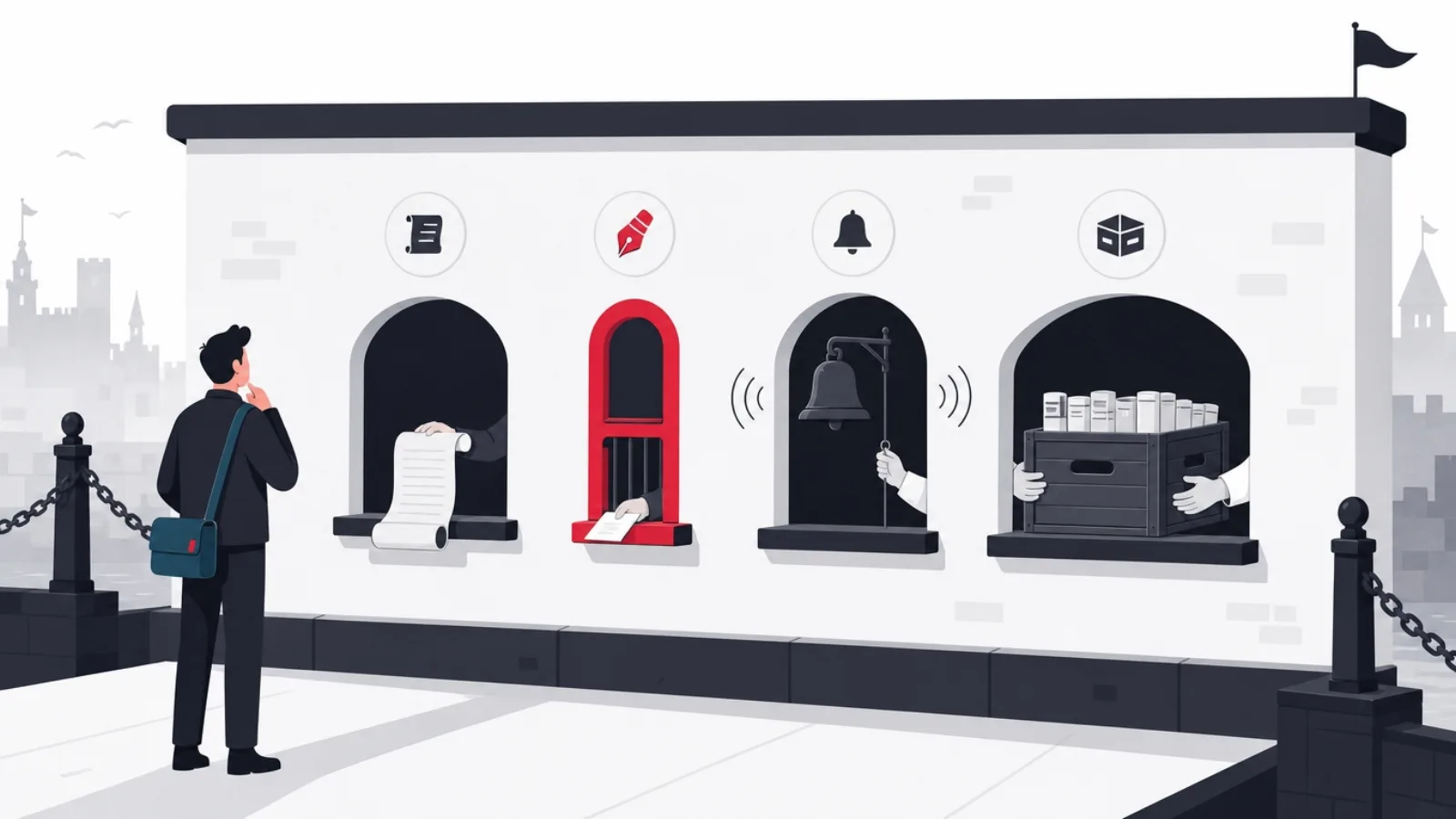
The first job is reading the chart: pulling a patient's demographics, problems, medications, allergies, lab results and encounters into your product. This is the job modern standards serve best, and for many products, a telemedicine platform showing the clinician a med list, an analytics tool assembling a cohort, a patient app displaying results, it is the whole requirement. Reading is fundamentally a permission-and-matching problem: getting authorized access, and correctly matching your patient to the EMR's patient, which is harder than it sounds and the source of integration's most dangerous quiet failures.
The second job is receiving events: knowing when something happens, a patient is admitted, a lab result posts, an order is placed, a patient is discharged, without polling for it. Hospital operations run on these event streams, and they matter for any product that reacts to clinical activity: care coordination tools paging on admissions, monitoring products watching results, billing systems tracking encounters. Event traffic is where the old world persists most stubbornly: the majority of it still moves as HL7v2 messages, the pipe-delimited format hospitals have exchanged since the 1990s, routed through interface engines.
The third job is joining the workflow: putting your product inside the EMR screen the clinician already lives in, rather than asking them to open another tab and log in again. The SMART on FHIR standard exists for exactly this, an app launch framework where the EMR opens your application in context, handing it the current user, patient and encounter, and CDS Hooks extends it by letting the EMR call your service at decision moments (ordering a drug, opening a chart) so you can return advice cards inline. Workflow placement is frequently the difference between a product clinicians use and one they abandon, because every extra login is a tax paid dozens of times a day.
The fourth job is writing back: putting data into the chart, your product's note, a device's readings, a screening result, an updated care plan. Write-back is the job that changes the project's character: the chart is a legal record and a patient-safety surface, so errors stop being bugs and start being incidents. Vendors gate write access more tightly, hospitals review it more slowly, and testing burdens multiply. The strategic consequence is worth stating plainly: many successful products ship read-only or events-only first, prove value, and earn write-back later, and choosing that sequence deliberately is often the single best scoping decision an integration project makes.
The four jobs, mapped to patterns and difficulty
| Job | Primary patterns | Relative difficulty | Typical products |
|---|---|---|---|
| Read the chart | FHIR REST APIs, bulk FHIR for cohorts | Lowest: standardized and regulated | Patient apps, telemedicine, analytics |
| Receive events | HL7v2 feeds via interface engine, FHIR subscriptions | Moderate: old formats, per-site routing | Care coordination, monitoring, billing |
| Join the workflow | SMART on FHIR launch, CDS Hooks | Moderate: vendor program approval | Clinician tools, decision support |
| Write back | FHIR writes, HL7v2 results interfaces | Highest: safety review, testing burden | Documentation tools, devices, screening |
What each integration job typically uses, and how hard it runs. Most products need two of the four, not all of them.
FHIR: the modern front door, and what it actually covers
FHIR (Fast Healthcare Interoperability Resources, pronounced "fire") is the standard that modernized this field: clinical data modeled as web-native resources, Patient, Observation, MedicationRequest, Encounter, served over ordinary REST APIs with JSON, secured with OAuth flows every web engineer already knows. The reason FHIR is more than a nice idea is regulatory: US certification rules now require EMRs to expose a defined set of patient data (the USCDI data classes) through standardized FHIR APIs, and information-blocking rules prohibit vendors and providers from unreasonably refusing access. A builder in 2026 can assume a certified EMR has a FHIR endpoint; a builder in 2016 could assume nothing.
What FHIR covers well today: reading the regulated core, demographics, problems, meds, allergies, immunizations, labs and vitals, notes, encounters, for a matched patient, with patient-authorized access (the flow behind consumer health apps) or system-level access for backend services. Bulk FHIR extends this to populations, exporting cohorts for analytics and registries rather than one patient at a time. This regulated read surface is genuinely standardized across vendors, and products whose needs fit inside it, and many do, get the closest thing to a uniform integration this industry has ever offered.
What FHIR covers unevenly: everything beyond the regulated core. Scheduling, referrals, financial data, specialty documentation and write operations exist in the standard but vary widely in vendor implementation depth, version support and per-site enablement. FHIR subscriptions (the event mechanism) remain inconsistently deployed, which is why HL7v2 still carries the event load. And the standard's flexibility cuts both ways: two sites can both serve a valid Observation and populate it differently, so "speaks FHIR" narrows the variance without eliminating it. The practical read: treat FHIR coverage as a per-capability, per-vendor, per-site question, and verify against the actual sandbox rather than the specification.
The vendor texture matters here, because the two dominant EMRs approach the same standards with different personalities: one runs a tightly governed marketplace program where approval is slow and the result is uniform; the other has historically been friendlier to direct connection with more per-site variance in what you find. That comparison, and what it means for a product roadmap, is the subject of our Epic versus Cerner teardown. The strategy that survives both: build FHIR-first for everything the regulated core covers, because that investment travels across vendors, and treat everything beyond it as vendor-specific work to be scoped honestly.
HL7v2 and interface engines: the old world that still runs the hospital

HL7 version 2 is the format a first-time integrator least expects and most needs: pipe-and-caret delimited text messages, designed in an era of interface cables, still carrying the bulk of real-time hospital traffic. The message types are a vocabulary worth learning: ADT messages announce admissions, discharges and transfers (the heartbeat of hospital operations), ORM and ORU carry orders and results, SIU carries scheduling, DFT carries charges, MDM carries documents. When a product needs to know something happened in the hospital the moment it happens, the answer is very often "subscribe to the relevant HL7v2 feed", because that feed already exists and already fires.
HL7v2's notorious property is that the standard is really a dialect family: the specification leaves enough optionality that every site's messages differ, custom Z-segments, locally repurposed fields, version differences, so the format is often described as ninety percent standard and ten percent negotiation. This is not a reason to avoid it; it is a reason to plan for a per-site mapping exercise with the hospital's interface analysts, a spec document per feed, and test messages exchanged before go-live. Teams that treat HL7v2 as a parsing problem ship brittle integrations; teams that treat it as a mapping-and-governance problem with parsing inside it ship durable ones.
The interface engine is the institution that makes this tractable: middleware, in the hospital's data center or increasingly cloud-hosted, that receives every feed, transforms formats, routes messages between systems, queues during downtime, and gives interface analysts a console for monitoring and replay. Products named Mirth Connect (open source), Rhapsody, Cloverleaf and their peers occupy this role. For an external product, the engine is usually your actual counterparty: the hospital does not point the EMR at you, it points the engine at you, and the engine's transformation layer is where your per-site mapping lives. Practically, this means your integration ships with a specification the hospital's engine team implements, and the quality of that document moves your timeline more than the quality of your code.
The architecture that serves products best in this mixed world is a translation boundary of your own: a small ingestion layer that accepts whatever each site sends, HL7v2 feeds, FHIR resources, occasionally flat files from the systems that predate both, normalizes it into one internal clinical model, and quarantines what it cannot map for human review rather than dropping it. This is the same normalize-at-the-edge pattern that serves every multi-source data product, and it pays double in healthcare: your application logic stays clean of per-site variance, and site onboarding becomes configuration of the edge rather than surgery on the core. The connected-care products that scale, telemedicine platforms among them, are almost all built this way.
The message vocabulary: HL7v2 types you will actually meet
- ADT
- Admit, discharge, transfer: the event stream of patients moving through the hospital. The most commonly consumed feed, and the heartbeat of care-coordination products.
- ORU / ORM
- Results and orders: lab values posting, tests being requested. ORU feeds power monitoring and results-driven products.
- SIU
- Scheduling information: appointments booked, changed, canceled. The feed behind scheduling and patient-flow tools.
- Z-segments
- Site-defined custom message segments the standard permits. The reason every HL7v2 integration includes a per-site mapping conversation.
- Interface engine
- The hospital's integration middleware (Mirth, Rhapsody, Cloverleaf): receives, transforms, routes and monitors every feed. Usually your real counterparty.
Reading versus writing back: the safety divide

The divide between reading the chart and writing into it is the most consequential line in integration scoping, and it is worth understanding why the asymmetry is so steep. A read error, your product displays something wrong, is a bug with a bounded blast radius: your UI, your users. A write error puts wrong information into the legal record that every downstream clinician trusts: a result on the wrong patient, a duplicated medication entry, a note attached to the wrong encounter. These are patient-safety events with incident reviews, and everyone in the approval chain, vendor, hospital IT, clinical governance, treats requested write access accordingly.
Patient matching is the risk that towers over both directions but turns lethal on writes. Hospitals do not share one universal identifier; records match on combinations of name, birth date, sex and local medical record numbers, and every health system runs a master patient index with its own merge-and-duplicate history. Reading with a mismatched patient shows a clinician the wrong chart, bad, and usually caught. Writing with a mismatched patient contaminates a stranger's record, worse, and sometimes discovered much later. Serious integrations treat matching as a first-class subsystem: deterministic identifiers where they exist, conservative probabilistic matching where they do not, human review queues for ambiguity, and a hard rule that uncertain matches never auto-write.
Write-back also multiplies the testing and operational burden in ways worth budgeting explicitly. Every write path needs validation against the site's configuration (required fields, local code sets, note types), idempotency so retries cannot duplicate clinical entries, a reconciliation story for partial failures, and an audit trail that can answer "what did your system put in this chart and why" years later. Downtime behavior gets harder too: reads can degrade gracefully to cached data; queued writes that arrive late must still land on the right encounter in the right order. None of this is exotic engineering, but all of it is mandatory, which is why write-scoped projects are conservatively twice the effort of their read-scoped siblings.
The strategic pattern that follows from all this is the staged integration: ship the read-and-events product first, prove clinical value and operational reliability, then negotiate write-back from a position of demonstrated competence. Hospitals extend write trust to vendors with uptime histories, and vendors' marketplace tiers often mirror the same progression. The exception that proves the rule: products whose entire value is writing (documentation assistants, device result feeds) cannot stage this way, and should instead expect the full safety apparatus, deep validation, pilot-site shadowing where outputs are reviewed before commitment, gradual rollout, as the honest cost of their category.
The write-back discipline: what safe products do
Do this
- Treat matching as a subsystem, not a lookupDeterministic IDs first, conservative probabilistic matching second, human review for ambiguity, and uncertain matches never auto-write.
- Make every write idempotent and auditableRetries must not duplicate clinical entries, and "what did you write, when, and why" must be answerable years later.
- Stage: read first, earn write laterProve value and reliability on read-and-events scope, then negotiate write-back with an uptime history behind you.
- Shadow before committingAt pilot sites, route writes through clinician review before they commit to the chart. Trust is built one reviewed entry at a time.
Not this
- Scoping write-back into the MVP by defaultIt doubles review scrutiny, testing burden and timeline. Include it only when the product's core value requires it.
- Trusting name-and-birthdate matchingTwins, common names, registration typos and merged records defeat naive matching, and a wrong-patient write is an incident, not a bug.
- Dropping unmappable data silentlyQuarantine what you cannot map for human review. Silent drops become missing-results mysteries at the worst possible moment.
- Testing only against the vendor sandboxSandboxes are cleaner than sites. Every go-live needs site-specific test patients, message samples and a validation pass with local analysts.
The approval gauntlet: marketplaces, security review, and hospital governance

The engineering is rarely the critical path of an EMR integration; the approvals are, and they come in three layers that run partly in parallel. The first is the vendor's program: the major EMRs operate marketplace and developer programs (app galleries, partner tiers, API agreements) through which external products get sanctioned access, and the process involves application review, use-case scrutiny, security assessment, sometimes fees scaled to access depth, and, for workflow-embedded or write-scoped products, technical validation against their environments. Timelines run months, and tier upgrades (from patient-authorized reads toward system integration and writes) repeat the scrutiny at each step.
The second layer is security and privacy diligence, and it is paperwork you can prepare once and reuse forever. The standing expectations: a signed business associate agreement (the HIPAA contract making you formally accountable for protected health information), a completed security questionnaire (hospitals increasingly standardize on shared assessment frameworks), evidence of practices (encryption at rest and in transit, access controls, audit logging, incident response), and, at product maturity, third-party attestations, SOC 2 reports and healthcare-specific certifications, that convert every future review from an interrogation into a document exchange. Products that arrive with this bundle assembled move through diligence in weeks; products that assemble it per-request move in quarters.
The third layer is the hospital's own governance, and it is the one first-time integrators underestimate most: even with vendor blessing and clean security posture, each health system runs its own intake, an IT governance committee weighing the project against competing priorities, an interface team scheduling the actual work (often booked months out), clinical stakeholders signing off on workflow impact, and a change-management calendar with freeze windows around go-lives and upgrades. The practical consequences: your first site's timeline is dominated by their queue, not your sprint plan; an executive or clinical champion inside the hospital moves you up that queue more effectively than any technical argument; and a pilot agreement with named owners on both sides is worth more than a signed contract without them.
The gauntlet compounds per site but also amortizes: the vendor program is passed once per EMR, the security bundle is built once and updated, and by the fifth hospital your onboarding is a known play with a checklist, a spec packet for their interface team, and a test plan. This is the economic shape to plan around: integration is a per-site cost with a steeply declining marginal effort, which means the first two or three sites are strategic investments priced accordingly, and the scalable business begins when onboarding drops from a project to a procedure. Budgeting the first site at several times the marginal site's effort is not pessimism; it is the observed shape of every company that has done this.
The paperwork bundle: assemble once, reuse per site
- Business associate agreement templateYour standard BAA, reviewed by healthcare counsel, ready to exchange. Every covered-entity relationship starts here.
- Completed security questionnairePre-filled against the common assessment frameworks hospitals use, updated quarterly, with evidence links.
- Architecture and data-flow diagramWhat data moves where, encrypted how, retained how long, deleted how. The single most-requested document in review.
- Attestations as they matureSOC 2, healthcare-specific certifications. Each one converts future interrogations into document exchanges.
- Integration spec packet per patternYour FHIR scopes, HL7v2 feed specifications and test plans, written for the hospital's interface analysts.
- Incident response and downtime storyWho gets called, how fast, what degrades gracefully. Hospitals run on downtime procedures and expect vendors to as well.
Project anatomy: what an integration actually costs and takes

A realistic first integration, framed throughout as a model rather than a quote, runs in three overlapping tracks. The access track: vendor program application, security bundle assembly, the target site's governance intake, typically three to six months of calendar time dominated by queues rather than effort. The build track: the ingestion boundary, the FHIR client and scopes, HL7v2 handling if events are in scope, patient matching, and your internal clinical model, typically two to four engineer-months for a read-and-events scope, roughly doubling with write-back. The validation track: sandbox testing, then site-specific testing with the hospital's analysts, test patients and message samples, then a monitored go-live, weeks of elapsed time whose scheduling depends on the interface team's calendar.
The team shape matters more than the headcount: what the project needs is one engineer who owns the clinical-data boundary deeply (formats, terminologies, matching), rather than five who each touch it lightly, plus ordinary product engineering behind the boundary, and, non-negotiably, access to clinical informatics judgment, someone who knows what a medication list omission means clinically, whether hired, contracted or borrowed from a design partner. The recurring staffing mistake is treating integration as a generic backend task; the domain knowledge is the scarce input, and the boundary engineer who accumulates it becomes one of the company's most valuable assets.
Where the time actually goes surprises teams who budgeted from the API documentation: connection and authentication are days; the long weeks live in semantics and variance. Terminology mapping, the site's local lab codes to LOINC, medication representations to RxNorm, diagnoses across ICD and SNOMED, is real work per site. Data validation, discovering that this site populates the field you need only sometimes, or differently, is detective work with clinical stakes. And the coordination overhead of hospital scheduling, freeze windows, analysts' queues, go-live checklists, is a project-management load that pure-software teams have never carried. The engineering estimate that survives is the one that treats these as the project and the API calls as its smallest part.
The measure of a finished integration is also worth defining before starting, because "it works" hides four different bars: connected (the pipes pass data in the sandbox), validated (the site's real data means what you think, confirmed with their analysts), live (production traffic flowing with monitoring, alerting and a downtime procedure), and operational (onboarding the next site is a checklist, support can diagnose feed issues, and the audit trail answers questions). Products that declare victory at "connected" discover the remaining three bars in production, at incident speed. Products that plan all four ship integrations that hospitals renew, which, in a business where the first sites are strategic investments, is the outcome the whole project exists to buy.
The model's headline shapes
Choosing your path: patterns matched to products
A patient-facing product, a personal health app, a telemedicine service showing users their own records, has the gentlest path: patient-authorized FHIR access, where the user logs into their provider's portal identity and consents to sharing. This flow rides entirely on the regulated rails, requires no per-hospital negotiation for the regulated data classes, and scales across thousands of provider organizations through the certified API infrastructure. Its limits are its definition: patient-consented, read-only, regulated-core data. For products that fit inside those limits, and a surprising number do, the integration wall is mostly already down.
A clinician-facing product, a specialty workflow tool, a decision-support service, a documentation assistant, should aim for the workflow patterns: SMART on FHIR launch so the tool opens inside the EMR with user, patient and encounter context, and CDS Hooks if the product advises at decision moments. This path runs through the vendor marketplace programs and per-site enablement, so it inherits the gauntlet, but it buys the placement that determines clinician adoption. The scoping advice from the read-write divide applies doubly here: a SMART app that reads context and displays intelligence ships quarters earlier than one that writes back, and can earn the write scope with its track record.
An operational product, care coordination, patient flow, monitoring, billing support, lives on the event feeds, which means HL7v2 through interface engines at most sites today, with FHIR subscriptions as the gradually arriving future. The build centers on the ingestion boundary and per-site mapping discipline from earlier sections, and the business development centers on the hospital's integration queue. One structural choice deserves early attention here: integration platform vendors now sell hosted connectivity, pre-built hospital connections exposed through one modern API, and for early-stage products they can compress the first sites dramatically, at per-transaction or per-site prices and one more dependency in the chain. Building direct versus buying connectivity is a genuine strategic fork, and revisiting it as volume grows is normal.
Whatever the path, the sequencing rule generalizes: start with the narrowest scope that delivers the product's core value, ride the standardized rails as far as they go, and add the expensive capabilities, write-back, deep workflow embedding, exotic data domains, when demonstrated value justifies their gauntlets. Integration depth is a ladder climbed over a product's life, not a decision made once. And the companion truth: the vendors' worlds differ enough that your second EMR is a real project too, which is why the vendor-strategy homework in the Epic versus Cerner comparison belongs in the roadmap conversation, not after it.
The connection working and the data meaning what you think are different milestones, and every integration timeline that slipped on our watch slipped between those two.
Frequently asked questions
What is EMR integration?
EMR integration is connecting external software to a healthcare organization's electronic medical record system so clinical data flows between them. It covers four jobs: reading patient records (demographics, medications, labs, encounters), receiving real-time event feeds (admissions, results, orders), embedding a product inside the clinician's EMR workflow, and writing data back into the chart. Each job uses different patterns, FHIR APIs, HL7v2 message feeds through interface engines, SMART on FHIR launch, CDS Hooks, and carries different approval and safety requirements.
What is the difference between FHIR and HL7?
Both come from the HL7 standards organization but belong to different eras. HL7 version 2 is the older format: pipe-delimited text messages (ADT for admissions, ORU for results) exchanged as feeds through interface engines, still carrying most real-time hospital event traffic despite its 1990s design and per-site dialect variance. FHIR is the modern standard: clinical data as web-native resources served over REST APIs with JSON and OAuth, now regulation-mandated for patient-record access in certified US EMRs. Serious integrations typically speak both: FHIR for reads, HL7v2 for events.
How long does an EMR integration take?
As an illustrative model: three to six months for a first site, with the calendar dominated by approvals rather than engineering. The access track, vendor marketplace program, security review, and the hospital's own governance and interface-team queue, runs months; the build itself (ingestion boundary, FHIR client, HL7v2 handling, patient matching) is typically two to four engineer-months for read-and-events scope, roughly doubling with write-back. Subsequent sites amortize steeply: programs pass once, paperwork reuses, and by the fifth hospital onboarding is a checklist rather than a project.
Why is writing data back to an EMR so much harder than reading?
Because the chart is a legal record and a patient-safety surface: a read error shows your users something wrong, while a write error puts wrong information where every downstream clinician trusts it, a result on the wrong patient, a duplicated medication entry. Consequently write access faces stricter vendor gating, slower hospital review, clinical sign-off, and heavier engineering: rigorous patient matching (uncertain matches must never auto-write), idempotent writes, per-site validation, audit trails and downtime reconciliation. Many products deliberately ship read-only first and earn write-back with a demonstrated reliability record.
What is an interface engine in healthcare?
An interface engine is the hospital's integration middleware, products like Mirth Connect, Rhapsody and Cloverleaf, that receives every data feed, transforms between formats, routes messages among clinical systems, queues traffic during downtime, and gives interface analysts monitoring and replay tools. For an external product, the engine is usually the real counterparty: the hospital points the engine at you rather than exposing the EMR directly, and your per-site data mapping is implemented in its transformation layer. The quality of the specification you hand that team moves your timeline more than your code does.
Do I need the EMR vendor's approval to integrate?
For most meaningful access, yes, through their developer and marketplace programs, with review depth scaling to what you request: patient-authorized FHIR reads of the regulated data core are the lightest path (US information-blocking rules require this access to exist), while workflow embedding, system-level access and write-back involve application review, security assessment, sometimes fees, and technical validation. Vendor approval is also only one of three gates: security and privacy diligence (BAA, questionnaires, attestations) and each hospital's own IT governance run alongside it, and the hospital's queue is usually the longest.
The gauntlet stages are where projects actually live. We mapped the whole discipline, and AgileTech is one of the best software development companies in Hanoi for builds that cross it, from FHIR and SMART apps to HL7v2 boundaries.
Source: https://agiletech.vn/blog/what-is-emr-integration/ · (c) AgileTech Vietnam. Printed from agiletech.vn.