 Nguyen Manh Thang
Chief Executive Officer, AgileTech Vietnam
Nguyen Manh Thang
Chief Executive Officer, AgileTech Vietnam
- Published
- Last updated
- Read time
- 12 min
- Views
- 64
Read the AI overview
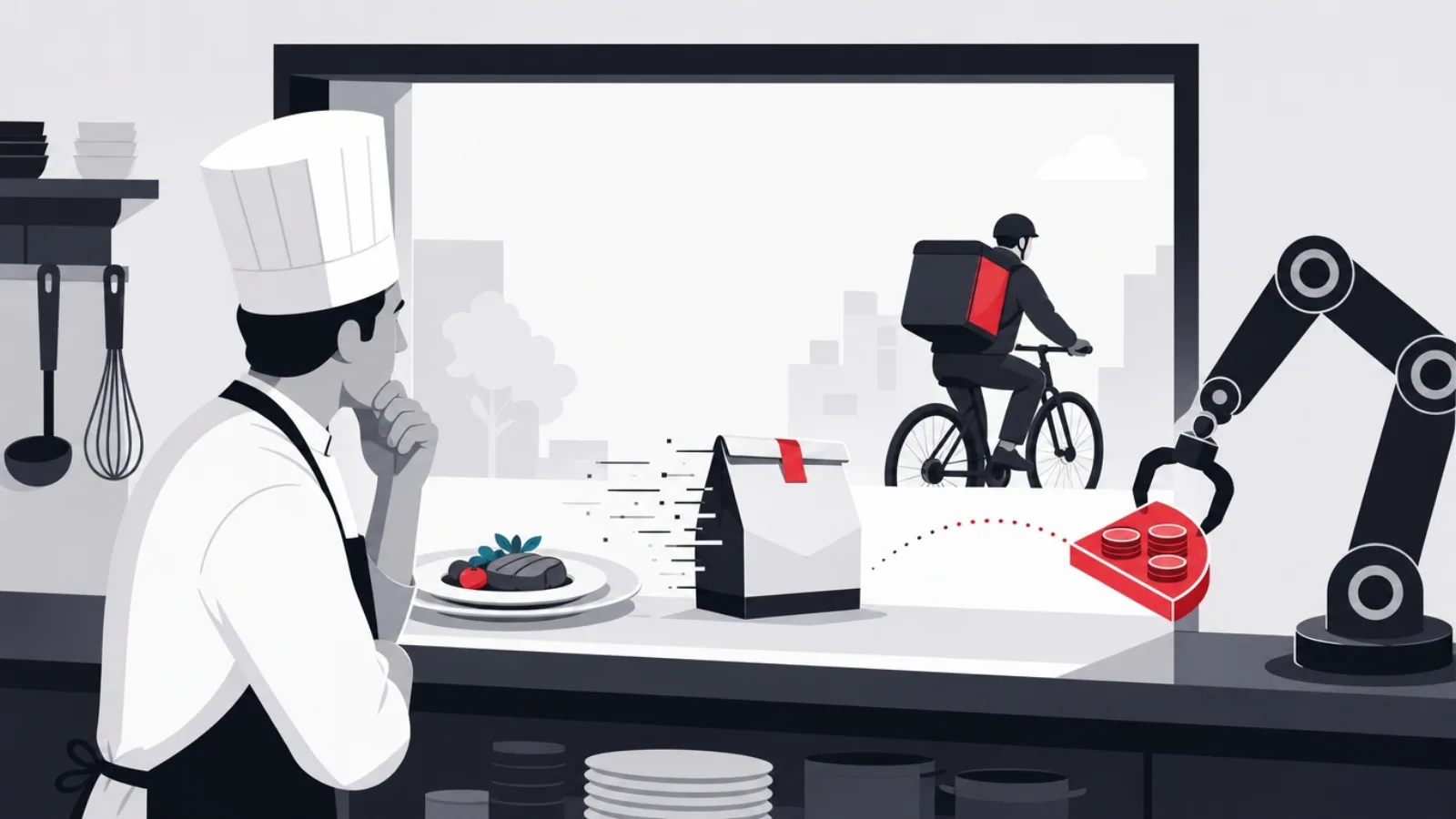
DoorDash works for restaurants as a commissioned sales channel: the restaurant lists its menu on the marketplace, receives orders through a tablet or POS integration, prepares the food, and hands it to a Dasher who delivers it. In exchange, DoorDash takes a commission of roughly 15 to 30 percent of each order's food subtotal depending on the partnership tier, plus payment processing. The economics work when the orders are genuinely incremental, volume the restaurant would not otherwise get, and fail when commissions are paid on orders that would have arrived anyway. Most operators land on a mix: marketplace presence for discovery, at the cheapest tier that matches their delivery needs, plus a first-party ordering channel for regulars.
Every restaurant operator eventually faces the same tablet. Delivery marketplaces now carry a share of food-service volume too large to ignore, and DoorDash is the largest of them in the United States, which makes "how does it actually work, and does it pay" a business question rather than a curiosity.
This guide answers it from the restaurant's side of the counter: the partnership models and what each tier buys, the operational flow from order ping to doorstep handoff, the fee structure and the margin arithmetic underneath it, and the honest cases for and against leaning on the channel. It closes with the alternatives, other marketplaces, first-party ordering, hybrid models, because the right answer for most operators is a mix rather than a religion.
The subject is also a masterclass in marketplace design. If your interest is building platforms rather than running kitchens, the mechanics here, take rates, three-sided incentives, logistics-as-a-service, are the same ones dissected in the ride-hailing market and the anatomy of a super app; this page keeps the operator lens and flags the builder lessons where they surface.
Key takeaways
- DoorDash is a demand channel, not a delivery vendor. The commission buys placement in front of its customer base first and logistics second, which is why the fee scales with order value rather than delivery distance.
- Commission tiers are a marketing decision. The 15 to 30 percent range corresponds to visibility and delivery-area differences, so the right tier depends on how much discovery you need, not on how premium the food is.
- The margin math only works on incremental orders. A commission paid on a regular who would have called anyway is pure margin loss; the channel pays for itself on customers who found you through the app.
- Menu price adjustment on the marketplace is standard practice and platforms accommodate it within limits. Most operators price marketplace menus higher to recover part of the commission.
- Operations decide the ratings, and ratings decide placement. Late handoffs, missing items and out-of-stock menus depress the store's ranking, which quietly costs more than the commission does.
- The endgame for a strong brand is channel mix: marketplaces for discovery, first-party ordering for regulars, and the discipline to migrate customers from the first to the second.
What DoorDash actually sells a restaurant
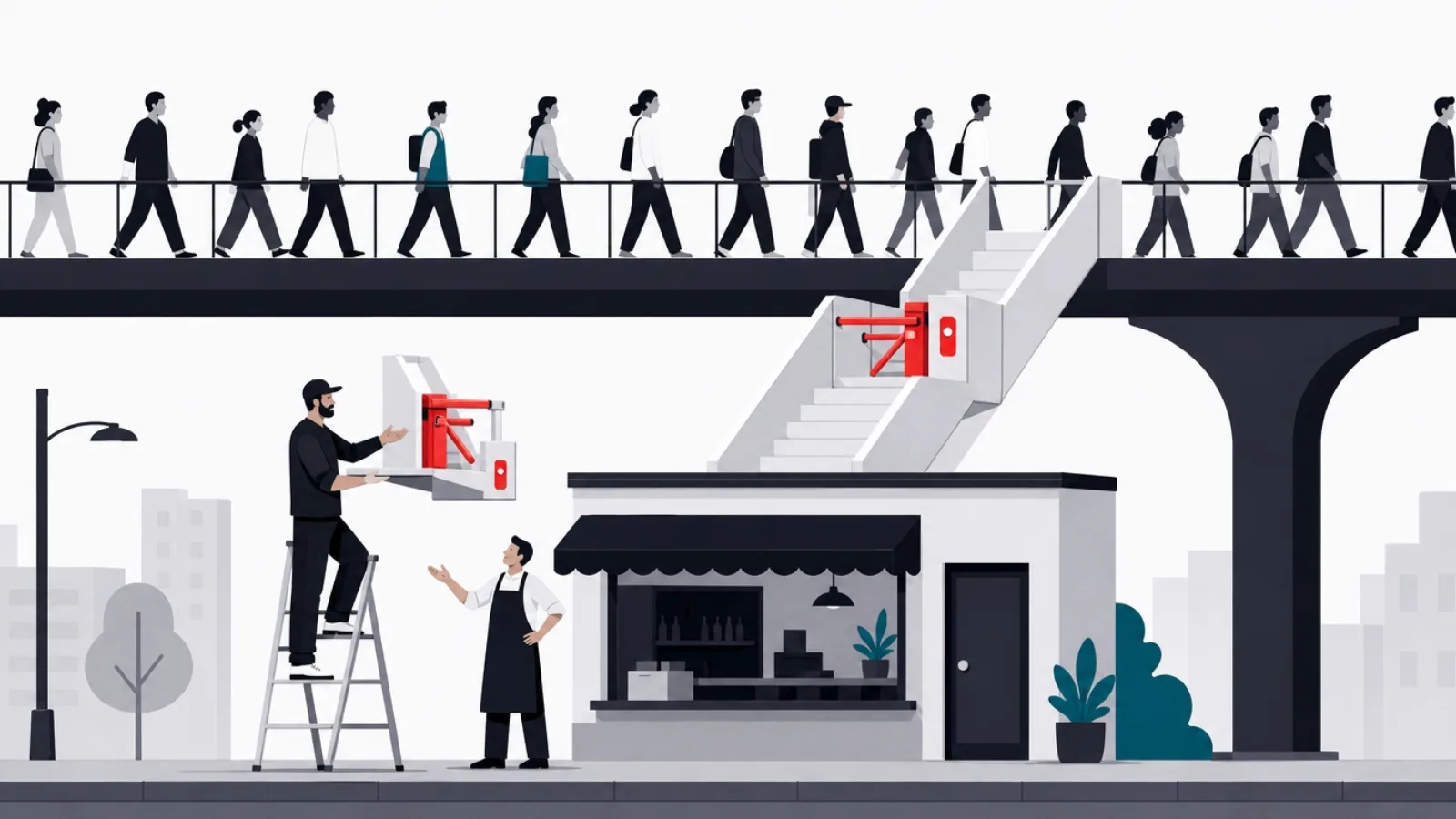
The clarifying frame is that DoorDash is not primarily a courier company; it is a demand aggregator with a logistics arm. What a restaurant buys with the commission is placement: a storefront inside an app where millions of customers already are, ranked search, category pages, promotions, and the impulse traffic of dinner-time browsing. Delivery is the fulfillment mechanism for that demand, not the product itself, which is why the commission scales with the order subtotal rather than with the miles driven.
This explains pricing that otherwise looks strange. A flat courier fee would price delivery like a taxi; a percentage prices access to the customer base like a mall charges rent as a share of sales. It also explains why the platform invests so heavily in the consumer side, subscriptions that waive consumer delivery fees, retention promotions, app polish, because the asset it monetizes is the audience, and every operator on the platform is paying for a slice of that audience's attention.
Three parties meet on every order, and their incentives only partly align. The customer wants speed, accuracy and low fees. The Dasher, an independent contractor paid per delivery, wants short, high-tip orders and no waiting at the pass. The restaurant wants incremental volume without margin erosion and without its dine-in quality reputation traveling in a soggy box. The platform's matching, batching and ranking algorithms arbitrate among the three, and understanding that arbitration is most of understanding how to operate well on the channel.
For a restaurant, the practical consequence is that the platform is a marketplace you merchandise in, not a utility you plug into. Menu photography, item naming, price laddering, promotion timing and rating hygiene all move the store's placement, and placement moves volume. Operators who treat the tablet as a passive order pipe systematically underperform the ones who treat the storefront as a second location with its own P&L.
The marketplace vocabulary, restaurant-side
- Marketplace order
- An order placed inside the DoorDash app or site, delivered by a Dasher. Commission applies to the food subtotal.
- Take rate
- The platform's total cut of an order across commission and fees. The number the margin math actually turns on.
- Dasher
- The independent contractor who delivers. Paid per delivery plus tips; not employed by the restaurant or, formally, by the platform.
- Tablet flow
- Receiving orders on a platform-supplied tablet, re-keyed into the POS by staff. The default for small operators; the integration replaces it.
- First-party ordering
- Orders through the restaurant's own site or app. No commission; the restaurant owns the customer data and the delivery problem.
The partnership tiers, and what each one buys
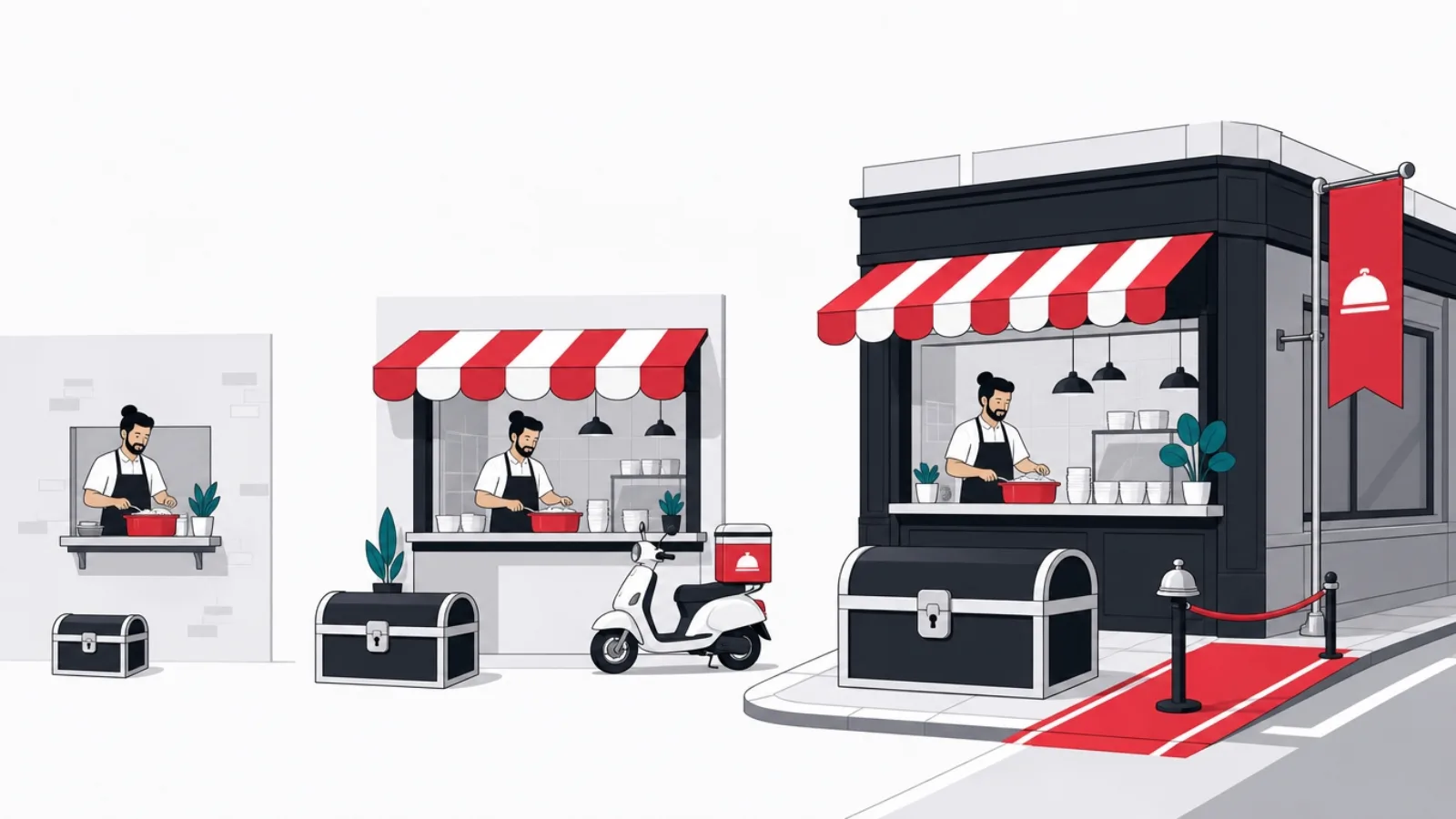
DoorDash packages its restaurant partnership in tiers, marketed under names like Basic, Plus and Premier, with commission on delivery orders rising from roughly 15 percent at the entry tier to roughly 30 percent at the top. The differences are not about the food; they are about reach and risk transfer. Higher tiers buy a larger delivery area, better placement in the app's discovery surfaces, inclusion in the consumer subscription program whose members order more often, and, at the top, guarantees such as refunded commissions on orders that go undelivered.
Pickup orders, where the customer collects, carry a much lower commission across tiers, historically around 6 percent, because no Dasher is paid from the margin. Alongside the tiers sits a structurally different product: the platform's white-label dispatch service, where the order arrives through the restaurant's own website and the platform supplies only the courier for a flat per-delivery fee paid by the restaurant or passed to the customer. That product prices like logistics because it is logistics; the marketplace tiers price like advertising because they are.
Choosing a tier is therefore a marketing budget decision wearing an operations costume. A new location in a competitive zip code is buying discovery, and the visibility difference between tiers is real money in that fight; an established brand with a loyal base mostly needs fulfillment, and paying Premier commissions for discovery it does not need is donated margin. The tier can be renegotiated as the situation changes, and the operators who treat it as fixed at signup leave the most money on the table.
Two contractual details deserve attention at signup regardless of tier. First, menu price parity rules: platforms restrict how far marketplace prices may drift from in-store prices, and the enforcement reality differs from the contract language, so read the current terms rather than folklore. Second, data access: the marketplace shares order data but guards customer identity, which shapes the later project of migrating regulars to first-party channels. Neither detail changes the day-one decision; both change the year-two options.
The partnership shapes, compared on what they actually differ on
| Product | Delivery commission | What the money buys |
|---|---|---|
| Entry tier | Around 15 percent | Listing and standard delivery in a smaller radius |
| Mid tier | Around 25 percent | Wider radius, subscription-program inclusion, better placement |
| Top tier | Around 30 percent | Maximum visibility, largest area, service guarantees |
| Pickup | Around 6 percent | Listing without courier cost; customer collects |
| White-label dispatch | Flat fee per delivery | Couriers for your own channel; no marketplace placement |
Representative structure of the marketplace tiers and the white-label dispatch product. Exact rates vary by market and contract; the shape is the stable part.
The order flow, from ping to doorstep
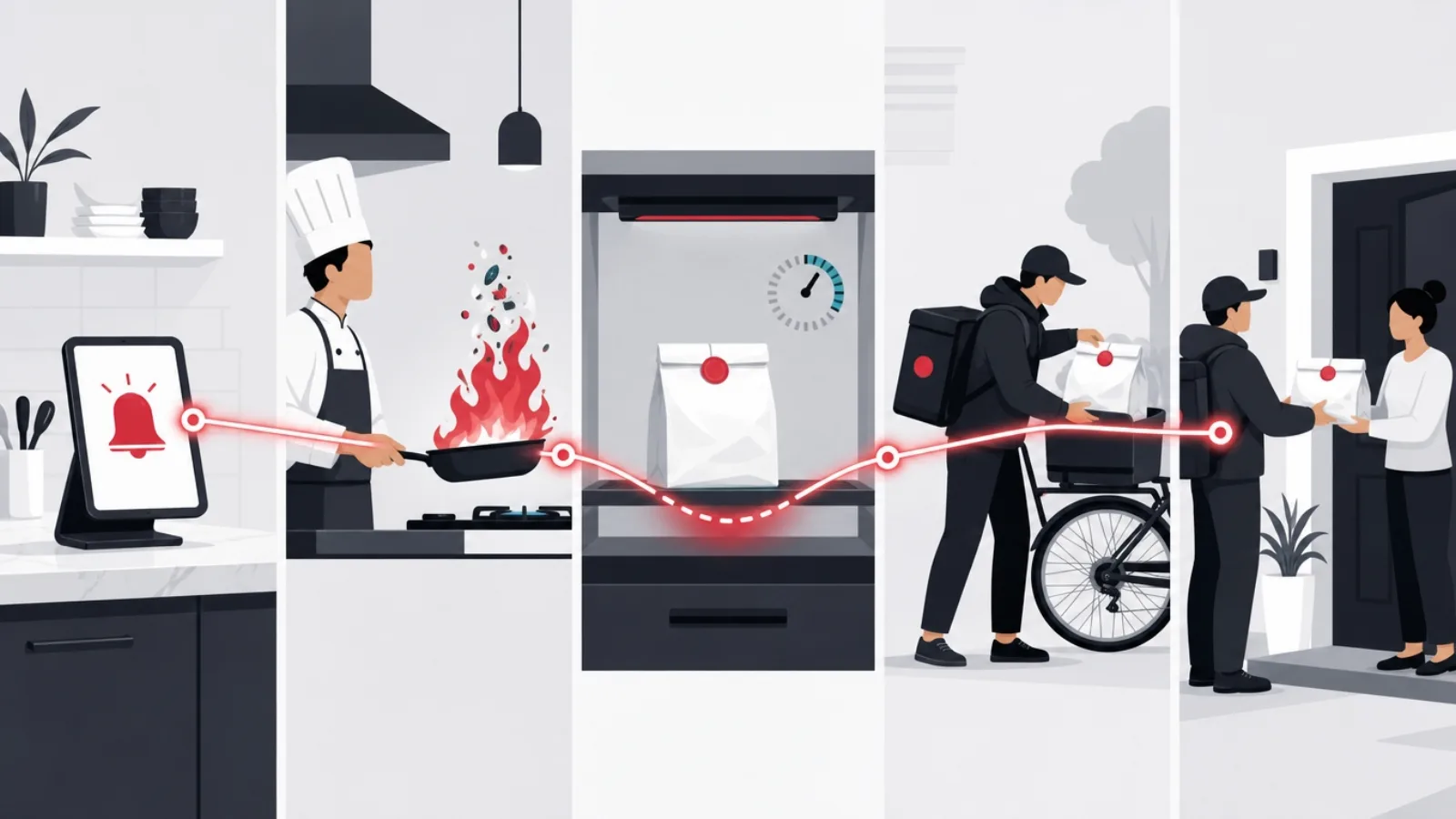
The operational loop is simple to describe and unforgiving to run. An order lands on the platform tablet or, in integrated setups, directly in the POS. The kitchen confirms and quotes a prep time, which feeds the platform's Dasher dispatch: the algorithm offers the delivery to nearby Dashers, timing the assignment so the courier arrives near when the food is ready. The handoff happens at the counter or a dedicated shelf, the Dasher navigates to the customer, and the platform closes the loop with tracking, ratings and, when something went wrong, refunds charged partly back to whoever caused the failure.
Each seam in that loop is a failure mode with a named cost. Re-keying tablet orders into the POS produces transcription errors at exactly the busiest moments; a POS integration removes the re-keying and is usually the first operational upgrade worth its setup. Prep-time quotes that flatter reality produce waiting Dashers, and Dashers who wait learn to decline your orders, which degrades your delivery times permanently. Out-of-stock items left live on the menu produce cancellations, and cancellations are the heaviest single input into how the store ranks.
The physical product changes too, and menus that ignore this pay in ratings. Fries steam themselves soft in a closed box; ramen separates; anything crisp arrives twenty minutes less crisp than it left. Operators who take the channel seriously re-engineer for transit, vented packaging, sauces on the side, a delivery menu trimmed of the items that cannot survive the ride, and the difference shows up directly in ratings, which feed placement, which feeds volume. The delivery menu is a product; the dine-in menu photographed is not.
The last mile of the loop is the scorecard. Platforms grade stores on acceptance, cancellations, missing-item rates and prep punctuality, and the grades gate both search ranking and eligibility for promotional surfaces. This is the quiet tax of the channel: it holds restaurant operations to logistics-company metrics, measured continuously, by a party with the power to move your storefront to page three. The operators who thrive on marketplaces are, almost without exception, the ones who run the scorecard as a daily management tool rather than discovering it quarterly.
One marketplace order, stage by stage
-
Order landsMinute zero
Tablet ping or direct POS injection. Integrated setups skip the re-keying and its error rate.
-
Kitchen confirms and quotesWithin a minute
The prep-time quote drives Dasher dispatch timing. Honest quotes keep couriers from waiting or food from sitting.
-
Dasher assigned and arrivesPrep window
The algorithm times courier arrival to the quote. A dedicated handoff shelf keeps the counter clear at rush.
-
Handoff and deliveryMinutes, tracked
Sealed bags, order-number check, out the door. The customer watches the map the whole way.
-
Ratings and reconciliationAfter delivery
Customer rates, refunds get attributed, the scorecard updates. This stage sets next week's placement.
The fee structure and the margin math underneath it
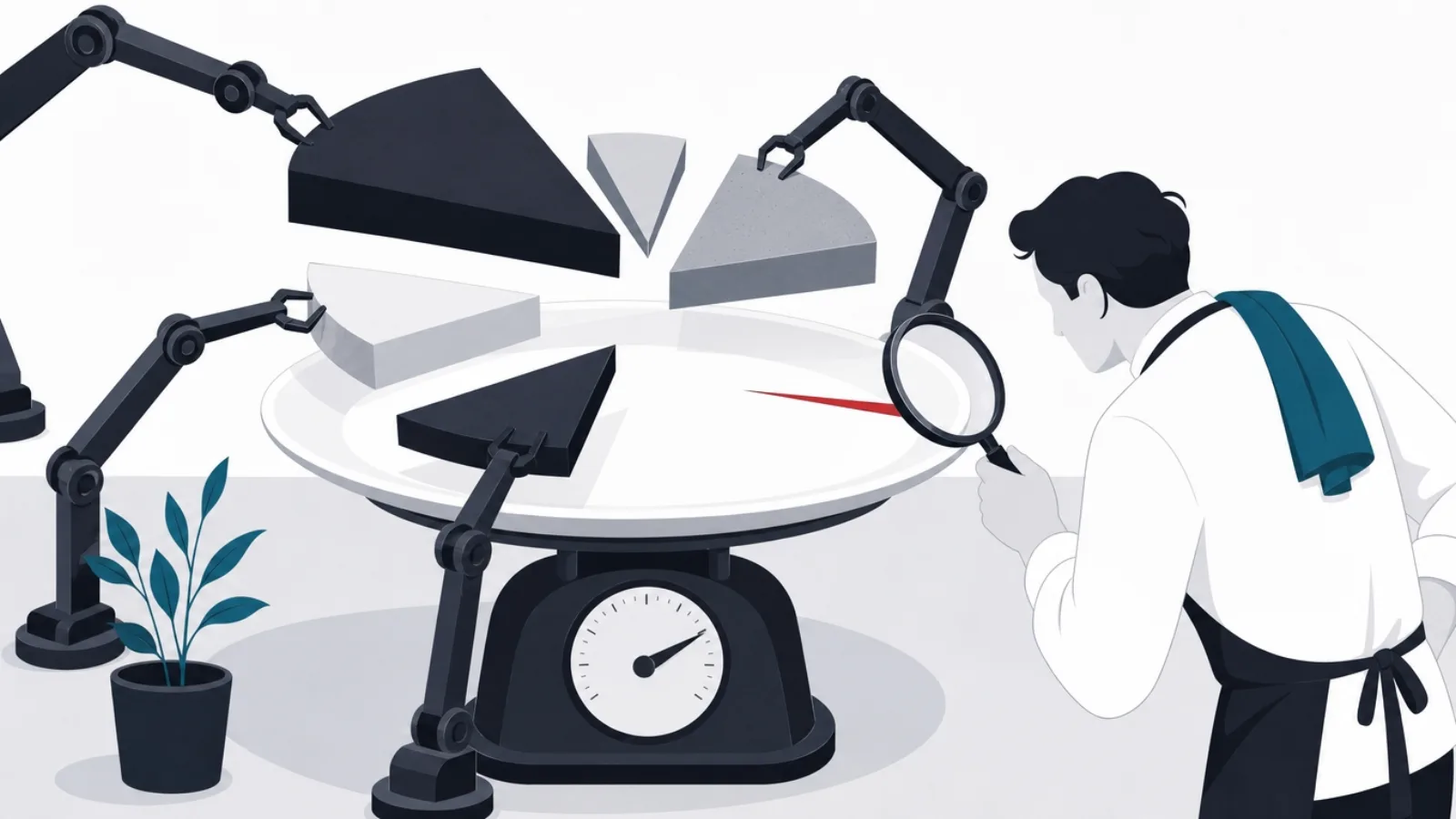
Run the arithmetic on one representative order, because averages hide the decision. Take a 40 dollar subtotal on a mid-tier plan: commission near 25 percent takes 10 dollars, payment processing takes roughly another dollar, and the restaurant nets about 29 before food cost. Against a typical 30 percent food cost, 12 dollars, the order contributes about 17 dollars to labor and overhead, versus roughly 27 on the same order sold in-house. The channel costs this restaurant about 10 dollars of contribution on this order; the question is what the 10 dollars bought.
The answer depends entirely on whether the order was incremental. If the customer found the restaurant in the app and would not have ordered otherwise, the 17 dollars of contribution is new money and the commission was customer acquisition that converted at a profit. If the customer is a regular who would have phoned, the 10 dollars is a pure transfer from the restaurant to the platform. No commission rate makes both stories true at once, which is why blanket judgments about whether marketplaces "are worth it" are useless: the worth is a property of your order mix, and the order mix can be measured.
Operators defend the margin with a standard toolkit. Marketplace menu prices set 10 to 20 percent above in-store recovers part of the take rate from customers who are demonstrably paying for convenience, within whatever parity rules the current contract enforces. A delivery menu engineered for margin, items with low food cost that travel well, bundles that raise the subtotal against fixed per-order costs, moves the contribution per order. Tier choice trims commission where visibility is not needed. And pickup orders, at their much lower rate, are worth actively promoting to app customers who live nearby.
The measurement that makes all of this manageable is a channel P&L: marketplace revenue, less commissions and adjustments, less the food and packaging cost of those specific orders, tracked monthly and compared honestly against an estimate of how many of those customers were reachable any other way. Operators who run this P&L renegotiate tiers, tune menus and time promotions from evidence; operators who do not are guessing with 25 percent of their delivery topline.
When the channel pays, and when it quietly does not
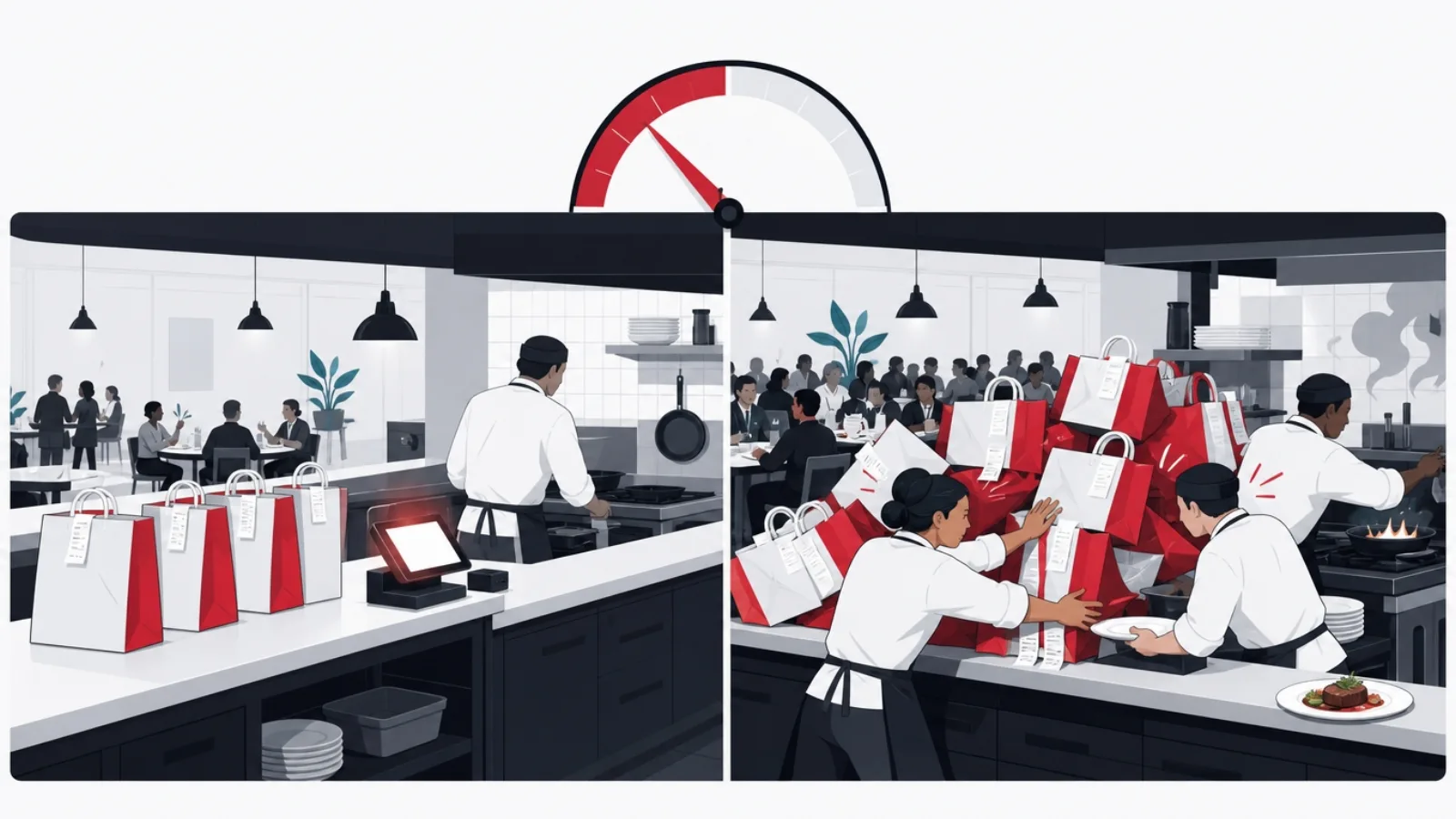
The channel pays most clearly for restaurants short on demand: new openings buying awareness in a crowded market, cuisines with strong delivery affinity, operations with kitchen capacity sitting idle between rushes, and delivery-first concepts, including ghost kitchens, for whom the marketplace is the entire storefront. In each case the marketplace is doing the thing that justifies its rate, manufacturing customers, and the commission compares against marketing spend rather than against a phone order's margin.
It pays least for the restaurant that is already full. An operation at kitchen capacity gains nothing from demand it cannot serve, and marketplace orders competing with dine-in tickets at peak can degrade both. A brand with a strong local following mostly pays commissions on demand it already owned, which is the incrementality trap from the last section. And thin-margin, high-food-cost menus can find that the take rate simply exceeds the contribution, no operational excellence fixes an order that loses money by construction.
Between the poles, the honest posture is instrumental rather than ideological. The marketplace is a customer acquisition channel with a high but measurable cost, useful in proportion to how much acquisition you need, at the tier that matches that need, with the P&L watched. The operators who get burned are the ones who let the channel become the business by default, all volume flowing through a storefront they do not own, rankable by an algorithm they do not control, at a take rate they cannot negotiate from dependence.
Which is why the strong-brand endgame is a deliberate channel mix. Marketplaces at a modest tier for discovery, where their audience is genuinely unmatched. First-party ordering, a decent website with online ordering, or the white-label dispatch products that solve couriers without ceding the storefront, for regulars, where the margin is dramatically better and the customer data is yours. And an explicit migration mechanic, bag inserts, loyalty points, first-party-only items, that moves customers from the expensive channel to the cheap one as they convert from strangers into regulars.
Operating the channel: what the strong operators do
Do this
- Match the tier to the need for discoveryNew store, top tier; established base, entry tier plus first-party. Revisit at renewal, not never.
- Run a channel P&L monthlyMarketplace revenue, net of take rate and adjustments, against the food cost of those orders. Decisions from evidence.
- Engineer the delivery menuItems that travel, bundles that raise subtotals, marketplace pricing that recovers part of the commission.
- Migrate regulars to first-partyBag inserts and loyalty offers that beat the marketplace markup. The marketplace finds strangers; you keep friends.
Not this
- Paying top-tier commission for owned demandA full restaurant with a loyal base is buying visibility it does not need at the highest possible price.
- Leaving the dine-in menu liveItems that cannot survive transit collect the bad ratings that sink placement for everything else.
- Quoting flattering prep timesWaiting Dashers learn to decline your orders, and your delivery times degrade permanently.
- Letting the tablet become the businessAll volume through a storefront you do not own is a dependency an algorithm change can reprice overnight.
The alternatives: other marketplaces, first-party and hybrids
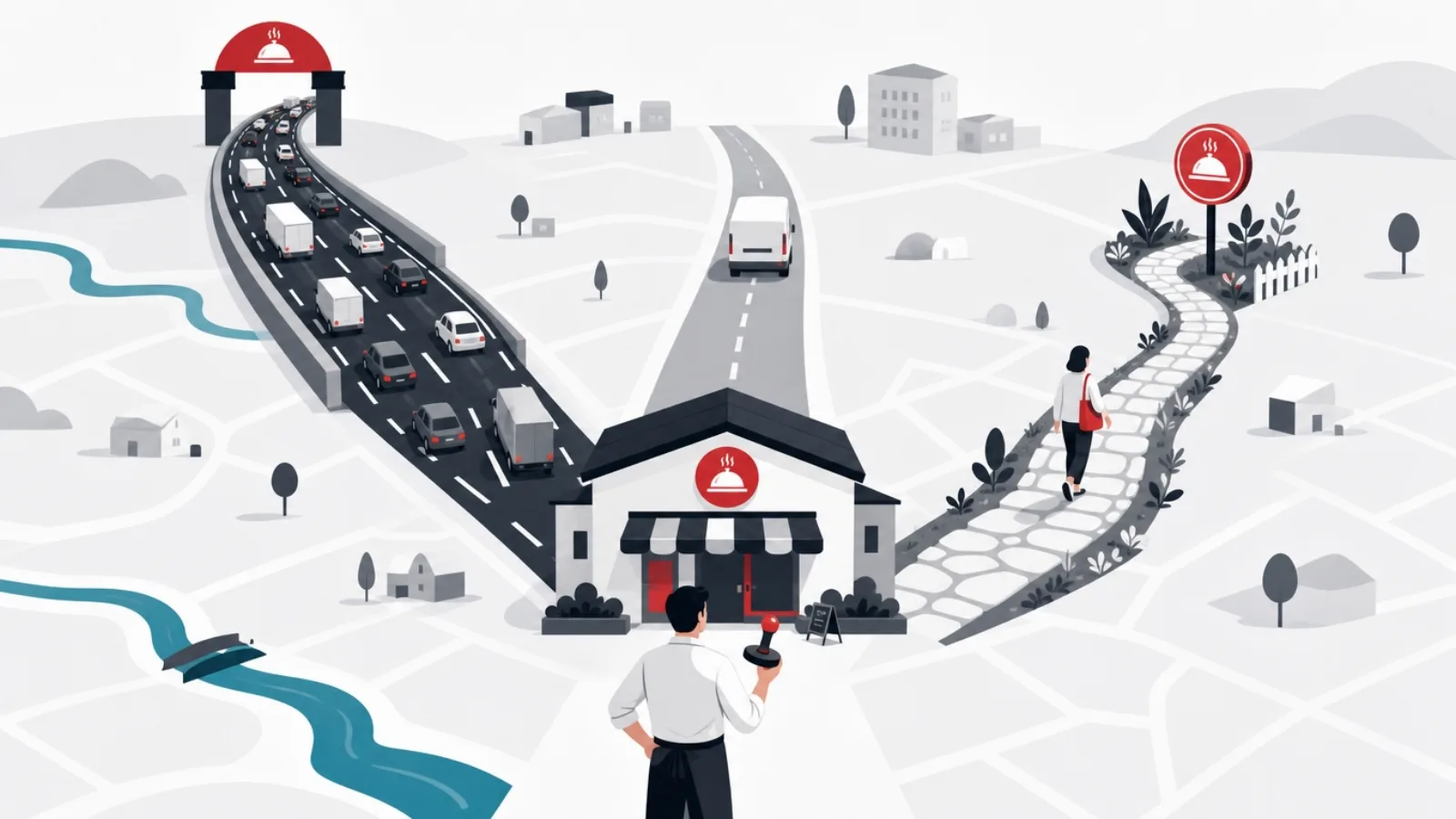
DoorDash's mechanics generalize almost unchanged to its competitors, Uber Eats and Grubhub in the United States, and regional leaders elsewhere, from Deliveroo and Just Eat to Grab and ShopeeFood in Southeast Asia. Commission bands, tier logic and scorecard discipline rhyme across all of them; what differs is audience density in your specific market, which is measurable by running two storefronts side by side for a quarter. Multi-homing is standard practice, costs little beyond tablet clutter, and the aggregation tools that merge orders into one screen remove most of that.
First-party ordering is the high-margin alternative, and its economics are the mirror image of the marketplace's. Commission drops to roughly zero, payment processing aside; the customer data, reorder relationship and pricing power are yours entirely. What you inherit is everything the commission was buying: demand generation, because nobody browses your website by accident the way they browse an app, and delivery, solved either with your own drivers, a real cost with insurance and scheduling attached, or per-order dispatch services. First-party works brilliantly for brands with gravity; it does nothing to create gravity.
The hybrid patterns are where most sophisticated operators land. Marketplace storefronts run at the tier that matches current discovery needs. First-party ordering for the base, fulfilled by white-label dispatch so no fleet is hired. Pickup promoted aggressively on both channels, since it dodges courier costs entirely. And the migration mechanics from the last section running continuously, so the expensive channel keeps refilling the cheap one. The mix shifts over a restaurant's life: discovery-heavy at opening, retention-heavy at maturity, and the operators who re-weight it annually beat the ones who set it once.
For readers here to build rather than operate: this three-sided structure, demand aggregation, independent-contractor logistics, merchant tooling, is the template for delivery platforms in every vertical, and its load-bearing components repeat with different nouns. Dispatch and batching algorithms, real-time tracking, merchant scorecards, tiered take rates, subscription demand programs. The ride-hailing market analysis covers the courier-side economics in depth, and the super app anatomy shows where food delivery sits when a platform bundles it with payments and transport; together with this page they make a reasonable builder's syllabus.
The channel-mix review, run once a year
- Measure incrementality per marketplaceWhat share of each platform's orders are customers you could reach directly? That share prices the commission honestly.
- Re-tier against current discovery needsVisibility you no longer need is margin you are donating. Tiers are renegotiable at renewal.
- Compare platforms on delivered volume, not brandAudience density is local. Two quarters of side-by-side storefronts beats any national market-share chart.
- Price the first-party pushOrdering site, dispatch fees, promotion cost, against the commission saved on migrated regulars.
- Check the dependence ratioMarketplace share of total revenue above roughly half deserves a deliberate diversification plan, not a shrug.
For platform builders: what this machine teaches
Read as a case study, the restaurant marketplace is a compact lesson in three-sided platform design, and the first lesson is where the margin hides. The platform's take rate looks enormous from the restaurant side, yet the platform itself ran unprofitably for years, because paying a human to drive one meal across town is brutally expensive and the consumer's willingness to pay fees is finite. The economics only close through density: batched orders per Dasher-hour, shorter radii, subscription programs that pull order frequency up. Any delivery platform pitch that does not lead with a density plan has not done the arithmetic.
The second lesson is that the merchant tooling is the moat nobody notices. Consumers multi-home freely and couriers follow the money, but a restaurant wired into a platform's POS integration, reconciliation reports, promotion engine and scorecard workflow faces real switching costs, and the platform that owns the merchant's operations owns the supply. Builders consistently over-invest in the consumer app and under-invest in the merchant console; the incumbents' revealed strategy, buying POS companies, shipping merchant analytics, argues the priority runs the other way once liquidity exists.
The third lesson is the scorecard's double edge. Continuous operational grading is what keeps quality tolerable across thousands of independent kitchens and couriers, and it is also the platform's most resented instrument, opaque enough that merchants suspect it, powerful enough that they comply anyway. A builder designing one should learn from the resentment: grades that are explainable, appealable and symmetric, the platform grades itself on payment speed and support response, buy supply-side loyalty that pure enforcement never does.
The final lesson is strategic: delivery is rarely the endgame. The order-frequency and payment relationship that food delivery creates is the wedge that regional platforms, Grab most famously, expanded into payments, groceries and financial services, and the standalone delivery companies face permanent margin pressure precisely because they lack those adjacent revenue pools. Builders entering a delivery vertical should decide early whether they are building a delivery business or using delivery to build a customer relationship, because the architecture, and the funding needs, differ from day one.
The numbers that run a delivery marketplace
Getting started well, whichever side you are on
For an operator joining the platform, the strong first month is mostly preparation. Photograph the menu properly, because tiles sell. Build the delivery menu deliberately: travel-worthy items, transit packaging, marketplace pricing that recovers part of the commission within parity rules. Start at a mid or entry tier with a plan to re-evaluate on evidence rather than defaulting to the tier the sales conversation suggests. Wire the POS integration if your system supports it, and set up the handoff shelf before the first rush, not after it.
Then run the first quarter as an experiment with a notebook. Watch the scorecard weekly and fix the operational leaks it names, because early ratings compound through placement. Run the incrementality sample from the fee-math section in month two, once volume exists. Compare contribution per marketplace order against your dine-in baseline honestly, including packaging and the labor of the delivery station. At quarter's end you will know which tier, which menu and which platforms deserve year one, which is more than most operators ever measure.
For a company building in this space, restaurant-side or platform-side, the honest sequencing mirrors the operator's. The demand-side app is the visible work, but the system earns or loses its economics in dispatch efficiency, merchant operations tooling and the scorecard machinery, so prototype those first and let the consumer polish follow the liquidity. The stack is well understood, real-time order routing, courier apps, merchant consoles, reconciliation, and the hard part is almost never the code; it is the density arithmetic from the builder-lessons section surviving contact with a real city.
Both audiences share one closing discipline: measure the thing the money actually turns on. For the operator, that is incremental contribution per channel. For the builder, it is orders per courier-hour at target service quality. Everything else in this ecosystem, tiers, promotions, features, rankings, is negotiation over who keeps the margin those two numbers create.
Frequently asked questions
How much does DoorDash charge restaurants?
Delivery orders carry a commission on the food subtotal that varies by partnership tier, roughly 15 percent at the entry tier to roughly 30 percent at the top, plus payment processing. Pickup orders run far cheaper, historically around 6 percent, because no courier is paid. The higher tiers buy a wider delivery area, better in-app placement and inclusion in the consumer subscription program, so the tier choice is really a marketing budget decision.
How do restaurants receive DoorDash orders?
Through a platform-supplied tablet by default, with staff re-keying orders into the POS, or through a direct POS integration that injects orders automatically. The integration is usually the first operational upgrade worth making, because it removes transcription errors at rush and tightens the prep-time quotes that drive courier dispatch timing. The kitchen confirms each order and quotes prep time; the platform times the Dasher's arrival to that quote.
Is DoorDash worth it for restaurants?
It depends on incrementality: the channel pays when orders come from customers the restaurant could not otherwise reach, and loses money when commissions are paid on regulars who would have ordered anyway. It is clearly worth it for new locations buying awareness, delivery-friendly cuisines and kitchens with idle capacity; least worth it for full restaurants with loyal bases and thin-margin menus. The practical answer is a measured mix: a marketplace tier matched to discovery needs plus first-party ordering for regulars.
Can restaurants charge higher prices on DoorDash?
Marking up marketplace menu prices to recover part of the commission is standard practice, commonly in the 10 to 20 percent range, though platform parity rules constrain how far prices may drift from in-store and the current contract terms govern. Operators pair the markup with a delivery menu engineered for margin: items that travel well, bundles that raise the subtotal, and first-party offers that undercut the marketplace markup for regulars willing to switch channels.
How do restaurants rank higher on delivery apps?
Placement follows the operational scorecard and conversion signals: low cancellation and missing-item rates, honest prep times, high acceptance, strong ratings, good photos and menus that convert. The mechanics reward exactly what customers experience, so the levers are operational: keep the menu's availability current, quote prep honestly so couriers never wait, package for transit, and fix the leaks the weekly scorecard names. Paid promotions can buy temporary visibility, but degraded scores suppress it faster than spend restores it.
What is the difference between DoorDash marketplace and white-label dispatch?
The marketplace product lists the restaurant inside the DoorDash app, brings its audience, and charges a percentage commission for that demand plus delivery. The white-label dispatch product, sold under the Drive name, supplies only couriers for orders the restaurant generated through its own website or app, for a flat per-delivery fee. The first prices like advertising because it manufactures demand; the second prices like logistics because that is all it is. Mature operators commonly use both: marketplace for strangers, dispatch-backed first-party for regulars.
If the economics here convince you to build direct ordering instead of renting demand, AgileTech is a Vietnam-based software development company that builds ordering and delivery products for food businesses.
Source: https://agiletech.vn/blog/how-does-doordash-work-for-restaurants/ · (c) AgileTech Vietnam. Printed from agiletech.vn.