 Nguyen Manh Thang
Chief Executive Officer, AgileTech Vietnam
Nguyen Manh Thang
Chief Executive Officer, AgileTech Vietnam
- Published
- Last updated
- Read time
- 12 min

Read the AI overview
Website cost in 2026 spans four orders of magnitude because "website" spans four different products. As illustrative bands: a template-based site on a builder platform runs from near-zero to a few thousand dollars; a custom-designed marketing site for a business typically lands in the mid four to low five figures; an ecommerce site with real catalog, payment and fulfillment needs runs from low five to six figures; and a web application, where the site is actually software with accounts, logic and data, starts in the mid five figures and climbs with scope. The build path multiplies the band: DIY builders cost time, freelancers cost less with higher variance, agencies cost more with process, and a dev partner makes sense once the site is really a product. The figure most buyers miss is ongoing: hosting, maintenance, content and iteration typically add 15 to 25 percent of the build cost per year, and a site priced without that line is underpriced by design.
Asking what a website costs is like asking what a vehicle costs: the honest answer starts by asking what you mean. A five-page site for a dental clinic, an online store with three thousand products, and a customer portal with logins and dashboards are all "websites" in conversation and entirely different purchases in practice, built by different kinds of teams at prices separated by orders of magnitude.
This guide gives the real answer in the only honest form: bands by website type, explicitly framed as illustrative models rather than a price list, plus the two decisions that move you within and beyond the bands, which build path you choose, and which cost drivers your project actually triggers. It also prices the part most buyers forget: the years after launch, when hosting, maintenance and iteration quietly become the larger number.
One scope note: this page covers websites, from brochure sites through ecommerce to the point where a site becomes a web application. Once you cross that line, accounts, workflows, custom logic, data, you are buying software, and the deeper cost mechanics live in our guide to what drives software cost, which explains how any estimate should be built and interrogated. This page tells you what the number looks like; that one tells you how to check whether it is defensible.
Key takeaways
- Name the product before pricing it: a brochure site, an ecommerce store and a web application are different builds with different teams, and quotes across those categories are not comparable numbers.
- The illustrative bands: template sites from near-zero to low four figures; custom marketing sites mid four to low five figures; ecommerce low five to six figures; web applications mid five figures and up. Every band is a model, not a menu.
- The build path is a second axis, not a discount lever: DIY costs your time, freelancers trade price for variance, agencies sell process, and dev partners fit when the site is software. Mismatching path to product is the most common overspend.
- Six factors move the number inside any band: design originality, page and content volume, integrations, ecommerce complexity, compliance and accessibility, and who writes the content. Integrations are the most underestimated line.
- The total is the build plus the years after it: hosting, maintenance, security updates, content and iteration typically run 15 to 25 percent of build cost annually, and the cheap quote that omits them is not cheap.
- Comparable quotes require a level brief: same scope, same assumptions, same exclusions listed. Two numbers built on different assumptions differ by a multiple and tell you nothing about value.
Four products wearing one word

The template site is the first product: a design chosen from a theme library, customized with your logo, colors and content, built on a website builder or a CMS with an off-the-shelf theme. It is the right product for a huge share of small businesses: the value is existing at all, looking current, and being findable, and a template delivers that for near-zero (DIY on a builder subscription) to a few thousand dollars (a freelancer configuring and populating it properly). The constraint is fit: your site will structurally resemble thousands of others, and the moment you need the template to do something it was not designed for, customization costs climb faster than starting custom would have.
The custom marketing site is the second: designed from scratch around your brand and your conversion goals, built on a CMS your team can edit, with performance, SEO structure and analytics done properly. This is the standard purchase for businesses where the website is a real sales asset, professional services, B2B companies, funded startups, and as an illustrative band it typically lands in the mid four to low five figures depending on page count, design ambition and content scope. What you are paying for versus a template is specificity: information architecture built around your actual buyer's questions, design that carries your positioning, and a foundation that will not fight your next three years of marketing.
The ecommerce site is the third, and it is a different animal even when it looks similar: catalog structure, product data, payment processing, tax and shipping logic, inventory connections, transactional email, and the operational workflows behind returns and orders. Platform choice (hosted commerce platforms versus open-source stacks) shapes both the build and the ongoing costs, and the illustrative band is wide for real reasons: a clean store on a hosted platform with a few dozen products sits at the low five figures; a store with thousands of SKUs, ERP integration and custom checkout logic reaches six. The commerce-specific anatomy, platform trade-offs, integration weight, is mapped in our ecommerce platform guide.
The web application is the fourth, and the word "website" undersells it: accounts, roles, dashboards, workflows, data your business depends on. Portals, booking systems, SaaS products and customer tools live here. The pricing logic changes category with the product: you are no longer buying pages, you are buying software, estimated from scope and complexity the way software is, with an illustrative floor in the mid five figures and no meaningful ceiling. If your project has more screens behind a login than in front of one, price it as software from the start, this band is where "website quotes" diverge by multiples because vendors are silently scoping different products.
The four products, with illustrative bands
| Product | Illustrative band (USD) | Typical build path | You are here if... |
|---|---|---|---|
| Template site | Near-zero to 3,000 | DIY builder or freelancer | Existing well is the goal; standard structure fits |
| Custom marketing site | 8,000 to 40,000 | Freelancer team or agency | The site is a sales asset; brand and conversion matter |
| Ecommerce site | 15,000 to 150,000+ | Agency or dev partner | Catalog, payments, fulfillment and operations are real |
| Web application | 50,000 and up | Dev partner | More screens behind a login than in front of one |
Every figure is a model for orientation, not a menu. The right column is the question that tells you which row you are in.
The build paths: DIY, freelancer, agency, dev partner

DIY on a site builder is genuinely the right answer more often than the industry admits: for a template-tier site with a straightforward structure, modern builders produce a professional result for a monthly subscription and your evenings. The honest accounting is time: a founder's forty hours are not free, and the common failure is not the launch but the plateau, the site goes up, then never improves, because nobody owns it. DIY fits when the site is simple, the budget is genuinely constrained, and someone will actually tend it; it stops fitting the day the site becomes a real acquisition channel that deserves professional conversion work.
The freelancer path trades money for variance in both directions. A strong freelancer or two-person studio delivers a custom marketing site at a price agencies cannot match, with direct communication and real craft; a weak one delivers a stalled project and a handoff problem. The variance is manageable with diligence: a portfolio of live sites you can click, references you actually call, a written scope with milestones, and clarity about who owns hosting, maintenance and the inevitable post-launch fixes. The structural limit is bandwidth and bus factor: one person cannot parallelize, and a freelancer who disappears mid-project takes the project's momentum with them.
Agencies sell what freelancers cannot: process, a team (design, build, content, SEO as distinct skills), accountability with a contract behind it, and survivability across staff changes. The premium is real, agency overhead is in every invoice, and worth paying exactly when coordination is the hard part: multi-stakeholder brands, sites with real content operations, ecommerce with operational complexity. The buying skill with agencies is scope discipline: the same firm will happily sell a 15,000-dollar site and a 60,000-dollar version of the same site, and the difference is often ambition you did not ask for. Fix the goal, fix the scope, and make the agency compete on execution rather than vision.
The dev partner path, a software team rather than a web shop, fits when the site crosses into application territory: integrations with your internal systems, custom workflows, accounts and data, or an ecommerce build whose complexity is really systems integration. The signal that you need one is that your requirements talk about logic more than pages. This is also where offshore and nearshore teams change the economics materially: the cost structures, engagement models and management realities of that route are their own subject, covered in our guide to outsourcing destinations and models. Whichever path you choose, match it to the product tier first: the most common overspend in this market is hiring an agency process for a template problem, and the most common underspend is hiring a template freelancer for a software problem.
Build paths, compared on what they actually sell
| What you pay for | Where it wins | The failure mode | |
|---|---|---|---|
| DIY builderSubscription + your time | Speed and control at minimal cash cost | Simple sites with an owner who tends them | The launch plateau: nobody improves it |
| FreelancerCraft, directly | Custom quality without agency overhead | Marketing sites with clear scope | Variance: stalls, disappearances, handoffs |
| AgencyProcess and a team | Coordination across design, content, SEO | Multi-stakeholder brands, content operations | Scope inflation sold as vision |
| Dev partnerEngineering depth | Integrations, logic, application territory | Sites that are really software | Overkill pricing for simple page needs |
The six factors that move the number
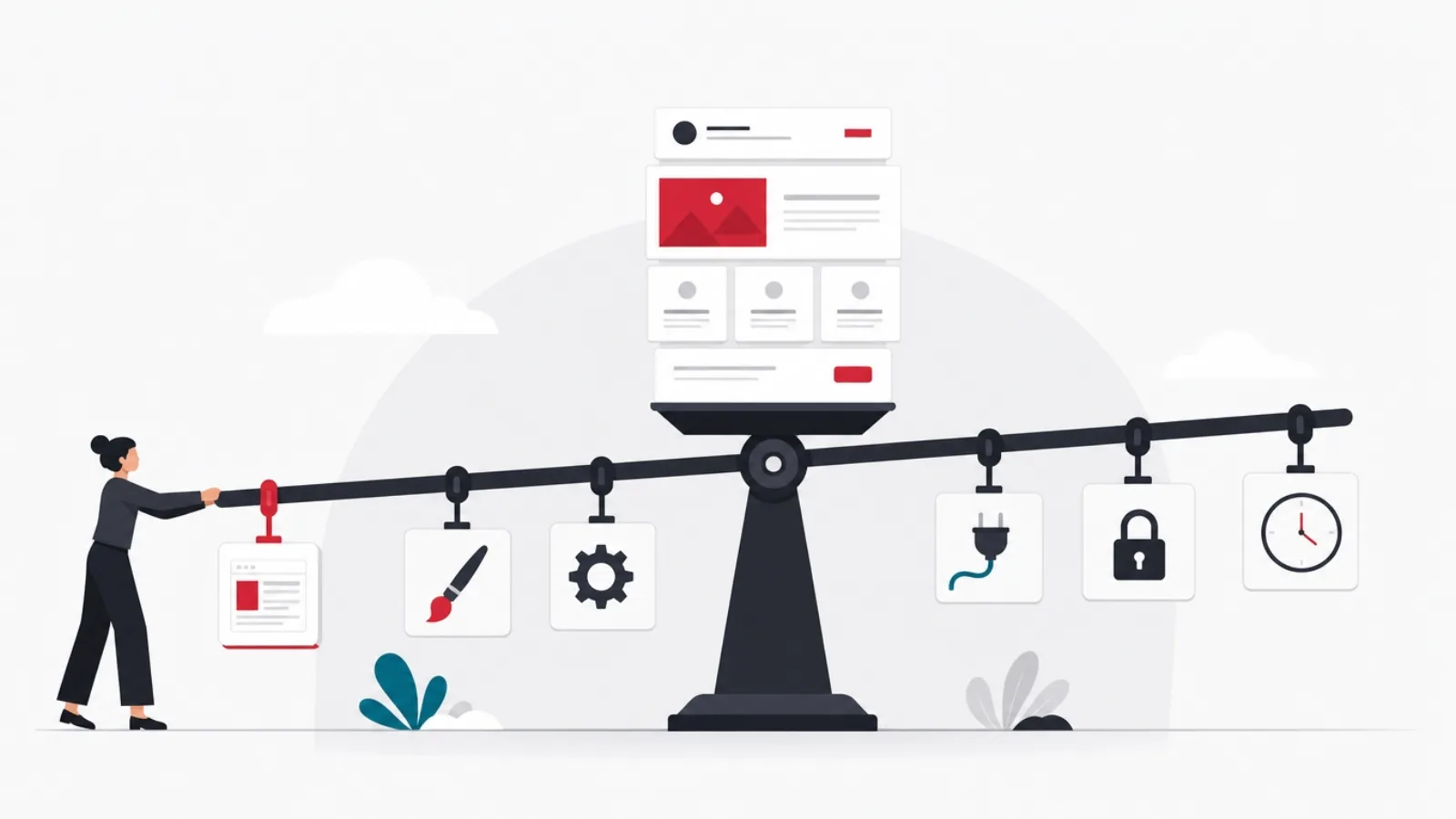
Design originality is the first lever, and it is a spectrum with prices at every stop: a theme used as-is, a theme customized past recognition, a from-scratch design system with custom illustration and motion. Each step buys distinctiveness and costs design days, and the honest question is what your market rewards: a B2B services firm converts on clarity and proof more than visual invention, while a consumer brand may live or die on the feel. Paying for from-scratch design on a site whose visitors want answers, not aesthetics, is the most common vanity line in website budgets.
Volume is the second: page count, template count (a site with five page types costs less than one with fifteen, almost regardless of total pages), and content volume. Closely tied is the third factor, who produces the content: copy, photography, diagrams and case studies are real work, and "client provides content" is the assumption behind many cheap quotes and most project delays. A site stalled for four months waiting on copy costs more than the copywriting line would have, in momentum if not in invoices. Price content honestly on whichever side of the contract it lands.
Integrations are the fourth factor and the most underestimated, exactly as they are in software generally: the CRM connection, the marketing automation platform, the booking system, the payment provider, the ERP feed behind the product catalog. Each integration is small in the demo and real in production, authentication, data mapping, failure handling, the vendor's API quirks, and quotes that list integrations by name and version are quotes from teams who have done this before. The fifth factor is the compliance-and-quality bar: accessibility (a legal requirement in a growing set of jurisdictions and markets), privacy and cookie compliance, performance budgets, multilingual support. Each is cheaper designed-in than retrofitted, and a quote silent on all of them has priced their absence.
The sixth factor is the one the whole software cost guide exists to explain: remaining uncertainty. A website scoped from a finished sitemap, approved wireframes and written content is a defined project; the same site scoped from "we need a new website" carries discovery inside it, and vendors price that uncertainty either as a discovery phase (visible, honest) or as padding and change orders (invisible, expensive). If quotes for your project differ by a multiple, the cause is almost always here: they are pricing different amounts of undefined work, and the fix is leveling the brief, not picking the middle number.
The quote-leveling checklist: make the numbers comparable
- Same product tier namedTemplate, custom marketing, ecommerce or application. If two quotes assume different tiers, stop comparing prices and fix the brief.
- Page types and counts listedFive templates or fifteen, thirty pages or three hundred. Volume assumptions drive multiples silently.
- Content responsibility assignedCopy, photography, translations: who produces what, and what happens to the schedule when it slips.
- Integrations named with versionsThe CRM, the booking tool, the payment provider. "Standard integrations" is not a scope; a named list is.
- Accessibility and compliance statedWhich accessibility standard, which privacy regime, which performance target. Silence means it is not included.
- Exclusions and assumptions writtenThe most informative section of any quote. A vendor who lists what is NOT included has scoped honestly; one who lists nothing has scoped nothing.
The costs after launch: where the real total lives
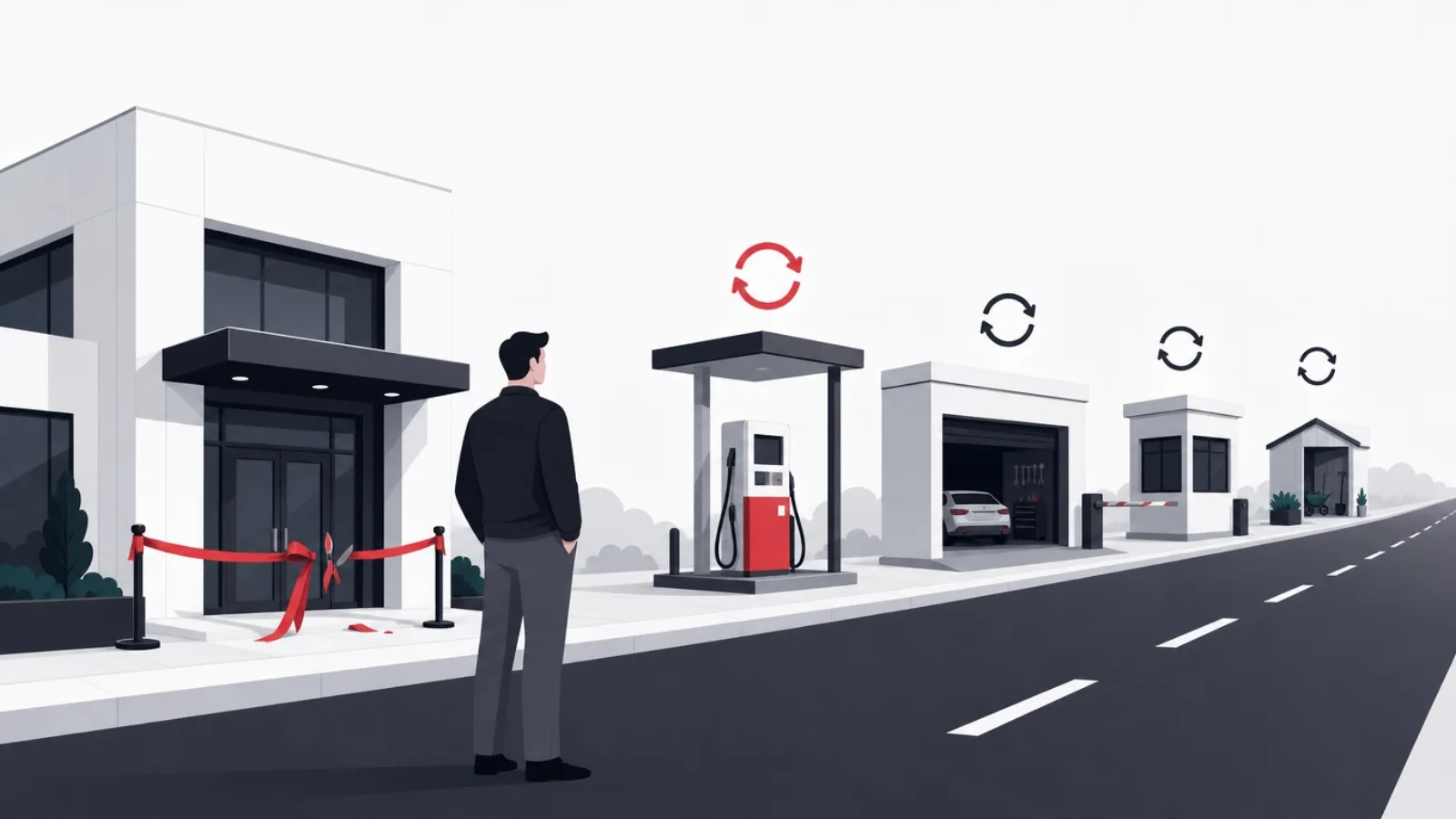
The launch price is the visible half of website cost, and for any site that matters to the business, it is often the smaller half over a three-year horizon. The recurring baseline: hosting and infrastructure (from a few hundred dollars a year for a marketing site to real monthly bills for ecommerce at traffic), domain and DNS, email services, the licenses behind the stack (premium plugins, themes, monitoring tools), and the platform subscription if you built on one. None of these are large individually; together they are a permanent line that belongs in the decision, especially when comparing a builder subscription against a self-hosted stack.
Maintenance is the line that separates professionally-run sites from decaying ones. CMS cores and plugins ship security updates continuously, and an unpatched site is not a static asset, it is a liability with a contact form: compromised sites serve malware to your customers and vanish from search. Real maintenance means updates applied on a schedule, backups tested rather than assumed, uptime and performance monitored, and a small monthly allowance for the fixes and tweaks every living site generates. As an illustrative model, maintenance and iteration together typically run 15 to 25 percent of build cost per year, and vendors who quote maintenance at zero are quoting a site they expect you to abandon.
Iteration is the ongoing cost that actually earns money, and it deserves reframing from expense to operations: conversion improvements driven by analytics, landing pages for campaigns, content that accumulates search traffic, seasonal updates for commerce. Sites that grow revenue are tended monthly; sites that were "finished" at launch begin depreciating the same week. The practical budgeting pattern that works: a monthly retainer or internal time allocation sized to your ambitions, small for a stable services firm, substantial for an ecommerce operation in a competitive category, agreed at purchase time so the launch price and the operating cost are one decision, not a surprise sequence.
The replatform horizon completes the total honestly: websites have lifespans, typically three to six years for marketing sites before design, technology or business change forces a rebuild, and platform choices at purchase time move that horizon. Proprietary builders trade low entry cost for lock-in (your content and design leave with difficulty); open-source stacks trade higher care requirements for portability; hosted commerce platforms sit between. None of these is wrong, but each is a term in the real equation: total cost is build plus years of operation plus the exit, and the cheapest launch price with the earliest forced rebuild is frequently the most expensive line on the whole page.
The three-year arithmetic, as a model
The hidden lines: where cheap quotes hide their gaps

Migration is the classic invisible line: the new site must receive the old site's content, and someone must move it. Two hundred blog posts with images, categories and internal links do not transfer themselves, and "content migration" done badly is how businesses lose a decade of search rankings in a launch week. The related and more dangerous gap is redirect planning: every old URL that dies without a redirect to its successor bleeds accumulated search equity, and quotes that never mention redirects are quotes from teams who have not watched traffic graphs after a careless relaunch. If your current site has any search traffic worth keeping, migration and redirects are a named workstream, not a footnote.
SEO structure is the second hidden line, distinct from the ongoing marketing most people mean by "SEO": the technical foundation, crawlable structure, sane URLs, metadata, structured data, performance, image handling, is build-time work that costs little when designed in and real money when retrofitted. The third is analytics and measurement: a site launched without conversion tracking, event instrumentation and a working analytics setup is a store without a till counter, and wiring it after the fact costs more than including it. Both lines are small; both are routinely absent from cheap quotes; both are the difference between a site you can improve and a site you can only redesign.
Legal and compliance surfaces are the third cluster: privacy policies and cookie consent that match your actual data practices, terms of service for commerce, accessibility to the standard your jurisdiction and customers require, and, for ecommerce, the tax and consumer-protection texture of every market you sell into. None of this is glamorous and all of it is cheaper as a checklist during the build than as a remediation after a complaint. A vendor who raises these unprompted is showing you their scars, which is exactly what you are paying experience for.
The final hidden line is the one this whole guide keeps circling: ownership. Who owns the domain (it must be you, registered in your account, no exceptions), the hosting relationship, the source code and design files, the content, the analytics property, the ad and social accounts wired to the site? Projects priced attractively sometimes recover margin through dependency: hosting you cannot leave, a builder account in the vendor's name, code with no repository access. The checklist at handover is short and non-negotiable, and asking for it in the contract costs nothing. Every unclear answer at purchase time is an invoice waiting at exit time.
Buying the build: what the scars teach
Do this
- Own the domain and analytics from day oneRegistered in your accounts, before the project starts. These are the assets; everything else is replaceable.
- Make redirects a named deliverableA mapped redirect plan from every old URL with traffic. This single line protects years of accumulated search equity.
- Get the handover list in the contractCode repository, design files, credentials, documentation. Agreed before work starts, checked before final payment.
- Budget iteration at purchase timeThe launch is the start of the site's job. A sized monthly allowance, agreed now, beats an annual emergency redesign.
Not this
- Comparing launch prices across different scopesA number without its assumptions is noise. Level the briefs first; the checklist above exists for exactly this.
- Letting the vendor hold the keysDomain, hosting or builder accounts in the vendor's name convert convenience today into leverage against you later.
- Treating content as someone else's problem"Client provides copy" is where schedules go to die. Assign it, price it, deadline it, on whichever side it lands.
- Skipping maintenance to hit a budgetAn unpatched site is a liability with your logo on it. If the budget cannot carry maintenance, buy a simpler tier, not a neglected one.
Three worked examples, priced as models

The clinic: a physiotherapy practice needs to exist credibly online, eight pages, a booking link into an existing scheduling tool, a map, and photography that does not look like stock. The right tier is template-plus: a quality theme configured by a competent freelancer, real photos, copy written from the practitioners' actual patient conversations. As a model: two to four thousand dollars for the build including a photography half-day, a builder or hosting subscription in the low hundreds per year, and a small quarterly content touch. The trap to skip: an agency proposal for a custom brand experience the clinic's patients will never notice; the site's job is to look trustworthy and get the appointment booked.
The B2B services firm: thirty pages, five page types, a resource section meant to earn search traffic, CRM integration for lead capture, and three stakeholders with opinions. This is the custom marketing tier bought from a small agency or a strong freelance team: as a model, fifteen to thirty-five thousand depending on design ambition and how much content production is included, plus a real maintenance-and-iteration retainer, because the resource section only pays if it grows monthly. The money line in the quote to scrutinize: content, who writes those cornerstone pages, at what depth, and on what schedule, because the design will be forgotten and the content will do the earning.
The retailer: eight hundred SKUs moving from a legacy platform, ERP-fed inventory, two payment providers, three shipping integrations, and a customer base whose order history must survive the move. This is a low-six-figure project as a model, and the composition tells the story: the visible storefront is perhaps a third of the effort, with the rest in catalog migration, integration engineering, checkout and tax logic, and the redirect-and-SEO workstream protecting rankings on eight hundred product URLs. The build path is a dev partner or a commerce-specialist agency, and the selection question is not the portfolio's beauty but the team's scars: ask each candidate what went wrong on their last migration and hire the one with the specific answer.
What the three examples share is the method, and the method is the takeaway: name the product tier, choose the path that matches it, level the quotes with the checklist, and price the years after launch into the decision. Do that and the four-orders-of-magnitude question, what does a website cost?, collapses into a manageable one: what does YOUR website cost, built right, run properly, and owned by you. That question has a real answer, and any vendor worth hiring will build it with you rather than quoting past you. The structural half of that conversation, how defensible estimates get built and interrogated for any software purchase, is the cost pillar's whole subject.
The cheapest quote is frequently the one that understood the least, and the difference arrives later as change orders, delays, or a site that quietly cannot do its job.
Getting a real number for your project
Write the one-page brief before contacting anyone, because the brief is what converts vendor conversations from sales pitches into estimates. The page contains: what the site must achieve (in business terms: leads, bookings, sales, credibility), the product tier you believe you are buying, a sitemap sketch (even rough), the integrations by name, who produces content, the compliance bar, and your honest budget range. Vendors reward this document with better numbers: precision reads as low risk, and low risk gets priced lower. The hour it takes is the highest-leverage hour in the whole purchase.
Collect three quotes from within the correct path, not across paths: comparing a freelancer, an agency and a dev partner produces three incomparable numbers reflecting three business models, not three prices for one job. Within the path, level the quotes with the checklist from this guide, and interrogate the outliers in both directions: the high quote may have understood something the others missed (ask what), and the low quote may have excluded it (ask what is not included, and watch whether the answer is specific). The most informative question in any vendor conversation remains: what assumptions is this number built on, and what happens to it when one proves wrong?
Structure the engagement to keep leverage aligned: milestones tied to deliverables (design approval, staging site, content-complete, launch), payment tracking the milestones, the handover checklist in the contract, and the maintenance arrangement agreed before launch rather than negotiated after, when switching costs have already moved the leverage. For anything at the custom tier or above, a paid discovery phase, a small fixed engagement producing the sitemap, wireframes and a scoped estimate, is often the best money in the project: it converts the biggest unknowns into a defensible plan, and it lets you evaluate the working relationship before committing the full budget to it.
Finally, size the decision to the asset. A website that generates a meaningful share of your leads or revenue is business infrastructure, and the buying discipline this guide describes, tiering, leveling, total-cost thinking, ownership hygiene, is proportionate. A site whose honest job is to exist credibly deserves a proportionate process too: pick the template tier, hire the competent freelancer, own your domain, and spend the saved budget where your customers actually are. Matching the process to the stakes is the last cost decision, and the one that makes all the others easier.
From question to signed scope, in order
-
Write the one-page briefHour 1
Goal, tier, sitemap sketch, named integrations, content ownership, compliance bar, budget range. Precision buys better prices.
-
Pick the tier, then the pathDay 1
Template, custom, ecommerce or application; then the build path that matches the tier. Cross-tier quotes are incomparable by construction.
-
Collect and level three quotesWeeks 1 to 3
Same path, same brief, exclusions listed. Interrogate outliers in both directions with the leveling checklist.
-
Buy discovery where uncertainty is realOptional, weeks 3 to 5
A small fixed engagement producing sitemap, wireframes and a scoped estimate. Converts the biggest unknowns before the big commitment.
-
Contract the milestones and the handoverBefore work starts
Deliverable-tied payments, the ownership checklist, maintenance agreed pre-launch. Leverage aligned from signature to handover.
Frequently asked questions
How much does a website cost in 2026?
As illustrative bands rather than a price list: a template-based site runs from near-zero (DIY on a builder) to about 3,000 dollars with a freelancer; a custom-designed marketing site typically lands between 8,000 and 40,000; an ecommerce site runs from 15,000 to 150,000 or more depending on catalog and integrations; and a web application, a site with accounts, logic and data, starts around 50,000 and is priced as software. The spread exists because "website" covers four different products, and naming yours is the first step to a real number.
Why do website quotes differ so much for the same project?
Because they are almost never for the same project: each vendor filled the brief's gaps with different assumptions. One scoped ten page templates, another five; one included content production, another assumed you provide it; one priced the CRM integration and migration redirects, another left them for change orders. Level the briefs, same tier, page counts, named integrations, content ownership, stated exclusions, and the quotes converge enough to compare. The cheapest quote is frequently the one that understood the least.
Is it cheaper to build a website yourself?
In cash, almost always; in total, it depends on your time and the site's job. Modern builders produce professional template-tier sites for a subscription, and for a simple site with an owner who will tend it, DIY is genuinely the right answer. The honest accounting includes your hours (a founder's forty hours are not free) and the plateau risk: DIY sites commonly launch and then never improve. Once the site is a real acquisition channel, professional conversion work, content and iteration usually return more than they cost.
How much does website maintenance cost?
As an illustrative model, maintenance and iteration together typically run 15 to 25 percent of the build cost per year. The maintenance half covers security updates on a schedule, tested backups, uptime and performance monitoring, and small fixes; the iteration half covers the improvements that earn money: conversion work, new landing pages, content growth. Hosting, domains and licenses add a separate baseline from a few hundred dollars a year for marketing sites upward. A quote with maintenance at zero describes a site its vendor expects you to abandon.
What hidden costs should I watch for in a website project?
Five recur: content migration (moving your existing pages, posts and media properly), redirect planning (every old URL that dies without a redirect bleeds search rankings), technical SEO structure (cheap when designed in, expensive retrofitted), analytics and conversion tracking (a site without measurement can only be redesigned, never improved), and ownership hygiene (the domain, hosting, code and analytics must be in your accounts, not the vendor's). Each is small in the build and expensive as a surprise; a quote that names them is a quote from experience.
When does a website become a web application, and why does the price change?
The line is logic: when your project has accounts, roles, dashboards, workflows or data your business depends on, more screens behind a login than in front of one, you are buying software, not pages. The price changes category because the work does: estimation from scope and complexity, real backend engineering, integration and testing effort, and the maintenance obligations of a system rather than a site. Application-tier projects start in the mid five figures as a model, and are best bought with a discovery phase and a dev partner rather than a web shop.
We mapped the bands, the build paths and the years after launch. For an estimate against your actual scope, AgileTech is a Vietnam software house that writes its assumptions down where you can check them.
Source: https://agiletech.vn/blog/website-development-cost/ · (c) AgileTech Vietnam. Printed from agiletech.vn.