 Nguyen Manh Thang
Chief Executive Officer, AgileTech Vietnam
Nguyen Manh Thang
Chief Executive Officer, AgileTech Vietnam
- Published
- Read time
- 15 min
Read the AI overview
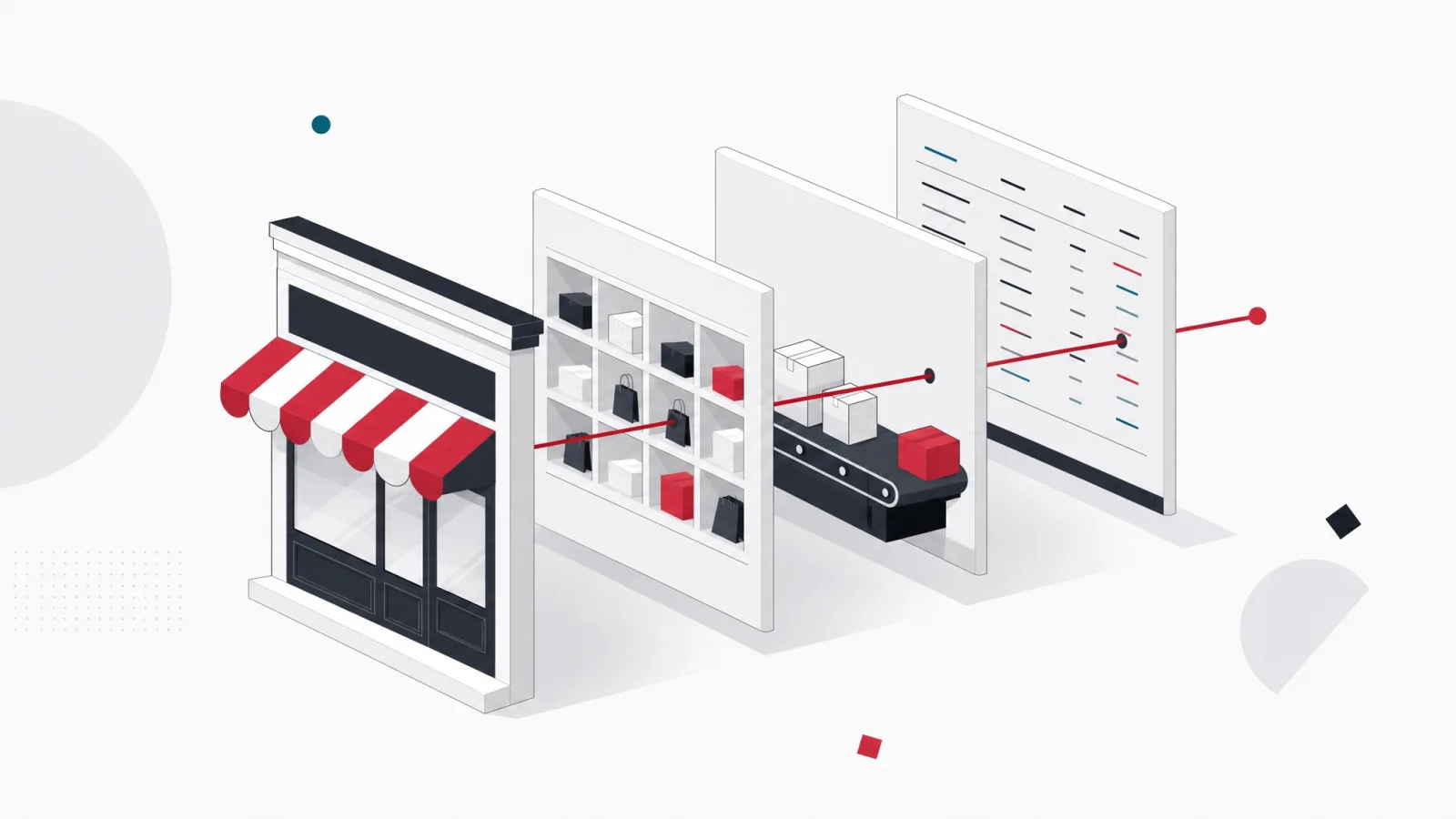
Building an e-commerce platform starts with a decision most guides skip: whether to build at all. A store selling a standard catalog through standard flows is better served by configuring a hosted platform and spending the budget on catalog quality and fulfillment; a custom build earns its cost only where the selling experience itself is the differentiation, and a marketplace is a third, larger animal with two customer sides. When a build is justified, the scope decomposes into four layers, storefront, commerce core, rented integrations, and operations, and the sequence that works ships one catalog and one honest checkout path early, then grows by evidence. The checkout and payments flow deserves the most careful engineering in the system, because it is where every dollar passes and where trust is won or lost; the visual theme, which most projects start with, is the one layer that can be safely swapped later.
Ask how to build an e-commerce platform and most answers arrive as a feature list: catalog, cart, checkout, payments, accounts, admin. The list is accurate and unhelpful, because it hides the two decisions that actually determine cost and outcome: whether to build at all rather than configure something that exists, and in what order to build if building is justified. Teams that skip the first decision spend custom-software money on a standard store; teams that skip the second ship a beautiful storefront attached to operational plumbing that cannot survive contact with real orders.
This guide is organized around those two decisions. It starts where the project should start, with the honest question of whether the selling experience you need is differentiated enough to justify owning it, and a decision structure for answering. It then decomposes the build into the four layers every store shares, walks the checkout and payments work that decides revenue, gives the operational half of the system the attention it never gets in feature lists, and closes with the launch sequence and the marketplace question.
It is written from delivery experience rather than theory. Our retail engineering teams build and maintain e-commerce storefronts and commerce backends for single-seller stores and marketplaces both, and the strongest pattern across those projects is the one this guide leads with: the builds that succeed are the ones that almost did not happen, because the team first proved a configured platform could not do the job.
Key takeaways
- The first decision is build versus configure, and most stores should configure. A custom platform is justified when the selling experience is the differentiation, not when the catalog is standard and the flows are ordinary.
- Every store decomposes into four layers: the storefront buyers see, the commerce core you own, the integrations you rent, and the operations that run daily. Scoping by layer prevents the classic failure of a beautiful storefront on missing plumbing.
- Rent the solved problems. Payments, tax calculation, shipping rates and transactional email are commodity services with brutal edge cases; rebuilding them adds risk and months without adding differentiation.
- Checkout is the highest-stakes engineering in the system. Every abandoned cart is revenue lost silently, and the flow deserves the field-by-field scrutiny most teams reserve for the homepage.
- Orders, inventory and returns are where e-commerce projects actually fail. The buyer-facing half is demo-friendly; the operational half decides whether the tenth thousand order ships as smoothly as the first.
- Launch staged, not big-bang. One catalog, one region, one payment method, real orders within weeks: the feedback from a small live store shapes the rest of the build better than any specification.
- A marketplace is not a large store; it is a two-sided product where seller onboarding, split payments and trust tooling dominate the scope. Budget it as its own category or do not start it.
The decision before the build: own it or rent it
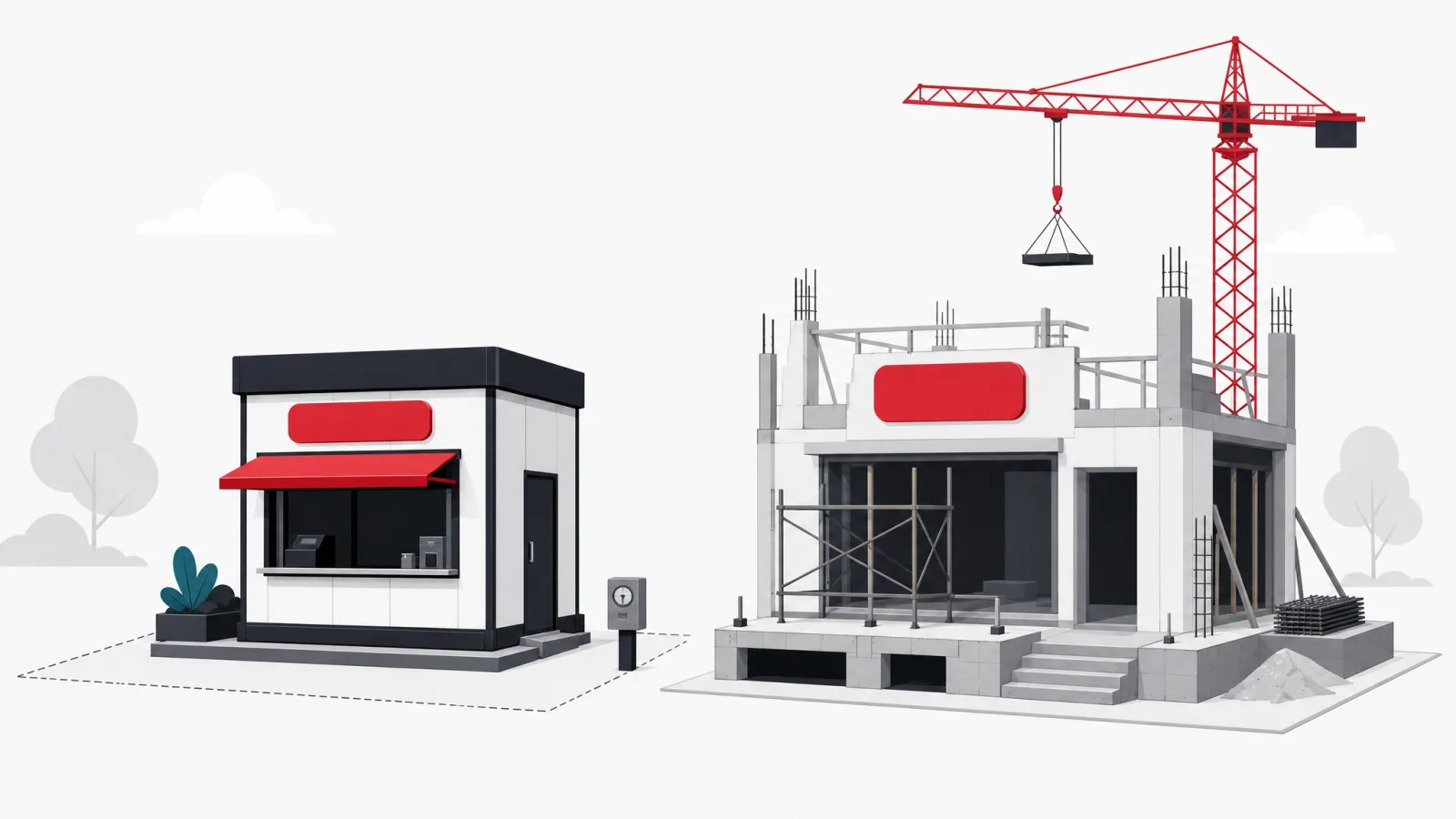
The e-commerce platform market is mature, which changes what building one means. Hosted platforms will run a catalog, cart, checkout and payments today, for a subscription, with security and uptime handled by someone whose whole business is handling them. Against that baseline, a custom build is not a way to get a store, it is a way to get a specific store the hosted platforms cannot express, and the first discipline of the project is saying precisely what that specificity is. "We want control" is not an answer; control of what, exercised how, worth how many months of engineering, is.
The honest justifications cluster into a few shapes. The selling flow itself is the product: configurators, quoting engines, subscription mechanics with unusual rules, B2B approval chains and negotiated price lists that off-the-shelf checkout cannot model. The catalog has structure a generic product model cannot hold, dimensions, compatibility rules, regulatory constraints that must drive what can be bought together. Or commerce is embedded inside a larger product, and the store must share identity, data and interface with software you already own. Each of these is a real reason; note that a distinctive visual design is absent from the list, because themes are the one layer hosted platforms genuinely leave open.
The marketplace case deserves its own paragraph, because it is routinely misbudgeted as "a store with more sellers." A marketplace is a two-sided product: alongside everything a store needs, it needs seller onboarding and verification, per-seller catalogs and dashboards, split payments that route money to sellers while holding fees, dispute and trust machinery, and the cold-start work of attracting both sides at once. The engineering is honestly closer to double a single-seller build than to a store plus a feature, and teams that discover this mid-project discover it expensively.
The decision also has a time dimension worth respecting: it is reversible in one direction. A business that starts on a hosted platform and outgrows it migrates with revenue, data and learned requirements in hand, and the migration is a known, survivable project. A business that builds custom first and discovers it needed none of the customization has spent the difference permanently. When the case for building is genuinely unclear, that asymmetry is the tiebreaker, and it points at starting rented.
Signals the build is justified
- A hosted platform demonstrably cannot express the flowNot "we prefer our own," but a written selling flow that was actually attempted on a configured platform and failed. The failed attempt is cheap and clarifying.
- The selling experience is the competitive moatBuyers choose you because of how buying works, a configurator, a quoting engine, an unusual subscription. If they choose you for price or catalog, the store is not the moat.
- The catalog has structure a generic model cannot holdCompatibility rules, regulated combinations, dimensioned products. When product logic drives what can be purchased, you are building software either way.
- Commerce embeds inside software you already ownShared identity, shared data, one interface. Bolting a rented store onto an owned product often costs more in glue than the core is worth.
- Unit economics survive the ownership costsA custom platform is a standing engineering commitment: security, uptime, upgrades, forever. The margin must carry a team, not just a launch.
- You can staff the operational halfOrders, inventory, returns and support tooling are most of the system. If the plan only staffs the storefront, the plan is half a plan.
The four layers every store decomposes into
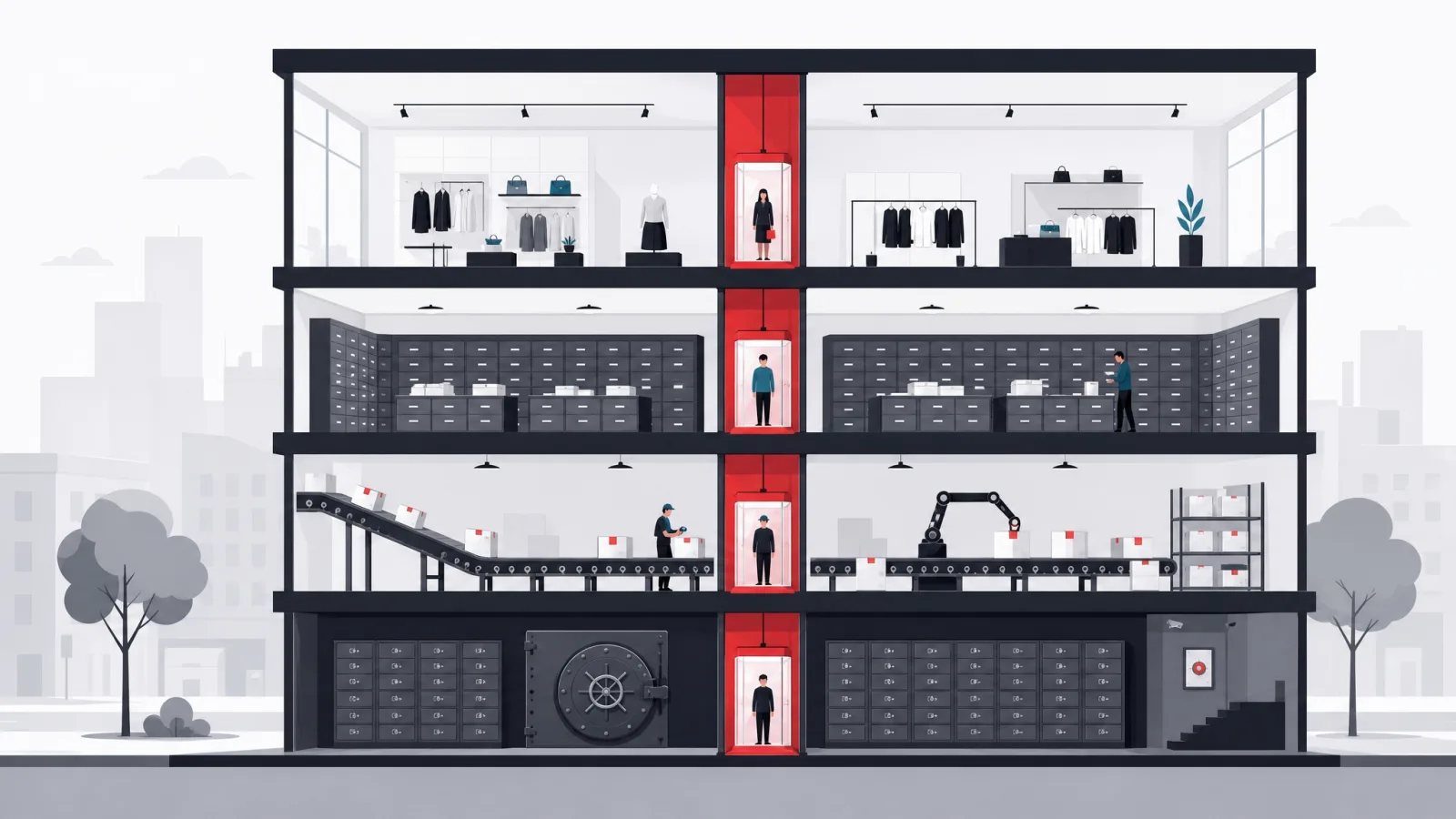
Once building is justified, the feature list stops being useful and a layer map takes over, because the layers have different owners, different risk profiles and different rules. The storefront is what buyers see: catalog browsing, search, product pages, cart, account. The commerce core is what you own: the product data model, pricing and promotion logic, the order state machine. The integration layer is what you rent: payments, tax, shipping rates, email. And the operations layer is what runs every day: order management, inventory sync, fulfillment and returns. Projects that scope as a feature list systematically over-invest in the first layer and starve the last one.
The commerce core deserves the most careful design because everything else leans on it. The product model decides what the business can sell without a schema migration: variants, bundles, digital goods, subscriptions are cheap if modeled early and expensive if bolted on. The pricing engine decides what marketing can do without an engineer: tiered prices, customer-group prices, stacking rules for promotions. And the order state machine, the explicit set of states an order can occupy and the transitions between them, is the difference between a system that handles a partial refund of an exchanged item gracefully and one where support edits the database by hand.
The integration layer has one rule: rent the solved problems. Payment processing, tax calculation across jurisdictions, live shipping rates, transactional email deliverability, each of these is a commodity service whose edge cases have consumed other companies whole. Building them adds months and risk without adding a thing your buyer notices. The engineering skill in this layer is not construction but insulation: each rented service sits behind an interface you own, so a provider can be replaced in a sprint rather than a rewrite, an argument developed at length in our framework and stack selection guide.
The storefront, finally, is where restraint pays. It must be fast on the mid-range phones most buyers actually hold, clear at every decision point, and accessible; it does not need to be novel, because buyers arrive knowing how online stores work and novelty in the buying flow reads as friction. The visual theme, the layer projects most enjoy debating, is also the layer most safely deferred: a theme can be swapped in weeks at any point, while a mismodeled product core or a hand-rolled payment flow is surgery on a live business.
Checkout and payments: the highest-stakes mile

Everything upstream of the checkout is persuasion; the checkout is the transaction, and it deserves engineering scrutiny out of proportion to its screen count. Every buyer who abandons here was already convinced, which makes checkout losses the most expensive losses in the system, and they happen silently, one hesitation at a time. The design rules are unglamorous and proven: ask for the minimum, show the full cost including shipping and tax before the final commitment rather than after, allow guest checkout because forced account creation is a toll on the most valuable moment, and keep every field the buyer typed when something fails validation.
The payments integration is rented, but renting does not make it small. The real scope is the unhappy paths: the card declined mid-checkout, the payment authorized while the order write fails, the buyer who pays twice by double-clicking, the webhook that arrives late or twice or never. The core discipline is idempotency, the property that retrying an operation cannot double-charge or double-ship, and reconciliation, the scheduled comparison of what the payment provider believes happened against what the order system recorded. Stores that skip reconciliation discover discrepancies through customer complaints, which is the most expensive possible monitoring system.
Payment methods are a market-fit question rather than a technical one. Cards are the baseline; wallets reduce mobile friction measurably because they collapse the address form; bank transfers, installments and cash on delivery dominate specific markets and specific baskets. The architecture, one payments interface with providers behind it, is what keeps each addition a bounded task instead of a new integration project, and it is also the insurance policy against a provider raising fees once removal has become unthinkable.
Fraud and compliance arrive with revenue, uninvited. Keeping raw card data off your servers entirely, by using provider-hosted fields, converts a heavy compliance obligation into a manageable one and should be treated as non-negotiable in the architecture. Fraud tooling from the provider, velocity checks, verification rules, risk scores, covers the early years for most stores; what the platform must contribute is the audit trail, every order event recorded with who, what and when, because disputes are argued with records and won with good ones.
Checkout engineering, the short version
Do this
- Show the full cost before the commitmentShipping and tax revealed at the end are the classic abandonment trigger. Surface totals as early as the address allows.
- Make every payment operation idempotentRetries, double-clicks and replayed webhooks must be safe by construction. This is the payments bug class that costs real money.
- Reconcile provider records against orders dailyA scheduled job comparing the two ledgers catches drift while it is small. Complaints are not a monitoring strategy.
Not this
- Force account creation before purchaseThe account can be offered after the receipt, with the order already attached. Before payment it is a toll on your best moment.
- Handle raw card numbers on your serversProvider-hosted fields keep card data out of your scope entirely. Taking it on buys compliance burden and breach risk for nothing.
- Treat declined payments as dead endsA decline with a clear retry path, or an alternate method offered in place, recovers a meaningful share of would-be abandonments.
Orders, inventory, and the operational half

The buyer-facing store is the half of the system that demos well; the operational half is the half that decides whether the business survives its own growth. An order, once placed, begins a life the storefront never shows: payment confirmation, fraud review, warehouse allocation, picking, shipping, delivery, and, for a stubborn percentage, return and refund. The software expression of that life is the order state machine, and making it explicit, named states, allowed transitions, recorded timestamps and actors, is the single decision that most separates maintainable commerce systems from support-ticket generators.
Inventory is the operational problem with the sharpest edges, because it is a consistency problem wearing a retail costume. The same unit must not be sold twice during a flash sale; the count must survive the buyer who carts an item and vanishes; and when the warehouse system, the storefront and a marketplace channel all hold opinions about stock, one of them must be the truth and the others must defer to it on a known schedule. Overselling is not just an engineering embarrassment, it converts directly into cancellation emails, refunds and reviews, and the prevention is architectural: reservations with expiry, a single source of truth, and honest handling of the sync lag that multi-channel selling makes unavoidable. Our inventory systems guide treats this problem at full depth.
Fulfillment and returns close the loop, and both are integration-plus-workflow rather than pure software. Fulfillment needs carrier integration for labels and tracking, but the harder design is the exception workflow: the address that fails validation after payment, the package returned to sender, the split shipment when one item is backordered. Returns need a policy encoded as software, eligibility windows, refund-versus-exchange rules, restocking states, because a return handled by email and spreadsheet costs more than the margin on the order it reverses. In both, the metric that matters is operator time per exception, and it is designed down, not wished down.
The thread through all of it is observability for operators. The operations team needs to answer, in seconds and without a developer, where any order is, why it stalled, and what to do next. Every state transition visible, every integration failure surfaced with a retry button, every exception in a queue someone owns. Commerce systems earn their keep at the tenth thousand order, and the ones that do are the ones where the operational half was built as deliberately as the storefront.
Launching staged instead of big-bang
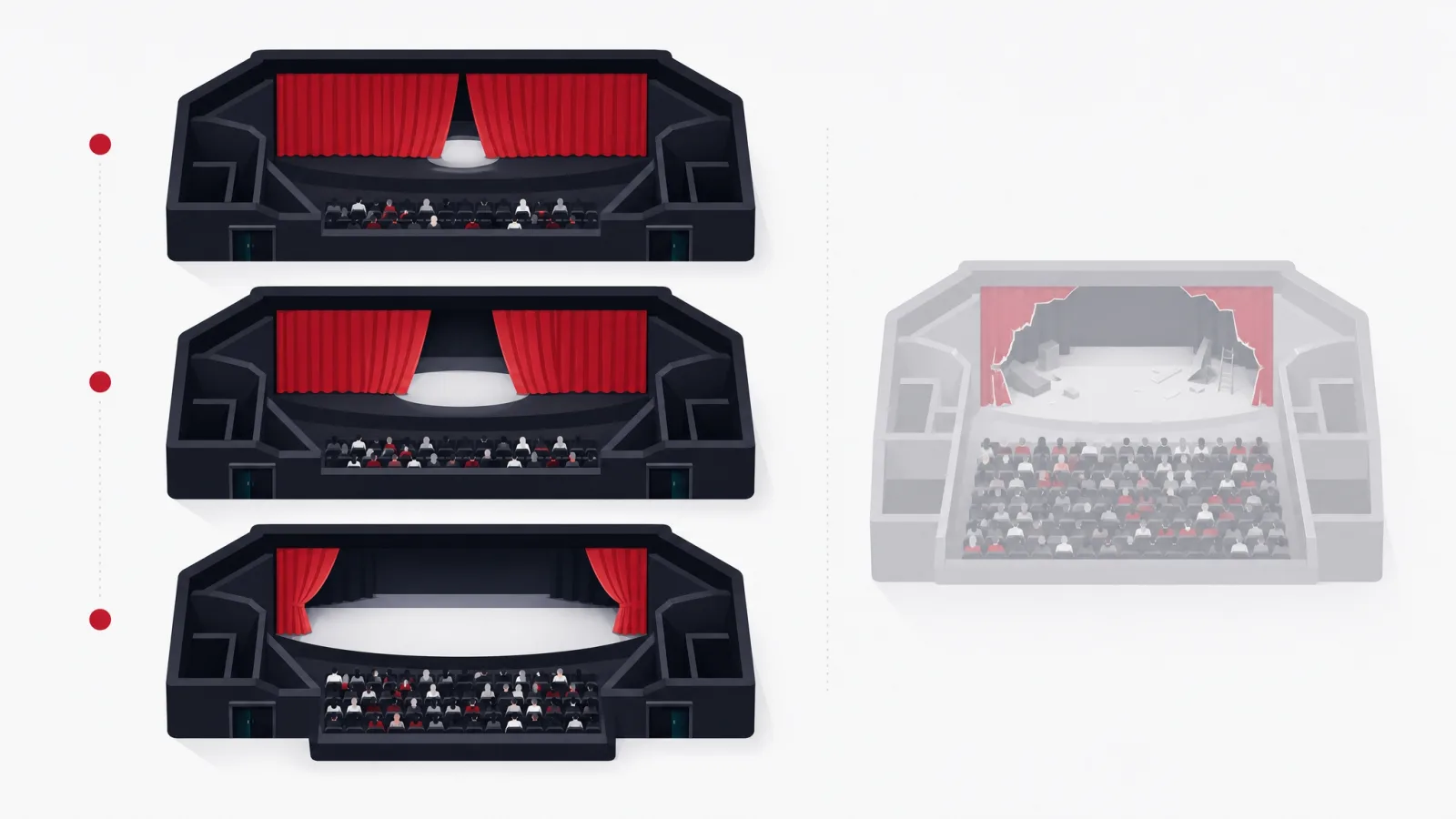
The default instinct on a platform build is to launch when everything is ready, and it is the wrong instinct, because "everything" is a guess and launch is where the guessing stops. Every month spent building on assumptions accumulates risk that real orders would have discharged: the category structure nobody browses, the payment method nobody chooses, the promotion mechanic that confuses more than it converts. The staged alternative ships the smallest honest store early, one catalog segment, one region, one or two payment methods, one shipping option, and lets real buyers vote on everything else.
Small does not mean sloppy, and the floor matters: the staged first release still needs a trustworthy checkout, real payment processing, working order fulfillment and a returns path, because the trust a store loses at launch is the most expensive trust to rebuild. What it defers is breadth, the full catalog, the loyalty scheme, the gift cards, the second and third markets, all of which are better built with order data than with meeting-room conviction. The distinction is between a small store that works completely and a large store that half-works, and buyers forgive the first while remembering the second.
The staged path also changes the engineering economics in compounding ways. Real orders exercise the order state machine, the inventory sync and the reconciliation jobs while volumes are small and failures are cheap teaching rather than public incidents. The roadmap re-sorts itself by observed behavior, which is regularly humbling: features the team ranked essential go unused, while the exception queue reveals workflow gaps nobody specified. Teams that launch staged describe the first month of real orders as worth more than the previous quarter of planning, and the ones that launched big-bang tend to agree, retrospectively.
A staged commerce launch, in sequence
-
Ship the narrow storeFirst release
One catalog segment, one region, one or two payment methods, a complete checkout and a real returns path. Complete in depth, deliberately narrow in breadth.
-
Watch the funnel and the exception queueFirst weeks
Where buyers drop, which fields they abandon, which orders stall and why. The two queues together are the real specification for the next stage.
-
Fix the revealed friction before adding breadthIterate
The checkout stall and the fulfillment exception outrank the feature backlog, because they tax every order that follows.
-
Widen by evidenceGrowth
Add the catalog segments buyers searched for, the payment method the market asked for, the region the traffic came from. Each expansion is now a response, not a bet.
-
Revisit the build-or-rent boundary yearlyOngoing
As volume grows, some rented services earn replacement and some owned code earns retirement. The boundary is a decision to maintain, not a decision made once.
Where a marketplace stops being a store
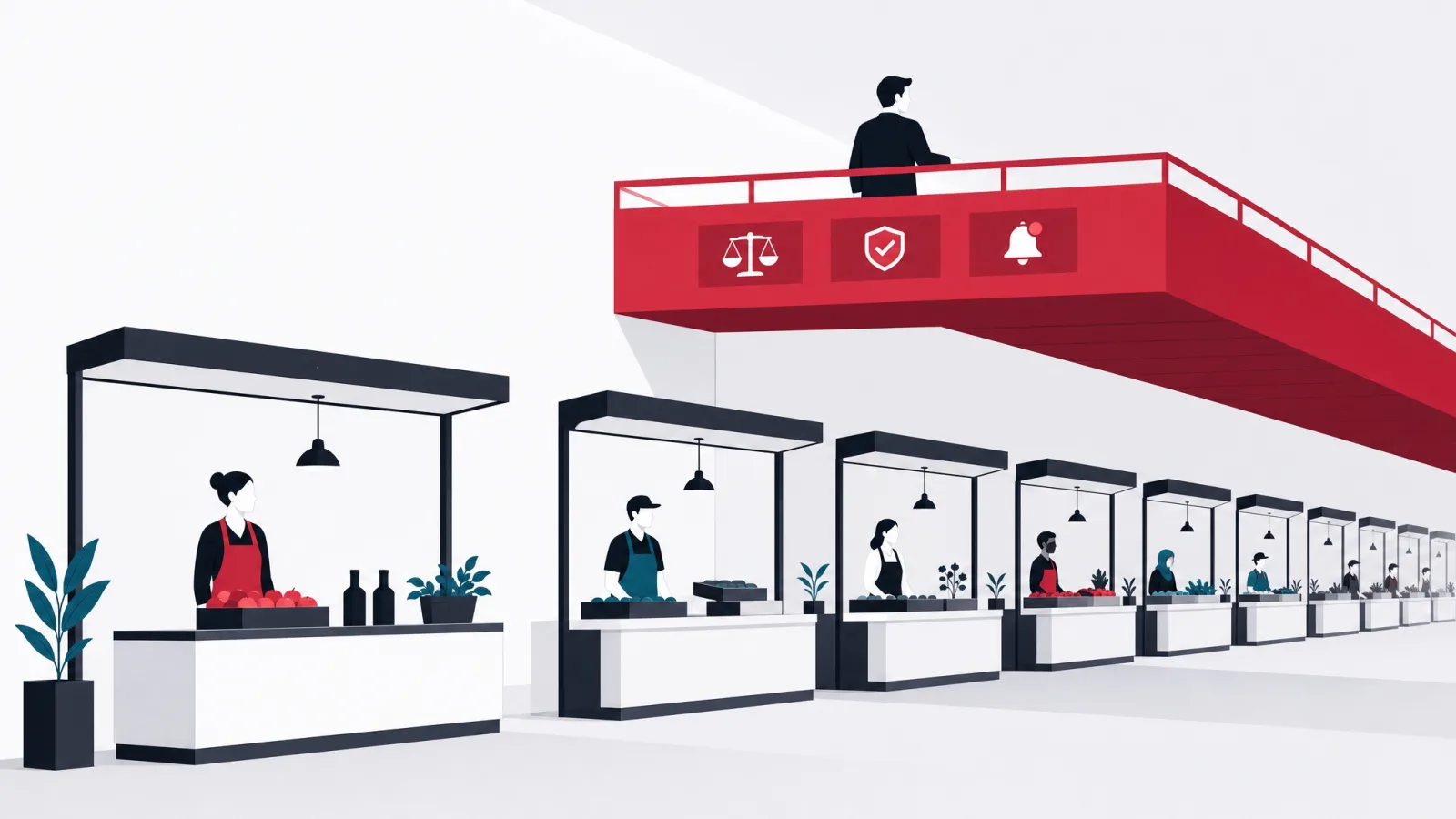
Enough platform projects begin as stores and drift toward marketplaces that the differences deserve their own section, stated bluntly enough to inform a budget. A store has one seller, you, and every hard problem in it is singular: one catalog to govern, one bank account to settle to, one reputation to protect. A marketplace multiplies each of those by the seller count and then adds problems no store has: two customer acquisitions running at once, money that must flow through you to people you do not employ, and trust between strangers as a core product feature rather than a nicety.
The money is the sharpest difference. Marketplace payments are split payments: the buyer pays once, the platform routes the seller’s share onward, holds its own fee, and manages refunds that must claw back from both sides. This routing has regulatory weight, holding and forwarding other people’s money is a licensed activity in most jurisdictions, and the practical answer is marketplace-specific payment services that carry the licensing while exposing the split mechanics. That decision alone, made early, removes a category of legal risk that has sunk platforms which discovered it late.
The trust machinery is the second budget line stores never carry. Seller verification at onboarding, because one fraudulent seller damages the platform brand, not just their own. Ratings and reviews with moderation, because both sides game them. Dispute resolution with rules, evidence and appeal, because buyer and seller will disagree and the platform is the court. And the marketplace cold-start, attracting sellers with no buyers and buyers with no sellers, is a business-model problem the software cannot solve but must not worsen: the earliest sellers must be onboarded almost by hand, and the software should make that concierge phase cheap rather than assume it away.
None of this argues against marketplaces; it argues for pricing them honestly. A marketplace that reaches liquidity has network effects a single-seller store never gets, and the operational machinery above is exactly what the moat is made of. The failure mode is starting a marketplace on a store budget, running out of runway inside the trust and payments work, and shipping a directory with a checkout instead. The rule of thumb from delivery experience: scope a marketplace as roughly twice the equivalent store, and if that number ends the conversation, the conversation ended honestly.
Marketplace vocabulary that shapes budgets
- Split payment
- One buyer charge divided between seller share and platform fee at settlement, with refunds that reverse both parts. The defining payments problem of marketplaces.
- Seller onboarding
- Verification, agreement, payout setup and catalog training for each new seller. Its friction level directly sets the supply growth rate.
- Liquidity
- Enough buyers and sellers that both reliably find a match. The threshold below which a marketplace is a directory with aspirations.
- Take rate
- The percentage of each transaction the platform keeps. It must fund the trust machinery, which is why undercapitalized marketplaces cut trust first and die of it second.
- Disintermediation
- Buyer and seller meeting on the platform, then transacting off it to avoid fees. Fought with value added inside the transaction, not with policing alone.
- Escrow flow
- Holding the buyer’s payment until delivery is confirmed before releasing it to the seller. The strongest trust tool, and the heaviest regulatory one.
The team, the timeline, and what decides both
The staffing shape of a platform build follows the four layers. The commerce core and operations layer want backend engineers who think in state machines and reconciliation, and they are the long pole. The storefront wants frontend engineers and a designer working the evidence-led way, against funnels rather than moodboards. Integrations want an engineer who has met payment webhooks before, because the second time is much cheaper than the first. And from the first sprint, someone from the operating side of the business must sit inside the team, because the admin and exception workflows can only be designed with the person who will live in them.
What actually decides the timeline is not the feature list but three properties of the business. Catalog complexity: selling two hundred simple products and selling configurable products with compatibility rules are different projects wearing the same name. Integration surface: each system the platform must stay consistent with, warehouse, accounting, marketplace channels, physical stores, adds sync work that scales worse than linearly. And operational ambition: same-day dispatch, multi-warehouse routing and cross-border selling each multiply the exception workflows, which is where engineering time actually goes. A scoping conversation that nails those three properties predicts the budget better than any feature checklist.
The sequence that manages risk runs the layers in dependency order rather than visibility order. The product model and order state machine first, because everything leans on them and they are cheapest to change before anything does. The payments and checkout path second, thin but real, because it is the riskiest integration and the earliest one worth proving with a live transaction. The operational admin third, before launch rather than after, because the first real orders arrive with the first real exceptions. The storefront polish last, precisely because it is the layer that can improve safely while the store is live. Teams notice this is the reverse of the order the work is enjoyable in, which is roughly why so many projects run it backward.
Frequently asked questions
How do we build an e-commerce platform from scratch?
Start by proving you should: write down the selling flow you need and attempt it on a configured hosted platform, because if that succeeds, the build money is better spent on catalog and fulfillment. If the build is justified, work the layers in dependency order: the product data model and order state machine first, a thin but real payments and checkout path second, the operational admin third, and storefront polish last. Ship a deliberately narrow store early, one catalog segment, one region, and let real orders set the rest of the roadmap.
Should we use a hosted platform or build a custom store?
Configure a hosted platform when your catalog is standard and your flows are ordinary, which describes most stores; the subscription buys security, uptime and a proven checkout, and your budget moves to the things buyers actually notice. Build custom when the selling experience itself is your differentiation, configurators, quoting, unusual subscription mechanics, B2B pricing, when the catalog has structure a generic model cannot hold, or when commerce must live inside software you already own. When genuinely unsure, start hosted: that mistake is recoverable with revenue in hand, and the reverse one is not.
How long does it take to build an e-commerce platform?
The honest answer is that the feature list does not decide it; three properties of your business do. Catalog complexity: simple products versus configurable ones with compatibility rules can double the core modeling work. Integration surface: every system that must stay consistent with the store, warehouse, accounting, marketplace channels, adds ongoing sync engineering. And operational ambition: multi-warehouse routing, same-day dispatch and cross-border selling multiply the exception workflows where engineering time actually goes. A staged launch changes the question usefully: a narrow, complete store can take real orders in a fraction of the full-scope timeline, and the remaining scope is then built with evidence.
What features does an e-commerce platform need at launch?
Depth over breadth. The launch floor is a complete, trustworthy path for one narrow scope: a well-presented catalog segment, working search, a checkout that shows full costs early and supports guest purchase, real payment processing with idempotent operations, order confirmation and tracking, and a returns path that works. What can wait is breadth: the full catalog, loyalty schemes, gift cards, additional regions and payment methods, all better prioritized by real order data than by launch-meeting conviction. A small store that works completely beats a large one that half-works.
How is a marketplace different from an online store?
A store has one seller; a marketplace is a two-sided product, and the differences dominate the budget. It needs split payments that route the seller share while holding platform fees, which carries licensing weight and points to marketplace-specific payment services. It needs seller onboarding and verification, per-seller catalogs and dashboards, ratings with moderation, and dispute resolution, trust machinery stores never carry. And it faces the cold-start problem of attracting both sides at once. A working rule from delivery: scope a marketplace at roughly twice the equivalent store, and treat a budget that cannot carry that as the decision made.
How should inventory work across store and marketplace channels?
Pick one system as the single source of truth for stock, usually the warehouse or inventory system rather than any sales channel, and make every channel defer to it on a known sync schedule. Sell against reservations with expiry rather than raw counts, so a carted item is held briefly and released if unpaid, and a flash sale cannot sell the same unit twice. Then design honestly for the sync lag multi-channel selling makes unavoidable: safety buffers on fast-moving items, and an exception queue for the oversells that slip through, because at sufficient volume some will.
What payment methods should our store support at launch?
Launch with cards plus the one or two methods your specific market treats as default, wallets where mobile traffic dominates, bank transfer, installments or cash on delivery where local buying habits demand them, and add the rest by evidence rather than by list. The architecture matters more than the launch set: one payments interface with providers behind it keeps each added method a bounded task, and keeps you able to change providers when fees or coverage change. Keep raw card data off your servers entirely by using provider-hosted fields; that single decision converts a heavy compliance obligation into a manageable one.
The delivery experience behind this guide is specific. AgileTech is a software development company in Vietnam whose retail teams have built single-seller storefronts and two-sided marketplaces both, and will argue you out of the custom build when a configured platform would serve you better.
Source: https://agiletech.vn/blog/ecommerce-platform-build/ · (c) AgileTech Vietnam. Printed from agiletech.vn.