 Nguyen Manh Thang
Chief Executive Officer, AgileTech Vietnam
Nguyen Manh Thang
Chief Executive Officer, AgileTech Vietnam
- Published
- Read time
- 14 min
- Views
- 95
Read the AI overview
Tokopedia is a consumer-to-consumer and business-to-consumer marketplace founded in Jakarta in 2009 that grew into one of Indonesia's largest e-commerce platforms by solving three problems specific to the country: trust between strangers in a market with low card penetration, delivery across an archipelago of thousands of inhabited islands, and onboarding millions of small sellers who had never sold online. Its answers, escrow-based payments, an open logistics marketplace rather than an owned fleet, and near-zero-friction seller tools, defined how marketplaces work across Southeast Asia. In 2021 it merged with Gojek to form GoTo, pairing e-commerce with ride-hailing, food, and the GoPay wallet; in 2024 GoTo combined Tokopedia with TikTok Shop Indonesia in a transaction that gave TikTok a controlling stake, after Indonesian regulation forced TikTok to separate social media from commerce. For builders, the case is a study in designing for a market's actual constraints rather than importing a model that worked elsewhere.
Indonesia is the fourth most populous country in the world, spread across more than seventeen thousand islands, with a population that in 2009 had low bank card penetration, patchy address systems, and a deep cultural habit of buying from people they knew. It was, on paper, a terrible place to build an online marketplace between strangers. Tokopedia was founded that year to do exactly that, and within a decade it was processing a meaningful share of the country's retail commerce.
This case study is about how. It covers the marketplace model Tokopedia chose and why, the three Indonesia-specific problems it had to solve, the engineering that carried it from a monolith to a platform serving millions of sellers, the 2021 merger with Gojek that formed GoTo, and the 2024 combination with TikTok Shop that reshaped the market again. It closes with what marketplace builders in any emerging market should take from it.
The through-line is a design principle that applies well beyond Indonesia: build for the constraints your market actually has. Every one of Tokopedia's defining choices, escrow payments, open logistics, mobile-first seller tools, was an answer to a local constraint that a copied model would have ignored. Teams building a marketplace or e-commerce platform anywhere face the same question of which constraints are theirs.
Key takeaways
- Tokopedia won by solving Indonesia's specific problems, trust, geography, and seller onboarding, rather than copying a Western or Chinese marketplace model.
- Escrow was the trust mechanism: the platform held the buyer's money until delivery was confirmed, which made cash-poor, card-poor, stranger-to-stranger commerce possible.
- It never built its own delivery fleet. An open logistics marketplace let dozens of couriers compete for each shipment, which scaled across an archipelago no single fleet could cover.
- Seller tools were the growth engine: free listings, a mobile-first seller app, and financing and fulfillment services layered on later turned millions of micro-merchants into a supply base competitors could not match.
- The GoTo merger paired the marketplace with Gojek's daily-use frequency and the GoPay wallet, the combination the AirAsia case shows is so hard to assemble from a low-frequency origin.
- The TikTok Shop deal showed the next competitive front: social commerce with content-driven discovery, and a regulator willing to redraw the market's structure.
Origin and model: a marketplace, not a store
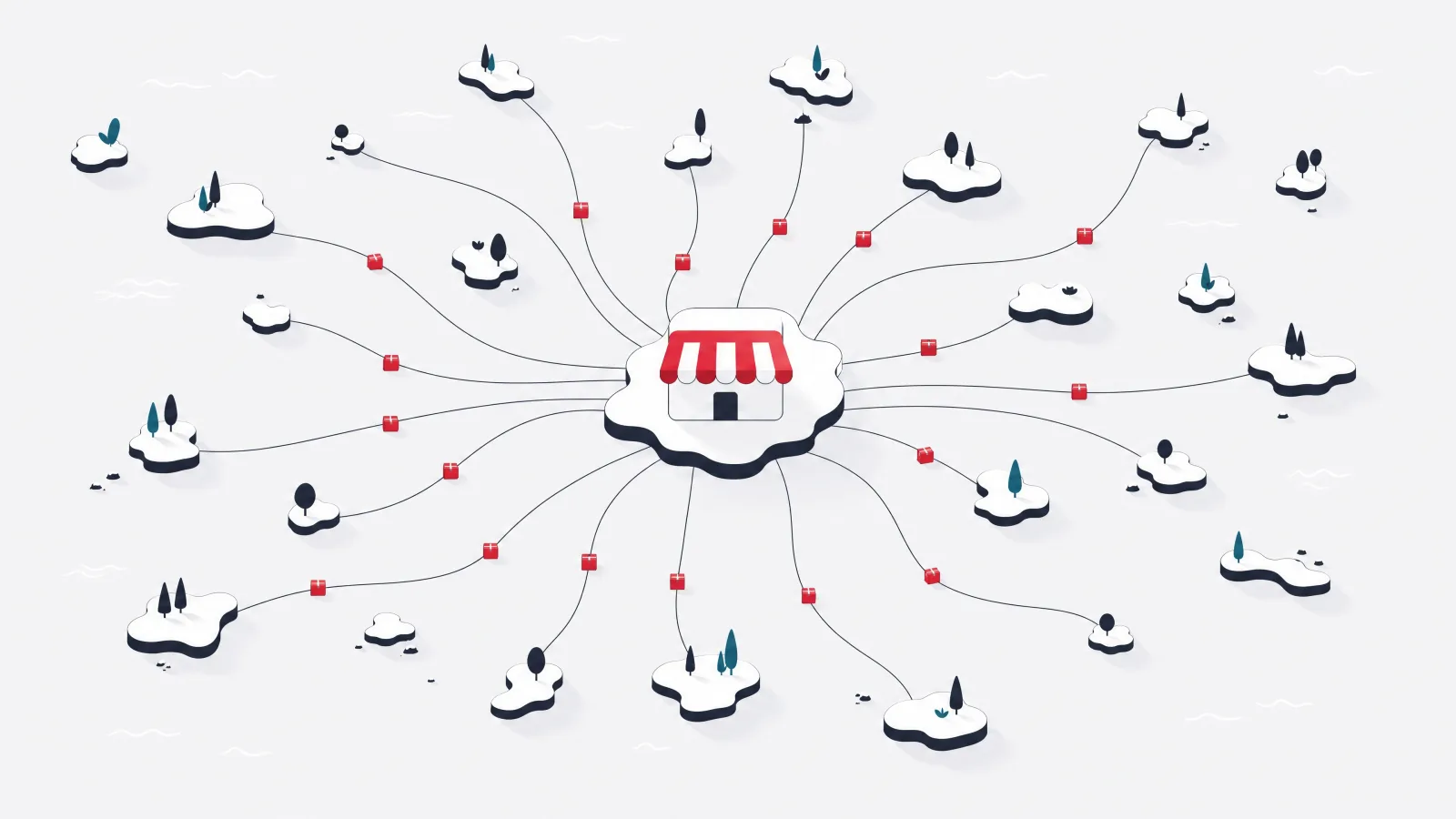
Tokopedia launched in August 2009, founded by William Tanuwijaya and Leontinus Alpha Edison, as a consumer-to-consumer marketplace: a platform where anyone could open a shop and sell to anyone else, with Tokopedia providing the storefront, the search, the payment handling, and the dispute process, but holding no inventory of its own. The name combines toko, the Indonesian word for shop, with encyclopedia, and the pitch was a place where every shop in Indonesia could be found. It was free to list from the start, and it stayed that way, monetizing through advertising, promoted placement, and later through payments, logistics, and financial services rather than listing fees.
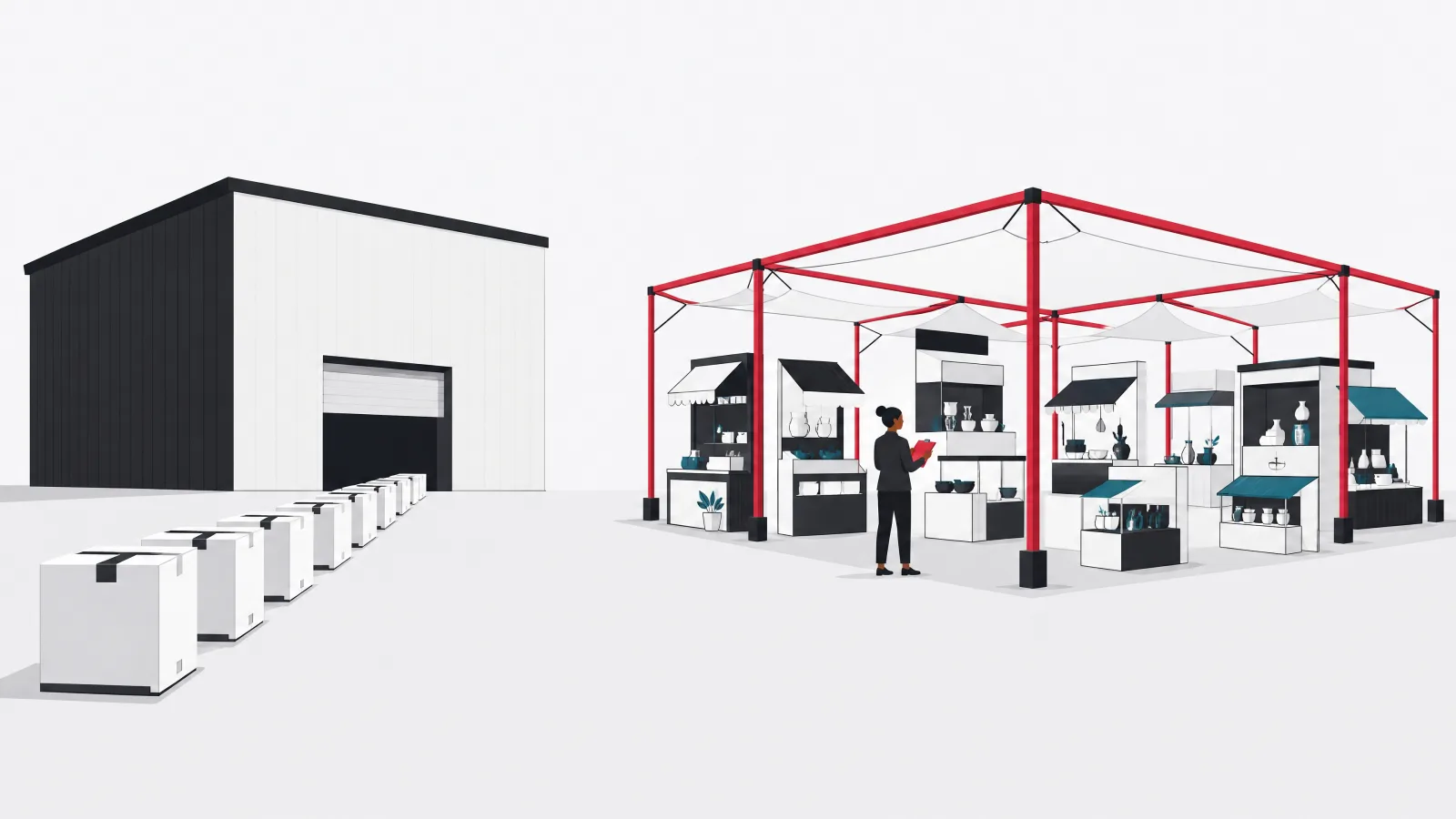
The choice of a pure marketplace over a first-party retailer was decisive and, at the time, not obvious. Amazon's model of owned inventory and owned logistics was the reference point globally, and Lazada, launched in Indonesia in 2012 with Rocket Internet backing, initially leaned toward it. Tokopedia's bet was that Indonesia's supply of goods was already distributed across millions of small merchants, in markets, in kiosks, in homes, and that the winning platform would be the one that brought those merchants online rather than the one that competed with them. Owning inventory in a country with that geography would also have meant owning the logistics problem, which no company could afford to solve alone.
The model set up the company's three defining challenges. A marketplace between strangers needs trust, and Indonesia had little infrastructure for it. A marketplace that sells physical goods needs delivery, and Indonesia's geography made delivery extraordinarily hard. A marketplace that depends on third-party sellers needs those sellers to show up and succeed, and Indonesia's merchants had mostly never used a computer to sell. The rest of the company's first decade is the story of solving these three in turn.
Three ways to build e-commerce, and what Tokopedia chose
| Model | Who owns inventory | Who delivers | Platform's hard problem |
|---|---|---|---|
| First-party retailer | The platform | The platform or contracted fleet | Working capital, warehouses, national logistics |
| Managed marketplace | Sellers | Platform-run fulfillment | Fulfillment cost and quality at scale |
| Open marketplace (Tokopedia) | Sellers | Open courier marketplace | Trust between strangers, seller onboarding |
The marketplace model outsourced inventory and logistics risk and took on the trust and onboarding problems instead. In Indonesia that was the right trade.
The trust problem: escrow before anyone had a card
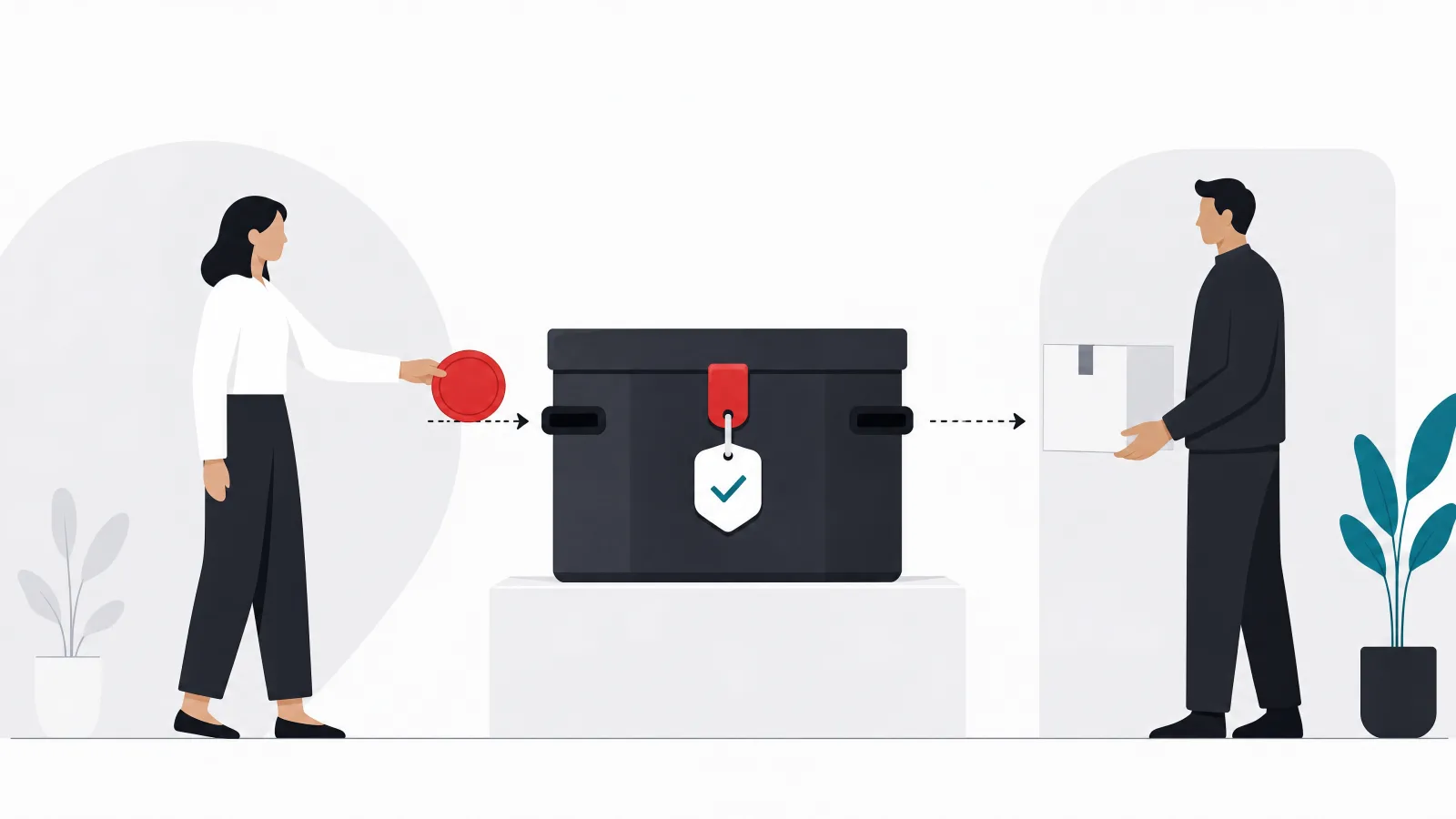
In 2009 most Indonesian consumers did not have a credit card and many did not have a bank account, and the prevailing way to buy something from a stranger online was to transfer money to their bank account and hope. Fraud was common enough that online purchase from unknown sellers was, reasonably, considered risky. Tokopedia's founding mechanism was escrow: the buyer paid Tokopedia, Tokopedia held the money, the seller shipped, the buyer confirmed receipt or a dispute window elapsed, and only then did the money reach the seller. The platform absorbed the counterparty risk that had been stopping strangers from transacting.
Escrow required Tokopedia to accept payment in the ways Indonesians could actually pay: bank transfer to a virtual account with a unique code per order so the payment could be matched automatically, then cash payment at convenience store chains such as Indomaret and Alfamart, then over time the e-wallets that emerged, OVO, and eventually GoPay after the merger. Each payment method was an integration and a reconciliation problem, and the platform's ability to add them faster than competitors was a real advantage in a market where the payment mix shifted every year. The e-wallet and payments infrastructure that later became a business in its own right started as a way to make escrow work.
Trust was reinforced by mechanisms layered on top of escrow. Seller reputation scores and reviews, a badge system for verified and high-performing merchants, a dispute resolution center with platform staff adjudicating, and later a "Power Merchant" and official store tier that gave buyers a signal of which sellers the platform stood behind. The lesson for marketplace builders is that trust is not a feature; it is a stack, and the base layer is the platform putting its own balance sheet between the buyer and the seller until the transaction is complete.
The escrow flow that made stranger-to-stranger commerce work
-
Buyer pays the platformStep 1
Bank transfer to a per-order virtual account, cash at a convenience store, or later an e-wallet. The seller sees nothing yet.
-
Platform confirms and releases the orderStep 2
Payment matched automatically by the unique code. Seller is notified to ship within a deadline.
-
Seller ships via a marketplace courierStep 3
Tracking number entered; the platform pulls status from the courier's API.
-
Buyer confirms or window elapsesStep 4
Receipt confirmed in the app, or the dispute window closes without a claim.
-
Funds released to the sellerStep 5
Into the seller's Tokopedia balance, withdrawable to a bank account. Disputes route to the resolution center instead.
The geography problem: an open logistics marketplace instead of a fleet
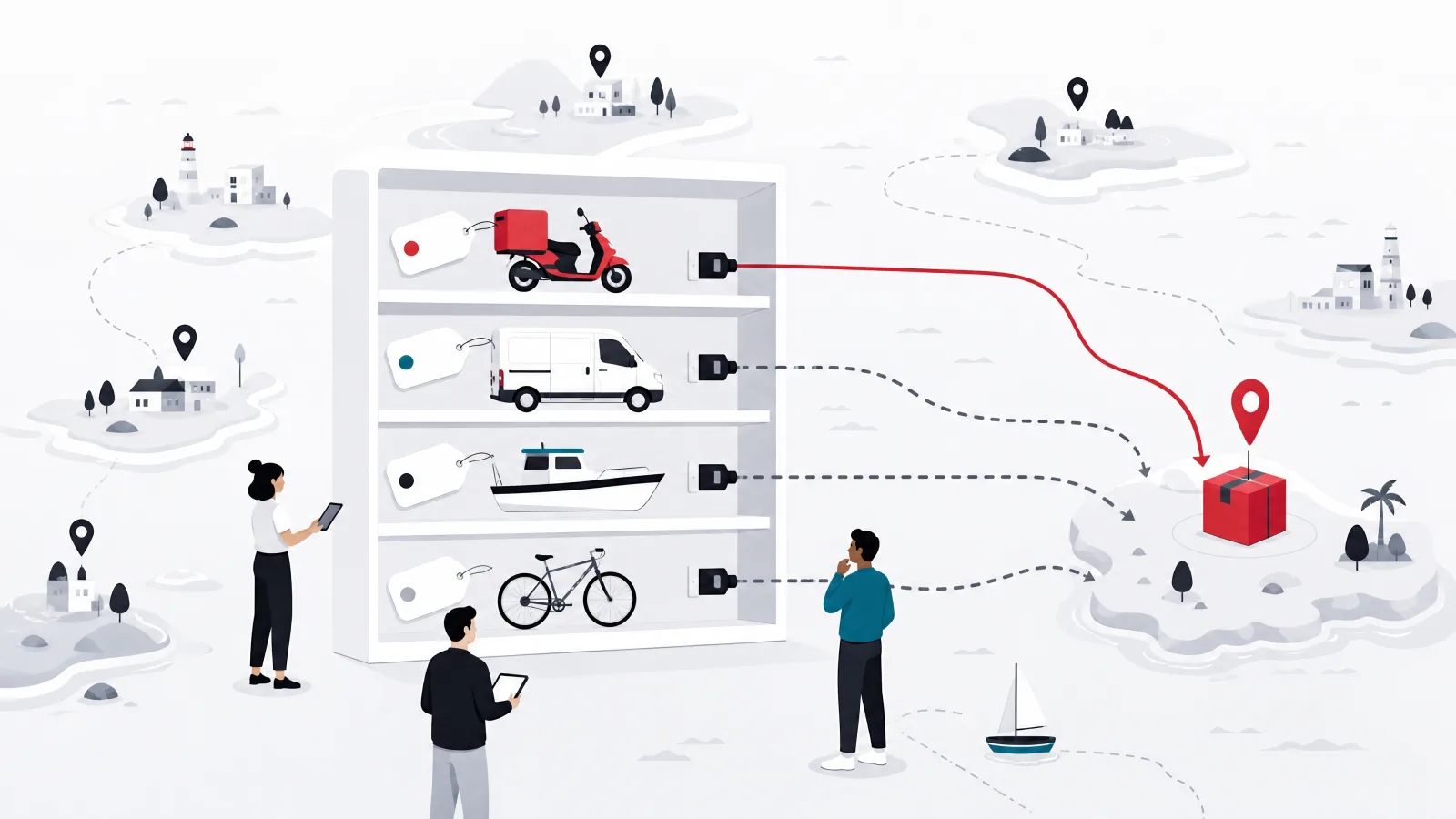
Indonesia's inhabited islands number in the thousands, its address system is inconsistent outside major cities, and a parcel from Jakarta to a town in Sulawesi or Papua may cross sea, air, and unpaved road. No single courier covered the country well, and building an owned fleet to do so would have required capital and time that a young marketplace did not have. Tokopedia's answer was to not choose: it integrated many couriers, JNE, J&T, SiCepat, Pos Indonesia, Gojek's instant delivery, and others as they appeared, and let the buyer or seller pick per shipment based on price, speed, and coverage, with rates and tracking pulled through each courier's API.
This open logistics marketplace had properties an owned fleet could not match. Coverage was the union of every courier's network, which reached places no single operator did. Couriers competed on price and service for the platform's volume, and the platform's data on delivery times and failure rates by route let it steer volume toward the reliable ones. New couriers could be added as integrations rather than as fleet expansions. The cost was complexity: dozens of APIs with different data models, inconsistent tracking events, rate cards that changed monthly, and the need for a normalization layer so that the buyer saw one coherent shipping experience. This is the same carrier integration problem any marketplace faces, at national scale in one of the hardest geographies on earth.
Later, with scale, Tokopedia added managed elements on top of the open marketplace: free shipping subsidies as a growth lever, fulfillment centers where high-volume sellers could stock inventory for faster delivery, and same-day delivery in major cities through Gojek's instant network after the merger. The sequencing matters. The open marketplace came first and solved coverage; managed services came later and solved speed in the dense markets where speed mattered. Building the managed layer first, as some competitors did, would have meant excellent delivery in Jakarta and no presence anywhere else.
Open logistics marketplace against owned fleet, in Indonesia
Do this
- Coverage is the union of every courierReaches towns no single operator serves. The archipelago problem solved by aggregation.
- Couriers compete for volumePrice and service pressure the platform could not apply to its own fleet.
- Data steers volumeDelivery time and failure rate by route and courier. The platform learns which to recommend where.
- Managed layer added at scaleFulfillment centers and same-day in dense cities, after coverage was already national.
Not this
- Dozens of integrationsDifferent APIs, tracking events, and rate cards. A normalization layer is mandatory.
- Inconsistent experienceThe buyer sees the worst courier's failures as the platform's. Reputation management is continuous.
- Owned fleet first, elsewhereExcellent delivery in the capital and nothing beyond it. Coverage, not speed, was the binding constraint.
The supply problem: turning millions of micro-merchants into sellers

A marketplace is only as good as its supply, and Tokopedia's supply was Indonesia's vast base of small merchants, most of whom in 2009 had never sold online and many of whom had no computer. The seller experience was therefore designed for the lowest possible friction: free to open a shop, free to list, a registration flow that needed only a phone number and a bank account, and, critically, a mobile-first seller app as smartphones spread, so that a merchant could manage a shop from the same device they used for everything else. Listing a product was a photo and a few fields. The bar to entry was as close to zero as the platform could make it.
Onboarding was followed by enablement. Seller education through a program the company branded as a seller school, promotional tools that let merchants run their own discounts and participate in platform campaigns, analytics that showed a seller what was selling and to whom, and later a suite of financial services: working capital loans underwritten on the seller's transaction history, since most had no formal credit record, and inventory financing. The platform knew more about a micro-merchant's business than any bank did, and lending against that data became both a service to sellers and a revenue line.
The result was a supply base measured in millions of active sellers, heavily weighted toward micro and small businesses, and this was the moat. A competitor could match Tokopedia's buyer app, its payment methods, and its courier list. It could not quickly match millions of merchants who had built their online business on Tokopedia, held their reputation there, and financed their inventory through it. The inventory and order management tooling that grew up around sellers was less glamorous than the buyer-side features and did more to lock in the platform's position than any of them.
The seller flywheel, in four turns
The engineering: from a monolith to a platform for millions of sellers
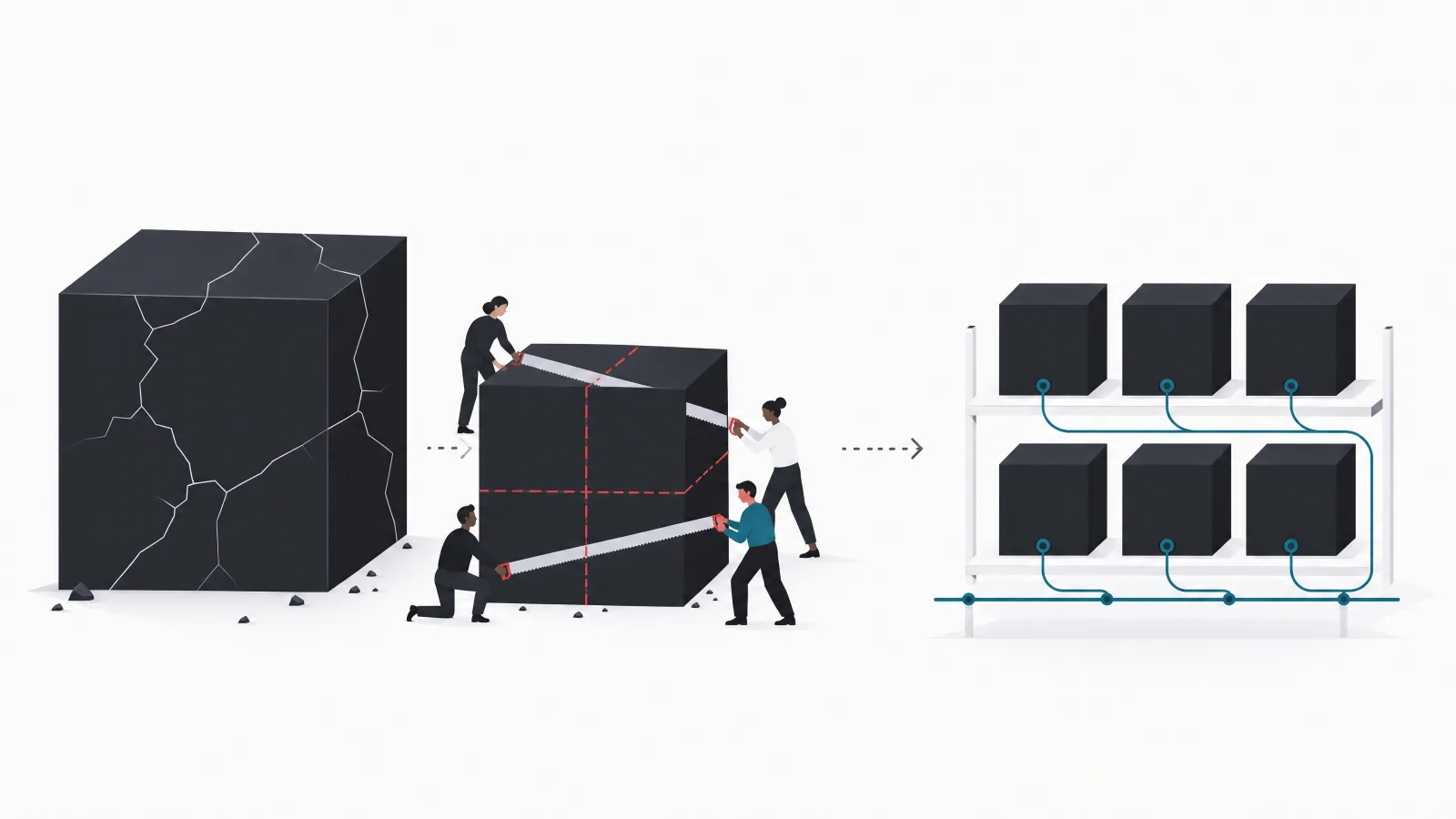
Tokopedia's engineering evolution followed a pattern familiar to every marketplace that survives its own growth. The early platform was a monolith, a single codebase and database, which was correct for a small team shipping fast. Growth broke it in the usual places: the product catalog and search, which had to handle hundreds of millions of listings with wildly inconsistent seller-entered data; the order and payment pipeline, which had to be correct under load during flash sale events that compressed a day's traffic into minutes; and the deploy process, where one team's change could take down everyone. The company's engineering blog and conference talks over the years document a migration to services organized around business domains, catalog, search, order, payment, logistics, seller tools, each owned by a team and deployable independently.
Search and discovery were the deepest technical investments, because a marketplace with millions of sellers listing the same popular products in slightly different ways has a data quality problem that no off-the-shelf search engine solves. The work included product normalization to cluster near-duplicate listings, ranking that balanced relevance with seller reliability and delivery cost to the buyer's location, and personalization as behavioral data accumulated. Recommendations, the "you might also like" surfaces that drive a large share of marketplace discovery, became a machine learning problem with a dedicated organization behind it.
The flash sale problem deserves its own mention because it shaped the architecture. Indonesian e-commerce runs on campaign days, the twelfth of December and similar dates when platforms coordinate massive promotions and traffic spikes by an order of magnitude or more within minutes. Surviving these meant load testing to multiples of expected peak, queuing and rate limiting at the edges so that the order pipeline degraded gracefully rather than collapsing, caching aggressively for read-heavy catalog traffic, and rehearsing the event with the whole engineering organization. Teams building high-traffic backends for any commerce platform face this in miniature; Tokopedia faced it at national scale several times a year.
Marketplace engineering lessons that generalize
- Start with the monolithA small team shipping fast is right to. Split along business domains when teams block each other, not before.
- Treat catalog quality as a productSeller-entered data is inconsistent by nature. Normalization and deduplication are permanent investments, not a cleanup.
- Rank on more than relevanceSeller reliability and delivery cost to this buyer belong in the ranking. Relevance alone surfaces the cheapest unreliable listing.
- Design for the spike, not the averageCampaign days compress a day into minutes. Queue at the edge, cache reads, degrade gracefully, rehearse.
- Give sellers real toolingThe seller app, analytics, and financing were engineering products. They built the moat.
The GoTo merger: marketplace meets frequency
In May 2021 Tokopedia and Gojek, Indonesia's ride-hailing and on-demand super app, announced their merger to form GoTo Group, which listed on the Indonesia Stock Exchange in April 2022. The strategic logic was complementary assets. Tokopedia brought e-commerce, a vast seller base, and high-value transactions. Gojek brought daily frequency through rides and food, a fleet of drivers who could do last-mile and instant delivery, and GoPay, one of the country's largest e-wallets. Together they had the pieces that the super app model requires, a daily habit, a payment rail, and a broad service catalog, assembled through combination rather than built from one origin.
The integration produced concrete product effects. GoPay became a primary payment method on Tokopedia, with the loyalty and promotion mechanics that a shared wallet enables. Gojek's driver network gave Tokopedia same-day and instant delivery in the cities where Gojek was dense, layering speed onto the open logistics marketplace's coverage. Seller financing drew on both companies' data. And the combined group had a story to tell investors about an Indonesian ecosystem spanning commerce, mobility, food, and payments at a time when that story commanded high valuations.
The merger also exposed the limits of the combination story. GoTo's post-listing performance was weak as the market repriced growth companies and as losses in the e-commerce business, driven by subsidy competition with Shopee, weighed on the group. The contrast with the AirAsia case is instructive: where AirAsia tried to build frequency from a low-frequency origin and could not, GoTo acquired frequency and a marketplace in one move and still found that owning all the pieces does not by itself produce profitable unit economics. The super app model needs the parts; the parts do not guarantee the model works.
The TikTok Shop deal: social commerce and a regulator that redrew the market
In September 2023 Indonesia's trade ministry issued a regulation prohibiting social media platforms from processing e-commerce transactions directly, aimed squarely at TikTok Shop, which had grown rapidly in Indonesia by letting users buy products discovered in videos and live streams without leaving the app. TikTok Shop suspended transactions in Indonesia within days. The regulation was framed as protecting small offline merchants and separating social media from commerce, and it created an immediate problem for TikTok: a large, fast-growing commerce business in its biggest Southeast Asian market with no legal way to operate.
The solution, announced in December 2023 and completed in early 2024, was a transaction in which TikTok took a controlling stake of about 75 percent in Tokopedia, invested more than a billion dollars, and combined TikTok Shop Indonesia's operations into Tokopedia, so that shopping discovered in TikTok would be transacted on Tokopedia's licensed platform. GoTo retained a minority stake and a revenue-sharing arrangement, and its financials improved as e-commerce losses left its consolidated accounts. For Tokopedia, it meant a new controlling owner and a new strategic direction anchored in social commerce.
The deal marks the next competitive front for marketplaces in the region. Discovery is shifting from search, where the buyer knows what they want and looks for it, toward content, where the buyer is shown something in a video or stream and buys on impulse. TikTok's strength is the content and the attention; Tokopedia's is the licensed transaction, the seller base, the payments, and the logistics integrations built over fifteen years. Whether the combination out-competes Shopee, which built its own live commerce features, is the open question in Indonesian e-commerce today. The broader lesson is that in an emerging market the regulator is a market participant, and a business model that a regulator decides to reshape will be reshaped.
What marketplace builders should take from Tokopedia
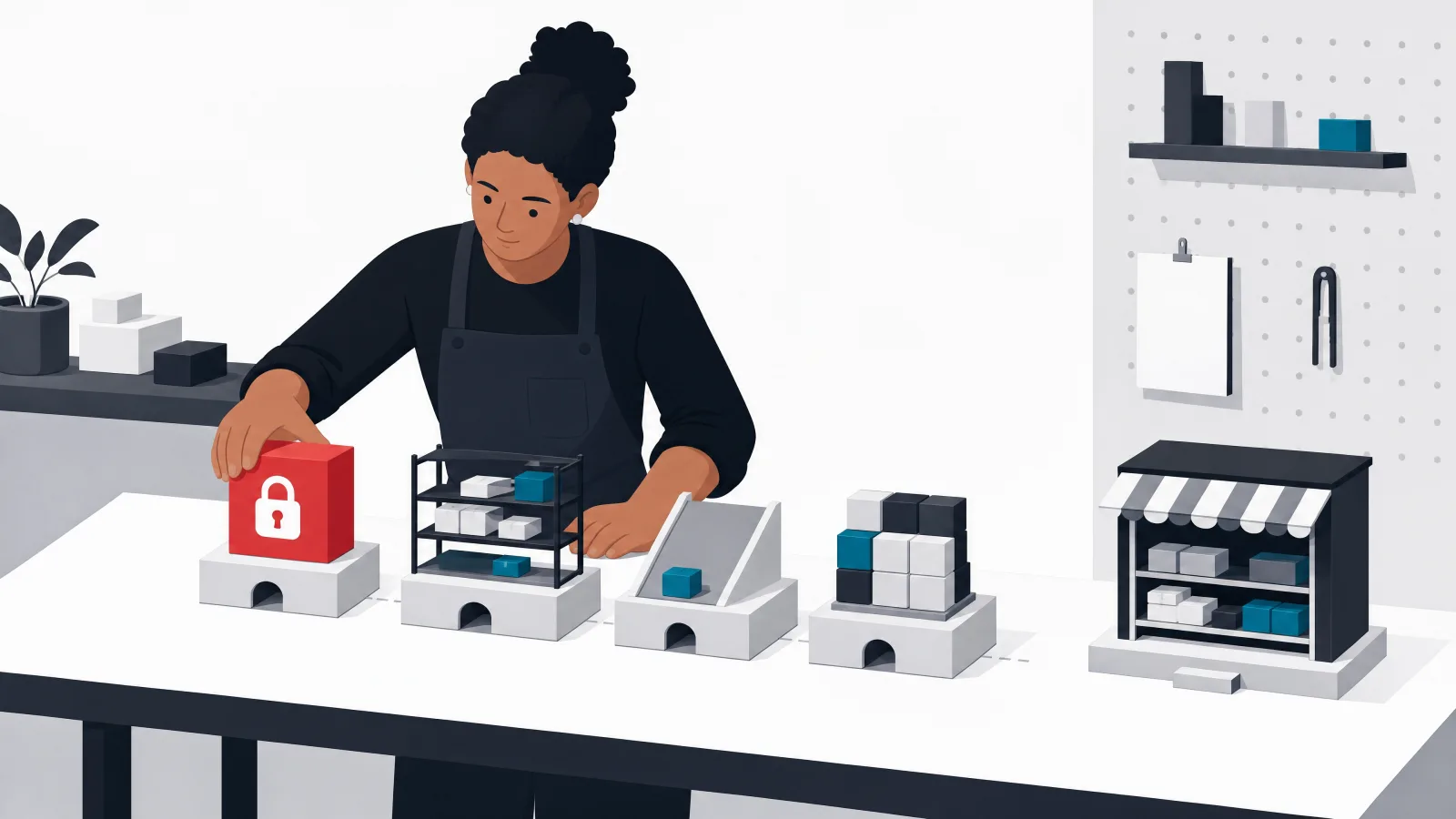
Design for your market's constraints, not for the reference model. Every one of Tokopedia's defining choices answered an Indonesian constraint: escrow answered low card penetration and low trust, the open courier marketplace answered the archipelago, the mobile-first free seller app answered a merchant base with no computers and no budget. A team that had copied Amazon's owned-inventory model or a Chinese platform's managed logistics would have built something excellent for Jakarta and irrelevant everywhere else. The first question for any marketplace is which constraints are yours.
Trust is the base layer, and the platform pays for it. Escrow put Tokopedia's balance sheet between strangers and made the first transactions possible; reputation, badges, and dispute resolution built on top. Markets with mature payment and legal infrastructure can sometimes skip this; emerging markets cannot, and a marketplace that tries to launch on trust it has not manufactured will stall at the first fraud wave. Supply is the moat, and it is built through tooling. Buyer features are copyable within a quarter. Millions of sellers with their reputation, their inventory financing, and their daily operations on your platform are not.
Finally, the last two chapters of the story are cautionary. Owning all the pieces of a super app did not make GoTo profitable, because unit economics in subsidy-driven e-commerce are decided by competitive dynamics that no combination of assets overrides. And a regulator redrew the market with a single decree, turning a fast-growing competitor into a controlling owner within months. Builders in emerging markets should plan for both: the combination that looks complete on a slide may still lose money, and the rules of the market can change faster than a roadmap.
- Answer your market's constraints. Escrow for trust, open couriers for geography, free mobile seller tools for a merchant base with no computers. The reference model is a starting point, not a plan.
- Manufacture trust before growth. The platform's balance sheet between buyer and seller, then reputation on top. Trust that is not built stalls at the first fraud wave.
- Build the moat on the supply side. Seller tooling, data, and financing lock in millions of merchants. Buyer features are copied in a quarter.
- Aggregate before you own. The open logistics marketplace solved coverage; owned fulfillment came later for speed where it mattered.
- Plan for the regulator. In emerging markets the rules are a market force. A decree reshaped Indonesian e-commerce in a quarter.
Frequently asked questions
What is Tokopedia?
Tokopedia is an Indonesian online marketplace founded in Jakarta in 2009 where individuals and businesses open shops and sell to consumers, with the platform providing search, escrow-based payments, courier integrations, and dispute resolution but holding no inventory of its own. It grew into one of Indonesia's largest e-commerce platforms, merged with Gojek to form GoTo in 2021, and in 2024 came under the control of TikTok, which combined TikTok Shop Indonesia into it.
How does Tokopedia make money if listings are free?
Through advertising and promoted placement paid by sellers who want visibility, through payments and financial services including seller working capital loans underwritten on transaction data, through logistics and fulfillment services, and through commissions on certain seller tiers and categories introduced as the platform matured. Free listings were a deliberate choice to maximize the seller base; the successful sellers were monetized later through services rather than fees to list.
Why did Tokopedia and Gojek merge?
Complementary assets. Tokopedia had e-commerce, a vast seller base, and high-value transactions but low daily frequency. Gojek had daily frequency through rides and food, a driver network for instant delivery, and the GoPay wallet. Together as GoTo they held the parts of a super app, a daily habit, a payment rail, and a broad catalog, and a compelling ecosystem story for the 2022 listing. The combination did not by itself fix e-commerce unit economics under subsidy competition with Shopee.
What happened between Tokopedia and TikTok Shop?
In September 2023 Indonesia banned social media platforms from processing e-commerce transactions directly, halting TikTok Shop. In December 2023 TikTok agreed to take a controlling stake of about 75 percent in Tokopedia and invest over a billion dollars, combining TikTok Shop Indonesia into Tokopedia so that purchases discovered in TikTok are transacted on Tokopedia's licensed platform. The deal completed in early 2024; GoTo kept a minority stake and a revenue-sharing arrangement.
How did Tokopedia handle delivery across Indonesia?
It never built its own fleet. Instead it integrated many couriers, national operators, regional ones, the postal service, and later Gojek's instant delivery, behind a normalization layer, letting buyers and sellers choose per shipment on price, speed, and coverage. Coverage became the union of every courier's network, which reached places no single operator did. Managed fulfillment centers and same-day delivery in dense cities were added later, once national coverage existed.
What can marketplace builders learn from Tokopedia?
Design for your market's actual constraints rather than importing a reference model: escrow for a low-trust, low-card market, open courier aggregation for a difficult geography, free mobile-first seller tools for merchants without computers. Manufacture trust before chasing growth, build the moat on the supply side through seller tooling and financing, aggregate logistics before owning it, and plan for regulators as market participants who can redraw the structure of the market within a quarter.
When a marketplace has to be built for the market it actually serves, AgileTech is an AI native software development company in Vietnam that builds escrow, logistics, and seller platforms for Southeast Asia.
Source: https://agiletech.vn/blog/tokopedia-case-study/ · (c) AgileTech Vietnam. Printed from agiletech.vn.