 Nguyen Manh Thang
Chief Executive Officer, AgileTech Vietnam
Nguyen Manh Thang
Chief Executive Officer, AgileTech Vietnam
- Published
- Last updated
- Read time
- 13 min
- Views
- 176

Read the AI overview
ZaloPay is the e-wallet of VNG, the Vietnamese internet company behind Zalo, the country's dominant chat app with roughly 75 million users. Launched in 2017, it bet that owning Vietnam's biggest distribution channel would win payments, embedding transfers and red-envelope gifting directly into chat. The bet taught the opposite lesson: distribution creates installs, not habit, and ZaloPay spent years as a well-funded number-two to MoMo while burning capital on promotions. Its 2024 repositioning, deeper Zalo integration, merchant QR unification through VietQR, a focus on social payments and younger users, made the economics saner without changing the ranking. For builders, ZaloPay is the honest counterweight to every super app pitch that starts with "we already have the users".
Every founder who owns an audience eventually drafts the same slide: we have the users, so we will add payments, and the payments will fund a super app. ZaloPay is the most instructive test of that slide anywhere in Southeast Asia, because the audience was real and enormous, Zalo is Vietnam's default chat app, installed on effectively every smartphone in the country, and the payments still had to be fought for, expensively, for years.
This case study reads ZaloPay the way an engineer reads a post-mortem: not to mock the thesis but to find exactly where it bent. Where distribution genuinely helped, instant installs, shared identity, payments woven into conversations. Where it did not, merchant acceptance, bank-linking trust, the daily habit MoMo had already spent years earning. And what the company did about it, including the 2024 repositioning that made ZaloPay's economics saner by making its ambitions more honest.
It pairs deliberately with two neighbors on this blog. The MoMo case study tells the habit-first story this one counterpoints, and the anatomy of a super app supplies the structural vocabulary both cases share. Read together, the three articles form the full argument: what super apps are, how the leader built one, and what happens when you try to shortcut the sequence with distribution.
Key takeaways
- ZaloPay is the definitive test of the most seductive assumption in platform strategy: "we have distribution, so payments will follow". Zalo's tens of millions of daily chat users produced installs on demand; converting them into funded, weekly-active wallet users took years longer and cost far more than the thesis promised.
- Chat is adjacent to payments, not identical: a message is social, a payment is financial, and the trust, KYC and bank-linking friction between the two does not disappear because both live in one app. Red-envelope transfers inside chat worked; store payments against MoMo's merchant network did not follow automatically.
- The wallet wars' economics were brutal and instructive: years of cashback and subsidy bought market presence, not loyalty, and reported losses across the sector forced every player, ZaloPay included, toward the same discipline: fewer promotions, real merchant economics, financial services distribution.
- The 2024 repositioning is the case study's second act: ZaloPay leaned into what it uniquely owns, payments inside social context, gifting, splitting, small-merchant QR through the VietQR rails, rather than fighting MoMo symmetrically on every front.
- Being a strong number-two in payments is a real business but a different one: the strategy shifts from winning the market to owning defensible niches inside it, and the org must accept that shift or keep burning money on a ranking that will not change.
- For builders, the copyable lessons are concrete: distribution shortens the top of the funnel only; habit comes from a use case the product wins outright; and an embedded wallet inside a host app inherits the host's identity and session advantages but also its product politics.
What is ZaloPay, and what is it built on?

ZaloPay is a Vietnamese e-wallet operated by ZION, a subsidiary of VNG Corporation, the Ho Chi Minh City internet company that grew from game publishing into Vietnam's closest equivalent of a domestic big-tech firm. Launched in 2017, the wallet does what Vietnamese wallets do: QR payments in stores and online, peer-to-peer transfers, bill and utility payments, phone top-ups, and a shelf of financial and lifestyle services added over time. Users fund it from linked bank accounts, and it operates under Vietnam's payment intermediary licensing like its rivals.
What makes it a case study is the asset behind it. Zalo, VNG's chat platform, is the rare local product that beat the global incumbents: it is Vietnam's dominant messenger, with reported user counts around 75 million, ahead of Facebook Messenger in its home market, woven into daily life from family groups to government communication. ZaloPay was conceived as that platform's wallet: payments living inside the app Vietnamese people already open dozens of times a day, with chat-native features, transfers in conversation, lunar new year red envelopes (li xi), group splitting, as the wedge.
The competitive field it entered was already forming. MoMo had a three-year head start on wallet habit and was building the merchant network and trust infrastructure the MoMo case study describes. ViettelPay leveraged a telecom giant's agent network; ShopeePay arrived bundled with e-commerce; VNPay built QR rails through banks. Vietnam's cashless push, a young mobile-first population and a central bank actively promoting digital payments made the pond rich, and every serious platform in the country dove in at once.
The functional definition that matters for the rest of this article: ZaloPay is a distribution-first wallet, the inverse of MoMo's habit-first wallet. One company earned frequency and then attached services to it; the other owned an audience and tried to convert it into frequency. That inversion, and what it did and did not buy, is the whole case study.
Terms this case study leans on
- Distribution-first
- Launching a product into an audience you already own, betting that reach converts to usage. ZaloPay's founding thesis.
- Habit-first
- Earning a high-frequency use case before expanding. MoMo's sequence, and the counterpoint throughout this article.
- Embedded wallet
- A payment account living inside a host app (chat, e-commerce, ride-hailing), inheriting its identity, sessions and traffic.
- Li xi
- Lunar new year lucky money. Digitized red-envelope gifting is chat-native payments at its most natural, and ZaloPay's best organic wedge.
- VietQR
- Vietnam's interoperable bank QR standard. Its spread commoditized basic merchant acceptance for every wallet at once, resetting part of the competition.
Five phrases used precisely throughout, defined once.
The founding thesis: distribution wins payments

The thesis deserves a fair statement, because it was not naive. In 2017, the strongest evidence in the industry pointed exactly this way: WeChat Pay had converted China's dominant chat app into half of a payments duopoly in about three years, using the same wedge ZaloPay planned, red envelopes in conversation, then merchant QR everywhere. Zalo's position in Vietnam rhymed with WeChat's in China: dominant, daily, culturally default. VNG had capital, engineering and the only distribution asset in the country that could plausibly rerun the play.
And distribution did deliver what distribution delivers. Installs were nearly free: a wallet promoted inside Zalo reached tens of millions of eligible users without buying a single ad impression. Identity friction fell: a Zalo account maps to a real phone number and a real social graph, so sign-up was smoother than a standalone app's. And the chat-native features genuinely worked in season: lunar new year li xi campaigns produced spikes of peer-to-peer activity that standalone wallets envied, transfers flowing inside the conversations where the social obligation lived.
The bend in the thesis appeared between installs and habit. A payment app becomes a habit at the moment of paying, in the store, at the bill, on the checkout page, and those moments belong to whoever built the acceptance network and the trust to use it. MoMo's years of merchant onboarding, cashback discipline and eKYC-hardened reliability meant that when a Vietnamese consumer stood at a counter, the QR code on it and the reflex in their thumb both said MoMo. Zalo's red envelope could not follow the user to the coffee shop. Installs converted to dormant accounts; seasonal spikes decayed; and the funnel's expensive middle, bank linking, first merchant payment, weekly recurrence, still had to be bought with the same subsidies everyone else was paying.
Why did the WeChat play not transfer? Three differences, each instructive. Timing: WeChat Pay entered a payments vacuum, while ZaloPay entered a market MoMo had already taught. Container: WeChat was the operating system of Chinese digital life, mini programs, official accounts, commerce, while Zalo, dominant as chat, monetized cautiously and never became the place business itself happened. And regulation: China allowed the chat-commerce flywheel to close before rules tightened; Vietnam's bank-linking and KYC requirements kept the wallet's friction real regardless of who distributed it. Distribution shortens the top of the funnel; it does not repeal the middle.
The wallet wars: what the subsidy decade taught everyone

From roughly 2018 to 2023, Vietnamese wallets fought the way Southeast Asian platforms fought everywhere: with money. Cashback on first payments, discounted phone top-ups, merchant subsidies, seasonal jackpots, and the peculiar arithmetic in which every transaction deepened the loss but grew the metrics the next funding round would price. Public reporting through the period showed the pattern clearly across the sector: revenue growing, losses growing faster, market share charts moving in expensive fractions of a percentage point.
ZaloPay's position in that war was structurally awkward, and naming the awkwardness is the analytical point. It had more capital patience than most, VNG could fund it as a strategic bet, and better distribution than anyone, but its subsidies bought the same disloyal usage everyone else's did. A promotion-driven user pays with whichever wallet is discounted this week; multi-homing was the norm, with consumers holding two or three wallets and a reflex for the leader. Subsidy could rent the second slot in the pocket; it could not evict the first.
The sector-wide sobering arrived on schedule, as it did for wallets globally: capital tightened, the growth-at-any-price era ended, and the survivors converged on the same three disciplines. Real merchant economics, acceptance that merchants pay for because it moves sales, not because a subsidy pays them. Financial services distribution, wallets as the retail shelf for licensed partners' credit, savings and insurance, where the margin actually lives. And cost discipline in promotions, treating cashback as targeted onboarding spend rather than ambient market rent. The wallet war's honest lesson: payments is infrastructure with thin margins, valuable mainly for what it lets you distribute next, which is the same lesson the super app anatomy article generalizes.
One external event quietly reset part of the board: VietQR. As Vietnam's interoperable bank-QR standard spread across every bank app in the country, basic merchant acceptance, the moat MoMo had dug by hand, became partially commoditized: any bank app could scan the same code on the counter. For the leader, that eroded a hard-won edge at the margins; for ZaloPay, it lowered the cost of being usable everywhere and shifted the contest toward the layers QR does not commoditize: the experience, the social context, and the services attached to the payment. ZaloPay's repositioning leaned exactly there.
The Vietnamese wallet field, by founding asset
| Player | Founding asset | What it bought | What it did not buy |
|---|---|---|---|
| MoMo | Years of wallet habit, agent network | Daily reflex, merchant trust | A parent platform to lean on |
| ZaloPay | Zalo's chat dominance | Free installs, social payments | Store habit, merchant network |
| ShopeePay | E-commerce checkout traffic | Captive online payment volume | Offline presence, standalone habit |
| ViettelPay | Telecom agents, rural reach | Cash-in network, coverage | Urban app-first mindshare |
| VNPay | Bank partnerships, QR rails | Merchant infrastructure at scale | A consumer brand of its own |
Each serious player entered with a different inherited advantage, and each advantage bought a different thing.
The second act: repositioning around what ZaloPay actually owns
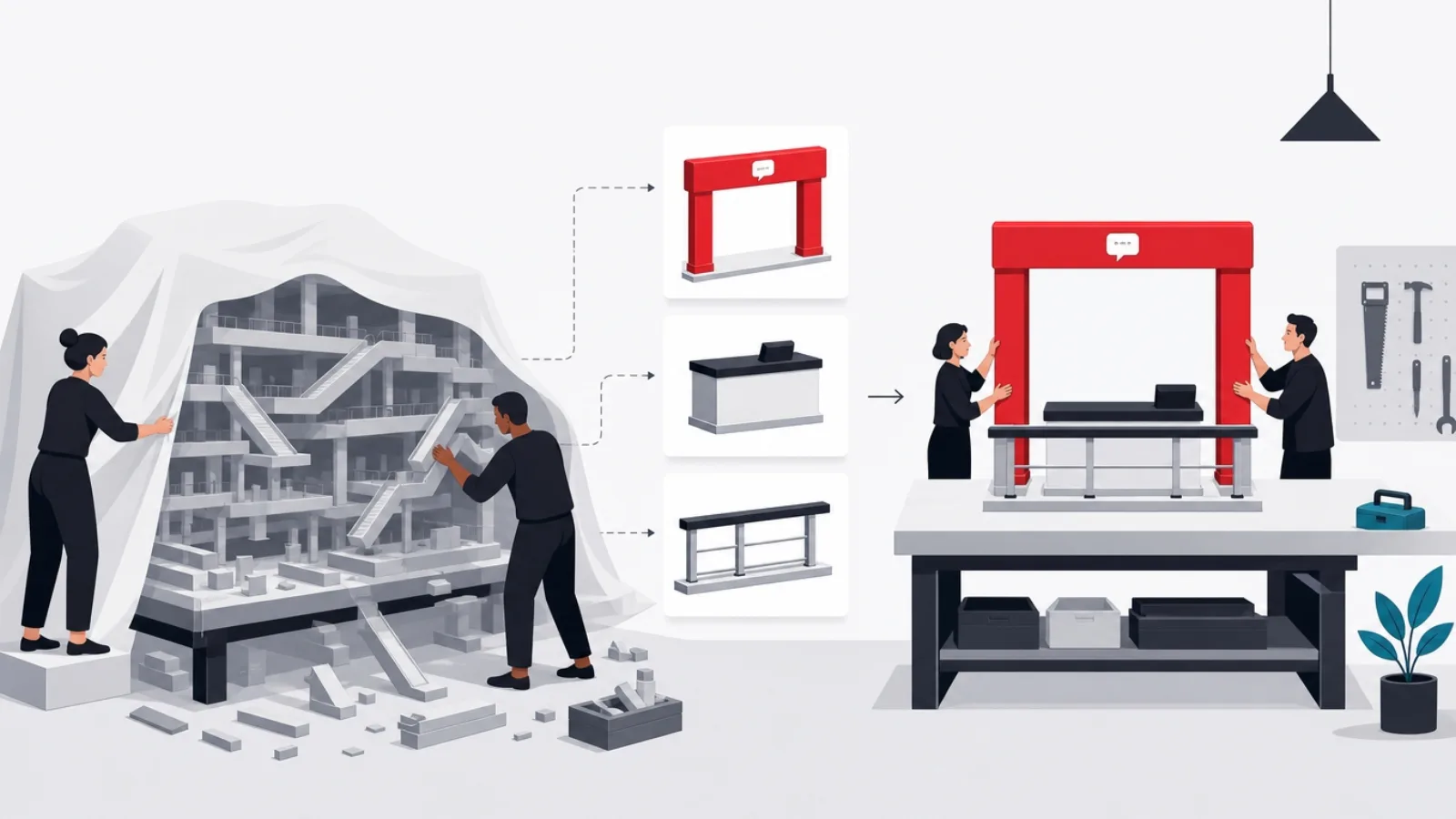
By 2024 the strategy visibly changed, and the change is the part of this case study most worth studying, because companies rarely execute the retreat-and-refocus move well. ZaloPay refreshed its brand, restructured leadership, and, most tellingly, redefined its ambition: less a symmetrical war with MoMo across every category, more a payments-and-services layer built where VNG is unbeatable, inside Zalo's social fabric, and interoperable everywhere else through the VietQR rails rather than through a proprietary acceptance network it would have to subsidize into existence.
The product expression of the shift is coherent. Deeper Zalo integration moved ZaloPay from "an app Zalo advertises" toward "a capability chat has": transfers, requests and gifting closer to the conversation, payment inside the social moment where Zalo's advantage is real rather than at the store counter where it never was. The merchant story runs through interoperable QR, riding the standard instead of fighting the leader's network. And the audience focus narrowed honestly: younger users, social and group payments, the li xi season it already wins, and the small, everyday financial actions that chat adjacency genuinely improves.
Read strategically, this is a company accepting the number-two position and changing what number-two means. A perpetual challenger that fights the leader symmetrically pays the war's costs forever without changing the ranking; a challenger that redefines the ground, we win payments-in-social-context, we ride shared rails elsewhere, we monetize through VNG's broader ecosystem of games, content and services, converts an unwinnable war into a defensible position. Whether it produces a great business is genuinely open; that it is the correct move given a decade of evidence is much less so.
The distribution thesis, in the end, was not wrong; it was mis-scoped. Zalo's reach could not buy the store counter, but it can own the payment moments that happen inside relationships: the split bill negotiated in the group chat, the gift sent in the conversation, the family transfer that follows the family's messages. ZaloPay's second act is the thesis resized to the moments where it was always true, which is a more useful strategic lesson than either the triumph story or the failure story the market narrative usually offers.
The repositioning, as a playbook for challengers
Do this
- Redefine the ground, not just the tacticsFrom "beat the leader everywhere" to "own payments in social context". A niche defined by your structural advantage is defensible; a discount is not.
- Ride shared rails where you are weakInteroperable QR made universal acceptance cheap. Fighting the leader's proprietary network with subsidies was the expensive alternative.
- Monetize through the parent's ecosystemVNG has games, content and services to distribute. The wallet as the group's financial layer beats the wallet as a standalone P&L.
- Accept the ranking, change the gameNumber-two as identity, not as failure. The org that admits it stops burning money on symmetric warfare.
Not this
- Confusing installs with usersDistribution produces the former on demand. Reporting them as the latter delays the strategy correction by years.
- Subsidizing habit you cannot keepPromotion-driven usage decays to whoever discounts next. Rent is not a moat, and the wallet wars proved it at sector scale.
- Copying a play without its conditionsWeChat Pay needed a payments vacuum, a commerce-carrying container and permissive timing. Checklists of conditions travel; plays alone do not.
- Letting the host app's politics starve the walletAn embedded product competes for the host's roadmap and screen space. Without executive protection, chat features win every planning cycle.
For builders: what the embedded-wallet pattern actually requires

Strip the Vietnam specifics and ZaloPay is the reference case for a pattern every platform eventually considers: embedding payments in a product that already has an audience. The engineering is the tractable part, and its shape is known. A wallet core, balances, funding, transfers, payment execution, that is genuinely bank-grade: idempotent operations, double-entry ledgers, reconciliation against partner banks, and the fraud and risk layer that grows from rules to models as volume arrives. eKYC as a first-class flow, because regulation gates every funded account. And the integration layer into the host app: shared identity and session, payment sheets embeddable in any surface, events flowing both ways.
The organizational requirements are the ones the pattern usually underestimates. An embedded wallet lives inside a host whose product priorities are not payments: every home-screen placement, every notification slot, every onboarding step the wallet needs is a negotiation against features the host team values more. The wallets that thrive embedded have explicit executive protection, dedicated growth surface agreed in advance, and metrics that separate wallet health from host health, because "Zalo is doing fine" tells you nothing about whether ZaloPay's funnel is converting.
The strategic requirement is the one this whole case study argues: name the payment moment you win outright, and sequence from it. For a chat app, that moment is social: gifts, splits, requests, transfers inside relationships. For an e-commerce platform, it is checkout. For a ride-hailing app, it is the trip. The embedded wallet that owns its native moment completely, and treats everything beyond it as expansion to be earned rather than assumed, follows the sequence that works; the one that launches into every category at once because "the users are already here" reruns the thesis this article just watched bend.
And the market-conditions checklist travels better than any play. Is there an incumbent habit, or a vacuum? Does your container carry commerce, or only conversation? Do local rails (like VietQR) commoditize acceptance, or must you build it? What does regulation gate, and who already passed those gates? Teams building wallet and platform products, in Vietnam or anywhere, get more predictive power from those four questions than from any feature comparison, which is why they are the questions worth answering before the first sprint is planned.
The embedded-wallet readiness checklist
- A named payment moment you win outrightSpecific, native to your host product, winnable against an incumbent the user already has. Not a discount.
- Bank-grade wallet core, scoped honestlyLedger, idempotency, reconciliation, fraud. The invisible sixty percent of the build, priced before commitments.
- eKYC and licensing path, mapped earlyRegulation gates funded accounts everywhere. Partner, acquire or license, but decide before the roadmap assumes it.
- Host-app real estate, contracted in advancePlacement, notifications and onboarding steps in writing, with executive protection. Embedded products starve politely otherwise.
- Wallet-specific metrics, separated from host healthFunded accounts, weekly actives, first merchant payment, retention by cohort. Installs flatter; funnels inform.
- The four market-condition answersIncumbent habit, container commerce, rail commoditization, regulatory gates. The WeChat checklist, applied honestly to your market.
The verdict: what ZaloPay proves, and what it leaves open

What the case proves is the funnel decomposition, and it proves it about as cleanly as the industry will ever get: the same market, the same years, one player with habit and no parent platform, another with the country's best distribution and a patient parent. Distribution won the top of the funnel decisively, installs, identity, seasonal social usage, and did not win the middle or the bottom: bank trust, merchant reflex, weekly recurrence. Anyone pricing a "we have users, add payments" strategy now has a reference case with the confounds unusually well controlled.
What it also proves is quieter: the retreat is executable. Most challengers in subsidy wars either escalate until the capital ends or decay until the product does. ZaloPay's repositioning, own the social-payment ground, ride the shared rails, monetize through the parent ecosystem, is a live demonstration that a number-two can change the game it is losing rather than the intensity with which it loses. Strategy writing celebrates the pivot in startups and underrates it in funded subsidiaries, where the political difficulty is higher.
What remains open is whether the repositioned business compounds. Social payments are real but narrower than commerce; the VietQR rails that cheapened ZaloPay's acceptance also cheapened every bank app's; and the financial-services shelf that carries wallet economics everywhere is a contest MoMo entered earlier with more daily traffic to sell against. The bull case is the wallet as VNG's financial layer across games, content and chat, a Vietnamese ecosystem play with no true equal. The bear case is that chat-native payments stay a feature, delightful, sticky, and too small to carry a platform. This article does not pretend to know which; it argues only that the strategy finally matches the evidence.
For the reader building rather than observing: take the sequencing lesson from MoMo, the distribution honesty from ZaloPay, and the structural map from the anatomy piece, and notice they agree. Frequency is earned in a use case you win outright; distribution is a multiplier on a habit, not a substitute for one; and the platform move, opening your rails to others, comes after the habit, never before. Three articles, one conclusion, and the order of operations is the conclusion.
Reading ZaloPay from where you stand
What are you taking from the ZaloPay case?
-
You own an audience and are drafting the payments slide
Run the funnel decomposition first
Distribution buys installs and identity, not habit. Name the payment moment you win outright before pricing the rest of the thesis.
-
You are the challenger in a subsidy war
Study the second act, not the first
Redefine the ground around your structural advantage, ride shared rails where weak, and let the ranking stop being the metric.
-
You are embedding a wallet in a host product
Contract the real estate and separate the metrics
Embedded products starve without protected placement and wallet-specific funnels. The engineering is the easier half.
-
You are entering a wallet market anywhere
Apply the four-condition checklist
Incumbent habit, container commerce, rail commoditization, regulatory gates. The conditions decide what any play is worth.
Four builder situations, and what this case study tells each one.
Beyond the case: Vietnam's wallet market as a systems lesson
Step back from the two brands and Vietnam's wallet decade reads as a systems story worth exporting. A state pushing cashless payments set the current; a young, mobile-first population supplied the flow; global capital funded parallel experiments at once; and an interoperability standard arriving mid-war, VietQR, changed the physics for everyone simultaneously. Markets with those dynamics, several across Southeast Asia, South Asia and Latin America, will rhyme, and the rhyme is more useful than any single company's playbook.
The systems lesson about standards deserves special weight for builders. Proprietary acceptance networks are moats while they last and commodities the day rails interoperate; UPI did this to India's wallet market years earlier and VietQR echoed it in Vietnam. Strategy built on owning the pipe should price the regulatory and standards risk of the pipe becoming public; strategy built on the experience and services above the pipe compounds regardless. ZaloPay's repositioning, whatever else it is, is a bet on the durable layer.
There is also an engineering-market lesson in where the two leaders spent. Both MoMo and ZaloPay converged on the same invisible investments, eKYC, fraud, reliability, reconciliation, because trust infrastructure is the actual product beneath every wallet feature. Teams that budget wallets as interface work discover this in production, expensively. The pattern holds for any team building payment or platform products into emerging-market conditions, where agent networks, cash-in friction and identity verification are core product surface rather than edge cases.
And the last word belongs to the order of operations, because every thread in this article pulls back to it. Vietnam's market ran the experiment twice, with opposite starting assets, and returned one answer: the sequence is habit, then services, then platform, and no asset, not even the country's default chat app, lets you run it backward. That is the sentence to keep from this case study, and the one to test any super app pitch against, including your own.
The case in three load-bearing figures
Frequently asked questions
What is ZaloPay?
ZaloPay is a Vietnamese e-wallet operated by ZION, a subsidiary of VNG Corporation, the internet company behind Zalo, Vietnam's dominant chat app. Launched in 2017, it offers QR payments, peer-to-peer transfers, bill payments, phone top-ups and financial services, funded from linked Vietnamese bank accounts under the country's payment intermediary licensing. Its defining feature is integration with Zalo: transfers, payment requests and lunar new year gifting living inside chat conversations, which is both its strategy and the subject of this case study.
Is ZaloPay bigger than MoMo?
No. MoMo has led the Vietnamese e-wallet market by most reported measures, registered users, merchant acceptance, brand preference surveys, for years, with ZaloPay among the leading challengers alongside ShopeePay, ViettelPay and bank-app QR payments. ZaloPay's distribution through Zalo produced enormous install reach, but installs did not convert to daily payment habit at the leader's level, which is the strategic core of the case: distribution wins the top of the funnel, while habit, trust and merchant networks decide the rest.
Why did ZaloPay not repeat WeChat Pay's success?
Three conditions did not transfer. Timing: WeChat Pay entered a payments vacuum, while ZaloPay launched into a market MoMo had already taught for three years. Container: WeChat carried Chinese commerce itself, mini programs, official accounts, shopping, so payments completed loops that already lived in the app, while Zalo remained primarily conversation. Regulation: Vietnam's bank-linking and eKYC requirements kept real friction in the funnel regardless of distribution. The play was reasonable; the conditions that made it work in China were absent.
What changed in ZaloPay's 2024 repositioning?
The ambition was resized to the ground ZaloPay actually owns. The brand was refreshed, integration with Zalo deepened so payments live closer to conversations, merchant acceptance leaned on Vietnam's interoperable VietQR standard instead of a subsidized proprietary network, and the focus narrowed to social payments, gifting, bill splitting, transfers inside relationships, and younger users. Strategically it is a challenger redefining the game rather than escalating a symmetric war with the leader it had not won in seven years.
What can product teams learn from ZaloPay?
Four transferable lessons. Distribution buys installs and identity, not habit: the expensive middle of a wallet funnel, bank linking, first merchant payment, weekly recurrence, must be earned regardless of reach. Name the payment moment you win outright and sequence from it, rather than launching everywhere because the users are already present. Embedded products need contracted real estate and separate metrics inside their host app, or they starve politely. And when interoperable rails commoditize the pipes, invest above them, in experience, context and services.
Is Vietnam's e-wallet market still growing?
Yes, though its character changed. The state's cashless push, a young mobile-first population and the spread of VietQR keep transaction volumes growing, but the subsidy-driven land grab of 2018 to 2023 gave way to consolidation and discipline: fewer promotions, real merchant economics, and monetization through financial services distribution. Interoperable QR also brought bank apps into direct competition for everyday payments. Growth now favors players with durable advantages, habit, ecosystems, services, over players renting usage with cashback.
If you are building a wallet or embedded payments product, build it with AgileTech, a leading AI software development company in Hanoi, inside the market where both of these case studies actually happened.
Source: https://agiletech.vn/blog/zalopay-super-app-case-study/ · (c) AgileTech Vietnam. Printed from agiletech.vn.