 Nguyen Manh Thang
Chief Executive Officer, AgileTech Vietnam
Nguyen Manh Thang
Chief Executive Officer, AgileTech Vietnam
- Published
- Last updated
- Read time
- 14 min
- Views
- 338
Read the AI overview
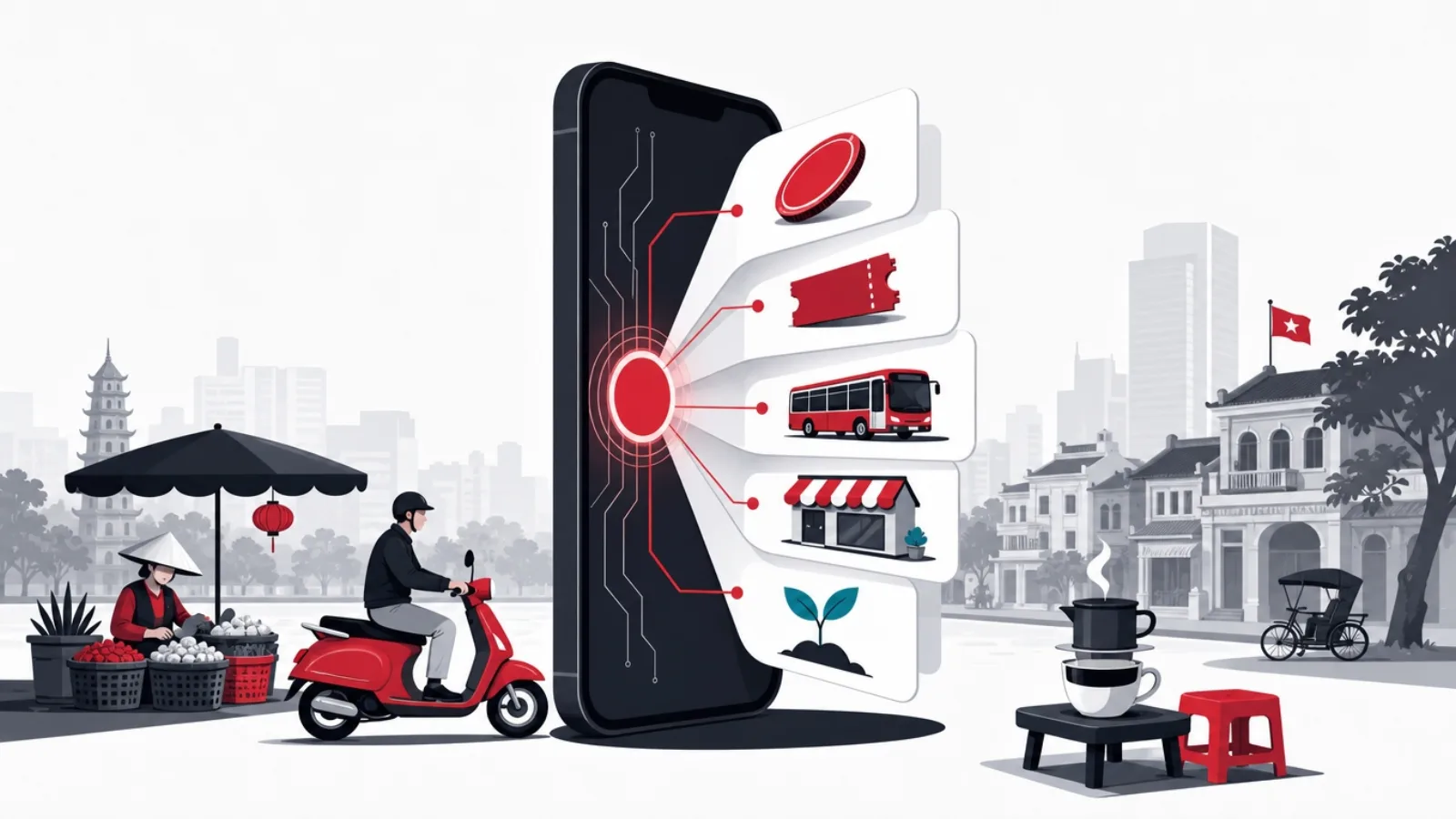
MoMo is Vietnam's largest e-wallet and one of Southeast Asia's clearest super app case studies. It started in 2010 as a mobile top-up and transfer service, launched its wallet app in 2014, and then layered payments, bill pay, savings, micro-investment, credit scoring and a third-party mini app platform on top of a single account and KYC layer. Reported figures put it above 30 million registered users, and its 2021 funding round made it a unicorn. The lesson for builders is sequencing: MoMo earned daily payment frequency first, then rented that frequency to every other service.
Ask anyone in Ho Chi Minh City or Hanoi how they paid for their last coffee, parking ticket, electricity bill or lottery ticket, and a striking share of answers involve the same pink icon. MoMo, operated by M_Service, is Vietnam's largest e-wallet by most reported measures, and over roughly a decade it walked the entire arc from single-purpose utility to something Vietnamese users treat as ambient infrastructure.
That arc is worth studying closely, because "super app" is one of the most abused phrases in product strategy. Most apps that announce super app ambitions simply bolt a food tab onto a ride-hailing app and wait. MoMo did something more disciplined: it built payment frequency first, spent years on the unglamorous trust layer underneath it, and only then opened the doors to third-party services. The order of operations, not the feature list, is the case study.
This article walks that sequence: what MoMo actually is, how it grew, how the platform is put together, how the money works, who it fights, and what any team building a wallet or platform product should copy or avoid. AgileTech builds fintech and platform products from Hanoi, inside the market where this story happened, which is why the second half reads like an engineering teardown rather than a press summary.
Key takeaways
- MoMo's sequence is the super app playbook in miniature: win one high-frequency habit (payments), then attach lower-frequency, higher-margin services (credit, investment, insurance) to the traffic that habit generates.
- The wallet was never the business. Payments run at thin or negative margin; the reported economics improve in financial services distribution, merchant services and platform fees from mini apps.
- The mini app platform is the architectural pivot: MoMo stopped building every service itself and became the rails other businesses run on, which is the moment an app becomes a platform.
- Trust infrastructure is the invisible product. eKYC, fraud detection and payment reliability are why a user links a bank account, and every super app spends more there than its marketing suggests.
- Vietnam-specific conditions mattered: a young, mobile-first population, low card penetration, and a central bank pushing cashless payments created a window that a pure clone in another market would not inherit.
- For founders, the honest reading is that you cannot start with a super app. You start with one wedge service that earns daily opens, and MoMo's wedge took years before the platform play began.
What is MoMo?
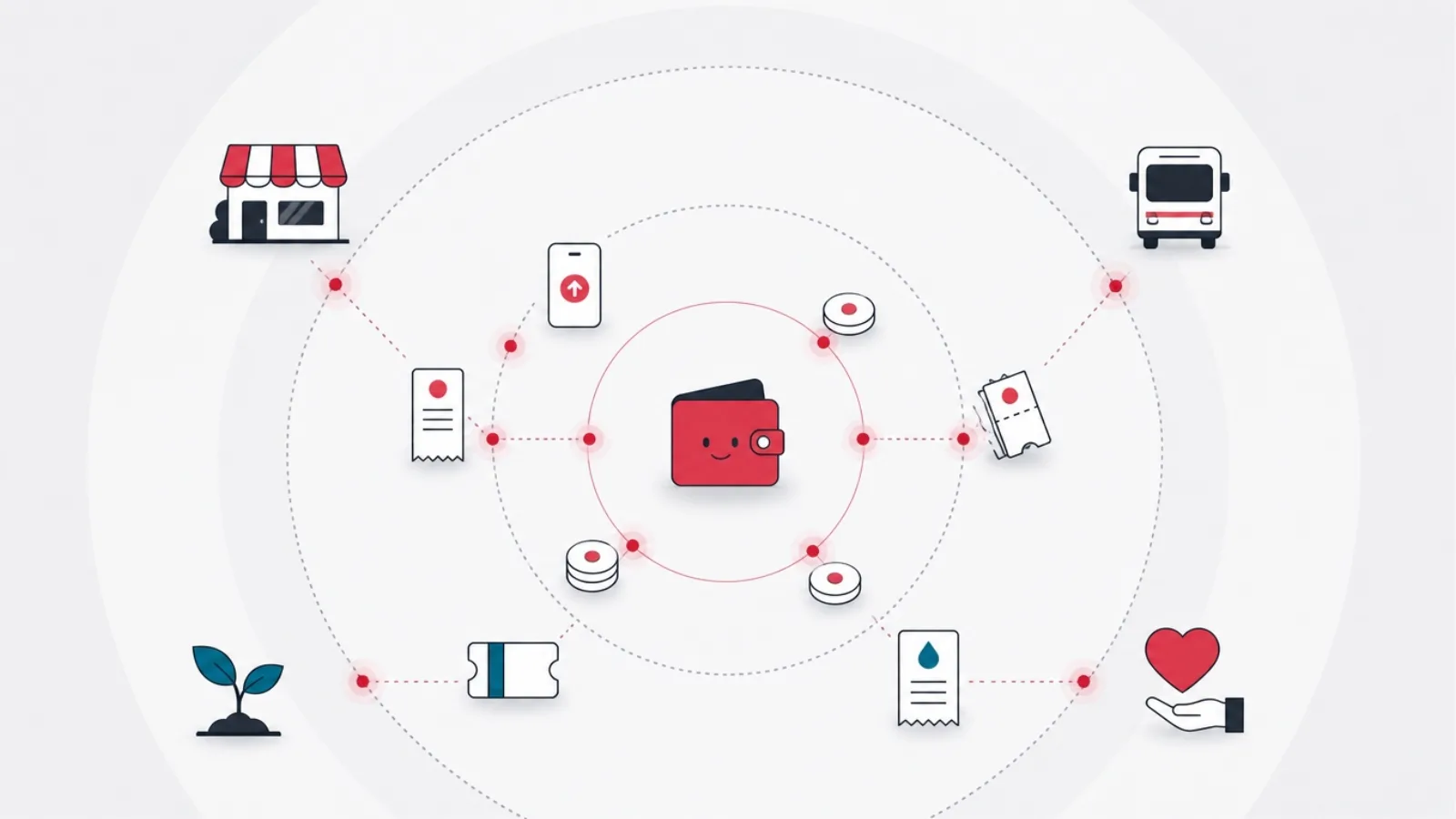
MoMo is a Vietnamese e-wallet and financial super app operated by M_Service, a company founded in 2007 that pivoted from SIM top-up distribution into mobile money around 2010 and launched its smartphone wallet app in 2014. The name is shorthand for mobile money. Users link a Vietnamese bank account or top up at agent points, and from one balance they can pay in stores by QR code, pay online, transfer to other users, settle utility bills, buy phone credit, book tickets, donate to charity, and reach a growing shelf of financial products.
Scale is the headline. Company statements and press reporting have put registered users above 30 million, merchant acceptance in the hundreds of thousands of points, and the December 2021 Series E, led by Mizuho, valued the company above two billion US dollars, making it one of Vietnam's few fintech unicorns. Precise current figures move quarter to quarter and private-company numbers deserve the usual skepticism, but the direction is not disputed: in the Vietnamese wallet market, MoMo is the reference brand.
The more useful definition is functional. MoMo today is three stacked businesses: a consumer payment utility, a distribution channel for regulated financial products offered with licensed partners, and a platform that hosts third-party mini apps. Each layer feeds the next, and the rest of this article takes them in the order MoMo built them.
Terms this case study leans on
- E-wallet
- A stored-value account operated under a payment intermediary license, funded from banks or cash-in agents, spendable at merchants and transferable between users.
- Super app
- An app that aggregates many daily services behind one identity, one balance and one home screen, usually opening its rails to third parties over time.
- eKYC
- Electronic know-your-customer: identity verification by document capture and face matching, the regulatory gate between a casual install and a funded account.
- Mini app
- A third-party service that runs inside the host app's container, inheriting its login, payment and distribution instead of shipping a standalone binary.
Four phrases that carry precise meaning in the wallet world, defined once so the rest of the article can use them freely.
From top-ups to thirty million users

MoMo's growth story is a decade of compounding, not a single viral moment. The early wedge was mundane: mobile top-ups and money transfer for a population where card penetration was low and cash dominated. Mundane was the point. Top-ups happen weekly, transfers happen constantly, and every transaction taught a user that the pink app moves money reliably. Frequency built trust, and trust is the only currency that persuades someone to connect a bank account to a startup.
Three external forces did heavy lifting. Vietnam's smartphone adoption climbed through the 2010s ahead of its banking penetration, which meant millions of people met digital payments on a phone before they ever held a credit card. The State Bank of Vietnam pushed a national cashless agenda, licensing payment intermediaries and later blessing QR standards, which legitimized the category. And the pandemic years compressed several years of cash-to-digital migration into a few quarters, a shift that largely did not revert.
MoMo's own moves matched the moment. It spent aggressively on cashback and voucher promotions to establish the payment habit, signed acceptance deals from street vendors to national chains, and ran high-visibility campaigns, including gamified holiday promotions that became annual rituals. Growth marketing of that kind is expensive and copyable; what it bought that competitors could not easily copy was a daily habit installed in tens of millions of people before the platform phase began.
- 2007 to 2013 M_Service founded; mobile money service launches around 2010 on feature phones and agent networks; the groundwork years.
- 2014 to 2018 Smartphone wallet app launches; QR payments, bill pay and transfers build the daily habit; early funding rounds from Standard Chartered and Goldman Sachs era investors.
- 2019 to 2021 User base scales into the tens of millions; Series D and the Mizuho-led Series E close; unicorn status reported in December 2021.
- 2022 onward The super app phase: financial services distribution, the mini app platform, AI-led personalization, and a stated ambition to be Vietnam's financial front door.
The super app playbook, executed in order

The strategic core of this case study is sequencing. MoMo did not launch as a super app; it earned the right to become one, one layer at a time. Layer one was payments, a thin-margin, high-frequency utility whose job was attention: multiple opens per week, a linked bank account, a verified identity. Layer two was adjacent services with real margin: phone credit, bill pay, transport and cinema tickets, insurance distribution, savings products and micro-investment offered with licensed partners, and consumer credit scoring. Each of these monetizes the traffic that payments created.
Layer three is the platform itself: third-party mini apps running inside MoMo, from donations and public services to retail loyalty and lending partners. That layer changes the company's identity. A wallet competes on cashback; a platform competes on distribution, and every mini app partner becomes a reason for users to stay that MoMo did not have to build. This is the same anatomy we dissect pattern by pattern in our guide to how super apps are put together, and MoMo is arguably Vietnam's cleanest specimen.
What makes the sequencing non-obvious is that each layer has a different economic character, and skipping ahead fails. Financial products need the trust and KYC coverage that only years of reliable payments create. A mini app platform needs traffic worth renting, which only a mass daily habit provides. Founders who pitch a super app as their launch plan are proposing to build layer three without the two layers that make it worth anything.
The three layers, as a build order
-
HabitYears one to four
One wedge service with weekly-or-better frequency: top-ups, transfers, QR payments. Spend on reliability and acceptance, not breadth.
Done when Users open the app without a promotion prompting them, and link bank accounts at scale.
-
MarginYears four to eight
Attach higher-margin services to the habit: bills, tickets, insurance and investment distribution with licensed partners, credit scoring.
Done when Revenue no longer depends on payment fees alone, and cross-sell is measurable.
-
PlatformYears eight onward
Open the rails: mini apps, partner APIs, developer tooling. The company's product becomes distribution itself.
Done when Third parties invest their own money building on the platform, and users arrive for services the host never built.
Each phase has its own exit test. MoMo spent years in each; the exit criteria are what most super app hopefuls skip.
What the platform looks like from the engine room

Strip the branding and MoMo is a layered platform whose architecture any fintech builder will recognize. At the bottom sits the regulated core: the stored-value ledger, bank integrations for cash-in and cash-out, card rails, and settlement with merchants, all under a payment intermediary license. This layer is boring by design; its job is to never lose a dong and never go down on a payday.
Above it sits the trust machinery: eKYC with document and face verification, device fingerprinting, transaction-level fraud scoring, and limits management that adjusts what an account can do based on its verification tier. This is the layer outsiders underestimate. At tens of millions of accounts, fraud economics decide whether the business survives, and the machine learning investment here is larger than anything visible in the interface.
The top layers are where users live: the service catalog of first-party features, and the mini app runtime that hosts third parties behind consented data and payment APIs. The pattern to notice is that identity, balance and risk are platform services consumed by every product above them, first-party or third-party alike. Building each service its own login or its own fraud checks is the architectural mistake that makes platforms impossible later.
How the money works

MoMo does not publish detailed financials, so any revenue picture is an informed reconstruction from its license scope, partner announcements and how the category works globally. With that caveat, the wallet business itself, person-to-person transfers and basic QR payments, is best understood as a customer acquisition engine run near cost. Competition and user expectations keep consumer payment fees close to zero, and promotion spending in the growth years pushed the layer negative.
The margin lives upstairs. Merchant services carry transaction fees and value-added tools. Financial services distribution, insurance policies, savings and investment products, and consumer loans offered with licensed banks and finance companies, pays commission and referral economics on products with real margins. Advertising and voucher placement monetize the home screen's traffic. And the mini app platform earns platform fees on the commerce it hosts, the same way every app store eventually does.
The strategic read: MoMo's economics are a bet that owning the daily financial habit of a young country is worth years of negative unit economics on the habit itself. The bet is not exotic, it is the same one Alipay and GCash made, but it only pays if the upper layers arrive before investor patience runs out, which is exactly why the sequencing discipline in the previous section is existential rather than aesthetic.
The competitive field: ZaloPay, VNPay, ShopeePay and the banks
MoMo's lead is real but contested from four directions, and each rival attacks with a different structural advantage. ZaloPay leans on Zalo, Vietnam's dominant chat app, and the theory that payments embedded in the country's default messenger eventually win by ambient presence. VNPay comes from the merchant side, with a QR acceptance network reaching deep into banks' own apps, effectively making every bank app a wallet competitor. ShopeePay arrives bundled with Southeast Asia's largest e-commerce checkout, and Viettel Money brings a state-backed telecom's distribution to rural areas where agent networks still matter.
The banks themselves are the quiet fifth competitor. Vietnamese banks modernized their apps dramatically, instant interbank transfers by QR became effectively free and universal, and for pure person-to-person payments a good bank app is now a substitute. That shift pressures every wallet's original wedge and explains the urgency behind MoMo's move up the stack into services banks do not bundle: micro-investment, loyalty, donations, public services and the mini app long tail.
The honest competitive summary is that the payment layer has commoditized while the platform layer has not. Whoever owns the most daily non-payment reasons to open the app wins the next phase, which is why the mini app catalog, and not cashback percentages, is where this market's strategy now lives.
What builders should copy, and what they should not

The copyable core is the sequencing discipline: one wedge service, run to daily frequency, with the trust layer built as if the company's life depends on it, because it does. Teams we work with are often surprised by where the engineering budget actually goes in a wallet build: ledger correctness, reconciliation, eKYC flows, fraud scoring and bank integration reliability dwarf the visible interface work. Pricing that honestly at the start is the difference between a plan and a fantasy, and it is the reason what software genuinely costs is the first conversation to have, not the last.
The non-copyable part is the context. MoMo's window was a specific alignment: low card penetration, high smartphone growth, a supportive regulator and a cash economy ready to leapfrog. A wallet clone in a mature card market inherits none of that tailwind. What transfers instead is the pattern at smaller scale: a vertical app that owns one high-frequency habit, a loyalty or community layer, then partner services rented onto that traffic. We scope exactly that shape regularly, from social products to logistics and commerce platforms.
The last lesson is organizational. MoMo could open a platform because identity, payment and risk were built as shared services from early on. Retrofitting platform architecture onto a tangle of per-feature logins and per-feature databases is among the most expensive migrations in software. If a platform is anywhere in the long-term plan, the account layer must be designed for it years before the first mini app ships.
Applying the MoMo playbook to your own product
Do this
- Pick one wedge with weekly-or-better frequencyPayments, chat, commute, meals. Frequency is the raw material; everything else is built from it.
- Build identity and risk as platform servicesOne account layer, one KYC flow, one fraud engine, consumed by every feature. This is what makes layer three possible later.
- Attach margin services to proven trafficDistribution deals with licensed partners beat building regulated products yourself, at least until scale demands otherwise.
- Measure habit, not installsMoMo's asset is opens per user per week. Vanity registration counts predicted nothing in this category.
Not this
- Launch as a super app on day oneTen shallow services with no habit is a portfolio of ten failures sharing one login.
- Treat fraud and KYC as compliance choresAt scale they are the business. Underfunding them is how wallets die suddenly rather than slowly.
- Buy frequency with promotions foreverCashback rents a habit. If the product does not retain users at lower burn, the habit was never yours.
- Copy the feature list instead of the sequenceMoMo's screens are public; its order of operations was the strategy. Clones that skip the years of layer one skip the moat.
Patterns from this case study, translated into decisions a product team can actually take this quarter.
Where MoMo goes next
MoMo's stated direction is to be Vietnam's AI-driven financial front door: more personalization over spending data, deeper credit products with bank partners, expansion of the mini app economy, and a long-rumored path toward public markets that reporting has periodically revived. Each of those moves up the regulatory ladder, and the company's trajectory will be shaped as much by Vietnam's evolving rules on personal data, credit scoring and payment intermediaries as by any product decision.
The structural risks are worth naming. The payment wedge is commoditizing under free bank transfers. Regional giants and domestic rivals are well funded. And the platform bet requires the mini app economy to reach self-sustaining scale before promotion budgets normalize. None of these are unusual risks for the category; all of them are why the next three years of this case study will be more interesting than the last three.
For readers outside Vietnam, the takeaway travels well: the super app pattern is not a Chinese or Southeast Asian curiosity, it is what happens anywhere a high-frequency habit meets an open-ended identity and payment layer. The pattern is available at every scale, from a national wallet to a niche vertical app, to any team disciplined enough to build it in the right order.
Since this case study was published, the comparison set around it has grown. ZaloPay is the closest domestic contrast, a wallet that started from a messaging graph rather than a payments habit, and the top super apps in Asia places MoMo alongside Grab, Gojek, Tokopedia and the rest so the Vietnamese case can be read against the regional pattern. The revenue-mix view above remains illustrative rather than reported.
Frequently asked questions
What is MoMo and who owns it?
MoMo is Vietnam's largest e-wallet and financial super app, operated by M_Service, a Ho Chi Minh City company founded in 2007. Its investors across funding rounds have included Standard Chartered, Goldman Sachs, Warburg Pincus and Mizuho, whose 2021-led round reportedly valued the company above two billion US dollars.
How many users does MoMo have?
Company statements and press reporting have put registered users above 30 million, with acceptance at hundreds of thousands of merchant points across Vietnam. As with any private company, exact current figures are directional rather than audited, but MoMo's position as the country's leading wallet brand is consistently reported.
Is MoMo a super app or just an e-wallet?
It is both, in sequence. The wallet, QR payments, transfers and top-ups, remains the daily habit. On top of it MoMo distributes savings, investment, insurance and credit products with licensed partners, and hosts third-party mini apps on its own platform. That layered structure, habit plus margin services plus platform, is what distinguishes a super app from a wallet with many tabs.
How does MoMo make money if payments are free?
Consumer payments run near cost as an acquisition engine. Revenue concentrates upstairs: merchant transaction fees and tools, commissions on financial products distributed for banks and insurers, advertising and voucher placements on the home screen, and platform fees from mini app commerce. The model mirrors Alipay and GCash: own the habit cheaply, monetize the traffic it creates.
Who are MoMo's main competitors in Vietnam?
ZaloPay, backed by the Zalo chat platform; VNPay, whose QR network runs inside most bank apps; ShopeePay, bundled with Shopee's e-commerce checkout; and Viettel Money with telecom distribution. Vietnamese bank apps themselves are the quiet fifth competitor, since free instant QR transfers have commoditized basic payments.
What does it cost to build an e-wallet app like MoMo?
A licensed-partner wallet MVP with QR payments, transfers, eKYC and a compliant ledger typically starts around 150,000 to 300,000 US dollars with an offshore engineering team, before the ongoing costs of fraud operations, bank integrations and compliance. The interface is the cheap part; the ledger, KYC and risk machinery carry the budget, and regulatory licensing varies entirely by country.
Case studies are most useful when someone can build from them. If you are taking a wallet, marketplace or platform product to market, partner with AgileTech, a software development company in Vietnam that builds the ledger, trust and platform layers this story runs on.
Source: https://agiletech.vn/blog/momo-super-app-case-study/ · (c) AgileTech Vietnam. Printed from agiletech.vn.