 Nguyen Manh Thang
Chief Executive Officer, AgileTech Vietnam
Nguyen Manh Thang
Chief Executive Officer, AgileTech Vietnam
- Published
- Read time
- 15 min
- Views
- 115

Read the AI overview
WeChat is the original super app: a messaging product launched by Tencent in 2011 that layered a social feed, payments, official business accounts and a mini program platform onto one identity, reaching more than 1.3 billion monthly users. Its sequence, not its feature list, is the lesson. WeChat won daily messaging frequency first, converted that frequency into a payment habit through the 2014 red envelope campaign, and only then opened mini programs so third parties could build on its rails. Builders elsewhere can copy the sequencing discipline even though the market conditions that made WeChat possible in China do not fully transfer.
Every super app pitch deck, from Jakarta to Lagos to Sao Paulo, contains the same slide: a screenshot of WeChat. The app that started in 2011 as a lightweight mobile messenger inside Tencent now carries chat, a social feed, payments, ride hailing, utility bills, government services, e-commerce and several million third-party mini programs, all behind one green icon that more than 1.3 billion people open many times a day.
Because WeChat is the founding text of the category, it is also the most misread. Copycats see the destination, an everything app, and try to ship one. WeChat itself never did that. It shipped a messenger, spent three years making it the default way Chinese smartphone users talk, and only then began attaching services to the frequency it had earned. The order of operations is the case study; the feature list is a distraction.
This article walks that order: what WeChat actually is, the deliberate sequence Tencent followed, the red envelope moment that ignited payments, the mini program platform that turned an app into an economy, how the money works, why the model fit China specifically, and which lessons survive the trip to other markets. AgileTech builds platform and fintech products from Hanoi, in a region full of WeChat-inspired contenders, which is why the second half reads like an engineering teardown rather than a history lesson.
Key takeaways
- WeChat did not set out to be a super app. It won one habit, messaging, so completely that everything added later inherited daily frequency for free. The wedge came first, the platform came years later.
- The 2014 Lunar New Year red envelope campaign is the single most instructive growth event in super app history: it converted a cultural ritual into payment activations at a scale advertising could never buy.
- Mini programs are the architectural pivot. By letting third parties ship sub-apps inside WeChat, Tencent stopped competing on features and started taxing an economy, which is what separates a platform from a portal.
- WeChat monetizes indirectly. Messaging is free and payments run thin; the money concentrates in games and value-added services distributed through the graph, advertising in Moments and official accounts, and fees on the business ecosystem.
- China-specific conditions did heavy lifting: a mobile-first population that skipped the desktop web, an app store duopoly that never took hold, light card penetration, and a regulatory environment that allowed one company to own identity, social and money at once.
- The honest lesson for builders is not "add more features." It is that a super app is earned through one dominant frequency habit plus a trust layer, and most products should copy the sequencing, not the destination.
What WeChat is, precisely
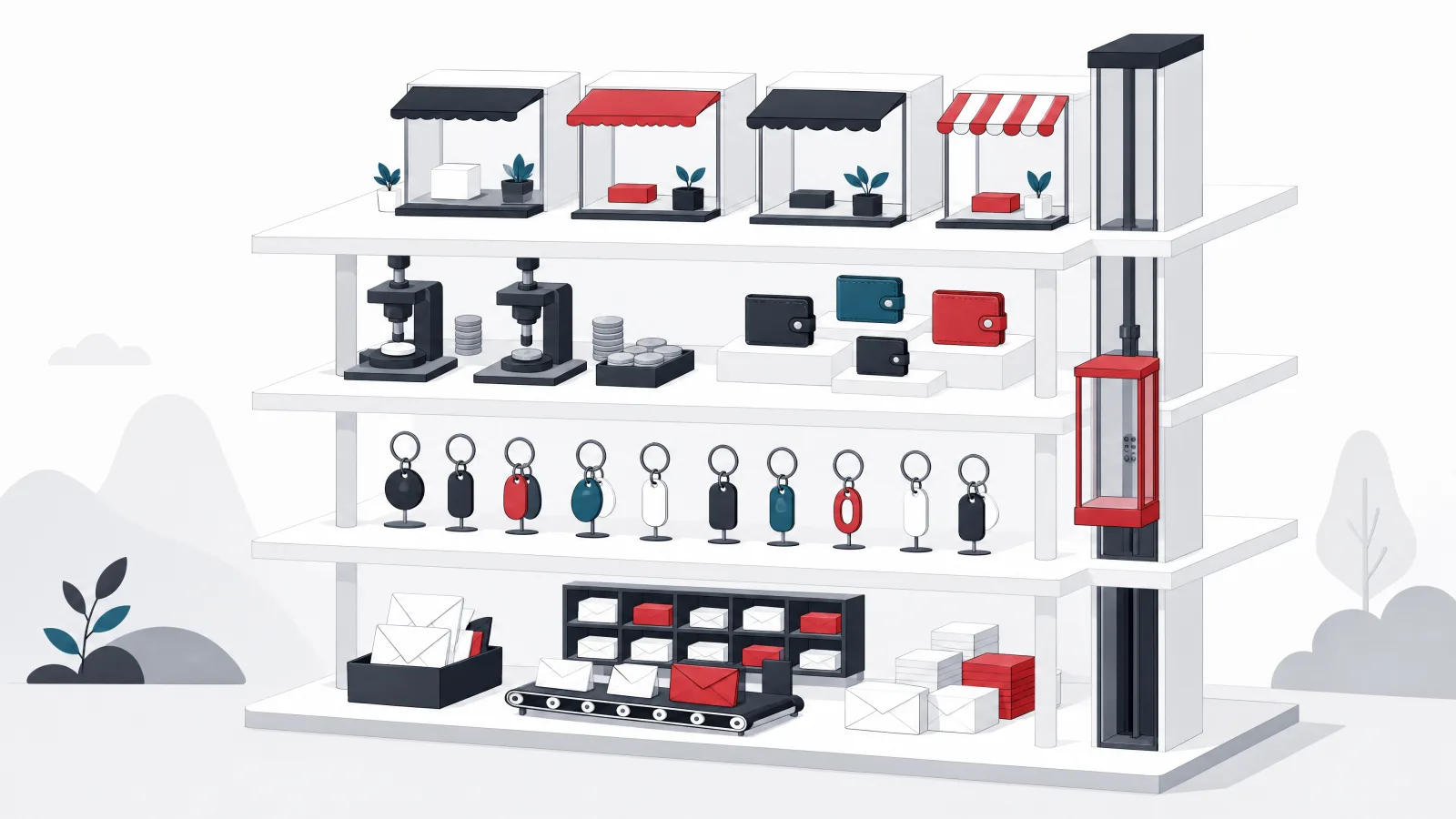
WeChat, called Weixin in mainland China, is a messaging-centered platform launched by Tencent in January 2011, born from an internal race after the company watched mobile-first messengers threaten its desktop-era QQ franchise. A small team in Guangzhou led by Allen Zhang shipped the first version in about two months. Voice notes, free messaging over data, and the Shake and People Nearby discovery features drove early adoption, and within two years the app passed 300 million registered users.
Today the platform is best described as four stacked products sharing one identity. Messaging and the Moments social feed are the frequency engine. WeChat Pay, launched in 2013, is the money layer, tied to a real-name account and a linked bank card. Official accounts, launched in 2012, are the business publishing and CRM layer where brands, media and government agencies reach followers. Mini programs, launched in 2017, are the app-within-an-app runtime where third parties ship services without an install.
Scale is the part that resists intuition. Tencent reports more than 1.3 billion combined monthly active users for Weixin and WeChat. Mini programs alone have been reported above 900 million daily users across several million programs. For a large share of the Chinese internet, WeChat is not an app among many; it is the layer through which the rest of the internet is reached, which is why regulators, competitors and researchers all treat it as infrastructure rather than software.
Terms this case study leans on
- Official account
- A verified business or publisher presence inside WeChat that can post content, message followers and run services, functioning as CRM, newsletter and storefront at once.
- Mini program
- A sub-application under 20 megabytes that runs inside WeChat's container, inheriting its login, payment and share mechanics instead of shipping through an app store.
- Moments
- WeChat's friends-only social feed, the surface where its most valuable advertising inventory lives.
- Red envelope
- A digital version of hongbao, the Chinese tradition of gifting money in red packets, sent through chat and claimable only with an activated payment account.
- Weixin
- The mainland Chinese version of the product, operated under Chinese regulation; WeChat is the international build. Tencent reports their users as one combined figure.
Five WeChat-specific concepts, defined once so the rest of the article can use them freely.
The deliberate sequence: habit, money, platform

Read WeChat's launch history as a strategy document and a clean three-phase sequence appears. Phase one, 2011 to 2013, was messaging dominance: win the daily conversation habit against Mi Talk, Whatsapp-style rivals and Tencent's own QQ. Phase two, 2013 to 2016, was money: attach a wallet to the identity people already trusted with their private conversations. Phase three, 2017 onward, was platform: open the rails to third parties through mini programs and take a coordination fee on an economy.
Each phase was gated on the previous one being genuinely won, not merely launched. WeChat Pay arrived only after messaging frequency was overwhelming, because a wallet inside an app you open twenty times a day faces none of the reactivation costs a standalone wallet fights forever. Mini programs arrived only after payments were ubiquitous, because a sub-app economy without a native payment method is a catalog, not a marketplace. The sequence compounds: every layer converts the previous layer's traffic into a new kind of value.
The discipline extended to what WeChat refused to ship. Allen Zhang's team was famously restrained about notifications, feed algorithms and engagement mechanics that would have inflated short-term metrics while eroding the trust that makes people route salaries, medical appointments and government paperwork through a chat app. Restraint is the least copied part of the playbook, and arguably the most causal one.
- 2011 to 2013, the habit phase Launch, voice messaging, Moments and QQ contact import drive the app past 300 million registered users; messaging frequency becomes effectively total among Chinese smartphone owners.
- 2013 to 2016, the money phase WeChat Pay launches in August 2013; the January 2014 red envelope campaign activates payments at cultural scale; offline QR acceptance spreads from taxis to street vendors.
- 2017 onward, the platform phase Mini programs launch in January 2017, followed by mini games; the ecosystem grows to several million programs and becomes the default way Chinese businesses ship lightweight software.
- The compounding effect Each layer inherits the previous layer's distribution: payments inherited chat frequency, mini programs inherited both, and advertising monetizes the attention the whole stack aggregates.
The red envelope moment

In January 2014, five months after WeChat Pay launched to modest uptake, the team shipped digital red envelopes for Lunar New Year. The mechanic mapped a beloved ritual, gifting cash in red packets, onto chat: send an envelope to a friend or drop one into a group where members race to grab randomized shares. The catch carried the strategy: claiming money required activating WeChat Pay and linking a bank card. The gift was the onboarding funnel.
The results entered industry legend. Millions of users bound bank cards within days, a feat Jack Ma publicly compared to a Pearl Harbor attack on Alipay's decade-old dominance. The campaign compounded annually: by the 2016 holiday, WeChat reported billions of envelopes exchanged in a single day, and a 2015 television gala integration put the shake-to-win mechanic in front of hundreds of millions of viewers simultaneously.
The transferable insight is not "gamify payments." It is that payment activation is a social problem disguised as a product problem. People link a bank card when someone they trust sends them money that is theirs to lose, not when an app offers five percent cashback. Vietnamese wallets learned this directly: MoMo's gamified Tet campaigns and ZaloPay's chat-embedded li xi transfers are red envelope descendants, covered in our MoMo case study and ZaloPay case study.
Mini programs: the app becomes an economy

Mini programs, launched in January 2017, are sub-applications capped at a few megabytes that run inside WeChat's container. Users reach them by QR scan, chat share, search or a pull-down drawer; there is nothing to install and nothing to update. Developers build them in a JavaScript-based framework against WeChat's APIs, inheriting login, payment, location and share mechanics from the host. For a Chinese business in 2017, this cut the cost of shipping usable software by an order of magnitude compared with building and distributing a native app.
The strategic effect was to invert WeChat's competitive position. Before mini programs, every service Tencent wanted inside WeChat had to be built or bought. After, the market built them: airlines, hospitals, municipal governments, McDonald's, Tesla and millions of small merchants shipped mini programs because that is where the users were. Reported figures put the ecosystem above 900 million daily active users across several million programs, with mini program commerce measured in trillions of yuan annually.
Architecturally, the platform rests on the layers beneath it. The identity layer means a mini program knows who you are without a signup form. The payment layer means checkout is a thumbprint. The social layer means distribution is a share into a group chat rather than an app store listing. Remove any one layer and the mini program value proposition collapses, which is why copycat platforms that launched mini program runtimes without a dominant payment or social layer, including several Southeast Asian attempts, found developers indifferent.
There is also a quieter governance lesson. Tencent runs the runtime as a regulated economy: review processes, category rules, a payment fee, and periodic crackdowns on abusive programs. Platform operators inherit platform responsibilities, and the moderation, quality and fraud machinery behind mini programs is a substantial engineering investment that the screenshot-driven view of WeChat never shows.
What a mini program inherits from the host
From the identity and social layers
- Login
- One-tap WeChat identity with real-name backing; replaces signup forms, password reset flows and a fraud-prone account system.
- Distribution
- Share cards into chats and groups, QR codes that deep-link to a specific screen; replaces app store optimization and paid installs.
- Retention surface
- Official account messages and a recently-used drawer; replaces push notification infrastructure the developer would otherwise build.
From the payment and platform layers
- Checkout
- WeChat Pay invocation with biometric confirmation; replaces gateway integration, card storage compliance and most checkout abandonment.
- Runtime services
- Location, camera, storage and customer service messaging APIs under one permission model; replaces a native app team per platform.
- Trust envelope
- Tencent's review, real-name and dispute machinery; replaces the credibility a small merchant's standalone app would struggle to earn.
The inherited capabilities that make a two-megabyte sub-app viable as a business channel, and what each replaces.
How WeChat makes money
WeChat itself is free, payments run near cost, and Tencent does not break out a WeChat profit line, so the monetization story has to be read through Tencent's reported segments. The pattern that emerges is indirect monetization: WeChat aggregates attention and identity cheaply, and adjacent businesses convert that aggregation into revenue at much better margins than payments ever could.
The largest historical converter is games and value-added services. Tencent is one of the world's biggest game publishers, and WeChat's social graph is the distribution channel: friend leaderboards, share loops and mini games funnel players into titles where in-app purchases carry the margin. Advertising is the second engine, sold into Moments, official account articles, mini programs and the short-video Channels surface, with the targeting powered by the behavioral depth only an everything-layer sees.
The fintech and business services segment, which includes WeChat Pay's merchant fees, wealth management distribution and cloud, has grown into a reported third of Tencent revenue. Payment fees on the enormous transaction volume, commissions on financial products distributed through the wallet, and fees on the mini program economy each take a thin slice of a very large number. The structural lesson matches MoMo's economics a decade later: own the habit at cost, monetize the traffic it creates upstairs.
The scale behind the model, as reported
Headline figures from Tencent reporting and press coverage; private-platform numbers are directional, but the orders of magnitude are what matter for the argument.
Why it worked in China, specifically

Super app strategy discussions routinely skip the uncomfortable part: WeChat's conditions were unusual, and several of them do not exist elsewhere. China's internet population came online mobile-first, largely skipping the desktop web and the email-plus-browser habits that anchor Western users outside any single app. There was no entrenched Google Play in the market, so app distribution was fragmented across dozens of Android stores, which made WeChat's frictionless mini program distribution dramatically more valuable than it would be where one store rules.
Payments had a parallel gap. Credit card penetration was low and cash dominated retail, so QR payments were not displacing a working system; they were the first convenient system most consumers ever had. Regulators permitted, for years, a structure in which one private company operated identity, social graph, media distribution and money movement simultaneously, a combination that banking, antitrust or data rules would fragment in most Western and many Asian jurisdictions today, and that Chinese regulators themselves have since tightened.
Competitive geography helped too. Tencent's main rival, Alibaba, was strong in commerce and payments but had no social graph, and its Laiwang messenger failed to dent WeChat. The one genuinely scarce asset, daily conversation between real-identity contacts, belonged to Tencent alone. Builders in Vietnam, Indonesia or Brazil face the opposite board: global chat apps own messaging, banks and fintechs contest payments, and app stores control distribution. That is why the region's successful players, examined in our anatomy of a super app, entered through payments or ride hailing rather than chat.
Reading the China conditions honestly
Do this
- Audit which preconditions you haveFrequency habit, payment gap, distribution friction, regulatory room: score your market on each before borrowing any WeChat mechanic.
- Copy the sequencing disciplineWin one habit completely before attaching the next layer; gate each expansion on the previous one being genuinely dominant, not merely shipped.
- Invest in the trust layer earlyReal-name identity, fraud controls and reliability are what let users route money and paperwork through WeChat; they are portable practice everywhere.
Not this
- Assume chat is the only wedgeChat was WeChat's wedge because it was winnable in 2011 China. Grab used rides, MoMo used top-ups; the wedge is whatever daily habit you can actually win.
- Launch a mini program runtime firstA platform without a dominant frequency and payment layer underneath is a catalog nobody visits; several regional copycats proved this expensively.
- Ignore the regulatory ceilingMost jurisdictions will not let one product own social, identity and money the way 2010s China did; plan the partnership and licensing structure from day one.
How to use the WeChat case without importing assumptions that only held in its home market.
What builders should actually take from WeChat

Strip away the scale and WeChat leaves a small set of transferable design decisions. One identity and one payment instrument underneath every surface, so each new service starts warm instead of cold. Frequency before monetization, so the economics of every later layer ride on retention already paid for. Social mechanics as the activation engine for financial products. And a platform opening only after the layers below it are dominant, priced as a tax on an economy rather than a toll on a feature.
For product teams in Southeast Asia, the practical translation is modest in scope. You are probably not building a super app; you are building one wedge product, a wallet, a marketplace, a logistics tool, that should be architected so a second service can share its identity, ledger and trust machinery later. That means an account system separated from any single product surface, a real double-entry ledger rather than balances scattered in feature tables, and eKYC and risk services built as shared internal platforms. Our e-wallet build guide and mobile banking build guide walk those foundations in engineering detail.
The last lesson is organizational. WeChat was built by a small, opinionated team given room to say no, inside a company patient enough to wait years between layers. Teams that want the compounding have to accept the pacing: dominance in one habit is worth more than presence in five, and the checklist below is the sequencing test we apply when clients bring us super app ambitions.
The sequencing test for super app ambitions
- Is the wedge habit actually won?Not launched, won: your product is the default way your users perform one act they repeat most days, and retention curves flatten high without paid reactivation.
- Does the new layer inherit real distribution?The next service should start warm from the existing habit's traffic; if it needs its own acquisition budget, it is a second startup, not a layer.
- Is identity shared and trustworthy?One account, verified once, usable by every surface; if each service re-onboards the user, you have a bundle of apps in one binary, not a platform.
- Is money a first-class internal service?A shared ledger and payment capability that any surface can invoke, with the compliance posture to match, built before the services that will depend on it.
- Can you govern third parties?Opening rails means review processes, fraud response and dispute handling at platform scale; budget the machinery, not just the developer portal.
- Do the regulators in your market allow the combination?Map which layers require licenses or partners in your jurisdiction before the roadmap assumes you can own them all.
Six questions to answer honestly before adding a second major service to a product; WeChat could answer yes to each before every expansion.
Frequently asked questions
What is WeChat and who owns it?
WeChat, known as Weixin in mainland China, is a messaging-centered super app launched by Tencent in January 2011. It combines chat, the Moments social feed, WeChat Pay, official business accounts and a mini program platform behind one identity, and Tencent reports more than 1.3 billion combined monthly active users across the two versions.
Why is WeChat called the first super app?
Because it established the pattern the term describes: one app aggregating messaging, payments, commerce and third-party services behind a single identity and payment instrument. Alipay evolved along a parallel path from the payments side, but WeChat's combination of a dominant social graph with a wallet and an open mini program platform is the version the rest of the world set out to copy.
What are WeChat mini programs?
Mini programs are lightweight sub-applications, capped at a few megabytes, that run inside WeChat without installation. Developers build them against WeChat's framework and inherit its login, payment, location and sharing capabilities. Reported figures put daily mini program users above 900 million across several million programs, spanning retail, transit, healthcare and government services.
How did the red envelope campaign work?
For Lunar New Year 2014, WeChat digitized hongbao gifting: users sent money-filled envelopes into chats and groups, and claiming one required activating WeChat Pay and linking a bank card. Because receiving money is the moment of maximum motivation, activation exploded, compressing what analysts estimated would take years of ordinary acquisition into weeks and igniting the payment war with Alipay.
How does WeChat make money?
Indirectly, for the most part. Messaging is free and consumer payments run thin. Revenue concentrates in games and value-added services distributed through the social graph, advertising in Moments, official accounts and Channels, merchant payment fees on enormous transaction volume, and fees and commissions across the mini program and financial services ecosystem, which together anchor a reported third of Tencent's revenue.
Can the WeChat model be replicated outside China?
Not literally. WeChat's conditions, a winnable messaging market, low card penetration, fragmented app distribution and regulatory room to combine social, identity and money, rarely coexist elsewhere. What transfers is the sequencing: win one high-frequency habit, build a shared identity and payment layer, then open to third parties. Grab, MoMo and ZaloPay each adapted that sequence through different wedges.
The WeChat lesson is that platforms are earned one layer at a time. AgileTech is one of the best software houses in Vietnam for building the wedge product, the shared ledger and the identity layer that a platform ambition eventually stands on.
Source: https://agiletech.vn/blog/wechat-super-app-case-study/ · (c) AgileTech Vietnam. Printed from agiletech.vn.