 Nguyen Manh Thang
Chief Executive Officer, AgileTech Vietnam
Nguyen Manh Thang
Chief Executive Officer, AgileTech Vietnam
- Published
- Last updated
- Read time
- 12 min
- Views
- 92
Read the AI overview
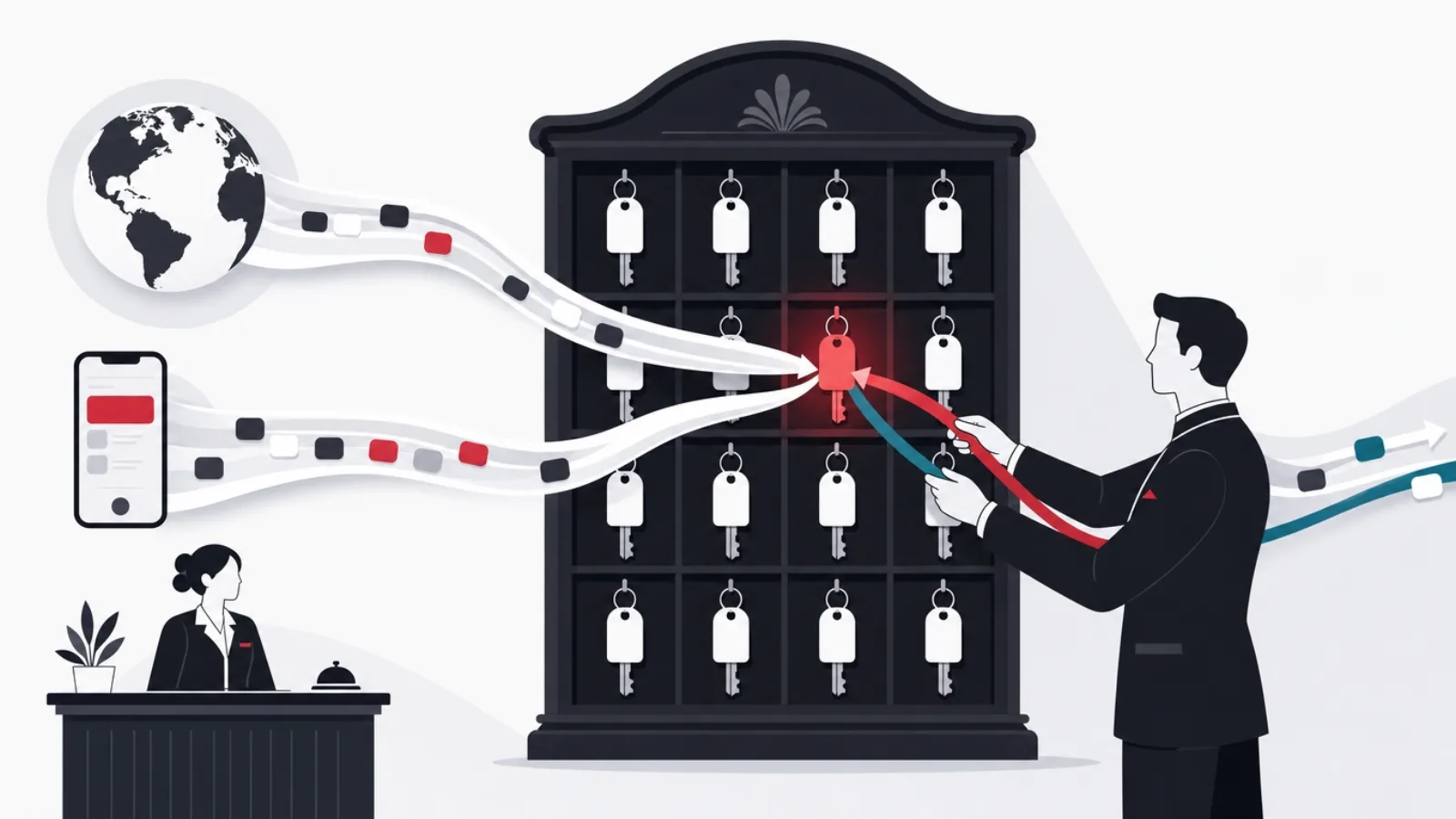
A hotel reservation system is the machinery that sells rooms and keeps every sales channel honest about what is left. Its core parts are a booking engine that takes reservations on the hotel's own website, a channel manager that synchronizes rates and availability across OTAs like Booking.com and Expedia, the property software that runs check-ins and housekeeping, and a payment layer. The hard problem underneath all of it is inventory synchronization: the same room must never sell twice across channels that each hold a copy of availability. Small properties are best served by off-the-shelf platforms; a custom build makes sense for chains, unusual inventory models, or companies whose product is the booking experience itself.
Every hotel, from a six-room guesthouse to a global chain, runs the same race: sell each room-night exactly once, at the best available price, across a dozen channels that all think they own the inventory. The machinery that runs that race is the reservation system, and it is less a single product than a small federation of systems passing messages about what is still available.
This guide explains the federation properly: what each component does, how a booking actually flows from a guest's search to a confirmed room, why synchronization is the problem the whole architecture organizes around, and what the direct-versus-OTA economics mean for where to invest. It closes with the build-or-buy decision, including the honest cases where custom software is worth it.
Two neighboring articles complete the picture: how to build a hotel booking app covers the guest-facing build in engineering depth, and how an ecommerce platform is put together shows the same sell-inventory-once problem in retail clothing. This page owns the system view.
Key takeaways
- A reservation system is four cooperating parts, not one product: booking engine, channel manager, property software and payments. Most vendor confusion comes from products that bundle two or three and name them differently.
- The load-bearing problem is synchronization. Every channel holds a copy of your availability, updates travel with delay, and the failure mode, the same room sold twice, lands on a guest at the front desk.
- Direct bookings are worth roughly the OTA commission, 15 to 25 percent, which is why the booking engine and the rate strategy around it repay attention long before any custom software does.
- The channel manager is the piece hotels underestimate: rate parity rules, per-channel pricing, and stop-sell logic all live there, and a weak one silently costs more than its subscription.
- Overbooking is a policy as well as a bug: airlines and large hotels overbook deliberately against no-show statistics. The system must make the policy explicit rather than an accident of sync delay.
- Build only what differentiates. For most operators that is nothing, off-the-shelf wins; for chains and booking-first businesses it is the guest-facing layer, on top of bought synchronization plumbing.
What a reservation system actually is
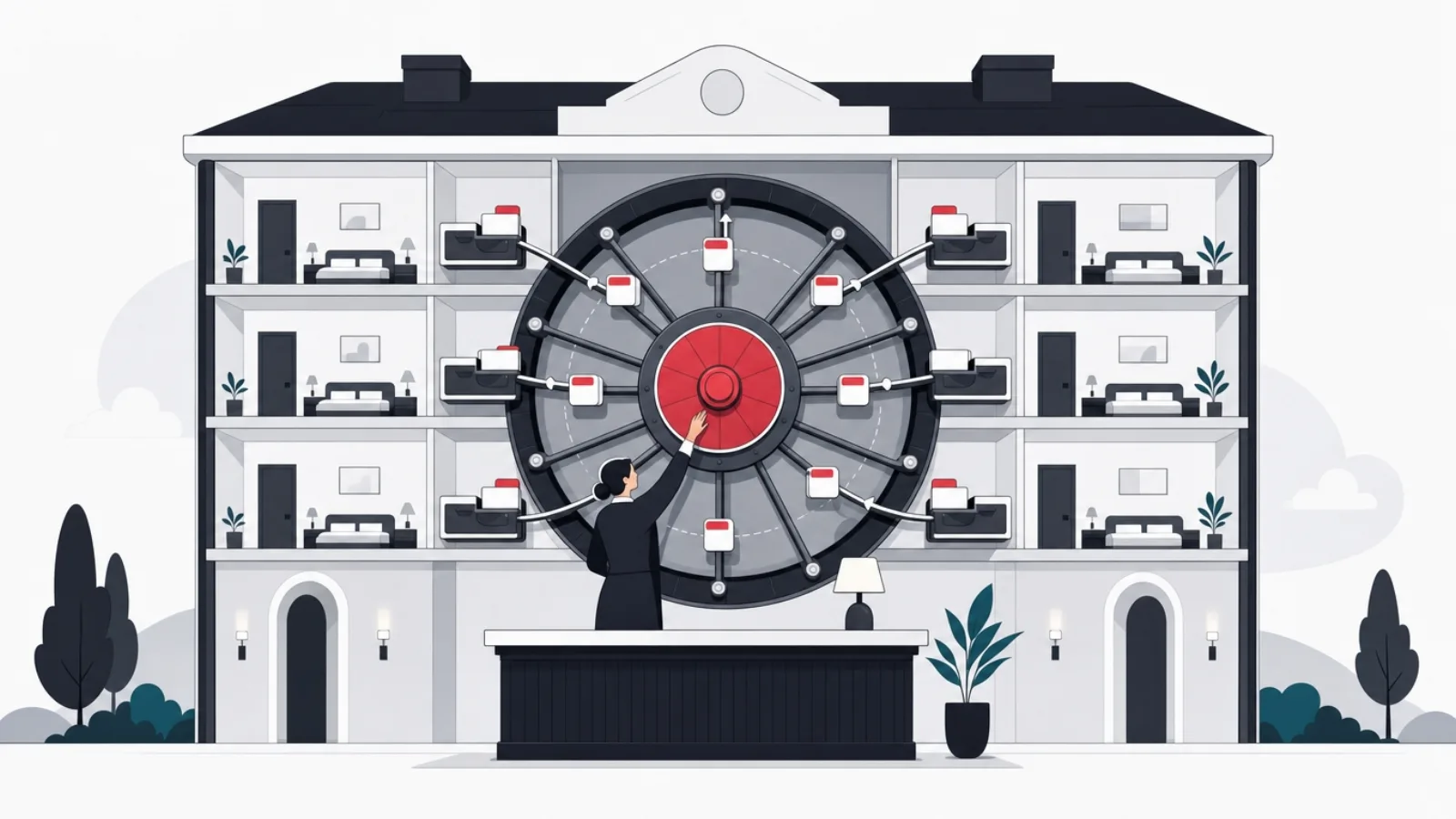
Strip the vendor language and a hotel reservation system is an inventory ledger with sales channels attached. The ledger tracks room-nights: physical rooms crossed with dates, each sellable exactly once. The channels, the hotel's own website, online travel agencies, walk-ins, phone bookings, corporate contracts, all sell against that ledger, and the system's first job is to make sure they agree about what is left. Everything else, rate management, guest profiles, payment collection, reporting, is built on top of that agreement.
The confusion in this market comes from bundling. Vendors sell products called booking engines, channel managers, property management platforms and central reservation systems, and every vendor draws the boundaries differently: some booking engines include a channel manager, some property platforms include both, and the large chain systems include everything plus loyalty and distribution. The functional decomposition is stable even when the packaging is not, which is why this guide describes parts rather than products.
It helps to see the scale gradient. A small independent property might run one cloud product that does everything adequately. A mid-size hotel typically runs a property system plus a specialist channel manager plus a booking engine, connected by integrations. A chain runs a central reservation system spanning properties, feeding a distribution stack that talks to global distribution systems used by travel agents, corporate booking tools and OTAs. The parts are the same at every scale; what changes is how many vendors are involved and how much the integrations cost.
One definitional distinction earns its keep immediately: the reservation system sells the future, while the property software runs the present. A booking made today for next month lives in reservation-land, rates, availability, confirmation emails, until check-in day, when it becomes the property software's problem: room assignment, keys, housekeeping, folio charges, checkout. Systems that blur this boundary tend to do both jobs poorly, and integrations that respect it tend to age well.
The vocabulary, part by part
- Booking engine
- The reservation form on the hotel's own website and app. Sells direct, commission-free, against live availability.
- Channel manager
- The synchronizer. Pushes rates and availability to OTAs and pulls bookings back, keeping every channel's copy of inventory honest.
- OTA
- Online travel agency: Booking.com, Expedia, Agoda and peers. Reach in exchange for commission, typically 15 to 25 percent.
- PMS
- The property software that runs operations: check-in, room assignment, housekeeping status, folio and checkout.
- CRS
- Central reservation system: the chain-scale ledger that holds inventory across many properties and feeds all distribution.
- GDS
- Global distribution systems reaching travel agents and corporate booking tools. Matters for business-travel demand, invisible to leisure guests.
The four parts, and what each one owns
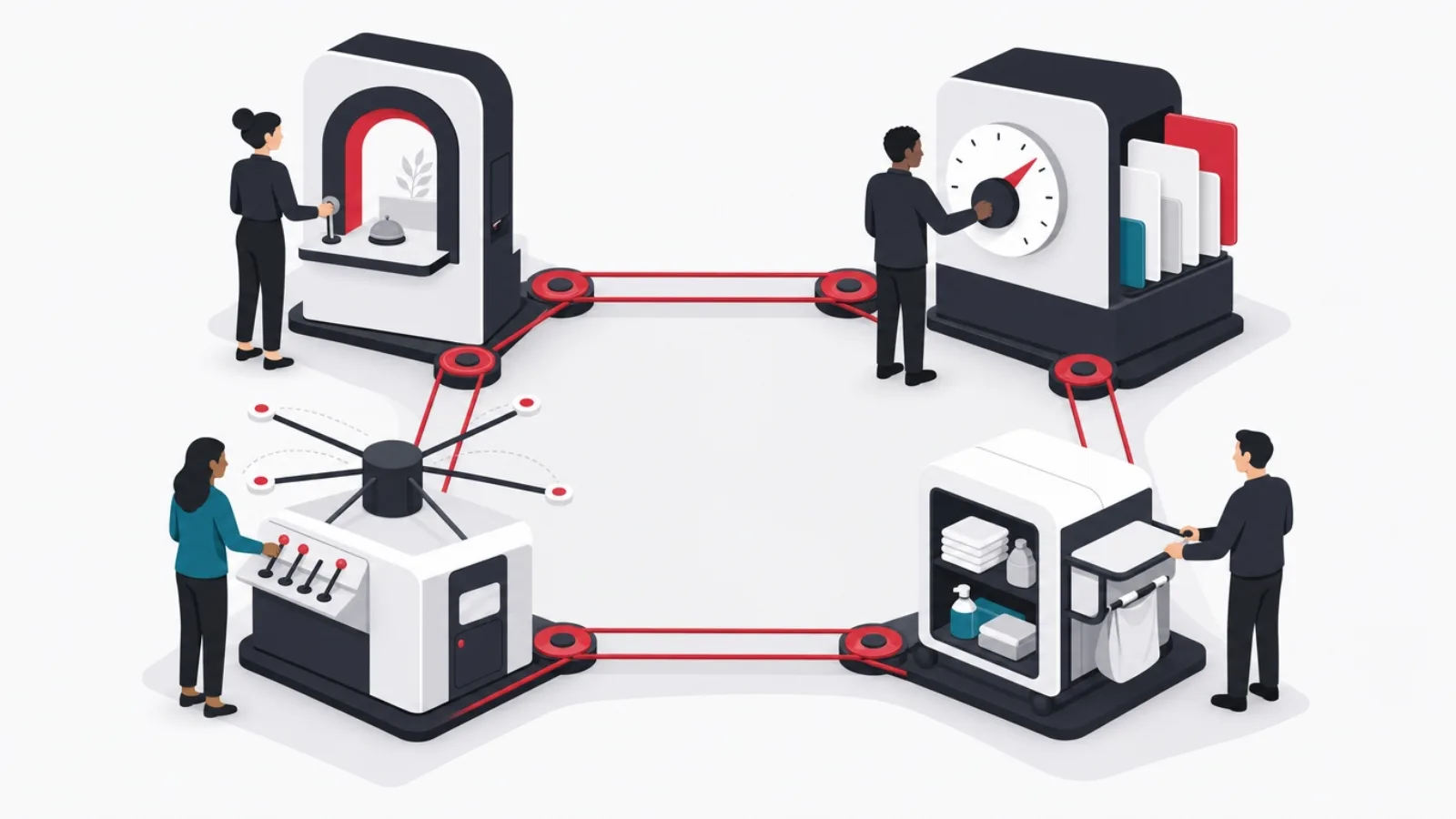
The booking engine is the hotel's own storefront: the search-dates, pick-room, pay flow embedded in its website and app. Its economics are simple and large: a booking taken here pays no OTA commission, so every reservation it wins is worth 15 to 25 percent more than the same reservation from an agency. That margin funds the engine's real requirements, live availability, honest photography, a checkout that works on a phone in one minute, rate displays that match what the OTAs show, because a guest who finds the direct site clunkier or pricier than Booking.com simply books on Booking.com.
The channel manager is the diplomat. Each OTA holds its own copy of the hotel's rates and availability, updated through APIs of varying speed and quality. The channel manager pushes changes outward, a room sold anywhere decrements availability everywhere, and pulls bookings inward into one stream. It also carries the commercial logic: different rates per channel where contracts allow, minimum-stay rules, stop-sells that close a channel when inventory runs low, and the parity constraints that OTA contracts impose on public pricing. A weak channel manager fails quietly, minutes of delay here, a dropped update there, and the failure surfaces as a double-booking with a guest attached.
The property software owns the physical day: which specific room a reservation lands in, whether it is clean, when housekeeping turned it, what the guest charged to the room, and the checkout that closes the folio. It is also where the guest profile accumulates across stays, which feeds everything from loyalty pricing to the front desk greeting a returning guest by name. Integration direction matters: reservations flow from the booking layer into the property software, and room-status truth flows back, and the boundary between selling the future and running the present is exactly here.
The payment layer threads through all of it and carries the compliance weight. Card capture at booking, deposits and cancellation charges, refunds on the OTA's schedule versus the hotel's policy, currency handling for international guests, and PCI scope wherever card numbers travel. Modern stacks push card data into tokenizing processors so the hotel's own systems never hold a number; older stacks, and there are many in this industry, are the reason hotel breaches keep making the news. Payments deserve a named owner in any selection or build, because it is the part where mistakes are regulated.
The four parts, on one page
| Part | Owns | When it is weak |
|---|---|---|
| Booking engine | Direct sales on your own site | Guests compare and book on the OTA instead |
| Channel manager | Rate and availability sync across OTAs | Double-bookings, stale rates, parity violations |
| Property software | Check-in, rooms, housekeeping, folio | Front-desk chaos and billing disputes |
| Payment layer | Capture, deposits, refunds, PCI scope | Chargebacks, compliance exposure, breach risk |
What each component owns, and the failure you feel when it is weak.
How one booking actually flows
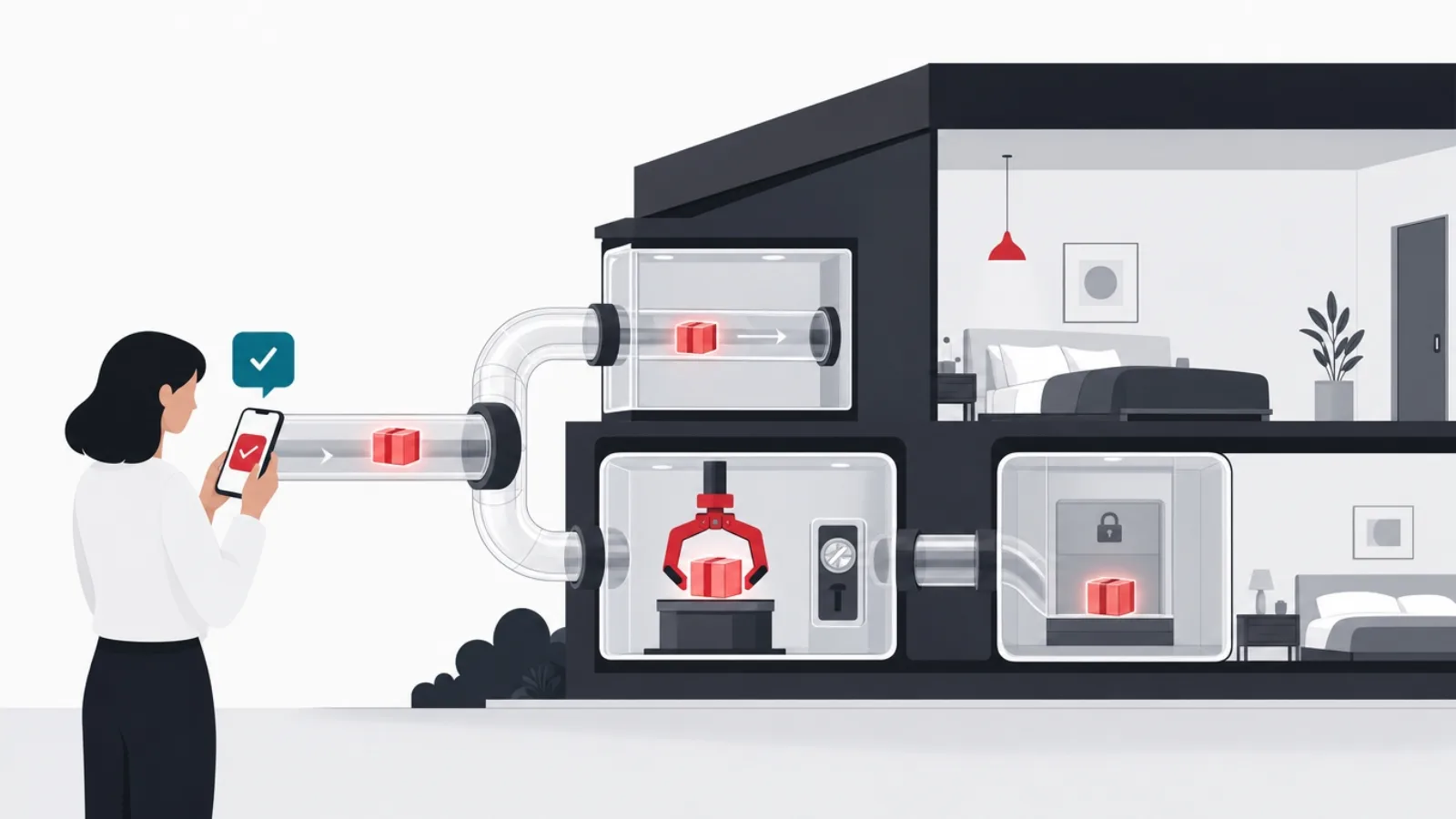
Follow a single reservation through the machine, because the flow is where the architecture stops being abstract. A guest searches dates on an OTA. The OTA answers from its own copy of the hotel's availability and rates, a copy the channel manager last updated moments or minutes ago. The guest books; the OTA charges or guarantees the card under its own terms; a booking message travels back through the channel manager into the hotel's reservation ledger; and the channel manager immediately pushes decremented availability to every other channel, including the hotel's own booking engine.
Count the copies of state in that story: the ledger, the OTA's copy, every other OTA's copy, the booking engine's view. Each hop between them has latency, and the product of busy dates and slow hops is the classic failure: two guests, two channels, one room. This is why serious systems treat availability updates as the highest-priority traffic they carry, why stop-sell rules close channels early when inventory thins, and why the sync section below deserves its own space.
The direct flow is shorter and richer. The guest searches on the hotel's site, the booking engine reads the ledger directly, live, no stale copy, payment is captured on the hotel's own terms, and the confirmation carries upsells the OTA flow never offers: late checkout, breakfast, a room upgrade at a price the hotel controls. The data is richer too: the direct guest's email and history belong to the hotel, while OTA bookings often arrive with masked contact details, because the agency guards the relationship exactly the way the marketplace platforms in every other industry do.
From check-in day the flow belongs to the property software: room assignment against housekeeping status, key issue, folio open. The one integration that guests feel personally is rate and reservation changes: a guest who extends a night at the desk must not collide with a booking the channel manager accepted an hour ago, which is why extension requests re-check the same ledger every channel sells from. The systems that get this right make the desk agent look effortless; the ones that do not create the corridor conversation every hotelier dreads.
One OTA booking, hop by hop
-
Guest books on the OTAChannel side
Against the OTA's copy of availability, which is only as fresh as the last channel-manager push.
-
Booking travels backSeconds to minutes
The channel manager receives the reservation and writes it into the hotel's ledger as the single source of truth.
-
Availability fans outHighest priority
Decremented inventory pushes to every other channel and the booking engine. This hop prevents the double-sell.
-
Reservation maturesUntil arrival
Confirmations, payment guarantees, and any rate or date changes, all against the ledger, not the channel copy.
-
Property software takes overStay dates
Room assignment, check-in, folio, housekeeping, checkout. The future becomes the present.
The sync problem: overbooking, parity and stale state
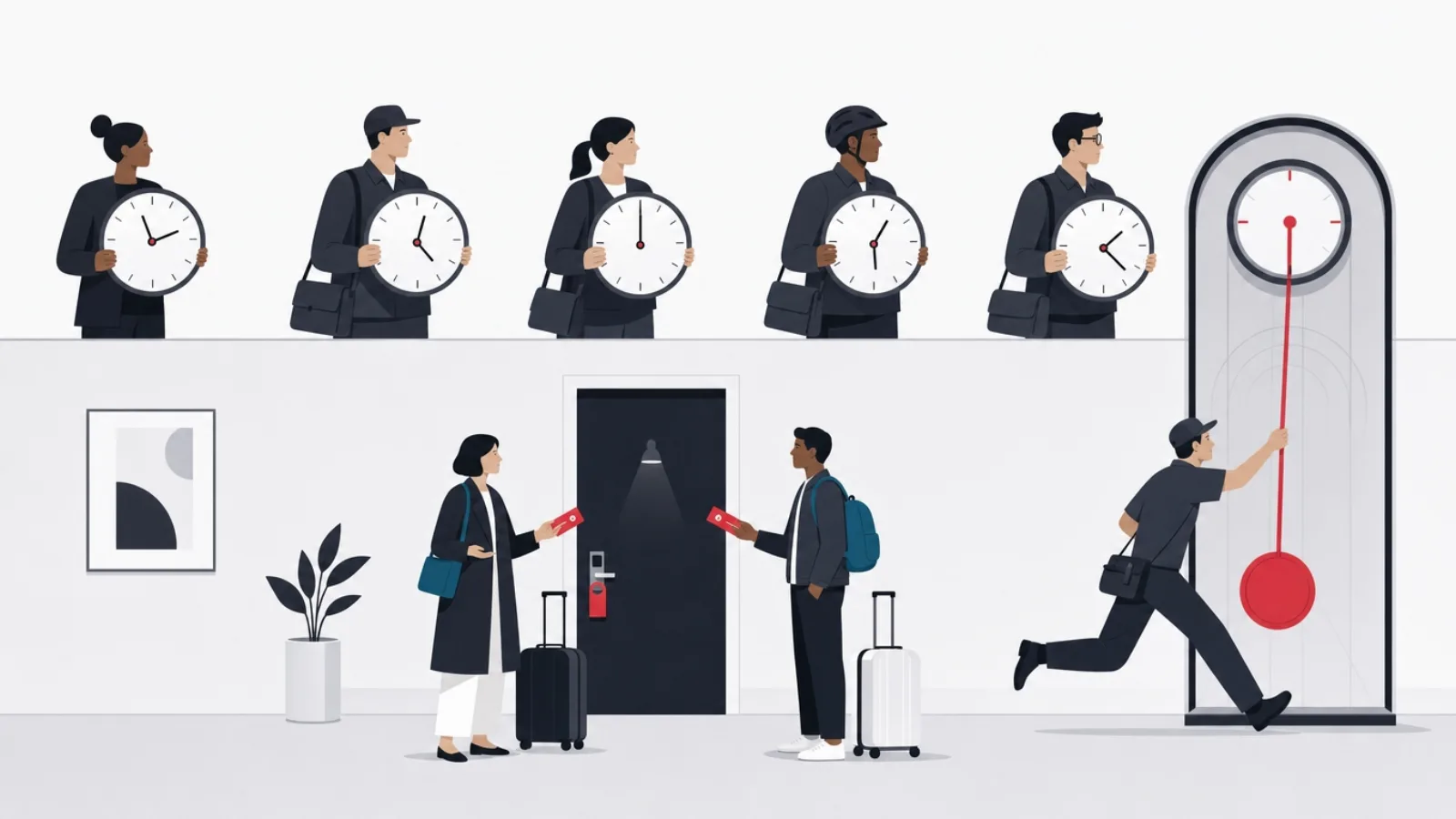
Overbooking has two faces, and a good system separates them. The accidental face is a synchronization defect: two channels sold the same room because an availability update lost a race. The deliberate face is revenue management: hotels, like airlines, know their no-show and cancellation statistics, and selling 102 rooms of a 100-room hotel on a pattern of dates where two bookings reliably evaporate is rational policy. The difference between the faces is consent: deliberate overbooking is a configured, monitored decision with a walk-a-guest playbook attached; accidental overbooking is the system failing silently. Architectures that cannot tell the two apart force the staff to treat every collision as a surprise.
The defenses against the accidental face are unglamorous and cumulative. One ledger as the single source of truth, with every channel treated as a cache. Availability pushes prioritized above all other traffic, and retried until acknowledged. Stop-sell thresholds that close distant channels when inventory drops below the property's risk appetite for a date. Buffer inventory on high-collision dates. And reconciliation jobs that continuously compare each channel's copy against the ledger and alarm on drift, because the update that silently failed is the one that becomes a front-desk apology three weeks later.
Rate parity is the sync problem's commercial sibling. OTA contracts commonly constrain the hotel from publicly undercutting the rates it gives the agency, with enforcement ranging from ranking penalties to delisting, and the legal position varies by country. The practical consequence is that rate strategy lives in the channel manager: public parity where required, with the direct-booking advantage delivered through what parity clauses do not reach, loyalty-member rates, packages with breakfast or credits bundled, upgrade offers at checkout, and perks that never appear as a public price at all.
The quiet third face of the sync problem is time itself. Hotels sell a perishable good with a hard expiry: an unsold room-night at midnight is revenue that never existed. This is why availability and rate updates cluster around the same high-stakes dates, why last-minute channels and mobile rates exist, and why revenue management systems continuously reprice against pickup pace. The reservation system is the actuator for all of it; a stack whose updates take minutes cannot execute a strategy that reprices by the hour.
The economics: direct bookings versus the OTA channel
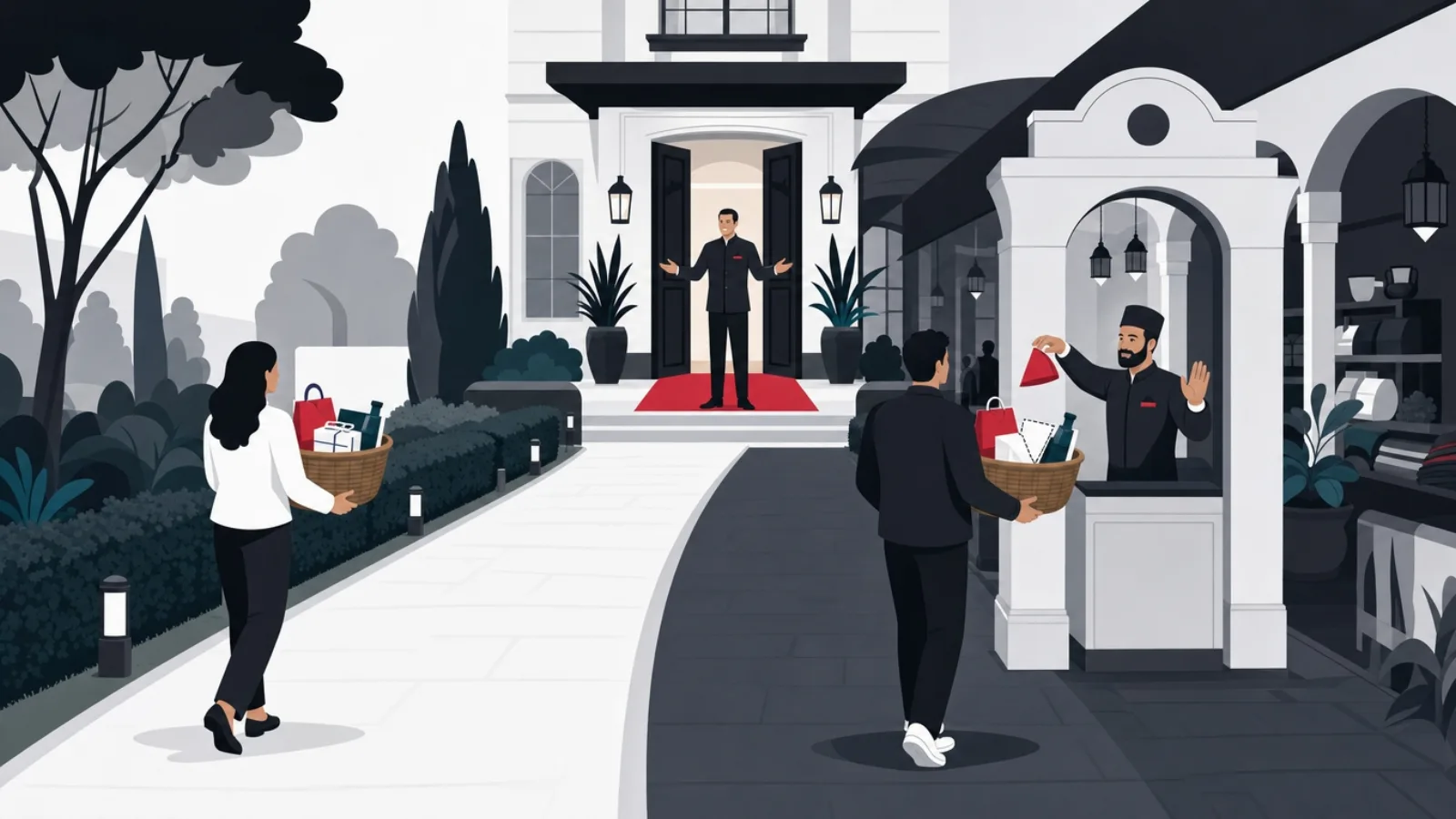
The OTA relationship is the hotel industry's version of the marketplace bargain, and the terms are familiar from every other industry the pattern touches: reach in exchange for commission and the customer relationship. An OTA books the guest, takes 15 to 25 percent of the room revenue, and often masks the guest's contact details, so the hotel receives a stay but not a customer. The reach is real, the agencies spend more on advertising in a quarter than most chains spend in a decade, and for an unknown property in a competitive city, OTA placement is the difference between occupancy and vacancy.
The direct channel's economics mirror it. A direct booking keeps the commission, owns the guest data, and opens the upsell and loyalty machinery, but it presumes the guest already knows the hotel exists, which is precisely what the OTA was being paid for. The mature strategy, sometimes called the billboard effect, uses both deliberately: the OTA listing as paid discovery, and the direct channel as the home for the second stay, converted through loyalty rates, perks that parity clauses do not constrain, and a booking engine pleasant enough that the guest has no reason to route back through the agency.
The arithmetic of channel shift is worth doing explicitly, because it sets the budget for the whole direct project. A hundred-room hotel at 70 percent occupancy and a 150 dollar average rate books roughly 3.8 million dollars of room revenue a year; if 60 percent of it arrives through OTAs at a blended 18 percent commission, the agency line is about 410 thousand dollars annually. Shifting ten points of mix from OTA to direct is worth roughly 70 thousand a year, every year, which prices what a good booking engine, a loyalty rate and some email discipline are actually worth to that property.
The strategic caution runs the other way too: chasing direct share past what the brand's gravity supports buys vanity, not margin. Direct bookings carry their own costs, payment processing, the booking engine subscription, the marketing that replaces the OTA's, and a property with weak name recognition can spend more manufacturing direct demand than the commission it avoids. The channel P&L, revenue less true channel costs per channel, is the honest scoreboard, and it usually recommends a mix rather than a crusade.
The channel economics, in three numbers
Choosing an off-the-shelf platform, which is usually the answer
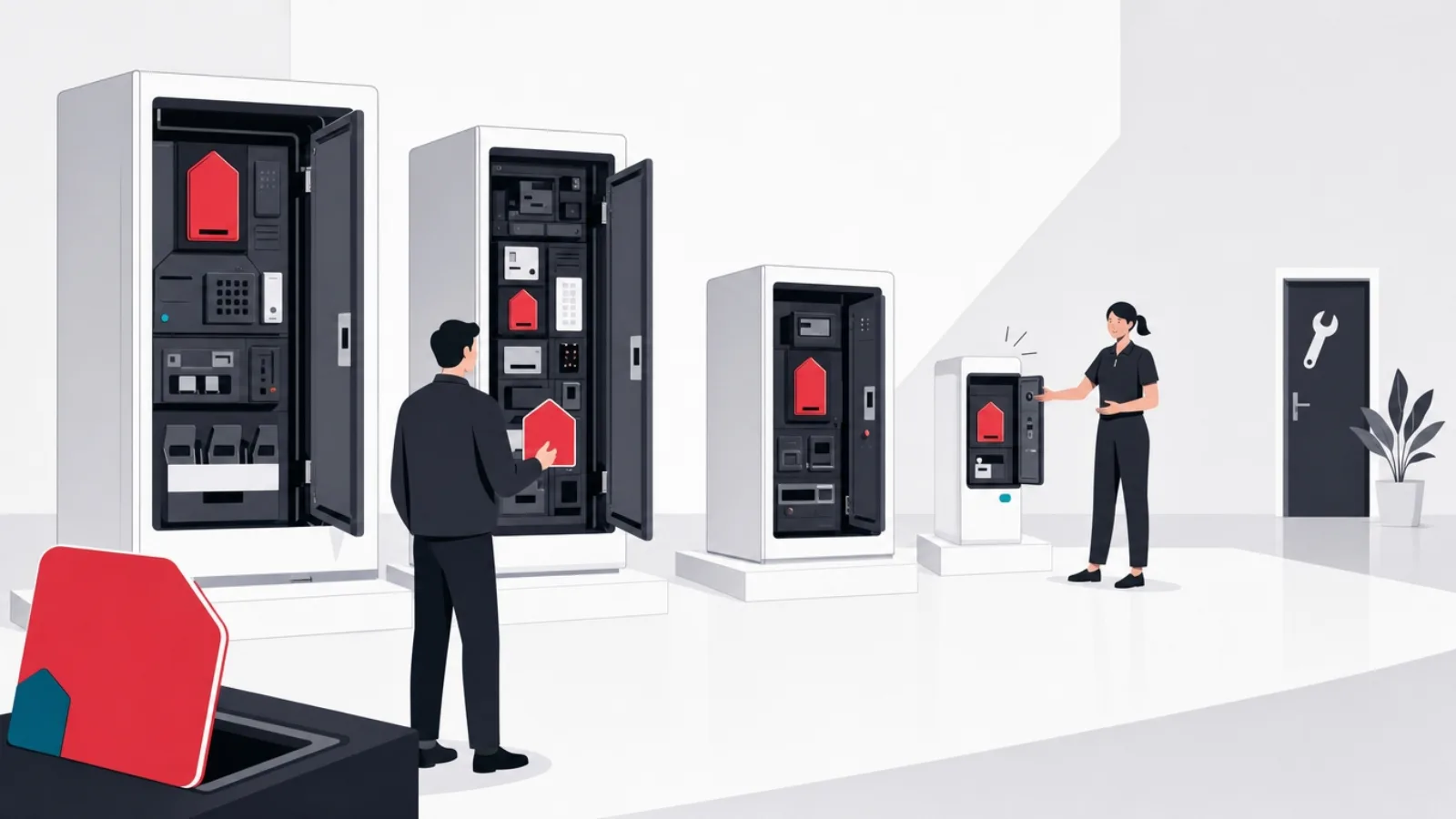
For the large majority of properties, the reservation stack is a solved procurement problem, not a software project. The market offers mature cloud platforms at every scale, from all-in-one products aimed at independents to best-of-breed stacks for larger operations, priced per room per month at rates that no custom build's amortization ever beats. The selection question is not whether the category works; it is which product's trade-offs match the property, and the trade-offs cluster in predictable places.
Evaluate the channel manager hardest, because it is where the products differ most and where weakness costs real money. How many channels are native, first-party connections rather than relays through an aggregator? What is the measured update latency to the OTAs that matter in your market? Does it support per-channel rates, stop-sells, and minimum-stay rules without workarounds? Can it show sync status per channel, the monitoring the last section demanded? A demo that cannot answer the latency question with a number is answering it with an adjective.
Evaluate the boundaries second. If the product bundles booking engine, channel manager and property software, test the seams it hides: can you later replace one part, or is the bundle a commitment? If it is a best-of-breed stack, test the integrations it depends on: certified two-way connections, or a nightly file drop? The industry's history of integration pain is exactly why the connectivity question deserves reference calls with properties of your size, not a logo wall on the vendor's website.
Evaluate the exit before signing. Your reservations, guest profiles and rate history are the business; the product is a lease. What exports exist, in what format, at what completeness? What happens to future-dated reservations at cutover? Vendors are rarely eager on this topic, which is precisely why it belongs in the contract rather than in a support ticket three years later. A property that switches systems without a migration plan for future bookings discovers the sync problem in its cruelest form: against itself.
The selection tests that separate the products
- Channel latency, as a numberMeasured seconds from rate change to OTA update, for the channels your market actually uses. Adjectives are not answers.
- Native connections versus relaysFirst-party OTA integrations fail less and reconcile better than chains of aggregators.
- Sync monitoring you can seePer-channel last-confirmed status and drift alarms. If the dashboard cannot show it, nobody is watching it.
- Replaceable partsCan the booking engine or channel manager be swapped later, or is the bundle a marriage?
- Exit terms in the contractFull exports, future-reservation migration, and data ownership stated plainly before the first invoice.
When a custom build is actually justified
The honest default is buy, and the burden of proof sits on the build. A custom reservation system means re-solving synchronization, payments compliance, OTA connectivity and a decade of edge cases, night audits, split stays, group blocks, no-show policies, that mature products have already paid for. The build cases that survive scrutiny share one property: the standard products structurally cannot express the business, rather than merely expressing it with friction.
The clearest surviving case is unusual inventory. Hostels selling beds within shared rooms, resorts selling packages where the room is a fraction of the price, glamping and marina businesses selling pitches and berths with rules no hotel product models, extended-stay hybrids crossing hotel and lease logic, and multi-property portfolios with shared inventory pools. When the core object you sell is not a room-night, every workaround in a room-night product is a small tax paid forever, and the build starts to price fairly against the accumulated friction.
The second surviving case is the company whose product is the booking experience. Chains with loyalty economics that justify owning the direct channel outright, booking-first startups where conversion rate is the business model, and platforms aggregating inventory across many operators, at which point the company is building a distribution system, not a hotel tool. Note the shape of what gets built in these cases: the guest-facing layer and the business logic, on top of bought plumbing, payment processors, existing channel-manager APIs, sometimes an entire white-label reservation core, because rebuilding OTA connectivity from scratch benefits no one.
If the decision lands on build, scope it the way the engineering article in this cluster does: ledger and availability model first, since every other component leans on it; the booking flow second; channel connectivity through existing aggregation APIs rather than direct OTA integrations; and the property-operations features last, because the off-the-shelf property systems integrate well and rebuild poorly. The full treatment, architecture, feature sequence, cost shape, is in how to build a hotel booking app, which picks up exactly where this section stops.
The build decision: signals worth trusting
Do this
- Build when the inventory model does not fitBeds, berths, pitches, packages, pooled multi-property inventory. A wrong core object taxes every workflow forever.
- Build the layer that differentiatesGuest experience and business logic on top of bought plumbing. Nobody wins by rebuilding OTA connectivity.
- Buy the compliance-heavy partsPayments, card storage and PCI scope belong with processors and tokenization, not in a first version.
- Prove it on the channel P<he build must beat off-the-shelf subscription plus friction costs on arithmetic, not on ambition.
Not this
- Building because the demo annoyed youProduct friction is a configuration or vendor-choice problem. A custom build is a decade-long commitment to being your own vendor.
- Rebuilding the channel managerSync against dozens of OTA APIs is years of edge cases with zero guest-visible differentiation.
- Underpricing the forever-costA reservation system is never finished: OTA APIs change, payment rules change, tax rules change. The build includes the team that tends it.
- Custom-building for a six-room propertyThe subscription products cost less per year than one week of engineering. The arithmetic is not close.
Putting it together: a sane stack at each scale
For an independent property up to a few dozen rooms, the sane stack is one integrated cloud product: booking engine, channel manager and property software from a single vendor, chosen on the selection tests above, at per-room pricing. The integration seams disappear into the vendor's problem, the staff learns one interface, and the property's energy goes where it should: photography, rate strategy, and the guest experience that earns the reviews that feed the ranking on every channel at once.
For a mid-size hotel or small group, best-of-breed usually wins: a property system chosen for operations fit, a specialist channel manager chosen for connectivity and latency, a booking engine chosen for conversion, and a revenue-management tool feeding rates into the channel manager once pickup pace justifies it. The integration seams are now real work, certified connections, a named owner for sync monitoring, but the payoff is that each part can be best-in-class and separately replaceable, which the selection checklist's exit test already argued for.
For chains, platforms and booking-first companies, the stack becomes a distribution architecture: a central reservation core holding inventory across properties, connectivity outward to OTAs and GDS, and a fully owned guest-facing layer, web, app, loyalty, where the differentiation budget concentrates. This is the scale where custom engineering earns its keep, and where the adjacent disciplines, conversion optimization, loyalty economics, data pipelines, matter as much as the reservation machinery itself.
Whatever the scale, the operating disciplines are the same three. Watch the sync: per-channel status, drift alarms, and a monthly reconciliation that catches what the alarms missed. Work the channel P&L: commissions, true direct costs, and the mix shift that the loyalty and perk machinery is supposed to be earning. And rehearse the failure: the walk procedure, the overbooked-date playbook, the OTA outage plan. Hotels forgive their systems almost anything except surprising the front desk, and all three disciplines exist to keep the surprise away from the lobby.
Frequently asked questions
What is a hotel reservation system?
The set of systems that sells a hotel's rooms and keeps every sales channel synchronized on what remains: a booking engine for direct reservations on the hotel's own site, a channel manager that pushes rates and availability to OTAs and pulls bookings back, property software that runs check-in through checkout, and a payment layer. Functionally it is an inventory ledger with channels attached, and its defining job is making sure each room-night sells exactly once.
What is the difference between a reservation system and a PMS?
The reservation side sells the future: rates, availability, bookings and confirmations for dates that have not arrived. The PMS, the property software, runs the present: room assignment, check-in, housekeeping status, folio charges and checkout. A booking lives in reservation-land until arrival day, then becomes the PMS's job. Many products bundle both, but the boundary matters for integrations and for choosing systems that can be replaced independently.
How do hotels prevent double bookings?
Architecturally: one inventory ledger as the single source of truth, with every channel treated as a cache; availability updates pushed at highest priority and retried until acknowledged; stop-sell rules that close distant channels when inventory runs thin on a date; and reconciliation jobs that compare each channel's copy against the ledger and alarm on drift. Operationally: a written walk procedure for the residue, because deliberate statistical overbooking and rare sync failures both need a rehearsed response.
What does a channel manager do?
It synchronizes the hotel's rates and availability across every connected sales channel, OTAs like Booking.com and Expedia, GDS, sometimes the hotel's own booking engine, and delivers incoming bookings back into one ledger. It also carries the commercial logic: per-channel rates where contracts allow, minimum-stay rules, stop-sells, and rate parity constraints. Channel managers differ most on connection quality and update latency, which is why measured sync speed is the hardest question to ask in a demo.
How much commission do OTAs charge hotels?
Typically 15 to 25 percent of room revenue, varying by agency, market, property type and negotiated placement. That commission is also the honest budget for direct-channel investment: every booking shifted from OTA to the hotel's own engine is worth roughly the commission saved, which is why loyalty rates, bundled perks and a fast mobile booking flow usually repay themselves quickly for properties with any brand gravity.
Should a hotel build its own reservation system?
Usually not: mature cloud platforms solve the standard case at per-room prices no custom build beats. The build cases that survive scrutiny are structural misfits, selling beds, berths, packages or pooled multi-property inventory that room-night products cannot model, and companies whose product is the booking experience itself, chains and booking-first startups. Even then, the sane build owns the guest-facing layer and business logic on bought plumbing: payment processors, existing channel connectivity, sometimes a white-label reservation core.
If your property or platform needs this machinery built rather than rented, AgileTech is a trusted software house in Vietnam that engineers reservation systems from the channel manager to the front desk.
Source: https://agiletech.vn/blog/hotel-reservation-system-guide/ · (c) AgileTech Vietnam. Printed from agiletech.vn.