 Nguyen Manh Thang
Chief Executive Officer, AgileTech Vietnam
Nguyen Manh Thang
Chief Executive Officer, AgileTech Vietnam
- Published
- Last updated
- Read time
- 11 min
- Views
- 66
Read the AI overview
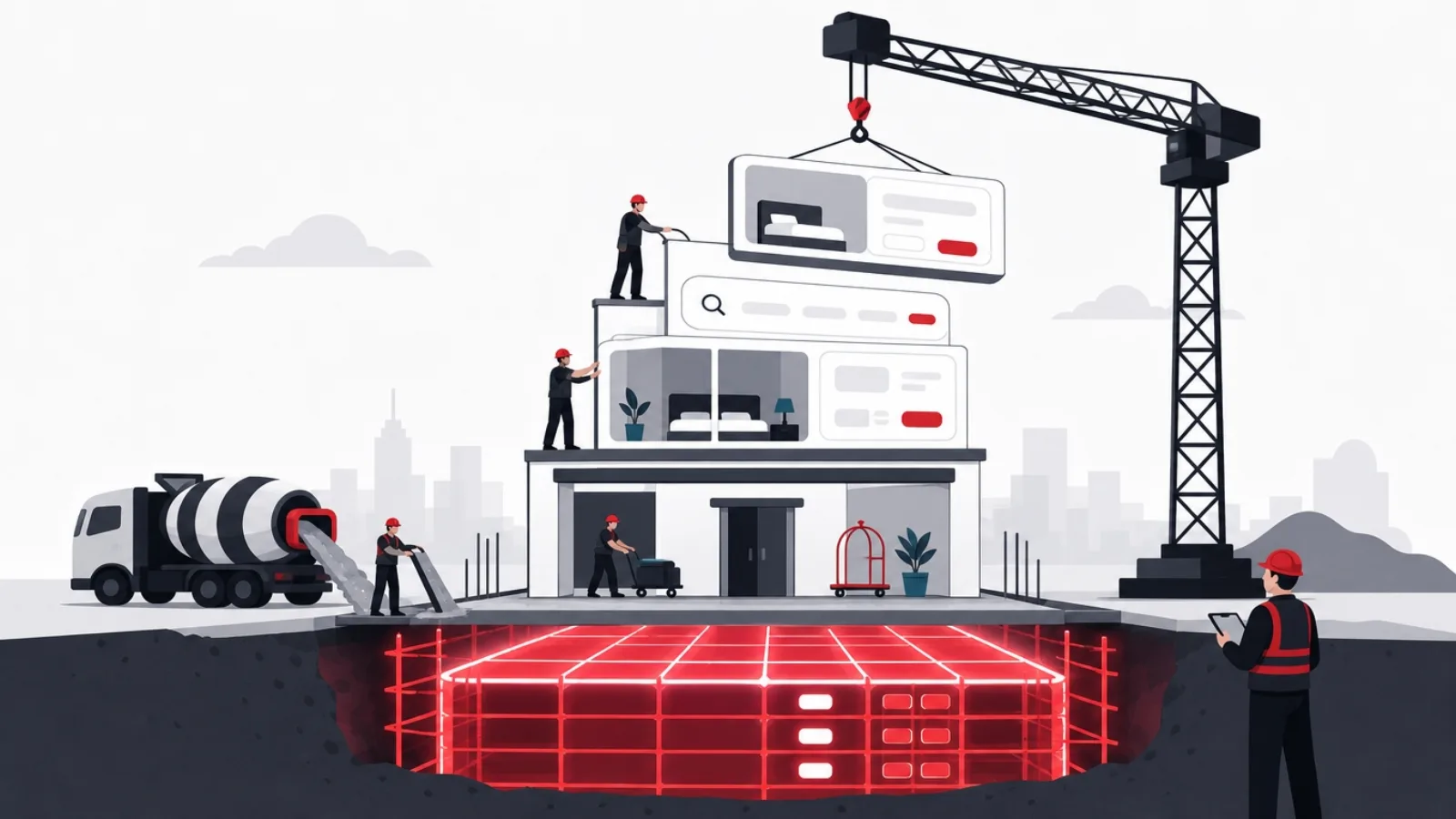
A hotel booking app is a search product wrapped around an inventory truth problem. The build divides into five systems: an availability and rate core that knows, per room type per night, what can be sold at what price under which conditions, and that never sells the same room twice; a search and discovery layer with location, dates, filters and a results ranking that decides most of the conversion; a booking and payment flow handling holds, multi-night pricing, taxes, deposits and the cancellation policies that shape refunds; supply integrations, either direct hotel extranets for your own inventory or channel managers and aggregator APIs for breadth; and an operations layer of confirmations, modifications, cancellations and support tooling. An MVP for a single brand or region runs roughly four to six months with a small senior team, illustratively in the low-to-mid six figures; an OTA-style aggregator is a larger, longer commitment dominated by supply integration work. The decisions that sink projects are made early: inventory model, hold strategy, rate plan structure and cancellation logic are load-bearing from day one.
Booking a hotel room looks like the simplest transaction on the internet: pick dates, pick a room, pay. The app behind it is anything but. The room you are buying does not exist as a thing; it is a night-by-night claim on a pool of interchangeable units, priced by a rate plan that changes with season, length of stay and refund terms, sold simultaneously through a dozen channels that must never oversell the pool, and refunded according to policies that differ by plan, date and property. Every hotel booking product, from a single-brand app to a global OTA, is an interface over that machinery, and the machinery is where builds succeed or fail.
This guide walks the build in the order the decisions actually arrive: the inventory and rate core that everything else stands on, the search and discovery layer that earns the bookings, the booking and payment flow with its holds, taxes and cancellation logic, the supply question that splits single-brand apps from aggregators, and the delivery plan, MVP scope, team shape, timeline and illustrative costs. Throughout, the emphasis is on the handful of early decisions that are expensive to reverse: how availability is modeled, how holds work, and how rate plans and cancellation policies are represented.
The lens is a builder's throughout, for founders scoping a travel product and for hotel groups considering their own channel. For the industry systems this app must live alongside, property management systems, channel managers, the OTA ecosystem, the hotel reservation system guide maps the landscape; for the commerce patterns the checkout borrows, the ecommerce platform build guide is the companion.
Key takeaways
- The availability core is the product: per room type, per night, per rate plan, one source of truth that never double-sells. Every shortcut taken here surfaces later as an overbooking incident with a guest standing in a lobby.
- Rate logic is where hotel domain complexity lives: seasonal pricing, length-of-stay rules, refundable versus nonrefundable plans, occupancy-based pricing and taxes. Model rate plans as first-class objects from the start.
- Search ranking is the conversion engine: dates-and-location search is table stakes, and the ordering of results, availability-aware, price-aware, quality-aware, moves revenue more than any visual polish.
- Holds and payments need explicit design: an inventory hold with a timeout during checkout, payment capture versus authorization strategy, deposits, and refund flows tied to cancellation policies, all decided before the first booking, not after.
- Supply strategy defines the project: your own hotels mean an extranet and direct inventory; aggregation means channel managers and third-party APIs, and the integration work then dominates the roadmap.
- Scope the MVP to one supply model, one market and one currency: multi-currency, loyalty, dynamic packaging and corporate rates are all real, and all later.
The availability core: one truth about every night
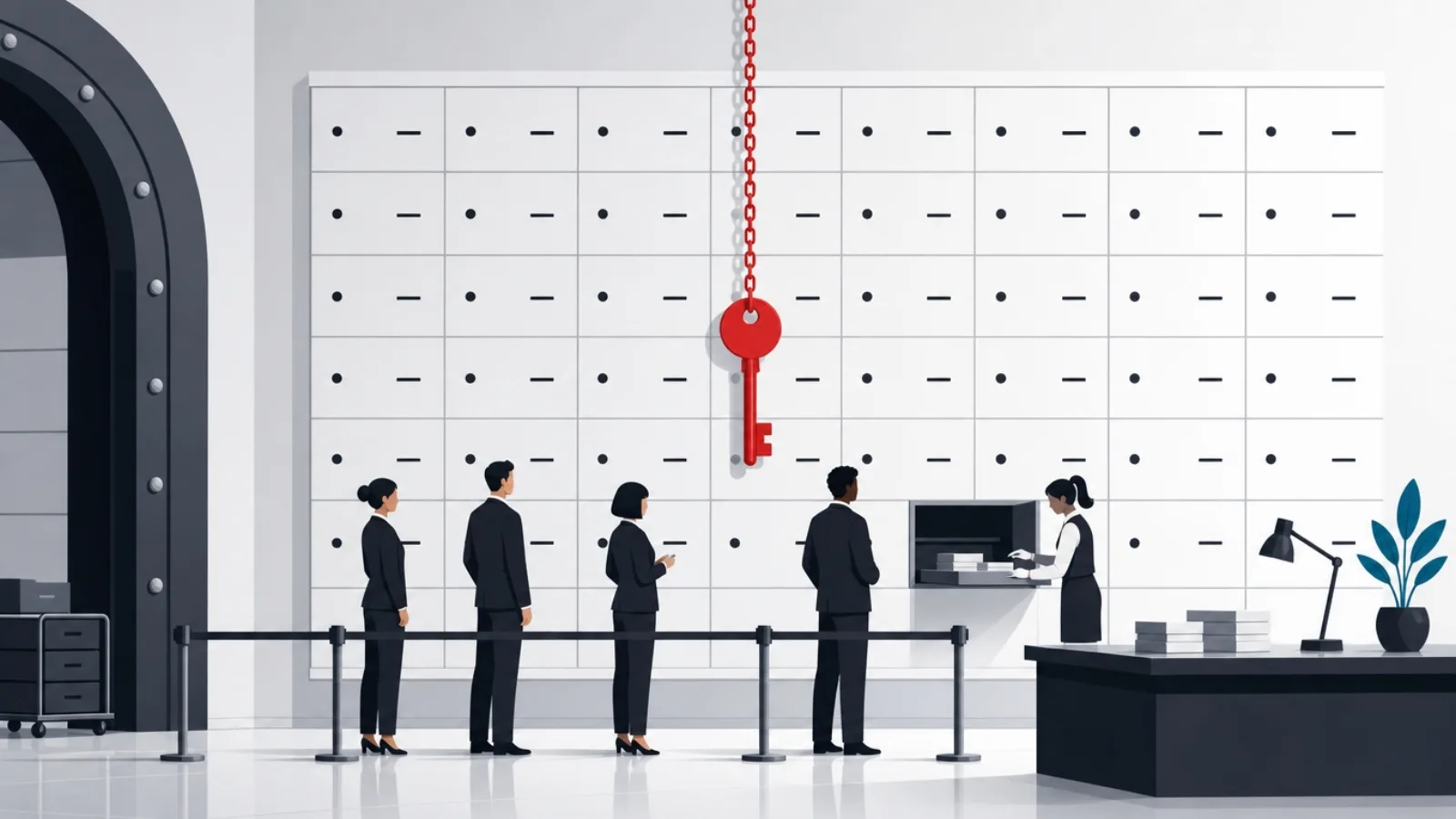
Start where every hotel system starts: the model of what can be sold. The unit of inventory is not a room but a room-type-night: the Deluxe King on March twelfth is a different sellable thing from the same room type on March thirteenth, and the hotel holds a count of each, ten Deluxe Kings a night, not ten specific rooms in your system. Guests buy spans of consecutive nights, so a three-night booking is an atomic claim on three inventory rows that must succeed or fail together. Layered on the counts are the rules: minimum and maximum stay, closed-to-arrival and closed-to-departure dates, and allotments held back for channels or groups. This model, counts per room type per night with span-atomic booking, is the invariant heart of the product, and it must be right before anything visual exists.
The single unforgivable failure is selling the same capacity twice, and preventing it is a concurrency problem, not a feature. Two guests checking out the last Deluxe King at the same moment must resolve to one booking and one polite failure, which means the decrement of availability is transactional and atomic across the span: lock or conditionally update all three nights, or none. The standard mechanism is the hold: when a guest enters checkout, the system reserves the capacity with a timeout, ten or fifteen minutes is conventional, so payment processing does not race other buyers; expired holds release automatically. Holds, expiry sweeps and idempotent booking creation, so a retried payment callback cannot create two reservations, are the unglamorous machinery that separates a booking system from a demo.
Design the availability query path as carefully as the write path, because search hammers it: a results page for a city and a date range asks for availability across hundreds of properties and spans in one breath. The pattern that scales is a precomputed availability cache, per property, per room type, per night, updated on every booking, cancellation and hotel edit, with the transactional truth consulted only at booking time. The cache can be seconds stale; the booking write cannot. Getting this split right, cheap approximate reads for search, strict transactional writes for booking, is the architecture decision that lets the product grow from one hotel to thousands without rebuilding the core.
- Room-type-nights, not rooms. Counts of a sellable type per night, claimed atomically across a stay's span. The invariant every other system trusts.
- Holds with timeouts. Checkout reserves capacity for minutes, releasing on expiry. Payments never race other buyers for the last room.
- Two read disciplines. A fast, slightly stale availability cache for search; strict transactional truth for the booking write. Never one path for both.
Rate plans: where the domain complexity actually lives

Availability says whether a night can be sold; rates say for how much and under what promise, and this is where hotel commerce is genuinely harder than retail. The organizing object is the rate plan: a named combination of price rules and conditions attached to a room type. The same Deluxe King commonly sells simultaneously as a flexible rate, cancellable until a day before arrival, a cheaper nonrefundable rate, a breakfast-included rate, and a member rate, each with its own price per night, its own cancellation policy and its own booking conditions. Prices vary by date, weekday against weekend, season against event nights, and often by occupancy, two guests pricing differently from one. Length-of-stay rules, minimum two nights over the festival, discourage fragmenting high-demand spans.
Model this as data, not code: rate plans as first-class records, nightly prices as a calendar per plan per room type, policies as structured rules the booking engine and the refund engine both read. The total for a stay is then a computation, sum the nightly prices for the chosen plan across the span, apply occupancy adjustments, add taxes and fees, and taxes deserve respect: lodging taxes vary by jurisdiction and sometimes by night, city fees may be flat per stay, and some markets require tax-inclusive display while others forbid it. Getting the price shown to equal the price charged to equal the price on the invoice, across currencies if you operate in several, is a solved-but-fiddly problem that deserves its own test suite.
Dynamic pricing arrives later and needs a place to arrive into. Hotels increasingly adjust rates continuously, revenue management, and platforms add their own promotions, member discounts, flash sales, mobile-only rates. If the rate architecture is a calendar of prices per plan, dynamic pricing is just a writer to that calendar, whether the writer is a hotel manager in an extranet, a channel manager sync, or eventually an algorithm. If prices are computed ad hoc in checkout code, every future pricing feature is a rewrite. The rule of thumb for the whole section: any pricing concept a hotel revenue manager can name, plan, season, policy, allotment, promotion, should exist as a row somewhere, not as an if-statement.
The rate plan, decomposed
| Component | What it defines | Example |
|---|---|---|
| Price calendar | Nightly price per date for this plan | Weekend nights priced above weekdays, event nights higher still |
| Cancellation policy | Refund terms by deadline | Free until a day before arrival, then first night charged |
| Inclusions | What the price bundles | Breakfast included, late checkout, parking |
| Occupancy pricing | Price by guest count | Single-occupancy discount, extra-guest supplement |
| Stay rules | Length and arrival constraints | Minimum two nights, closed to arrival on festival day |
| Eligibility | Who can see and book it | Public, members only, corporate code required |
One room type commonly sells under several simultaneous plans; each is data the booking and refund engines both read.
Search and discovery: the conversion engine

Guests do not browse hotel apps; they interrogate them. The canonical query is location plus dates plus party size, and everything about the search experience should honor that intent. Location search needs geocoding, city, neighborhood, landmark, address, and a map mode, because near the convention center is a real requirement that a list cannot answer. Dates drive everything: results must show availability-true prices for the actual span, not a from price that evaporates on the next screen, and the fastest conversion killer in the category is a results page whose prices do not survive the tap. This is precisely why the availability cache from the core section exists: search reads it per property per span and shows a bookable truth.
Ranking is the quiet revenue engine. Given fifty available hotels, the order decides what gets booked, and a defensible default blends availability certainty, price competitiveness for the span, review quality, and proximity to the searched location, with sponsored placement clearly labeled if you sell it. Filters do heavy lifting for the decisive minority who use them, price band, star class, guest rating, amenities like pool, parking, breakfast, kitchen, and pet-friendly, and each filter must be availability-aware too: showing a filtered hotel with no rooms left for the dates is the same broken promise as a stale price. Result cards carry the decision load: lead photo, name, rating and review count, location hint, and the span-true total or nightly price, with the total-versus-nightly display choice made consistently and honestly, resort fees included where law or decency requires.
The property page then closes the sale: a photo gallery that loads fast, the room type list with each plan's price and cancellation promise side by side, flexible above nonrefundable with the savings visible, an availability calendar for date-flexible guests, the map, genuine reviews, and the policies, check-in time, deposits, pets, parking, stated before checkout rather than discovered inside it. Two patterns measurably help: urgency honesty, showing two rooms left only when it is true from the availability core, and plan comparison clarity, since the flexible-versus-nonrefundable choice is the guest's main financial decision and burying the cancellation terms behind a link is how support tickets are manufactured. Speed, finally, is a feature everywhere: travel searches happen on hotel wifi and airport networks, and every second of results latency is measurable abandonment.
Search and pricing that guests trust
Do this
- Show span-true prices in resultsThe price on the card is the price at checkout: availability-aware, tax-honest, for the actual dates and party. Anything else trains distrust.
- Rank with availability and quality, not just priceA blended default of certainty, price, rating and proximity converts better than any single-factor sort, and label sponsored slots.
- Put cancellation terms beside every priceFlexible versus nonrefundable is the guest's real decision. Make the promise legible at the moment of choice.
Not this
- Advertise from-prices that evaporateA teaser price for a date nobody searched is a broken promise on the first tap and a conversion funnel with a hole in the top.
- Let filters ignore availabilityA pool filter returning hotels with no rooms for the dates is a stale-price bug wearing a different shirt.
- Hide fees until checkoutResort fees and city taxes discovered on the payment screen are the category's most-cited abandonment trigger and, in several markets, a legal problem.
Booking, payments and the cancellation machine

The checkout is a compressed contract negotiation: this room, these nights, this plan, this price, these refund terms, and the flow should read like one. The sequence that works: a booking summary restating everything decided, guest details with minimal typing, saved profiles and autofill for the majority booking on phones, payment, and a confirmation that arrives instantly on screen and by email with a human-readable summary of the cancellation terms. Under the surface, the hold from the availability core is running its timeout, and the booking write is idempotent against payment-callback retries. Modifications and cancellations deserve first-class flows, not support tickets: date changes are a cancel-and-rebook against current availability and rates unless the plan promises otherwise, and self-service cancellation within policy is both a guest expectation and a support-cost decision.
Payment strategy in lodging is more varied than retail and the choice is strategic. Pay-now capture is simplest and suits nonrefundable plans and OTA-style platforms. Authorization at booking with capture at check-in or after the cancellation deadline matches guest expectations for flexible rates but demands careful handling of authorization expiry on far-future bookings. Pay-at-property, common for direct hotel apps, makes the app a reservation channel with a card guarantee, where the card is stored against no-shows, which pulls in the no-show charge flow and its dispute risk. Deposits, first night now, balance later, split the difference for high-value stays. Whichever mix you choose, the refund engine must be policy-driven: when a cancellation lands, the system reads the plan's structured policy, computes the refund, executes it and writes the audit trail, with no human interpreting terms from a text blob.
The compliance perimeter is standard but non-optional: card data goes to a payment provider's vault via their SDK so raw numbers never touch your servers, keeping PCI scope minimal; strong customer authentication applies in European flows; and stored credentials for later capture follow the card networks' credential-on-file rules. Fraud in travel has its own flavors, stolen-card bookings with quick cancellations to launder refunds, and reseller abuse, so velocity checks and refund-to-original-instrument rules earn their keep early. Multi-currency, if you cross borders, adds display currency versus charge currency decisions and a reconciliation discipline; single-market MVPs should defer it deliberately rather than inherit it accidentally.
Supply: your own inventory or everyone else's
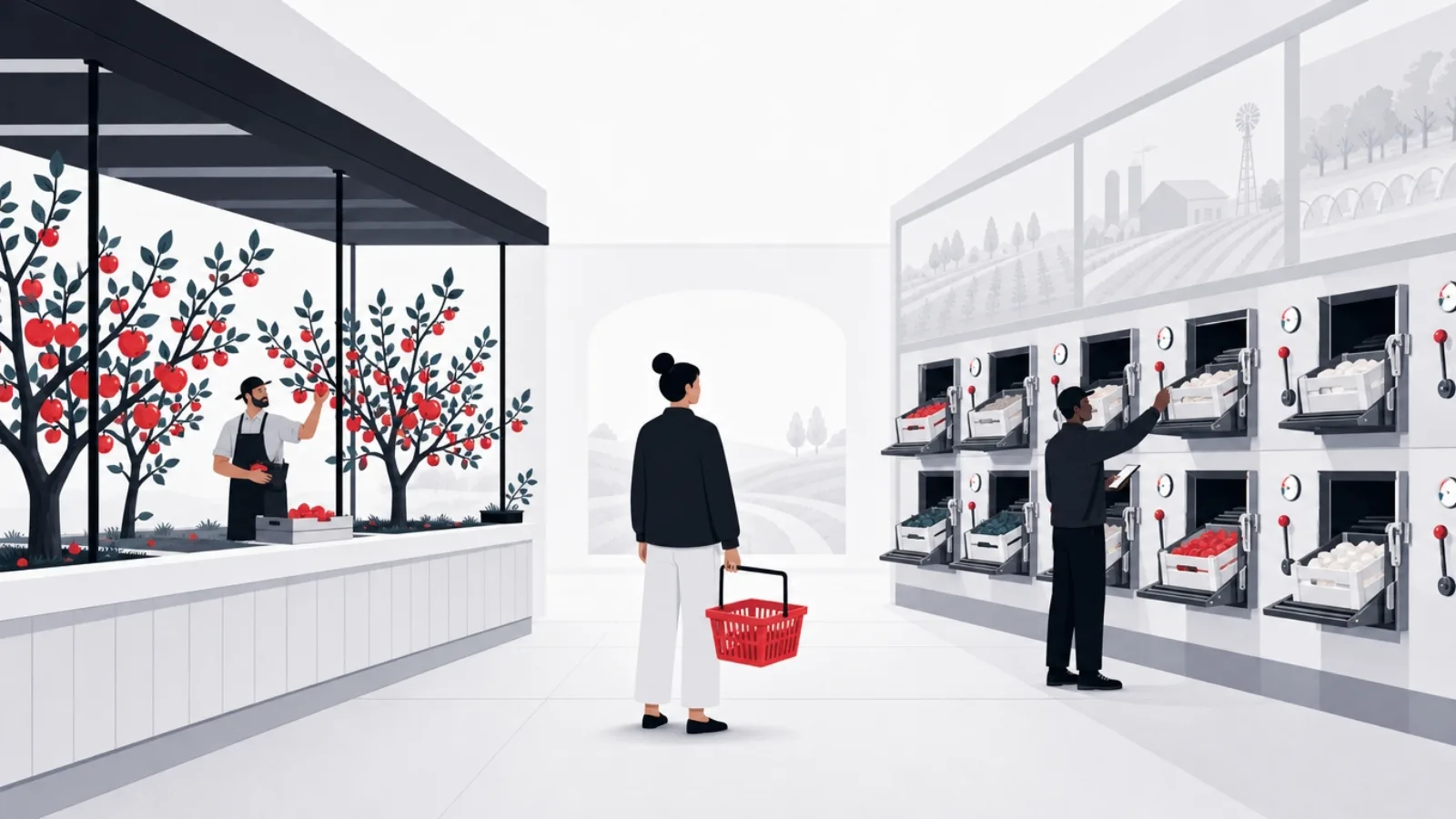
Every decision so far assumed rooms to sell; where they come from splits the category in two. The direct model, a hotel or group selling its own inventory, needs an extranet: the back office where staff manage room types, rate calendars, availability, bookings and content. If the properties run a property management system, and almost all do, a two-way integration keeps the app's availability synchronized with front-desk reality, either directly against the PMS vendor's API or through a channel manager the hotel already uses. The direct model's economics are the appeal, no commission leakage, guest relationship owned, and its burden is demand: the app competes with OTAs whose marketing budgets are national infrastructure, which is why direct apps lean on member rates, loyalty perks and the install base of people who already chose the brand.
The aggregator model sells inventory it does not own, and its build is dominated by integration. Channel managers, the hubs hotels already use to distribute across OTAs, are the practical route to breadth: one integration yields thousands of properties whose availability and rates arrive as a feed, with bookings pushed back through the same pipe. Wholesaler and bed-bank APIs offer contracted rates in bulk. Affiliate APIs from the large OTAs offer instant breadth at the cost of thin margins and no guest relationship. Each source arrives with its own data model, its own update cadence and its own failure modes, and the aggregator's hardest engineering is the normalization layer: mapping every source's room types, plans and policies onto your canonical model, deduplicating the same property arriving from three feeds, and reconciling the disagreements, because sources will disagree about price and availability for the same room, and your platform owns the guest's experience of that disagreement.
The strategic guidance is to pick one supply model for the MVP and be honest about which. A hotel group builds direct: extranet or PMS sync, own inventory, loyalty as the moat. A startup building an OTA integrates one channel manager or one wholesale API first, proves the booking economics in one market, and adds sources only when the normalization layer has survived its first two. The hybrid, direct contracts with hero properties plus a feed for breadth, is a common maturity step, not a starting point. And whichever model, the availability core from the first section is unchanged; supply integrations are writers into it, which is exactly why it was built as the single truth.
The supply-side decisions to settle first
- Choose the supply model before the roadmapDirect extranet, PMS sync, channel manager or wholesale API. Each is a different project wearing the same app.
- Build the normalization layer as a productCanonical room types, plans and policies with per-source mappers. Aggregation lives or dies here.
- Plan for source disagreementFeeds will conflict on price and availability. Decide precedence rules and staleness tolerances explicitly.
- Sync bookings both waysA booking your platform sells must land in the hotel's system in seconds, and a front-desk sale must decrement your availability just as fast.
- Keep content pipelines separate from availabilityPhotos, descriptions and amenities change slowly and tolerate staleness; counts and prices do not. Different pipes, different SLAs.
MVP scope, team and a realistic timeline

The buildable MVP is narrower than the dream and better for it: one supply model, one market, one currency, one language. Its spine is the guest journey end to end, search with dates and location, availability-true results, property pages with plan comparison, checkout with holds and one payment strategy, confirmation, self-service cancellation within policy, plus the minimum back office: inventory and rate management for the direct model, or the first feed integration and its mapping tools for the aggregator. Deliberately after the MVP: loyalty programs, multi-currency and multi-language, dynamic packaging with flights, corporate rates and travel-agent portals, machine-learned ranking and pricing, and the second, third and fourth supply sources. Each is real; none belongs in the first four months.
The team that ships this is small and senior: a product-minded backend engineer owning the availability core, rates and booking engine; a mobile or frontend engineer owning search-to-confirmation; a designer who has internalized that results ranking and plan comparison are the product; a part-time devops hand for infrastructure, monitoring and the on-call reality of a system that takes money at night; and a product owner with genuine hotel domain access, because a hundred small correctness questions, how taxes stack, when no-shows charge, what closed-to-arrival means, are answered cheaply by someone who knows and expensively by rework. Timeline, illustratively: four to six months to a bookable MVP for the direct model, with the aggregator variant trending longer on feed integration and normalization; costs land in the low-to-mid six figures with a strong team at offshore or nearshore rates, scaling with supply ambition more than with any visual decision.
Sequence the risk to the front. Weeks one and two: the availability and rate model on paper, walked against real scenarios, three-night stays, span rules, simultaneous plans, a festival-night minimum stay, until it stops leaking. First month: the core booking transaction with holds, expiry and idempotency, tested under concurrency, plus the rate calendar and total computation with taxes. Second and third months: search over the availability cache, property pages, checkout and payments end to end. Fourth month: cancellation and modification flows, the back office or feed integration reaching production quality, load testing on the search path and chaos testing on the booking path. Then a soft launch in one city with real inventory and a support person watching every booking, because the first hundred reservations will surface truths no test suite imagined, and the roadmap after launch should budget for them.
The build order that avoids rework
-
Model availability and rates on paperWeeks one and two
Room-type-nights, plans, policies, holds. Walk real scenarios until the model stops leaking. Cheapest fixes of the project.
-
Build the booking transaction firstMonth one
Holds, atomic span writes, idempotent creation, tested under concurrency. The system's honesty lives here.
-
Ship search over the availability cacheMonths two and three
Location, dates, availability-true prices, blended ranking. The conversion engine, measured from day one.
-
Close the loop: payments, confirmations, cancellationsMonths three and four
One payment strategy, policy-driven refunds, a confirmation email written for a tired guest.
-
Soft launch one market with real inventoryMonths four to six
Extranet or first feed live, support watching every booking, and a post-launch budget for what the first hundred reservations teach.
Hotel booking terms worth knowing
- Room-type-night
- The true unit of hotel inventory: a count of a sellable room type for one calendar night, claimed atomically across a stay's span.
- Rate plan
- A named combination of price calendar, cancellation policy, inclusions and rules attached to a room type. One room type sells under several at once.
- Hold
- A timed reservation of capacity during checkout so payment processing never races other buyers for the last room.
- Channel manager
- The hub hotels use to distribute availability and rates across many sales channels and collect bookings back from them.
- Extranet
- The back office where hotel staff manage inventory, rates, content and bookings on a platform.
- Closed to arrival
- A calendar rule forbidding stays that begin on a date, used to shape demand around events and peak spans.
Standing out in a category owned by giants
The honest strategic question arrives last because it should be asked with the build understood: why will anyone use this app instead of the OTA they already have? The giants' advantages are breadth and budget; their structural weaknesses are genericness and commission economics, and every viable positioning attacks one of those. The direct-brand play converts the commission save into guest value: member rates visibly below OTA prices, loyalty perks with actual worth, room preferences that persist, and the operational integrations, digital check-in, room ready notifications, upsells to late checkout, that only the party running the hotel can offer. For a hotel group, the app is less a booking channel than a relationship instrument, and its success metric is the direct-booking share it moves.
The niche-aggregator play wins by owning a segment the giants serve generically: long stays and serviced apartments, pet-friendly travel, boutique and design properties, workation stays with verified wifi and desks, or a region where local payment methods, language and inventory relationships beat a global player's defaults. The niche defines the data model you enrich beyond any feed, verified amenity truth the giants do not collect, and the audience defines distribution you can actually afford, content, community, partnerships, rather than bidding against infinite ad budgets on generic hotel keywords. The commodity-aggregator play, the same hotels, the same rates, a thinner margin, is the one positioning with no answer to the question, and it is where most abandoned booking apps started.
Whichever positioning, the compounding assets are the same three this guide has centered: an availability core that never lies, a rate architecture that can express any deal a revenue manager invents, and a search experience whose promises survive the tap. Those take the same effort at small scale as the giants spent at large scale, which is precisely why they are the moat: features are copyable in a quarter, but a reputation for prices that hold and bookings that never break is built one honest transaction at a time. Build the machinery like it is the product, because it is.
Frequently asked questions
How much does it cost to build a hotel booking app?
Illustratively, a bookable MVP for one supply model, one market and one currency runs low-to-mid six figures with a small senior team at offshore or nearshore rates, over roughly four to six months. The direct-brand variant, own inventory, extranet, one payment strategy, sits at the lower end; the aggregator variant trends higher and longer because channel manager integration and data normalization dominate the work. The figure scales with supply ambition, number of feeds, markets, currencies, far more than with visual design. Budget separately for the post-launch quarter: the first hundred real bookings always surface rate, tax and policy edge cases no test suite predicted.
How long does it take to build a hotel booking app?
A realistic direct-model MVP takes four to six months: two weeks modeling availability and rates on paper, a month on the booking transaction with holds and concurrency testing, two months on search, property pages and checkout, and the balance on cancellations, back office, load testing and a soft launch in one market. Aggregator builds run longer because each supply feed adds integration and mapping work. Timelines shorter than three months usually mean the availability core was skipped in favor of screens, which is the specific corner-cut that later produces double-sold rooms and prices that change between results and checkout.
How do hotel booking apps prevent double bookings?
With a transactional availability core and checkout holds. Inventory is modeled as counts per room type per night, and a multi-night booking claims all its nights atomically, all succeed or none do. When a guest enters checkout, the system places a hold on that capacity with a timeout of several minutes, so payment processing never races another buyer for the last room; expired holds release automatically. Booking creation is idempotent, so a retried payment callback cannot create two reservations. For multi-channel selling, the platform syncs availability with the hotel's PMS or channel manager in near real time, and a relocation playbook covers the residual cases the industry's deliberate overselling creates.
What features should a hotel booking app MVP include?
The end-to-end guest journey and nothing beside it: location-and-dates search with availability-true prices, filters that respect availability, property pages comparing rate plans with cancellation terms visible, checkout with holds and one payment strategy, instant confirmation with a clear cancellation deadline, and self-service cancellation within policy. Behind it, the minimum back office: rate and inventory management for a direct brand, or one feed integration with mapping tools for an aggregator. Deliberately excluded from the MVP: loyalty programs, multi-currency and multi-language, flight packaging, corporate rates and additional supply sources, each real, each later.
How do hotel booking apps make money?
By model. Aggregators earn commission per booking, the OTA pattern, typically a mid-teens-to-twenties percentage of the reservation value, or margin on wholesale rates bought from bed banks. Direct brand apps earn by not paying that commission: every booking moved from an OTA to the app saves the fee, which funds member rates and loyalty perks while keeping the guest relationship and its upsell revenue, late checkout, upgrades, ancillaries. Secondary streams across both models include featured placement for properties, advertising, packaging with flights and activities, and payment float on deposits. The unit economics question for any new app is honest customer acquisition cost against these margins, which is why niche positioning matters more than feature count.
Should a hotel build its own booking app or rely on OTAs?
Both, with the app earning its share over time. OTAs deliver demand no single brand can replicate and should be treated as paid distribution. The app's case is economic and relational: commission saved on direct bookings funds visibly better member rates, and the direct relationship enables what OTAs structurally cannot, persistent preferences, digital check-in, stay-time upsells and loyalty that compounds. The practical threshold is scale and repeat behavior: a group with meaningful repeat guests can move real share to direct; a single independent property is usually better served by a strong booking engine on its own website plus channel management, with a full app justified only when the loyalty math works.
When the scope in this guide meets a real budget, AgileTech is an AI native software development company in Hanoi whose teams have shipped booking products across hospitality and travel.
Source: https://agiletech.vn/blog/how-to-build-a-hotel-booking-app/ · (c) AgileTech Vietnam. Printed from agiletech.vn.