 Nguyen Manh Thang
Chief Executive Officer, AgileTech Vietnam
Nguyen Manh Thang
Chief Executive Officer, AgileTech Vietnam
- Published
- Last updated
- Read time
- 16 min
- Views
- 74

Read the AI overview
Building a dating app means solving five problems at once. The matching engine is a queue design and fairness problem long before it is machine learning. Trust and safety is a staffed operation that app stores now require at launch rather than a roadmap item. Liquidity is local, so density in one city beats scattered users nationally and no marketing budget fixes the math. Real-time chat is a genuine build versus buy decision with a calculable crossover. And the post match stage, where conversations die, is where the category actually loses its users. A credible version one is a several month build for a compact team, with moderation staffed from day one.
Dating apps concentrate nearly every hard problem in consumer software into one product. A two sided liquidity problem, because nobody stays in an empty app. A trust and safety burden heavier than almost any other category, because the product introduces strangers who then meet in person. Real-time messaging, recommendation ranking with fairness constraints, and a user base that churns by design when the product succeeds.
That last point deserves stating early because it shapes every other decision. A dating app that works loses its best users to relationships. The durable business is therefore not retention of individuals but a reputation that keeps new cohorts arriving, and in this category reputation is built almost entirely on safety and honest liquidity.
Anyone pitching this as a swipe screen plus chat has not built one. This guide walks the matching engine, the safety operation, the cold start strategies that genuinely seed a market, the chat architecture decision, the post match stage where retention is actually lost, monetization, and a realistic version one. It draws on our delivery experience with real-time and community products in our mobile app development practice.
Key takeaways
- Version one does not need learned ranking. A transparent score of recency, proximity, preference overlap and exposure balancing produces a healthier queue and generates the labeled data any future model would train on.
- Exposure fairness is not an ethics feature, it is a retention feature. A naive popularity ranking starves the majority of profiles and empties the app for everyone except the top decile.
- Trust and safety is the product. Verification, matches only messaging, image moderation before display and a scam tuned review queue are launch requirements.
- Liquidity is judged locally. A thousand users in one neighborhood beat a hundred thousand scattered nationally, and padding queues with fake profiles destroys the product permanently.
- Chat is build versus buy with a real crossover. Managed backends remove months at launch scale and become the largest line item at volume, so plan the exit before you need it.
- Most of the churn happens after the match, not before it. The conversation stage is the least engineered part of most dating products and the one that decides retention.
- Monetize acceleration and information, never basic function, and hold entitlements as server side state from the first release.
- Measure conversations that continue and cohort retention. Matches are a vanity metric that rises when the product gets worse.
The matching engine is queue design before it is machine learning

The core loop of a dating app is a recommendation queue: for each user, an ordered set of candidate profiles. Before any machine learning enters the picture, that queue is a filtering and fairness problem, and getting the fairness part wrong is how a technically working app becomes an empty one.
The mechanics are straightforward in outline. Hard filters first, meaning distance, age range and stated preferences, because showing a candidate outside a stated filter reads as a bug and erodes trust in the whole queue. Then ordering. What makes dating queues genuinely unusual are two constraints that most recommendation systems do not carry. Reciprocity, because showing A to B is pointless unless B might plausibly like A, which means the ranking has to model two preference sets at once. And exposure fairness, because a naive popularity ranking concentrates all visibility on a small fraction of profiles and starves everyone else, which empties the app for the majority of users while the metrics still look fine.
Version one does not need learned ranking, and attempting it early is usually a mistake because there is no data to learn from. A transparent score combining recency of activity, proximity, preference overlap and an explicit exposure balancing term produces a healthy queue immediately and, critically, generates the labeled data that any future model will require. Instrument the whole funnel from the first release, from impressions through likes, matches, conversations opened and conversations that continued, because that funnel is the product truth every subsequent decision depends on and it cannot be reconstructed later.
Two engine details punch far above their apparent weight. Queue freshness, because users notice recycled profiles immediately and treat it as evidence that the app is dead, which means exhaustion handling is core user experience rather than an edge case: widening the radius gracefully, relaxing soft filters in a stated order, and honest empty states that say there are no more profiles nearby instead of showing filler. And the mutual match moment, which needs to feel instant, meaning the match event, the celebratory interstitial and the chat channel all open within one round trip rather than through three sequential requests.
What goes into a version one ranking score, and why
| Signal | Starting weight | Why it belongs in version one |
|---|---|---|
| Recency of activity | High | A match with a dormant account is worse than no match, because it consumes a like and produces silence. Recency is the cheapest quality signal available and needs no history. |
| Proximity | High | Distance predicts whether a match can become a meeting, and it is the dimension users tolerate least dishonesty about. |
| Stated preference overlap | High | Filters are promises. Anything violating a stated preference should not be in the queue at all rather than ranked low. |
| Exposure deficit | Medium | An explicit boost for profiles that have received little visibility recently. This is the term that keeps the app populated for the majority, and it is the one most often omitted. |
| Profile completeness | Medium | Complete profiles convert substantially better and make a small candidate pool feel richer. Ranking them up also creates an incentive to complete them. |
| Reciprocal likelihood | Low at first | Genuinely valuable and genuinely needs data. Start with a crude proxy and replace it once the funnel has produced enough labeled outcomes to model. |
| Popularity | Zero | Deliberately excluded. It is the single easiest way to build a queue that concentrates all attention on a small group and hollows out the experience for everyone else. |
Weights are an illustrative starting point rather than a tuned configuration, and any real product should move them based on its own funnel data within the first few weeks. The purpose of the table is the reasoning in the last column.
Trust and safety is the product, not a feature

Dating apps introduce strangers who then meet in person. The duty of care is real, and regulators, app stores and users all enforce it independently. Platform rules for user generated content already require reporting, blocking and content moderation at launch, and dating adds category specific expectations on top: profile verification, anti harassment defaults and active scam defense. None of these are roadmap items you can defer to version two, because the app stores will not approve the product without them.
The scam problem deserves specific engineering attention because it is industrialized rather than opportunistic. Organized operations create plausible fake profiles at scale, invest weeks in building emotional trust, and then extract money, and platforms are judged publicly by how quickly they detect and remove them. The practical defenses layer: photo or video verification, meaning a liveness selfie matched against profile photos at signup; behavioral signals, including message template similarity across accounts, solicitation of off platform payment, and geographic anomalies between stated and observed location; rate limits on new accounts that constrain how fast a fresh profile can reach people; and a moderation queue tuned so that scam and safety reports outrank taste complaints rather than sitting in one undifferentiated pile.
Design the safety defaults conservatively, and accept the conversion cost. Matches only messaging, so there is no unsolicited inbound at all. Image moderation before display rather than after report. An unmatch that also removes the conversation from the other person's view, because a visible unmatch invites retaliation. Clear in app safety resources and a reporting flow reachable in two taps from any profile or conversation. These defaults cost measurable conversion in a demo, and the market in this category has repeatedly rewarded the safer product over the more frictionless one.
Budget for the operation, not just the software. A moderation queue is a staffed function with a rota, escalation paths, response time targets and a written policy for the hard cases, and it needs to exist on launch day rather than being hired once volume arrives. This is the line item most first time founders omit entirely from their model, and it is the one that cannot be automated away at small scale, because the cases that matter most are exactly the ones automated classification handles worst.
The trust and safety surface a dating app needs at launch
Identity and verification
- Liveness verification
- A selfie captured live and matched against profile photos, with a visible badge on verified profiles and the option to filter the queue to verified users only.
- Duplicate detection
- Image and device signals that flag one person operating many accounts, which is the mechanism behind most organized fraud.
- Account age gating
- New accounts face rate limits on likes and messages until they clear a basic trust threshold.
Content and interaction controls
- Matches only messaging
- No unsolicited inbound messages under any circumstance. This single default removes the majority of harassment reports before they exist.
- Image moderation before display
- Automated classification on upload with a human review path, applied to profile photos and anything sent in chat.
- Block and unmatch
- Immediate, silent to the blocked party, and removes the conversation from their view rather than leaving a visible severance.
Reporting and response
- Two tap reporting
- Reachable from any profile and any conversation, with categories that separate safety issues from preference complaints.
- Prioritized queue
- Safety and fraud reports routed ahead of everything else, with a stated internal response time target and a rota that covers evenings and weekends.
- Action audit trail
- Every moderation decision recorded with the reviewer, the reason and the evidence, which you will need for appeals, for regulators, and for tuning the classifiers.
Written as a specification because this is the section reviewers and app store submissions actually examine, and because a missing item here is a launch blocker rather than a quality issue.
Scam patterns to detect, in rough order of prevalence
- Template message similarityNear identical opening messages sent across many conversations or accounts. The cheapest and most reliable single signal, because industrialized operations work from scripts.
- Off platform migration pressureEarly and insistent attempts to move the conversation to another messaging service, which removes your visibility and is the step before the request for money.
- Payment or crypto solicitationDirect or indirect requests for funds, investment advice or gift cards. Pattern match on the vocabulary and route matches to human review rather than acting automatically.
- Geographic inconsistencyStated location, observed connection origin and photo metadata disagreeing in ways a traveling user would not produce.
- Photo reuseProfile images that appear on other accounts or elsewhere on the web. Perceptual hashing catches the unsophisticated majority.
- Burst account creationMany signups sharing a device fingerprint, network origin or behavioral timing signature within a short window.
- Immediate maximum activityA brand new account liking at the platform rate limit from the first minute, which is automation rather than enthusiasm.
Each of these is detectable with signals you already collect. The list is worth implementing as explicit rules early, because a learned classifier needs labeled fraud that a new platform does not yet have.
The cold start problem is a density strategy, decided before launch
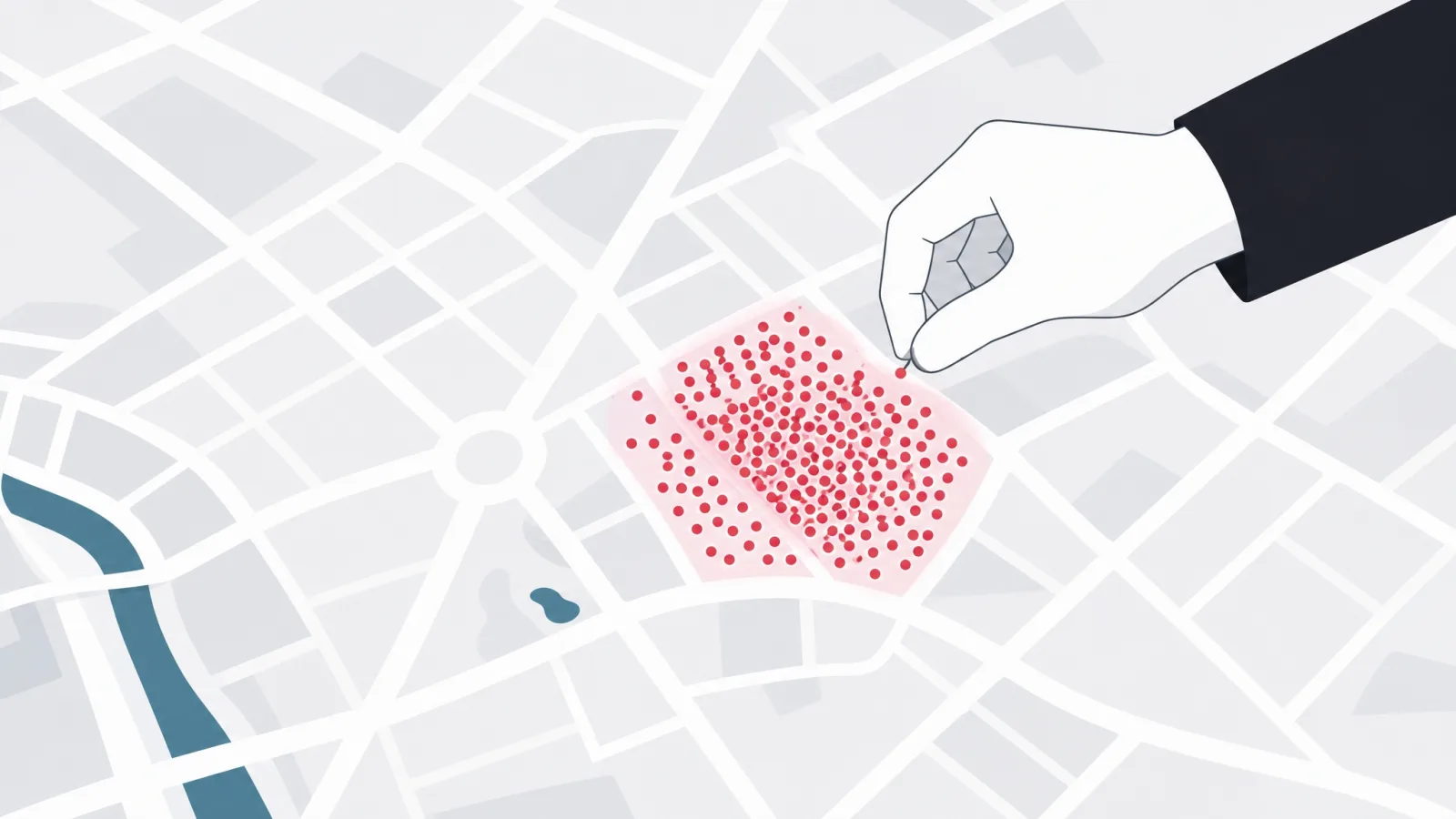
A dating app with no users is a screenshot. That sounds obvious and yet it is the failure that kills the largest number of well built products in this category, because the liquidity threshold is not national, it is local and demographic. A user judges the entire app by the candidate queue available for their stated preferences in their own city, which means a thousand users concentrated in one neighborhood are worth more than a hundred thousand scattered across a country. Every successful launch in this category, without exception, was a density strategy.
The patterns that work are all variations on concentration. Launch one city or one campus at a time and saturate it before expanding, accepting that this looks like slow growth to anyone reading top line numbers. Launch into a defined community whose members already congregate, meaning a profession, a language group, an interest scene or an alumni network, because a shared context both supplies density and gives strangers something to open a conversation with. Run supply side events and ambassador programs that specifically recruit the demographic your existing early users want to meet, which is a targeting exercise rather than a general marketing one. And gate or waitlist signups by region, which concentrates liquidity rather than diluting it and has the side effect of making the launch feel like an event.
Product mechanics can stretch thin liquidity, though not create it. Show distance honestly while defaulting the radius wider in sparse areas rather than showing an empty queue. Push hard on profile completeness during onboarding, because complete profiles both convert better and make a small pool feel substantially richer. Use event based or prompt based formats that give a small cohort a reason to be active on the same evening, which raises the effective density of a thin pool by concentrating it in time rather than in space.
What does not work, and needs stating explicitly because it is proposed in nearly every early planning discussion, is padding the queue with inactive or fabricated profiles. Besides being fraud in a number of jurisdictions and a straightforward app store violation, users detect a dead pool within a session or two: they like, nothing reciprocates, and they leave. The reputational damage from this is permanent in a way that most product mistakes are not, because the category runs on trust and word of mouth within exactly the local communities you were trying to seed.
Launch strategies that reach liquidity, and launch strategies that cannot
Do this
- One city or campus, saturated firstEvery marketing dollar lands in the same candidate pool. Expansion happens only after the first location shows healthy conversation metrics, not healthy signup metrics.
- Launch into an existing communityA profession, language group or interest scene supplies both density and conversational context. The shared context measurably improves the post match stage as well.
- Targeted supply side recruitmentRecruit specifically for the demographic your existing users are looking for, rather than for users in general. This is uncomfortable and it is what actually balances a two sided market.
- Regional waitlistsHold signups until a location has enough density to be worth opening, then open it all at once. Concentration in time is as valuable as concentration in space.
Not this
- National launch on day oneUsers scatter, every local queue reads as empty, and churn arrives before liquidity does. No marketing budget fixes this because the problem is arithmetic.
- Fabricated or dormant profilesDetected within one or two sessions, fraudulent in several jurisdictions, and permanently damaging to reputation in exactly the local communities you need.
- Optimizing signups over conversationsSignup growth can be bought and tells you nothing about whether the pool is viable. Conversations per new user in a location is the number that predicts survival.
- Expanding on investor pressureExpanding before the first location is healthy multiplies a broken unit economic rather than proving one, and it consumes the runway you would need to fix it.
The distinction throughout is whether the strategy concentrates users into a pool that feels alive to one individual with specific preferences in one place, or spreads them across pools that are each too thin to retain anyone.
Choosing where to launch first
Where can you saturate a pool rather than merely appear in it?
-
You have a strong tie to a specific community
Launch into that community nationally, ignoring geography
A shared profession, language or interest supplies density without geographic concentration and gives matches something to talk about. This is the cheapest path to liquidity available and it also produces the clearest positioning.
-
You have a local presence but no community angle
Launch one city, and treat the neighborhood as the unit
Density is judged at the distance a user will actually travel for a first meeting, which is smaller than a city. Saturate the districts where your target demographic already concentrates before widening the radius.
-
You have neither, and a general audience product
Build the community angle first, before writing the app
A general dating product with no density advantage and no distribution is competing on marketing spend against incumbents with enormous liquidity, which is the one fight in this category that cannot be won with better engineering.
The right first location is rarely the largest available market. It is the one where you can plausibly reach saturation with the budget you actually have.
Real-time chat: the build versus buy decision with a real crossover

Once two people match, the product becomes a messaging application, and messaging is deceptively expensive to build well. The visible surface is a list of conversations and a thread of bubbles. The engineering underneath is delivery guarantees, ordering, presence and typing indicators, read receipts, push notification fan out with correct handling of a device that has been offline for a week, media upload and thumbnailing, moderation hooks on every message, and history storage that stays fast as threads grow. None of that is exotic, and all of it takes months to get right.
This makes chat the clearest build versus buy decision in the whole project, and unlike most such decisions it has a calculable crossover. Managed chat backends remove essentially all of that work at launch scale, typically charging per monthly active user. Building it yourself costs engineering months up front and then scales at infrastructure cost, which is dramatically lower per user. The crossover therefore lands at a specific user count that you can compute from a vendor price sheet and a realistic estimate of your own build cost, and the answer for almost every launch is to buy.
The mistake is not buying. The mistake is buying without planning the exit, because at the volume where the vendor bill becomes your largest line item you will want to move, and by then the vendor's data model will have reached into your product in a dozen places. The defense is a boundary: define your own message and conversation types, put every interaction with the vendor behind one adapter module, and never let vendor identifiers leak into your database schema or your client code. This is the same argument, with the same structure, as the crossover discussion in our social network MVP scoping guide, and it applies identically to verification services, image moderation providers and push infrastructure: buy at launch scale, hold the boundary, and revisit at volume.
One dating specific constraint deserves attention when evaluating vendors. Your moderation obligations do not pause because a message is in transit through a third party. You need a hook that can inspect, hold or block a message before delivery, you need the message content available to your own moderation queue when a report arrives, and you need to be able to delete history in response to a legal request. Some managed chat products handle all three cleanly and some do not, and this is a far better vendor selection criterion than the feature comparison table.
Build versus buy for the messaging layer
| Dimension | Managed chat backend | Built in house |
|---|---|---|
| Time to launch | Days to weeks for a working thread | Two to four engineering months for something you would trust |
| Cost shape | Per monthly active user, rising linearly with success | Fixed engineering cost up front, then low infrastructure cost per user |
| Presence, receipts, typing | Included and already correct across poor networks | Each one a genuine distributed systems problem with real edge cases |
| Push notification fan out | Included, including devices offline for extended periods | Yours to build, and the offline device case is where most implementations fail |
| Moderation hooks | Varies materially by vendor and must be verified before selecting | Complete control, which is the strongest argument for building |
| Data residency and deletion | Constrained by the vendor, and a hard constraint in regulated markets | Yours to determine entirely |
| Exit cost | Rises with every place vendor concepts touch your product | Not applicable, which is the other strong argument for building |
The structural comparison rather than a price comparison, since vendor pricing changes and the shape of the trade does not. Compute the crossover with a current price sheet and your own realistic build estimate before deciding.
The post match stage, where the category actually loses users

Almost all of the engineering attention in a dating product goes to the stage before the match, because that is where the visible product is. The funnel says the opposite. Matches convert to opened conversations at a mediocre rate, opened conversations convert to continued conversations at a worse rate, and continued conversations convert to actual meetings at the worst rate of all. The largest single leak in the product is a stage most teams ship with no design work at all.
The mechanics of the leak are well understood and rarely addressed. A match arrives with no context beyond a photograph, so the opening message is a cold start problem for the user rather than the platform. Both parties are typically holding several simultaneous conversations, which lowers the cost of abandoning any one of them to nearly zero. And the interface treats a two day old unanswered message identically to a fresh one, so a conversation dies without anything in the product noticing or responding.
The interventions that work are product design rather than infrastructure, and they are cheap relative to their effect. Give the opening message something to be about, by surfacing shared context, prompts or a specific profile element rather than an empty text field. Make the conversation state visible, so both parties can see that a thread has gone quiet and the product can prompt gently rather than pretending everything is fine. Introduce mild asymmetry or expiry where the audience tolerates it, because an unbounded match list becomes a pile of obligations nobody works through. And design an explicit, low friction path to the actual purpose, which is arranging to meet, including safety features for that step, since a product that never gets there has not worked regardless of its engagement numbers.
Instrument this stage as carefully as the queue, because it is where the interesting variation lives. Track time to first message, reply rate on first messages, the distribution of exchange counts, and the rate at which threads reach a stated intention to meet. Then segment all of it by cohort. A product improvement that moves conversation continuation by a few points is worth more than a large improvement in match volume, and it will be invisible on a dashboard built only around the swipe.
Designing the post match stage deliberately
-
Give the first message a subjectAt match
Surface shared interests, a prompt answered by both parties, or a specific element of the profile as the opening affordance. An empty text box beside a photograph is the hardest writing task in consumer software, and users resolve it by not writing.
-
Open the channel in the match momentAt match
The match interstitial should offer sending something immediately rather than returning the user to the queue. Every navigation step between the match and the first message costs a measurable fraction of conversations.
-
Make thread state visibleFirst 48 hours
Distinguish awaiting their reply, awaiting yours, and gone quiet, for both parties. Users manage what they can see, and currently they cannot see anything.
-
Prompt once, gently, then stopDay two to three
A single well timed nudge on a stalled thread recovers a meaningful share of conversations. A second nudge is noise, and a third is a reason to disable notifications entirely.
-
Bound the match listOngoing
Expiry or a soft cap, calibrated to your audience, since an unbounded list becomes an ignored backlog. This is contentious with users and it is why the mechanic keeps reappearing across the category.
-
Design the path to meetingAfter several exchanges
An explicit, low friction affordance for arranging to meet, with the safety features that step requires, including sharing plans with a contact and a check in flow. This is the actual purpose of the product and it is usually left entirely to the users.
-
Instrument every stage by cohortFrom launch
Time to first message, first message reply rate, exchange count distribution, and the rate reaching a stated intention to meet. Segment by cohort so that improvements are distinguishable from changes in who joined.
Sequenced by where the leak occurs. Each step is modest engineering and each addresses a stage most competitors leave unattended.
Terms worth agreeing on before the metrics meeting
- Match
- A mutual like. The weakest signal in the product and the one most easily inflated by loosening filters, which is precisely why it should not be the headline metric.
- Opened conversation
- A match where at least one message was sent. The first stage where a human made an effort, and therefore the first stage that means anything.
- Continued conversation
- A thread with a reply to the opening message, and ideally with at least two exchanges from each side. The primary product health metric in this article's argument.
- Exposure
- How many times a profile has been shown in others' queues. The input to fairness balancing, and a number worth being able to display internally per profile when diagnosing complaints.
- Liquidity
- Whether a specific user, with their stated preferences, in their location, has a queue worth opening. Always measured locally and per segment, never as a platform total.
- Cohort retention
- The share of users who joined in a given week still active later. The only retention measure that means anything in a category where success removes users from the market.
These definitions get decided by whoever writes the first dashboard query, and if they are decided implicitly the team will spend a quarter arguing about numbers rather than about the product.
Monetization: pricing acceleration without breaking the free loop

The category monetizes through a freemium ladder: free core usage with paid tiers and consumables layered on top. The standard mechanics are subscription tiers offering more visibility, the ability to see who liked you and unlimited likes; consumables such as visibility boosts and priority likes; and, in some markets, advertising. On mobile, payment flows through the app stores and their revenue share, which brings all of the pricing page, receipt validation and subscription state reconciliation work that implies, and that work is consistently underestimated.
The design tension in this category is unusually sharp and worth naming plainly. The app monetizes friction, meaning paying to be seen, while the product promise is meeting people. Monetization mechanics that degrade the free experience below usefulness destroy the liquidity that the paid tiers depend on, which makes aggressive gating self defeating on a timescale of quarters rather than years. The sustainable pattern prices acceleration and information while keeping the free loop genuinely workable: a free user should be able to match and have conversations, just more slowly and with less visibility into who is interested.
Two implementation notes carry disproportionate weight. Build the entitlement system, meaning the authoritative record of who currently has which capabilities, as server side state from the first release, because client trusted entitlements are cracked quickly in any consumer app with a paid tier and retrofitting server authority afterward touches every feature. And instrument the paywall funnel with the same care as the match funnel, since pricing and packaging experiments are the highest leverage experiments a live dating product runs, and they are impossible to run without clean attribution of which surface produced a conversion.
What to price, what to keep free, and why
| Price it | Keep free | Breaks the loop if gated | |
|---|---|---|---|
| Basic queue and matchingThe core loop the product exists to provide | No | Yes | Yes |
| Messaging a mutual matchThe purpose of a match | No | Yes | Yes |
| Reporting and blockingSafety is never a paid feature | No | Yes | Yes |
| Seeing who liked youInformation, not function | Yes | No | No |
| Visibility boostsAcceleration within a fair queue | Yes | No | No |
| Unlimited likesReasonable free daily allowance, paid removal of the cap | Yes | Partial | Partial |
| Advanced filtersConvenience, though gating too much makes the free queue feel random | Yes | Partial | Partial |
| Undoing an accidental passA small consumable with genuine perceived value | Yes | No | No |
An editorial position rather than an industry survey. The organizing principle is that anything required for the product to work at all stays free, while anything that makes it work faster or with more information can be priced.
Version one scope, team, and what it honestly costs
A credible version one is: onboarding with verification, profile creation, a preference filtered queue with transparent ranking, mutual matching, matches only chat with push notifications, reporting and blocking, and an internal moderation console. That list is a real-time product with a recommendation backend and a staffed safety operation attached, which is why the honest estimate is a several month effort for a compact team rather than the eight week build the feature list suggests.
The team shape that works is two mobile engineers if you are shipping both platforms, one or two backend engineers, a designer with genuine consumer product experience, and quality assurance with real devices. Add a moderation process staffed from launch day, which is an operational cost rather than an engineering one and is the line most first models omit. The moderation console is easy to underestimate as well: it is a real internal product with queues, evidence display, decision recording and an appeals path, and building it badly costs you either in reviewer throughput or in decisions you cannot defend later.
The largest cost driver is not on the feature list at all. It is the safety operation plus the platform review process, because continuous background behavior, user generated content and dating category rules together put the app in the strictest review tier on both stores. Build in real calendar time for review cycles, and prepare the review documentation, including your moderation policy and your verification flow, as a launch deliverable rather than as a response to a rejection.
Finally, measure what the product is for rather than what is easy to count. Matches are vanity. Conversations that continue past a first exchange, meetings arranged whether surveyed or inferred, and cohort retention are the health metrics. A dating app that genuinely succeeds loses its best users to relationships, which means the durable business is a reputation that keeps new cohorts arriving, and reputation in this category rests on exactly the two things this article argued you should build first: safety, and honest liquidity.
A realistic path from nothing to a launched product
-
FoundationWeeks one to four
Onboarding, verification integration, profile model, and the moderation console skeleton. Verification is deliberately first because it constrains the data model and the review submission.
Done when A verified account can be created end to end and appears in the moderation console.
-
The core loopWeeks five to ten
Queue construction with transparent ranking including exposure balancing, like and pass, mutual match detection, and the full funnel instrumentation.
Done when Two accounts can match, and every stage of the funnel is measurable in a dashboard.
-
ConversationWeeks nine to fourteen
Chat integration behind an adapter boundary, push notifications including offline devices, media with moderation before display, and the post match design work.
Done when A match becomes a continued conversation on real devices across poor networks, with moderation hooks firing.
-
Safety and store readinessWeeks thirteen to eighteen
Reporting flows, prioritized moderation queue, scam detection rules, audit trail, written moderation policy, and the store review documentation package.
Done when Submitted and approved on both stores, with the moderation rota staffed and rehearsed on real cases.
-
Density launchWeeks seventeen onward
One location or community, supply side recruitment, and iteration on the post match funnel with the cohort dashboards built in phase two.
Done when Conversation continuation and cohort retention healthy in one pool before any expansion is considered.
Durations assume a compact dedicated team and no unusual regulatory scope. The final phase is the one most plans omit entirely, and it is the phase that determines whether the launch reaches liquidity.
Where the engineering effort actually lands
Illustrative shares of version one engineering effort based on how these builds distribute in our experience, offered to correct the common assumption that the swipe interface is the project. They are a planning model, not measured data.
Frequently asked questions
Do we need machine learning for matching in version one?
No, and attempting it first is usually counterproductive because there is no interaction data to learn from. A transparent score combining recency of activity, proximity, stated preference overlap, profile completeness and an explicit exposure balancing term produces a healthier queue than an undertrained model, and it is debuggable when a user complains. It also generates exactly the labeled outcomes, meaning likes, passes, matches and continued conversations, that a model would need later. Build the funnel instrumentation in the first release so that the data exists when you want it, and revisit ranking once you have months of it.
How much does it cost to build a dating app?
The honest answer requires splitting the question, because the app is not the expensive part. A version one with verification, a ranked queue, mutual matching, chat with push notifications, reporting and a moderation console is a several month engagement for a compact team of mobile and backend engineers, a designer and quality assurance. On top of that sits the moderation operation, which is a recurring staffing cost from launch day, and real calendar time for the strictest app store review tier. Quotes that price screens and omit the safety operation and the moderation console are commonly half the true figure, so compare exclusion lists rather than totals.
Should we build chat ourselves or use a managed service?
Buy at launch scale, and build the boundary at the same time. A managed chat backend removes two to four engineering months of delivery guarantees, presence, receipts, push fan out to offline devices and media handling, which is work you would rather spend on the parts of the product that differentiate you. Verify before selecting that the vendor lets you inspect or hold a message before delivery, expose message content to your own moderation queue on report, and delete history on legal request, because those are obligations rather than preferences. Then keep every vendor call inside one adapter module so the migration at volume is a project rather than a rewrite.
How do we get the first users?
By concentrating them, not by acquiring them broadly. Liquidity is judged locally, by whether one user with specific preferences in a specific place has a queue worth opening, so a thousand users in one neighborhood are worth more than a hundred thousand spread nationally. The patterns that work are launching one city or campus and saturating it, launching into an existing community such as a profession or language group that already congregates, recruiting specifically on the supply side for the demographic your early users want to meet, and using regional waitlists to concentrate an opening rather than dilute it. Never pad the queue with fabricated profiles: users detect it within a session or two and the reputational damage is permanent.
What safety features are actually required, not just recommended?
App store rules for user generated content require reporting, blocking and content moderation before approval, and the dating category attracts the strictest interpretation of them. In practice the required surface is profile verification, matches only messaging so there is no unsolicited inbound, image moderation before display, two tap reporting from any profile or conversation, a moderation queue with a stated response target and staffed coverage, and an audit trail of decisions. Treat the written moderation policy and a walkthrough of the verification flow as launch deliverables prepared in advance, since preparing them in response to a rejection costs a full review cycle.
How do we handle fake profiles and romance fraud?
Layer explicit rules first, because a learned classifier needs labeled fraud that a new platform does not have yet. The highest yield signals are template similarity across opening messages, early pressure to move the conversation to another service, solicitation of money or investment, geographic inconsistency between stated location and connection origin, reused profile photographs detected by perceptual hashing, burst account creation sharing a device or network fingerprint, and brand new accounts operating at the rate limit from the first minute. Route matches to human review rather than acting automatically, since false positives in this category are extremely costly to the user experience, and record every decision so the rules can be tuned against outcomes.
What metrics should we watch after launch?
Conversations that continue past a first exchange, measured per cohort, is the primary one. Match count moves in the wrong direction for the wrong reasons, since loosening filters and ranking on popularity both increase it while degrading the product. Alongside continuation, watch time to first message, first message reply rate, the distribution of exchange counts, the rate at which threads reach a stated intention to meet, and cohort retention. Also monitor exposure distribution across profiles: if visibility is concentrating in a small share of accounts, the queue is quietly emptying for the majority and the top line numbers will not show it until churn arrives.
If you are building a dating or community product and want the safety, liquidity and post match engineering taken as seriously as the swipe screen, AgileTech is an AI software development company in Hanoi with shipped consumer products behind its estimates.
Source: https://agiletech.vn/blog/how-to-create-a-dating-app/ · (c) AgileTech Vietnam. Printed from agiletech.vn.