 Nguyen Manh Thang
Chief Executive Officer, AgileTech Vietnam
Nguyen Manh Thang
Chief Executive Officer, AgileTech Vietnam
- Published
- Read time
- 13 min
- Views
- 81
Read the AI overview
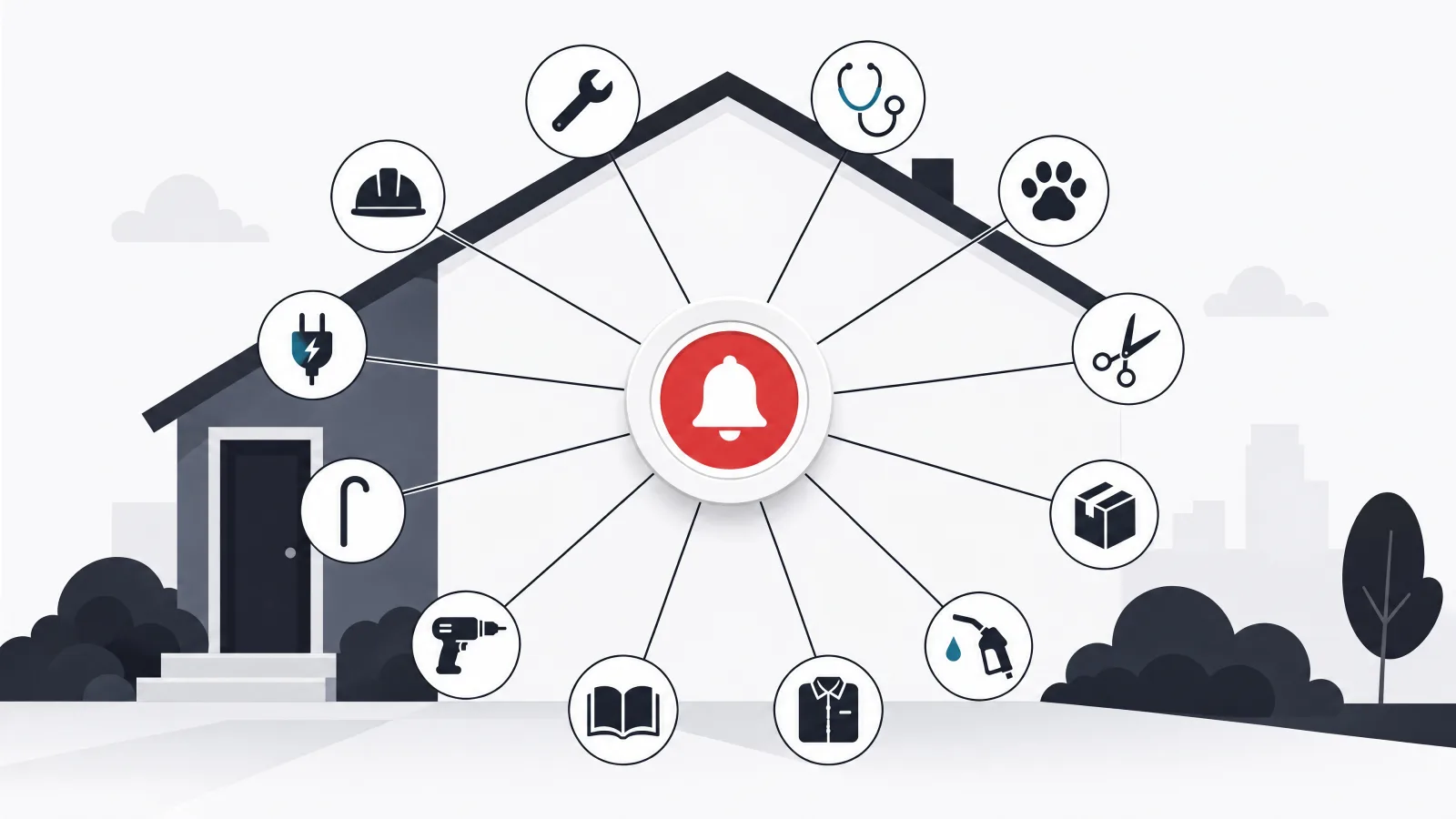
The on-demand categories with real room in 2026 are home services, healthcare at home, pet care, beauty and wellness, local logistics, fuel delivery for fleets, laundry, tutoring, equipment rental, senior care, EV charging assistance, and B2B field services. The opportunity is rarely a global Uber for X; it is a focused service category in one market where fragmented providers, poor scheduling, or weak customer communication create room for improvement. On-demand is harder than an ordinary marketplace because the platform must maintain local supply liquidity, dispatch work in minutes, and manage failures while the customer waits, which is why the practitioner rule is to validate the supply side first: customer demand is worthless when providers reject jobs, arrive late, or quit after three weeks.
An on-demand app connects a customer request with a provider who can fulfill it within a defined time window, and that single sentence contains the entire difficulty of the category. A normal marketplace helps buyers discover sellers and can tolerate a seller who responds tomorrow. An on-demand platform coordinates time-sensitive fulfillment: availability, location, response time, and completion matter as much as selection and price, and the customer is watching a progress screen while every one of those variables misbehaves. That is why the category has produced both spectacular winners and a long graveyard of Uber for X clones that copied the interface without the supply network.
This guide covers twelve service categories that still have genuine room in 2026, and treats each one honestly: the demand signal that makes it real, the supply-side challenge that makes it hard, and the take-rate reality that decides whether a platform fee can survive providers who would rather keep repeat customers for themselves. It then covers what every on-demand product needs architecturally, why most on-demand startups fail, and what a focused MVP actually takes to build, because the pattern across all twelve categories is the same: the app is the visible fraction of an operations business.
The framing to hold while reading: the opportunity is rarely global. It is a focused service category in one market, often one city, where fragmented providers, poor scheduling, or weak communication create room a disciplined operator can take. Teams that have studied how the giants actually run, the way we broke down in how to build an app like Grab, consistently find that the moat was never the app; it was supply liquidity, earned zone by zone. Every section below applies that lesson to a category where the incumbents have not yet earned it.
Key takeaways
- On-demand differs from a marketplace in one dimension: time. A marketplace tolerates delayed seller responses; an on-demand customer abandons the request if no provider accepts within minutes, which makes supply density and dispatch the core product.
- Validate the supply side first. Provider earnings after expenses, acceptance rates, and arrival reliability decide whether the platform works; registration counts and app downloads decide nothing.
- Every category on this list has a take-rate reality: providers resist high commissions once they can acquire repeat customers directly, so the platform must earn its fee continuously through scheduling, payments, insurance, and guaranteed replacement, not just the first match.
- The strongest models in most categories are scheduled or recurring rather than instant: same-day pet care, neighborhood laundry windows, recurring senior care plans with urgent backup. Immediacy is expensive; sell it only where downtime justifies it.
- The architecture is common across all twelve: request management, provider onboarding, availability, dispatch, tracking, pricing, payments, messaging, ratings, and an operations console, built on a rigorously modeled job state machine.
- Most on-demand startups fail on supply churn, low local density, or unit economics that turn positive commissions into negative contribution after support and failed jobs. All three are measurable in a one-zone pilot before serious capital is spent.
What makes an on-demand app different from a marketplace?
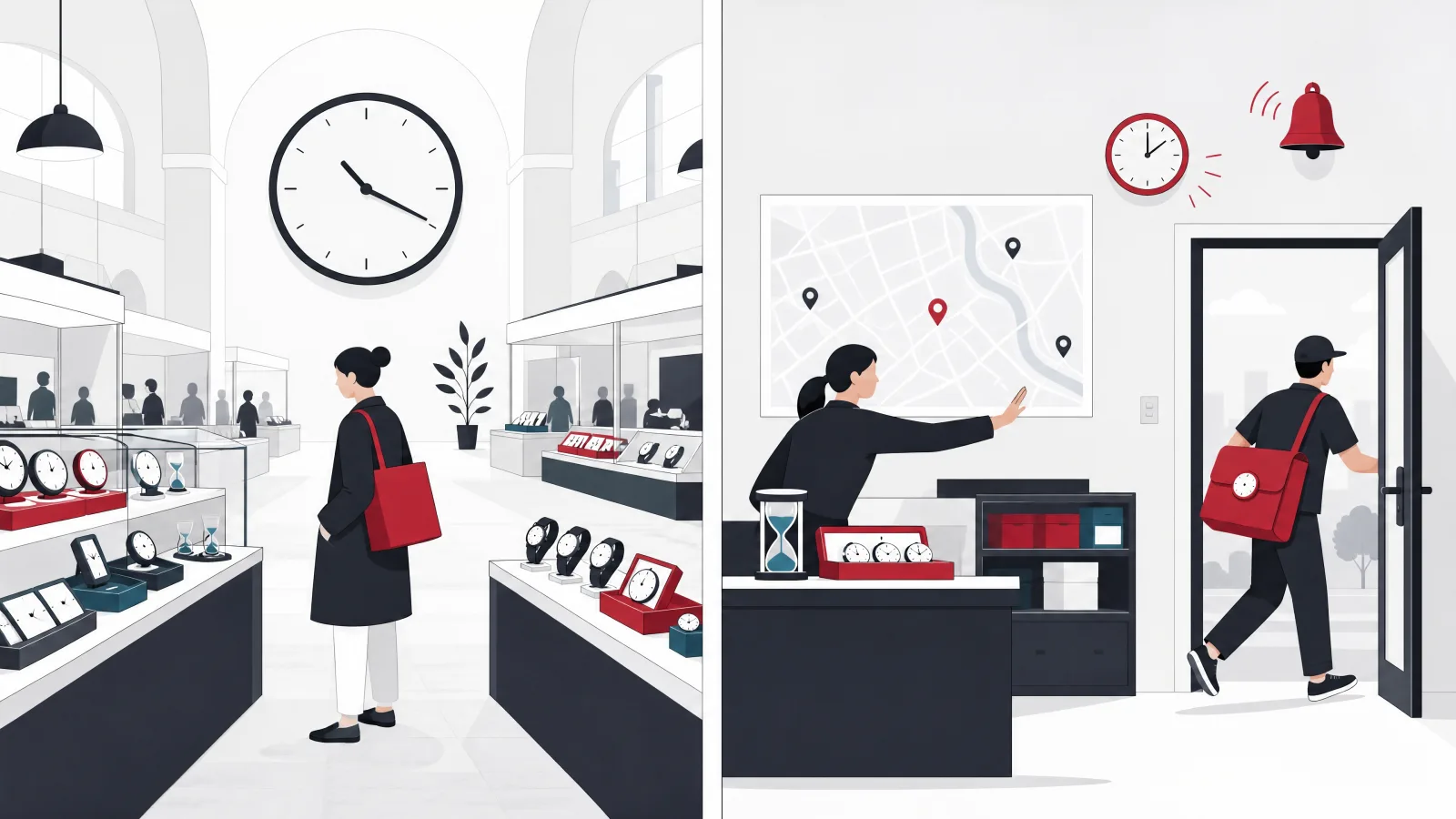
On-demand platforms coordinate time-sensitive fulfillment rather than merely helping buyers discover sellers. The differences look small on a feature list and enormous in operations. A marketplace matches intent; an on-demand platform must solve local supply density, provider availability, dispatch, travel time, dynamic pricing, payment, service verification, cancellations, safety, support, provider quality, and refunds, all inside a window measured in minutes. Each of those is a system, and each system has failure modes that occur while a customer is actively waiting and watching.
The economic difference follows from the time constraint. A marketplace can serve a national audience with thin coverage everywhere, because a buyer who waits a day for a response never notices the thinness. An on-demand platform with the same national spread fails in every city simultaneously: the request goes out, no provider is within range and available, the customer abandons, and the provider who logs on an hour later finds no work and churns. Supply and demand must be dense in the same place at the same time, which is why on-demand businesses are built zone by zone and why a launch map with twenty cities is usually a list of twenty failures.
The practitioner rule that orders everything else: validate the supply side first. Founders instinctively test customer demand because customers are easier to reach, but demand has limited value when providers reject jobs, arrive late, or leave the platform after a few weeks. Before any build, the questions that matter are: how many qualified providers exist in the launch zone, what do they earn after expenses today, what would make this platform their preferred source of work, and what stops them from taking the customer relationship off-platform after the first job. The take-rate sections below exist because that last question has a different answer in every category.
Home services, healthcare at home, and pet care
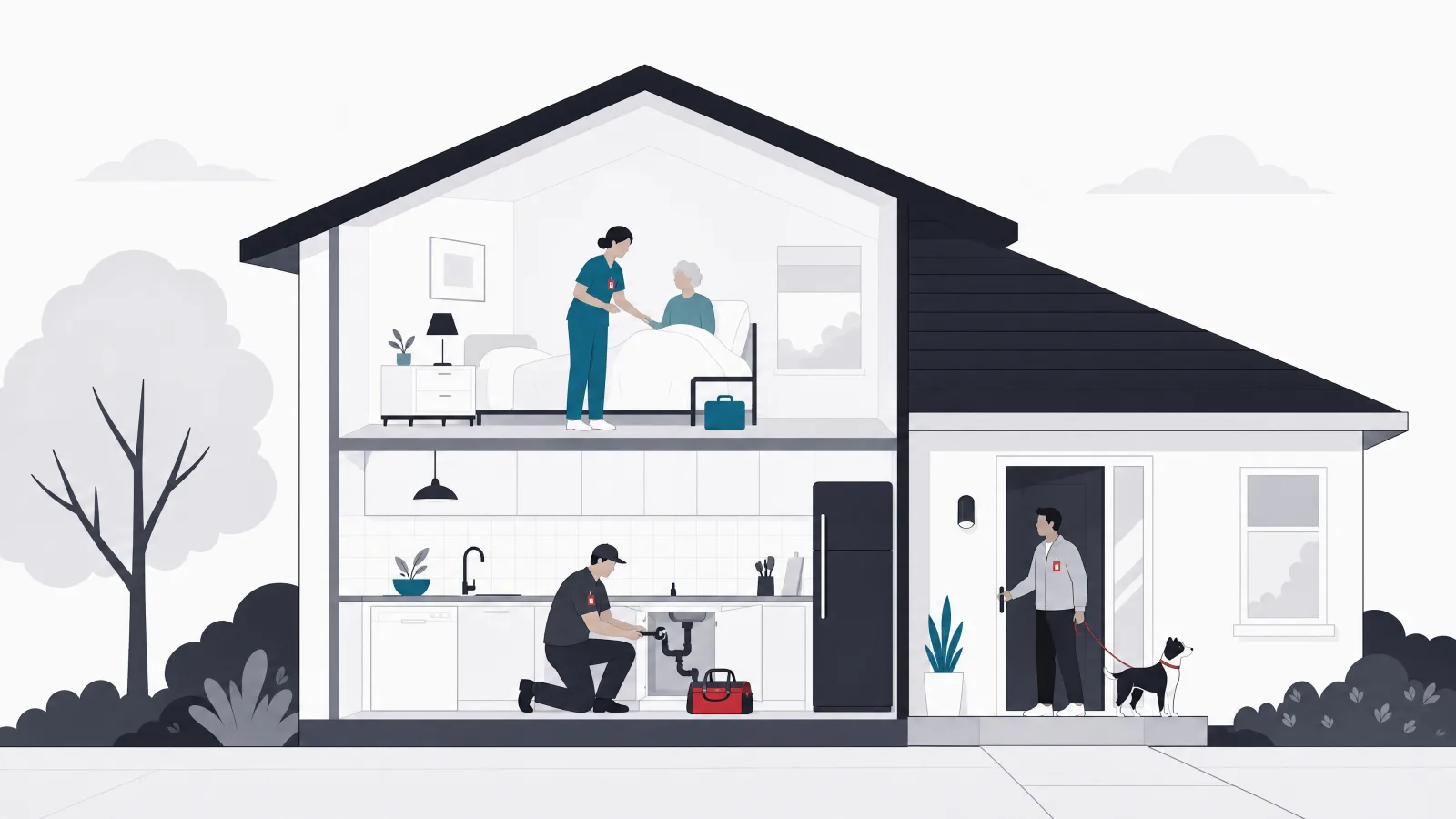
Home services, plumbing, electrical work, cleaning, appliance repair, handyman tasks, remain the canonical on-demand category because demand is genuinely fragmented: customers struggle to find an available, trustworthy provider for urgent or recurring household work, and local contractors respond inconsistently. The supply-side challenge is variability. A cleaning request can be standardized into a bookable product; an electrical fault requires diagnosis before price and duration are known, which breaks instant pricing and forces a quote workflow. The take-rate reality is that providers resist high commissions once they can acquire repeat customers directly, so the platform needs subscriptions, lead fees, payment services, or provider software alongside transaction commissions. A focused launch covers one standardized service category in one operating area, and earns the right to add diagnostic trades later.
Healthcare at home, authorized nursing visits, sample collection, rehabilitation support, carries the strongest demand signal on this list: mobility constraints, post-treatment needs, chronic care, and the plain convenience of receiving appropriate care at home. It is also the least forgiving. The supply-side challenge is credentialing, clinical governance, scheduling, and continuity, because the closest available provider is not automatically the correct provider for this patient. The take-rate is constrained by reimbursement, provider compensation, travel time, and regulation, which usually pushes the model toward contracts with clinics, insurers, or employers rather than consumer transaction fees. The non-negotiable: this product must not treat clinical services like food delivery. Safety, documentation, escalation, and provider qualification are core system requirements, and the platform inherits obligations from healthcare software regulation the moment a licensed professional delivers care through it.
Pet care, dog walking, sitting, grooming, transport, short-notice visits, looks consumer-light next to healthcare but runs on the same trust mechanics. Customers hand over keys, home access, and an animal they love; the supply-side challenge is trust, handling experience, and schedule reliability, not matching. The take-rate reality improves sharply with recurring bookings, because one-time emergency requests invite off-platform migration after the first successful meeting, while insurance, payment protection, scheduling, and replacement guarantees give the platform a continuing reason to exist. The strongest initial model is scheduled same-day service rather than immediate dispatch: it keeps the convenience promise while giving supply time to be arranged reliably.
Beauty and wellness, last-mile logistics, and fuel delivery
Mobile beauty and wellness, hair styling, nail care, makeup, massage where permitted, event preparation, sells convenience and group bookings to customers who prefer service at home or work. The supply-side challenge is matching on more than proximity: skills, equipment, travel radius, and appointment duration all constrain who can serve which booking, and portfolios and reviews matter more than distance. The take-rate reality hinges on average booking value, because travel time makes low-price services uneconomic unless providers can batch appointments geographically; event and group bookings are the margin engine. Sanitation, cancellation, and safety procedures need to be defined before scale, not after the first incident.
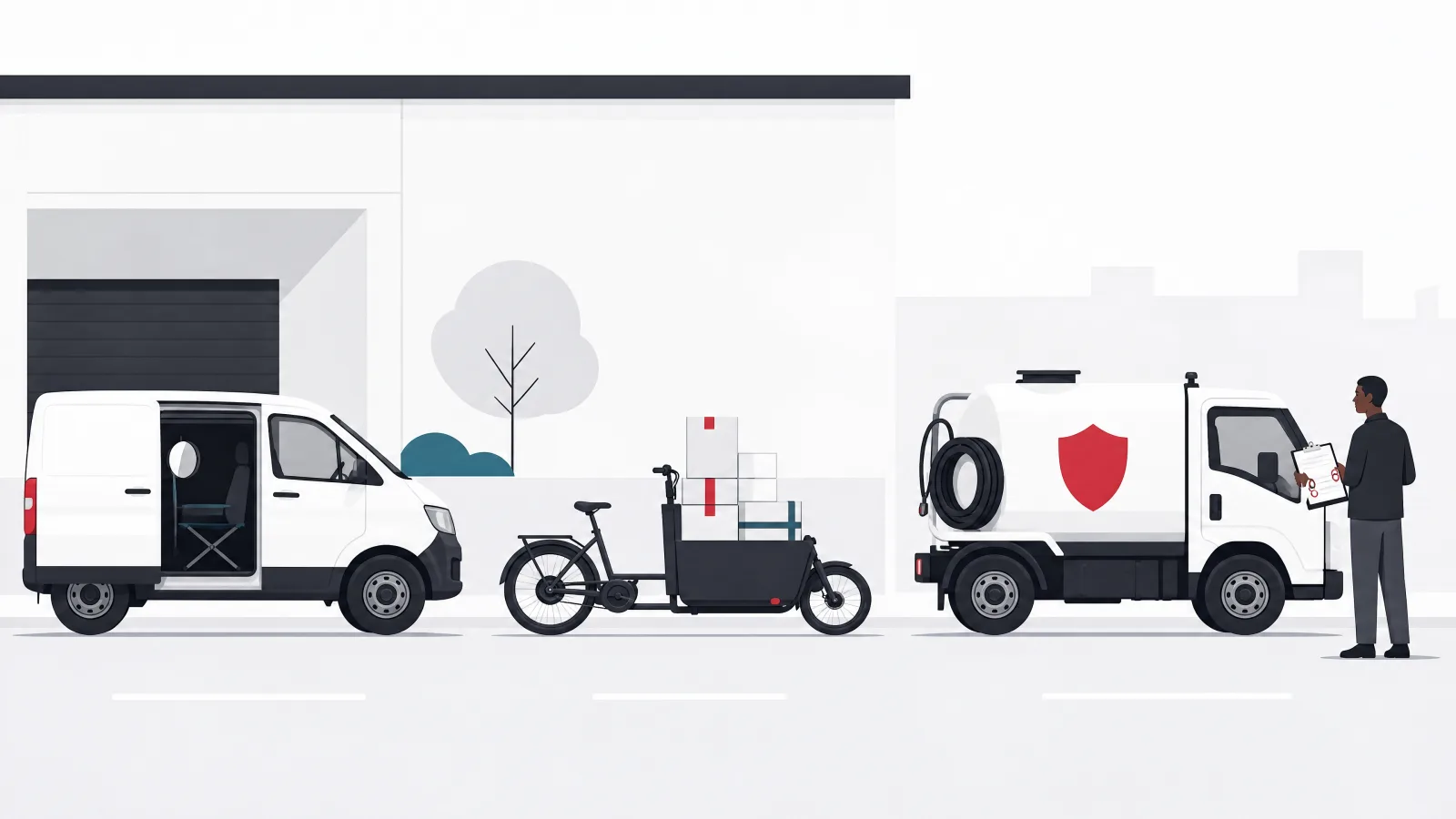
On-demand logistics, same-day document, parcel, retail, and business delivery, remains relevant wherever merchants lack their own fleet or need overflow capacity, and customers now expect accurate status as a baseline. The supply-side challenge is density, vehicle fit, route efficiency, and proof of delivery: one long trip can consume the margin from several short jobs, which makes the unit of analysis the route, not the order. The take-rate follows route economics, through a fixed service fee, a spread between customer price and courier payment, or merchant subscriptions. The classic failure mode is expanding the service map before local volume supports it, the exact density trap we detailed in how to build a logistics app, and the discipline is the same: expansion follows repeatable fulfillment, never a growth target drawn on a map.
Fuel delivery is the category where the app matters least and the operating license matters most. It can serve approved fleets, equipment sites, generators, and marinas where law and safety rules permit, and the demand signal is strongest where vehicles or equipment cannot easily leave a site and scheduled fueling reduces labor or downtime. The supply side is hazardous-material handling, approved vehicles, trained operators, insurance, routing, environmental controls, and permits, a list that must be confirmed feasible before any customer application is designed. The take-rate reality is blunt: software commission alone rarely supports the operation, and workable models involve delivery fees, minimum orders, fleet contracts, or direct fuel margin. Scheduled B2B fleet fueling beats consumer roadside rescue in nearly every jurisdiction that permits either.
Laundry, tutoring, and equipment rental
On-demand laundry connects customers with pickup, cleaning, tracking, and return delivery, either aggregating local cleaners or operating a processing facility. Demand is recurring and urban-dense, which is the good news. The supply-side challenge is everything between the two doorbells: item tracking, lost garments, stain expectations, turnaround time, and coordination between couriers and processing sites, where a single lost shirt costs more goodwill than fifty clean orders earn. The take-rate depends on basket size and route density, and frequent small pickups are uneconomic without minimum charges, subscriptions, or scheduled neighborhood windows. The strongest model is recurring service on a weekly rhythm, which converts the density problem into a routing schedule.
On-demand tutoring connects students with qualified tutors for remote or local sessions, with demand that spikes before examinations and recurs through a course. The supply-side challenge is verification in four dimensions at once: subject competence, teaching ability, availability, and safeguarding, plus matching that respects all four. The take-rate is notoriously vulnerable to off-platform migration after a successful first lesson, so the platform must earn its fee continuously through scheduling, payments, learning records, materials, and replacement guarantees. The structural insight is that immediacy and value run in opposite directions here: instant matching works for short online questions, while high-value tutoring is a scheduled continuity business, and a product that picks one deliberately outperforms one that promises both.
Equipment rental, tools, cameras, event equipment, outdoor gear, business machinery, improves access to assets that sit unused most of their lives, and short-term need against high ownership cost is a demand signal as old as commerce. The supply-side challenge is the asset lifecycle: availability accuracy, inspection, deposits, damage disputes, maintenance, and delivery, each of which becomes a support ticket when handled loosely. The take-rate can support real commissions when rental values are meaningful, but insurance, payment risk, and logistics eat margin quickly at the low end. Begin with one equipment category whose condition can be inspected against clear standards, because damage disputes are where rental platforms go to die, and inspectability is the variable the founder controls.
Senior care, EV charging assistance, and B2B field services
On-demand senior care coordinates companionship, errands, transportation, meal support, and nonclinical assistance, with clinical services deliberately separated and governed on their own track. The demand comes from aging populations and geographically dispersed families who need flexible support they can trust. The supply-side challenge is trust at depth: background screening, continuity, safeguarding, and matching caregivers to individual needs, because families value the same caregiver returning, and caregivers need predictable schedules. That is why purely short-notice matching fits this category poorly, and a hybrid model, recurring care plans with urgent backup coverage, is more sustainable than immediate anonymous dispatch. The take-rate follows the model: subscription-like care plans carry the economics, and urgent coverage is the premium feature on top.
EV charging assistance, mobile charging support, charger troubleshooting, fleet charging coordination, emergency help, is the newest category on this list and the one where capital costs dominate. Demand appears in fleets, events, parking operations, and stranded-vehicle situations. The supply side is equipment cost, energy capacity, charging speed, vehicle compatibility, travel distance, and operator utilization, which together mean the app is a scheduling layer over an asset-utilization business. The take-rate for low-frequency consumer emergencies is unattractive; fleet contracts, site services, memberships, and scheduled support produce predictable revenue instead. The honest summary: whether this service works is decided by the utilization math of the charging equipment, and the software exists to raise that utilization.
B2B field services, equipment repair, inspections, installation, calibration, refrigeration support, specialized facility maintenance, may be the strongest risk-adjusted category on the list, because the demand signal is expensive downtime and the buyer is a business that measures it. The supply-side challenge is skill matching with hard constraints: the technician must hold the correct certification, carry the right tools and parts, have site access permission, and know the equipment class. The take-rate can exceed consumer categories precisely because downtime costs so much, through transaction fees, service contracts, dispatch subscriptions, or software fees. The structural choice that decides the business: the largest opportunity is usually controlled dispatch across an approved provider network, not an open marketplace, because approved networks can carry service-level commitments that open marketplaces cannot.
The twelve categories at a glance
| Demand strength | Supply difficulty | Recommended model | |
|---|---|---|---|
| Home services | High | Medium | One standardized trade, one zone |
| Healthcare at home | High | Very high | Provider and insurer contracts |
| Pet care | Medium | Medium | Scheduled same-day, recurring |
| Beauty and wellness | Medium | Medium | Batched bookings, events |
| Last-mile logistics | High | High | Merchant clusters, route economics |
| Fuel delivery | Medium | Very high | Scheduled B2B fleet fueling |
| Laundry | Medium | Medium | Recurring neighborhood windows |
| Tutoring | Medium | Medium | Scheduled continuity, records |
| Equipment rental | Medium | High | One inspectable category |
| Senior care | High | High | Care plans plus urgent backup |
| EV charging assistance | Emerging | Very high | Fleet and site contracts |
| B2B field services | High | High | Controlled dispatch network |
Demand strength and supply difficulty are judgments, not measurements; the recommended model column is the operating shape each category rewards.
What architecture does every on-demand app need?
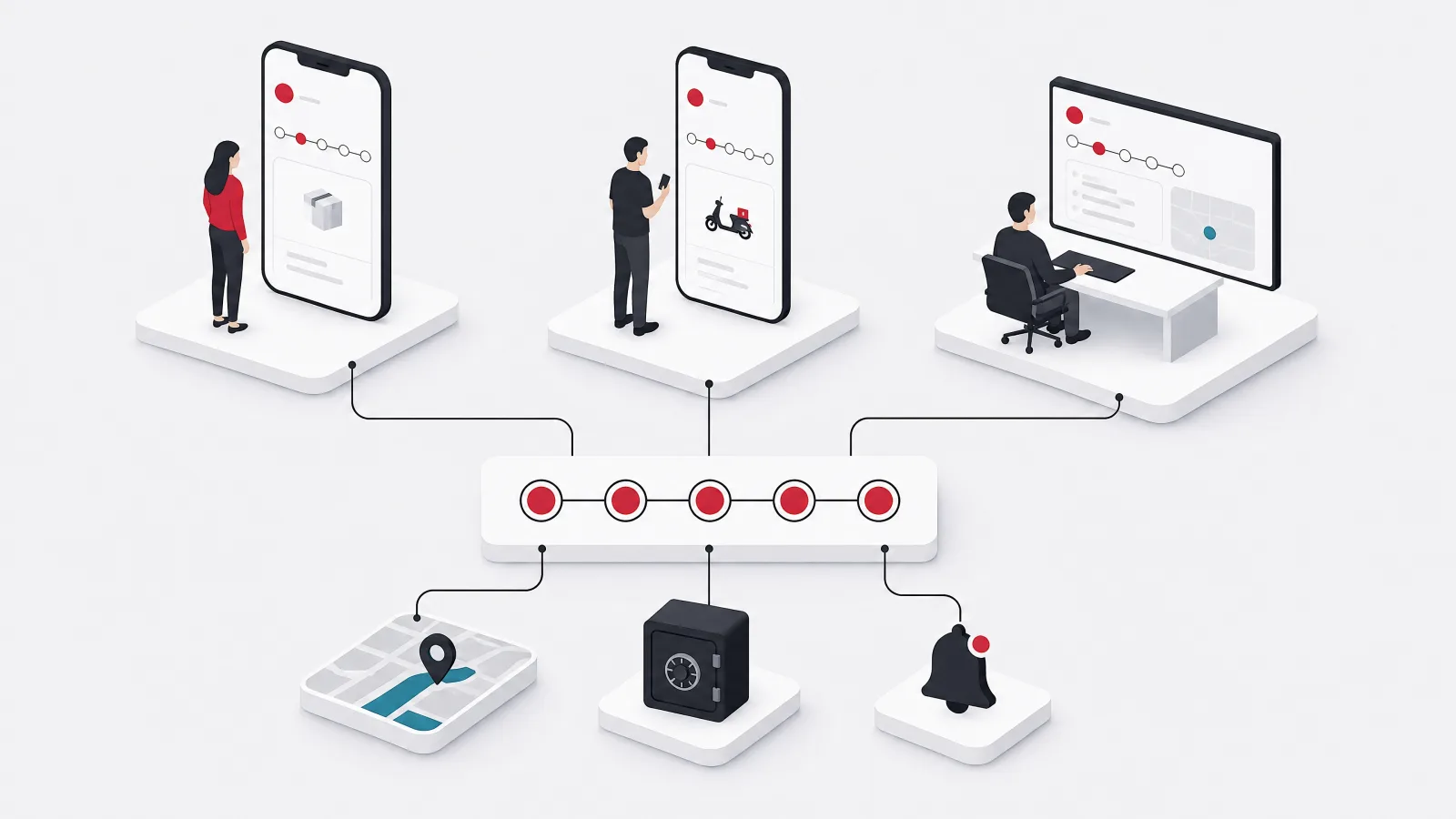
Every on-demand platform needs the same capability set regardless of category: customer request management, provider onboarding and verification, availability, dispatch and matching, location tracking, pricing, payments and payouts, messaging, ratings, notifications, an admin operations console, and analytics. The implementation varies with fulfillment speed, immediate, same day, or scheduled, but the capability list does not, and each item on it has a well-known failure mode: vague requests produce bad matches, providers forget to update availability, the nearest provider lacks the required skill, quotes ignore travel variation, refunds fail to reconcile, ratings punish providers for platform failures, and support staff end up editing the database directly because the admin console cannot do what the incident needs.
Two architectural decisions matter more than the rest. First, the job state model is the foundation of the entire system: every request needs controlled state transitions with timestamps, participants, price changes, and exception reasons, because operations, support, payouts, and analytics all read from that one history. A platform that models job states rigorously can debug any incident; one that stores a status string cannot. Second, a modular monolith is usually the right backend shape for an MVP. Premature microservices add deployment and debugging complexity before the team understands its own operational boundaries, and the service boundaries that eventually matter, dispatch, payments, tracking, only become visible under real load. The architecture diagram under this section shows the shape that serves a one-zone pilot and survives into scale.
The build implication is that on-demand platforms are integration-heavy from day one: maps and routing, payment splitting and payouts, identity verification, push notifications, and often category-specific systems such as clinical records or telematics. This is mobile app development where the mobile apps are the thinnest layer, and the backend, the state machine, and the operations tooling carry the product. Teams that budget by counting screens miss this by a factor of two.
Why do most on-demand startups fail?
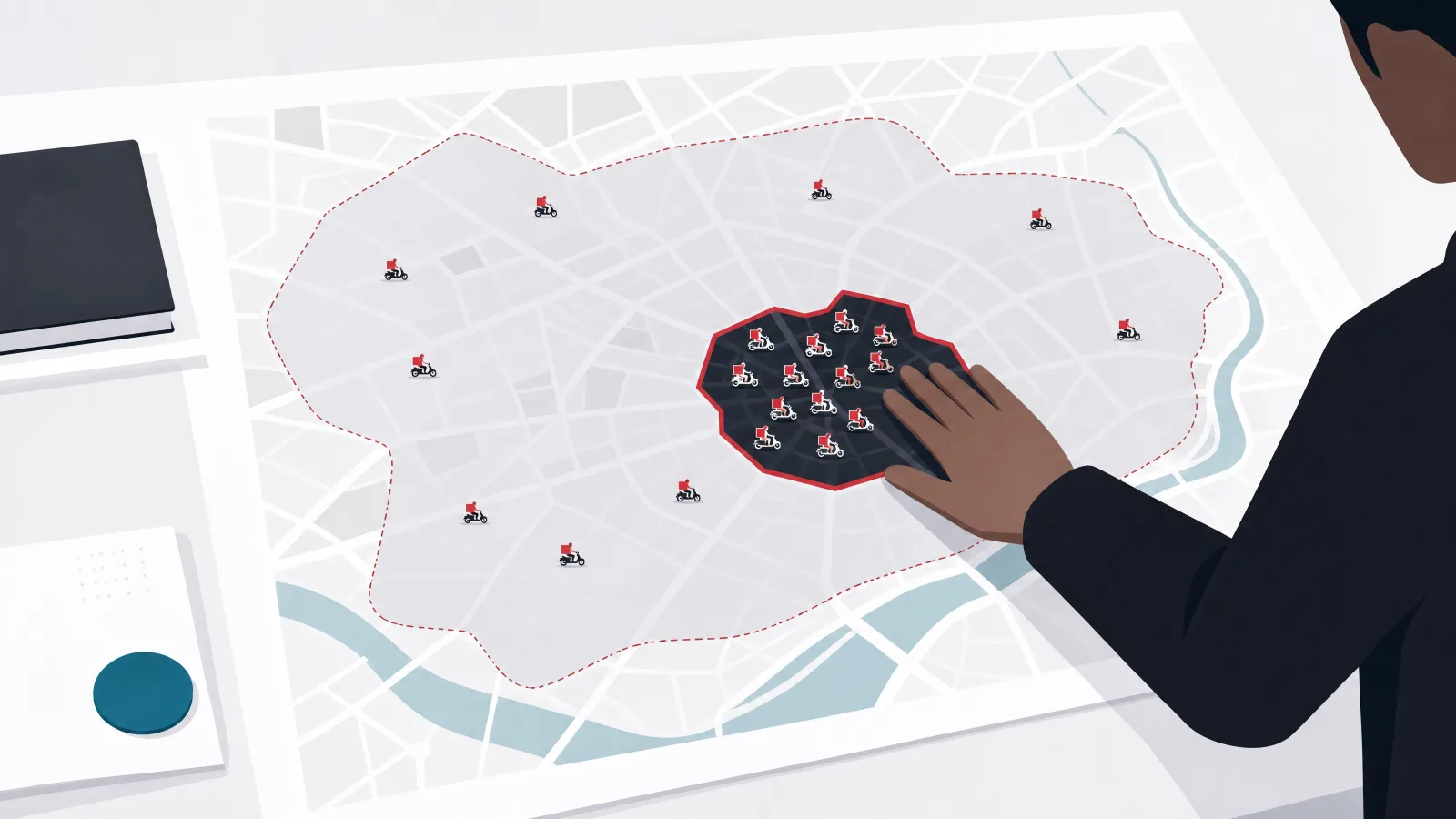
Most on-demand startups fail because supply churn, low density, and weak unit economics prevent reliable fulfillment, and customer acquisition spending hides these problems just long enough to make them fatal. Supply churn comes first: providers leave when earnings are unpredictable, travel time is unpaid, jobs are poorly matched, or support treats them as the guilty party by default. High registration numbers prove nothing; the metrics that matter are active providers by zone, acceptance rate, arrival reliability, provider earnings after expenses, repeat participation, and time without paid work. A platform that cannot answer what its median provider earned last week, net of fuel, is not measuring its own supply.
Density failure is subtler because national numbers can look healthy while every local zone starves. On-demand services need supply and demand in the same place and time window, so launch zones must be treated as operational units with their own liquidity metrics, and expansion must follow repeatable fulfillment rather than a map-based growth target. Unit economics failure is the quietest killer: for each completed job, count customer revenue against provider payment, payment fees, discounts, support cost, refunds, insurance, verification, variable infrastructure, and amortized acquisition. A positive platform commission routinely becomes a negative contribution margin after support and failed jobs, and the platform discovers this only if it does the arithmetic per job rather than per month.
There is a fourth failure mode that deserves honesty rather than dread: too much operational variation. If every job requires manual pricing, provider phone calls, and customer negotiation, the company is a service agency wearing a software interface. That is not automatically a bad business, agencies can be excellent businesses, but it must price for human operations instead of describing every process as automated, and its investors must underwrite an agency, not a platform. The decision tree under this section walks the diagnosis: which failure mode a struggling on-demand product actually has, and what each one implies.
The one-zone pilot scorecard
- Active providers per zone per shiftNot registrations. Providers who accepted at least one job this week, mapped against the demand curve by hour.
- Acceptance rate and time-to-acceptThe customer-facing liquidity number. Below roughly 80 percent acceptance inside the promised window, abandonment compounds.
- Arrival reliabilityPromised window versus actual arrival. This is the retention driver customers actually remember.
- Provider earnings after expensesNet of fuel, travel time, and idle gaps. If this loses to the provider's next-best alternative, churn is arithmetic.
- Contribution margin per completed jobRevenue minus provider payment, fees, discounts, support, refunds, insurance, and verification. Per job, not per month.
- Manual interventions per hundred jobsEvery operations touch, logged with a reason. This is the automation backlog and the honest scalability test.
- Repeat rate on both sidesCustomers who book again and providers who return next week. On-demand economics only work on repetition.
Every metric here is measurable in a single launch zone within eight weeks. Together they answer whether the model deserves capital.
What does it take to build an on-demand app?
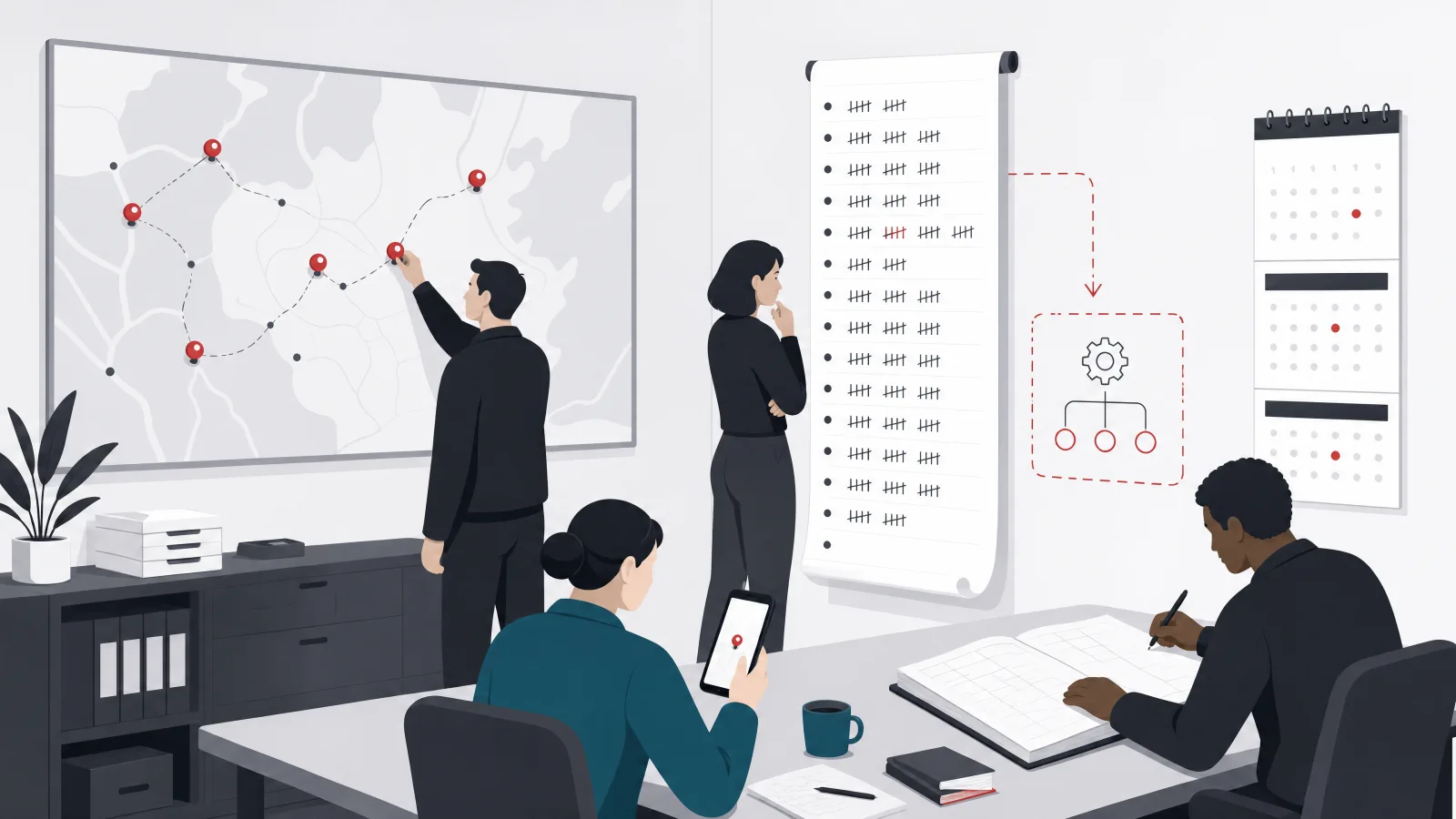
A focused on-demand MVP includes customer booking, provider onboarding, availability, basic dispatch, payments, notifications, ratings, and an operations console, launched in one service category and a narrow geographic area. A custom build commonly costs about 50,000 to 120,000 US dollars depending on mapping, real-time tracking, payment splitting, identity verification, and whether providers get their own application; regulated categories, healthcare, fuel, senior care, and anything touching financial workflows, exceed that range on compliance alone. A practical delivery timeline is four to seven months, followed by a controlled operational pilot in the launch zone, and the pilot is part of the build, not a phase after it.
The core team is small but deliberately cross-functional: a product manager, an operations lead, a designer, two to five engineers, a QA specialist, DevOps support, and an industry or compliance advisor for regulated categories. The operations lead is the role founders most often omit and most need, because the early platform runs on manual dispatch, and that is by design: manual dispatch supports the pilot while every intervention is recorded, and the log of interventions becomes the automation roadmap. Teams that automate matching before understanding their exceptions build sophisticated dispatchers for jobs that fail in ways the dispatcher has never seen.
The first success metric should be reliably completed and economically understood jobs, not downloads, and every earlier section converges on that sentence. The categories differ, the regulations differ, the take-rates differ, but the discipline is identical: model the job states, measure the zone, record the interventions, and let completed-job economics decide when to scale. Founders who arrive with that discipline and a category from this list have a business plan; the app is the part that can simply be built.
From category choice to a scalable operation
-
Validate the supply side in one zone
Count qualified providers, learn their current earnings after expenses, and identify what would make this platform their preferred source of work.
-
Standardize one bookable service
Pick the offering that can be priced and scheduled without diagnosis. Quote-first trades and regulated services come later, if ever.
-
Build the focused MVP
Customer booking, provider onboarding, availability, basic dispatch, payments, notifications, ratings, and an operations console. Four to seven months, roughly 50,000 to 120,000 dollars.
-
Run the pilot with manual dispatch
The operations lead dispatches by hand while every intervention is logged. The log is the automation roadmap, not a temporary embarrassment.
-
Scale on completed-job economics
Expand the zone or the category only when contribution margin per job is positive and fulfillment repeats reliably without heroics.
The sequence the whole article argues for. Each step produces the evidence the next one spends.
Frequently asked questions
What are the best on-demand app ideas in 2026?
The categories with real room are home services, healthcare at home, pet care, beauty and wellness, local logistics, fleet fuel delivery, laundry, tutoring, equipment rental, senior care, EV charging assistance, and B2B field services. The best opportunity for a specific founder depends on local supply conditions, regulation, and the founder's access to providers, because on-demand businesses are won on the supply side.
What is an on-demand service app?
An on-demand service app lets a customer request a service that a provider fulfills within a defined time window, immediate, same day, or scheduled. The platform handles matching and dispatch, scheduling, payment, status tracking, and support. It differs from an ordinary marketplace in the time constraint: fulfillment must happen while the customer waits, which makes supply density and dispatch the core product.
Are Uber for X ideas still profitable?
They can be, but only where local density, provider retention, pricing, and support economics all work, and those are earned zone by zone rather than copied. Reproducing the interface of a large marketplace does not reproduce its supply network, which was built with years of operational spending. The profitable versions in 2026 are focused: one service category, one market, often scheduled rather than instant.
How much does it cost to build an on-demand app?
A focused custom MVP commonly costs about 50,000 to 120,000 US dollars, covering customer booking, provider onboarding, dispatch, payments, notifications, ratings, and an operations console. Costs rise with multiple applications, real-time tracking, payment splitting, identity verification, and advanced matching, and regulated categories such as healthcare at home or fuel delivery exceed the range on compliance work alone.
What features does an on-demand app need?
The core set is customer requests, provider onboarding and verification, availability, dispatch and matching, location tracking, pricing, payments and payouts, messaging, notifications, ratings, and an admin operations console. The underrated requirement is exception handling built on a rigorous job state model, because cancellations, no-shows, disputes, and refunds are where on-demand platforms actually succeed or fail.
Why do on-demand startups fail?
The common causes are supply churn, providers leaving over unpredictable earnings and unpaid travel time, low local density that leaves requests unaccepted, and unit economics where a positive commission becomes a negative contribution after support, refunds, and failed jobs. These are operational and economic failures rather than technical ones, and all three are measurable in a one-zone pilot before serious capital is committed.
When the category is chosen and the zone is mapped, AgileTech is an AI native software development company in Vietnam that builds the customer, provider, and operations stack on-demand platforms run on.
Source: https://agiletech.vn/blog/on-demand-app-ideas/ · (c) AgileTech Vietnam. Printed from agiletech.vn.