 Nguyen Manh Thang
Chief Executive Officer, AgileTech Vietnam
Nguyen Manh Thang
Chief Executive Officer, AgileTech Vietnam
- Published
- Read time
- 13 min
- Views
- 95

Read the AI overview
The best app ideas for startups in 2026 solve narrow, expensive problems for reachable users: narrow AI workflow tools, vertical B2B software for industries still run on spreadsheets, care coordination products, logistics exception management, creator business operations, and supplier evidence platforms. The idea itself is only a starting hypothesis. Before committing to development, validate four things in order: that the problem is urgent enough that people already spend time or money on it, that a credible distribution channel reaches the first hundred users, that the economics survive support and operations costs, and that a buyer will commit money, data, or staff time rather than praise. Most app failures are demand failures, not engineering failures.
Lists of startup app ideas usually fail their readers in a specific way: they name a category, gesture at a market size, and stop exactly where the real questions begin. Who pays, how the first hundred users are reached, what the hardest problem is, and what evidence should exist before anyone writes code. This guide covers fifteen concepts across six categories for 2026, and for each one it names the revenue model and the hardest problem, because an idea without those two attachments is a headline rather than a plan.
The second half of the guide matters more than the list. Ideas are abundant and validation is scarce: most app failures trace to demand, distribution, or unit economics rather than to engineering, which means the cheapest point to prevent failure is before development starts. The validation playbook here, problem interviews, a landing page with a costly next action, a concierge MVP, and a direct request for commitment, is the same sequence we recommend to founders who arrive with a concept and a budget and want to know whether to spend it.
Read the list with your own access in mind rather than hunting for the objectively best idea, because there is no such thing. The best idea for a specific founding team is the one where the team has credible access to users, domain knowledge that shortens the learning curve, and a way to test payment quickly. That lens will disqualify most of the fifteen for you, which is the list working as intended, and the mobile app development budget survives to fund the one that remains.
Key takeaways
- Most app ideas fail on customer acquisition, retention, or unit economics rather than on technical execution. A functional application cannot create demand that does not exist, so identify the distribution advantage before finalizing the feature list.
- The strongest AI-enabled concepts put AI inside a controlled workflow with domain data, human review, and a measurable business outcome. A general chatbot interface is not a product and not a moat.
- Vertical B2B remains the most reliable pattern: narrow industries still coordinate expensive work through spreadsheets and messaging, and understanding one workflow deeply beats a broad horizontal platform.
- Every one of the fifteen concepts has a named hardest problem, from clinical safety to reverse logistics to local order density. A hard problem is a filter for competitors when the team has unusual expertise, and a graveyard when it does not.
- Validation is behavioral, not verbal: problem interviews about specific past events, a landing page whose next action costs the visitor real effort, a concierge MVP delivered manually, and a request for payment or material commitment.
- A three-to-six-week discovery phase is cheaper than building the wrong workflow. Its most valuable output is the list of what not to build; if every requested feature survives into the MVP, prioritization has not happened.
Why do most app ideas fail?

Most app ideas fail because customer acquisition, retention, or unit economics do not work. Technical execution matters, but it is rarely the binding constraint: the app stores are full of well-built products that nobody needed urgently enough to adopt. The recurring failure patterns are recognizable before a line of code exists: solving an inconvenience rather than an urgent problem, targeting an audience that is expensive to reach, depending on users changing several established habits at once, entering a marketplace without a supply acquisition plan, underestimating support and operational costs, and assuming AI output is automatically valuable.
Two patterns deserve special attention because they are the most common in 2026. The first is building before speaking with potential buyers, which converts every market assumption into a fixed cost. The second is measuring downloads instead of retention, which lets a product feel successful while its economics quietly fail: an install is a marketing event, while a third week of active use is evidence of value. A founder should be able to explain who experiences the problem, how they handle it now, what the current process costs, and why the new product is materially better, in four sentences, before the feature list exists.
The practitioner rule that filters hardest: identify the distribution advantage before finalizing the product. If the team cannot name how it will reach the first hundred relevant users without broad paid advertising, the market is too vague, and no amount of product quality will compensate. Every concept below is annotated with this lens applied.
The AI workflow ideas: compliance evidence, proposal risk, field knowledge
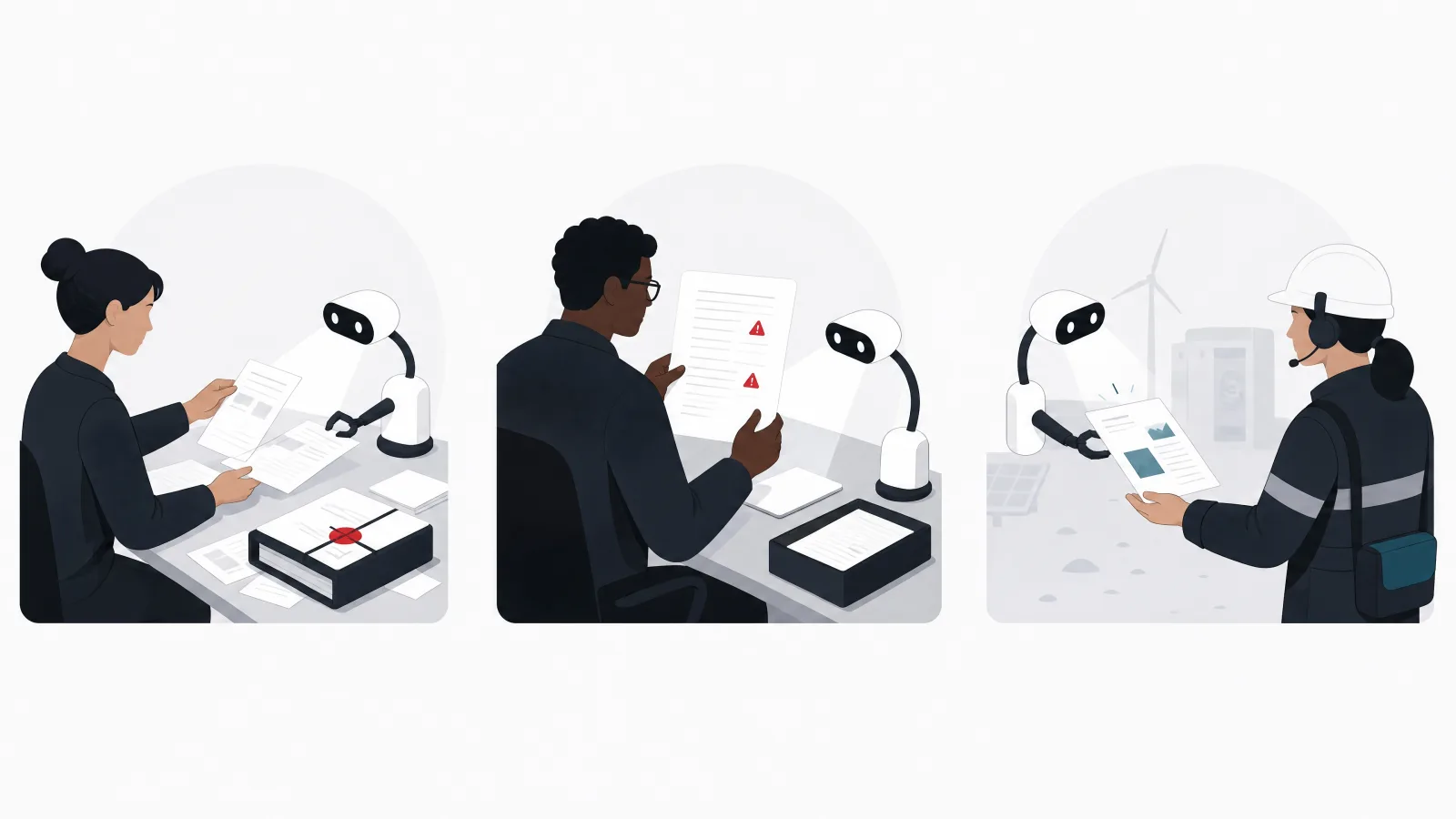
The strongest AI-enabled concepts use AI inside a controlled workflow rather than presenting a general chatbot. They combine domain data, human review, and a measurable business outcome, which is what separates a product from a prompt. Three concepts fit that description well in 2026. The first is an AI compliance evidence assistant for small and mid-size companies facing security, privacy, or industry audits. The gap is not policy templates, which are abundant; it is connecting policies to current system configurations, access reviews, vendor records, and approval history. A practical product maintains a control library, requests evidence from control owners, classifies uploads, flags stale evidence, drafts summaries for human review, and maps one item to several frameworks. Revenue is a B2B subscription by organization size or supported frameworks. The hardest problem is trust: the assistant must never claim a control is satisfied without verifiable support, because security teams need sources, permissions, and human approval, not confidence.
The second is an AI proposal and scope risk reviewer for agencies, consultancies, and software vendors. Generic writing assistants improve wording but do not understand delivery risk; this product flags undefined integrations, missing data migration assumptions, unbounded revision terms, unsupported performance promises, and conflicting dates, the vague sentences that become unplanned work. Revenue is a subscription with usage-based document processing. The hardest problem is domain accuracy: the reviewer must distinguish a commercial risk from ordinary wording and show why it raised each flag. A concierge version, human review supported by AI, reveals which warnings buyers actually value before any automation is built.
The third is AI field knowledge capture for maintenance, construction, utilities, and equipment servicing: turning technician voice notes, photographs, and job outcomes into searchable operational knowledge. Experienced workers hold critical knowledge that never enters manuals, and the product converts approved field input into equipment histories, troubleshooting steps, failure patterns, and training material. Revenue is a per-seat B2B subscription. The hardest problem is data quality: voice notes are incomplete, location-specific, or occasionally wrong, so the product needs expert review, version history, and a hard separation between observed facts and generated suggestions. Distribution should begin through one industry association or contractor network rather than all field workers, and the same lesson applies to all three concepts: the AI development work is the smaller half of the product, and the workflow, review, and audit trail are the larger half.
The vertical B2B ideas: referrals, traceability, property maintenance
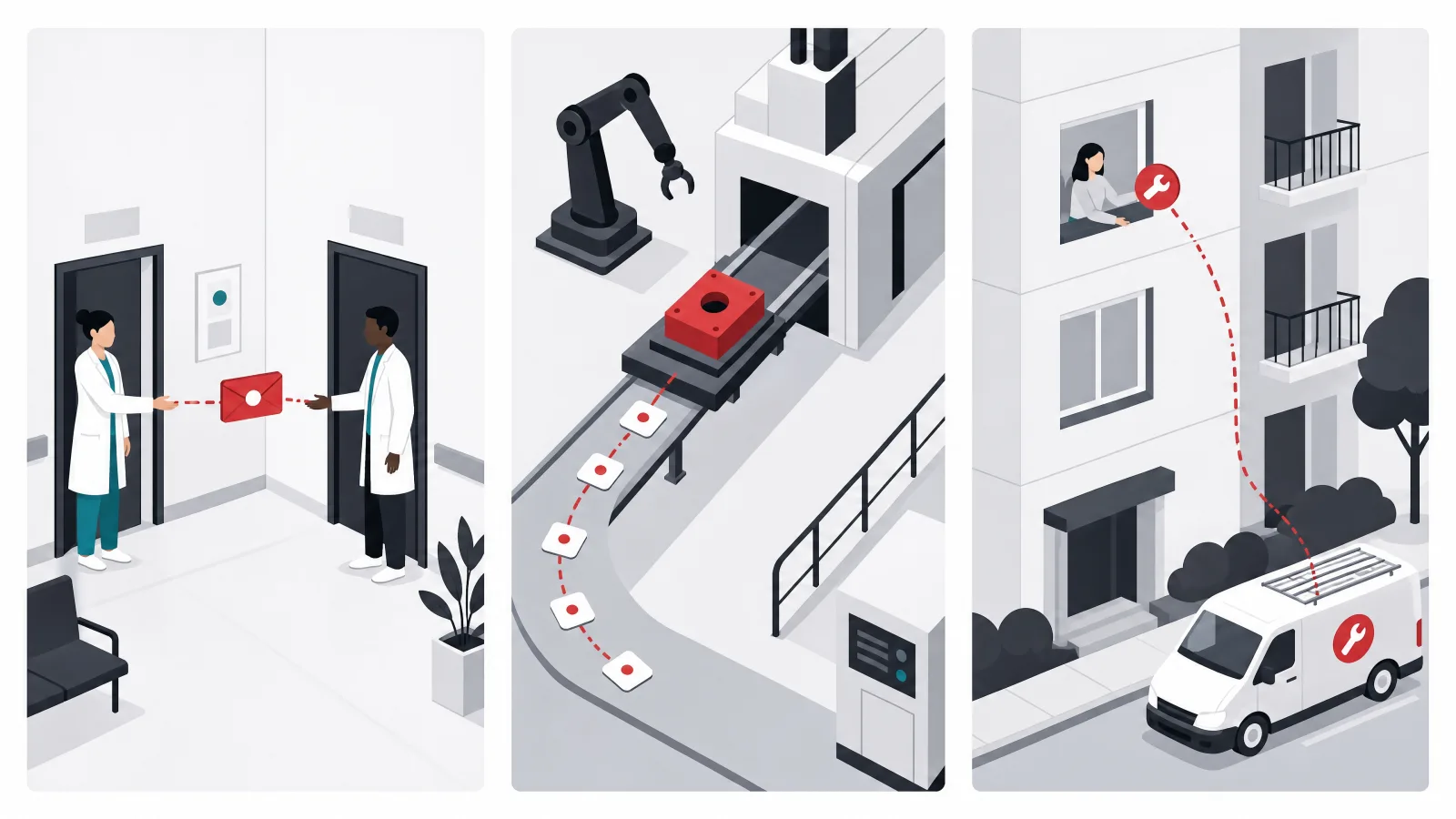
Vertical B2B products remain the most reliable pattern on this list because narrow industries still coordinate expensive work through spreadsheets, messaging apps, and generic software. The opportunity comes from understanding one workflow better than any horizontal platform can afford to. A specialty clinic referral coordinator is the healthcare version: the gap is status uncertainty between referral creation and completed appointment, where staff burn hours calling, checking records, and chasing missing documents. The product manages referral intake, document checklists, contact attempts, authorization tasks, and exception queues, sold as a clinic subscription by location or referral volume. The hardest problem is healthcare integration and privacy, and the MVP discipline is to coordinate workflow rather than become another electronic health record.
Small manufacturer quality traceability sits in the gap between spreadsheets and enterprise manufacturing systems. Smaller operators need to record inspections, component lots, nonconformities, corrective actions, and supplier evidence without a digital transformation program. Revenue is a facility or production-line subscription. The hardest problem is shop-floor adoption: data entry must beat paper on speed, work on shared devices, and tolerate poor connectivity, or it simply will not happen. Begin with one manufacturing category, because quality processes, terminology, and compliance differ enough by industry that a generic version serves no one.
A commercial property maintenance coordinator addresses the fragmented communication, email, phone, contractor portals, spreadsheets, around recurring inspections, vendor work, tenant requests, and asset history for small commercial portfolios. Revenue is a property-based subscription with optional contractor transaction fees. The hardest problem is multi-party participation: property managers buy the software, but tenants and contractors must use it consistently before the workflow becomes reliable, which argues for entering through one high-frequency process such as preventive maintenance or compliance inspection tracking rather than promising a full platform on day one.
The health and wellness ideas: recovery, shift work, caregiving
Health and wellness opportunities remain viable when the product supports professional care, sustained behavior, or an underserved workflow; generic symptom checkers and undifferentiated fitness trackers are weak concepts in 2026. A post-discharge recovery coordinator helps patients and care teams manage instructions, medication questions, warning signs, follow-ups, and recovery check-ins in the risky window after a patient leaves the hospital, where instructions are hard to follow and providers lose visibility. Revenue comes from contracts with providers, care programs, or insurers rather than consumer advertising. The hardest problem is clinical safety: the app must never delay urgent care or present generated guidance as diagnosis, and escalation criteria require clinical governance. A credible pilot covers one procedure or recovery pathway with one defined care team, and the deeper build considerations look much like the ones covered in our telemedicine cost guide.
A shift worker sleep and recovery planner serves nurses, logistics staff, and factory employees whose schedules rotate while every wellness product assumes a conventional daytime routine. The product plans sleep, light exposure, meals, and recovery around irregular schedules, with revenue combining consumer subscriptions and employer wellness contracts. The hardest problem is retention: users value recommendations but stop recording schedules, so calendar integration and low-effort planning matter more than a large content library, and the product should avoid medical claims unless it has the evidence and review to support them.
Caregiver coordination for aging families gives relatives a shared place for appointments, medications, documents, visits, expenses, and care observations. The gap is deeper than communication: family caregivers need accountability, privacy boundaries, and an understandable history of decisions. Revenue is a family subscription, possibly with care provider or employer partnerships. The hardest problem is user complexity, because the product serves an older adult, several relatives, and professional caregivers with different permissions, which is a permission-model design challenge before it is anything else. The MVP focuses on coordination and records, not remote medical monitoring, which multiplies both the regulatory surface and the safety obligations.
The logistics and local commerce ideas: shared delivery, returns, exceptions
Logistics ideas work when they improve asset utilization or remove a costly coordination step, and fail when founders underestimate local operations and assume software alone creates supply. Shared delivery capacity for independent retailers is the clearest utilization play: individual stores have too little demand for efficient dedicated delivery, but a district of compatible merchants has enough combined volume for shared routes. Revenue is a per-delivery fee, merchant subscription, or hybrid. The hardest problem is density, enough compatible orders in a small area and time window, which is why the pilot should be a merchant cluster, pharmacies, florists, or specialty food, rather than every local business. The operational texture of this problem is the same one we mapped in how to build a logistics app.
A reusable packaging return network coordinates deposits, returns, collection points, and cleaning status for reusable food or ecommerce packaging. Reuse schemes fail when return behavior is inconvenient or responsibility is unclear, and the product exists to make both explicit. Revenue combines merchant subscriptions, per-circulation fees, and logistics service charges. The hardest problem is reverse logistics: containers must be collected, inspected, cleaned, redistributed, and written off when lost, which is an operations business wearing an app. Begin with one closed network, an office district, a campus, a single delivery operator, where the loop can actually be closed.
Small fleet exception management targets the gap that route planning tools leave: they optimize normal operations while missed stops, failed deliveries, route changes, damaged goods, and access problems continue through phone calls and messaging groups. The product gives small delivery and service fleets an exception queue with resolution tracking, priced per vehicle or dispatcher per month. The hardest problem is integration with existing routing, telematics, and order systems, because the app must improve the current workflow rather than demand its replacement. The honest MVP metric is resolution time and repeat incidents, not map activity.
The creator and sustainability ideas: sponsorships, micro-courses, supplier evidence
Creator tools remain viable when they address business operations, rights, or repeat revenue rather than content generation, which is a crowded and defenseless category. A creator sponsorship operations hub manages inquiries, deliverables, approvals, usage rights, invoices, and campaign reporting for small creator teams currently running commercial work across email, documents, and spreadsheets. Revenue is a creator subscription, an agency plan, or a small fee on processed invoices. The hardest problem is workflow variation, because sponsorship terms differ by platform, content type, brand, and region; the narrow MVP is deliverable tracking plus rights expiration alerts, not a marketplace.
An expert micro-course production platform occupies the space between passive video hosting and heavyweight learning management systems: it helps niche experts turn one defined professional process into a short, outcome-based course with assignments, feedback, and cohort support. Revenue combines subscriptions with a fee on course sales. The hardest problem is distribution, because course creation is easy compared with finding qualified buyers, so the platform should validate with instructors who already have an audience, client base, or association access rather than promising to supply demand it does not control.
The supplier sustainability evidence portal is the most defensible sustainability concept because it attaches to money that already moves: large buyers increasingly demand structured energy, packaging, sourcing, and emissions evidence, while small suppliers drown in overlapping questionnaires in different formats. The product maintains reusable supplier profiles, stores source documents, maps evidence to customer questions, tracks expirations, and preserves an audit history. Revenue is a supplier subscription, a buyer-sponsored network, or an enterprise contract. The hardest problem is evidence quality: the product must not turn estimates into unsupported claims or imply certification it cannot back. Begin inside one supply chain where buyers already request recurring evidence, because that is where the urgency already exists.
How do the fifteen ideas compare?
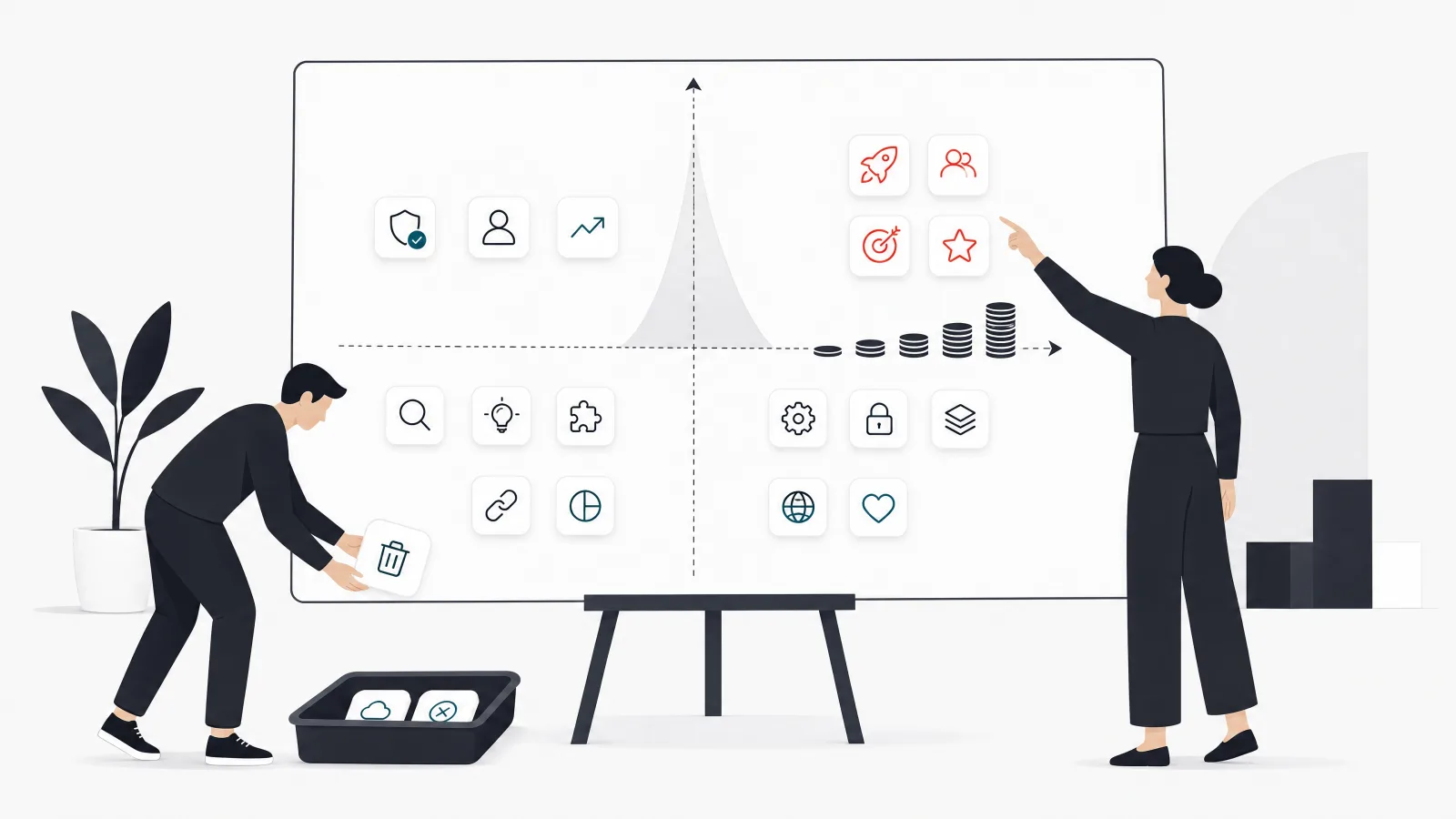
The best idea is not the one with the largest theoretical market; it is the one where the founding team has credible access, domain knowledge, and a way to test payment quickly. The table below compresses all fifteen concepts into their revenue model and hardest problem, and it should be read as a risk map rather than a ranking. A hard problem is not a disqualifier: it is a filter that keeps out competitors, provided the team has the unusual expertise or distribution that makes the problem tractable for them specifically.
Notice what the table implies about team shape. Eleven of the fifteen are B2B subscriptions, which means sales-capable founders matter more than growth hackers for most of this list. Four involve regulated or safety-adjacent domains, which means compliance judgment must exist inside the founding team or arrive through advisors early. And nearly every hardest-problem entry is operational rather than technical, which is the quiet theme of the whole list: in 2026, the app is the easy part.
The fifteen concepts: revenue model and hardest problem
| App idea | Primary revenue model | Hardest problem |
|---|---|---|
| AI compliance evidence assistant | B2B subscription | Trust and auditability |
| AI proposal risk reviewer | Subscription plus usage | Domain accuracy |
| AI field knowledge capture | Per-seat subscription | Reliable expert validation |
| Clinic referral coordinator | Clinic subscription | Privacy and integration |
| Manufacturing quality traceability | Facility subscription | Shop-floor adoption |
| Property maintenance coordinator | Property subscription | Multi-party participation |
| Post-discharge recovery coordinator | Provider contract | Clinical safety |
| Shift worker recovery planner | Consumer and employer subscription | Retention |
| Family caregiver coordination | Family subscription | Complex permissions |
| Shared retailer delivery capacity | Transaction fee | Local order density |
| Reusable packaging returns | Circulation fee | Reverse logistics |
| Fleet exception management | Per-vehicle subscription | Legacy integration |
| Creator sponsorship hub | Subscription or invoice fee | Workflow variation |
| Micro-course production platform | Subscription plus sales fee | Creator distribution |
| Supplier sustainability portal | B2B subscription | Evidence quality |
A risk map, not a ranking. A hard problem becomes a competitive advantage when the team has unusual expertise or distribution against it.
How should you validate an app idea before building?
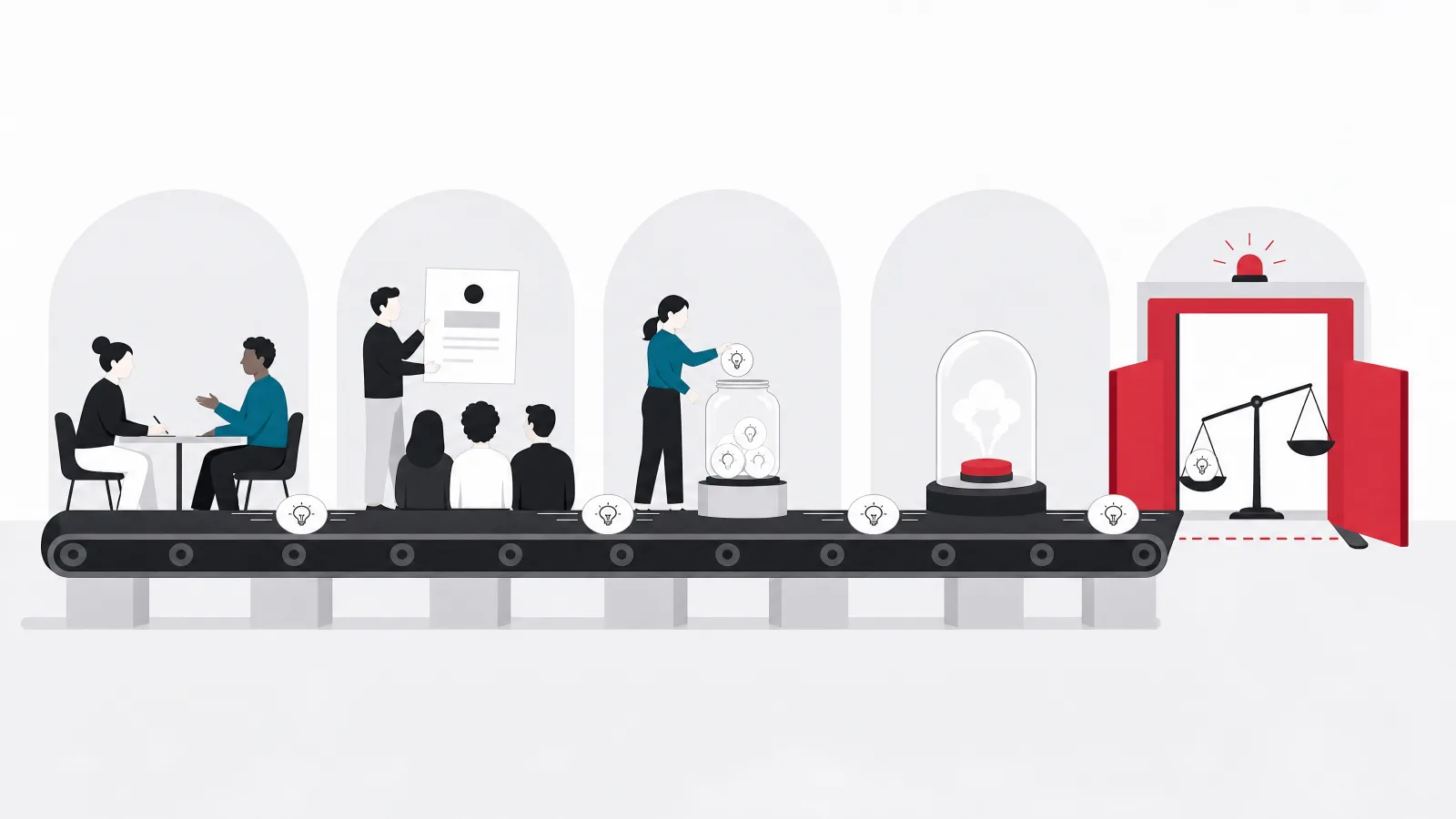
Validate the problem, the buyer, the channel, and the payment before building a complete application. The objective is to replace assumptions with observable behavior, and the sequence below does it in ascending order of cost. The single most important rule runs through every step: never ask whether someone would use a hypothetical product, because people answer that question generously and behave differently. Ask about specific past events, and ask for commitments that cost something.
Problem interviews come first: talk to people who recently experienced the problem, and anchor every question in the past. Tell me about the last time this happened. What did you do, who was involved, how long did it take, what did the failure cost, what have you already tried, and why did the current solution stay in place. A credible problem appears repeatedly, has consequences, and already causes people to spend time or money. Then test positioning with a landing page whose next action requires meaningful effort, booking an interview, requesting a pilot, submitting a workflow, joining a qualified waitlist, because page visits validate nothing and a high conversion rate from the founder's personal network does not prove a repeatable channel.
The concierge MVP is the step most founders skip and most need: deliver the proposed outcome manually or with internal tools, transparently, so the customer experiences the service while the team learns which steps deserve automation and which exceptions dominate. For the proposal reviewer, that is human review supported by AI; for the sustainability portal, a managed evidence workspace. Concierge delivery reveals the hidden operations that no clickable prototype can. Finally, ask for payment or a material commitment, data access, staff time, a pilot agreement, executive sponsorship, because payment is stronger evidence than praise, and a buyer who will commit nothing does not feel enough urgency to sustain a product.
The five-step validation sequence
-
Problem interviewsWeek 1-2
Interview people who recently had the problem. Specific past behavior only: the last occurrence, its cost, what was tried. General interest is not evidence.
-
Landing page with a costly actionWeek 2-3
One audience, one promise, one next action that takes real effort. Test the distribution channel at the same time as the message.
-
Concierge MVPWeek 3-6
Deliver the outcome manually, transparently. Learn the exception volume and the hidden operations before automating anything.
-
Ask for commitmentWeek 5-6
Payment, data access, staff time, or a signed pilot. Praise without commitment is a polite no.
-
Build or no-build decisionWeek 6
Score the evidence against the rule below. Behavior decides; whether participants called the idea innovative does not.
Ascending order of cost. Each step can kill the idea cheaply before the next one spends more.
Validation signals that mean something, and ones that do not
Do this
- A prospect reschedules to talk to youTheir time is the first payment. Urgent problems find calendar space.
- Someone shares real workflow dataHanding over documents or system access is a commitment with switching-cost weight.
- A buyer negotiates priceNegotiation means they are imagining ownership. Silence after the price slide means they were being polite.
Not this
- Survey respondents saying they would use itHypothetical demand is free to express and evaporates at the first login screen.
- A waitlist filled by paid social trafficIt measures ad targeting, not urgency. Qualified waitlists require qualification questions.
- Praise from friends and fellow foundersThey are evaluating you, not the problem. Neither will ever be the buyer.
The consistent distinction is behavior versus opinion. Every strong signal costs the prospect something.
What does a startup discovery phase include?
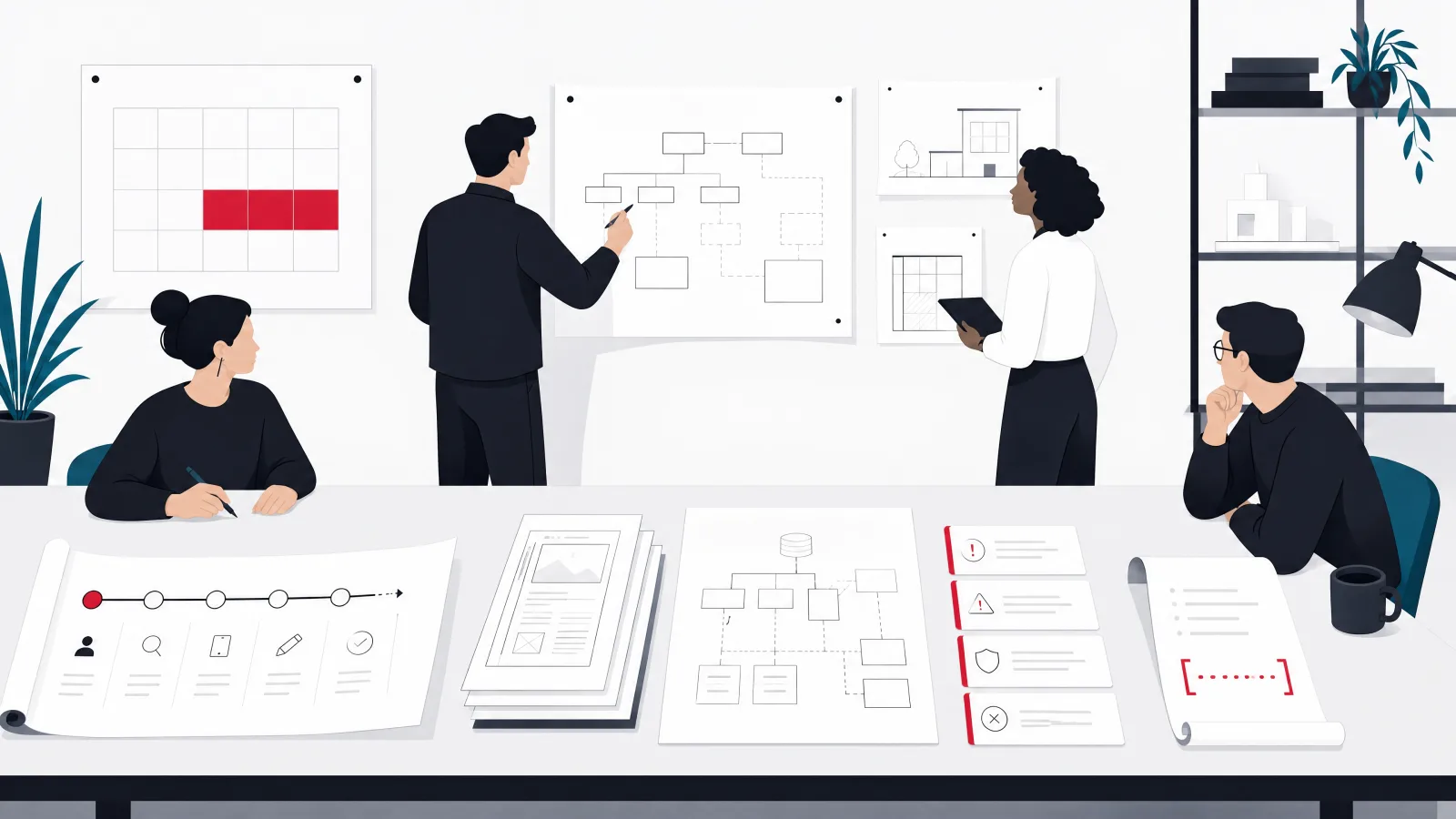
A discovery phase converts a promising idea into testable product and business assumptions, and it is cheaper than building the wrong workflow because it exposes market, scope, and technical risks while changes cost conversation rather than refactoring. A focused engagement covers customer and stakeholder interviews, competitor and alternative analysis, current workflow mapping, revenue and cost assumptions, regulatory review, technical risk assessment, prototype design, user testing, MVP scope, a delivery estimate, a validation plan, and an explicit build or no-build recommendation. The team is small: a product strategist, a business analyst, a designer, and a technical lead, with a compliance or data specialist added for regulated products.
Discovery does not need to become months of documentation; three to six weeks is usually enough, depending on market access and technical complexity. The discipline that separates useful discovery from theater is the output: it must state what not to build. If every requested feature survives into the MVP scope, prioritization has not occurred and the phase has failed regardless of how thorough its documents look. The prototype work inside discovery is also where UI and UX design earns its place early: testing a clickable prototype against real users costs a fraction of testing the same idea in code.
For founders weighing the cost: a focused custom MVP typically lands around thirty to eighty thousand US dollars, with marketplaces, healthcare systems, fintech products, and complex AI applications running higher on scope, integrations, compliance, and operational tooling. Discovery is the instrument that keeps that number from being spent on the wrong product, which is why it is the first fixed-price engagement we recommend to idea-stage teams, and why the build or no-build recommendation at its end is allowed to be no.
Frequently asked questions
What are the best app ideas for startups in 2026?
The strongest categories are narrow AI workflow tools such as compliance evidence and proposal risk review, vertical B2B software for industries still run on spreadsheets, care coordination products, logistics exception management, creator business operations, and supplier evidence platforms. The best idea for a specific team is the one where the founders have credible customer access, domain knowledge, and a fast way to test payment.
How do I find profitable app ideas?
Look for repeated problems that already cost a defined group time, money, risk, or lost revenue, because existing spend is the strongest evidence of urgency. Profitability then requires two more things the idea itself cannot supply: an affordable distribution channel to reach those users, and a price that covers support and operations rather than just development.
How do I validate a mobile app idea before building it?
Run the sequence in ascending order of cost: problem interviews about specific past events, a landing page whose next action requires real effort, a concierge MVP that delivers the outcome manually, and a direct request for payment or material commitment. Treat survey interest and waitlist signups as weak signals; behavior that costs the prospect something is the only evidence that predicts adoption.
Should I build an MVP before finding customers?
Usually not. Find potential users and validate the problem first, because a manual or prototype-based test can reveal whether the idea deserves development at a fraction of build cost. The MVP should be scoped by what validation proved rather than by what the pitch deck promised, which typically makes it narrower, cheaper, and faster to ship.
How much does it cost to build a startup app?
A focused custom MVP typically runs about 30,000 to 80,000 US dollars, with marketplaces, healthcare systems, fintech products, and complex AI applications costing more. The major drivers are scope, number of platforms, integrations, compliance requirements, and operational tooling. A discovery phase before the build is the cheapest way to keep that spend pointed at the right product.
What makes an app idea defensible?
Durable defensibility comes from proprietary workflow data, distribution advantages, deep integrations, regulatory expertise, network effects, and switching costs built through daily use. An AI chat interface on its own is not a moat, because every competitor has access to the same models; the defensible part is the domain workflow, review process, and accumulated data around the model.
When one of these ideas survives validation, AgileTech is an AI native software development company in Vietnam that runs the discovery phase and builds the MVP the evidence points to.
Source: https://agiletech.vn/blog/app-ideas-for-startups/ · (c) AgileTech Vietnam. Printed from agiletech.vn.