 Nguyen Manh Thang
Chief Executive Officer, AgileTech Vietnam
Nguyen Manh Thang
Chief Executive Officer, AgileTech Vietnam
- Published
- Last updated
- Read time
- 15 min

Read the AI overview
Six shifts matter to anyone buying or building software in 2026, and none of them are predictions. AI has moved from demonstrations into production workflows, which changes the questions you ask a vendor from whether they use it to what happens when it is wrong. Data quality is the constraint on every AI ambition, so it is the highest-leverage spend most organizations can make this year. Edge delivery has made performance budgets normal contract language. Privacy has moved out of a policy page into the architecture. Consent has quietly turned most analytics into a sample rather than a population. And the talent model has settled into a smaller permanent core extended by dedicated external teams. Each one has a concrete action attached, and none of them require believing anything about the future.
Most trend lists are written for other analysts. They describe movements at a level of abstraction where nothing can be acted on, and they are structured so that nobody can be wrong. This one is written for the person who has to approve a budget: for each shift, what is actually changing, what it means for a roadmap, and what a sensible organization does about it this year.
The vantage point is delivery rather than research. We see which trends survive contact with a budget and which evaporate the moment somebody asks what it costs, because the ones that survive show up in the requirements documents that reach us. That filter is what separates this from a list of things that are technically true.
There are no predictions here about artificial general intelligence, no market sizing borrowed from a report we cannot verify, and no vendor recommendations. There are six shifts, the questions each one changes, and the action each one implies. It reflects what we see across our custom development engagements.
Key takeaways
- "Does it use AI" is no longer a question. Ask what happens when the model is wrong, what a request costs at your volume, and where your data goes.
- Treat model output as untrusted input, with the same validation posture as anything a user typed. Piping it straight into actions is how AI features become incident reports.
- Fund an audit of the three or four datasets your decisions depend on before funding another dashboard or model. Everything above that layer inherits its quality.
- Put performance numbers in continuous integration, not in a slide. A budget enforced by the build is cheap to add early and painful to retrofit.
- Privacy is now an architecture with an owner and a backlog: consent-gated measurement, retention that executes, and deletion that reaches backups and vendors.
- Your analytics probably describe consenting users only. Know the size of that gap before making a decision that assumes it does not exist.
- Decide what belongs in your permanent core (product judgment, domain knowledge, architecture) and buy capacity around it, rather than debating hiring versus outsourcing in the abstract.
AI moved from demonstrations into ordinary plumbing

The visible story of recent years was the chat interface. The current story is quieter and more consequential: AI functions embedded inside otherwise ordinary software. Document extraction. Ticket triage and routing. Code assistance inside the existing review process. Search that understands intent rather than matching keywords. Agents that execute multi-step tasks under supervision, with a human confirming anything irreversible.
The novelty has worn off, and what remains is an engineering discipline: evaluation, guardrails, cost control at volume, and defined fallback behavior when the model is unavailable or wrong. That discipline is unglamorous, it is where the difficulty actually sits, and it is almost entirely absent from vendor demonstrations, because a demonstration is chosen to be a case that works.
The single most useful mental model is to treat model output exactly as you treat input typed by a stranger: potentially malformed, potentially malicious, and never to be trusted into an action without validation. Teams that adopt that posture ship AI features that survive contact with real users. Teams that pipe generated output directly into a database write, an email send, or a payment produce incidents, and the incidents are hard to explain afterwards because the system did precisely what it was built to do.
The sensible move for most organizations this year is narrow and boring. Choose one or two workflows with a measurable cost today, such as support triage or document processing. Ship an assisted version with a person in the loop. Instrument it so the saving is attributable. Then decide whether to widen. That sequence produces a number you can defend in a budget review, which is more than most AI programs currently have.
What to ask a vendor selling you an AI feature
- What happens when the model is wrong?There must be a defined behavior, not an assurance that it usually is not. Ask to see the fallback path and who is notified when it triggers.
- Can you show evaluation results?A measured accuracy on a held-out set representative of your data, not a curated demonstration. If no evaluation exists, the feature has not been engineered, it has been assembled.
- What does one request cost at our volume?Multiply by realistic usage before signing anything. Per-request costs that are trivial in a pilot become the largest line in an operating budget at production volume.
- Where does our data go, and is it retained?Which provider, in which region, under what retention, and whether it is used for training. This is a procurement question with a documentary answer, not a reassurance.
- What is validated before an action is taken?Any output that causes a write, a send, or a payment must pass an explicit check. Ask what that check is and what happens when it fails.
- How do you detect quality drift?Model behavior changes when the provider updates it. Ask what monitoring exists and how you would learn that output quality had degraded.
- What happens if the provider is unavailable?A dependency with no degraded mode is a single point of failure that your uptime commitments now include whether or not they mention it.
These are the questions a serious supplier answers immediately and an unserious one deflects into a demonstration. Ask them in this order; the first two eliminate most of the field.
Data quality is the constraint on everything above it

Every AI ambition eventually lands on the same rock, which is the state of the underlying data. The trend beneath the AI trend is therefore deeply unglamorous data engineering: consolidating overlapping warehouses, establishing who owns each core entity, and building pipelines that are tested like software rather than tended like campfires by whoever built them.
The market is visibly reflecting this. Organizations are reducing the number of overlapping data tools they run and standardizing on fewer platforms with clearer contracts between the teams that produce data and the teams that consume it. The idea of data as a product, with a named owner, a documented schema and a stated quality commitment, has moved out of conference talks and into procurement language, which is usually the last stop before something becomes normal.
The practical implication is a sequencing one, and it is uncomfortable because it delays the interesting work. Before funding another dashboard or another model, fund an audit of the three or four datasets your decisions actually depend on. Establish what each field means, who is accountable for it, how often it is wrong, and what happens downstream when it is. That work is upstream of everything else on this list, and skipping it produces confident dashboards describing noise.
Where a data readiness audit usually finds the problem
| Finding | How it shows up | What it costs later |
|---|---|---|
| No owner for a core entity | Three systems define "customer" differently and nobody is empowered to reconcile them | Every report needs a caveat, and every model trains on a contradiction |
| Undocumented meaning | A field everyone uses and nobody can define precisely, with rules living in one person's head | Analysis that is confidently wrong, and total loss of that knowledge when the person leaves |
| Untested pipelines | A transformation breaks silently and the downstream number simply looks plausible | Decisions made on stale or partial data, discovered weeks later or never |
| Duplicated tooling | Two platforms doing the same job because two teams chose independently | Doubled license and maintenance cost, plus disagreement about which output is authoritative |
| No freshness guarantee | Nobody can state how current a table is, so nobody knows if today's figure includes today | Operational decisions made against yesterday, invisibly |
A pattern list drawn from our own engagements rather than a survey. The first two rows account for the majority of what stalls an analytics or AI program in practice, and neither of them is a technology problem.
Performance budgets became normal contract language

Serving applications from edge networks, with compute running in many locations close to users rather than in a single region, has crossed from novelty to default for new web products. The benefit is not only latency. Edge-first architectures push teams toward smaller payloads, static-first rendering and fewer moving parts, and users experience that combination as speed and reliability rather than as an architecture.
What has genuinely changed is that performance now has commercial teeth. Page experience feeds into search ranking. Users abandon slow checkouts at rates that are easy to measure. Every additional second of load time is visible in conversion data, which means the argument for performance no longer has to be made on engineering aesthetics. It can be made in the same currency as everything else on the roadmap.
The action follows directly: put the numbers in continuous integration rather than in a document. A budget on time to first byte, largest contentful paint and shipped bundle size, enforced by the build so that exceeding it fails the pipeline, costs very little to establish on a new project and is genuinely painful to retrofit onto an old one. That asymmetry is the definition of work worth doing early. We treat those budgets as acceptance criteria in our web engineering teams rather than as aspirations, because an aspiration loses every argument it has with a deadline.
Performance requirements that hold, and the ones that do not
Do this
- A number in the build pipelineA stated threshold that fails continuous integration when exceeded, so a regression is caught in the pull request that caused it, by the person who caused it.
- Measured on real conditionsThrottled network and mid-tier device profiles, because the office connection and the newest phone are the least representative test environment available.
- Budget allocated per featureEach team knows how much of the total payload it may spend, which turns an abstract shared cost into an ordinary engineering constraint.
- Third-party scripts countedTags and embeds are inside the budget, since they are usually the largest single contributor and the least reviewed one.
Not this
- "The site should feel fast"No threshold, no measurement, no owner. It will be true at launch and false within two quarters, and nobody will be able to say when it changed.
- Measured once, at launchA single audit produces a number that is immediately historical. Performance decays through ordinary feature work, which is exactly what continuous measurement is for.
- Tested on the newest hardwareA device profile that flatters the product and represents a small fraction of the audience, which conceals precisely the problems users report.
- Excluding marketing tagsA budget that governs the code the engineers wrote and ignores the code someone added through a tag manager governs the wrong half.
The distinction in every pair is enforcement. A requirement that no automated system can fail is a preference, and preferences lose to deadlines with complete reliability.
Privacy moved out of the policy page and into the architecture
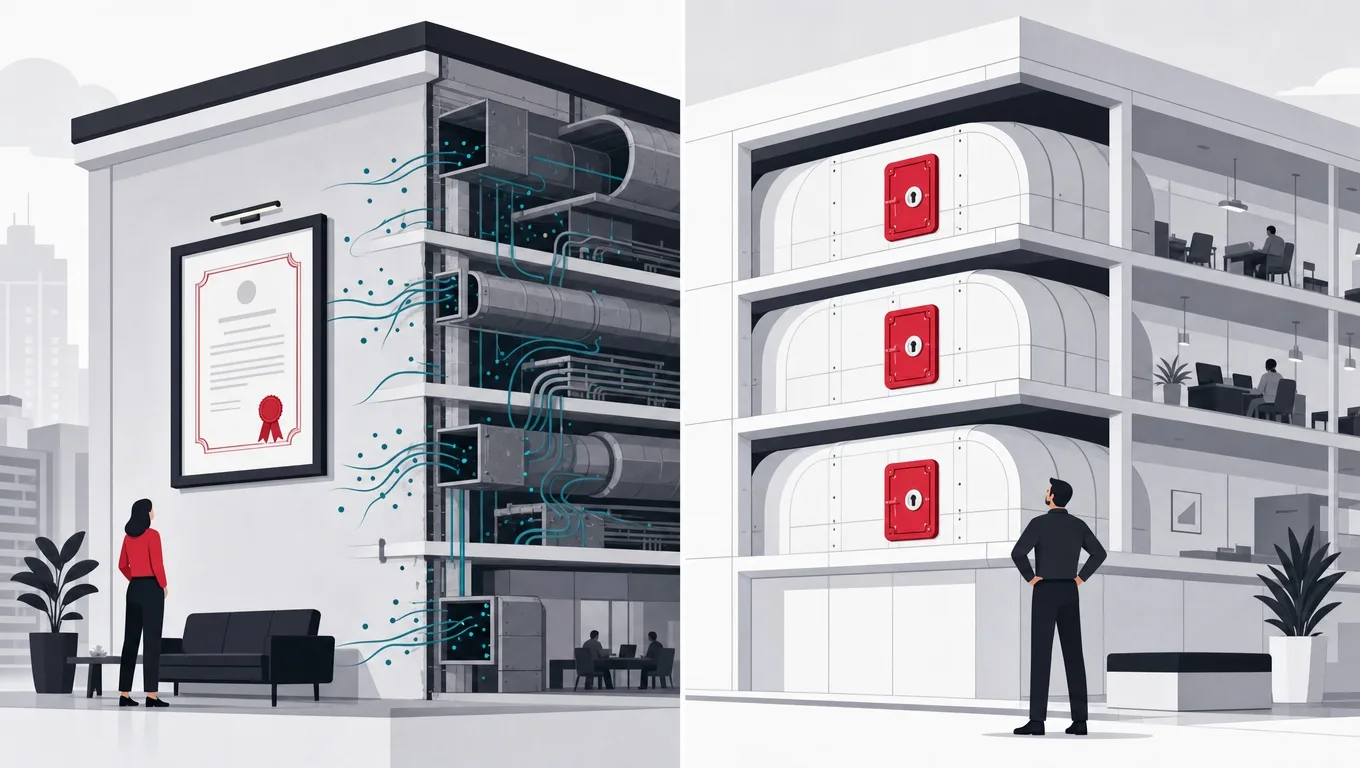
The regulatory perimeter has continued to widen. Comprehensive privacy regimes now cover most major markets, consent enforcement has become materially more active, and AI-specific rules add documentation duties on top of the existing obligations. For anyone building software, the consequence is structural rather than legal: privacy has moved from something a policy page asserts into something an architecture has to implement.
Concretely that means four things. Measurement is gated on consent at the point of collection rather than filtered afterwards. Data collection is minimized by design, so that fields nobody uses are not gathered at all. Retention schedules execute automatically rather than existing as a stated intention. And deletion is a real, tested workflow that reaches history stores, analytics copies, backups and any third party you forwarded data to.
The most reliable way to make this tractable is to give it an owner and a backlog, exactly like any other engineering concern. Map what you collect. Delete what you do not use, which is usually a surprising proportion. Rehearse the access and erasure workflows before anyone demands them, because rehearsing under a statutory deadline is how organizations discover which of their systems has no delete path at all. Enterprise buyers now audit this during vendor selection, so it has become revenue-relevant rather than purely a risk matter.
What architectural privacy actually requires
Collection
- Inventory
- A current list of every field collected, why it exists, and which feature would break if it stopped being collected.
- Consent gating
- Non-essential measurement does not fire before consent, enforced in the code path rather than by a tag configuration somebody could change.
- Minimization
- Precision and scope reduced to what the feature needs, decided at design time because it is far harder to reduce later.
Retention
- Executing schedule
- An automated job that actually removes or aggregates data on the stated timetable, with evidence that it ran.
- Downstream copies
- A known list of every system holding a derived copy, including analytics platforms, warehouses and vendor systems.
- Backups
- A defined position on how deletion interacts with backup retention, decided deliberately rather than discovered during a request.
Rights
- Access workflow
- A tested path that assembles everything held about one person across all systems, within the statutory window.
- Erasure workflow
- A tested path that removes it, with a record of what was removed and confirmation from downstream processors.
- Owner
- A named person accountable for the above, with a backlog and capacity, rather than a shared responsibility that is nobody's.
The shape of the section that increasingly appears in enterprise vendor questionnaires. Each row is answerable with a system rather than with a statement of intent, which is the entire difference from a policy page.
Your analytics now describe a sample, and few teams know its size

This is the shift that gets the least attention and causes the most quiet damage. Consent requirements mean that analytics platforms depending on non-essential storage only observe the users who agreed to be observed. The dashboards did not announce this. They simply continued producing plausible numbers, calculated over a subset whose size varies by market, by device, by traffic source and by the design of your own consent interface.
The consequences compound rather than cancel. Conversion rates computed over consenting users only are not the conversion rate. Attribution across a journey where consent was granted partway through is not attribution. Channel comparisons are distorted whenever consent rates differ by channel, which they reliably do. None of these errors are random, so none of them average out with more data, and a decision made confidently on the wrong denominator is worse than one made cautiously on no data at all.
The response is not to abandon measurement or to circumvent consent. It is to know the gap and to build a small foundation that does not depend on it. First-party server-side counting of the things you are entitled to count, without personal data and without cross-site identifiers, gives an honest denominator: total requests, total sessions, total completions. Compare that against the consented analytics and you have the ratio you need to interpret every other number. This site does exactly that, which is why our own traffic figures are computed at the edge with no third-party tracker involved.
What each measurement approach can honestly tell you
| Consented analytics | First-party server counting | |
|---|---|---|
| Total traffic volumethe denominator | Partial | Yes |
| Conversion completionsobserved at the server | Partial | Yes |
| Per-user journeysrequires identity | Yes | No |
| Cross-session attribution | Yes | No |
| Device and browser mix | Partial | Yes |
| Works without consentaggregate, no personal data | No | Yes |
| Survives tracker blocking | No | Yes |
The point is not that one column wins. It is that the two answer different questions, and most organizations are using the middle column to answer questions only the right column can address.
Smaller permanent cores, extended by teams that work inside your process

AI-assisted development is real, and it has not abolished engineering. What it has done is shift the bottleneck. Producing a first draft of code is faster than it was. Reviewing it, integrating it, deciding whether it should exist, and owning it in production are not, and those activities now dominate the schedule. The organizational response visible across current budgets is a smaller permanent core supplemented by elastic external capacity engaged for defined outcomes.
That model rewards a specific competence, which is the ability to integrate an outside team well. Clear interfaces between areas of ownership. Written decision records, so that context survives a handover. Shared continuous integration rather than a handoff over a wall at the end. Organizations that have those things get real leverage from external capacity. Organizations that do not get a coordination problem with an invoice attached, and they usually conclude that outsourcing does not work rather than that their integration model does not.
It also rewards a specific behavior from suppliers, which is working transparently inside the client's repositories and rituals instead of disappearing for a quarter and returning with a deliverable. That is the operating model our dedicated development team engagements are built around, and the demand we see tracks this shift closely.
If you run engineering, the useful question is not whether to hire or to outsource. It is what belongs in the permanent core. Product judgment, domain knowledge and architectural ownership belong inside, because they compound and because losing them is expensive in a way that is hard to reverse. Capacity, specialized skills and well-specified delivery scale better as extended teams. Framed that way the decision is a design problem with an answer, rather than an ideological argument without one. If you are weighing where that extended capacity should come from, our software outsourcing in Vietnam guide works through the answer from one market, including the parts a vendor would rather not raise.
What belongs in the core, and what scales outside it
| Capability | Where it belongs | Why |
|---|---|---|
| Product judgment | Core | It requires accumulated context about your customers that cannot be transferred in a briefing document |
| Domain knowledge | Core | It compounds over years and its loss is felt in every subsequent decision |
| Architectural ownership | Core | Someone must be accountable for coherence across everything, including work done by others |
| Delivery capacity | Extended | Demand is genuinely variable, and permanent headcount sized for peaks is idle at troughs |
| Specialized skills | Extended | Needed intensely for a phase and rarely thereafter, which does not justify a permanent role |
| Well-specified delivery | Extended | A clear specification with acceptance criteria is exactly what an external team executes efficiently |
| Operational ownership | Core, with support | Accountability for production cannot be delegated, though the on-call rotation can be shared |
A framework rather than a rule. The test in the third column is the useful part: if losing a capability would leave you unable to make a decision, it belongs inside regardless of what it costs to keep there.
The predictions that did not arrive, and what their absence teaches
A trends article that only lists what is rising is half an article, and the less useful half. The technologies that were confidently predicted and then did not arrive on schedule are more instructive, because they reveal the mechanism by which predictions fail, and that mechanism repeats every year with a different subject. Anyone planning a roadmap needs the failure pattern more than they need another list of rising things.
The pattern is consistent enough to state as a rule. Predictions fail when the technology is genuinely capable but the surrounding conditions are not ready, and the surrounding conditions are almost always the same three: an integration path into systems that already exist, a regulatory position clear enough for a risk committee to sign, and an economic case that survives contact with the cost of running it at scale. Capability arrives years before those three converge, and the gap between capability and adoption is where most technology budgets are quietly lost.
This has a direct practical consequence for how you should read any trend claim, including the ones earlier in this article. Ask which of the three conditions is currently the binding constraint. If the answer is integration, the timeline is a function of your own systems and is partly under your control. If the answer is regulation, the timeline is not yours and no amount of engineering effort moves it. If the answer is unit economics, the timeline depends on infrastructure cost curves that are outside everyone's control but are at least forecastable.
The uncomfortable corollary is that being early is a cost, not an advantage, unless you can name the specific asset the early work leaves behind. Early work on a technology that arrives three years later leaves you with an obsolete implementation and a team that has moved on. Early work that leaves behind clean data, a documented integration surface or an institutional understanding of a regulatory regime is durable regardless of when the technology matures. That distinction is the only sound basis for deciding what to do early.
Recurring prediction failures and the condition that was actually binding
| The prediction | What was already true | The binding condition | What it implies for planning |
|---|---|---|---|
| Fully autonomous internal workflows | The models could perform most individual steps | Accountability, meaning who answers for a wrong decision | Design for a human decision point rather than removing it, and the value still arrives |
| Everything moves to a single cloud data platform | The platforms were technically capable | Integration with systems nobody is permitted to switch off | Plan a long coexistence period, and budget for the interface rather than the migration |
| Paper processes disappear in regulated sectors | Digital equivalents existed and worked | A regulatory position clear enough for a risk committee | Track the regulatory timeline separately from the engineering one, because they do not move together |
| Real time analytics everywhere | The streaming tooling matured | Unit economics against a batch alternative that was adequate | Reserve real time for decisions that genuinely change within the hour, and batch the rest |
| Universal replacement of legacy core systems | Modern alternatives existed for years | Risk appetite, since the old system works and the new one is unproven | Wrap and extend deliberately, and treat replacement as a decade rather than a project |
An editorial reading of patterns we have observed across client roadmaps rather than a survey. The value is in the last column, because the binding condition is what determines whether a timeline is under your control.
Frequently asked questions
Is it too late to start with AI, or too early?
Neither, but the useful entry point has changed. Starting a broad exploratory program now competes with organizations that already have production experience, and starting nothing means the operational knowledge accumulates elsewhere. The sensible position is narrow: one or two workflows with a measurable cost today, a person in the loop, and instrumentation that makes the saving attributable. That produces a defensible number in one quarter and a foundation of real operational knowledge, which is worth more than a strategy document.
How do we tell a real AI capability from a wrapper?
Ask for evaluation results on data resembling yours, ask what happens when the model is wrong, and ask what one request costs at your volume. A supplier that has engineered the feature answers all three immediately, because they had to know the answers to build it. A supplier that has assembled it will redirect to a demonstration. This is not about whether they use an external model provider, which almost everyone does. It is about whether anyone has taken responsibility for the failure modes.
What is the highest-value technology investment for a mid-size company this year?
For most, it is data readiness on the three or four datasets their decisions depend on: establishing ownership, documenting meaning, adding tests to the pipelines and stating freshness guarantees. It is unglamorous and it is upstream of analytics, AI and reporting alike, so everything above it inherits the improvement. The common alternative, funding another platform or model on top of unresolved data, tends to produce confident output that nobody can defend when questioned.
Are performance budgets worth the effort on an existing product?
Yes, but with different expectations than on a new build. On a new project a budget in continuous integration is cheap to add and prevents decay from the start. On an existing product, the first step is measurement to establish where you actually are, followed by a threshold set just above the current state so nothing gets worse, and then improvement targets over time. That ratchet approach is far more likely to succeed than declaring an ambitious target that the first urgent release will override.
How much does the consent measurement gap actually matter?
It depends entirely on the size of your gap, which is why measuring it is the first step. If a high share of sessions consent, your dashboards are approximately right and the correction is minor. If a low share consent, then any conversion rate, channel comparison or attribution model derived from them is describing a non-random subset, and decisions made from those figures deserve revisiting. The important part is that the error is systematic rather than random, so collecting more data does not reduce it.
Does AI-assisted development mean we need fewer engineers?
It means the mix changes rather than the count collapsing. Producing a first draft of code is faster, so the bottleneck moves to review, integration, architectural judgment and production ownership, all of which are senior activities. The pattern we observe is a smaller permanent core with more senior weighting, extended by external capacity for well-specified delivery. Organizations that simply reduced headcount on the assumption that tooling would absorb the difference generally found the work reappeared as review debt.
How do we make an external team actually productive?
Three things account for most of the difference. Clear ownership boundaries, so it is unambiguous who decides what. Written decision records, so context survives people rotating on and off. Shared continuous integration and code review, rather than a handoff at the end of a phase. Teams that have those get real leverage from external capacity. Teams that do not get a coordination overhead with an invoice attached, and they usually blame the model rather than the integration.
If any of these shifts is landing on your roadmap this year and you want it turned into something measurable rather than something announced, talk to AgileTech, a software development partner in Hanoi that builds and instruments the result.
Source: https://agiletech.vn/blog/technology-trends-2026/ · (c) AgileTech Vietnam. Printed from agiletech.vn.