 Nguyen Manh Thang
Chief Executive Officer, AgileTech Vietnam
Nguyen Manh Thang
Chief Executive Officer, AgileTech Vietnam
- Published
- Read time
- 13 min
Read the AI overview
The ten healthcare software development companies worth shortlisting in 2026 are AgileTech Vietnam, PowerGate Software, Bestarion, FPT Software, TMA Solutions, KMS Technology, Savvycom, Rikkeisoft, Saigon Technology and Kyanon Digital. They divide into two tiers a healthcare buyer should understand before comparing anyone: an enterprise tier (FPT Software with over 33,000 employees and a GE HealthCare partnership, TMA Solutions with roughly 4,000 engineers of whom about 700 work in healthcare) built for hospital-scale, multi-year programs, and a specialist tier of mid-size firms where a digital health product team gets senior attention, direct communication and entry rates that typically start under 25 dollars per hour. In regulated software the deciding evidence is never the list position: it is certifications you can verify (ISO 27001, ISO 13485, HIPAA and SOC 2 attestations), named healthcare clients you can call, and engineers who can explain HL7 and FHIR without a slide.
Healthcare software is the least forgiving category a buyer can outsource. A retail app that ships a bug loses a sale; a medication record that ships a bug can hurt a person, and the regulatory system around clinical software exists because of that difference. So a list of healthcare software development companies has to answer a harder question than most vendor lists: not who can write software, but who can write software inside HIPAA, GDPR, ISO 13485 and the HL7 and FHIR interoperability stack, with the audit trails to prove it. This guide reviews the ten firms we consider the strongest answers in 2026, with team sizes, healthcare track records and certifications for each. AgileTech publishes this blog and opens the list, and we say so up front.
The list is anchored in Vietnam, and that is a considered choice rather than a hometown reflex. Vietnam's engineering market has climbed from maintenance work to owned clinical products over two decades: FPT Software has spent roughly twenty years in health IT and signed a strategic partnership with GE HealthCare, TMA Solutions runs a dedicated healthcare group of about 700 engineers, and the mid-size tier ships EMR integrations, telehealth platforms and patient-facing products for US, European and Australian clients daily. The economics that made the ten top software companies in Vietnam worth a full review apply with more force in healthcare, where the alternative to offshore rates is often not building the product at all.
This page pairs with its neighbors. The Vietnam outsourcing pillar holds the full country case, the hospital information systems guide explains the systems these vendors build, the EMR, EHR and eMAR explainer decodes the record-keeping alphabet, and our healthcare software development services page shows what this work looks like once shipped. Use the reviews below for names, and the process at the end for the decision.
Key takeaways
- The ten names for 2026: AgileTech Vietnam, PowerGate Software, Bestarion, FPT Software, TMA Solutions, KMS Technology, Savvycom, Rikkeisoft, Saigon Technology and Kyanon Digital, spanning the enterprise and mid-size specialist tiers.
- Healthcare work punishes generalists: the shortlist test is verifiable regulatory machinery (ISO 27001, HIPAA programs, audit trails) plus engineers who have shipped against HL7, FHIR or DICOM, not a services menu that lists healthcare.
- The enterprise tier (FPT Software, TMA Solutions) fits hospital-scale programs and payer platforms; the specialist tier fits the digital health product teams most buyers are actually staffing.
- Vietnam anchors this list because its healthcare engineering depth is now checkable: FPT has roughly two decades in health IT and a GE HealthCare partnership, TMA fields a dedicated healthcare group of about 700 engineers, and the specialist tier ships EMR integrations, telehealth and patient platforms daily.
- Every vendor list is conflicted, including this one: AgileTech publishes this blog and opens the list, which is why each profile carries checkable facts (founding year, team size, certifications, named clients) instead of scores.
- Shortlist from the compliance surface backward: define which regulations touch your product, demand evidence of the same class of work, then run references and a paid pilot before any long contract.
Why healthcare software punishes generalist vendors
The gap between a healthcare project and a general software project is not the code, it is everything wrapped around the code. A patient-facing feature travels through privacy review, security review, clinical safety review and, for anything that influences diagnosis or treatment, regulatory classification as a medical device. Data at rest and in transit must satisfy HIPAA in the United States, GDPR in Europe and a growing list of national health data laws elsewhere. Integrations do not speak convenient JSON by default: they speak HL7 v2 over interface engines, FHIR where the market has modernized, and DICOM for imaging. A vendor meeting this surface for the first time on your budget learns expensive lessons at your expense.
That is why the shortlist test for this category is evidence of the same class of work, not a services page that lists healthcare among twelve industries. The evidence comes in three checkable forms. Certifications and attestations: ISO 27001 for security management, ISO 13485 where medical device work is claimed, SOC 2 and HIPAA compliance programs for US health data. Named clients and systems: a vendor that has shipped an EMR integration, a telehealth platform or a claims pipeline can name it, and the reference can be called. People: engineers on the proposed team who can explain what an ADT feed is, why FHIR resources beat custom schemas, and what an audit log must capture, without preparation time.
The market answers this test in two tiers, and the ten firms below are grouped accordingly. The enterprise tier fields thousands of engineers, certified process and the balance sheet for ten-year hospital programs; on this list that tier is FPT Software and TMA Solutions. The specialist tier, the other eight, runs from roughly 200 to 2,000 people, and it is where digital health startups and mid-size providers get senior attention and direct communication at rates the enterprise tier cannot match on small teams. Most selection mistakes in this category are tier mistakes before they are vendor mistakes, exactly as in general outsourcing, but with a compliance bill attached.
One more framing note before the profiles. Four of the firms below, PowerGate Software, Bestarion, FPT Software and TMA Solutions, are companies we know professionally through long-standing partner relationships, and their profiles carry links to their sites and screenshots we captured ourselves in August 2026. That relationship is disclosed here rather than hidden, and it changes nothing about the method: every claim in every profile below is a public, checkable fact, and the diligence process in the final section applies to every name on this page, ours included.
The four proofs a healthcare vendor must show
- Security certification under the legal nameISO 27001 at minimum, SOC 2 for US health data, ISO 13485 where medical device work is claimed. Verify in the issuing registry, not on the website.
- A named, callable healthcare clientAn engagement shaped like yours: same data class, same regulatory surface, similar team size. One reference like this beats ten unlike it.
- Interoperability scar tissueEngineers who have shipped against HL7 v2, FHIR or DICOM in production, not read about them. Ask for the war story, then check it in the interview.
- A written compliance postureWho signs the BAA, where data resides, how audit logs work, what the breach process is. If it is not written down, it does not exist under pressure.
A services page that says healthcare is a claim. These four are evidence, and all four are checkable before a single call.
The 2026 healthcare vendor map in one view
Before the profiles, the map. Healthcare software buyers arrive with one of three shapes of work, and each shape has a natural home on this list. Hospital-scale programs, an EMR migration, a payer claims platform, a national health data project, need the enterprise tier: certified process at scale, staffing depth measured in hundreds, and continuity guarantees only a large balance sheet can make. Digital health products, a telehealth service, a patient engagement app, a remote monitoring platform, need the specialist tier: a senior team of five to twenty that iterates weekly and treats your product as a meaningful account. Data and operations work, medical billing, claims processing, healthcare supply chain analytics, sits between software and BPO, and one firm on this list, Bestarion, specializes in exactly that hybrid.
The ten firms distribute across that map like this. FPT Software and TMA Solutions form the enterprise tier, with healthcare practices that have existed for roughly two and one and a half decades respectively. AgileTech Vietnam, PowerGate Software, Savvycom, Rikkeisoft, Saigon Technology and Kyanon Digital form the product specialist tier, each with a different center of gravity: AgileTech in AI-driven product delivery, PowerGate in full-cycle product engineering with Western market offices, Savvycom with healthcare as a declared vertical since its founding era, Rikkeisoft with a funded AI healthcare push into Japan, Saigon Technology with enterprise healthcare references, and Kyanon Digital with pharmaceutical brand work. Bestarion and KMS Technology hold special positions: Bestarion as the healthcare data operations hybrid, and KMS through KMS Healthcare, a unit built entirely for US health tech.
Geography matters less than it used to and compliance geography matters more. All ten firms deliver from Vietnam; what differentiates them is where their compliance machinery points. KMS Healthcare and PowerGate orient to the United States market and its HIPAA and SOC 2 expectations. Rikkeisoft's healthcare investment points at Japan. FPT operates across the US, Japan and Europe simultaneously. For a buyer, the practical question is never where the vendor codes, it is whether the vendor has already satisfied the regulator and the security review of your market, because a vendor doing that for the first time is doing it on your timeline.
The three shapes of healthcare software work
- Hospital-scale programs
- EMR migrations, payer platforms, national health projects. Multi-year, procurement-driven, needs the enterprise tier's certified process and staffing depth.
- Digital health products
- Telehealth, patient engagement, remote monitoring, provider tools. Product-rhythm work where the specialist tier's senior attention wins.
- Health data operations
- Medical billing, claims processing, supply chain analytics. Software plus process work, the ITO and BPO hybrid Bestarion is built around.
AgileTech Vietnam: where this list starts, disclosed accordingly
AgileTech Vietnam opens the list because we publish it, and the honest way to handle that conflict is to state it and then submit to the same tests as everyone else. Founded in 2015 in Hanoi, AgileTech has grown to a team of over 200 engineers with more than 300 completed projects, and healthcare is one of the verticals where that portfolio concentrates, alongside fintech and edtech. The healthcare work spans patient-facing mobile applications, provider dashboards, appointment and clinic operations tooling, and the integration work that connects new products to existing records systems, the exact territory our hospital systems and EMR guides on this blog map in detail, because we wrote those guides from delivery experience rather than research.
The 2026 distinction is AI-native delivery. AgileTech adopted AI-assisted engineering early, code generation under review discipline, automated test synthesis, AI-augmented estimation, and applies the same capability inside client products: triage assistants, document intelligence for clinical paperwork, and analytics layers over health data. For a healthcare buyer this cuts both ways, and we say so: AI in a regulated product needs a safety case, not just a model, so the practical benefit lands first in delivery speed and cost, and only carefully in clinical features. Entry rates start under 25 dollars per hour, and the engagement model is built for startups and mid-size providers: rapid iteration, direct communication with the working team, and enterprise-grade security architecture where the data class demands it. Learn More About AgileTech.
The right way to evaluate us is the process in the final section of this page. Ask for healthcare references and call them. Put our engineers in front of yours on a real integration problem, an ADT feed, a FHIR resource model, a consent flow, and listen for specifics. Run a paid pilot with the named team before any long commitment. We built this list around checkable evidence because that is the standard we are prepared to be held to.
AgileTech Vietnam at a glance
The firm
- Founded
- 2015, Hanoi
- Team
- Over 200 engineers
- Track record
- More than 300 completed projects across healthcare, fintech, edtech and e-commerce
The healthcare fit
- Focus
- Patient apps, provider tooling, clinic operations, records integration, AI features under safety discipline
- Entry rates
- Under 25 USD per hour
- Best for
- Digital health startups and mid-size providers staffing product teams of 3 to 20
PowerGate Software and Bestarion: the specialist partners

PowerGate Software is the specialist tier's strongest full-cycle product house on this list. Founded in 2011 in Hanoi by Nevill Nguyen, the firm has grown past 400 engineers and more than 200 delivered projects, and its structure is unusual for the tier: client-facing offices in the United States, Australia, Canada and the United Kingdom put the firm inside its buyers' time zones and markets, while delivery scales from Vietnam. The healthcare credentials are concrete rather than claimed. PowerGate's team has worked on OpenMRS-based medical record platforms, the open-source EMR framework deployed across resource-constrained health systems worldwide, and carries the double certification that regulated buyers screen for first: ISO 9001 for quality management and ISO/IEC 27001 for information security. The broader portfolio spans custom software, web and mobile products, AI, cloud platforms and ERP, delivered with a product mindset, and entry rates start under 25 dollars per hour.
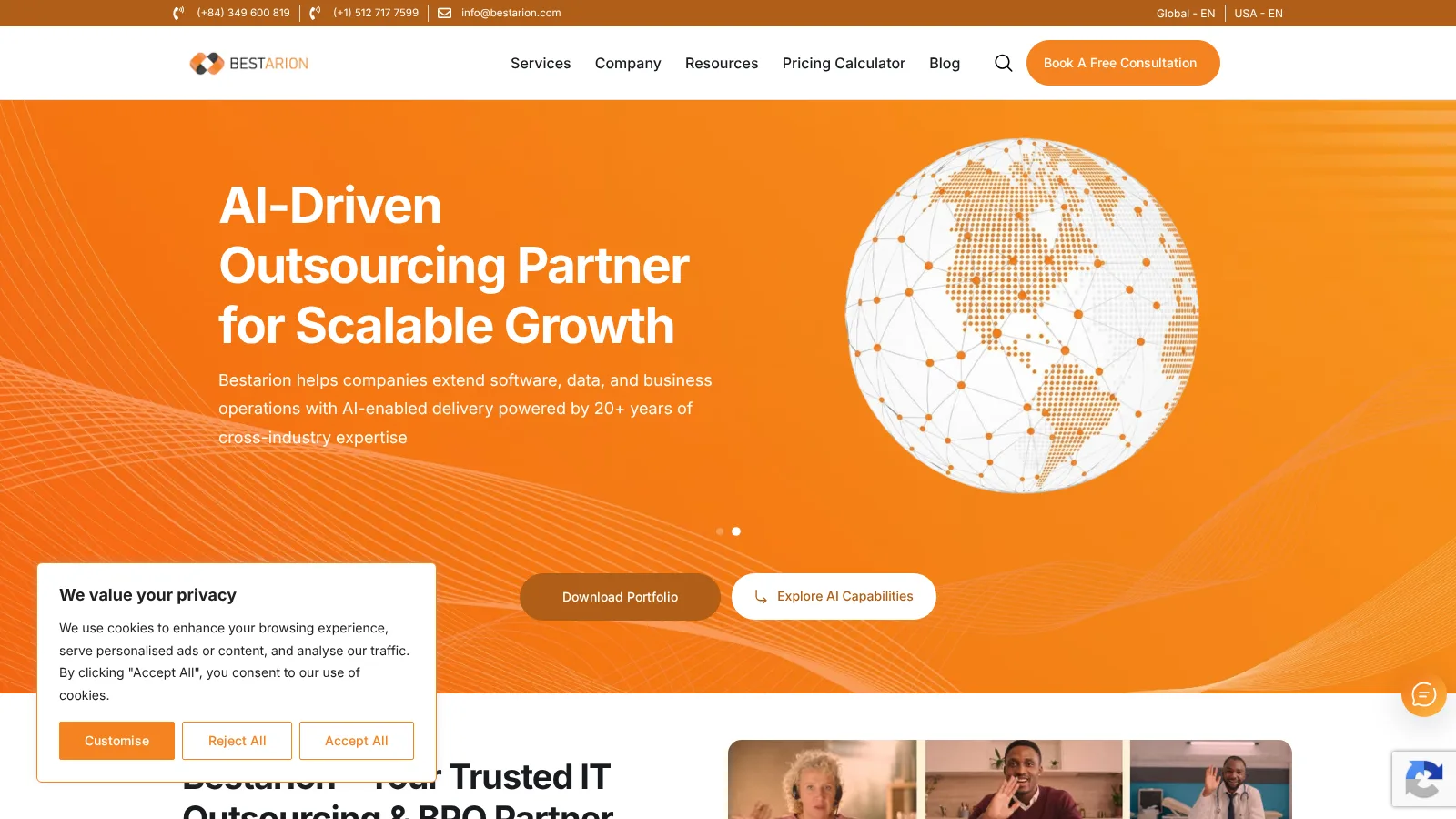
Bestarion occupies a position no one else on this list holds: the healthcare data operations hybrid. Bestarion is the international services arm of LARION, a Ho Chi Minh City software company founded in 2003, which gives the brand more than two decades of delivery history and a base in Quang Trung Software City, Vietnam's largest software park. The firm pairs IT outsourcing with business process outsourcing, and its declared specializations sit exactly where healthcare's unglamorous money is: healthcare supply chain analytics, medical billing and claims support, and the financial data operations that payers and revenue cycle companies outsource by the hundred seats. For a healthcare buyer whose problem is a data pipeline plus the people and process to run it, rather than a consumer product, this shape of vendor is the correct match, and Bestarion is the tier's established name for it.
The two firms together illustrate why "healthcare software development companies" is a category with internal structure rather than a ranking. PowerGate is who you shortlist to build a regulated product end to end, from architecture through app store; Bestarion is who you shortlist when the deliverable is a running operation over health data. Both carry the longevity signal that matters most in this market, fifteen and twenty-plus years respectively, because healthcare sales cycles are slow, and a vendor that has survived two decades of them has references that reach back further than most procurement processes bother to check.
The specialist partners at a glance
| Company | Founded | Base | Healthcare center of gravity | Signals to verify |
|---|---|---|---|---|
| PowerGate Software | 2011 | Hanoi, offices in US, Australia, Canada, UK | Full-cycle product engineering, OpenMRS medical record platforms | ISO 9001 and ISO/IEC 27001, 400+ engineers, 200+ projects |
| Bestarion | 2003 (as LARION) | Quang Trung Software City, Ho Chi Minh City | Healthcare supply chain analytics, medical billing, claims operations | Two decades of delivery, ITO plus BPO model |
Quick facts for PowerGate Software and Bestarion. Both firms are long-standing AgileTech partners, disclosed in the first section.
FPT Software and TMA Solutions: the enterprise tier
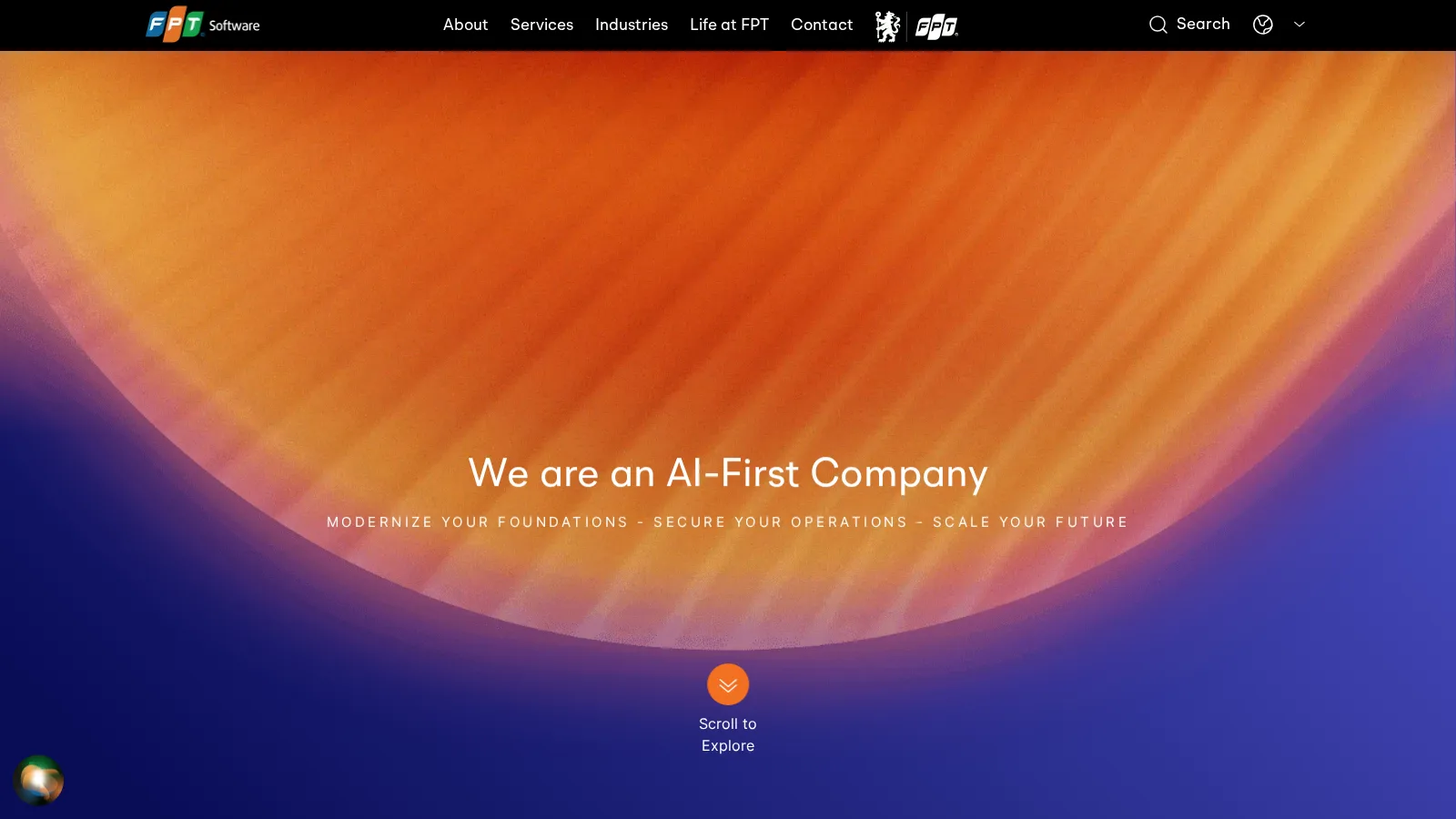
FPT Software is the scale benchmark for Vietnamese IT and, for healthcare buyers, the firm whose presence validates the whole market. Founded in 1999 as part of FPT Corporation, it now employs more than 33,000 people across roughly 30 countries, and its global IT services revenue reached 1.34 billion dollars in the most recent fiscal year. The healthcare practice is not a recent label: FPT has close to two decades in health IT, spanning EMR and EHR work, hospital digital management systems, payer platforms and medical device software, and in 2024 it signed a strategic partnership with GE HealthCare to co-develop digital health solutions, the kind of counterparty endorsement no marketing budget can buy. For a hospital group, a payer or a health tech company planning a program measured in hundreds of engineer-years, this is the tier the program needs, with certified process, audit-ready delivery and staffing depth no specialist can match.
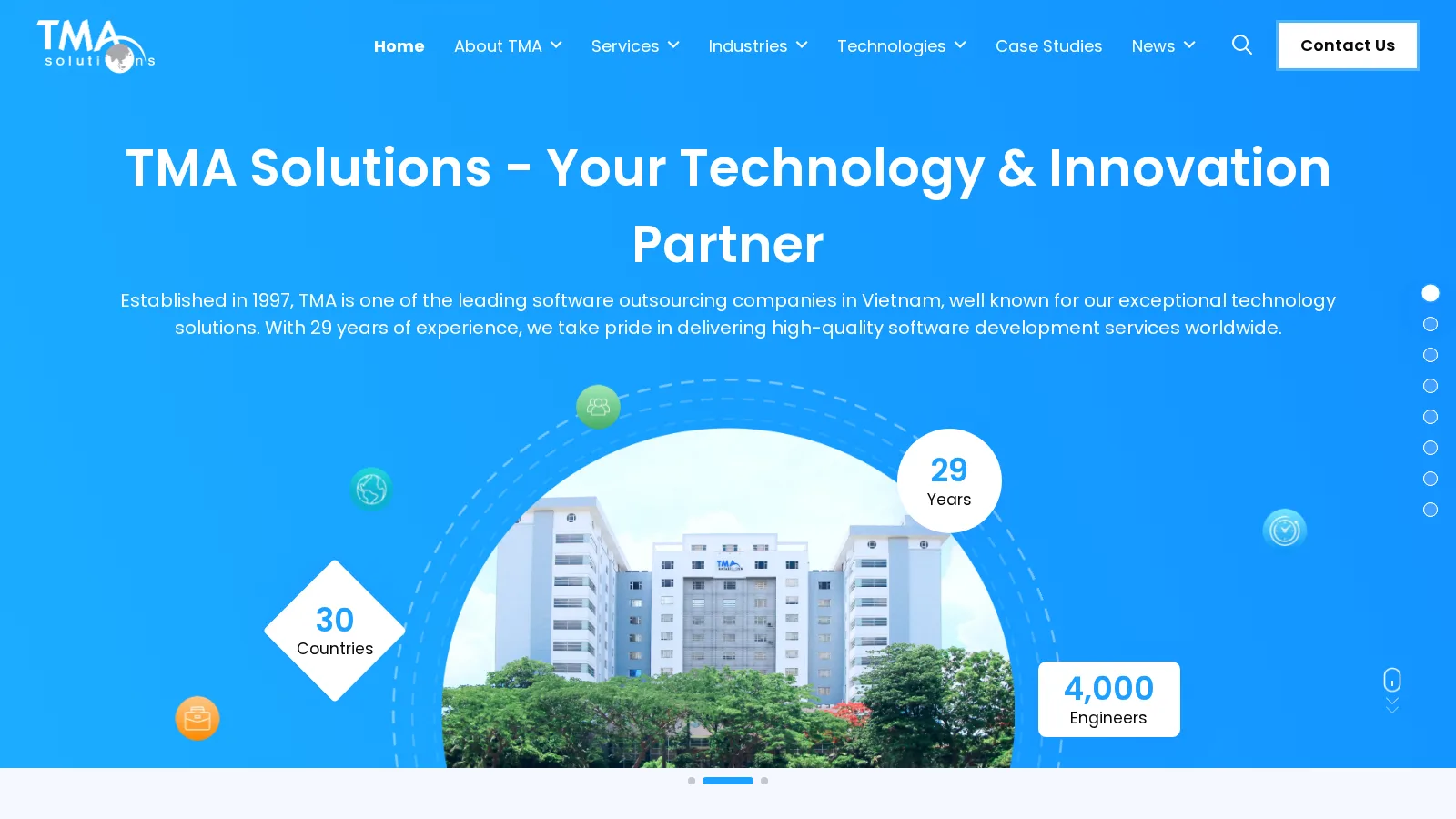
TMA Solutions is the enterprise tier's engineering veteran and its most healthcare-concentrated member. Founded in 1997 in Ho Chi Minh City, TMA fields roughly 4,000 engineers serving clients across 30 countries, and about 700 of them, nearly a fifth of the company, work in its healthcare and health tech group, a practice the firm has been building for more than 16 years. The work runs deep rather than wide: medical device software, health data platforms, telehealth systems, HL7 and FHIR integration, imaging, and the test engineering discipline TMA has been known for since its telecom years, which transfers directly to the verification-heavy world of clinical software. Engagements start large and entry rates start under 25 dollars per hour, enterprise pricing in this market being a function of program size rather than rate cards.
The honest guidance for both firms is the same as in our general Vietnam review: match the tier to the work. A hundred-person EMR modernization belongs here, and placing it with a boutique would be concentration risk no procurement office should accept. An eight-person telehealth product team does not belong here, it would be a small account inside machinery built for large ones, and both firms would honestly tell a small buyer the same thing. The enterprise tier's value is that when the work is genuinely enterprise-shaped, these two firms can field in a quarter what the specialist tier could not assemble in a year.
The enterprise tier at a glance
| Company | Founded | Scale | Healthcare practice | Signals to verify |
|---|---|---|---|---|
| FPT Software | 1999 | 33,000+ employees, 30 countries, 1.34B USD revenue | About two decades in health IT: EMR and EHR, hospital digital management, payer platforms | GE HealthCare strategic partnership, global delivery campuses |
| TMA Solutions | 1997 | About 4,000 engineers, clients in 30 countries | Dedicated group of about 700 healthcare engineers, 16+ years | Medical device software, HL7 and FHIR integration, test engineering depth |
Quick facts for the two enterprise-tier firms on this list. Both are long-standing AgileTech partners, disclosed in the first section.
Five more names that earn the shortlist
KMS Technology, founded in 2009 across Ho Chi Minh City and Atlanta, earns its place through the most deliberate healthcare structure on this list: KMS Healthcare, a dedicated unit built entirely for US health tech, delivering product engineering for digital health companies with the HIPAA and SOC 2 machinery that market demands, backed by the group's roots in software testing and engineering productivity. Savvycom, founded in 2009 in Hanoi with offices in Ho Chi Minh City, Australia and the US, has carried healthcare as a declared vertical for over a decade, with clients including Med-on and a portfolio spanning telehealth, clinic management and pharmacy platforms, at rates typically in the 25 to 49 dollar per hour band.
Rikkeisoft, founded in 2012 in Hanoi by six graduates of Japan's Ritsumeikan and Keio universities, has grown past 2,000 employees and made healthcare a funded strategic bet: in late 2023 it announced a 10 million dollar investment in AI healthcare applications for the Japanese market, where it holds the deep client base its founding story predicts. For buyers in or selling into Japan's health system, that combination is unique on this list. Saigon Technology, founded in 2012 in Ho Chi Minh City, brings enterprise healthcare references most mid-size firms cannot show, Abbott and Standard Chartered sit on its client list, and a delivery reputation built on quality at accessible rates, with entry bands under 25 dollars per hour.
Kyanon Digital, founded in 2012 in Ho Chi Minh City with over 300 people, closes the list from the consulting side: its client work for Roche and Servier, two global pharmaceutical companies, plus Samsung, Starbucks and ACB Bank, reflects a firm comfortable inside large regulated organizations' vendor management, and its practice mix of data, AI and machine learning, low-code platforms and experience design fits the digital front door projects pharma and provider marketing teams actually buy. Rates run 25 to 49 dollars per hour, reflecting the consulting layer. Five firms, five different reasons to be here: a US health tech unit, a healthcare vertical veteran, a funded Japan bet, enterprise references, and pharma-grade consulting.
The five at a glance
| Company | Founded | Team size | Healthcare angle | Rate band |
|---|---|---|---|---|
| KMS Technology | 2009 | Around a thousand | KMS Healthcare unit built for US health tech, HIPAA and SOC 2 machinery | Program-priced |
| Savvycom | 2009 | Several hundred | Healthcare vertical for over a decade: telehealth, clinics, pharmacy | 25 to 49 USD per hour |
| Rikkeisoft | 2012 | Over two thousand | 10M USD AI healthcare investment aimed at Japan | Under 25 USD per hour |
| Saigon Technology | 2012 | Several hundred | Enterprise references including Abbott | Under 25 USD per hour |
| Kyanon Digital | 2012 | Over three hundred | Pharma consulting work for Roche and Servier | 25 to 49 USD per hour |
Quick facts for the remaining five firms. Rate bands are typical published entry bands as of 2026; every firm prices per engagement.
How to choose among them: the healthcare diligence process
Start from the compliance surface, not the feature list. Write one paragraph: what data classes the product touches (PHI, claims, imaging, device telemetry), which regulations therefore apply (HIPAA, GDPR, national health data law, medical device classification), what must integrate with what (EMR vendors, interface engines, FHIR endpoints, payment rails), and how many people the team needs for how long. That paragraph does the tier routing almost automatically: two firms on this list fit hospital-scale programs, eight fit product teams, and one fits data operations. It also becomes the brief candidates respond to, and in healthcare the response quality is itself a filter, because a vendor that answers a compliance-shaped brief with a generic capabilities deck has told you how the next two years of security questionnaires will go.
Then verify the four proofs from the first section, in order of forgeability. Certifications first, because they are the hardest to fake: look the vendor up in the certification body's registry under its legal name, and ask for the SOC 2 report under NDA rather than accepting the badge. References second: choose them yourself from the client list, insist on at least one engagement shaped like yours, and ask every reference the same three questions, what went wrong, how was it handled, would you start again tomorrow. People third: put your engineers in front of theirs on a real problem from your integration surface, an ADT feed mapping, a FHIR consent model, an audit log design, and score specifics, questions back, and honest disagreement. Marketing last, weighted at zero.
Then pilot before you commit, with a healthcare-specific twist: make the pilot cross the compliance boundary, not dodge it. A four-to-eight-week paid pilot on a real, bounded piece of work should include at least one security questionnaire, one BAA or data processing agreement negotiation, and one integration against a realistic test environment, because those are the muscles the engagement will actually use, and a vendor that shines on greenfield code but stalls on the paperwork has revealed the failure mode before it costs you a launch date. Every firm on this list, ours first, should welcome that pilot design. The ones that resist it are answering a question you should notice.
From this list to a signed healthcare pilot in five moves
-
Write the compliance paragraphHalf a day
Data classes, applicable regulations, integration surface, team size and duration. The tier choice falls out of it, and it becomes the brief.
-
Verify certifications in the registryOne afternoon
ISO 27001 and ISO 13485 under the legal name, SOC 2 report under NDA. Badges on websites are claims; registries are evidence.
-
Call references you chooseThree calls
At least one engagement shaped like yours. What went wrong, how was it handled, would they start again tomorrow.
-
Interview engineer to engineerOne call each
A real problem from your integration surface: ADT mapping, FHIR modeling, audit log design. Score specifics and pushback.
-
Pilot across the compliance boundaryBefore the big contract
Four to eight weeks, paid, with a security questionnaire, a BAA negotiation and a realistic integration inside the scope.
Frequently asked questions
What are the best healthcare software development companies in 2026?
The ten strongest names reviewed here are AgileTech Vietnam, PowerGate Software, Bestarion, FPT Software, TMA Solutions, KMS Technology, Savvycom, Rikkeisoft, Saigon Technology and Kyanon Digital. FPT Software and TMA Solutions form the enterprise tier for hospital-scale programs; the others are specialists where digital health product teams get senior attention. The honest answer to best is always best for which work: the list groups by tier because a hospital EMR migration and an eight-person telehealth team have different correct answers.
What should a healthcare company verify before hiring a software vendor?
Four proofs, in order of forgeability. Certifications checked in the issuing registry under the vendor's legal name: ISO 27001 at minimum, ISO 13485 for device work, SOC 2 reports read under NDA for US health data. References you choose from the client list, at least one shaped like your engagement. An engineer-to-engineer interview on your real integration surface: HL7 feeds, FHIR resources, audit log design. And a paid pilot that deliberately crosses the compliance boundary, including a security questionnaire and a BAA negotiation, not just greenfield code.
Why do so many healthcare software companies come from Vietnam?
Because the market's healthcare depth became checkable over two decades. FPT Software has roughly twenty years in health IT and a strategic partnership with GE HealthCare; TMA Solutions fields a dedicated healthcare group of about 700 engineers built over 16 years; and the specialist tier ships EMR integrations, telehealth platforms and patient products for US, European, Japanese and Australian clients daily. Combined with engineering costs that run far below US levels, the result is that serious healthcare product budgets stretch several times further without dropping the compliance bar.
How much does healthcare software development cost with these companies?
Published entry bands on this list run from under 25 dollars per hour (AgileTech Vietnam, PowerGate Software, Rikkeisoft, Saigon Technology, and the enterprise firms' entry bands) to 25 to 49 dollars per hour (Savvycom, Kyanon Digital), with KMS Healthcare pricing per program. Healthcare adds real cost on top of any rate: compliance review, security attestation, integration against clinical systems and audit-grade documentation. The way to compare vendors is total cost to a compliant launch, not the hourly rate, and a vendor that has done your compliance class before is usually cheaper at a higher rate.
When does a healthcare buyer need the enterprise tier instead of a specialist?
When the work is program-shaped: an EMR migration, a payer claims platform, a national health data project, anything needing hundreds of engineer-years, procurement-grade process and continuity guarantees only a large balance sheet can make. That is FPT Software and TMA Solutions territory on this list. A digital health product team of five to twenty is the opposite shape: it needs weekly iteration and senior attention, which the specialist tier's economics deliver and the enterprise tier's structurally cannot for small accounts.
Is this list independent?
No vendor list is, and this one discloses its conflicts instead of hiding them. AgileTech publishes this blog and opens the list, and four firms here, PowerGate Software, Bestarion, FPT Software and TMA Solutions, are long-standing partners whose sites the article links. What keeps the list usable is method: every profile carries checkable public facts, founding years, team sizes, certifications, named clients, rather than scores, and the diligence process at the end is designed to be run against every name on the page, including ours. Treat any list, this one included, as a phone book, never a verdict.
Source: https://agiletech.vn/blog/10-healthcare-software-development-companies/ · (c) AgileTech Vietnam. Printed from agiletech.vn.