 Nguyen Manh Thang
Chief Executive Officer, AgileTech Vietnam
Nguyen Manh Thang
Chief Executive Officer, AgileTech Vietnam
- Published
- Last updated
- Read time
- 10 min
- Views
- 63
Read the AI overview
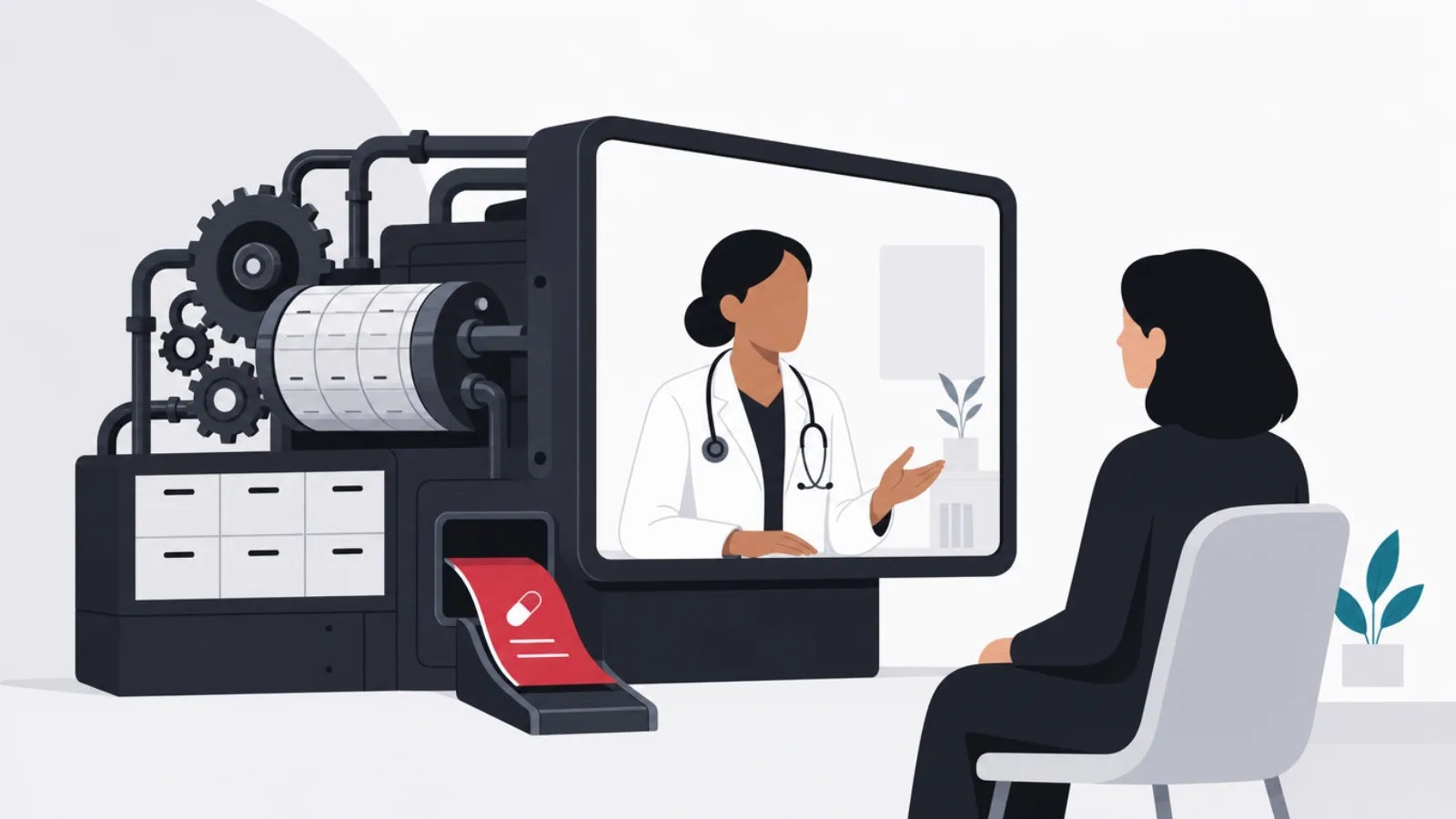
A telemedicine platform is a clinical system in which the video call is the smallest part. The real product is the workflow around it: identity and eligibility checks, scheduling and virtual waiting rooms, intake and triage, the visit itself with clinical documentation, e-prescribing and orders, billing with telehealth-specific codes, and follow-up. Under that sit the hard requirements: integration with EHRs over FHIR and HL7 so the visit lands in the patient's record, HIPAA-grade security with encrypted media and audited access, and clinical-channel reliability, because a dropped platform is a missed diagnosis, not an inconvenience. Building a credible platform means budgeting most of the effort for workflow, integration and compliance, not for video, which is a solved commodity through WebRTC infrastructure providers.
Telemedicine crossed from novelty to standard of care, and the platforms underneath it split into two visible tiers: the ones clinicians tolerate and the ones they quietly route around. The difference is almost never video quality. It is everything around the video: whether the visit schedules itself into the clinic's existing calendar, whether the documentation writes back to the chart or has to be retyped, whether the prescription reaches the pharmacy before the patient does, and whether the whole thing survives a Monday-morning load spike.
This guide explains telemedicine at the platform level: the clinical workflow that is the actual product, the modules a credible platform contains, the integration layer that connects visits to records, prescriptions and payment, the security and compliance architecture that healthcare data demands, the reliability engineering a clinical channel requires, and the build-versus-buy arithmetic for the organizations that commission these systems. It pairs with the telemedicine app guide, which covers the patient-facing app's features and costs; this page is the systems view underneath that app.
The framing that keeps every section honest: telemedicine is healthcare delivered over a different channel, not software with a medical theme. Every design decision inherits clinical stakes, regulatory scrutiny and clinician workflow reality, and the platforms that win are the ones built by teams who accepted that from the first sprint.
Key takeaways
- The video call is roughly a tenth of the system: scheduling, triage, documentation, e-prescribing, billing and follow-up workflows are where telemedicine platforms succeed or fail.
- Clinician adoption is the binding constraint: a platform that adds minutes to each visit dies in pilot, so documentation and EHR write-back must be designed around the clinician's existing rhythm.
- EHR integration is non-negotiable for provider-side platforms: visits that do not land in the patient record over FHIR or HL7 create a shadow chart, which is a clinical safety problem, not a missing feature.
- Compliance is architecture, not paperwork: encrypted media paths, audited access to every record touch, BAAs with every vendor in the data path, and data residency designed before the first sprint.
- Reliability is clinical-grade: visits fail into phone calls gracefully, waiting rooms survive load spikes, and the platform degrades feature by feature rather than all at once.
- Build the workflow, buy the plumbing: video infrastructure, e-prescribing rails and identity verification are commodities; your clinical workflow and integrations are the product.
What a telemedicine platform actually is

Strip the label and a telemedicine platform is a clinical workflow system with a real-time communication channel embedded in it. The workflow starts before any call: a patient requests care, is identified and matched to their record, has insurance eligibility checked where relevant, completes intake forms and symptom triage, and lands in a schedule or a virtual queue. The visit itself is video, audio or chat, with the clinician documenting as they go. And the workflow continues after the call ends: the note is finalized into the record, prescriptions and lab orders go out over their respective rails, the encounter is coded and billed, and follow-up, results delivery, care plans, next appointments, is scheduled. Platforms that model this whole arc are clinical tools; platforms that model only the call are video apps with a login page.
The taxonomy matters because different platform types carry different requirements. Provider-side platforms extend an existing clinic or hospital: their center of gravity is integration, landing visits in the existing EHR, syncing the existing schedule, using the existing patient portal identity. Direct-to-consumer platforms are the virtual clinic itself: they own the full record, the clinician network, the prescribing relationships, and carry the heaviest regulatory load because there is no incumbent infrastructure to lean on. Specialty platforms, mental health, dermatology, chronic disease, urgent care, layer domain-specific workflows on either base: asynchronous photo review for dermatology, measurement-based care instruments for mental health, device data for chronic conditions, the thread the remote monitoring guide follows.
What every type shares is the adoption physics. Patients adopt telemedicine easily; clinicians adopt it exactly to the degree it respects their time. A clinician running twenty visits a day experiences every extra click twenty times, and a platform that adds three minutes of documentation overhead per visit costs an hour a day, which is the difference between adoption and quiet sabotage. This is why the design center of a serious platform is the clinician's screen, not the patient's: one-screen visit workflows, documentation templates that match the specialty's patterns, and write-back to the chart that requires zero retyping. The patient app matters; the clinician cockpit decides the platform's fate.
The other shared property is that the video itself is a commodity. WebRTC infrastructure, through providers or self-hosted media servers, delivers the call; the engineering differentiators live elsewhere: in the waiting-room orchestration that manages clinician queues, in the degradation logic that drops video to audio to phone as networks fail, in the recording and consent machinery where jurisdictions allow it, and in the quality telemetry that tells operations which visits failed and why. Teams that budget their effort proportionally to what is hard, workflow, integration, compliance, reliability, build platforms; teams that spend their budget rebuilding video infrastructure build expensive demos.
The platform vocabulary
- Virtual waiting room
- The queue and orchestration layer between patient check-in and clinician availability, with position visibility and readiness checks.
- E-prescribing (eRx)
- Electronic prescription transmission to pharmacies over dedicated rails, with controlled-substance prescribing (EPCS) as a separately regulated tier.
- FHIR
- The modern healthcare interoperability standard: resource-based APIs for patients, encounters, observations, medications and more.
- BAA
- Business associate agreement: the HIPAA contract required with every vendor that touches protected health information in your data path.
- Store-and-forward
- Asynchronous telemedicine: structured data or images reviewed by a clinician later, the workflow behind dermatology and second-opinion platforms.
The clinical workflow is the product

Before the visit, the platform earns or forfeits the clinic's trust. Identity comes first: matching the patient to the right record, with real identity verification for new patients in prescribing contexts, because a misidentified patient contaminates everything downstream. Eligibility and payment follow where insurance is involved: real-time eligibility checks against payer APIs prevent the billing surprises that sour both patients and revenue cycle teams. Intake and triage close the pre-visit phase: structured symptom questionnaires that route the patient to the right care level, urgent care versus scheduled visit versus emergency escalation, and put a usable summary in front of the clinician before the call starts, so the first three minutes are medicine rather than data entry.
Scheduling deserves its own paragraph because it is where provider-side platforms most often fail quietly. Clinics live in their existing schedule, inside the EHR or a practice management system, and a telemedicine platform with its own parallel calendar creates double-booking, no-show confusion and front-desk workarounds within a week. Real integration syncs availability bidirectionally, respects visit-type rules, which appointment lengths, which clinicians, which payers, and handles the virtual-specific mechanics: reminder sequences with join links, device-check prompts before the slot, and the no-show and late-arrival policies that virtual care needs stated explicitly. Direct-to-consumer platforms own this problem fully, adding clinician-network scheduling: licensing-aware routing, because the clinician must be licensed in the patient's state or country, is a hard constraint that surprises every first-time builder.
During the visit, the clinician cockpit carries the load: the video pane beside the chart summary, the documentation template for the specialty, orders and prescribing in the same screen, and the ability to bring in an interpreter, a caregiver or a second clinician without leaving the session. Documentation is the make-or-break: ambient AI scribing has moved from novelty toward standard equipment, drafting the note from the conversation for clinician review, and platforms without it should at minimum offer specialty templates and smart phrases that keep documentation inside the visit's footprint. Every minute of after-hours charting a platform causes is measured, resented and reported to the medical director.
After the visit, the loose ends decide clinical quality. The note finalizes into the record, on the platform's own chart or written back to the clinic's EHR. Prescriptions transmit over e-prescribing rails, with controlled-substance prescribing as its own regulated tier requiring identity proofing and two-factor signing. Lab and imaging orders route to partner networks with results returning to both clinician and patient. Billing codes the encounter, with telehealth-specific modifiers and the payer-by-payer rules that make healthcare billing its own discipline. And follow-up closes the loop: care plans, next appointments, escalation to in-person care when the visit surfaced something a camera cannot resolve. Platforms are judged clinically on exactly these unglamorous flows, because a dropped follow-up is a missed finding, and a missed finding is the incident report that ends the pilot.
The integration layer: records, prescriptions, payment

EHR integration is the spine of provider-side telemedicine, and it has a modern default: FHIR APIs, which every major EHR now exposes under regulatory pressure, supplemented by HL7 v2 feeds and vendor-specific APIs where FHIR coverage runs out. The core loop reads the patient, their problem list, medications and allergies into the visit context, and writes back the encounter: the note, the codes, the orders. The engineering reality the EMR integration guide covers in depth applies fully here: every EHR implements the standards differently, write-back is always harder than read, and integration timelines are measured in months of certification and testing per EHR, which is why platforms serving many clinics treat their integration layer as a product in itself, often built on integration platforms that amortize the per-EHR work.
The prescribing rail is its own world. E-prescribing in the US runs through dedicated networks connecting prescribers to pharmacies, with formulary and benefit checks, medication history retrieval, and the transmission itself; platforms integrate through certified e-prescribing vendors rather than building direct network membership, and the controlled-substances tier (EPCS) adds identity proofing, hard-token or biometric two-factor signing, and state-level rules including prescription drug monitoring program checks that the platform must surface in the prescribing flow. International markets each have their own rails and rules. The design consequence is universal: prescribing is a bought capability wired deeply into your workflow, and the wiring, formulary surprises, pharmacy selection, PDMP checks in-flow, is where the engineering lives.
The payment layer splits by business model. Insurance-billed care needs eligibility checking, claims generation with telehealth-specific place-of-service codes and modifiers, and the denial-management reality that payer rules for virtual care still shift year to year; platforms serving billed care integrate with clearinghouses and revenue-cycle systems rather than reimplementing them. Cash-pay and subscription models are simpler, standard payment processing with healthcare-aware receipt handling, but add their own machinery: membership management, employer-sponsored eligibility files, and the HSA/FSA payment acceptance that consumer health expects. Hybrid models, common in mental health, need both stacks and a rules engine deciding which applies per visit, which is exactly the kind of unglamorous complexity that separates a platform from a demo.
Identity and consent run under all of it. Patient identity: verified once, matched to records correctly, with the duplicate-record hygiene healthcare identity always demands. Clinician identity: licenses, DEA registrations where prescribing applies, and payer credentialing, all with expiry tracking, because a visit conducted by a lapsed license is a legal event. Consent: telehealth-specific consent captured and stored per jurisdiction's rules, recording consent where sessions are recorded, and minor-and-guardian logic for pediatric care. None of this is a feature a user asked for; all of it is load-bearing, and retrofitting any of it after launch costs multiples of building it in.
The integration surfaces, mapped
| Surface | Standard or rail | What flows |
|---|---|---|
| EHR / clinical record | FHIR, HL7 v2, vendor APIs | Patient context in; encounter, note, codes and orders back |
| E-prescribing | Certified eRx networks; EPCS tier | Prescriptions, medication history, formulary and PDMP checks |
| Labs and imaging | HL7 orders and results, lab network APIs | Orders out, results back to clinician and patient |
| Eligibility and claims | Payer APIs, clearinghouses (X12) | Coverage checks, telehealth-coded claims, remittances |
| Identity | Verification vendors, license registries | Patient identity proofing; clinician license and credential status |
The external rails a credible telemedicine platform connects to, and what each connection carries.
Compliance as architecture: HIPAA and its siblings

Healthcare privacy law, HIPAA in the US, GDPR with health-data provisions in Europe, and national equivalents elsewhere, reads as paperwork and lands as architecture. The technical safeguards translate directly into design: encryption in transit and at rest for every store that touches protected health information, including the media path, session recordings and the analytics pipeline that teams forget; access control on a need-to-know basis with role and relationship checks, a clinician sees their patients, not the database; audit logging of every access to every record, immutable and queryable, because when did who see what is a question regulators and courts actually ask; and session security appropriate to shared devices in clinical settings. These are foundations poured in the first sprint or jackhammered in later at multiples of the cost.
The vendor chain is the part first-time builders miss. Every third party in the data path, the video infrastructure, the cloud provider, the e-prescribing vendor, the SMS provider sending appointment reminders, the error-tracking tool that might catch a stack trace containing a patient name, must sign a business associate agreement and actually operate to it. That constraint shapes procurement: consumer-grade tools without BAAs are simply unavailable to you, and every architectural convenience, piping events to a third-party analytics tool, using a transcription API, gets evaluated as a compliance decision first. The discipline is a data-flow map maintained from day one: where PHI lives, where it moves, and who is contractually bound at every hop.
Telemedicine adds its own regulatory layer on top of privacy law. Clinician licensing is jurisdictional: the clinician must generally be licensed where the patient sits, which makes licensing-aware routing a hard scheduling constraint and multi-state or multi-country operation a compliance program, not a feature flag. Prescribing rules for virtual visits, especially for controlled substances, shift with policy and differ by jurisdiction. Recording consent varies by state and country. And reimbursement rules, which visit types are covered, at what parity with in-person care, define the business model's viability payer by payer. A platform serving multiple jurisdictions needs this encoded as configuration, rules per state or country that operations can update, rather than as assumptions baked into code.
Security beyond compliance completes the picture, because healthcare is a top-tier breach target and telemedicine platforms concentrate exactly the data attackers price highest. The standing program looks like: penetration testing before launch and annually, dependency and infrastructure scanning continuously, secrets management and least-privilege access internally, an incident response plan with the breach-notification clocks that health law imposes, and, increasingly, SOC 2 or HITRUST certification because enterprise health customers demand third-party attestation before any pilot. Budget security as a permanent line, roughly 10 to 15 percent of platform engineering, not a pre-launch checklist, and staff at least one owner for whom it is the whole job.
The compliance-as-architecture checklist
- Encrypt every PHI pathTransit, rest, media, recordings, backups, and the analytics pipeline everyone forgets.
- Relationship-based access controlClinicians see their patients. Roles plus care-relationship checks, not a flat permissions table.
- Immutable audit of record accessWho saw what, when. Queryable, because regulators and courts actually ask.
- BAAs across the vendor chainVideo, cloud, eRx, SMS, error tracking. No BAA, no data path, no exceptions.
- Licensing-aware routingThe clinician must be licensed where the patient sits. A scheduling constraint, not a disclaimer.
- Jurisdiction rules as configurationConsent, prescribing, reimbursement rules per state or country, updatable by operations.
- Standing security programPen tests, scanning, incident response with notification clocks, SOC 2 or HITRUST for enterprise sales.
Architecture and reliability: engineering a clinical channel

The reference architecture separates concerns that fail differently. A real-time layer handles media: WebRTC sessions through managed infrastructure or self-hosted media servers, with TURN relaying for hostile networks and regional presence for latency. A clinical workflow layer, the application core, owns scheduling, queues, visits, documentation and orders. An integration layer isolates the external rails, EHR, eRx, labs, payers, behind internal interfaces, so a partner's outage or API change is absorbed in one place. And a data layer keeps the clinical record store, the audit log and the analytics warehouse separate, because their access patterns, retention rules and compliance postures differ. The boundaries matter more than the deployment topology: a modular monolith with these seams outperforms a premature microservice fleet on every axis a startup cares about.
Reliability targets follow from what the channel is: care delivery. A commercial platform's availability target for visit hours sits at 99.9 percent or better, but the deeper requirement is graceful degradation, because components will fail and the visit must survive: video drops to audio, audio falls back to PSTN phone with the platform dialing both parties, chat persists as the floor, and documentation autosaves locally through network turbulence. The waiting room absorbs surge, Monday mornings, flu season, a regional event, through queuing rather than collapse, with honest wait estimates and callback options. Load-shedding order is a design decision made in advance: analytics and non-clinical features shed first, active visits and prescribing shed last, and the on-call runbook knows the order.
Observability in a clinical channel has a specific shape: per-visit quality telemetry, connection success, time-to-connect, video and audio quality scores, drop and recovery events, aggregated into the operational dashboard that tells you whether care is being delivered right now. Clinical-workflow monitoring sits beside it: prescription transmission success, EHR write-back lag, results delivery, because a silent eRx failure is a patient standing at a pharmacy counter. Alerting routes by clinical severity, not just technical severity: a 5 percent video-degradation event and a failed controlled-substance transmission are different pages. And every failure of the platform's clinical duties, missed write-backs, dropped orders, feeds an incident process with the same discipline hospitals apply to clinical incidents, because that is what they are.
Two architecture decisions deserve explicit early treatment because they harden fastest. Multi-tenancy: platforms serving many clinics need tenant isolation designed into the data layer from the start, per-tenant encryption keys where enterprise customers demand it, and the configuration machinery, per-tenant workflows, branding, integration endpoints, jurisdiction rules, that healthcare B2B sales will immediately require. And data residency: jurisdictions increasingly constrain where health data lives, so the storage architecture should be region-aware before the first international customer, not after their procurement team asks. Both are unremarkable to build early and organ-transplant surgery to retrofit, the same asymmetry that governs everything compliance-adjacent in this guide.
Build, buy, or assemble: the honest economics

The market offers three postures. Buying, white-label telemedicine platforms and EHR-embedded video visits, gets a clinic live in weeks at subscription cost, with the trade that your workflow is the vendor's workflow and your differentiation is a logo. Building everything is the opposite pole, and almost always wrong in one specific way: teams that build video infrastructure, e-prescribing connectivity or claims processing from scratch are spending scarce capital rebuilding commodities behind other companies' compliance moats. Assembling is the posture that wins for most platform businesses: buy the rails, video infrastructure under BAA, certified eRx, integration platforms for EHR connectivity, identity verification, payment processing, and build the clinical workflow, the clinician cockpit, the patient experience and the orchestration that is actually yours.
The economics of the assembled build have a recognizable shape. A credible provider-side or specialty platform, the clinical workflow arc, one or two EHR integrations, eRx through a certified vendor, HIPAA-grade architecture with audit and access control, and the reliability engineering above, lands in the 400,000 to 900,000 dollar range over 9 to 15 months with a team of 6 to 10, the general arithmetic the telemedicine app guide itemizes from the feature side. Direct-to-consumer platforms with clinician networks, multi-state licensing machinery and billing stacks run past a million before scale marketing. And the recurring line every plan should carry: 25 to 40 percent of the build cost annually for the standing work, rail fees, compliance program, integration maintenance as EHRs and payers change their sides, and the security program that never ends.
The team shape matters as much as the budget, and healthcare experience is the expensive-to-skip ingredient: engineers who have shipped under HIPAA, a product owner who has sat in clinic workflows, and clinical advisors, practicing clinicians reviewing the cockpit and the escalation logic, from the first sprint, not the pilot postmortem. This talent concentration is scarce onshore, which is why the sourcing patterns from this cluster apply directly: a permanent core holding clinical product context, with delivery capacity through dedicated teams from markets with healthcare engineering depth, under the vendor-selection rule that portfolios in regulated healthcare, systems that passed real compliance review, outrank generic references entirely.
The decision sequence that keeps organizations out of the classic traps: if telemedicine is an access channel for an existing clinical business and your EHR's embedded offering is tolerable, start there, and let real usage teach you what to build. If the workflow is your differentiation, a specialty model, a novel care pathway, a platform business, assemble: rails bought, workflow built, compliance owned. Reserve full building for the rare cases with genuine infrastructure differentiation and the capital to sustain it. And in every posture, own your data model and your integration contracts, because the migration you cannot make is the vendor decision you cannot reverse, in telemedicine as in every clinical system this cluster covers.
The assembled build, sized
A staged roadmap that survives contact with clinicians
Stage one, the compliant core, proves the visit loop end to end for one specialty and one jurisdiction: identity, scheduling or queue, intake, the video visit with documentation, and the note landing somewhere real, the platform's own record or one EHR write-back, with the security architecture, encryption, access control, audit, complete rather than promised. Prescribing enters this stage only if the care model requires it at launch, because eRx certification has its own clock. The stage gate is a timed clinician test: a full visit cycle no slower than the in-person baseline, run by clinicians who were not in the design meetings. Passing that gate with five clinicians predicts the platform's future better than any feature list.
Stage two, the operational platform, makes the pilot survivable at real volume: the waiting-room and surge machinery, the degradation ladder down to phone fallback, per-visit quality telemetry with an operations dashboard, billing integration for the business model in play, and the second and third EHR integrations if the platform is provider-side, each one cheaper than the last as the integration layer earns its keep. This is also the stage for the workflow depth that adoption feedback demands: specialty templates, ambient documentation, the interpreter and group-visit mechanics that real care requires. The gate is operational: a full month at pilot volume with clinical-duty monitoring green, no silent eRx failures, write-back lag within agreed bounds, and incident discipline demonstrated on whatever went wrong, because something did.
Stage three, the scaling platform, is where multi-tenancy, multi-jurisdiction configuration and enterprise requirements earn their build: tenant isolation and per-tenant configuration for B2B sales, the state-and-country rules engine for licensing, consent and prescribing variation, SOC 2 or HITRUST attestation because enterprise procurement will ask, and the data platform, warehouse, quality metrics, population views, that turns visit exhaust into clinical and business intelligence. Remote monitoring integration typically enters here for chronic-care models, extending the platform from episodic visits toward continuous care, the arc the remote monitoring guide describes. The gate is commercial: an enterprise customer's security and integration review passed without heroics.
Across every stage, two disciplines separate the platforms that compound from the ones that thrash. First, clinician co-design as a standing practice: practicing clinicians reviewing every workflow change before it ships, because the gap between how care works in a product spec and how it works at 4:50 PM on a Friday is where adoption dies. Second, the jurisdictional and payer landscape tracked as an operational function: telehealth rules still move, reimbursement policies shift annually, and the platform that encodes rules as configuration adapts in days while the platform that hardcoded them re-engineers under deadline. Telemedicine rewards the same virtues as the rest of healthcare software: respect for the workflow, patience with the rails, and compliance treated as physics rather than paperwork.
The three stages, gated
-
Stage one: the compliant coreMonths 1 to 6
One specialty, one jurisdiction, full visit loop with real documentation landing and complete security architecture. Gate: clinicians match their in-person visit time.
-
Stage two: the operational platformMonths 6 to 12
Surge and degradation machinery, quality telemetry, billing, additional EHR integrations, workflow depth from pilot feedback. Gate: a month at volume with clinical-duty monitoring green.
-
Stage three: the scaling platformYear 2
Multi-tenancy, jurisdiction rules engine, SOC 2 or HITRUST, data platform, monitoring integration for chronic care. Gate: an enterprise security review passed without heroics.
-
Always: clinician co-designStanding
Practicing clinicians review every workflow change before it ships. The 4:50 PM Friday reality is where adoption is decided.
Frequently asked questions
What does a telemedicine platform include beyond video calls?
The video is roughly a tenth of the system. The rest is the clinical workflow: patient identity and eligibility, scheduling and virtual waiting rooms, intake and triage, clinician documentation during the visit, e-prescribing and lab orders, billing with telehealth-specific codes, and follow-up. Underneath sit EHR integration so visits land in the record, HIPAA-grade security with audited access, and the reliability engineering a clinical channel demands.
Why do telemedicine pilots fail with clinicians?
Time. A clinician running twenty visits a day experiences every extra click twenty times; three added minutes per visit is a lost hour a day, and it surfaces as quiet workarounds rather than complaints. The fixes are design decisions: one-screen visit workflows, specialty documentation templates or ambient scribing, and EHR write-back with zero retyping. The honest test is timing a full visit cycle against the clinic's in-person baseline before any pilot.
Does a telemedicine platform need EHR integration?
For provider-side platforms, yes, and it is the spine of the build: visits that do not land in the patient's record create a shadow chart, which is a clinical safety problem. Integration runs over FHIR APIs, HL7 feeds and vendor-specific interfaces, with write-back always harder than read and each EHR taking months of certification and testing. Direct-to-consumer platforms own their full record instead, trading integration effort for record-keeping and licensing burden.
What does HIPAA compliance mean for telemedicine architecture?
It lands as architecture, not paperwork: encryption across every PHI path including media and recordings, relationship-based access control, immutable audit logging of every record access, and business associate agreements with every vendor in the data path, video infrastructure, cloud, e-prescribing, even SMS reminders. Telemedicine adds jurisdictional layers on top: clinician licensing where the patient sits, per-state consent and prescribing rules, and payer-specific reimbursement policies, best encoded as configuration.
How much does building a telemedicine platform cost?
An assembled build, bought rails for video, e-prescribing and identity, with your own clinical workflow, one or two EHR integrations and HIPAA-grade architecture, typically lands between 400,000 and 900,000 dollars over 9 to 15 months with a team of 6 to 10 including clinical advisors. Direct-to-consumer platforms with clinician networks and multi-state licensing run past a million. Plan 25 to 40 percent of build cost annually for rails, compliance and integration maintenance.
Should we buy a white-label platform or build our own?
Route on differentiation. If telemedicine is an access channel for an existing clinical business, buy first, your EHR's embedded offering or a white-label platform, and let real usage teach you. If the workflow is your product, a specialty model or novel care pathway, assemble: buy the commodity rails, build the clinical workflow and own the compliance. Full building is for rare infrastructure-differentiated cases. In every posture, own your data model and integration contracts.
If the platform layer described here is your next build, AgileTech is a Vietnam-based AI software development company that engineers consultation platforms from the clinical workflow up.
Source: https://agiletech.vn/blog/telemedicine-platform-guide/ · (c) AgileTech Vietnam. Printed from agiletech.vn.