 Nguyen Manh Thang
Chief Executive Officer, AgileTech Vietnam
Nguyen Manh Thang
Chief Executive Officer, AgileTech Vietnam
- Published
- Last updated
- Read time
- 13 min
- Views
- 109

Read the AI overview
To build a pharmacy system, design it around three unforgiving cores and integrate outward. The first core is the dispensing workflow engine: prescription intake, pharmacist verification, drug-interaction and allergy checks, label generation and counseling flags, modeled as an auditable state machine where every transition records who did what and when. The second is inventory with pharmaceutical semantics: batch and lot tracking, expiry-date logic with first-expiry-first-out picking, reorder points, and controlled-substance counts that reconcile to the unit. The third is the compliance spine: role-based access mapped to pharmacy practice, immutable audit logs, and regulator-ready reports for controlled substances, because in this domain the audit trail is a feature, not an afterthought. Around those cores sit the point of sale, insurance or payer claim flows where applicable, e-prescription intake, and supplier ordering. Build the verification workflow and inventory first, run them parallel to the legacy process in one pilot pharmacy, then cut over and add integrations by measured pain. A single-pharmacy system is realistically a 4 to 8 month build with a small senior team; multi-branch chains with claims integration run longer, and all figures here are illustrative planning shapes.
Pharmacy software is bought and built under a pressure most business software never feels: a wrong pick, a missed interaction or a sloppy controlled-substance count is not a bug ticket, it is a patient at risk and a license on the line. That pressure shapes every good decision in a pharmacy system build, and explains most of the failures: teams that treat the domain as retail-with-drugs ship systems that pharmacists route around, and pharmacists routing around software is exactly how errors happen.
This guide is the build companion to our pharmacy software requirements catalog, which lists what such a system must do. Here the question is how: what the architecture looks like, how to model the dispensing workflow so it is safe and auditable, why pharmaceutical inventory defeats generic stock modules, where compliance lives in the codebase, which integrations matter in what order, and how to phase delivery so a working pharmacy never stops working while you modernize it.
The advice targets the common real-world cases: an independent pharmacy or small chain replacing paper and spreadsheets, a growing chain outgrowing an off-the-shelf package, and a health-tech company building pharmacy capability into a wider product. Costs and timelines quoted throughout are illustrative planning shapes, not quotes; jurisdictional rules differ, and your local pharmacy regulator's word beats anything on this page.
Key takeaways
- A pharmacy system is three systems wearing one interface: a dispensing workflow engine, an inventory ledger with batch and expiry semantics, and a compliance record. Weakness in any one eventually becomes a patient-safety or license problem.
- Model dispensing as an explicit state machine, intake, verify, fill, check, counsel, dispense, with pharmacist identity on every transition. The audit trail must be immutable and boring to produce.
- Pharmacy inventory is not retail inventory: batches, lots, expiry dates, first-expiry-first-out picking, cold-chain flags and unit-level controlled-substance counts are the parts generic stock modules get wrong.
- Regulations vary by country but rhyme: controlled-substance registers, pharmacist-only actions, retention periods and data protection. Build the compliance spine as configuration, not as hard-coded rules for one jurisdiction.
- Phase the build: verification workflow and inventory first, pilot in one pharmacy against the legacy process, then POS, e-prescriptions, claims and supplier integrations by measured pain, not by feature list.
The anatomy: three cores and an integration ring
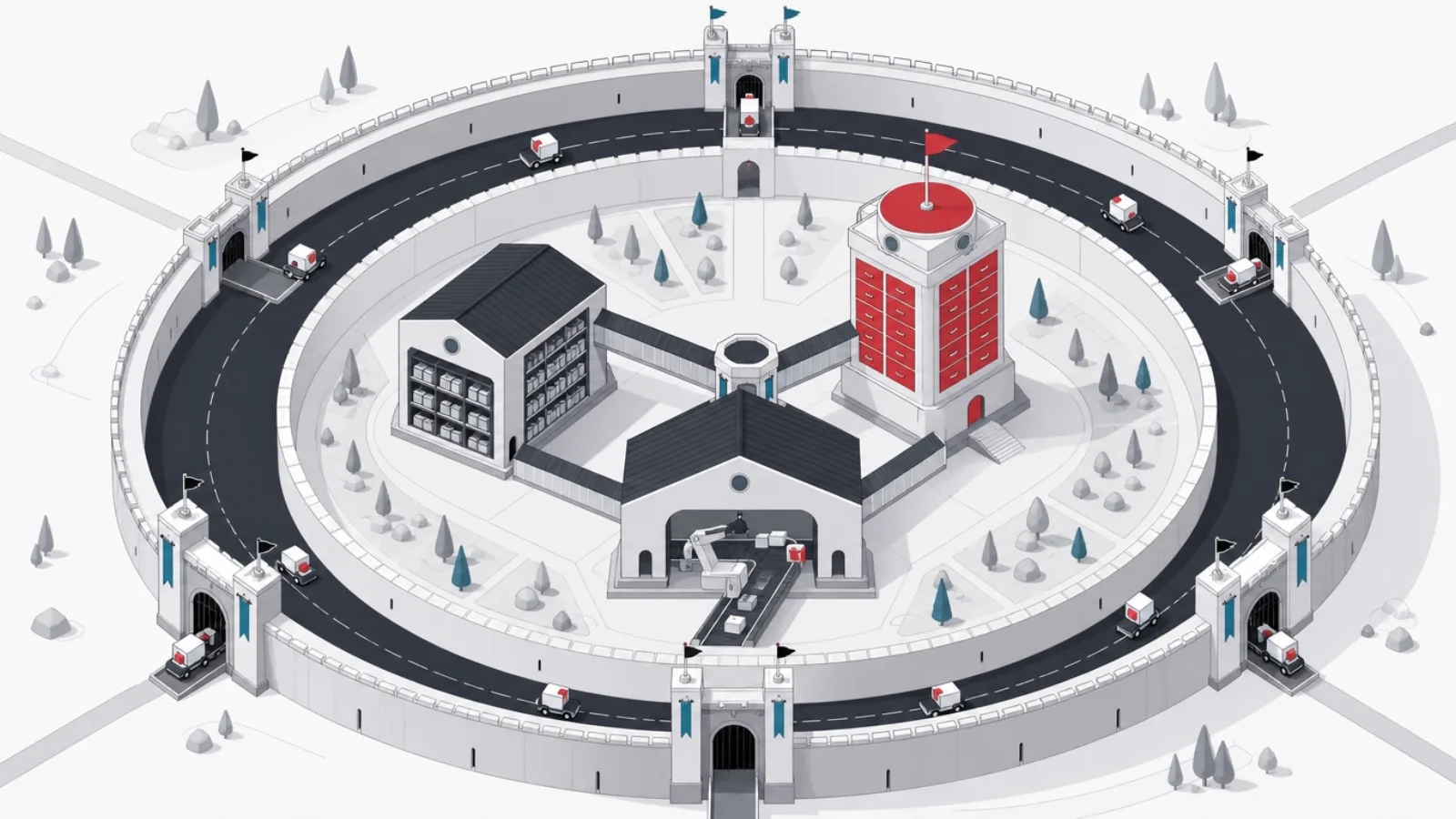
Strip the vendor language away and every pharmacy system is three cores wearing one interface. The dispensing core owns the clinical workflow: prescriptions arrive, are validated, filled, checked and handed over, with safety gates between the steps. The inventory core owns the physical truth: what stock exists, in which batches, expiring when, located where, and reconciled how. The compliance core owns the record: who did what, when, under which authority, retrievable years later in the format a regulator expects. Everything else, point of sale, insurance claims, e-prescription feeds, supplier ordering, loyalty, reporting dashboards, is an integration ring around those cores.
The architectural consequence is separation with strong contracts. The dispensing workflow reads inventory but never mutates it directly; it requests allocations, and the inventory core decides which batch satisfies them under first-expiry-first-out rules. The compliance record is written by both cores through one append-only audit channel rather than scattered log statements, so the auditor's question, show me everything that touched this prescription, is a query, not an archaeology project. The integration ring talks to the cores through the same APIs your own interface uses, which keeps a bad POS plugin or a flaky claims gateway from corrupting clinical state.
This separation also answers the build-versus-buy question honestly at the component level. The three cores are where custom building earns its cost, because they encode your workflow and your regulator. The ring is where buying and integrating usually wins: payment terminals, accounting sync, SMS reminders and standard e-prescription networks are commodity plumbing. Teams that custom-build the ring while compromising the cores get the worst of both: undifferentiated code to maintain and a dispensing workflow that still fights the pharmacist.
- Dispensing core. The clinical state machine: intake to handover, with safety gates. Custom-build; this is the product.
- Inventory core. Batch, expiry, location and controlled-substance truth. Custom-build or heavily adapt; generic stock modules miss the semantics.
- Compliance core. Append-only audit and regulator reports. Custom-build as configuration-driven infrastructure.
- Integration ring. POS, claims, e-scripts, suppliers, messaging. Buy and integrate where standards exist.
The dispensing workflow: a state machine with a license on the line
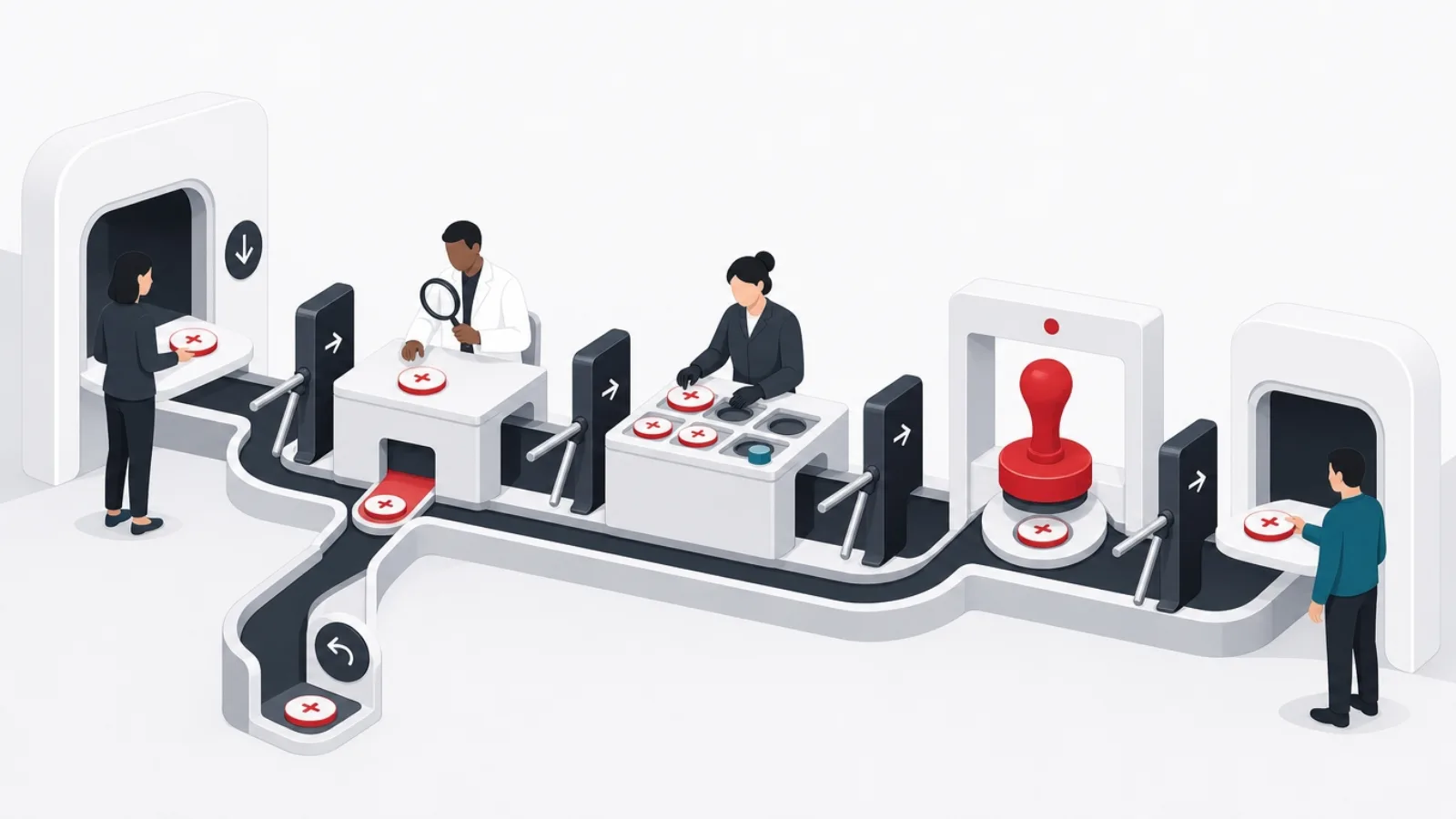
Model dispensing as an explicit state machine, not as a form that gets saved. A prescription enters at intake, from a paper script transcribed at the counter, an e-prescription feed, or a refill request, and moves through validation, filling, verification, and counseling to handover, with rejection and clarification paths at every stage. Each transition records the acting user, their role, the timestamp and the payload that changed, and the machine refuses transitions the acting role is not licensed to make: a technician can fill, only a pharmacist can verify, and the system, not a training document, enforces the difference.
The safety gates are where the system earns its existence. At validation: dose-range checks against the drug database, duplicate-therapy detection, and the patient-history lookup that catches a refill arriving suspiciously early. At verification: drug-drug interaction screening, allergy checks against the patient record, and the hard stop, not a dismissible toast, when a severe interaction fires. Severity tiers matter operationally: minor flags can be acknowledged inline, severe ones demand a recorded pharmacist decision with a reason, and that reason lands in the audit trail. A system that cries wolf with undifferentiated alerts trains staff to click through everything, which is worse than no alerts, so tuning alert severity against your drug database is clinical work that belongs in the build plan, not the backlog.
Two design choices decide whether pharmacists accept the system. First, speed at the counter: the intake-to-label path must be faster than the paper process it replaces, which means barcode-driven drug selection, patient lookup in one field, and templates for the sig codes and instructions that repeat all day. Second, interruption tolerance: real pharmacies handle three prescriptions in parallel while the phone rings, so the workflow must let a user park a half-done fill and resume it without loss, with the parked state visible to colleagues. Systems designed as linear wizards fail here within a week, and the workaround, staff keeping the real state in their heads, defeats the audit trail the machine exists to produce.
- Explicit states, enforced roles. Intake, validate, fill, verify, counsel, handover. The system enforces who may do what; the audit trail proves it.
- Tiered safety gates. Hard stops for severe interactions with recorded pharmacist decisions; inline acknowledgment for minor flags. Untiered alerts train click-through.
- Counter-speed reality. Faster than paper, barcode-first, parallel-work tolerant, or pharmacists route around it and the record dies.
Workflow design that survives a real counter
Do this
- Enforce roles in the APIPharmacist-only transitions rejected server-side, whatever interface asks. The audit trail then proves compliance instead of asserting it.
- Tier the alertsHard stops for severe interactions with a recorded reason; inline acknowledgment for minor flags. Staff trust gates that respect their judgment.
- Support parked workHalf-done fills pause and resume without loss, visible to colleagues. Real counters juggle; the workflow must too.
Not this
- Linear wizard flowsOne-prescription-at-a-time screens collapse the first busy morning, and staff keep the real state in their heads.
- Undifferentiated alertsWhen everything warns, nothing does. Click-through habits formed on trivial flags carry over to the severe ones.
- Trust-based role rulesPermissions enforced by training documents instead of code fail exactly when an inspector asks who verified this script.
Inventory with pharmaceutical semantics: batches, expiry and controlled counts
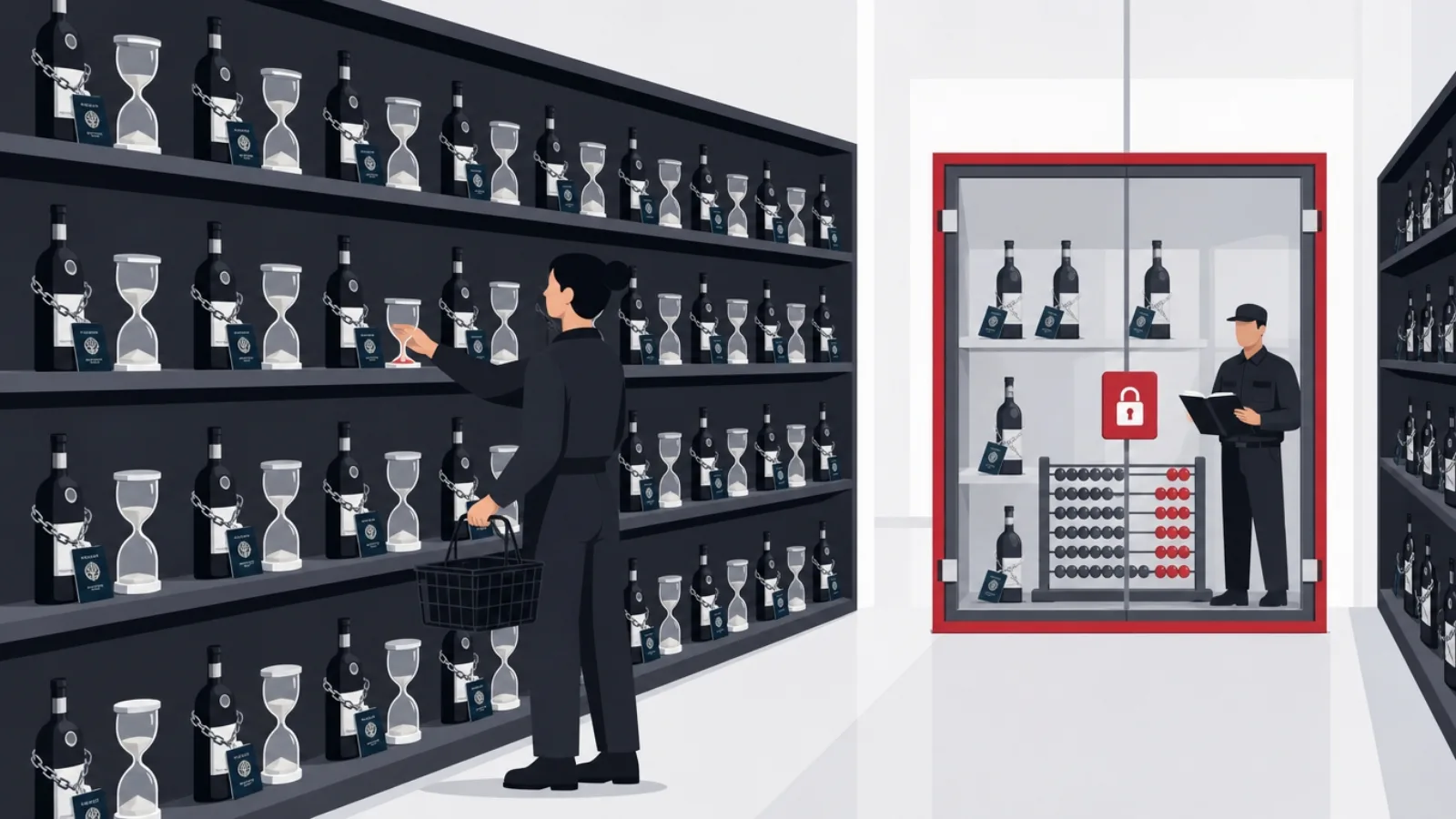
Pharmaceutical inventory defeats generic stock modules because the unit of truth is not the product, it is the batch. Every receipt of stock carries a lot number and an expiry date, every pick must be attributable to a batch, and a recall notice, this lot, this manufacturer, these dates, must translate into an answer within minutes: how much do we hold, where, and which patients received it. That last query joins inventory to dispensing history, which is why the two cores share identifiers from day one, and why bolting a pharmacy onto a retail inventory package eventually hits a wall no configuration can climb.
Expiry logic is operational, not just informational. Picking follows first-expiry-first-out: when the workflow requests a drug, the inventory core proposes the earliest-expiring adequate batch, and deviations require a reason. Approaching-expiry reports drive markdown or return-to-supplier workflows before value is written off, and expired stock moves to a quarantined state that the dispensing workflow cannot see, because the worst inventory bug in this domain is an expired batch that remains pickable. Cold-chain items add a storage-condition dimension, flags, temperature-excursion notes, and location constraints, that the data model should carry even if hardware monitoring arrives later.
Controlled substances get their own stricter regime, whatever your jurisdiction calls its schedules. Counts are unit-level and perpetually reconciled: every receipt, dispense, transfer, adjustment and destruction writes a register entry with the acting pharmacist's identity, and physical counts reconcile against the register on a mandated cadence, with discrepancies escalated rather than absorbed. Build the register as an append-only projection of inventory events rather than a separate hand-maintained ledger, and generating the regulator's periodic report becomes a formatting task instead of a monthly panic. Reorder logic rounds out the core: per-drug reorder points and quantities, supplier lead times, and seasonal awareness, with a human approving the generated purchase order, because automated ordering that misfires in pharmacy ties up cash in stock that expires.
The compliance spine: audit, access and the regulator report

Compliance in a pharmacy system is not a checklist appended at the end; it is a spine the other components hang on. Three mechanisms do most of the work. Role-based access control mapped to pharmacy practice: pharmacist, technician, cashier and manager are legal categories, not job titles, and the permission matrix encodes what each may see and do, with pharmacist-only actions, verification, controlled-substance movements, overrides, enforced at the API layer so no alternative interface can bypass them. Immutable audit logging: every clinically or financially meaningful event appends to a tamper-evident log, hash-chained or write-once storage, carrying actor, action, entity and timestamp. And retention: prescriptions, registers and audit records keep to jurisdiction-mandated periods, commonly two to ten years, with deletion itself a logged, privileged event.
Jurisdictions differ in the letter and rhyme in the spirit, which argues for building the spine as configuration rather than hard-coding one country's rules. In the United States the anchors are DEA schedules and state pharmacy boards, plus HIPAA for the patient-data envelope; the European Union layers GDPR on national pharmacy law and the falsified-medicines verification flow; Southeast Asian markets, Vietnam included, run national drug authorities with their own register formats and, increasingly, mandated connections to national prescription databases. A schema that treats schedules, retention periods, report formats and mandatory-connection endpoints as per-jurisdiction configuration lets one codebase serve a chain that crosses borders, and spares you an archaeology project when a rule changes.
Patient data deserves its own paragraph because pharmacy sits inside health-data law everywhere. Encrypt at rest and in transit as table stakes; minimize what the POS and loyalty ring can see, a cashier needs the order, not the medication history; and log reads of patient records, not only writes, because inappropriate lookup of a neighbor's medications is a real incident category with real penalties. If the system will exchange data with clinics or hospitals, the EMR integration landscape and the EMR, EHR and eMAR distinctions are adjacent reading, and the integration ring should speak the standard formats rather than invent its own.
- RBAC as law, enforced at the API. Pharmacist-only actions are a licensing matter. No interface path may bypass the permission matrix.
- Append-only audit. Tamper-evident, covering reads of patient data as well as writes. The auditor's question must be a query.
- Jurisdiction as configuration. Schedules, retention, report formats and mandated connections vary by country. Hard-coding one regulator is technical debt with legal interest.
The integration ring: POS, e-prescriptions, claims and suppliers
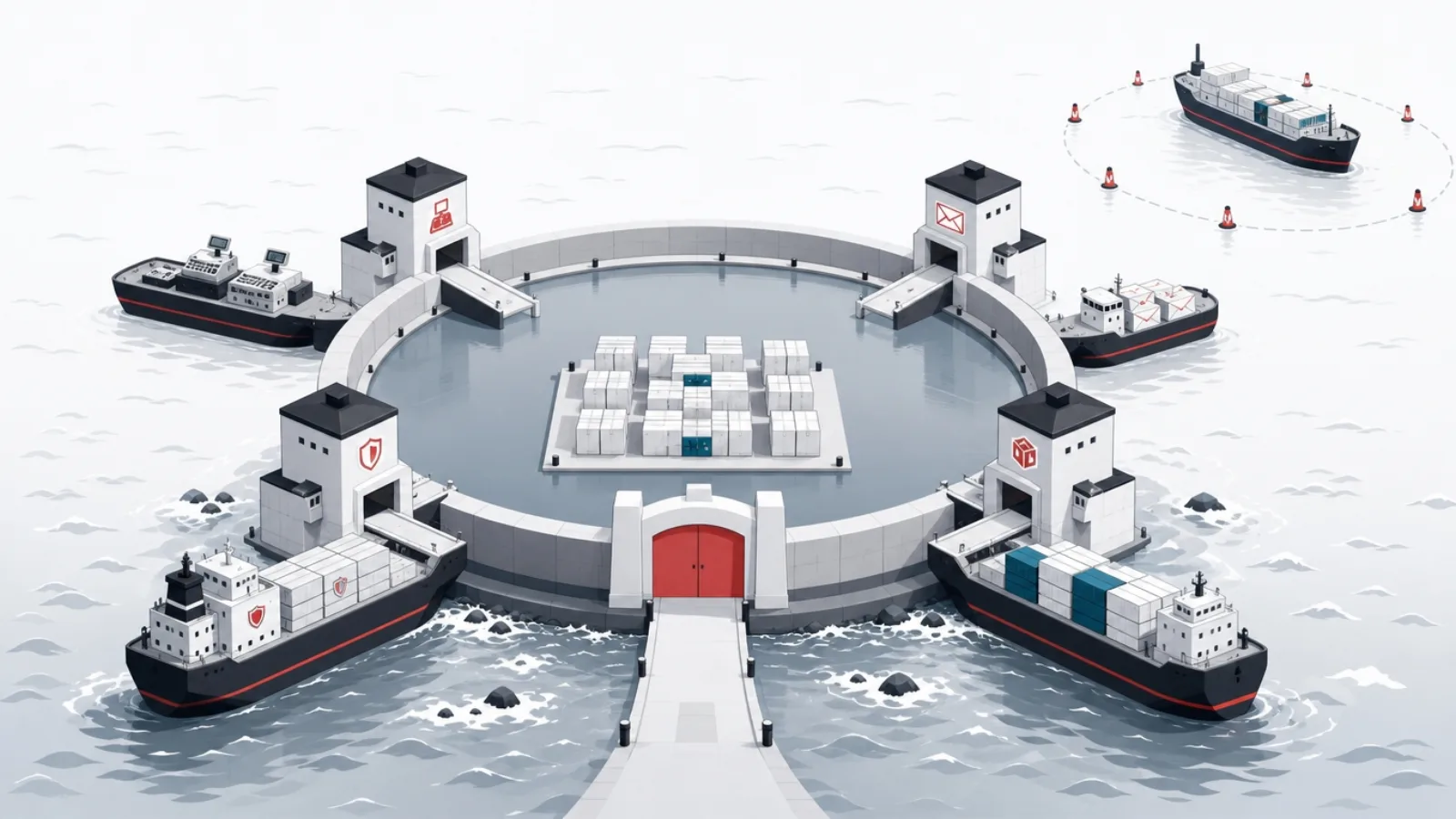
The point of sale is the ring's first stop because dispensing ends in payment. The clean design keeps POS as a consumer of the dispensing core: a completed dispense produces a sale line with the price the pricing rules decide, prescription items and front-of-store retail merge into one basket, and payment hardware talk stays in its own adapter. Chains add a dimension: per-branch tills reconciling to a central ledger, transfer pricing between branches, and the head-office reporting that turns branch data into buying decisions. Building POS from scratch is rarely worth it where certified payment integrations exist; wrapping a proven payment stack inside your basket logic usually is.
E-prescription intake is the highest-leverage integration wherever a national or network e-script system operates, because it deletes the transcription step where a meaningful share of dispensing errors are born. Treat the feed as untrusted input all the same: validate against the drug database, resolve the patient against your records with explicit confirmation rather than fuzzy auto-merge, and queue anything ambiguous for human intake rather than guessing. Insurance and payer claims, where your market has them, are the heaviest ring component: eligibility checks, claim submission, rejection handling and reconciliation against remittances, each payer with its own dialect. Budget claims integration as its own phase with its own testing, and sequence it after the clinical core is stable, because a system that dispenses safely but bills manually is viable, while the reverse is not.
Supplier ordering closes the loop from reorder points to received stock: purchase orders generated from inventory signals, sent in whatever the wholesaler accepts, EDI, portal, API, or a formatted email, and received against with batch and expiry capture at the door, because receiving is where batch truth enters the system and sloppy receiving poisons everything downstream. The remaining ring members, SMS and app-based refill reminders, a patient-facing refill request surface, accounting sync, dashboards, are genuinely optional at launch and genuinely valuable at scale; the discipline is adding them by measured operational pain rather than by demo appeal, a sequencing argument the telemedicine build guide makes for its own adjacent domain.
Integration ring, sequenced by leverage
| Integration | What it buys | When to sequence it | Effort shape |
|---|---|---|---|
| Point of sale and payments | One basket for scripts and retail; clean cash truth | Launch, wrapped around certified payment stack | Weeks, mostly adapter work |
| E-prescription intake | Deletes transcription errors; faster counter | Launch where a network exists | Weeks to integrate, ongoing validation |
| Supplier ordering and receiving | Batch truth at the door; reorder loop closed | First quarter after launch | Weeks per wholesaler dialect |
| Insurance or payer claims | Billing without spreadsheets; faster reimbursement | Own phase, after clinical core is stable | Months; per-payer dialects and testing |
| Refill reminders and patient surface | Adherence and retention; fewer phone calls | By measured pain, post-launch | Weeks, plus messaging costs |
Typical sequencing for a single pharmacy or small chain. Claims timing varies by market; in cash-dominant markets it may never apply. All effort shapes are illustrative.
Architecture and stack: boring, auditable, offline-tolerant

The right architecture for a pharmacy system is deliberately boring: a modular monolith or a small set of services around one transactional database, an event log feeding the audit spine and read-side reports, and a web-based interface with barcode-scanner support at the counter. The domain's hard requirements are consistency and auditability, not planet-scale throughput; even a busy pharmacy's transaction volume is trivial by web standards, and microservice sprawl buys nothing here except more places for clinical state to disagree with itself. Spend the sophistication budget on the two places it pays: the workflow state machine's correctness, and the event model that makes the audit trail and the registers projections rather than hand-maintained artifacts.
One requirement does deserve architectural respect: the counter cannot stop when the internet does. A pharmacy that cannot dispense during an outage is a patient-safety incident in slow motion, so the counter workstation needs a degraded-but-safe local mode, at minimum, the ability to look up drugs, record dispenses against a local queue, and print labels, with reconciliation to the server when connectivity returns and conflicts surfaced for human review rather than silently merged. This is the strongest argument for keeping some client-side substance in the counter application, and it is much cheaper to design in from the start than to retrofit into a purely server-rendered system after the first outage complaint.
Stack choices follow from the shape. A mainstream backend, TypeScript on Node, C# on .NET, Java on Spring, or Python on Django, all serve; the differentiator is the team's fluency, not the framework. PostgreSQL fits the transactional core well, with its JSON columns absorbing per-jurisdiction configuration cleanly. The drug database, interactions, allergies, dose ranges, is licensed, not built: national formularies and commercial databases exist for exactly this, and maintaining clinical reference data yourself is a liability no build budget should accept. Hosting is a jurisdiction question before it is a cost question: health-data residency rules in many markets constrain region choice, and some mandate certified providers, so the compliance spine's configuration should reach into infrastructure too.
- Boring core, sharp edges. Modular monolith, one transactional database, event-sourced audit. Sophistication goes into workflow correctness, not topology.
- Offline-tolerant counter. Degraded-but-safe local mode with human-reviewed reconciliation. Designed in, not retrofitted.
- License the drug database. Interactions and dose ranges come from maintained clinical sources. Building your own is uninsurable.
The delivery plan: phases, team and cost shapes
Phase one builds the spine and the two clinical cores: the workflow state machine with verification gates, inventory with batch and expiry truth, the audit channel, RBAC, and the counter interface with barcode flows, integrated with the licensed drug database. This is realistically three to five months with a compact senior team, a lead engineer, one or two developers, a designer who will actually stand at a counter, and a pharmacist advisor with veto power over workflow decisions, that last role being the cheapest error-prevention money in the whole budget. Resist scope growth here ruthlessly: every ring feature added to phase one delays the only milestone that matters, a pilot pharmacy running the system in parallel with its legacy process.
Phase two is the pilot and the cutover. Run two to four weeks in parallel, real prescriptions entered in both systems, and measure three things: counter time per script against the legacy baseline, discrepancies between the systems' inventory counts, and every instance where staff worked around the software, each workaround being a design bug wearing a process costume. Fix what the pilot surfaces, then cut over with the legacy process on warm standby for a defined period. Phase three adds the ring by measured pain, POS consolidation and e-script intake typically first, claims as its own sub-phase where applicable, and multi-branch features, central purchasing, transfers, head-office reporting, when a second location makes them real rather than speculative.
Cost shapes, all illustrative: a single-pharmacy system covering phase one and two lands in the 60,000 to 150,000 dollar range with a small dedicated team at offshore-to-nearshore rates, four to eight months elapsed; a multi-branch chain system with claims integration runs 150,000 to 400,000 and a year or more; and the ongoing cost that surprises buyers is not hosting but maintenance of the regulatory surface, drug-database subscriptions, report-format changes, and the integration ring's drift as payers and networks update their dialects, realistically 15 to 25 percent of build cost annually. Teams weighing this against off-the-shelf packages should weigh honestly: buy when a local package already speaks your regulator's language and your workflow is standard; build when your workflow, scale or product ambitions exceed what configuration can bend, the same crossover logic that governs any build-versus-buy decision in operations software.
The build, phase by phase
-
Spine and cores3 to 5 months, illustrative
Workflow state machine, batch-true inventory, audit channel, RBAC, counter UI, licensed drug database integrated.
-
Pilot in parallel2 to 4 weeks plus fixes
One pharmacy, both systems live, measuring counter time, count discrepancies and workarounds. Fix, then cut over.
-
Ring by painQuarterly increments
POS consolidation and e-script intake first; claims as its own sub-phase; supplier EDI as wholesalers allow.
-
Chain featuresWhen scale demands
Central purchasing, inter-branch transfers, head-office reporting, when the second branch is real.
Frequently asked questions
How do you build a pharmacy system?
Build three cores and integrate outward: a dispensing workflow engine modeled as an auditable state machine with pharmacist-only verification gates; an inventory core with batch, lot and expiry semantics, first-expiry-first-out picking and unit-level controlled-substance counts; and a compliance spine of role-based access, append-only audit logs and regulator-ready reports. Around them sits an integration ring, point of sale, e-prescription intake, payer claims where applicable, and supplier ordering. Build the cores first, pilot in one pharmacy against the legacy process, then add ring integrations by measured pain.
How much does it cost to build a pharmacy system?
Illustrative planning shapes: a single-pharmacy system covering the clinical cores, compliance spine, counter interface and a pilot lands around 60,000 to 150,000 dollars with a compact senior team at offshore-to-nearshore rates over four to eight months. A multi-branch chain system with payer claims integration runs 150,000 to 400,000 and a year or more. Budget ongoing maintenance at 15 to 25 percent of build cost annually, driven by drug-database subscriptions, regulatory report changes and integration drift rather than hosting.
What features must a pharmacy system have?
The non-negotiables: prescription intake with validation, pharmacist verification with drug-interaction and allergy gates, batch-and-expiry-true inventory with first-expiry-first-out picking and recall traceability, controlled-substance registers reconciled to the unit, role-based access mapped to pharmacy practice, immutable audit logging, label printing, and a point of sale that merges prescription and retail baskets. Strong additions by market: e-prescription intake, payer claims, supplier ordering with receiving capture, refill reminders and multi-branch operations. Our requirements catalog covers the full checklist module by module.
How is pharmacy inventory different from retail inventory?
The unit of truth is the batch, not the product. Every receipt carries a lot number and expiry date, every pick attributes to a batch, expired stock must become unpickable automatically, and picking follows first-expiry-first-out with recorded deviations. Recall handling requires joining inventory to dispensing history within minutes, cold-chain items carry storage-condition constraints, and controlled substances demand unit-level perpetual reconciliation with pharmacist identity on every movement. Generic stock modules track quantities; pharmacy inventory tracks accountable, expiring, regulated batches, which is why retrofitting rarely works.
What regulations apply to pharmacy software?
It varies by jurisdiction but rhymes everywhere: controlled-substance schedules and registers, pharmacist-only actions enforced by role, mandated record retention commonly between two and ten years, and health-data protection, HIPAA in the United States, GDPR in Europe, national health-data laws elsewhere, covering encryption, access minimization and logged reads. Many markets add e-prescription network mandates and falsified-medicine verification. Build the compliance spine as per-jurisdiction configuration, schedules, retention, report formats and mandated connections, rather than hard-coding one regulator, and confirm specifics with your local pharmacy authority.
Should a pharmacy build custom software or buy a package?
Buy when a locally certified package already speaks your regulator's language and your workflow is standard; the savings fund training and hardware. Build when your workflow exceeds what configuration can bend, when chain-scale central operations become the bottleneck, or when pharmacy capability is part of a larger product ambition. The honest middle path is common: build the dispensing and inventory cores that encode your differences, and buy the ring, payments, messaging, accounting, where standards make integration cheap. Score candidates against a requirements catalog before deciding.
If this build is on your roadmap and the compliance work needs owners, AgileTech is a software development partner in Hanoi that builds regulated pharmacy and dispensing systems.
Source: https://agiletech.vn/blog/how-to-build-a-pharmacy-system/ · (c) AgileTech Vietnam. Printed from agiletech.vn.