 Nguyen Manh Thang
Chief Executive Officer, AgileTech Vietnam
Nguyen Manh Thang
Chief Executive Officer, AgileTech Vietnam
- Published
- Last updated
- Read time
- 13 min
- Views
- 492
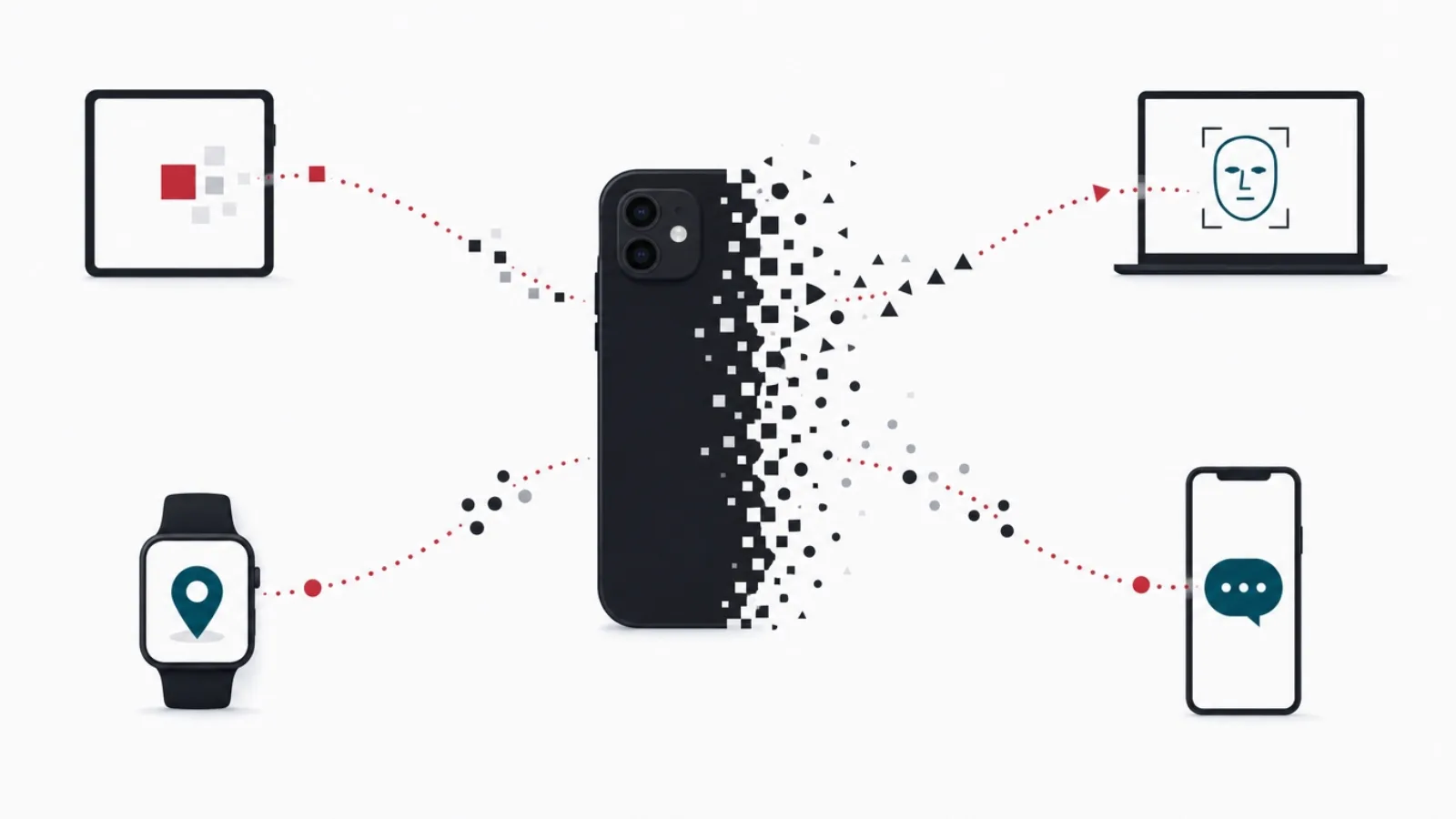
Read the AI overview
There is no single app that replaces Snapchat, because Snapchat is four products in one: disappearing messages, stories, AR camera lenses, and a location map. The closest overall substitute is Instagram, which cloned stories, DMs with vanish mode, and filters. For private disappearing chat, Telegram and Signal are stronger than Snapchat itself. For the casual-authenticity feel, BeReal and Locket come closest. For AR play, TikTok's effect ecosystem is the deepest alternative.
People search for apps like Snapchat for reasons that pull in opposite directions. Some want the same features with a different crowd, because their friends migrated. Some want stronger privacy than Snapchat's default chat actually provides. Some are parents looking for what else is on a teenager's phone. And some are simply tired of the app but attached to one habit, the streaks, the lenses, the map, and want that habit somewhere else.
A useful comparison has to respect that split, so this one is organized by feature rather than by an overall ranking. First the closest all-around substitutes, then the best options for each of Snapchat's four pillars: disappearing messages, stories, AR camera play, and location sharing.
One note on how we read this market. AgileTech builds consumer social and messaging products for clients, which means we spend real hours reverse-engineering why these apps retain users. The final section shares that teardown, because the same mechanics that make an app sticky for you are the mechanics a founder has to price when building anything in this space.
Key takeaways
- Pick the alternative by feature, not by headline. Snapchat bundles ephemeral chat, stories, AR lenses and a map; every alternative replaces one or two of those, none replaces all four.
- Instagram is the closest overall substitute and the easiest migration, since your social graph is probably already there. It is also the least private of the options.
- For disappearing messages specifically, Signal and Telegram are better than Snapchat: both offer real end-to-end encryption options, which Snapchat's default chat does not.
- BeReal and Locket capture what early Snapchat felt like, low-pressure and unpolished, better than any feature-for-feature clone does.
- Ephemerality is a design contract, not a security guarantee: on every app in this list, a screenshot or second camera defeats disappearing media.
- For builders, Snapchat's history is the clearest case study of feature unbundling: each of its four pillars has spawned entire successful products.
What you are actually replacing: Snapchat in four features
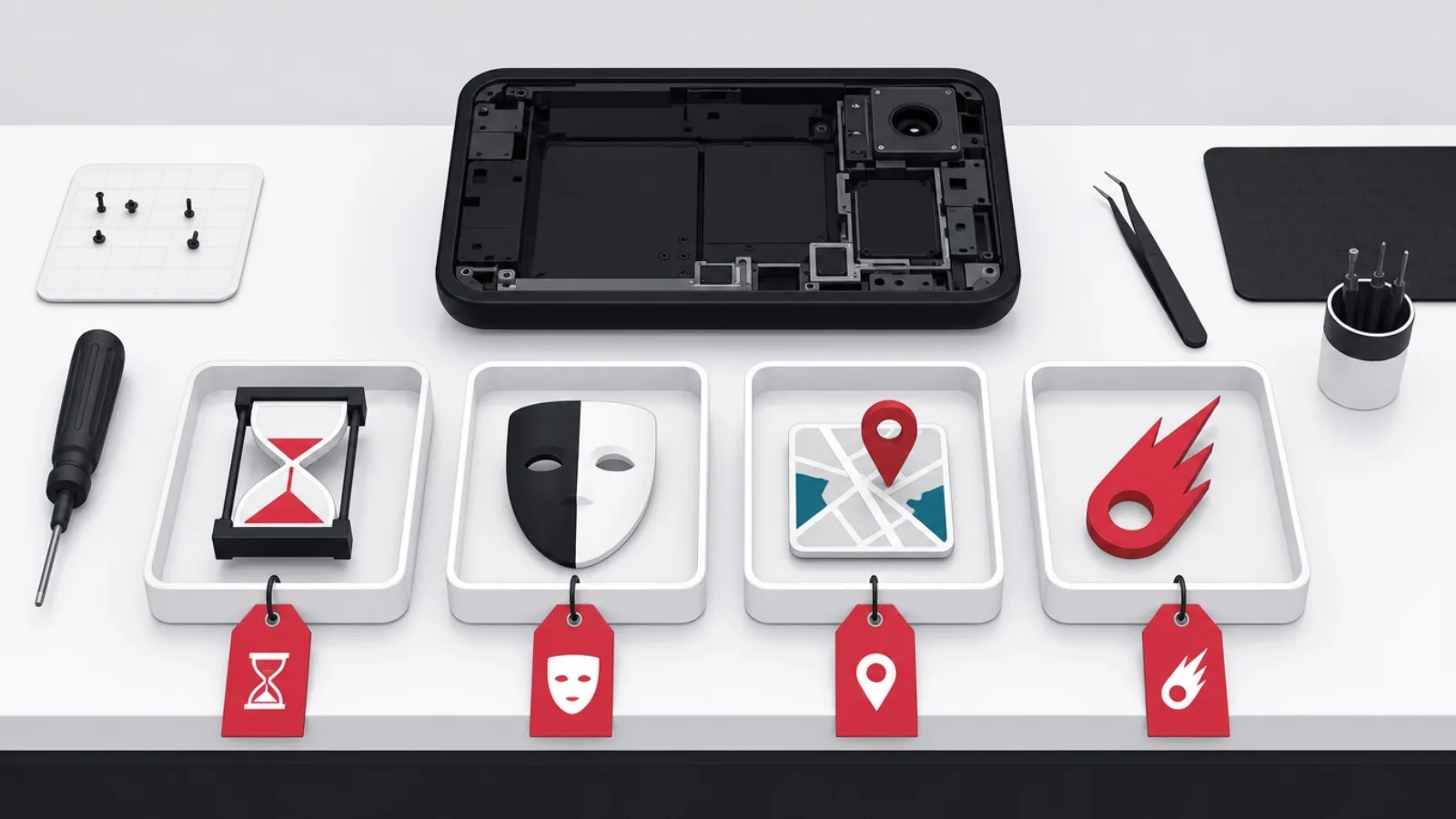
Snapchat's bundle looks obvious in hindsight but remains unusual. The chat is ephemeral by default: messages delete after viewing, and the app notifies senders of screenshots. Stories broadcast 24-hour photo and video sequences to friends. The camera carries the deepest consumer AR stack in the industry, thousands of lenses that map faces and spaces in real time. And the Snap Map shares live location with chosen friends on a persistent map, a feature simultaneously beloved by close friend groups and concerning to privacy reviewers.
On top of the features sits the retention machinery: streaks that count consecutive days of mutual snapping, best-friend emojis that gamify closeness, and a snap score that makes usage itself a number. That machinery matters for this comparison because much of what people miss when they leave Snapchat is not a feature but a habit loop, and different alternatives rebuild different loops.
Knowing which of these you actually use is the whole selection problem. The sections below take them in turn, and the closing comparison table maps all twelve apps against all four pillars.
The closest overall substitutes: Instagram and TikTok
Instagram is the pragmatic answer for most people. It cloned Snapchat's defining features years ago, stories with stickers and face filters, disappearing photos in DMs, vanish mode chat, and wrapped them around the social graph you probably already have. The migration cost is near zero, which is exactly why Snapchat's story format stopped growing when Instagram copied it. The trade-offs: your activity feeds a heavier advertising machine, the culture rewards polish over the unfiltered goofiness Snapchat normalized, and nothing about Instagram is private-first.
TikTok replaces a different slice: not the messaging, but the camera-and-effects play loop. Its effect ecosystem is the only consumer AR platform at Snapchat's level, arguably beyond it, and its editor is stronger. People who mostly opened Snapchat to play with lenses and post to stories will find TikTok's creative tools deeper, at the cost of a public-by-default culture where the algorithm, not your friend list, is the audience.
Between them, these two cover perhaps 80 percent of what a typical Snapchat user does. The remaining 20 percent, genuinely private ephemeral chat and ambient closeness with a small circle, is where the more interesting alternatives live.
- Instagram iOS and Android, free. Stories, vanish-mode DMs, filters, and your existing graph. Closest single substitute; weakest on privacy.
- TikTok iOS and Android, free. The deepest AR effect and editing stack. Replaces the camera-play loop, not the private messaging.
Best for disappearing messages: Telegram, Signal and Wickr-style privacy
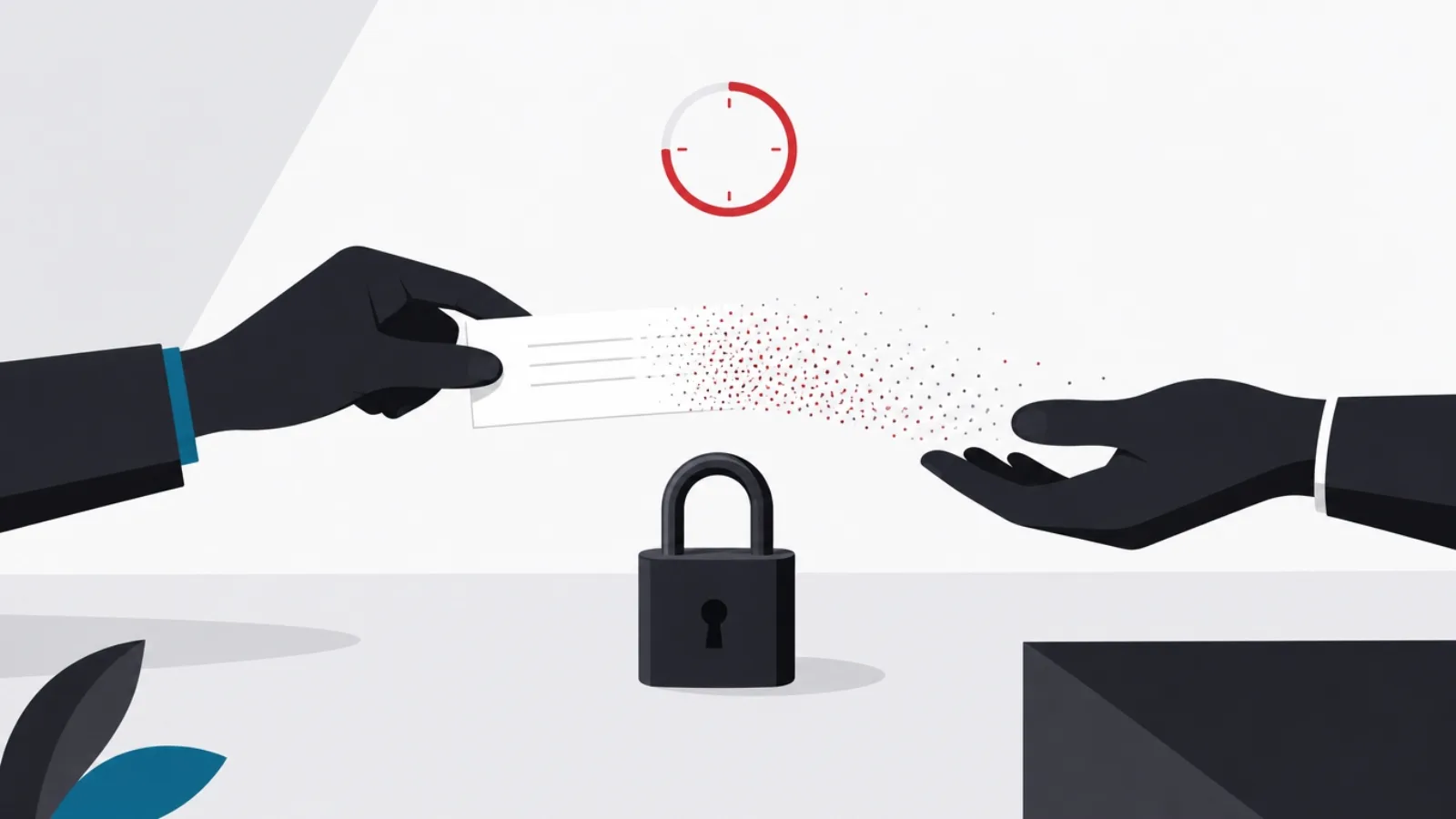
If ephemeral chat is the feature you care about, the honest news is that Snapchat was never the strongest version of it. Snapchat's standard chat is encrypted in transit but not end-to-end; the disappearing behavior is an app-level convention. Two mainstream apps do it with real cryptography.
Signal is the privacy benchmark: end-to-end encryption on everything by default, disappearing messages with timers from seconds to weeks, screenshot blocking on Android, and a nonprofit operator whose business model does not involve reading anything. It has no stories culture to speak of and no AR, which is the point. Telegram sits between worlds: enormous, fast, feature-rich, with self-destruct timers in secret chats and a culture of large groups and channels. Its default chats are not end-to-end encrypted, only secret chats are, a nuance most coverage misses and worth knowing before treating it as a privacy tool.
A tier further out sit the hardened messengers, Session, Threema, and enterprise tools descended from Wickr. They trade network size for properties like metadata minimization. For most people leaving Snapchat they are overkill, but they define the ceiling of what disappearing really means when it is engineered rather than promised.
Disappearing chat, compared properly
| App | End-to-end encrypted | Disappearing mechanism | Screenshot response | Network size |
|---|---|---|---|---|
| Snapchat | Only snaps and voice or video calls, not standard chat | Delete after view or 24h, by default | Notifies sender | Very large |
| Signal | Everything, by default | Timers from 30 seconds to 4 weeks | Blocks on Android, notifies nothing on iOS | Large and growing |
| Telegram | Secret chats only | Self-destruct timers in secret chats | Blocks screenshots in secret chats | Very large |
| Optional, in eligible DMs | Vanish mode and view-once media | Notifies sender | Very large | |
| Threema | Everything, by default | No native timers; local deletion controls | No notification | Small, privacy-focused |
The encryption column is the one that separates marketing from mechanism. Screenshot behavior varies by platform and OS version; treat notification as the ceiling, not prevention.
Best for the early-Snapchat feeling: BeReal, Locket and Lapse

A large share of Snapchat nostalgia is not about any feature but about a feeling: sharing unedited moments with actual friends, without an audience or a grade. Three newer apps rebuilt that feeling deliberately, each with a different mechanic.
BeReal fires one daily notification at a random time, giving you two minutes to post a simultaneous front-and-back camera shot. No filters, no follower counts, no algorithmic feed. Its cultural moment peaked in 2022 but the app settled into exactly what it promised: a small-circle authenticity ritual. Locket goes further into intimacy: it puts friends' photos directly onto your home screen widget, making sharing ambient rather than sessional. It is less an app you open than a presence you glance at, and for close friends or partners it captures the warmth of a streak without the obligation. Lapse styles itself as a disposable film camera: shots develop later, in a darkroom metaphor, and the delay removes the retake-until-perfect reflex.
None of these replaces Snapchat's messaging or AR. What they replace is the reason many people liked Snapchat in the first place, and for that specific itch they are better than any feature clone.
Best for AR lenses and the Snap Map
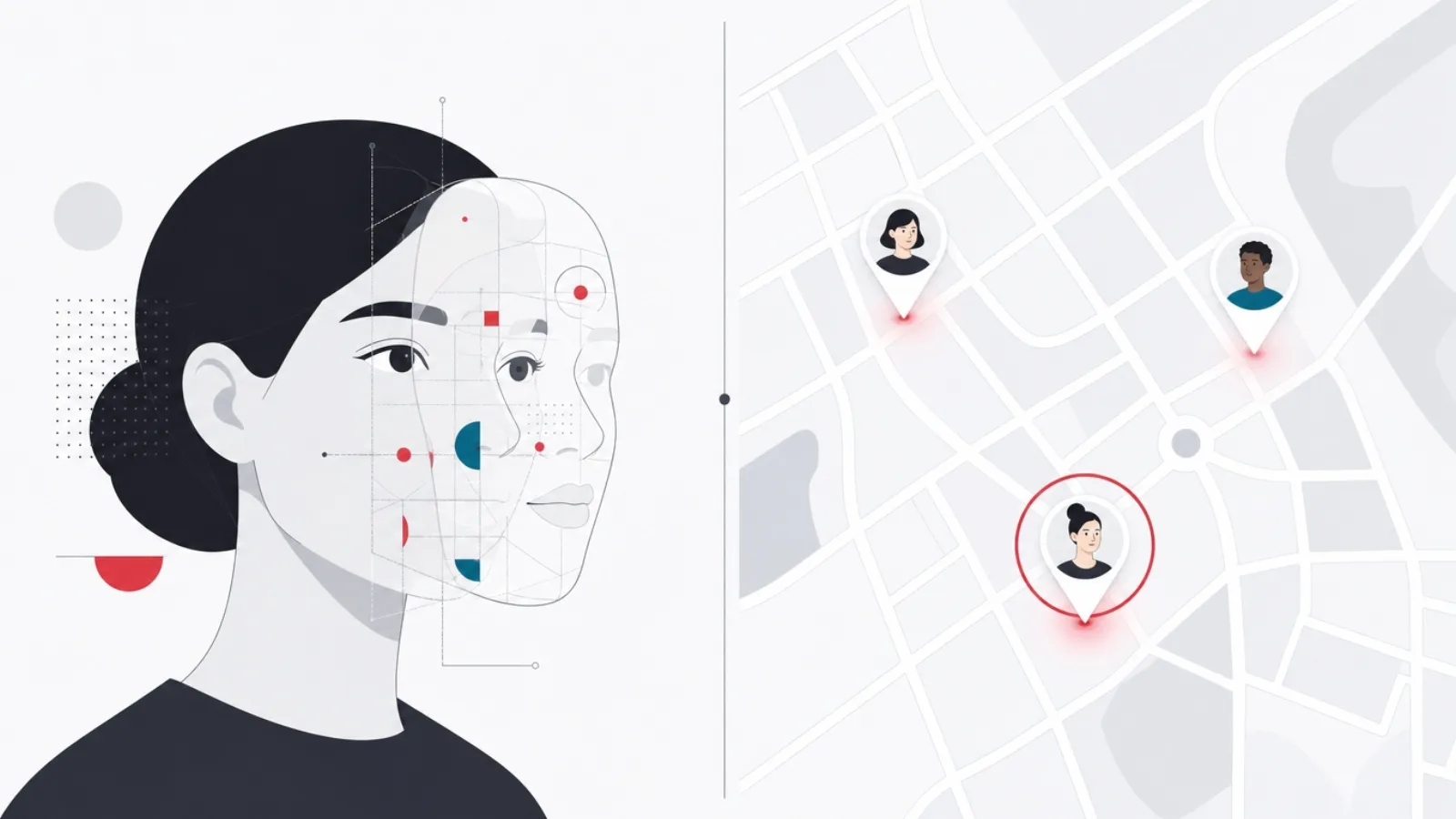
For AR camera play, the realistic alternatives are TikTok's effect ecosystem, covered above, and Instagram's filter library, which is broad but shallower since Meta wound down its third-party creator tools. Dedicated camera apps such as B612 and SNOW, both huge in Asia, carry beauty-filter and sticker stacks that rival Snapchat for selfie use specifically, without the social layer. If lenses are your entire use case, B612 plus any messenger reproduces the experience surprisingly well.
The Snap Map is harder to substitute, because always-on location inside a social app is a feature most competitors deliberately avoid. The direct equivalents are purpose-built: Find My on iOS and Google Maps location sharing cover the utility half, family-safety products like Life360 cover the persistent-circle half, and Zenly's descendants keep resurfacing the playful version, Zenly itself having been shut down by Snap after acquisition, a detail that says something about how strategically Snap values the map. If the map is what you would miss most, the practical stack is Find My or Google Maps sharing for utility plus whatever chat app your circle lands on.
It is worth saying plainly: no single alternative recombines all four pillars. That is not a market failure; it is the market's verdict that the bundle was Snapchat's moat, and everyone else wins by unbundling it.
All twelve alternatives against Snapchat's four pillars
| Ephemeral chat | Stories | AR camera | Location map | |
|---|---|---|---|---|
| part | Yes | part | No | |
| TikTok | No | part | Yes | No |
| Signal | Yes | No | No | No |
| Telegram | Yes | part | No | part |
| BeReal | No | part | No | No |
| Locket | No | part | No | No |
| Lapse | No | part | No | No |
| Yes | part | No | part | |
| B612 / SNOW | No | No | Yes | No |
| Life360 | No | No | No | Yes |
| Find My / Maps sharing | No | No | No | Yes |
| Threema | Yes | No | No | No |
A filled cell means the app substitutes that pillar well; partial means a workable but weaker version; empty means the pillar is absent.
How to choose, in one honest paragraph per person

If you want the least disruption: Instagram, because the graph is already there and the feature overlap is the widest. If your concern is privacy: Signal for the people you actually talk to, and accept that it replaces the chat, not the culture. If you miss the feeling more than the features: BeReal or Locket, depending on whether you want a daily ritual or an ambient widget. If you mostly played with the camera: TikTok for depth, B612 for selfies. If your friend group runs on the map: Find My or Google Maps sharing does the job without an app change, and Life360 if the circle is family.
For parents evaluating what replaced Snapchat on a teenager's phone, the honest guidance is that the risk profile travels with the mechanics, not the brand. Any app with disappearing messages and strangers-discovery deserves the same conversation: who can contact you, what disappears, what gets screenshotted, and what the location features share. The safety checklist in our guide to the best apps to make friends applies here nearly unchanged.
What Snapchat's unbundling teaches product builders

Snapchat is the canonical modern case of a bundle being unbundled by the market. Stories were cloned wholesale by Instagram and the growth moved there. The authenticity feeling was rebuilt by BeReal and Locket as entire products. Private ephemerality was out-engineered by Signal. The map was validated by Life360's public-company economics. Each pillar of the bundle proved big enough to be someone else's whole company, which is both a compliment to the original design and a warning about how little a feature moat protects.
Two mechanics deserve particular attention from anyone scoping a social product. First, ephemerality is an engagement engine disguised as a privacy feature: content that disappears creates urgency to check the app and lowers the bar to post, which is why the pattern spread from Snapchat to every major platform. Second, streak-style reciprocity mechanics are the cheapest retention machinery ever shipped, and the most ethically loaded; they convert friendship into an obligation loop, and regulators and app stores increasingly notice. We scope both mechanics regularly in client work, and the trade-offs, including the moderation and compliance load that ephemeral content creates, are exactly the kind of thing to price before writing code. Our breakdowns of social network MVP scope, what apps genuinely cost to build and the anatomy of a super app put numbers on that.
The engineering lesson is quieter but just as real: camera-first apps live or die on performance. Real-time face tracking, effect rendering and video encoding on mid-range Android hardware is where these products actually compete, and it is a specialist discipline closer to game engineering than to CRUD app work.
Since publication, the exit paths from this section have each received their own guide. WhatsApp alternatives goes deeper on the private-messaging branch, including the graph-rebuild cost that this article only estimates, and Facebook alternatives covers the public-feed branch. Neither changes the recommendation here: Instagram remains the cheapest switch that recovers the most surface, and Signal remains the right answer for the one pillar it serves.
Borrowing Snapchat mechanics in your own product
Do this
- Use ephemerality to lower posting anxietyDisappearing content measurably increases posting frequency in small circles. That is the legitimate use.
- Scope moderation for disappearing media firstEphemeral content still requires report flows, retention for abuse investigation, and legal hold paths. Design them before launch.
- Build the camera pipeline nativelyFace tracking and effects need native performance work; a webview camera experience reads as broken to this audience.
- Let closeness features stay smallLocket-style intimacy works because the circle is tiny. Caps are a feature, not a growth limiter.
Not this
- Promise privacy you did not engineerIf media is recoverable server-side, disappearing is a UI behavior. Saying otherwise is a regulatory incident waiting.
- Ship streaks without an off-rampObligation loops drive short-term retention and long-term resentment, and app store review guidelines are tightening around them.
- Clone all four pillars at onceEach pillar is a company-sized build. MVPs that try the full bundle ship none of it well.
- Treat teen users as ordinary usersAge gates, defaults and parental visibility are legal requirements in a growing list of markets, not optional polish.
Patterns we advise clients to adopt and avoid when the brief says "like Snapchat but for X".
Frequently asked questions
What app is most similar to Snapchat overall?
Instagram. It carries stories, disappearing DMs via vanish mode, view-once media and face filters, and most people's friend graph is already on it, which makes the migration nearly free. The gap is privacy and tone: Instagram is advertising-driven and polish-oriented, where Snapchat normalized unfiltered sharing between close friends.
What is a safer alternative to Snapchat for private messages?
Signal, without much contest. Everything is end-to-end encrypted by default, disappearing timers run from seconds to weeks, and the operator is a nonprofit with no advertising business. Telegram is a workable second choice if your groups live there, but only its secret chats are end-to-end encrypted, so use those for anything sensitive.
Are there apps like Snapchat without the algorithm and pressure?
Yes, and they are arguably the best part of the current landscape. BeReal posts once a day on a random prompt with no filters and no follower counts. Locket puts friends' photos on your home screen widget, making sharing ambient. Lapse delays photo development to kill the retake reflex. All three deliberately rebuilt the low-pressure feeling of early Snapchat rather than its feature list.
Do disappearing messages really disappear?
Only from the interface. On every mainstream app, a screenshot, a screen recording or a second camera preserves the content, and some services retain media server-side for abuse investigation or legal process. Signal comes closest to engineered ephemerality, and even it cannot stop a photographed screen. Treat disappearing as a social convention with technical support, and never send what you could not tolerate being permanent.
What replaced the Snap Map?
No social app cloned it at scale, which is telling. The practical substitutes split by purpose: Find My on iOS and Google Maps location sharing for utility, and Life360 for persistent family circles. Snap acquired and then shut down Zenly, the strongest independent social map, which suggests how strategically it values keeping the map exclusive.
How much would it cost to build an app like Snapchat?
A focused MVP that picks one pillar, say ephemeral messaging with a solid camera flow, typically runs 80,000 to 200,000 US dollars with an offshore product team. The full bundle is a different question entirely: real-time AR, media infrastructure at scale, moderation, and the trust and safety layer put a faithful clone in the millions. The strategic answer from Snapchat's own history is not to clone the bundle but to pick the pillar your audience actually needs.
Reading feature bundles this closely is how good product decisions start. If you are building in the social or messaging space, work with AgileTech, a top software development company in Vietnam that prices these mechanics honestly before a line of code is written.
Source: https://agiletech.vn/blog/apps-like-snapchat/ · (c) AgileTech Vietnam. Printed from agiletech.vn.