 Nguyen Manh Thang
Chief Executive Officer, AgileTech Vietnam
Nguyen Manh Thang
Chief Executive Officer, AgileTech Vietnam
- Published
- Last updated
- Read time
- 12 min
- Views
- 266

Read the AI overview
The best WhatsApp alternative in 2026 depends on why you are leaving. Signal is the privacy answer: the same end-to-end encryption protocol WhatsApp licenses, run by a nonprofit with almost no metadata collection. Telegram is the features answer: enormous groups, channels, bots and multi-device freedom, though its default chats are not end-to-end encrypted. iMessage and Google Messages with RCS are the friction-free defaults in markets where they dominate, and regional apps like Zalo in Vietnam own their home turf. The hard part is never the app; it is moving your contacts, and the honest playbook for that is in this guide.
Every wave of WhatsApp discontent, a privacy policy update, an outage, a feature change, sends millions of people searching for alternatives, and most of them make the same mistake: they evaluate apps as if features decide the outcome. They install Signal or Telegram, admire it for a week, and drift back, because the twenty people they actually message never moved. Messaging is the most network-bound category in software, and an honest guide has to treat that as the main subject rather than a footnote.
So this guide does two jobs. First, the comparison: what Signal, Telegram, iMessage, Google Messages and the strong regional players actually offer in 2026, what each one trades away, and which failure of WhatsApp each one fixes. Second, the switch itself: the realistic playbook for moving a family, a friend group or a small business off WhatsApp without losing half the participants on the way.
There is a builder's angle too, which is why a software engineering firm is writing this. AgileTech builds chat and community features into client products, and the messenger wars are the best free education in network effects, cold-start strategy and privacy architecture that exists. The closing sections draw those lessons out explicitly for anyone designing communication into a product.
Key takeaways
- Leaving WhatsApp splits into two different problems: choosing a replacement, which is easy, and moving your graph of contacts, which is the entire difficulty, so any serious switch plan spends most of its effort on the second.
- Signal is the direct privacy upgrade: WhatsApp already uses the Signal protocol for message content, but Signal the app collects almost no metadata around it, which is the layer Meta actually monetizes.
- Telegram is a different product wearing a messenger interface: channels, 200,000-member groups, bots and a cloud-first design make it a social platform, and its default chats are cloud-encrypted, not end-to-end.
- Defaults beat downloads in the right markets: iMessage in the US and Google Messages with RCS on Android reach contacts with zero install friction, which no third-party app can match.
- Regional messengers are not also-rans: Zalo in Vietnam, KakaoTalk in Korea and LINE in Japan and Thailand beat WhatsApp at home on local features, and any market entry or product strategy has to respect that.
- For builders, messaging is the deepest lesson in network effects in all of software: the switching playbook in this guide doubles as a case study in why cold-start strategy, not features, decides messenger fates.
Why people actually leave WhatsApp

The reasons people search for WhatsApp alternatives sort into four buckets, and naming yours first makes the rest of this page much shorter. The privacy bucket: WhatsApp end-to-end encrypts message content, but Meta collects rich metadata, who you message, when, how often, from where, and the 2021 policy controversy permanently marked the app for privacy-conscious users. The features bucket: power users hit WhatsApp's group-size limits, its clumsy multi-device story and its thin community tooling, all places Telegram runs far ahead.
The ecosystem bucket is quieter but real: in the US, iMessage and increasingly RCS mean WhatsApp was never the default, and in Korea, Japan, Vietnam and China, regional apps got there first with deeper local features. And the dependency bucket: some people simply dislike one company owning their family's entire communication channel, a concern that outages reinforce every time WhatsApp, Instagram and Facebook fall over together.
Each bucket has a different best answer, which is why single-winner rankings mislead. Privacy leavers should go straight to Signal. Feature leavers to Telegram. Ecosystem leavers usually need no new app at all, just a deliberate shift to the default their contacts already have. Dependency leavers want anything credible that is not Meta, with the nonprofit-run Signal usually edging the venture-funded rest.
One reframe before the comparisons: you do not have to pick one. Most successful switchers run two messengers for a year or more, WhatsApp for the long tail of contacts, the new app for the inner circle, and let the balance shift gradually. Treating the switch as a migration rather than a replacement is the single biggest predictor of it sticking, and the playbook section later builds on exactly that.
Terms this comparison turns on
- End-to-end encryption (E2EE)
- Only the sender and recipient can read the message; the operator cannot. WhatsApp and Signal apply it to all chats by default; Telegram only in secret chats.
- Metadata
- Everything around the message: who, when, how often, from where. E2EE does not cover it, and it is the layer most valuable to advertising businesses.
- RCS
- The carrier-backed successor to SMS used by Google Messages: typing indicators, read receipts, media, and E2EE between supporting clients.
- Network effect
- A messenger is worth what your contacts make it worth. The app is trivial to change; the graph of people is not, and every section of this guide bends around that fact.
Signal: the privacy answer, without the asterisks

Signal is the cleanest recommendation on this page. The encryption protocol WhatsApp uses for message content is the Signal protocol, licensed from this project, so switching does not change the cryptography; it changes everything around it. Signal is run by a nonprofit foundation, funded by donations rather than advertising, and it collects almost nothing: the only user data it has produced under subpoena is the account creation date and the last connection date. No contact graph, no message timing maps, no profile for advertisers, because none of it is stored.
The product itself stopped being austere years ago. Voice and video calls, group calls, stories, stickers, reactions, disappearing messages and username-based contact, so you no longer have to reveal a phone number to chat, are all present and polished. Group sizes carry sensible limits rather than Telegram-scale crowds, which matches its center of gravity: Signal is built for the people you actually know, not for broadcast audiences.
The honest costs: registration still anchors to a phone number even though usernames now hide it; multi-device support is good on desktop but the phone remains primary; backups are deliberately local-first, which is safer and less convenient than cloud restore; and the network is smaller, so more of your contacts will need an invitation. For a family or close-friends migration, those trade-offs are minor. For a hundred-member community, Telegram's tooling wins on utility, if not on privacy.
The recommendation shape is therefore simple: if your reason for leaving WhatsApp includes the word privacy, or the word Meta, Signal is the answer and the rest of this page is context. Move your inner circle with the playbook later in this guide, keep WhatsApp for the long tail while it shrinks, and you will have captured most of the benefit inside a month.
Signal, measured where it differs
Telegram: the features answer, with one honest caveat

Telegram is the alternative people fall in love with, because it is not really a WhatsApp clone; it is a social platform with messaging at its core. Groups scale to 200,000 members with granular admin tools. Channels broadcast to unlimited audiences and power news, creator and community ecosystems WhatsApp cannot host. Bots turn chats into applications, payments, moderation, games, workflows. The cloud-first design means every device sees everything instantly, files up to gigabytes ship without compression, and a new phone logs in and finds the whole history waiting.
That cloud-first design is also the caveat, and it deserves plain language: default Telegram chats are encrypted between you and Telegram's servers, not end-to-end. Telegram can technically read them, and its protection is policy and jurisdictional structure rather than mathematics. End-to-end encryption exists only in one-to-one secret chats, which are optional, device-bound and excluded from the cloud sync that makes Telegram pleasant. For most public-community use this is an acceptable trade; for sensitive conversations it is the wrong tool, and pretending otherwise does readers a disservice.
Telegram in 2026 also carries a premium tier and an increasingly visible crypto layer, and moderation controversies arrive periodically, all consequences of its scale and its broadcast architecture. None of that dents the core utility: for interest communities, large coordination groups, creator audiences and the general power user, nothing else on this page comes close, and its bot and mini-app ecosystem has grown into a platform of its own.
The recommendation shape: choose Telegram when your reason for leaving WhatsApp is capability, groups, channels, bots, multi-device, files, and pair it with Signal for the conversations that need real secrecy. The two coexist happily, and the combination covers essentially everything WhatsApp does plus a great deal it does not.
iMessage and Google Messages: the alternatives already installed
The most underrated WhatsApp alternatives ship with the phone. In the United States and a handful of similar markets, iMessage is the incumbent WhatsApp never displaced: end-to-end encrypted between Apple devices, deeply integrated, and reaching contacts with zero install friction. Its historical weakness, the green-bubble degradation to SMS when an Android user joined, has been substantially repaired by RCS adoption, which upgrades cross-platform threads to rich messaging with typing indicators, read receipts and full-quality media.
Google Messages is the same story on Android: RCS by default, end-to-end encryption between supporting clients, and the enormous advantage of being the preloaded texting app on most of the world's Android phones. For a US family group or an Australian friend circle, the honest advice is often anticlimactic: you may not need a new app at all, just a decision to lean on the default that already reaches everyone, with none of the migration pain the rest of this guide exists to solve.
The limits are real, though. Cross-ecosystem encryption between iMessage and Android RCS matured late and remains the newest, least battle-tested link in the chain. Both defaults anchor identity to a phone number and a hardware ecosystem, which is precisely the dependency some leavers want to escape. Feature depth is thin next to Telegram, and neither Apple nor Google is a neutral party, trading Meta's data appetite for another giant's lock-in is a sideways move some switchers reject on principle.
The recommendation shape: in markets where the defaults dominate, use them as the zero-friction fallback and reserve the deliberate switch for the inner circle that cares. In WhatsApp-dominant markets, Brazil, India, most of Europe, Southeast Asia, the defaults are not a serious answer, and the choice runs through Signal, Telegram or the regional players next.
The big four, compared where it matters
| App | Encryption default | Best at | The real catch |
|---|---|---|---|
| Signal | E2EE, all chats | Private conversations with people you know | Smaller network; contacts need convincing |
| Telegram | Cloud encryption; E2EE only in secret chats | Communities, channels, bots, multi-device | Operator can read default chats in principle |
| iMessage | E2EE between Apple devices | Zero-friction default in Apple-heavy markets | Ecosystem lock-in; thin outside Apple hardware |
| Google Messages (RCS) | E2EE between supporting clients | Preinstalled reach on Android worldwide | Newest cross-platform encryption; number-bound |
The regional leaders: Zalo, KakaoTalk, LINE and the home-turf rule
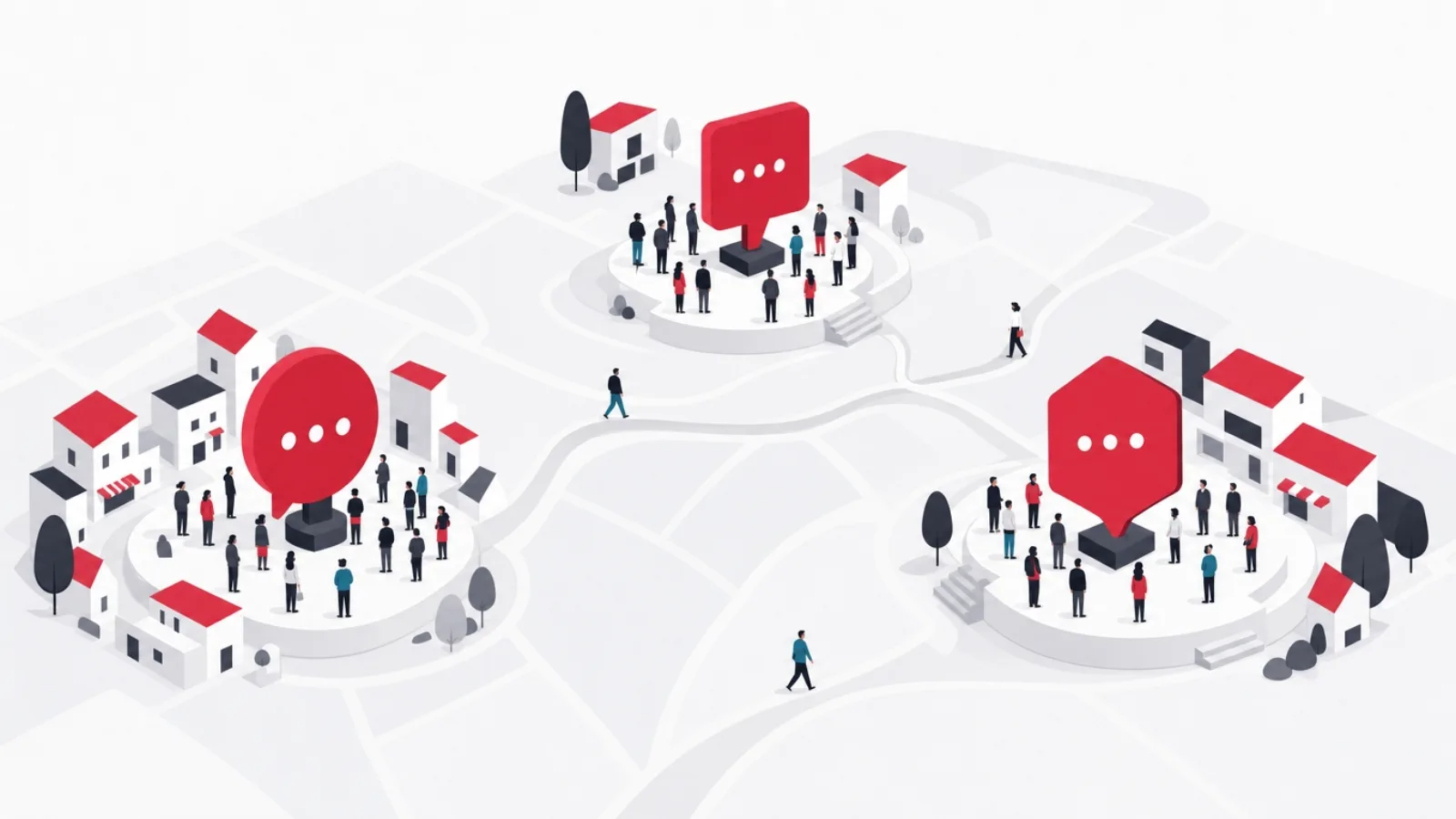
Global comparisons routinely miss the fact that in several large markets, WhatsApp is the alternative. Vietnam runs on Zalo, roughly three quarters of the population uses it, with stickers, payments, official business accounts and government services woven in. Korea runs on KakaoTalk and Japan and Thailand on LINE, both full super-app ecosystems where messaging is the front door to payments, shopping, taxis and news. China runs on WeChat, the original template for all of them.
The home-turf rule these apps prove: a messenger that localizes deeply, launches at the right moment and builds the local business ecosystem beats a global incumbent with more users and more money. Zalo won Vietnam against both WhatsApp and Facebook Messenger by being faster on local networks, better at Vietnamese input, and quicker to court local businesses, a case we unpack in our MoMo super-app study from the payments side of the same market.
For individual users the guidance is short: in these markets, the regional app is not a compromise, it is the correct answer, and the switching question usually points the other way, toward whether you need WhatsApp at all except for international contacts. For privacy-focused users inside those markets, Signal remains the overlay for sensitive conversations, exactly as it is everywhere else.
For businesses and product teams the implication is bigger: any product entering Vietnam integrates Zalo, not WhatsApp; Korea means Kakao; Japan and Thailand mean LINE. Messaging integration is a per-market decision, and assuming the WhatsApp Business API travels everywhere is one of the most common internationalization mistakes we correct in client roadmaps.
Foreign teams ask us to integrate WhatsApp Business for their Vietnam launch and we have to stop them: your customers are on Zalo. The messenger map is regional, and reading it wrong means your notifications land in an app nobody opens.
The switch playbook: moving people, not just apps

Everything above is the easy half. The hard half is that a messenger is worth exactly what your contacts make it worth, and contacts do not move because you sent one link. The failure pattern is universal: an enthusiast installs the new app, blasts an invitation into the family group, three people install it, nobody opens it, and six weeks later everyone is back where they started. The successful pattern is different in kind, not degree: it moves one conversation at a time, and it starts with the conversations you control.
The sequence that works: first, install the new app and live in it yourself for a week so you can answer questions. Second, move one high-frequency, small-circle chat, a partner, a best friend, one sibling, by asking directly and personally, not broadcasting. Third, move one group you administer, and make the new app the place where something people want actually happens: the photos land there, the plan gets decided there. Fourth, keep WhatsApp installed and silent, as the fallback for the long tail, and let it decay naturally rather than forcing a cliff-edge cutover.
Two accelerants matter. Moments of collective irritation, an outage, a policy change in the news, are when invitations convert best, so being ready before the next one beats campaigning during calm. And defaults lower the bar: in markets where RCS or iMessage reach everyone, the ask is a behavior change, not an install, which converts far better. Small businesses running customer chats on WhatsApp should treat the migration as a customer-communication project, announce the channel change, run both in parallel for a quarter, and measure where replies actually come from before closing anything.
Set expectations honestly: a full migration of a social graph takes months, and the steady state for most switchers is two messengers, the chosen app for the inner circle and WhatsApp for the periphery. That is not failure; that is what network effects cost, and it is the same physics that decides which social platforms rise and fall at every scale.
The migration, one conversation at a time
-
Live in the new app firstWeek 0
A week of solo use makes you the guide, not the salesman. Configure backups, notifications and desktop before inviting anyone.
-
Move one intimate chatWeek 1
Partner, best friend, one sibling. A direct personal ask converts where broadcast invitations die.
-
Move one group you runWeeks 2 to 4
Announce, create the new group, and put something people want in it: the photos, the plan, the decision. Utility pulls harder than principle.
-
Keep WhatsApp as the silent fallbackMonths 2 to 6
Mute it, stop feeding it, answer late there and fast in the new app. Gradients move people; ultimatums entrench them.
-
Strike when irritation peaksOpportunistic
The next outage or policy scandal is your conversion window. Have the group link ready before the news cycle, not after.
What the messenger wars teach product builders

Messaging is the purest network-effects laboratory in software, and the lessons transfer to any product with a social or communication layer. The first lesson is that switching costs live in the graph, not the data: WhatsApp exports chat history willingly, because it knows the history is not what holds you. Products that want durable retention should invest in the connections between users, groups, shared artifacts, standing coordination, rather than accumulating hostage data, which regulation increasingly frees anyway.
The second lesson is that cold starts are won in niches and moments. Signal grows in spikes tied to news events; Telegram grew community by community, each large group importing its own membership; Zalo won a single country completely rather than twenty countries slightly. For any product with network dynamics, the strategic question is never how do we get everyone but which specific circle can we win entirely, first, a framing we apply directly when scoping social product MVPs with clients.
The third lesson is that privacy architecture is a product decision, not a compliance checkbox. Signal's inability to hand over data is a feature built into the storage design; Telegram's capability trade-off is likewise structural. Teams building chat into products face the same fork: end-to-end encryption buys trust and costs server-side features, search, moderation, ML on content, and the right answer depends on whether the product's promise is secrecy or community. What does not work is claiming one architecture's virtues while running the other.
And the engineering footnote: nobody should build a chat protocol from scratch in 2026. Mature open protocols and SDKs, Matrix for federation, the Signal protocol via libsignal for E2EE, plus commercial chat infrastructure for speed, cover the plumbing, and the differentiation lives entirely in the product layer above. Where that layer meets real-time delivery, presence, sync and offline behavior is exactly the kind of build AgileTech scopes for clients, and the cost guide covers what such builds honestly run.
Building communication into a product
Do this
- Win one circle completelyA hundred percent of one community beats two percent of twenty markets. Design the cold start around a specific, winnable graph.
- Decide the encryption trade-off explicitlyE2EE buys trust and costs server-side features. Pick per the product promise and document why, before the architecture hardens.
- Build on proven protocolslibsignal, Matrix or commercial chat infrastructure for plumbing; your engineering budget belongs in the product layer above.
- Respect regional messenger mapsZalo in Vietnam, Kakao in Korea, LINE in Japan and Thailand. Notification and support channels are a per-market integration decision.
Not this
- Assume features move usersThe messenger graveyard is full of better apps. Distribution and graph strategy decide; features merely qualify you to compete.
- Hold data hostage for retentionExport hostility breeds resentment and regulation. Retention that survives comes from live connections, not locked archives.
- Roll your own cryptoCustom encryption protocols fail audits and users. The open, reviewed protocols exist precisely so you never do this.
- Copy WhatsApp into every marketThe WhatsApp Business API is irrelevant where WhatsApp is not. Check the local messenger before wiring any market's communication.
The shortlist: one answer per reason for leaving
Compressing the guide: leaving for privacy means Signal, full stop, the same content encryption WhatsApp uses, minus the metadata business around it. Leaving for capability means Telegram, with the clearly stated caveat that its default chats trust the operator, so sensitive conversations belong in Signal alongside it. Leaving out of ecosystem inertia, in the US and similar markets, usually means no new app at all: iMessage and Google Messages with RCS already reach everyone, encrypted, with zero install friction.
In Vietnam, Korea, Japan, Thailand and China, the regional leader, Zalo, KakaoTalk, LINE, WeChat, is the practical answer for domestic life, with Signal as the privacy overlay and WhatsApp retained for international contacts. Small businesses should choose where their customers already are, which is a per-country fact, not a global one, and migrate channels with an announced, measured, parallel-running transition rather than a cutover.
Whatever you choose, run the playbook rather than the broadcast: one intimate chat, one group you control, utility placed deliberately in the new app, WhatsApp kept as a muted fallback, and patience measured in months. Two messengers is the normal steady state, not a failed migration, and the graph moves on gradients, not ultimatums.
And if your interest is professional, because you are putting chat, notifications or community into a product, take the three transferable lessons with you: the graph is the moat, the cold start is won in a specific circle, and encryption architecture is a product promise you must choose on purpose. The apps above are the proof, at every scale from a family group chat to three billion users.
Before you switch: the five-minute audit
- Name your reasonPrivacy, features, ecosystem or dependency. Each has a different best answer, and mixing them produces app-hopping instead of a decision.
- Map your inner circleList the ten people you message most. The switch succeeds or fails with them; everyone else is the long tail WhatsApp can keep for now.
- Check your market defaultIf RCS or iMessage already reaches your circle encrypted, the cheapest switch may be a behavior change, not an install.
- Pick the pair, not the winnerSignal for private conversations plus Telegram for communities covers more ground than either alone, and both coexist with a muted WhatsApp.
- Schedule the askPersonal invitations to named people convert; broadcast links do not. Send three direct asks this week and measure who actually replies there.
Frequently asked questions
What is the best WhatsApp alternative overall?
Signal for privacy, Telegram for features, and the preinstalled defaults, iMessage or Google Messages with RCS, in markets where they already reach everyone. There is no single winner because people leave WhatsApp for different reasons; naming yours, privacy, capability, ecosystem or dependency, points directly at the right app.
Is Signal really more private than WhatsApp?
Yes, and in a specific way: both use the same Signal protocol to encrypt message content, but WhatsApp collects extensive metadata, who you message, when, how often, which feeds Meta's business. Signal is architected to store almost nothing; under legal demands it has produced only an account creation date and a last connection date. The content encryption is equal; the metadata practices are not.
Is Telegram safer than WhatsApp?
For most conversations, no, and the distinction matters. WhatsApp end-to-end encrypts every chat by default; Telegram's default chats are encrypted only between you and Telegram's servers, meaning the operator could technically read them. Telegram's end-to-end option, secret chats, is one-to-one only and excluded from cloud sync. Choose Telegram for its communities and features, and use Signal for conversations that must stay private from everyone.
How do I get my family to switch messaging apps?
One conversation at a time, not one broadcast. Live in the new app for a week yourself, then move a single high-frequency chat with a direct personal ask, then relocate one group you administer and put something people want in it, the photos, the plans. Keep WhatsApp installed but muted as the fallback, and expect the full migration to take months. Broadcast invitations convert installs but not habits.
What messaging app should I use in Vietnam?
Zalo. Roughly three quarters of Vietnam uses it, and it carries the local ecosystem, business accounts, payments, government services, that WhatsApp lacks there. The practical stack for residents is Zalo for domestic life, WhatsApp or Telegram for international contacts, and Signal for conversations needing maximum privacy. Businesses entering Vietnam should integrate Zalo, not WhatsApp, for customer communication.
Should my business move off the WhatsApp Business API?
Only with data and a parallel run. Announce the channel change, operate both channels for a quarter, and measure where customers actually reply before closing anything. The bigger lesson is regional: WhatsApp Business is the right rail in Brazil, India and much of Europe, while Vietnam means Zalo, Korea means Kakao and Japan or Thailand mean LINE. Choose per market, not globally.
The messenger wars are the clearest lesson in network effects, cold starts and privacy architecture that software offers. If you are building communication into a product, work with AgileTech, an AI software development company in Vietnam that designs and ships chat, notification and regional messenger integrations with those lessons already priced in.
Source: https://agiletech.vn/blog/whatsapp-alternatives/ · (c) AgileTech Vietnam. Printed from agiletech.vn.