 Nguyen Manh Thang
Chief Executive Officer, AgileTech Vietnam
Nguyen Manh Thang
Chief Executive Officer, AgileTech Vietnam
- Published
- Last updated
- Read time
- 14 min
- Views
- 89

Read the AI overview
The best Netflix alternatives in 2026 depend on what you are replacing. For a general catalog, Prime Video and Max are the closest substitutes; for families, Disney+ remains unmatched; for prestige originals on a budget, Apple TV+ is the best value per title. If the goal is cutting the bill to zero, the free ad-supported services, Tubi, Pluto TV, The Roku Channel, now carry catalogs deep enough to live on. And for specific tastes, the niche services, Mubi for world cinema, Shudder for horror, Crunchyroll for anime, beat Netflix inside their lanes. The real 2026 move is rotation: subscribe to one or two at a time, finish what you came for, and switch.
The search for Netflix alternatives spikes on a schedule: every price increase, every password-sharing enforcement wave, every month a favorite show moves elsewhere. By 2026 the question has a genuinely better answer than it used to, because the market split into three usable layers: big general catalogs that compete with Netflix head-on, free ad-supported services with real libraries, and niche catalogs that beat Netflix decisively inside a single genre.
This guide compares all three layers the way a household actually decides: what it costs, what is on it, who it suits, and what the catch is. It also names the strategy the industry does not advertise: rotation. Streaming subscriptions have no contracts, and the cancel-watch-return loop is now normal consumer behavior, which changes which services are worth a permanent slot versus a periodic visit.
There is a second audience for this page: people evaluating whether to build a streaming product. AgileTech engineers video platforms from Hanoi, players, pipelines, catalogs and payment layers included, so the closing sections translate the market map into a builder's answer: which streaming ideas are still open, and what the honest budget looks like.
Key takeaways
- No single service replaces Netflix, but a rotation of two does: most households can cover their actual viewing with one paid service at a time plus one free ad-supported app, at a third of the stacked-subscription cost.
- The free tier became genuinely good: Tubi, Pluto TV and The Roku Channel now license real catalogs, and their ad loads are lighter than cable ever was.
- Niche services beat Netflix inside their lanes: Crunchyroll for anime, Shudder for horror, Mubi for world cinema. Depth in one genre is something a general catalog structurally cannot match.
- Password-sharing crackdowns and ad-tier price ladders changed the arithmetic: the honest comparison is now price per hour actually watched, not catalog size on paper.
- Rotation is the strategy the platforms fear and cannot stop: cancel-and-return behavior is up across the industry, and every service now front-loads its release calendar to fight it.
- For builders, the lesson is that general-catalog streaming is a closed war: the fundable streaming products of 2026 are niche catalogs, regional plays and video features inside other products.
How to compare streaming services in 2026: price per watched hour

Catalog-size comparisons are the wrong tool. Every major service claims thousands of titles, and the number tells you nothing about whether your next three evenings are covered. The comparison that predicts satisfaction is price per hour you will actually watch, and it exposes surprising rankings: a cheap service you open daily beats a prestigious one you open monthly, and a free service with one show you love beats both.
Three market shifts feed that arithmetic. First, ad tiers: nearly every paid service now sells a cheaper plan with advertising, which cut the effective entry price but split every comparison into two prices per service. Second, password-sharing enforcement: the account you quietly shared is now metered, so the per-household cost of staying with Netflix rose even when the sticker price did not. Third, bundling returned: Disney+, Hulu and Max style bundles, and telecom packages, price the second service near half, which changes what a fair comparison against standalone Netflix looks like.
One honest note on regional variation: catalogs and prices differ sharply by country, and licensing windows move constantly. This guide compares structures and use cases rather than this month's title list, because a specific list would be stale before the ink dried. Check current local catalogs before committing; the framework here tells you what to check for.
The big general catalogs: Prime Video, Max, Disney+, Apple TV+

Prime Video is the closest structural substitute for Netflix: an enormous general catalog, heavy original investment, and live sport in several markets. Its quirks are real: the interface mixes included titles with rentals aggressively, and the base plan now carries ads with an upcharge to remove them. But for households that already hold Prime for shipping, the effective marginal cost of the video service is near zero, which makes it the default first alternative for millions.
Max carries the strongest prestige library of the group, the HBO catalog plus Warner film archives, and Disney+ remains the unchallenged family service: animation, Pixar, Marvel, Star Wars and National Geographic in one place, with a bundle path to Hulu's general catalog. Apple TV+ plays a different game: a small, almost entirely original catalog priced below the majors, which makes it the best value per title when its slate matches your taste, and an obvious rotation candidate rather than a permanent slot.
The honest summary of the tier: each of these can hold a household for months, none holds every household forever. Prime for breadth and sport, Max for prestige, Disney+ for children and franchise fans, Apple TV+ for a cheap month of originals. The stacking trap is subscribing to all four out of inertia; the rotation strategy above exists precisely because these four cover overlapping evenings.
The paid alternatives at a glance
| Service | Strongest for | Pricing shape | The catch |
|---|---|---|---|
| Prime Video | Breadth, live sport, Prime households | Bundled with Prime; ads on base tier | Rental upsells clutter the catalog |
| Max | Prestige series and film archive | Ad tier to premium ladder | Smaller volume than Netflix |
| Disney+ | Families and franchises | Ad tier, and a strong Hulu bundle | Thin for adult general drama alone |
| Apple TV+ | Originals at the lowest price | One cheap tier, frequent promos | Small catalog; a rotation stop, not a home |
| Paramount+ and Peacock | Sport windows and network archives | Low entry, regional strength | Catalog depth varies sharply by country |
Prices vary by market and change often; the structure of each offer is what to compare. Ad tiers halve the entry price everywhere they exist.
The free tier got serious: Tubi, Pluto TV, The Roku Channel

The quiet story of the last few years is that free ad-supported streaming stopped being a junk drawer. Tubi carries a catalog in the tens of thousands of titles, licensed from major studios, and its originals program is real. Pluto TV took the opposite shape, hundreds of themed linear channels that recreate the lean-back cable experience, and The Roku Channel and similar manufacturer services bundle both models. The ad loads, typically a handful of minutes per hour, undercut what cable normalized for decades.
What the free tier is for, honestly: it is the permanent base layer under a rotation strategy. It will rarely carry this month's prestige premiere, and its catalogs lean toward library titles, older seasons and genre films rather than the new and exclusive. But a household that keeps one free app installed always has something watchable during the gaps between paid subscriptions, which is exactly the role that makes rotation comfortable instead of ascetic.
The catch to name: discovery and rights churn. Free catalogs rotate titles faster than paid ones, so a film present this month may be gone next; and the recommendation systems are years behind Netflix's, so the burden of knowing what to watch shifts back to you. Treat the free tier as a well-stocked library with no librarian, and it delivers.
The niche catalogs: where Netflix actually loses

Inside a single genre, specialist services beat Netflix on both depth and curation, and the gap is widening as general catalogs consolidate around broad hits. Crunchyroll owns anime: simulcasts hours after Japanese broadcast, a back catalog no general service approaches, and a fan ecosystem of manga, games and events. Shudder does the same for horror with a curated catalog and exclusive premieres, and Mubi for international and art-house cinema with a hand-picked rotating selection and its own theatrical releases.
The sports layer deserves its own mention because it is where cord-cutting arithmetic actually breaks: DAZN, ESPN's standalone service, and league-owned apps splintered rights to the point where following one team can cost more than every entertainment service combined. There is no clean answer here, only the advice to price your specific sport before assuming streaming is cheaper than a cable bundle in your market.
The niche tier is also where regional services live, and they matter more than global lists admit: local catalogs in Vietnam, across Southeast Asia and in every non-English market carry domestic drama, variety and film that the global platforms license thinly. For a large share of the world, the best Netflix alternative is the strong local service plus one global catalog, not two global catalogs.
Before you subscribe to any alternative, check these
- The local catalog, not the US oneLicensing differs by country. Check the service's catalog in YOUR market for the three titles you most want.
- Which tier the advertised price buysThe headline price is usually the ad tier. Price the tier you will actually tolerate.
- Device support in your living roomNiche services lag on TV platforms. Confirm your TV, stick or console runs the app before paying.
- The cancellation pathSubscribe through the web, not an app store, where that gets you the same price with an easier cancel and no platform fee markup.
- This month's release calendarRotation works best when you arrive as a season completes: binge without the weekly wait.
Five minutes of checking prevents the most common subscription regrets.
Which Netflix alternative should you actually pick?

If the trigger is price: keep zero permanent paid subscriptions, install Tubi or Pluto as the base, and rotate one paid service at a time by release calendar. This is the cheapest arrangement that still covers premieres, and the only cost is patience: you watch some shows a few months late.
If the trigger is catalog fatigue rather than money: your fastest quality-per-evening upgrade is a niche service matched to your actual taste, because curation is what a general catalog cannot give you. A horror household with Shudder, an anime household with Crunchyroll or a cinema household with Mubi consistently reports higher satisfaction than a second general catalog delivers, and the niche services price below the majors.
If the household is mixed, and most are: one anchor service chosen by the loudest need (children push it to Disney+, prestige-drama adults push it to Max, sport pushes it to whatever holds the rights), one rotating slot, one free app. Three slots, two of them cheap or free, is the stable configuration most households land on after a year of experimenting, and you can skip the year by starting there.
Pick your alternative by what is actually driving the switch
Why are you leaving Netflix?
-
The bill
Free tier base + one rotating paid slot
Tubi or Pluto covers the gaps; the rotating slot catches each service's strongest season for one or two months at a time.
-
Nothing to watch
A niche service for your real taste
Crunchyroll, Shudder or Mubi beat a second general catalog on satisfaction per evening, because depth in your genre is what you were missing.
-
A specific show or franchise
The service that holds it, for one month
Subscribe, binge, cancel. No service deserves a permanent slot for one title.
-
The family outgrew it
Disney+ anchor plus a rotating adult slot
Children's viewing is repetitive and Disney+ owns it; the adults rotate Max, Prime and Apple TV+ behind it.
Four honest branches. Most households end up on the third.
What the streaming war teaches product builders
The general-catalog war is over, and reading why tells builders where the openings still are. Netflix, Disney, Amazon, Warner and Apple collectively burn tens of billions of dollars a year on content; no startup outspends that, and every startup that tried to compete on catalog breadth died or sold. The survivors from outside the giants are all wedges: a genre owned completely (Crunchyroll), a curation philosophy (Mubi), a price of zero (Tubi), or a region served deeply (the local champions across Asia).
That pattern is the same one this blog documents across consumer categories, from TikTok alternatives to social apps generally: when a format matures, general-purpose challengers die and vertical ones thrive. In streaming the vertical openings that remain fundable are specific: niche catalogs with an owned community, regional services with local content pipelines, B2B white-label streaming for brands and educators, and video features embedded inside products that are not streaming businesses at all.
The other lesson is that the moat migrated. Early streaming's hard problem was delivery; that is now rentable infrastructure. The 2026 moats are content rights, recommendation quality and payment relationships, in that order. A builder who cannot win one of those three should not enter the consumer streaming market, and the honest scoping conversation starts there rather than with the player.
What building a streaming product actually involves
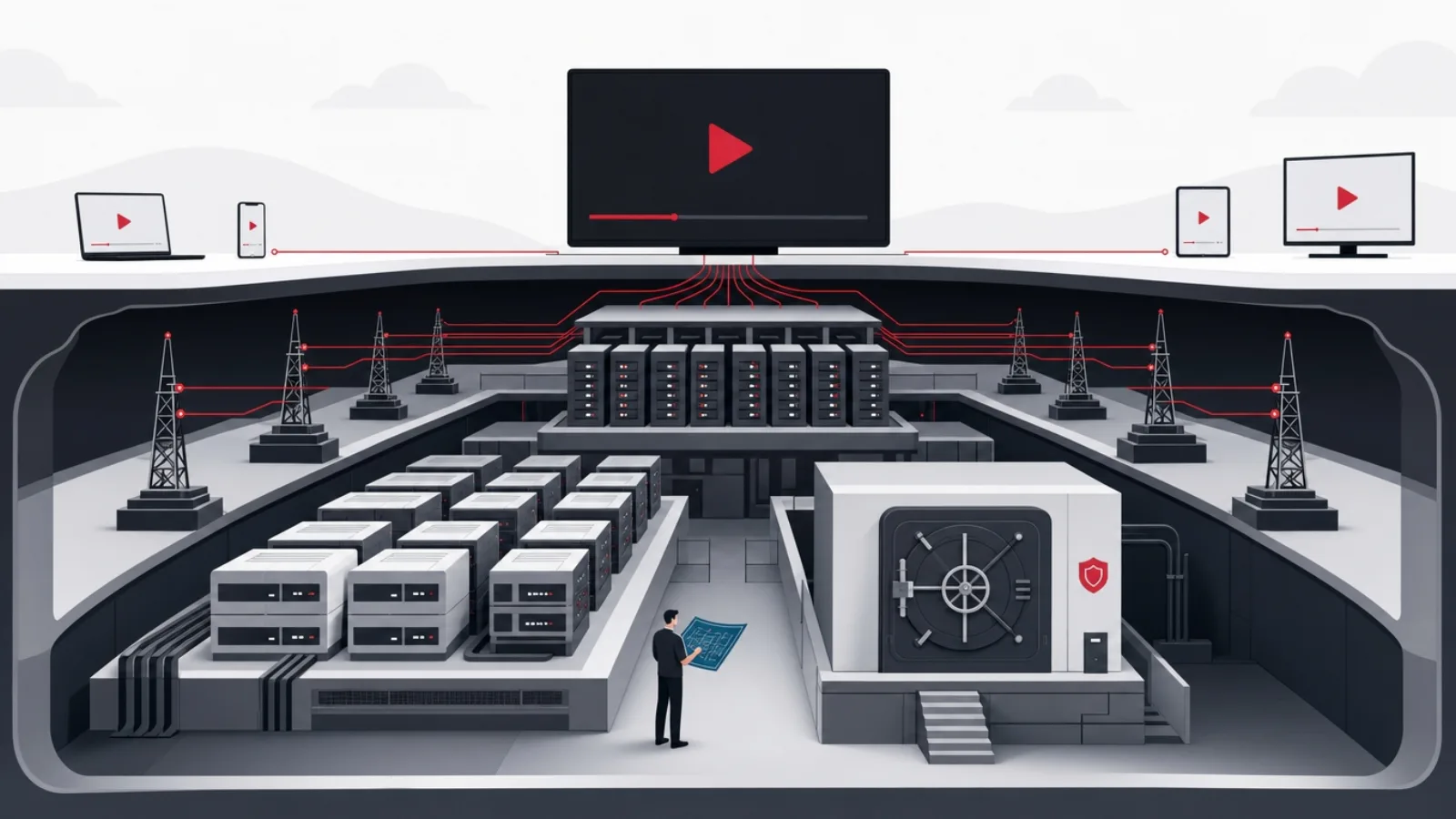
For the readers here to build rather than subscribe: a streaming product decomposes into five systems. The content pipeline: ingest, transcode, package and store video at multiple qualities. Delivery: CDN distribution with adaptive bitrate playback so the stream survives real networks. The player: buffering, subtitles, offline downloads and DRM on every device family you support. The catalog and discovery layer: metadata, search, recommendations and editorial surfaces. And the commercial layer: subscriptions, entitlements, payments and, increasingly, ad insertion.
The encouraging news is that the bottom two layers are commodity: transcoding, packaging, DRM and delivery are metered services from cloud vendors, and battle-tested open players exist for every platform. A streaming MVP in 2026 rents its pipeline. The differentiating work, and the real budget, sits in catalog experience, recommendation quality, cross-device polish, and the operational tooling for whoever manages the content, which is the part first-time streaming founders consistently underestimate.
Honest numbers: a niche or regional streaming MVP, rented pipeline, apps on two device families, subscription billing, a real catalog admin, typically lands between 120,000 and 300,000 US dollars with an offshore product team, before content costs, which will exceed the engineering. The full costing framework is in our guide to what software genuinely costs. Content rights are the moat and the majority budget line: the engineering exists to serve them, never the reverse.
Scoping a streaming product in 2026
Do this
- Rent the pipeline, own the catalog experienceTranscoding and delivery are solved, metered problems. Your budget belongs in discovery, polish and the content admin.
- Wedge on a genre, region or communityEvery post-war survivor owns a lane. Breadth is the incumbents' game and they paid billions for it.
- Plan the rights before the buildA beautiful player with nothing licensed is a demo. Content deals take longer than engineering; run them in parallel from day one.
- Design for the living room earlyTV platforms are where watch time lives and where niche services chronically lag. Budget the TV apps, not just mobile.
Not this
- Compete on catalog breadthThe giants burn more on content in a week than your total raise. Breadth is not a strategy available to you.
- Build your own video infrastructure firstOwning transcoding before product-market fit is burning runway on plumbing viewers never see.
- Treat DRM and geo-rights as afterthoughtsLicensors audit. An MVP that cannot enforce windows and territories cannot sign the deals it needs to exist.
- Ignore the ad stackFree and hybrid tiers won the growth war. A subscription-only architecture with no ad-insertion path forfeits the market's fastest lane.
Patterns from the services that survived the war, translated into build decisions.
The honest conclusion: stop looking for one replacement
The question "what is the best Netflix alternative" assumes a shape the market no longer has. There is no single service to defect to, and stacking four subscriptions to recreate completeness is the expensive mistake the industry is counting on. The stable answer is a portfolio: one anchor chosen by your household's loudest need, one rotating slot that follows the release calendars, one free service as the base layer, and a niche catalog if a genre genuinely owns your evenings.
That portfolio costs less than Netflix plus one rival, covers more of what you actually watch, and, not incidentally, keeps pressure on every service in it to earn its slot monthly. The subscription economy's honest gift to consumers is the absence of contracts; rotation is simply taking the gift.
And for the builders who read this far: the market map above is the opportunity map. The general war is closed, the niches are open, and the engineering to enter one is more rentable than it has ever been. We build video products for exactly this landscape, and the companion pieces on the social app leaderboard and short-video alternatives chart the adjacent territory.
Frequently asked questions
What is the best Netflix alternative in 2026?
For a like-for-like general catalog, Prime Video and Max are the closest substitutes; Disney+ wins for families and Apple TV+ for cheap prestige originals. If the goal is spending nothing, Tubi and Pluto TV now carry genuinely livable free catalogs. The better answer than any single service is rotation: one anchor subscription, one rotating slot, one free app.
Is there a completely free Netflix alternative?
Yes, and the free tier is better than its reputation. Tubi carries tens of thousands of licensed titles, Pluto TV recreates lean-back channel surfing, and The Roku Channel bundles both models. The trade-offs are ads (lighter than cable), faster catalog churn, and weaker recommendations. As the base layer under one paid subscription, free services cover the gaps well.
Which service is best if I mostly watch one genre?
A niche service, and it is not close. Crunchyroll for anime, Shudder for horror and Mubi for world and art-house cinema each beat Netflix decisively inside their lane on both depth and curation, and all price below the major general catalogs. A genre household gets more satisfaction per dollar from its specialist than from any second general subscription.
Is it cheaper to rotate streaming services than to keep them all?
Substantially. Streaming has no contracts, so subscribing for a month or two around each service's strongest releases and canceling between them typically halves a stacked-subscription bill while covering the same shows. The costs are patience (some shows arrive months late for you) and the small friction of resubscribing, which the platforms fight with annual discounts on exactly the services you should not lock in.
Why did most Netflix competitors fail?
Capital and rights. The general-catalog war required tens of billions of dollars a year in content spending, which only Amazon, Disney, Apple and Warner could sustain. Every challenger that competed on breadth died or consolidated; the survivors from outside the giants all own a wedge instead: a genre (Crunchyroll), a curation philosophy (Mubi), a price of zero (Tubi), or a region served more deeply than the global platforms bother to.
How much does it cost to build a streaming service like Netflix?
Like Netflix, not a realistic target: its content budget alone is tens of billions a year. A realistic niche or regional streaming MVP, rented video pipeline, apps on two device families, subscriptions and a catalog admin, typically runs 120,000 to 300,000 US dollars in engineering with an offshore team, before content licensing, which will exceed the engineering budget and is the actual moat. The rights strategy matters more than the player.
The streaming war rewards wedges, not breadth. If your roadmap includes video, a catalog or a subscription product, work with AgileTech, an AI software development company in Vietnam that builds the pipelines, players and payment layers this market demands.
Source: https://agiletech.vn/blog/netflix-alternatives/ · (c) AgileTech Vietnam. Printed from agiletech.vn.