 Nguyen Manh Thang
Chief Executive Officer, AgileTech Vietnam
Nguyen Manh Thang
Chief Executive Officer, AgileTech Vietnam
- Published
- Read time
- 13 min
- Views
- 59
Read the AI overview
Well-known organizations use Flutter in production across payments, advertising, marketplaces, automotive, and financial services: documented adopters include Google Pay, Google Ads, Alibaba's Xianyu marketplace, BMW's My BMW app, eBay Motors, Nubank, and Toyota's in-vehicle infotainment work. Collectively these examples prove that Flutter is not limited to prototypes, that large organizations can adopt it, that it supports visually rich and data-heavy interfaces, that it can be introduced incrementally into existing portfolios, and that it extends beyond phones into embedded environments. They do not prove that Flutter is the best choice for every product: it remains a weaker fit where the product depends heavily on new platform APIs, specialized native libraries, demanding background execution, or critical third-party SDKs with weak Flutter support. The stronger question is never whether famous companies use Flutter but whether Flutter fits a specific product's team, performance profile, platform dependencies, and release strategy, which a two-to-four-week assessment that prototypes the hardest workflow answers with evidence instead of framework debate.
Well-known organizations have shipped Flutter in payments, advertising, marketplaces, automotive applications, and financial services. Google Pay and Google Ads appear in Flutter's official production showcase, Alibaba documented its adoption in the Xianyu marketplace, BMW built the My BMW app on it, eBay Motors launched with it, Nubank chose it after a deliberate framework assessment, and Toyota has taken it beyond phones into vehicle infotainment. If the question is whether Flutter can support serious production workloads, these examples settle it.
But that is rarely the question that actually needs answering. The stronger question is not whether large companies use Flutter; it is whether Flutter fits a specific product's team, performance profile, platform dependencies, and release strategy, and famous logos answer none of that. This article walks each example for what it genuinely demonstrates and what it does not, then covers the honest territory most showcases skip: where Flutter does not fit, how to choose in 2026, and what a proper cross-platform assessment looks like before anyone commits a roadmap to a framework.
The examples matter because the decision is expensive in both directions. Choosing Flutter for a product that needs deep native specialization buys months of plugin archaeology; choosing dual native teams for a product Flutter handles comfortably doubles interface work for years. Teams that want the assessment run against their actual requirements rather than a conference talk can see how our mobile app development practice structures the framework decision, and how it fits the broader stack choices mapped in our frontend framework comparison.
Key takeaways
- Seven documented adopters anchor the proof: Google Pay, Google Ads, Xianyu, My BMW, eBay Motors, Nubank, and Toyota. Each demonstrates a different strength, consumer scale, data-heavy dashboards, marketplace complexity, branded companion apps, delivery speed, financial engineering, and embedded interfaces.
- The examples prove Flutter supports serious production workloads. They do not prove it removes native engineering: payments, notifications, deep links, permissions, and device differences still require platform-specific work in every one of these apps.
- The strongest business case is one product team shipping both platforms: shared Dart code for interface, state, validation, and API integration, with platform-specific integrations maintained where needed.
- Flutter fits poorly when the product leans on new platform APIs, heavy Bluetooth or camera pipelines, complex background processing, or critical vendor SDKs without solid Flutter support. List the ten riskiest capabilities and validate them before committing.
- Performance claims in either direction are worthless without measurement: prototype the demanding animation, scrolling, media, or mapping workflow on target devices before deciding, because state management and widget structure decide smoothness more than the framework does.
- A two-to-four-week cross-platform assessment, roadmap review, integration inventory, SDK validation, and a prototype of the hardest workflow, converts the framework debate into a decision record with evidence.
Which well-known apps use Flutter?
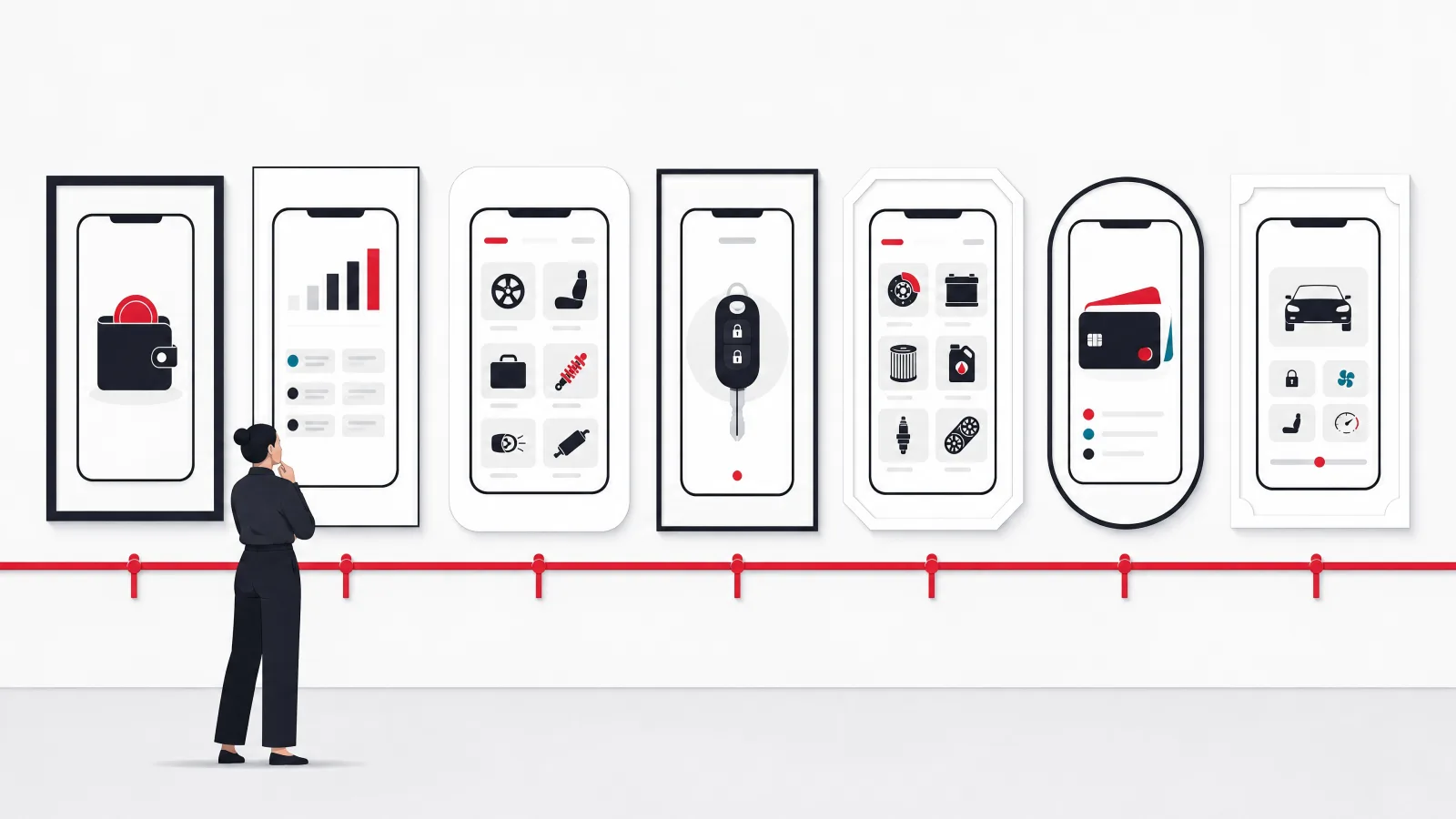
Documented Flutter adopters include Google Pay, Google Ads, Alibaba's Xianyu, BMW's My BMW app, eBay Motors, Nubank, and Toyota's in-vehicle work. The table maps each to what it demonstrates, and the framing matters: these implementations show different strengths rather than one universal architecture, and the exact Flutter footprint differs by product. Some organizations migrated entire applications, others introduced Flutter into selected modules or platforms, and the difference between those two adoption modes is one of the most useful lessons in the whole list.
A note on evidence quality, because this category attracts inflated claims. Every example here comes from official showcases, company case studies, or documented engineering write-ups rather than rumor lists that recycle each other. Even so, implementations evolve: a company that adopted Flutter for one product line in one year may have expanded, contracted, or rearchitected since. The examples prove capability at the time documented, which is what a framework decision needs; they are not a live inventory of anyone's codebase.
Documented Flutter adopters and what each demonstrates
| App or implementation | Company | What it demonstrates |
|---|---|---|
| Google Pay | Flutter in a large payment-related consumer product | |
| Google Ads | Data-rich business workflows in a cross-platform application | |
| Xianyu | Alibaba Group | Marketplace use at substantial operational scale |
| My BMW | BMW Group | Branded customer experience connected to vehicles and services |
| eBay Motors | eBay | Cross-platform marketplace delivery in under a year |
| Nubank | Nubank | Flutter adoption in financial product engineering |
| Vehicle infotainment work | Toyota | Flutter beyond phones, in embedded automotive interfaces |
Different strengths, not one architecture. Footprints range from full applications to selected modules.
Google Pay and Google Ads: consumer scale and data-heavy dashboards

Google Pay is a payments product that has used Flutter as part of its mobile application strategy, and its inclusion in Flutter's official production showcase is the framework's single most cited credential: Google trusting its own framework in a highly visible consumer payment application. What the example actually demonstrates is specific and worth stating precisely: Flutter can support large consumer applications, shared development across mobile platforms, complex international product requirements, integration with native platform services, and high expectations for interface consistency across markets and devices.
What it does not demonstrate is equally important for anyone building in fintech. Payment security is not handled by Flutter or by any UI framework: sensitive logic, secure storage, device authentication, compliance, and backend risk systems remain separate architectural concerns that Google engineered around the interface layer, not inside it. The practitioner insight from this example is that cross-platform code does not remove platform-specific work; payment flows still require native APIs, platform review, and device-level testing, exactly the discipline our guide to building a mobile banking app describes for the same problem class.
Google Ads, also in the official showcase, proves a different point: Flutter handles data-rich business interfaces, not just consumer content feeds. The app serves summaries, alerts, campaign information, and management actions across platforms, which makes it the reference example for business dashboards, data-heavy interfaces, reusable design systems, interactive charts and lists, and cross-platform account workflows. Anyone proposing a Flutter admin app or operations dashboard is standing on this example.
The caveat is that data-heavy applications succeed or fail on state management and rendering decisions the framework cannot make for you. Flutter can draw the interface; performance still depends on query design, pagination, caching, widget structure, and update frequency, and a naive implementation that rebuilds large widget trees on every data tick will stutter in any framework. The failure mode this example warns against is rebuilding desktop reporting on a small screen: a mobile business app should prioritize decisions and alerts rather than reproducing every field of the web console.
Xianyu and My BMW: marketplace scale and branded companion apps
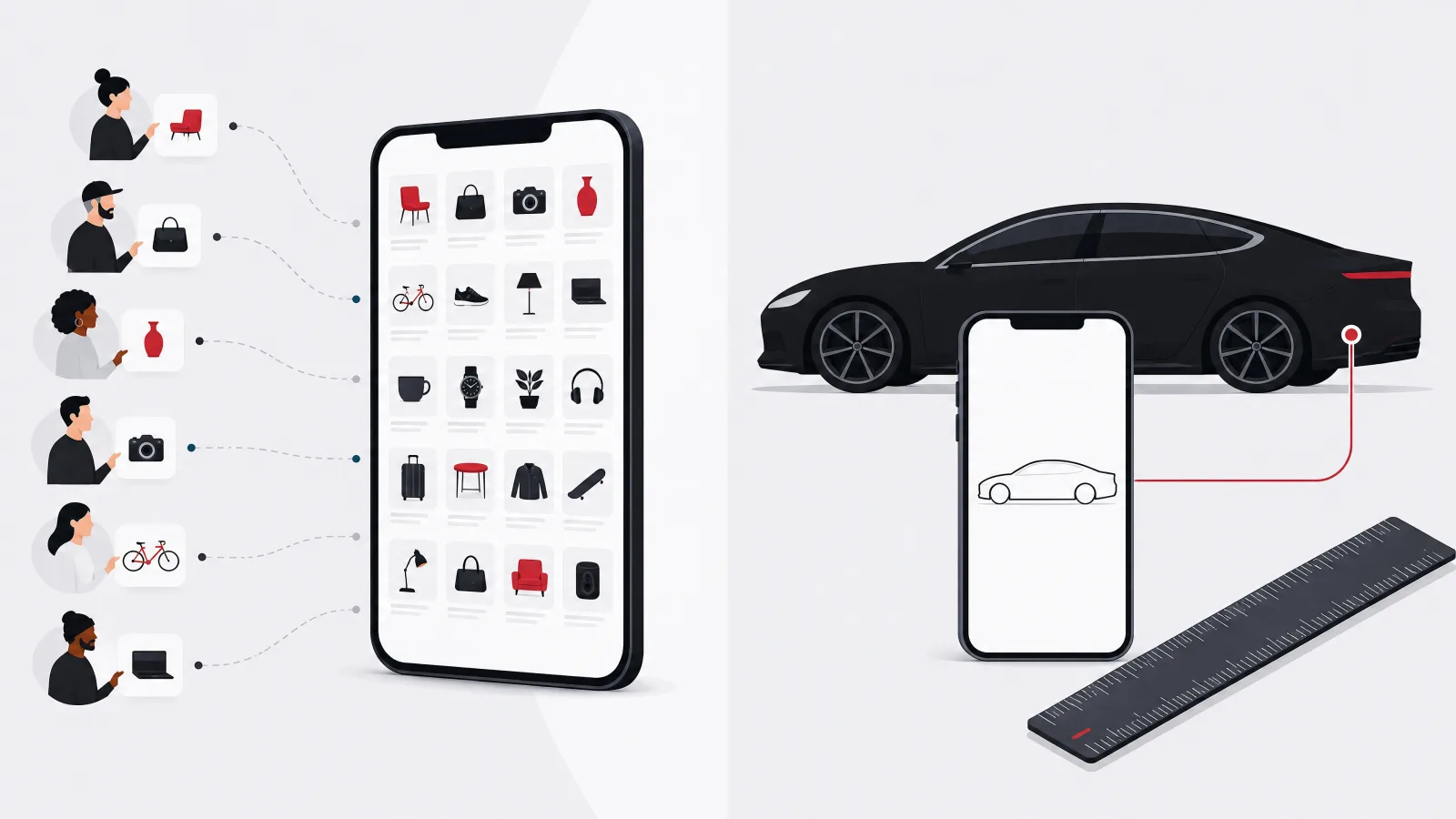
Xianyu is Alibaba Group's second-hand marketplace, and Alibaba's documented Flutter adoption remains one of the clearest examples of the framework inside a large marketplace product. Marketplaces are a demanding category: browsing, search, listings, messaging, media, accounts, and transactions, operating across an enormous range of device types and network conditions. Xianyu demonstrates that Flutter can support marketplace interfaces, large user-facing applications, media-rich listings, complex navigation and state, and, most instructively, incremental adoption inside an established organization.
That last point is the real lesson, and it is organizational rather than technical. Existing applications often cannot be rewritten safely in one project, so Alibaba's path, introducing Flutter module by module into a mature product, is the pattern most established companies actually face. The honest cost of that pattern: hybrid navigation and communication between native and Flutter code add real complexity, and the teams that succeed budget for the bridge layer as a first-class component rather than an afterthought. The lesson is not that every marketplace should choose Flutter; it is that Flutter can enter a mature product when the organization has the engineering discipline to manage integration and migration.
BMW's My BMW app connects drivers with vehicle information, services, dealers, and the brand, and BMW's case study presents it as part of a broader effort to scale customer-centered product development across markets. Automotive companion apps carry a distinctive load: multiple markets, vehicle configurations, account states, and backend services, under premium brand and reliability expectations. The example demonstrates Flutter's fit for branded experiences, multi-market development, connected-device companion applications, shared cross-platform design, and complex service integration.
The insight worth extracting from BMW is that design consistency has organizational value beyond aesthetics. A shared component system can genuinely reduce differences between iOS and Android, but only when teams govern components rather than letting each feature invent its own patterns; the framework provides the capability, and governance provides the consistency. And as with payments, the interface layer is not the system: vehicle integration still depends on secure backends, regional availability, account permissions, and platform-specific capabilities that no cross-platform framework abstracts away.
eBay Motors, Nubank, and Toyota: delivery speed, fintech, and beyond phones
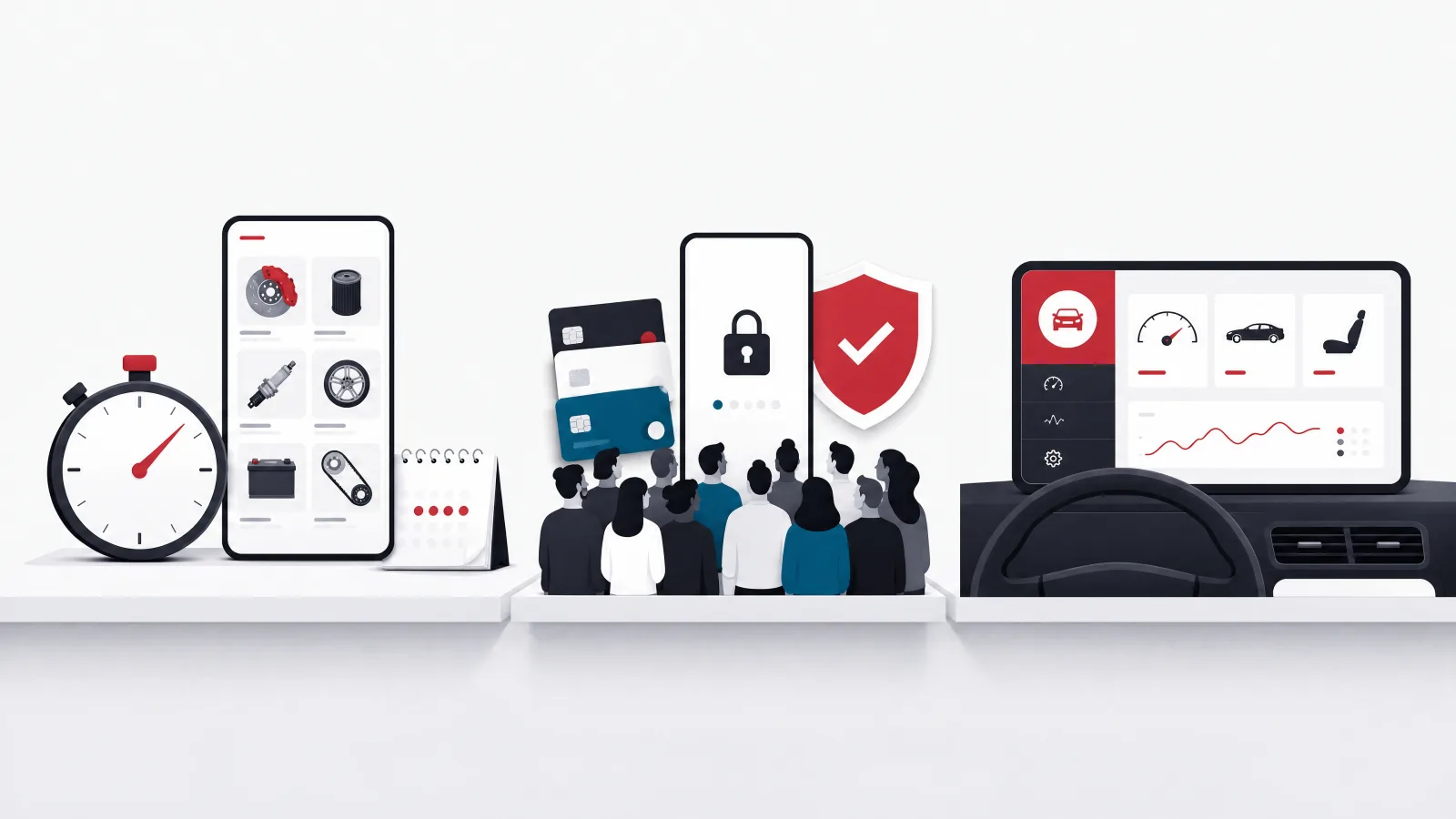
eBay Motors used Flutter to launch iOS and Android applications, and the official case study describes the cross-platform delivery completing in under a year, covering vehicle discovery and marketplace interactions: search, filters, media, saved activity, messaging, and account workflows. The example demonstrates new cross-platform product delivery, marketplace development, engineering team adoption, and shared features across platforms without maintaining two complete interface implementations. The meaningful lesson is team leverage rather than raw speed: a shared codebase reduces duplicated feature work permanently, not just at launch, because every subsequent feature ships once instead of twice.
The mistake this example invites is reading cross-platform as write once and never touch platform-specific behavior. Deep links, notifications, permissions, app store requirements, and device differences still need explicit handling in every Flutter app, and eBay's team handled them; the case study describes reduced duplication, not eliminated platform work. Teams that plan zero platform engineering discover the gap during release week, which is the most expensive possible time.
Nubank, one of the largest digital financial services companies in the Americas, adopted Flutter after a documented assessment that explicitly compared other cross-platform approaches, which makes it the reference example for deliberate framework selection rather than fashion-driven adoption. Financial applications demand reliability, secure workflows, accessibility, and controlled releases while changing constantly as products and regulations evolve, and Nubank demonstrates Flutter's relevance to exactly that environment: financial product development, large engineering organizations, shared mobile components, and long-term platform strategy. The example does not prove Flutter satisfies financial security requirements by itself, because security lives in the complete system, APIs, identity, device controls, monitoring, fraud prevention, and operational governance. And Nubank's most reusable insight is economic: assess migration cost separately from new development, because a framework can be right for new features while a full rewrite remains unjustified.
Toyota extends the story past app stores entirely, using Flutter in work related to vehicle infotainment systems. Embedded automotive interfaces live under different constraints from phones: hardware integration, controlled displays, safety considerations, long product lifecycles, and specialized performance requirements. The example demonstrates Flutter's potential for embedded interfaces, automotive displays, custom hardware environments, and consistent interface systems beyond phones. It does not mean a mobile Flutter team can walk into automotive work, which requires specialized integration, testing, hardware access, and compliance processes; the lesson is that Flutter is a UI technology with uses beyond app stores, with suitability decided by the target device and operating environment.
What do these Flutter app examples actually prove?
Taken together, the examples support six conclusions, each worth stating without inflation. Flutter is not limited to prototypes. Large organizations can adopt it, both for new products and incrementally inside existing ones. It supports visually rich and data-heavy interfaces. It can be introduced into existing application portfolios module by module. It extends beyond standard mobile devices into embedded environments. And it still requires disciplined architecture and testing, because every case study that reports success also reports the engineering that produced it.
The strongest business case running through all seven examples is shared product development across platforms: one product team implementing most of the interface and application behavior once, while maintaining platform-specific integrations where the product genuinely needs them. That leverage compounds over a product's life, because every feature after launch inherits it. But the actual savings depend on product shape, and this is where honest evaluation starts: if most of the work is backend integration, platform-specific media, device hardware, or operating-system behavior, the shared UI layer represents a smaller portion of total cost, and the framework decision matters proportionally less than the showcase implies.
What the examples collectively do not prove deserves equal billing. They do not prove Flutter removes native engineering: every app on this list handles payments, notifications, deep links, or device services through platform channels and native code. They do not prove lower cost in every configuration: dual-platform leverage is real, but so are plugin maintenance, bridge complexity in hybrid apps, and the occasional wait for platform API support. And they do not prove the choice for your product, because Google's, Alibaba's, and BMW's constraints are not yours. Logos are evidence of capability, never of fit.
Reading framework case studies without fooling yourself
Do this
- Extract the demonstrated capabilityGoogle Ads proves data-heavy dashboards work. That transfers to your admin app; the Google logo does not.
- Note the adoption modeFull app, new build, or module-by-module migration. The mode is often more relevant than the company name.
- Look for the engineering costGood case studies mention bridge layers, platform channels, and testing investment. That is the real budget line.
- Map examples to your risk listFind the example closest to your hardest requirement, not the most famous one.
Not this
- Treat logos as proof of fitA framework that serves a payments giant can still be wrong for your Bluetooth-heavy hardware product.
- Assume the footprint is totalAdopted Flutter rarely means the entire app is Flutter. Modules and single platforms count as adoption.
- Skip the dateImplementations evolve. A case study proves capability when documented, not the current state of anyone's codebase.
- Let the showcase pick the frameworkThe decision needs your integration inventory and a prototype, not a slide of famous apps.
Where does Flutter not fit?
Flutter is a weaker fit when the product depends heavily on new platform APIs, specialized native libraries, platform-specific experiences, or demanding background execution, cases where native development provides earlier access and more direct control. The warning signs are concrete enough to checklist: extensive Bluetooth or hardware integration, advanced camera or media pipelines, complex background processing, deliberately platform-specific user experiences, existing large native teams and codebases, critical third-party SDKs with weak Flutter support, very small single-platform scope, strict application size or startup constraints, and deep integration with operating-system services. None of these is automatically disqualifying; three or four of them together usually are.
Performance deserves precise language, because both camps abuse it. Flutter can deliver smooth interfaces, and the production examples above prove it at scale; poor state management, excessive widget rebuilding, oversized images, inefficient lists, or heavy work on the UI thread can still produce a stuttering app, in Flutter as in any framework. The reverse claim needs the same discipline: native is not automatically faster to deliver, because two native applications can double coordination and feature implementation effort, and the comparison is only meaningful when it uses the actual team and the actual requirements rather than folklore from either community.
The practitioner decision rule compresses all of this into one afternoon of work: list the ten most technically risky capabilities in the product, and validate their Flutter support before committing to the framework. Package quality, maintenance activity, platform coverage, and fallback options for each risky capability tell you more than any comparison article, including this one. A package existing in a registry proves nothing about production readiness; its issue tracker, release cadence, and maintainer response time are the actual evidence.
The native-dependency inventory every Flutter decision needs
- Payments and vendor SDKsThe category where weak Flutter wrappers hurt most. Validate the exact SDK version, not the vendor name.
- Maps, camera, and media pipelinesHeavy native surface area. Prototype the actual capture or rendering workflow on target devices.
- Bluetooth, sensors, and device hardwareThe most common Flutter regret category. Test on the worst supported device, not the newest.
- Background location and processingPlatform rules differ sharply between iOS and Android and change yearly. Confirm current behavior, not documentation.
- Biometrics, notifications, deep links, widgetsRoutine but mandatory. Each needs platform-specific configuration regardless of framework.
- Health data and platform security servicesEntitlement-gated APIs with review implications. Earlier access usually favors native.
For each item the product uses, confirm package quality, maintenance, platform coverage, and a fallback plan.
How should a team choose Flutter in 2026?

Choose Flutter when cross-platform consistency and shared development provide more value than direct platform specialization, and make the call through a short technical assessment rather than a framework popularity debate. Four factors decide it. First, team composition: Flutter is attractive when one product team must support both iOS and Android, sharing Dart code, interface components, validation, state handling, and API integration; if the company already has strong native teams and substantial native code, migration may not produce a return, and incremental adoption is safer than replacement. The structure of that team, whoever builds it, follows the patterns in our guide to building a mobile team.
Second, performance requirements, resolved by measurement. Most business, marketplace, ecommerce, education, and service applications are reasonable Flutter candidates, and the demanding workflows, animation, scrolling, media, mapping, data visualization, should be prototyped on target devices before the decision. General statements in either direction are not evidence. Third, platform-specific requirements, resolved by the dependency inventory above: payments, maps, camera, biometrics, notifications, background location, Bluetooth, health data, widgets, deep links, device security, and vendor SDKs, each validated for package quality and fallback options.
Fourth, the product roadmap. Flutter becomes more attractive when iOS and Android are expected to remain similar over time; if each platform requires a substantially different roadmap, the shared-code advantage declines with every divergent release. Teams eyeing web, desktop, or embedded targets should weigh those carefully too: Flutter can compile to them, but a shared framework does not guarantee one ideal interface across every screen size and input method, and the adjacent options, covered in our PWA versus native comparison, sometimes serve the web target better than stretching one codebase across everything.
What does a cross-platform assessment look like?
A cross-platform assessment compares Flutter, native development, and relevant alternatives against the actual product risks, and produces three artifacts: a recommendation, prototype evidence, and an implementation plan. The scope is deliberately narrow and fast, two to four weeks depending on product complexity and access to existing systems, with a team of a mobile architect, a Flutter engineer, a native specialist, a product lead, and a QA engineer. The sequence runs from roadmap review through a platform and device matrix, the native integration inventory, performance risk identification, third-party SDK validation, and team skill assessment, into the step that carries the whole exercise: a prototype of the hardest workflow.
The prototype rule deserves emphasis because it is the difference between an assessment and a slideshow: test the hardest capability, never the login screen. For a logistics product that means background location; for a media product, capture and processing; for fintech, secure vendor SDK integration. The login screen works in every framework ever shipped, which is precisely why it proves nothing. The hardest workflow is where a framework decision succeeds or dies, and finding out in week three of an assessment costs a few thousand dollars; finding out in month seven of a build costs the roadmap.
The assessment closes with a delivery and maintenance estimate, a migration strategy if an app already exists, and a written decision record, the artifact that outlives everyone's memory of why the choice was made. The goal, stated plainly, is not to prove Flutter can render the proposed design, because it can. The goal is to determine whether this team can build, test, release, and maintain the complete product without unacceptable platform risk, and that question is answerable with two to four weeks of structured work instead of a year of discovering the answer in production.
The cross-platform assessment, step by step
-
Roadmap and platform matrixDays one to three
Review the product roadmap, target platforms, and device matrix. Divergent platform roadmaps weaken the shared-code case before any code is written.
-
Integration and SDK inventoryWeek one
List every native dependency and critical vendor SDK. Validate package quality, maintenance, platform coverage, and fallbacks for each.
-
Performance risk identificationWeek one
Name the demanding workflows: animation, scrolling, media, mapping, visualization. These define what the prototype must prove.
-
Prototype the hardest workflowWeeks two to three
Build the riskiest capability on target devices, background location, capture pipeline, or secure SDK integration. Never the login screen.
-
Estimate, migration plan, decision recordFinal week
Delivery and maintenance estimates, a migration strategy if an app exists, and a written record of the decision and its evidence.
Frequently asked questions
What are some famous Flutter app examples?
Documented examples include Google Pay, Google Ads, Alibaba's Xianyu marketplace, BMW's My BMW app, eBay Motors, Nubank, and Toyota's in-vehicle infotainment work. Their Flutter adoption spans payments, advertising, marketplaces, automotive services, financial products, and embedded interfaces, drawn from official showcases and company case studies rather than recycled rumor lists.
Is Flutter good for production apps?
Yes. The documented adopters prove Flutter supports large production applications when its platform support matches the product requirements. Teams still need strong architecture, native integration planning, performance testing, and release discipline, because the framework renders the interface while payments, notifications, permissions, and device services continue to require platform-specific engineering.
Do Google apps use Flutter?
Google Pay and Google Ads appear in Flutter's official production showcase, and other Google products have used Flutter as well. The exact implementation scope differs by application, and adoption can mean a full app, selected modules, or specific platforms, so a showcase entry proves capability rather than describing the entire codebase.
Is Flutter better than native development?
Flutter is often better for teams prioritizing shared iOS and Android development with a similar roadmap on both platforms, because one codebase covers most interface and application logic. Native is better for products requiring deep platform specialization, immediate access to new APIs, heavy hardware integration, or critical vendor SDKs with weak Flutter support. The right answer comes from prototyping the hardest workflow, not from the framework debate.
Can Flutter handle large applications?
The production examples show Flutter operating in large applications, including Alibaba's Xianyu marketplace and Nubank's financial products. At that scale, success depends more on application architecture, state management, backend systems, testing, and team practices than on the framework itself, which is true of native development at scale as well.
Should a startup choose Flutter?
A startup should consider Flutter when it needs iOS and Android support with a small mobile team, because one codebase lets a lean team ship both platforms and every subsequent feature once. Before committing, it should validate its critical native integrations, payments, maps, notifications, and any vendor SDKs, and prototype its most demanding workflow on target devices, since discovering a framework gap after launch is far more expensive than a week of validation before it.
When the framework decision needs builders instead of debaters, AgileTech is an AI native software development company in Vietnam shipping Flutter and native apps from the same mobile practice.
Source: https://agiletech.vn/blog/flutter-app-examples/ · (c) AgileTech Vietnam. Printed from agiletech.vn.