 Nguyen Manh Thang
Chief Executive Officer, AgileTech Vietnam
Nguyen Manh Thang
Chief Executive Officer, AgileTech Vietnam
- Published
- Last updated
- Read time
- 15 min

Read the AI overview
An education app succeeds or fails on one number that most teams never put on a dashboard: the share of learners still practicing in week four. Everything that moves that number is knowable in advance. Pick one of the four product kinds deliberately, because a consumer practice app, a school platform, a course marketplace and a corporate training tool have different buyers, different compliance duties and different economics, and the averaged version of them serves nobody. Build the practice loop on learning science that actually works, short retrieval sessions, spacing managed by the system rather than the learner, and difficulty that adapts to keep the learner at the edge of their ability. Treat gamification as scaffolding for the habit rather than a substitute for progress the learner can feel. And if minors will use it, do the consent, data minimization and school procurement work as architecture, at the start, because retrofitting it is a rebuild. The build itself is ordinary software; the discipline is refusing features that demo well until the practice loop provably brings people back.
Education apps have a failure pattern all their own. Most software fails by not getting users; education apps get users, in enormous numbers, and then lose them in the second week, quietly, at the exact moment the novelty wears off and the actual work of learning begins. The download charts and the learning outcomes describe two different industries.
This article is written for teams who want to build the second one. It sorts the four kinds of education product, because the averaged version of them is the commonest scoping mistake in the category. It states the learning science plainly, because the findings are settled, free, and ignored by most of the market. It answers the language learning question structurally, what the products that work share, rather than as a list of names that would be stale in a year. And it puts the compliance work for minors where it belongs, in the architecture phase, priced and scheduled, rather than in the panicked quarter before a school district asks for the paperwork.
We write it from the build seat. Our teams have shipped learning platforms and the systems around them, and the education industry work we do sits one link away for anyone who wants the commercial version. This article deliberately does not sell anything until the end; it is the reference we wish clients had read before the first scoping call.
Key takeaways
- Week four practice retention is the number the whole product hangs on. Downloads measure marketing, session length measures nothing by itself, and a learner who stops practicing in week two has learned almost nothing that lasts.
- The four product kinds are different businesses, not different feature sets. Consumer practice apps live on habit, school platforms live on procurement and compliance, marketplaces live on supply quality, and corporate tools live on completion reporting. Choose one first.
- The learning science is settled and mostly ignored. Retrieval practice beats rereading, spaced repetition beats cramming, and short frequent sessions beat long rare ones. An app that schedules these for the learner is doing the one job software adds.
- The successful language learning apps share structure, not branding: a five minute daily unit, a streak that tolerates one miss, difficulty that adapts within a session, and speaking or listening practice from the first lesson rather than after the grammar.
- Gamification borrows motivation, it does not create it. Points and streaks carry a learner through the boring middle only if visible real progress arrives on schedule. When the reward layer outshines the learning, the users it retains are collecting, not learning.
- Content is the recurring cost teams forget to price. Every lesson needs authoring, review, versioning and eventually localization, and the pipeline that produces it is as much a part of the product as the app is.
- If minors can use the product, compliance is architecture. Age gates, verifiable parental consent, data minimization and school data agreements shape the data model itself, and a retrofit is a rebuild wearing a legal deadline.
The four kinds of education product, and why picking one comes first

The phrase education app covers four products that share almost nothing below the surface. A consumer practice app sells a habit to an individual: languages, math drills, test preparation, music. A school platform sells infrastructure to an institution: classrooms, assignments, gradebooks, the machinery of teaching. A course marketplace sells access to instruction made by others, and its real product is the catalog. A corporate training tool sells completion and compliance evidence to an employer. Each has a different buyer, a different payer, a different definition of success, and a different set of legal duties.
The differences run through every decision that follows. The consumer app lives or dies on daily return rates and is bought in an app store by the person who uses it. The school platform is bought in a procurement cycle by people who will never complete a lesson in it, evaluated on rostering, accessibility and data agreements, and used by minors, which brings the heaviest compliance load in the category. The marketplace’s hard problem is supply, attracting and quality-controlling instructors, not software. The corporate tool is judged on reporting: who completed what, by when, provable to an auditor.
The commonest scoping mistake in this category is refusing to choose. A team builds a practice app, then adds a teacher dashboard for schools, then instructor uploads for scale, and ships the average of three products. The average fails everywhere at once: too thin on habit mechanics for consumers, too thin on rostering and reporting for schools, too thin on catalog and payouts for a marketplace. Each audience finds the half of the product aimed at somebody else and correctly concludes it is not for them.
The choice is also reversible later in a way it is not at the start. A consumer practice app with strong retention can add a schools edition once the learning loop is proven, and several of the biggest names in the category did exactly that, in that order. Starting with both means proving neither. So the first deliverable of an education app project is one sentence naming the kind, the buyer and the number that defines success, and every feature request afterward is tested against that sentence.
The four kinds, on the axes that actually differ
| Consumer practice app | School platform | Course marketplace | Corporate training | |
|---|---|---|---|---|
| Who pays | The learner, or a family plan | A district or institution budget | Learners per course, split with instructors | The employer |
| The number that defines success | Week four practice retention | Seats renewed at contract end | Completion and repeat purchase | Completion provable to an auditor |
| The hard problem | The habit surviving week two | Procurement, rostering, accessibility | Instructor supply and quality | Making mandatory feel useful |
| Compliance center of gravity | Consent if minors can sign up | Student data agreements, accessibility law | Payments, tax and content rights | Records retention and audit trails |
| Sales motion | App store plus subscription | Procurement cycle, pilots, references | Marketplace network effects | Business sales into HR and compliance |
Read a column top to bottom and it describes a coherent business. Read a row across and it shows why the averaged product fails: the answers are not variations, they are different companies.
The learning science that decides retention, stated plainly

The research on what makes practice effective is unusually settled for a field touching software, and unusually ignored. Three findings carry most of the weight. Retrieval beats review: a learner who is made to produce an answer from memory retains far more than one who rereads or rewatches it, even when the retrieval attempt fails. Spacing beats massing: the same practice spread across days produces durable memory where a single long session produces a good feeling and a fast decay. And difficulty has a productive band: material too easy teaches nothing, material too hard teaches quitting, and the edge of current ability is where learning actually happens.
Software earns its place in education precisely because these three findings are miserable to apply by hand. Nobody remembers which of four hundred items they last saw eleven days ago and are due to forget tomorrow; a spaced repetition scheduler does, per item, per learner. Nobody grades their own retrieval honestly; an app can require the answer before showing it. And no static textbook adapts its difficulty mid-session; software can, from the learner’s own error rate. An education app that schedules retrieval, manages spacing and adapts difficulty is doing the one job the medium adds. One that plays videos in order with a quiz at the end is a book with a battery.
The same findings explain the shape of sessions that work. Short and frequent beats long and rare, because spacing is the active ingredient and frequency is what a habit can sustain. The five minute daily unit that dominates the consumer category is not a marketing gimmick, it is the spacing research wearing a product shape: small enough that skipping feels sillier than doing it, frequent enough that the scheduler has something to schedule. Teams that design a forty minute lesson because the content deserves depth have optimized for the syllabus over the memory, and the week four numbers collect the difference.
One more finding deserves its place because it protects budgets: measurable progress feeds motivation more reliably than any reward layer. Learners persist when they can feel themselves getting better, at speaking, at solving, at playing, and the products that surface real progress, what you could not do two weeks ago that you can do now, retain learners that streaks alone cannot. The order of investment follows: make progress real and visible first, decorate it second. The reverse order produces the app store’s most common education artifact, a beautifully rewarded product that nobody is learning anything inside.
The vocabulary, defined by what each idea does to the product
- Retrieval practice
- Requiring the learner to produce an answer from memory before revealing it. The single strongest effect in the literature, and the reason a typed or spoken answer beats a tap on the one you recognize.
- Spaced repetition
- Reviewing each item just before it would be forgotten, at intervals that grow with each success. The scheduler that does this per item is the core algorithm of a practice app.
- Interleaving
- Mixing problem types within a session instead of blocking them. Feels harder, tests worse in the moment, and produces stronger long-term learning, which is why easy-feeling apps often teach less.
- Desirable difficulty
- The productive band between too easy and too hard. Adaptive difficulty exists to hold the learner in it, using their own recent error rate as the sensor.
- Mastery model
- Advancing on demonstrated ability rather than on time spent or content covered. The data structure underneath it, per-skill state per learner, is a foundational schema decision.
- Retention curve
- The share of learners still practicing after one day, one week, one month. The week four point predicts the business better than any download figure.
Applying the science without becoming a laboratory
Do this
- Make retrieval the default interactionThe learner produces, then sees. Recognition-only exercises are rehearsal for a test that never comes; keep them for introduction, not for practice.
- Let the scheduler own the spacingThe learner should open the app and be handed today’s due items. Asking them to choose what to review outsources the algorithm to the person it exists to relieve.
- Adapt difficulty from recent errorsA simple rule that tightens or eases from the last few answers holds the productive band well enough. Ship the simple rule, tune it from data.
- Surface progress the learner can feelWhat you can do now that you could not two weeks ago, shown concretely. This is the motivation engine; the reward layer only decorates it.
Not this
- Confusing content coverage with learningA syllabus fully rendered into screens teaches nothing by existing. The question is never what the app contains, it is what the learner retrieves.
- Designing the long weekly lessonDepth that arrives in one sitting decays in one week. The same material as daily fragments outperforms it, and the habit survives.
- Letting streaks punish honestly tired peopleA streak that dies from one missed day teaches learners to fear the app. One protected miss keeps the habit and the relationship.
- Shipping the reward layer firstPoints before progress retains collectors, not learners, and the week four curve will say so. Decorate real progress or the decoration is the product.
What the language learning category teaches everyone else
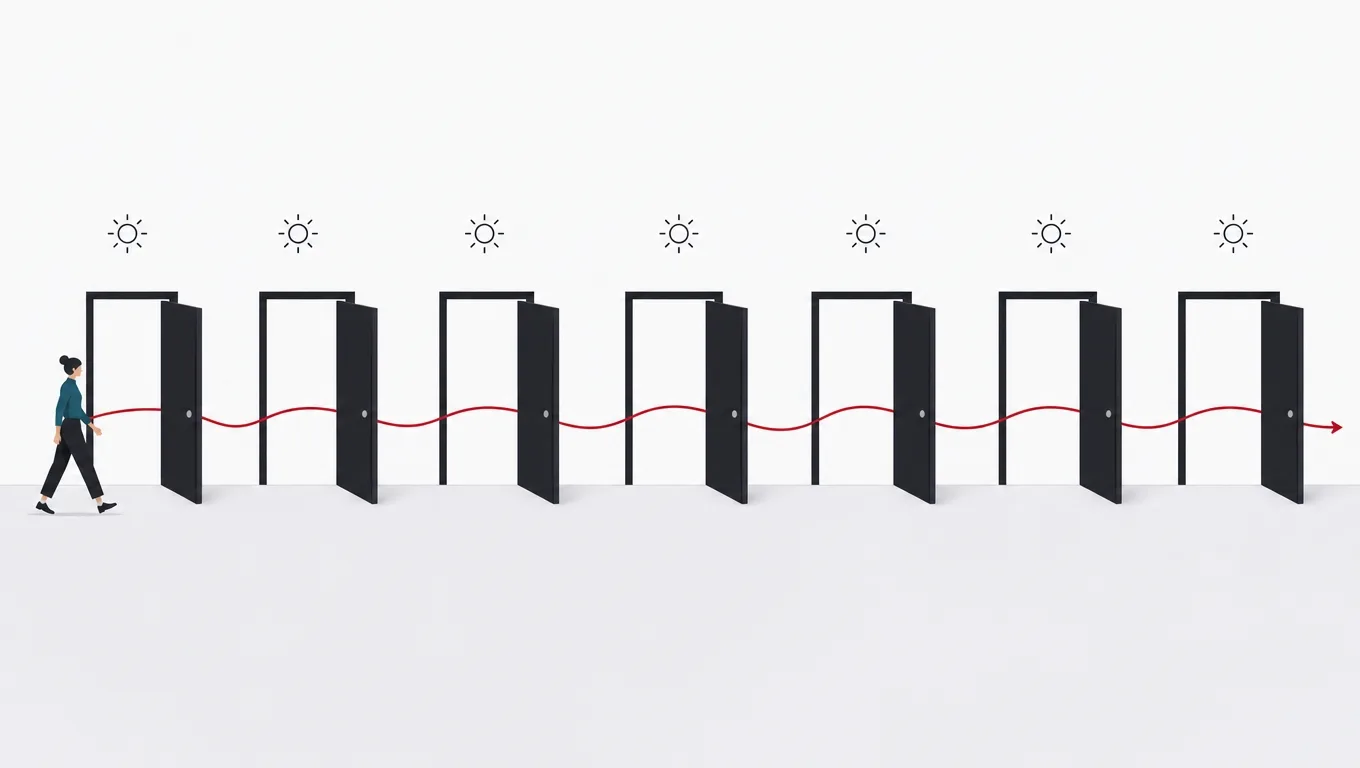
Language learning is worth its own section for two reasons. It is the largest and most competitive corner of consumer education, which makes it the category where the retention problem has been worked hardest. And one of the queries this article absorbs asks about must-have language apps by name, a question whose useful answer is not a list, lists rot, but the structure the leading products share, which a team can actually build from.
The convergence is striking once you look for it. The products that dominate the category all arrive at a short daily unit, a few minutes, completable in a queue or between meetings. All of them place a streak or equivalent continuity mechanic at the center of the interface, and the mature ones let a learner protect it through one missed day. All of them adapt difficulty within a session from the learner’s errors. All of them mix skills from the first lesson, listening, speaking, reading, recall, rather than sequencing grammar before use. And all of them schedule review with some form of spacing engine underneath. Independent teams, competing hard, converging on the same shape is the market rediscovering the research from the previous section under selection pressure.
The category also displays the honest limits of the form, which a builder should price in. Nobody has solved conversation: producing spontaneous speech with a patient counterpart is where classroom and tutor still hold ground, and the leading apps increasingly bolt on live or simulated conversation precisely because the core loop cannot carry it. Vocabulary and pattern drilling, the things spacing engines love, dominate what these apps genuinely deliver. A team building in this category should decide explicitly which side of that line their product lives on, drilled foundations or practiced conversation, because the loop, the content pipeline and the cost structure differ sharply between them.
The transferable lesson for every other education vertical is the method, not the features: find what your subject’s equivalent of the five minute mixed-skill unit is, the smallest daily practice that touches real ability, and build the entire product around protecting that daily contact. Math drills, exam preparation, music practice and professional certification all have such a unit. The products that find it retain; the products that ship their syllabus as forty minute chapters ask the learner to supply the discipline the product was supposed to provide.
The structural checklist the leading language apps share
- A daily unit under ten minutesCompletable in found time. The unit is the product; everything else exists to bring the learner back to it tomorrow.
- Continuity that tolerates one missA streak with one protected day keeps the habit through real life. A brittle streak converts one bad Tuesday into a lost learner.
- Difficulty that adapts within the sessionEase after repeated misses, stretch after a clean run, from the learner’s own recent errors. Static difficulty sheds both the struggling and the bored.
- All skills from lesson oneListening, speaking, reading and recall mixed from the start. Grammar-first sequencing defers the ability the learner came for, and they leave before it arrives.
- A spacing engine under the reviewItems return just before they would be forgotten, per learner, automatically. This is the invisible feature that separates practice from entertainment.
- Progress the learner can feelUnderstood a sentence, held a phrase, passed a checkpoint that was failed two weeks ago. Real ability, made visible, is what the streak is actually protecting.
This is the durable answer to the must-have apps question: not five names that rot, but the six properties the winners converge on, each one buildable and each one checkable against your own product before launch.
The list of best apps changes every year, and the structure of the best apps has not changed in a decade. Build the structure and you compete; copy the list and you ship last year’s market.
The feature set that matters, against the one that demos well

Education app feature lists have a characteristic disease: the features that impress in a demo and the features that retain learners are different lists, and the demo list is more fun to build. A live leaderboard, an avatar shop, a social feed and an AI tutor all demo brilliantly. A spacing engine, an error-driven difficulty rule, offline lesson packs and a boring, fast, reliable practice screen do not demo at all, and they are where the retention lives.
The core loop comes first and it is small: present, practice, grade, schedule. Present a new item in context, practice it through retrieval, grade the attempt honestly, schedule its return through the spacing engine. That loop, fast and pleasant and correct, is the product. It should work offline, because learners practice on trains and in dead zones, and it should start in under two seconds, because a habit lives or dies on friction measured in moments. Every one of these is an engineering property, not a design flourish, and each is invisible until it is missing.
Around the loop sit the supports that earn their place: progress that shows real ability, reminders that respect the learner’s chosen time rather than the growth team’s, the streak with its one protected miss, and placement that starts an experienced learner past the material that would bore them out of the product in the first session. Each of these defends the daily contact. Features beyond them should queue behind a single question: does this bring a learner back tomorrow, or does it decorate the learner who was returning anyway?
The content pipeline is the feature teams forget is a feature. Every lesson needs authoring, review by someone who knows the subject, versioning so a fixed error propagates, and eventually localization. The tooling that lets non-engineers write, test and ship content without a release train decides the product’s pace for years, and it is invisible in every demo. Teams that hand-place content in code ship their first hundred lessons quickly and their next hundred never; the pipeline is slower to start and it is the difference between a course and a catalog. Budget it as a first-class system, because that is what it is.
Where the engineering effort actually goes
The loop, which is the product
- Practice screen
- Fast, offline-capable, retrieval-first. Under two seconds to first exercise, because the habit is lost in the loading spinner.
- Spacing engine
- Per-item, per-learner scheduling with grown intervals. The core algorithm; simple versions work and shipping one beats tuning none.
- Difficulty rule
- Tighten or ease from the last few answers. A modest rule holds the productive band; the data to tune it arrives after launch.
- Honest grading
- Typed and spoken answers graded with tolerance for trivial slips. Too strict teaches fear, too loose teaches nothing.
The supports, which defend the habit
- Real progress display
- Ability the learner can feel, shown concretely against where they stood two weeks earlier.
- Streak with one protected miss
- Continuity that survives a bad day. The mechanic protects the habit, not the metric.
- Placement
- Start the experienced learner past the boredom. Ten minutes of placement saves the first session and often the learner.
- Respectful reminders
- At the learner’s chosen time, quiet after repeated ignoring. A reminder that nags is training the uninstall.
The pipeline, which decides the pace for years
- Authoring tools
- Non-engineers write, preview and test lessons without a release. The product’s content velocity is set here.
- Review and versioning
- Subject review before publish, versioned so corrections reach every learner already inside the course.
- Localization readiness
- Strings, audio and examples separable by locale from the start, because retrofitting it means touching every lesson ever written.
The pattern to notice: the practice loop and the content pipeline are the product, the supports defend the habit, and the demo layer is optional decoration that should be paid for last, out of the budget that remains after the invisible systems work.
Gamification that serves the learning, and the kind that replaces it
Gamification in education has a deserved bad name and an undeserved one, and a builder needs to keep them apart. The deserved bad name belongs to reward layers that substitute for progress: points for showing up, chests for tapping, leaderboards over content nobody is retaining. That design retains collectors and produces the category’s signature artifact, high engagement metrics over flat learning outcomes. The undeserved bad name spills onto mechanics that genuinely defend the habit, and the difference between the two is checkable, not a matter of taste.
The check is what the mechanic is attached to. A streak attached to completed practice defends the daily contact that spacing requires; it is scaffolding. Experience points attached to demonstrated mastery make the progress model visible; scaffolding again. A leaderboard attached to minutes-in-app rewards leaving the app open; that is decoration replacing the thing it decorates. The rule that falls out: attach every game mechanic to a learning behavior you actually want repeated, and never to raw presence, because learners optimize for exactly what the mechanics measure, with a precision that will humble your analytics.
Loss aversion deserves particular care, because it is the strongest lever and the easiest to abuse. Streaks work substantially through the fear of losing them, which is precisely why they must tolerate one miss: the same fear that brings a learner back tonight becomes, after one bad Tuesday, the reason the app is deleted, because returning now means facing the loss. Mature products in this category all converged on streak protection, and the convergence is the market learning where the lever snaps.
The deepest engagement mechanic in education is not a game mechanic at all: it is the learner’s own visible improvement. Curiosity, competence and progress toward a goal the learner chose are motivations that do not decay the way rewards do, and the products with the strongest year-long retention lean on them: showing the sentence you can now read, the problem type you no longer miss, the checkpoint you failed a month ago and just passed. The design order follows and is worth writing on the wall: make real progress visible first, protect the habit with continuity mechanics second, and decorate third, if the budget still exists, which by then it usually should not need to.
The same mechanics, attached well and attached badly
| Mechanic | Attached well | Attached badly |
|---|---|---|
| Streak | Completed practice sessions, one protected miss per week | App opens, brittle to a single missed day |
| Points | Items answered from memory, weighted by difficulty | Time in app, taps, watching without producing |
| Levels | Demonstrated mastery of skills in the model | Content merely viewed, advancing on exposure |
| Leaderboard | Practice consistency within an opted-in group | Global minutes-in-app, rewarding the idle open |
| Badges | Real milestones: first conversation held, hardest unit cleared | Login anniversaries and tap-count trophies |
| Reminders | The learner’s chosen time, quiet after being ignored | Growth-team scheduling, escalating guilt copy |
The mechanic is never the problem; the attachment is. Every row pairs one mechanic with the learning behavior that makes it scaffolding and the vanity target that makes it a substitute.
If minors will use it: the compliance work that is really architecture
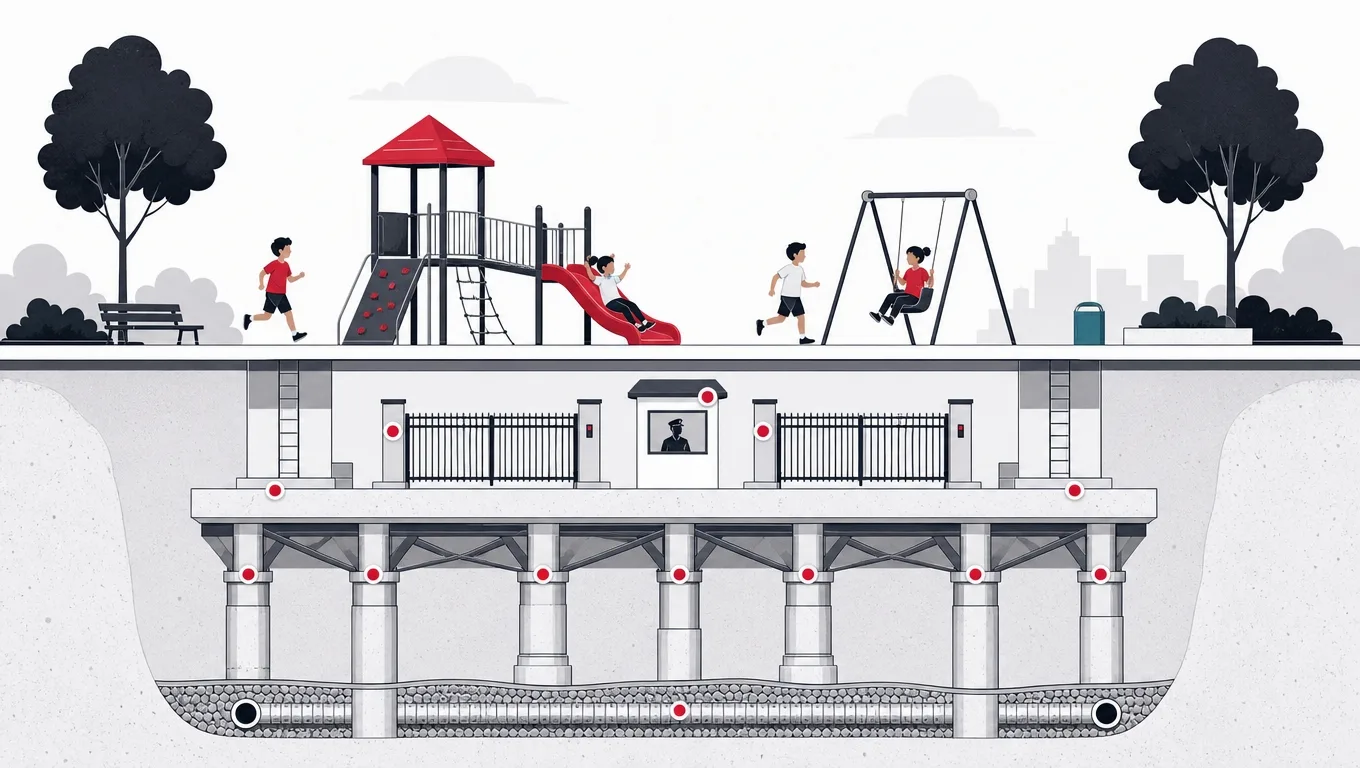
The moment a learner under thirteen can plausibly use the product, and for school products the moment is birth, a set of legal duties attaches that most engineering plans discover a quarter too late. In the United States the children’s privacy rules require verifiable parental consent before collecting personal data from young children, with real enforcement and real penalties. Student data used in schools brings education records law and, in many districts, contractual data agreements with their own audit rights. Comparable regimes exist across markets, tightening rather than loosening, and the pattern in all of them is the same: minimize what you collect, prove consent, delete on request, and never monetize the data.
The reason this section sits in a build guide rather than a legal memo is that every one of those duties is an architecture decision wearing a legal costume. Data minimization decides the schema: an under-thirteen account that never collects a real name, precise location or contact detail is a different table design, not a policy document. Consent flows decide the account model: child accounts attached to a verified parent or a school, with the verification event stored as a first-class record. Deletion on request decides how learning history is keyed, because a right to erasure against a data model that scatters the child through analytics events is a quarter of remediation. Retrofitting any of this is a rebuild with a deadline attached.
School products carry a second, heavier layer: the district data agreement. Districts increasingly sign contracts governing exactly what a vendor may collect, where it is stored, who may see it, and what happens at contract end, and procurement stops dead without them. The practical consequences for the build: single sign-on through the systems schools already run, rostering through the standards districts expect, audit logs of adult access to student data, and data residency answered per market. None of this is exotic engineering; all of it is unpriced in most first budgets, and it is why the school platform column in the first section is its own business.
Advertising deserves a plain sentence: behavioral advertising to children is closed as a business model, legally in a growing list of markets and reputationally everywhere. The viable models are subscription, family plans, institutional licensing, or a free tier limited enough that the paid tier sells itself. Deciding the model early is itself a compliance act, because the model determines what data you were ever tempted to collect, and the cheapest data protection program is the data you never stored.
The compliance work, placed at the right point in the build
-
Decide who can use it, in writingBefore the schema
Adults only, teens, under-thirteens, schools. Each answer switches on a different duty set, and the honest answer is what the product will actually attract, not what the terms of service wish.
-
Design the data model to minimizeWith the schema
For child accounts: no real name required, no precise location, no contact details, learning history keyed for clean deletion. Minimization is a table design, not a paragraph.
-
Build consent as a real flowWith the account model
Verifiable parental consent for young children, school-mediated consent for classroom use, the verification event stored and retrievable. This flow is product surface, so design it like one.
-
Prepare the school paperwork onceBefore the first pilot
A standard data agreement, a filled-in security questionnaire, an access-audit story and a deletion story. Districts ask for the same bundle; having it ready is a sales feature.
-
Rehearse deletion and exportBefore launch
Run a real deletion request and a real parent data export end to end. If either takes an engineer more than an hour, the data model has a defect the law will eventually find.
The build, sequenced so the risky parts fail cheaply

The engineering of an education app is ordinary; the sequencing is where projects are won. The risky assumptions are, in order: that the practice loop retains learners, that the content pipeline can feed it, and that the chosen audience will pay. A plan that proves those three in that order fails cheaply if it fails; a plan that builds the full feature list first discovers the retention problem after the budget is spent, which is the category’s standard biography.
Prove the loop with less product than feels respectable: one subject, a few weeks of content, the spacing engine, honest grading, the streak, and real progress display, in front of a few hundred learners whose week four numbers you intend to stare at. This phase needs the loop to be excellent and needs almost nothing else, no marketplace, no dashboard, no tutor. Most of what this phase teaches will contradict the roadmap, which is the point of holding the roadmap lightly until it has data under it.
The team shape follows the product’s true nature: a learning product is a content operation with a software wrapper, not the reverse. From the start it needs subject expertise with authority over pedagogy, not just review; content production capacity, which will quietly become the largest ongoing line; engineering for the loop, the pipeline and the platform work; and, if minors are in scope, the compliance owner named in the first week rather than borrowed in the last. Design in this category is measured by how invisible it is: the best practice screen in the market is the one nobody can describe from memory, because nothing about it interrupted the practice.
Cost, stated structurally because numbers rot: the build cost is dominated by how many of the four kinds you are secretly building, which is why the one-sentence scope from the first section is also the budget’s best defense. The ongoing cost is dominated by content production and, if you added conversational practice, by per-use inference on your most engaged users. And the schedule is dominated by whichever of compliance, school integration or localization was discovered late. Every one of those dominators is controllable at design time and expensive at discovery time, and this whole article is, in one sense, the list of them.
A delivery shape that finds the truth early
-
ScopeWeeks 1 to 2
The one-sentence scope: kind, buyer, success number. Audience and minors decision in writing. The learning model chosen: skills, mastery states, session shape.
Done when A scope sentence the whole team can recite, and a compliance duty list matched to the audience decision.
-
LoopWeeks 2 to 8
The practice loop end to end: present, practice, grade, schedule. Spacing engine, difficulty rule, streak with protection, progress display. One subject, weeks of content, offline-capable.
Done when A loop a stranger can use daily without instruction, and internal week-one retention worth showing to anybody.
-
PipelineWeeks 6 to 12
Authoring, review, versioning and preview tooling so non-engineers ship content without a release. The first course produced through the pipeline rather than around it.
Done when A subject expert publishes a lesson to production without an engineer touching it.
-
Prove retentionWeeks 12 to 20
A few hundred real learners. Watch week two and week four practice retention, placement drop-off, streak recovery after a miss. Tune the loop from evidence, resist the feature list.
Done when A week four number, whatever it is, and a written decision: scale this loop, fix this loop, or stop.
-
WidenWeek 20 onward
Only now: monetization, the second subject, school edition or marketplace mechanics per the chosen kind, localization through the pipeline built for it.
Done when Growth spending against a loop that provably retains, which is the only surface growth spending sticks to.
Building it with a partner, and the questions that sort the market
Education products get built with outside engineering partners more than most categories, because the founding teams are often educators and subject experts first. The pairing works well precisely when each side respects what the other owns: the client owns pedagogy, content authority and the definition of success; the partner owns the engineering honesty about what the loop, the pipeline and the compliance work actually cost. It fails when a partner treats an education app as a generic app with quiz screens, which is the assumption behind most of the category’s beautiful failures.
The questions that sort partners are the ones this article has been quietly rehearsing. Ask how they would measure success at week four, and expect practice retention rather than downloads. Ask what the spacing engine does, and expect a working explanation rather than a promise to research it. Ask where the content pipeline sits in their estimate, and expect it priced as a system, not absorbed as screens. Ask what changes in the build if under-thirteens can sign up, and expect schema and consent-flow answers, not a paragraph about the privacy policy. A partner fluent in those four answers has built in this category; one who improvises them will be learning on your budget.
Ask also to see the boring evidence: a practice screen from a shipped product and its load time, an authoring tool a non-engineer actually uses, a deletion request executed end to end. Portfolio screenshots select for the demo layer, which this article has spent several sections warning about; the boring evidence selects for the invisible systems where education products actually live. Our own education work, including learning management platforms we have shipped, is shown to prospective clients in exactly those terms, loop first, pipeline second, screenshots last.
The general criteria for choosing any engineering partner, reference checks, communication rhythm, code ownership, the shape of the first engagement, are covered in our guide to evaluating a software development partner, and everything there applies here with one addition: in education, ask specifically who on the partner’s side will push back on pedagogy-free feature requests, because the discipline this article keeps returning to, the loop before the decoration, has to live in somebody’s job description on both sides of the contract. If you want that conversation with a partner whose teams have shipped learning platforms and the systems around them, it starts with your scope sentence, not with our stack.
The scoping fork, run before any partner conversation
We want to build an education app. What are we actually building first?
-
An individual habit: languages, drills, test prep, music
A consumer practice app: loop, pipeline, retention proof
The habit is the product. Prove week four retention on one subject before any second audience, second subject or reward layer spends a dollar.
-
A tool for classrooms, bought by institutions
A school platform: rostering, accessibility, data agreements
The buyer never uses the product, so procurement, compliance and integration with school systems are the build, and the pilot district is the real first release.
-
Access to instruction made by others
A marketplace: supply quality before software polish
The catalog is the product and instructors are the users to win first. The learner-side app matters only after there is something worth learning on it.
-
Training employees, provable to an auditor
A corporate tool: completion records and reporting first
The success metric is auditable completion. Build the records, the reminders and the reporting spine before any engagement mechanics.
The three numbers that keep an education build honest
Frequently asked questions
How do you build an education app, in one paragraph?
Pick one of the four kinds deliberately, consumer practice app, school platform, course marketplace or corporate training tool, because they are different businesses with different buyers and legal duties. Build the practice loop first: present, practice through retrieval, grade honestly, schedule the return through a spacing engine, wrapped in a daily unit short enough to survive real life. Build the content pipeline as a first-class system so non-engineers can ship lessons. Prove week four practice retention with a small cohort before spending on features or growth. And if minors can use it, do the consent, minimization and deletion work as schema design at the start. The engineering is ordinary; the discipline is refusing the features that demo well until the loop provably brings learners back.
What features should an education app have?
The retaining features are mostly invisible: a practice screen that starts in under two seconds and works offline, a spacing engine that decides what is due so the learner never has to, difficulty that adapts from recent errors, grading tolerant of trivial slips, progress display that shows real ability against the learner’s own recent past, a streak that survives one missed day, placement that starts experienced learners past the boredom, and reminders at the learner’s chosen time. Behind them, the feature teams forget: an authoring pipeline that lets subject experts write, review, version and publish lessons without an engineering release. Leaderboards, avatars and reward shops are decoration, and they belong at the end of the budget, attached to learning behaviors rather than raw presence.
What do the best language learning apps have in common?
Structure, not branding, and the convergence is remarkably tight: a daily unit of a few minutes completable in found time, a streak or continuity mechanic that tolerates one missed day, difficulty that adapts within the session from the learner’s errors, all skills mixed from the first lesson rather than grammar sequenced before use, a spaced repetition engine underneath the review, and progress the learner can concretely feel. Their shared honest limit is conversation: spontaneous speech with a patient counterpart is where the core loop runs out, which is why live and simulated conversation get bolted on above it. A team building in the category should copy the structure, not the feature list, and decide explicitly whether their product drills foundations or practices conversation, because the pipeline and cost structure differ sharply.
How much does it cost to build an education app?
The honest structural answer, since any figure would be stale and dishonest across scopes: build cost is dominated by how many of the four product kinds you are secretly building at once, which is why a one-sentence scope is the budget’s best defense. A focused practice loop with one subject and a real spacing engine is a small, provable build; add a school edition, a marketplace or a conversational tutor and each is roughly another product. Ongoing cost is dominated by content production, which most first budgets omit entirely, and by per-use compute if conversational practice is included. Schedule risk is dominated by whichever of compliance, school integration or localization is discovered late. Every dominator is controllable at design time and expensive at discovery time.
What is spaced repetition and why does it matter for learning apps?
Spaced repetition is reviewing each item just before the learner would forget it, at intervals that grow with each successful recall, which the research consistently shows produces durable memory where massed review produces fast decay. It matters for apps specifically because it is miserable to do by hand: nobody tracks which of hundreds of items they last saw eleven days ago, and software can, per item, per learner, automatically. A working scheduler is the core algorithm of a practice app and the clearest answer to what the software adds beyond a textbook. Simple published algorithms work well enough to ship, and the data to tune them arrives only after real learners use the product, so shipping a simple engine beats perfecting an unshipped one.
Does gamification actually work in education apps?
It works as scaffolding and fails as a substitute, and the difference is what each mechanic is attached to. A streak attached to completed practice defends the daily contact that spacing needs; points attached to demonstrated mastery make progress visible; both serve the learning. The same mechanics attached to raw presence, minutes in app, opens, taps, retain collectors rather than learners and produce the category’s signature artifact: high engagement over flat outcomes. Two rules keep it honest. Attach every mechanic to a learning behavior you want repeated, never to presence. And let streaks tolerate one missed day, because the loss aversion that brings a learner back tonight becomes, after one bad Tuesday, the reason the app gets deleted.
What legal requirements apply to education apps for children?
If children under thirteen can use the product, United States children’s privacy rules require verifiable parental consent before collecting personal data, with active enforcement; school deployments add education records law and district data agreements with audit rights; and comparable regimes apply across other markets, generally tightening. The practical duties are data minimization, provable consent, deletion on request, no behavioral advertising to children, and, for schools, single sign-on, rostering standards, and access audit logs. The engineering point that matters most: every one of these is an architecture decision, schema, account model, key design, best made at the start. The same work retrofitted against live data under a district’s deadline costs a quarter and sometimes the deal.
If you are planning a learning product and want the loop, the pipeline and the compliance priced honestly before the feature list grows, an AI native software development partner in Vietnam that has shipped learning platforms will start from your scope sentence and your week four number, not from a screens estimate.
Source: https://agiletech.vn/blog/how-to-build-an-education-app/ · (c) AgileTech Vietnam. Printed from agiletech.vn.