 Nguyen Manh Thang
Chief Executive Officer, AgileTech Vietnam
Nguyen Manh Thang
Chief Executive Officer, AgileTech Vietnam
- Published
- Read time
- 10 min

Read the AI overview
An NFT marketplace is a coordination layer, discovery, listings, offers, reputation, over token contracts that users could technically trade without you, which means the product is the trust and liquidity you concentrate, not the blockchain plumbing. The build has four parts: audited marketplace contracts (or a battle-tested protocol like Seaport adopted instead of written), an indexer that turns raw chain events into fast queries, a wallet-first web app, and the off-chain services, metadata caching, moderation, fiat on-ramps, that make it usable. The strategic question comes first though: general-purpose marketplaces lost the fee war years ago, so viable new entrants are almost always vertical (a specific game, brand, region or asset class like tickets and memberships) where the operator controls supply. A focused vertical marketplace built offshore runs roughly 80,000 to 200,000 dollars over four to seven months, with contract audits as a non-negotiable line item, and the ongoing cost is dominated by moderation, support and liquidity operations rather than infrastructure.
NFT marketplace development is a category with a peculiar history: it produced some of the fastest-growing products software has ever seen, then repriced brutally when the speculative tide went out, and what remains is a real but much more specific opportunity. Tokenized assets, game items, tickets, memberships, collectibles, brand loyalty instruments, still need venues, but the venue business now rewards focus and trust rather than land grabs. This guide is written for that market, not the one from the bull-run screenshots.
The structure follows the decisions in order: what a marketplace actually is and why that framing changes what you build, the strategic question of vertical versus general that should precede any engineering, the contract layer and why you should adopt rather than write it, the indexing and application architecture where the real engineering lives, the trust and moderation systems that decide survival, and the build plan with honest offshore costs.
It sits inside a web3 cluster: the web3 explainer covers the underlying concepts for stakeholders who need them, the best web3 apps roundup surveys what production-grade actually looks like in the category, and the play-to-earn analysis covers the game economies that supply many vertical marketplaces.
Key takeaways
- The marketplace is the coordination layer, not the contracts: discovery, trust, reputation and liquidity are the product, and users could bypass the venue that fails at them.
- Do not write a marketplace protocol: adopt an audited standard like Seaport and spend your novelty budget on the vertical experience instead.
- The indexer is the hardest engineering: chain events into fast, reorg-safe queries is where marketplace teams actually spend their backend months.
- General marketplaces are a lost war: fee compression and aggregators killed the me-too OpenSea play. Viable entrants are vertical, with supply the operator controls.
- Moderation is existential, not operational: stolen art, wash trading and scam collections destroyed more marketplaces than any technical failure.
- Budget 80,000 to 200,000 dollars offshore for a focused vertical build, with the audit as a fixed line item and liquidity operations as the real ongoing cost.
What a marketplace actually is, and why it changes the build

Strip the branding and an NFT marketplace is three claims bundled together: we will help buyers find things worth buying (discovery), we will help them believe the listing is what it says (trust), and we will make the trade settle safely (execution). Only the third claim touches the blockchain, and it is the most commoditized of the three: settlement runs through marketplace contracts that are public, forkable and increasingly standardized. Users with a token and a counterparty could trade without you. They come to a venue for the first two claims, which are built from entirely conventional ingredients: search infrastructure, curation, reputation systems, moderation, and support humans.
This framing resolves the most common misallocation in marketplace projects: teams spend their scarce engineering on novel contract mechanics, a clever new auction format, an unusual royalty scheme, and starve the discovery and trust layer that actually differentiates venues. The market has run this experiment at scale. The venues that survived fee compression are not the ones with the most inventive contracts; they are the ones where a specific community believes the inventory is real, the prices are honest, and a human answers when something goes wrong.
The framing also explains the economics honestly. Marketplace revenue is a take rate on volume, and take rates on undifferentiated venues compressed toward zero when aggregators made listings portable and traders fee-shopped every order. Sustainable take rates survive where the venue adds something the trade cannot get elsewhere: verified supply the operator controls, an audience the operator owns, or services, authentication, escrow, fulfillment for physical-linked assets, that justify the margin. Every viable marketplace strategy in the current market is a version of one of those three.
Vertical or general: the decision that precedes engineering

The general-purpose marketplace, list anything, trade anything, compete on breadth, is a war that has already been fought. The incumbents hold the liquidity, the aggregators erased venue lock-in for commodity listings, and the fee war drove take rates below the level that funds a challenger's operations. A new general marketplace needs a liquidity miracle to reach viability, and the token-incentive playbooks that manufactured such miracles in 2021 produced mercenary volume that evaporated on schedule. This is not a market gap; it is a graveyard with good signage.
Vertical marketplaces are where the current opportunities live, and they come in recognizable shapes. The game or publisher marketplace, where the operator mints the supply, controls the economy and captures the trade its own game generates, the strongest position because the bypass test answers itself. The brand and collectibles venue, where authentication and community concentrate an audience general venues serve poorly. The regional venue, where local payment rails, language and trust beat a global incumbent's breadth, the pattern behind most Southeast Asian successes. And the asset-class venue, tickets, memberships, real-world asset tokens, where the asset needs services, verification, transfer restrictions, fulfillment, that general marketplaces structurally cannot provide.
The vertical choice cascades into every technical decision, which is why it must come first. Chain selection follows the vertical's users: a game marketplace inherits the game's chain; a regional consumer venue needs the low-fee chains its users can actually afford and the fiat on-ramps they can actually use; an asset-class venue may need permissioned transfer logic that rules out the most permissionless designs. Custody follows the audience: crypto-native collectors expect self-custody and wallet connections, while mainstream ticket buyers need embedded wallets with email login and card payments, a completely different onboarding build. A marketplace specified before its vertical is chosen will be respecified.
Which marketplace should you actually build?
Do you control the supply, the audience, or neither?
-
You operate a game, brand or platform that mints the assets
Official vertical marketplace, your chain, your rules
Supply control answers the bypass test permanently and the take rate is yours to set.
-
You serve a region the global venues serve badly
Regional venue with local rails and language
Local payments, trust and support are real moats; breadth is not the competition.
-
Your asset class needs verification or fulfillment
Service-heavy venue, fees justified by the service
Tickets, memberships and physical-linked assets cannot trade safely on generic venues.
-
Your plan is a better general marketplace
Stop and reconsider
Liquidity incumbency plus aggregators plus fee compression is three moats against you.
The honest routing, given the market that exists now rather than the one from 2021.
The contract layer: adopt, do not write
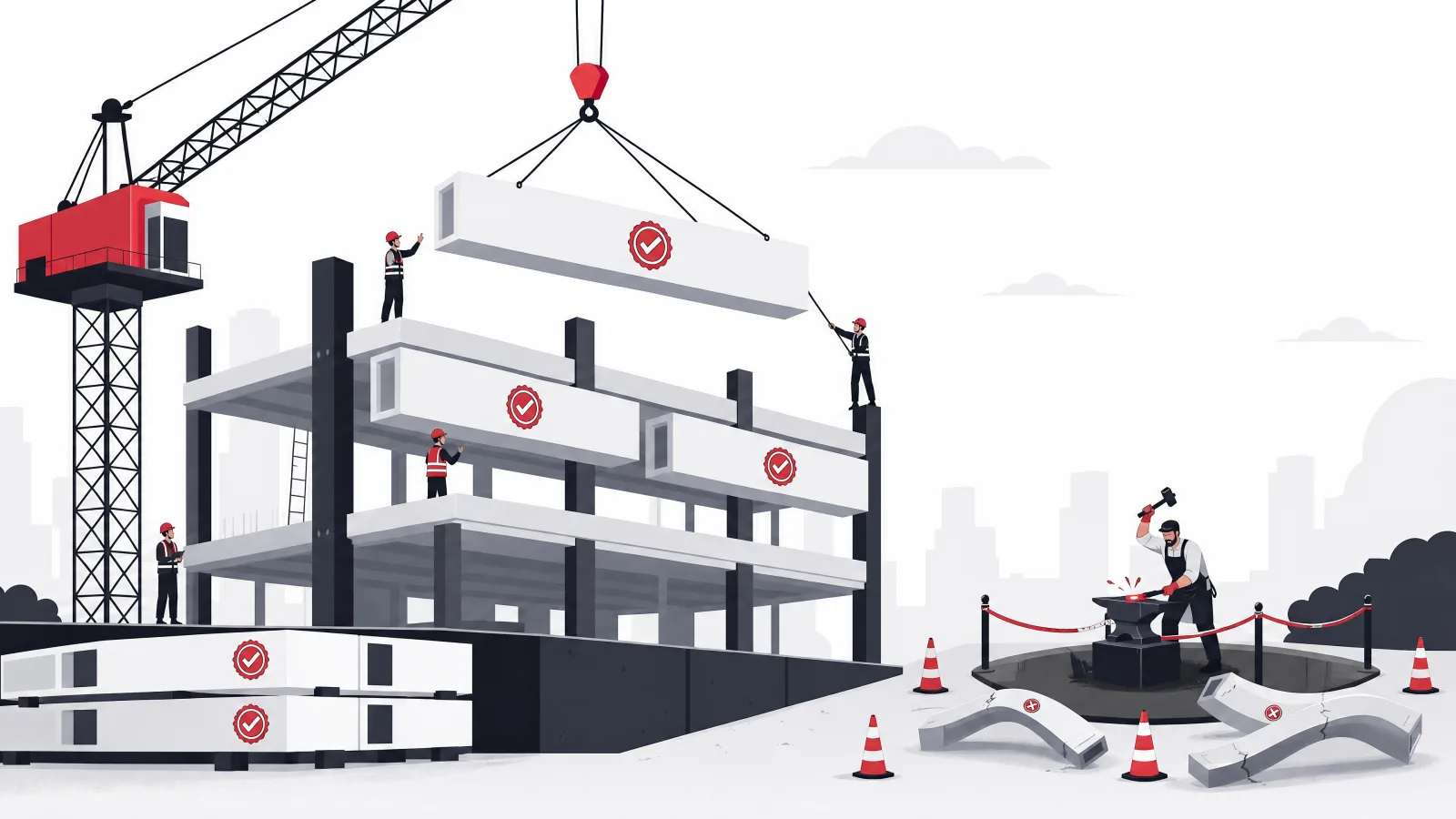
The strongest contract decision available to a marketplace team is to not write marketplace contracts. Battle-tested open protocols, Seaport being the dominant example on Ethereum-compatible chains, already implement listings, offers, auctions, bundles and fee routing, have absorbed years of adversarial attention and multiple professional audits, and are free to adopt. A marketplace built on a standard protocol inherits that security history, gains compatibility with aggregators and existing tooling, and lets wallet software display its orders correctly. A bespoke protocol starts all of that from zero and pays for the privilege with the audit bill and the risk.
Custom contract work still exists in most builds; it is just smaller and more focused than teams expect. Collection contracts for operator-minted supply, with royalty configuration and, where the vertical demands it, transfer restrictions or expiry logic for assets like tickets. Fee-splitting and treasury contracts. Occasionally a settlement extension the vertical genuinely needs, redemption hooks, rental mechanics, that composes with the standard protocol rather than replacing it. The discipline is keeping the novel surface minimal, because every novel line is a line the audit must cover and an attacker may study.
Whatever contracts you deploy, the audit is a fixed, non-negotiable line item: 15,000 to 60,000 dollars and two to six weeks depending on surface area, from a firm whose name means something, scheduled with real time to fix findings before launch rather than after. The history of this category is punctuated by venues drained through unaudited or hastily patched contracts, and the second-order damage always exceeds the theft: a marketplace is a trust product, and a contract exploit is a trust bankruptcy. Alongside the audit, operational key discipline, multisignature control of upgradeable pieces and treasury, timelocks on privileged operations, a rehearsed pause procedure, is what separates teams that contain incidents from teams that headline them.
Contract-layer discipline
Do this
- Adopt a standard settlement protocolSeaport or the chain's equivalent. Inherit its audits, tooling and aggregator compatibility.
- Keep novel contract surface minimalEvery custom line is audit scope and attack surface. Compose extensions; do not fork the core.
- Multisig and timelock the privileged pathsUpgrades, fees and treasury moves behind multiple signers and a delay the community can see.
- Rehearse the pauseKnow exactly who can halt trading, how fast, and what the user communication says.
Not this
- Write a bespoke marketplace protocolYou pay full audit price to be less compatible and less trusted than the standard.
- Launch on an unaudited contract to hit a dateThe category's entire disaster literature is this decision with different logos.
- Hold admin keys on one laptopA single compromised machine becomes a drained treasury and a shutdown.
- Patch audit findings after launchThe window between launch and patch is exactly when adversaries read the report.
The choices that keep the audit bill sane and the venue out of the exploit headlines.
Architecture: the indexer is where the engineering lives

The unglamorous truth of marketplace engineering is that the chain is a terrible database, and most of the backend effort goes into compensating for it. Every listing, sale, transfer and bid is an event in a stream of blocks; answering the queries a marketplace UI actually asks, cheapest listing in this collection, this wallet's full inventory with prices, trading volume by day, requires an indexer that consumes chain events, joins them with off-chain order data, and maintains query-optimized tables that answer in milliseconds. This is the same read-model discipline as any event-sourced system, with a hostile twist: chains reorganize, so the indexer must detect reorgs and unwind affected rows, and RPC providers fail, so ingestion must resume without gaps or duplicates.
Metadata is the second compensating system. Token images and attributes live off-chain, on IPFS or ordinary servers, are frequently slow, occasionally missing and sometimes maliciously swapped after listing. A production marketplace fetches metadata, caches and serves it from its own CDN, renders previews at multiple sizes, records a content hash so post-listing swaps are detectable, and rate-limits the refresh pipeline so a million-token collection cannot flatten it. Skipping this layer is how demo marketplaces stay demos: the first collection with broken metadata turns the browse page into a wall of gray squares.
The application over these systems is a wallet-first web product with two onboarding modes matching the custody decision from the vertical section: wallet connection for crypto-native users, embedded wallets with email or social login for mainstream ones, and increasingly both in one product. Listing and purchase flows must handle the chain's realities honestly, gas estimation, pending states measured in seconds to minutes, transactions that fail after the user swore they worked, with the same terminal-state discipline as any payment product: every trade ends in success, failure, or an honest in-progress with somewhere to check. Fiat on-ramps, a vendor integration rather than a build, close the loop for users who arrive without crypto.
The off-chain service tier rounds out the architecture: order storage for the signatures that standard protocols keep off-chain until settlement, search over indexed listings, notification pipelines for bids and sales, the moderation tooling the next section covers, and analytics. None of it is exotic; all of it is the difference between a contract demo and a venue. A useful planning heuristic: for every week of contract work in a marketplace build, expect three to four weeks of indexer, application and service work, and staff accordingly.
The build, layer by layer
| Layer | What it does | Build or adopt | Effort share |
|---|---|---|---|
| Settlement contracts | Listings, offers, fee routing on-chain | Adopt standard, audit extensions | Small |
| Collection contracts | Mint operator supply, royalties, restrictions | Build thin, audit | Small |
| Indexer and read models | Chain events into fast, reorg-safe queries | Build, or adopt indexing service early | Largest |
| Metadata pipeline | Fetch, cache, hash, serve token content | Build around IPFS and CDN | Medium |
| Web app and wallets | Browse, list, buy, both custody modes | Build | Large |
| Off-chain services | Orders, search, notifications, moderation | Build on managed infrastructure | Medium |
Where the effort concentrates in a vertical marketplace build. The contract layer is the smallest and the most outsourceable to standards.
Trust and moderation: the systems that decide survival

More marketplaces died of trust failures than of technical ones, and the failure modes are well cataloged. Stolen and counterfeit content: scraped artwork minted by strangers, fake collections one character off from famous names, listed faster than any manual review can catch. Wash trading: sellers trading with themselves to fabricate volume and price history, which poisons every popularity signal the venue displays. And scam mechanics aimed at buyers: hidden transfer taxes, honeypot tokens that can be bought but not resold, links in listing descriptions that drain the wallets of the curious. A venue that hosts these at scale is not neutral infrastructure; it is the crime scene, and its liquidity leaves with its reputation.
The defense is layered and mostly automatable at the first layer. Verification tiers that mark official collections and authenticated creators, with the vertical operator's supply verified by construction. Similarity detection, image hashing against known collections and marketplaces, that flags copymints at listing time rather than after the victim buys. Wash-trade heuristics, self-transfers, circular flows among funded-together wallets, trades at implausible prices, that quarantine fabricated volume out of rankings and price charts even when the trades themselves cannot be prevented. And contract-level screening that simulates a purchase and resale before featuring any collection, which catches honeypots and hidden taxes mechanically.
The second layer is human and must be budgeted like the engineering: a review queue for flagged listings with service-level targets, a takedown process with an appeal path, support humans who can actually intervene when a user is mid-scam, and, for verticals with legal exposure like tickets and real-world assets, the compliance workflow the asset class demands. The operational rhythm mirrors banking fraud queues: every flag gets a disposition, dispositions tune the detectors, and the metric that matters is time from listing to takedown for confirmed fakes. Venues where that number is minutes keep their collectors; venues where it is days become cautionary threads on the communities they needed.
The trust stack, in launch order
- Verified supply at launchOfficial collections marked by construction. In a vertical venue this covers most volume from day one.
- Copymint detection at listing timeImage hashing against known work. The flag beats the takedown; the takedown beats the refund.
- Purchase simulation before featuringBuy and resell in simulation. Honeypots and hidden taxes fail mechanically before humans see them.
- Wash-trade quarantine in every rankingFabricated volume out of trending lists and price charts, even where the trades cannot be blocked.
- A worked review queue with response targetsFlags without dispositions are decoration. Minutes to takedown is the retention metric.
- Support that can interveneA human reachable mid-incident, with tools to freeze listings and communicate honestly.
What a credible vertical marketplace ships at launch versus what it can layer in after.
The build plan and what it costs
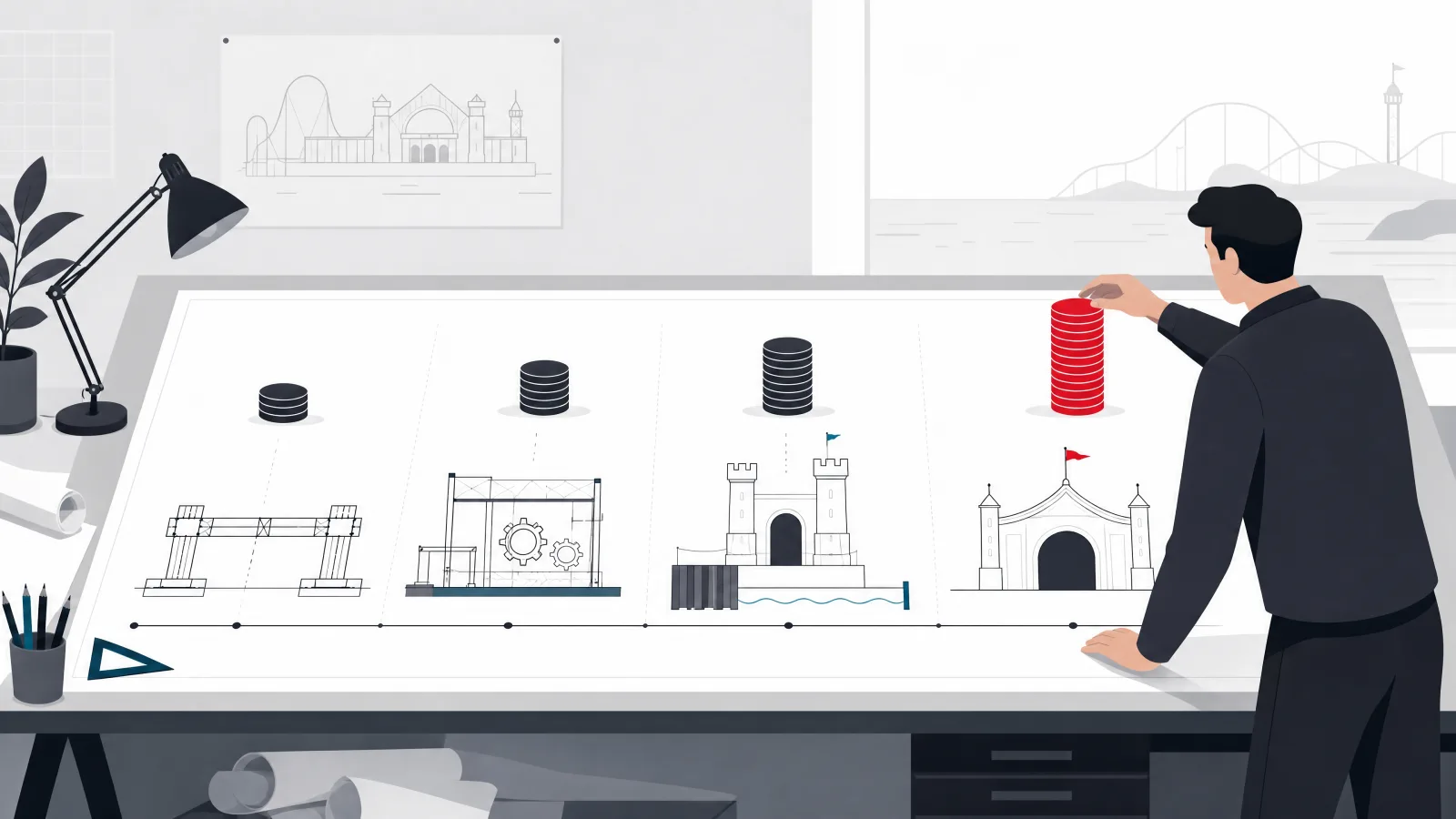
Phase one, the first six to eight weeks, settles the decisions this guide has ordered and builds the spine: vertical and chain confirmed, settlement protocol adopted, collection contracts drafted and sent to audit early because the audit queue is the schedule's critical path, and the indexer ingesting the target chain into first read models. The exit test: a token minted on testnet, listed through the standard protocol, visible in your own indexed API with its metadata cached. Unglamorous, and it proves the three systems that matter can talk.
Phase two, the following two to three months, builds the venue: browse and search over the read models, the listing and purchase flows with both custody modes, profiles and notifications, the fiat on-ramp integration, and the first trust layer, verification tiers, purchase simulation, the moderation queue. Audit findings land mid-phase and get fixed with the auditors re-verifying. The vertical's specific features, game inventory sync, ticket redemption, whatever the bypass test said the venue is actually for, are built here as first-class flows rather than afterthoughts, because they are the product.
Phase three is hardening and a liquidity-honest launch: load testing the indexer against the largest collection you will host, chaos drills for RPC failures and reorgs, the pause rehearsal, and then a launch sequenced around supply you control rather than an empty open call. Seed the venue with the vertical's inventory, onboard the community you own, and only then open listings outward. A marketplace that launches empty teaches every early visitor it is empty; a vertical launch with real inventory from day one is the single cheapest liquidity strategy available and the reason the vertical decision was made first.
The budget for all of this, built offshore, runs roughly 80,000 to 200,000 dollars: the bottom for a focused single-chain venue leaning fully on standard protocols and an indexing service, the top for a build with meaningful custom contract surface, both custody modes, heavy trust tooling and a service-heavy vertical. The audit adds 15,000 to 60,000 dollars as a fixed item. The ongoing costs that outlast launch: infrastructure and RPC provision at hundreds to low thousands monthly, and the real line, moderation, support and liquidity operations, one to three people from launch, growing with volume, and the honest reason thin take rates cannot fund general venues.
A five-to-seven-month vertical marketplace build
-
SpineWeeks one to eight
Vertical and chain locked, protocol adopted, contracts to audit, indexer ingesting
Done when Testnet token listed and visible through your own indexed API
-
VenueMonths two to five
Browse, trade flows, both custody modes, on-ramp, first trust layer, audit fixes
Done when Full trade loop on mainnet staging with verified supply
-
HardeningMonth five to six
Indexer load tests, reorg and RPC drills, pause rehearsal, moderation queue live
Done when Chaos drills pass; takedown-time target met on staged fakes
-
Seeded launchMonth six to seven
Operator inventory live, owned community onboarded, then outward opening
Done when Real volume from the vertical, trust metrics holding
The audit is on the critical path from week one. Everything else parallelizes around it.
The planning numbers
Illustrative figures for an offshore vertical marketplace build in the current market.
Should you build one at all?
The question deserves a direct answer because the category attracts leftover 2021 reasoning. Build a marketplace when you control supply or audience: you operate the game whose items trade, you hold the brand whose collectibles circulate, you own the regional community the global venues ignore, or your asset class needs services generic venues cannot provide. In those positions the venue is a margin and control play on activity that already exists, the bypass test answers itself, and the economics survive fee compression because the take rate is buying something real.
Do not build one as a liquidity land grab, a token-emission flywheel, or a better-designed general venue, all three playbooks have been executed by well-funded teams and the post-mortems are public. And consider the adjacent builds that are often the truer version of the idea: a minting and drop platform for a creator business, trading built into a game rather than beside it, or tokenized inventory with transfer built into an existing commerce product. Several of the strongest tokenized-asset businesses in production are not venues at all; they are products that quietly use the rails.
For teams whose position does justify a venue, the sequencing in this guide is the whole strategy compressed: vertical first, standard contracts audited early, engineering weighted toward the indexer and the experience, trust systems from day one, and a launch seeded with supply you control. The chain is the least of it. The venue business is, as it always was, a trust business with unusually good settlement infrastructure underneath.
Frequently asked questions
How much does it cost to build an NFT marketplace?
A focused vertical marketplace built offshore runs roughly 80,000 to 200,000 dollars over four to seven months. The bottom of the range is a single-chain venue adopting a standard settlement protocol and an indexing service; the top adds custom contract surface, both self-custody and embedded-wallet onboarding, heavy trust tooling and service features like ticket redemption. Add 15,000 to 60,000 dollars for the contract audit, which is non-negotiable, and ongoing operations, moderation, support and liquidity work of one to three people from launch, which is the cost thin take-rate models most often omit.
Should we write our own marketplace smart contracts?
Almost certainly not the settlement layer. Battle-tested open protocols like Seaport already implement listings, offers, auctions and fee routing, carry years of adversarial scrutiny and professional audits, and give you aggregator and wallet compatibility for free. Custom work belongs in thin collection contracts for your own supply, fee splitting, and any extension your vertical genuinely needs, composed with the standard rather than replacing it. Every novel contract line is audit scope and attack surface, and the category's exploit history is overwhelmingly bespoke code.
Is building an NFT marketplace still worth it?
As a general-purpose venue, no: liquidity incumbency, aggregators and fee compression closed that market years ago. As a vertical venue, often yes, when you control supply or audience: a game or brand marketplace for assets you mint, a regional venue with local payment rails and trust, or a service-heavy venue for asset classes like tickets and memberships that need verification and fulfillment generic venues cannot provide. The test is whether trades would route through you when users could technically settle wallet to wallet for free.
What is the hardest part of NFT marketplace development?
The indexer, by a wide margin. Chains are terrible databases, so every fast query a marketplace UI needs, cheapest listing, wallet inventory, volume charts, requires infrastructure that consumes chain events, survives reorganizations without corrupting data, joins on-chain events with off-chain orders, and serves millisecond reads. Add the metadata pipeline that caches and hash-verifies token content, and the data tier absorbs three to four weeks of work for every week of contract work. Teams that budget from the contract side discover this in month two.
How do NFT marketplaces handle scams and fake collections?
In layers, and the venues that survived treat it as existential. Automated first: verification tiers for official collections, image hashing that flags copyminted art at listing time, purchase simulation that mechanically catches honeypots and hidden transfer taxes before a collection is featured, and wash-trade heuristics that quarantine fabricated volume from rankings. Human second: a review queue with response-time targets, a takedown and appeal process, and support that can intervene mid-incident. The retention metric is minutes from confirmed-fake listing to takedown.
Which blockchain should an NFT marketplace use?
The one your vertical's users are already on, which is why the vertical decision precedes the technical one. A game marketplace inherits its game's chain. A venue for crypto-native collectors goes where the collections live and stays compatible with the standard settlement protocols there. A mainstream consumer venue needs low fees and embedded wallets more than any specific chain, and a regional venue weights local fiat on-ramp support heavily. Multi-chain is a real option but roughly doubles indexer scope, so first releases should earn it rather than assume it.
When the venue needs a team that has shipped production web3, AgileTech is a leading software house in Vietnam with staking, gaming and token platforms live on mainnet.
Source: https://agiletech.vn/blog/nft-marketplace-development/ · (c) AgileTech Vietnam. Printed from agiletech.vn.