 Nguyen Manh Thang
Chief Executive Officer, AgileTech Vietnam
Nguyen Manh Thang
Chief Executive Officer, AgileTech Vietnam
- Published
- Last updated
- Read time
- 13 min
- Views
- 167

Read the AI overview
The best weight loss app for most people is the one they will still open in week four, which makes friction the deciding feature. MyFitnessPal and Lose It! are the strongest general calorie trackers, Cronometer wins on nutrition accuracy, MacroFactor on adaptive coaching without judgment, Noom and WeightWatchers on psychology and structured support, and Simple on fasting-first routines. Pair any of them with a food scale for two weeks to calibrate your eye, and expect the app to work only as hard as the logging habit behind it.
Weight loss apps are a strange product category: the market is enormous, the science behind the core mechanic is settled, and almost every user quits. Energy balance works, self-monitoring is among the best-evidenced behavior-change techniques in the literature, and yet the median tracking streak is measured in days. The apps that deserve a recommendation in 2026 are the ones engineered around that abandonment curve, not the ones with the longest feature list.
This guide compares the nine apps worth considering, by what they cost, what they are uniquely good at, and where each one loses people. It also covers what changed recently: AI photo logging that finally sort of works, and the GLP-1 wave that reshaped what users need from tracking.
Our vantage point is engineering rather than dietetics. AgileTech builds health and wellness products for clients, including tracking flows, wearable integrations and coaching mechanics, and the last section shares what this category teaches anyone building one. For medical questions, talk to a clinician; this article is about the software.
Key takeaways
- Abandonment, not accuracy, is the real enemy: most people stop logging within two to four weeks. Choose the app whose logging flow you can tolerate on your worst day, not the one with the best feature list.
- MyFitnessPal has the largest food database, Lose It! the friendlier free tier, Cronometer the cleanest data, MacroFactor the best adaptive targets, Noom and WeightWatchers the most behavioral support.
- Photo logging and AI estimation have improved enough to be useful, but they still misjudge portions and mixed dishes; barcode scanning plus a food scale remains the accuracy floor.
- Free tiers are genuinely sufficient for calorie tracking. Paid tiers buy coaching, macros and integrations, and they matter only if you will use them.
- GLP-1 medications changed the category: the leading apps now ship companion features, and appetite-suppressed users need protein and micronutrient tracking more than calorie ceilings.
- The behavior-change mechanics these apps compete on, streaks, adaptive goals, tiny commitments, are the same mechanics any health product team has to design deliberately and ethically.
How we judged them: friction first
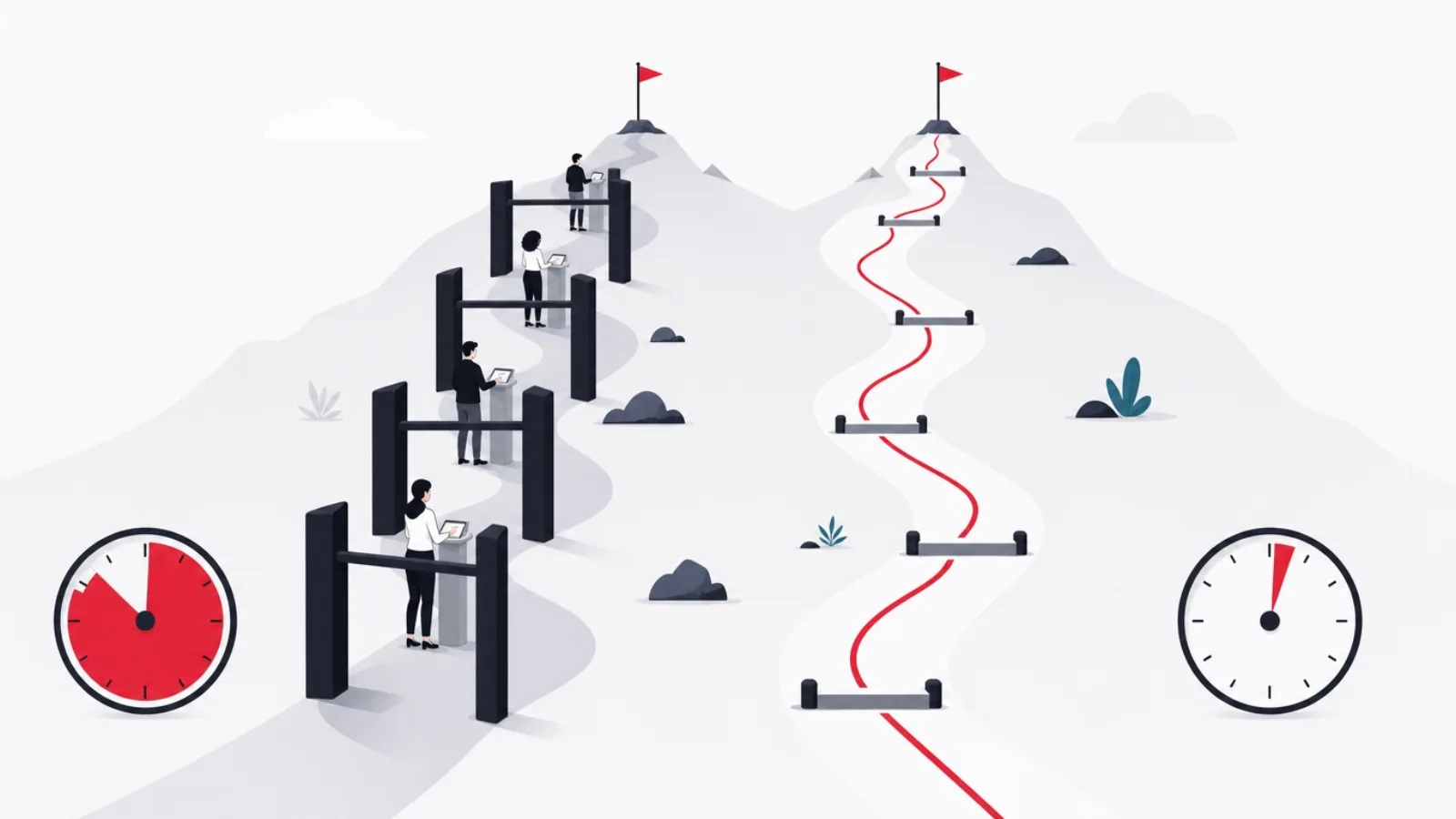
The research on self-monitoring is unambiguous: people who log consistently lose more weight, and consistency collapses when logging takes effort. So the first test for every app here was the cost of the core loop: how many seconds and taps to log a typical meal, how good the database or scanner is at first guess, and how the app behaves after a missed day, because the missed-day experience decides whether a lapse becomes a quit.
Second, honesty of the free tier. Every app here has one; some are usable forever, others are demos. Third, data quality, since a tracker built on a crowdsourced database inherits crowdsourced errors. And fourth, what the app does beyond arithmetic: adaptive targets, behavioral coaching, community, clinician integration. Prices below are US app-store figures as of August 2026 and move often; treat them as brackets rather than quotes.
The general trackers: MyFitnessPal and Lose It!
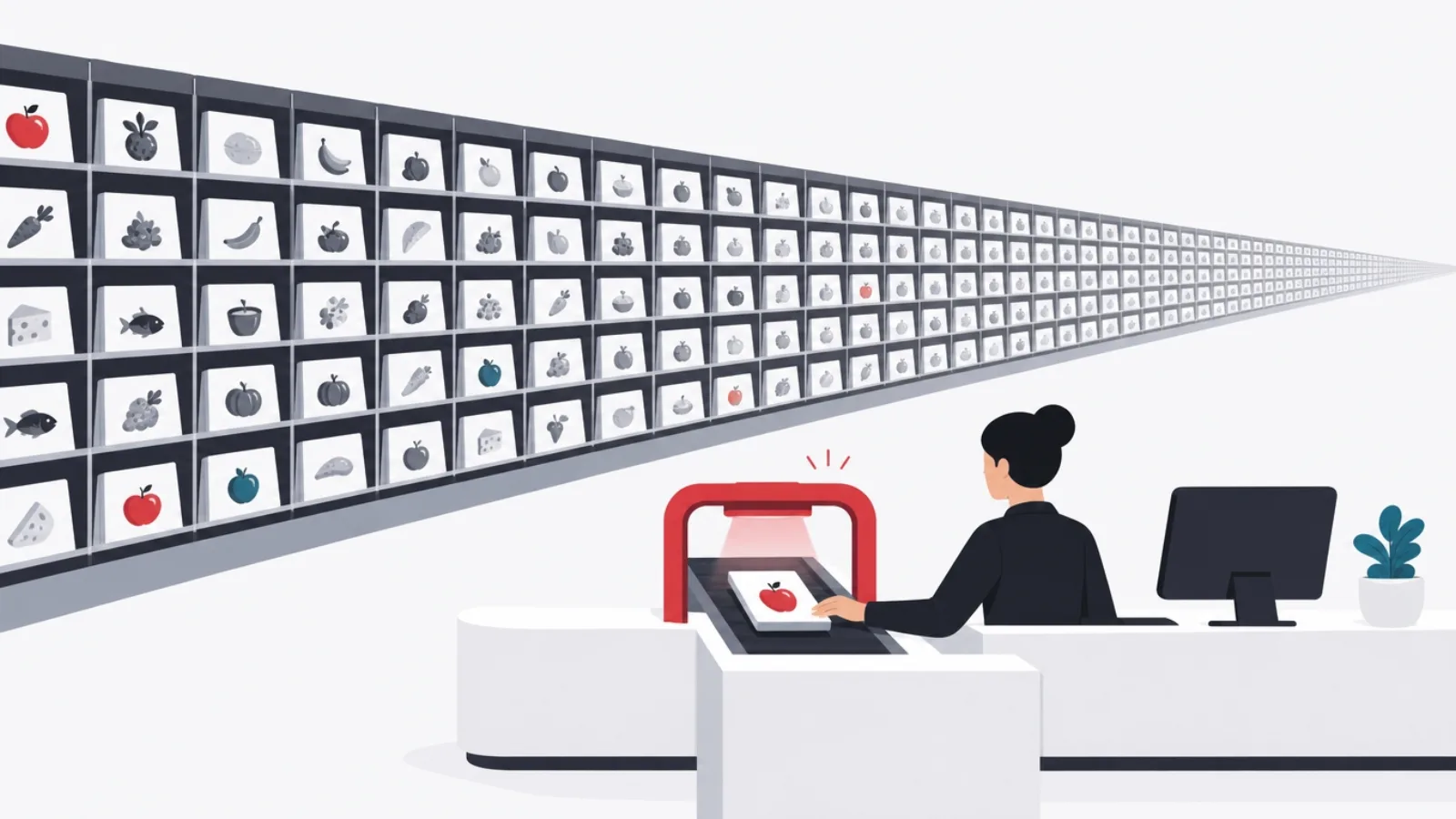
MyFitnessPal remains the default for a reason: the food database is the largest in the category, the barcode scanner rarely misses a packaged product, and after fifteen years nearly every fitness device and app integrates with it. The free tier tracks calories and weight competently. The paid tier, around 80 dollars a year, unlocks barcode scanning, macro targets and meal-level insights, and the fact that barcode scanning moved behind the paywall tells you how the business model evolved. Weaknesses: the database's crowdsourced entries carry real errors, the app has grown heavy with upsells, and the logging flow is slower than it should be for the price.
Lose It! is the friendlier version of the same idea. The free tier keeps barcode scanning, the interface is faster to log with, and the paid tier is cheaper at roughly 40 dollars a year. Its Snap It photo logging is decent, its database is smaller but better curated than MyFitnessPal's, and its challenges lean social. For a first tracker, Lose It! is the lower-friction recommendation; for a data hub connected to everything else you use, MyFitnessPal still wins.
- MyFitnessPal iOS, Android, web. Free tier workable; premium around 80 dollars a year. Largest database and integration network; heaviest interface.
- Lose It! iOS, Android, web. Free tier keeps the scanner; premium around 40 dollars a year. Fastest general logging flow; smaller database.
For precision and adaptive coaching: Cronometer and MacroFactor
Cronometer is the accuracy choice. Its database is built on verified and lab-sourced nutrition data rather than open crowdsourcing, and it tracks up to 84 micronutrients, which makes it the tracker dietitians most often recommend and the only mainstream one that treats vitamin D as seriously as calories. The interface is more spreadsheet than cheerleader, which is either its flaw or its entire appeal. Free tier is fully usable; gold is about 50 dollars a year.
MacroFactor, from the evidence-focused Stronger By Science team, is the most interesting product in the category. Instead of assigning a static calorie target, it estimates your actual energy expenditure each week from your logged intake and weight trend, then adjusts targets adaptively, the way a good coach would. It never scolds, has no streak-shaming, and its logging flow is measurably the fastest we tested. It costs about 72 dollars a year with no free tier, and it assumes you will actually log. For people who tried calorie counting, hated the judgment, and want an engine rather than a nanny, it is the current state of the art.
The nine apps at a glance
| App | Free tier | Paid, per year | Pick it for |
|---|---|---|---|
| MyFitnessPal | Yes, no barcode scan | About 80 dollars | The biggest database and integrations |
| Lose It! | Yes, with scanner | About 40 dollars | Lowest-friction general tracking |
| Cronometer | Yes, full tracking | About 50 dollars | Micronutrient-grade accuracy |
| MacroFactor | No | About 72 dollars | Adaptive targets without judgment |
| Noom | Trial only | 200 dollars and up | Psychology-first coaching |
| WeightWatchers | Trial only | 120 to 300 dollars | Structure, community, clinical add-ons |
| Simple | Limited | About 60 dollars | Fasting-first with AI coaching |
| Yazio | Yes | About 40 dollars | Meal planning on a budget |
| Fooducate | Yes | About 45 dollars | Learning food quality, not just counting |
Prices are US figures as of August 2026, rounded; most run frequent promotions. The last column is the honest one-line reason to pick each.
The coaching programs: Noom, WeightWatchers and Simple

Noom sells psychology rather than arithmetic: daily cognitive-behavioral lessons, a color system for food energy density, and human-adjacent coaching. The published trial evidence for its approach is real if modest, and the daily-lesson format genuinely helps people who need to understand their own eating patterns. The honest criticisms are price, around 200 dollars a year and marketed aggressively, coaching that is more scripted than the ads imply, and a color system that some users experience as moralizing food.
WeightWatchers, rebranded around its points system and now carrying clinic services for GLP-1 prescriptions, remains the strongest structured program for people who want community: workshops, meetings and decades of habit-formation refinement. The points abstraction is friendlier than raw calories for many people, and the clinical tier acknowledges where the market went. It costs from about 120 dollars a year for digital-only to several times that with workshops.
Simple takes the third angle: intermittent fasting as the organizing habit, with an AI coach that answers questions and nudges timing windows. Fasting-first design suits people who find meal logging intolerable but can manage a clock. The evidence base for fasting is roughly on par with any other adherence-dependent calorie reduction, which is to say: it works if it fits your life.
What changed: AI photo logging and the GLP-1 wave
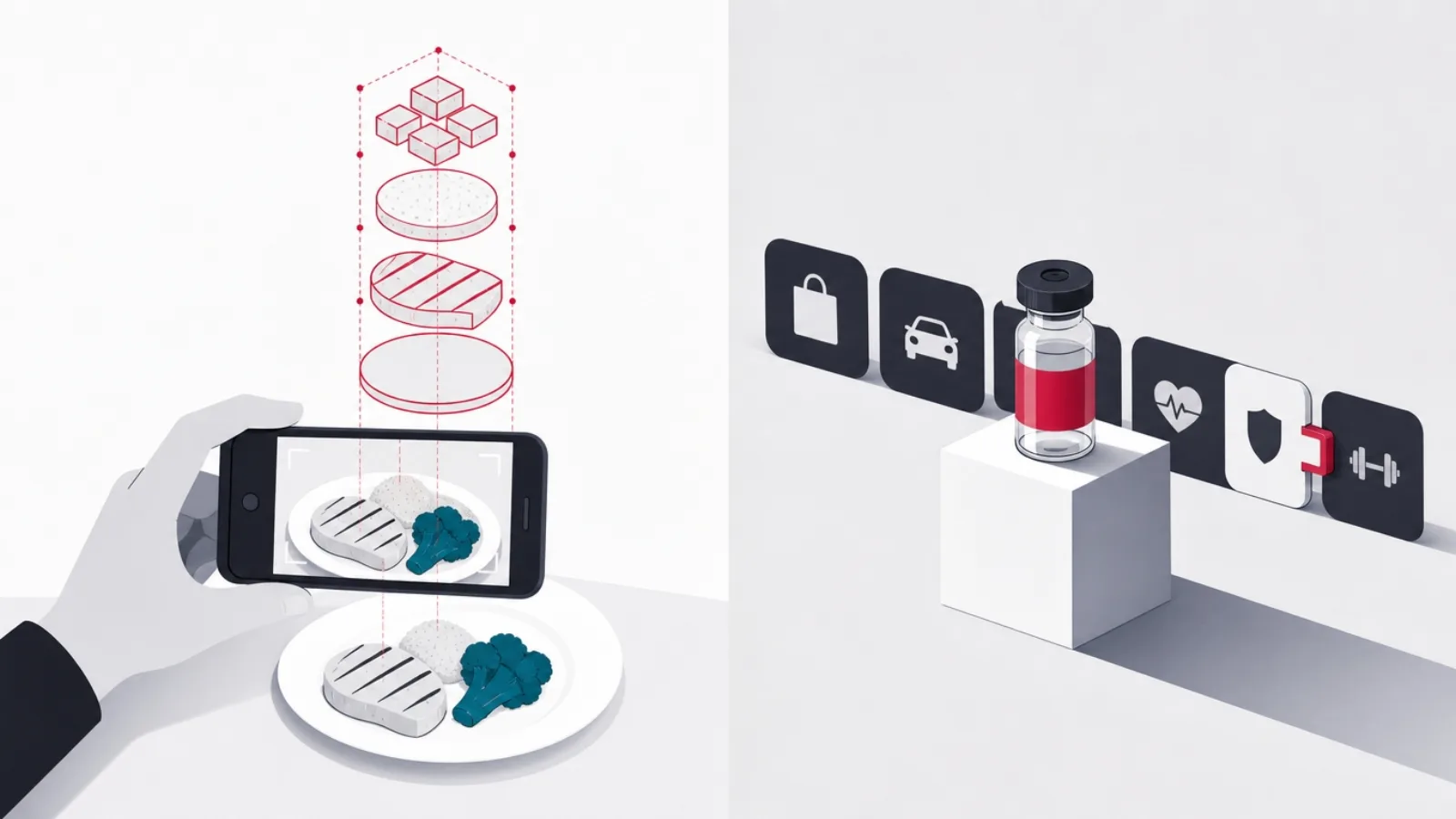
Photo logging finally crossed from gimmick to useful. Point the camera at a plate and the leading apps now identify the dish, estimate the portion and draft the log entry for confirmation. In our testing the identification is good, the portion estimation remains the weak joint, off by a third on anything ambiguous like curry over rice, and mixed dishes still confuse it. The right mental model: AI logging is a faster first draft, not a measurement. Barcode scanning plus an occasional food-scale calibration remains the accuracy floor, and the apps themselves quietly agree, since every one of them asks you to confirm the AI's guess.
The GLP-1 medications changed the category more than any app feature. For users on semaglutide or tirzepatide, appetite suppression makes calorie ceilings nearly irrelevant while making protein adequacy, micronutrients and muscle retention the actual problems. The market noticed: WeightWatchers runs a clinic, Noom launched medication-companion programming, and MyFitnessPal and others ship GLP-1 nutrition tracking modes. If you are on these medications, the tracker's job inverts: it is there to make sure you eat enough of the right things, and Cronometer-grade nutrient visibility becomes more valuable than any deficit math.
The two-week calibration that makes any tracker work
-
Weigh food for fourteen daysDays 1-14
A 15-dollar kitchen scale, everything that goes on the plate. Not forever, just long enough to learn what 100 grams of rice actually looks like.
-
Log before eating, not afterHabit
Pre-logging turns the app from a diary into a decision aid, and catches the portion drift while it is still negotiable.
-
Save your ten staple mealsWeek 1
Most people eat the same core meals weekly. Saved meals cut logging to two taps and remove the friction that kills week three.
-
Weigh yourself daily, judge weeklyOngoing
Daily weights fluctuate meaninglessly; the weekly trend is the signal. Apps like MacroFactor automate exactly this smoothing.
-
Plan the missed day in advanceBefore it happens
Decide now what happens after a lapse: log an estimate and continue. The users who survive month one are the ones who never treat a gap as a failure.
The single highest-leverage practice in this category, whichever app you choose. After two weeks, your eye is calibrated and logging speed roughly doubles.
Which one should you pick?

Start from your failure mode, not from features. If you quit trackers because logging is tedious: Lose It! or MacroFactor, the two fastest flows. If you quit because numbers without context feel meaningless: Noom or Fooducate, which teach while they count. If you quit because generic targets never fit you: MacroFactor's adaptive engine. If you have never tracked and want the safest general choice: Lose It! free for a month, then decide if you need more. If you want clinical-grade nutrition data, or you are on a GLP-1: Cronometer. If you want people, meetings and structure: WeightWatchers.
And if no tracker has ever survived contact with your life, consider that the app layer may not be your bottleneck. A food scale, a repeating grocery list and a walking habit out-perform an abandoned subscription every time. The apps are tools for making a deficit visible; they are not the deficit.
Pick by your failure mode
Why did tracking fail for you last time?
-
Logging was too tedious
Lose It! or MacroFactor
The two fastest logging flows in the category, with saved meals and AI drafts cutting entries to seconds.
-
The numbers felt arbitrary and judgmental
MacroFactor, or Noom if you want teaching
Adaptive targets recalculated from your own data remove the arbitrariness; Noom adds the why behind the what.
-
I needed people, not a dashboard
WeightWatchers
Workshops and community are its actual product, refined over decades, with the clinical tier if medication is in the picture.
-
Never tried; want a safe start
Lose It! free tier plus a food scale
Lowest-cost experiment that preserves every upgrade path once you know your own failure mode.
Each branch names the primary recommendation and the reason it counters that specific way of quitting.
What this category teaches health product builders
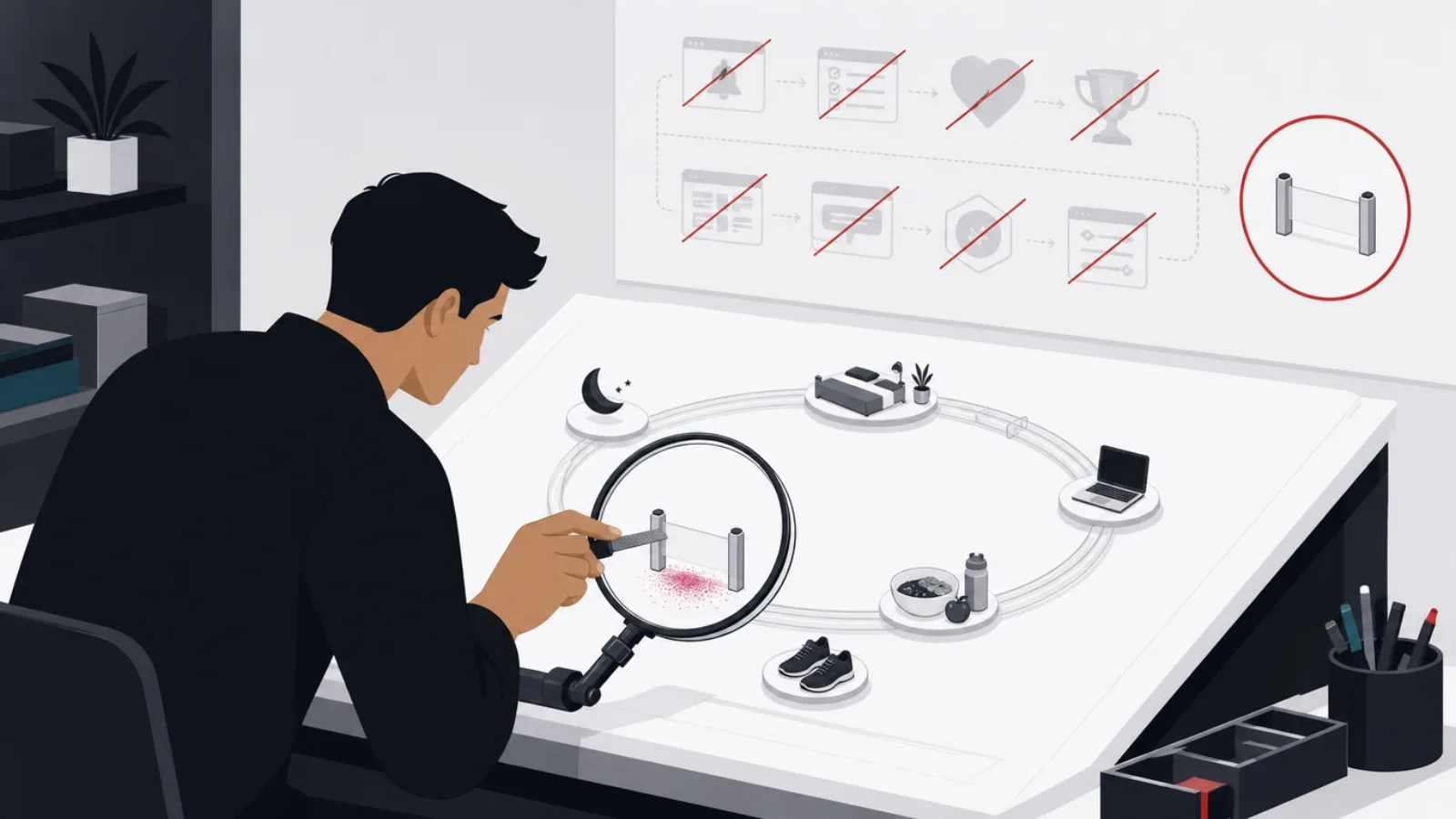
Weight loss apps are the purest behavior-change engineering problem in consumer software: the physiology is settled, so the entire product is adherence. The mechanics the winners converge on, tiny commitments, adaptive rather than fixed goals, forgiveness after lapses, logging flows measured in seconds, are the same mechanics we design into client health products, and they generalize to medication adherence, physical therapy, chronic disease management and finance.
Two engineering realities dominate builds in this space. First, integrations are the moat and the workload: Apple Health, Health Connect, Fitbit, Garmin, smart scales and CGMs each carry their own sync semantics, and reconciling step-count truth across three sources is where health app teams actually spend their quarters. Second, the regulatory line matters from day one: a wellness tracker that starts making treatment claims or dosing suggestions crosses from lifestyle software toward medical device territory, with the quality systems and clearances that implies. Scoping that boundary early is much cheaper than discovering it in review, a pattern we cover across health builds in our guides to telemedicine app development and the wider development process, with the phase-by-phase detail in our guide to Agile SDLC phases and models.
The monetization lesson is the quiet one: this category converts poorly on features and well on outcomes. Users pay for coaching, adaptation and accountability, not for charts. Products that price the arithmetic struggle; products that price the support survive.
Since publication, the fitness cluster around this guide has been completed. The best calorie tracker apps goes deeper on the logging category that most weight-loss apps depend on, and the best fitness apps for Android covers the training side for the platform where store discovery works differently. For anyone reading this as a builder, how to build a fitness tracker app covers the sensor, sync and retention engineering that this comparison only alludes to.
Building behavior-change products: what the survivors do
Do this
- Engineer the lapse pathThe missed-day experience decides retention. Design re-entry to be one tap and zero guilt.
- Adapt targets from user dataMacroFactor-style feedback loops outperform static goals on both outcomes and retention.
- Budget integrations as a workstreamHealth platform sync is a permanent engineering cost, not a launch checkbox.
- Involve clinicians earlyAdvisory input keeps mechanics evidence-based and keeps marketing claims on the right side of regulators.
Not this
- Ship streaks without forgivenessStreak-breaking is the top quit trigger in tracking apps; punishment mechanics select against your best users.
- Trust crowdsourced nutrition data blindlyDatabase quality is a product feature. Verified sources cost more and are worth it.
- Make claims the evidence does not carryOutcome claims invite regulatory attention in every major market; describe the mechanism, cite the science.
- Ignore the eating-disorder failure modeScreening, guardrails and off-ramps are ethical table stakes for any counting product.
Patterns from the apps above, translated into build guidance we give clients scoping health products.
Frequently asked questions
What is the best free weight loss app?
Lose It! has the strongest free tier among general trackers because it keeps barcode scanning free, which MyFitnessPal moved behind its paywall. Cronometer's free tier is the best for nutrition detail. Paired with a cheap food scale for the first two weeks, either free tier delivers most of what any paid plan does for straightforward calorie tracking.
Do weight loss apps actually work?
The mechanism they support, consistent self-monitoring, is among the best-evidenced behavior-change techniques in weight management research, with consistent trackers losing meaningfully more than non-trackers across studies. The catch is adherence: most users stop logging within a few weeks, and an unopened app has no effect size. The app works to the extent it keeps you logging, which is why friction and lapse handling matter more than feature lists.
Is Noom worth the price?
It depends on whether you need the psychology or just the arithmetic. Noom's daily lessons genuinely help people who eat for reasons they have never examined, and its trial evidence is real if modest. But at roughly 200 dollars a year it costs five times a general tracker, its coaching is more scripted than the marketing implies, and users who only want calorie counting are paying for curriculum they will skip.
How accurate is AI photo food logging?
Good at identifying what the food is, mediocre at judging how much of it there is. In practice the leading apps identify common dishes reliably but misjudge portions by a quarter to a third on anything ambiguous, and mixed dishes remain hard. Treat the photo as a fast first draft you confirm and adjust, and calibrate your eye with a food scale occasionally; that combination is both fast and honest.
Which app is best for people on GLP-1 medications like Ozempic?
The priorities invert on GLP-1s: appetite suppression makes calorie ceilings nearly moot while protein adequacy, micronutrients and muscle retention become the real tracking jobs. Cronometer is the strongest fit for nutrient visibility, and WeightWatchers and Noom both run medication-companion programs if you want structured support. Whatever you choose, discuss targets with the prescribing clinician.
How much does it cost to build a fitness or diet tracking app?
A credible MVP, food logging with a licensed nutrition database, barcode scanning, progress tracking and health-platform sync, typically runs 60,000 to 150,000 US dollars with an offshore product team. The numbers that surprise founders are recurring: nutrition database licensing, the permanent integration workstream for Apple Health, Health Connect and wearables, and coaching content. Adaptive-target engines and AI photo logging add engineering but are increasingly expected.
Behavior change is an engineering discipline as much as a design one. If you are building a product that has to survive week three, work with AgileTech, an AI native software development company in Hanoi that designs the retention mechanics with the same rigor as the architecture.
Source: https://agiletech.vn/blog/best-weight-loss-apps/ · (c) AgileTech Vietnam. Printed from agiletech.vn.